百余张历史老照片,带你“穿越”探访19世纪中国的昔日万“像”
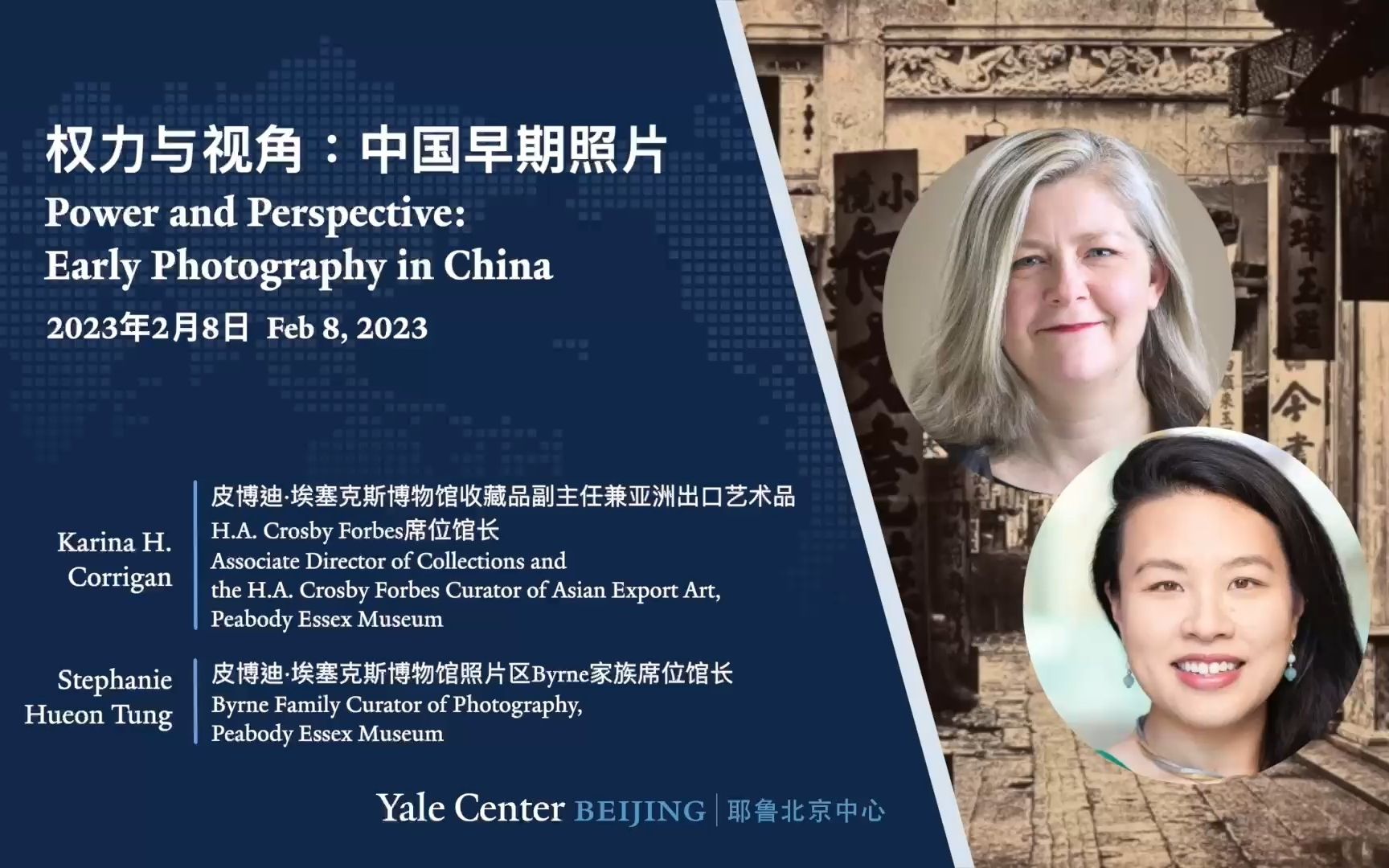
字幕摘录
| 时间 | 英文 | 中文 |
|---|---|---|
| 0:04 | Welcome. | 欢迎 |
| 0:05 | My name is Devin Lau. | 我叫刘德文 |
| 0:06 | I'm the associate director for Yale Center Beijing, and today we | 我是耶鲁中心北京的副主任 今天我们 |
| 0:11 | are excited to have Stephanie Tung, the Byrne Family Curator of Photography at Peabody Exx Museum, | 很高兴有Stephanie Tung 在皮博迪艾克斯博物馆的伯恩家族摄影师 |
| 0:20 | 和Karina Corrigan,亚洲出口艺术公司H. A. Crosby Forbes经理兼副董事长 | |
| 0:24 | of Collections at the museum, join us for their discussion about the exhibition and publication | 与我们一起讨论展览和出版物 |
| 0:31 | Power and Perspective Early Photography in China. | 中国权力与视角早期摄影. |
| 0:34 | And just so you know, this is a current exhibition | 你知道,这是现在的展览 |
| 0:37 | that's going on until April 2023, so for those of you guys that may be in the U.S. or planning a trip, | 直到2023年4月 你们这些可能在美国或计划旅行的人 |
| 0:46 | you still have a little bit of time to try to get there. | 你还有一点时间去那儿 |
展开字幕全文(906 条)
| 序号 | 英文 | 中文 |
|---|---|---|
| 1 | Welcome. | 欢迎 |
| 2 | My name is Devin Lau. | 我叫刘德文 |
| 3 | I'm the associate director for Yale Center Beijing, and today we | 我是耶鲁中心北京的副主任 今天我们 |
| 4 | are excited to have Stephanie Tung, the Byrne Family Curator of Photography at Peabody Exx Museum, | 很高兴有Stephanie Tung 在皮博迪艾克斯博物馆的伯恩家族摄影师 |
| 5 | 和Karina Corrigan,亚洲出口艺术公司H. A. Crosby Forbes经理兼副董事长 | |
| 6 | of Collections at the museum, join us for their discussion about the exhibition and publication | 与我们一起讨论展览和出版物 |
| 7 | Power and Perspective Early Photography in China. | 中国权力与视角早期摄影. |
| 8 | And just so you know, this is a current exhibition | 你知道,这是现在的展览 |
| 9 | that's going on until April 2023, so for those of you guys that may be in the U.S. or planning a trip, | 直到2023年4月 你们这些可能在美国或计划旅行的人 |
| 10 | you still have a little bit of time to try to get there. | 你还有一点时间去那儿 |
| 11 | It features 130 photographs in dialogue | 里面有130张照片 |
| 12 | with paintings, decorative arts, and prints, drawn largely from the museum's collection, | 绘画、装饰艺术和印刷品 主要是博物馆收藏的 |
| 13 | and offers a vital reassessment of the colonial legacy of the medium. | 并且对媒体的殖民遗产进行了重要的重新评估。 |
| 14 | They will discuss the ways in which the encounters with historic photography collections, most of which | 他们将讨论与历史摄影作品的交汇方式,其中多数是 |
| 15 | are found outside of China, can generate new insights for today. | 能够为今天带来新的见解 |
| 16 | Today's speakers, I will | 今天的发言者,我会的 |
| 17 | introduce both of them and then turn it over to them. | 介绍他们俩,然后,把它交给他们。 |
| 18 | Karina Corrigan is the associate director, | 卡琳娜·科里根是副局长 |
| 19 | 正如我所提到的, 收藏, 以及H. A. Crosby Forbes Currator 亚洲出口艺术。 | |
| 20 | As associate director, she is responsible for spearheading research on the rich and | 作为副局长,她负责带头研究富人和 |
| 21 | storied collection of the museum, as well as enhancing access to the collection through | 博物馆的收藏,以及通过下列方式增加获得收藏的机会: |
| 22 | increased documentation, digitization, and display, and building the collection through | 增加文件、数字化和显示,并通过 |
| 23 | new acquisitions. | 新采购。 |
| 24 | She oversees the largest, most comprehensive public collection of cross-cultural | 她监管着最大的、最全面的跨文化公共收藏 |
| 25 | art from China, Japan, and South Asia. | 来自中国、日本和南亚的艺术。 |
| 26 | She's organized many exhibitions drawing from PEM's | 她组织了许多展览 从PEM的 |
| 27 | collections and received awards, including the 2020 Award of Excellence from the Association of | 收集并获奖,包括2020年协会杰出奖 |
| 28 | (原始内容存档于2018-09-26). Art Museum Curders. | |
| 29 | She received her BA in Art History and Medieval Renaissance Studies from | 她获得了艺术史和中世纪文艺复兴研究学士学位 |
| 30 | Wellesley College, as well as an MS in Historic Preservation from the University of Pennsylvania, | 韦尔斯利学院 以及宾夕法尼亚大学历史保护学院 |
| 31 | and an MA from the Winterthur Program in American Material Culture. | 以及美国物质文化的温特瑟尔计划 |
| 32 | Stephanie Tung is the | 斯蒂芬妮・董是 |
| 33 | family curator of photography at the museum. | 博物馆摄影家庭馆长。 |
| 34 | She leads the interpretation and presentation of the | 她领导解释和介绍 |
| 35 | museum's growing photography collection, which spans the 19th century through today. | 博物馆不断壮大摄影收藏,它跨越19世纪,直到今天. |
| 36 | A specialist in the history of photography in China, her research focuses on transnational art | 她是中国摄影史专家 她的研究重点是跨国艺术 |
| 37 | exchanges, global modernism, translational studies, and the notions of artistic labor. | 交流、全球现代主义、翻译研究以及艺术劳动的概念。 |
| 38 | At PEM, she has been instrumental in shepherding the 2020 acquisition of approximately 1,600 | 在PEM,她一直帮助牧羊 2020年收购约1600 |
| 39 | photographs by artists with ties to East Asia. | 照片来自与东亚有关系的艺术家。 |
| 40 | She holds a Bachelor of Art in Literature and | 她拥有文学艺术学士学位 |
| 41 | History of Art and Architecture from Harvard, as well as a Masters of Arts in Art and Archaeology | 哈佛艺术和建筑史,以及艺术和考古学硕士 |
| 42 | from Princeton. | 从普林斯顿。 |
| 43 | Thank you everybody for joining us, and thank you especially to our two speakers for | 感谢各位加入我们,并特别感谢两位发言者。 |
| 44 | joining us this morning. | 今早加入我们 |
| 45 | I'm very excited to see what you have to share. | 我非常兴奋地看到你必须分享的东西。 |
| 46 | I've taken a look at the | 我看过了 |
| 47 | book, and it's fantastic, but I'm sure that the pictures you have and the exhibition in person is | 书,这是美妙的, 但我敢肯定,你的照片 和展览的人 |
| 48 | even better. | 更厉害 |
| 49 | So I will turn things over to you. | 所以我会把事情交给你 |
| 50 | Thanks, Devin, and good morning, good evening, | 谢谢 德温,早安,晚安 |
| 51 | wherever you are. | 无论你在哪里 |
| 52 | We're so thrilled to be with you today. | 我们今天很高兴能和你在一起 |
| 53 | We wanted to introduce you to the site | 我们想介绍你到网站 |
| 54 | where we work and the site where the exhibition is. | 我们工作的地方和展览的地点 |
| 55 | This is three facades of the Peabody Essex | 这是皮博迪埃塞克斯的三层外观 |
| 56 | Museum, which is the oldest museum in the United States, founded in 1799 as a marine society for | 博物馆,是美国历史最悠久的博物馆,成立于1799年,为海洋社会. |
| 57 | ship captains. | 船长 |
| 58 | Salem is a sleepy little suburb of Boston now, but in 1800, this was the wealthiest | 塞勒姆现在是波士顿的一个困倦的小郊区, 但是在1800年,这是最富有的 |
| 59 | city per capita in America. | 美国人均城市。 |
| 60 | Almost all of that wealth was due to global trade, and a huge amount | 几乎所有的财富都来自全球贸易,而且数额巨大 |
| 61 | that global trade was to Asia, and in particular to China. | 全球贸易是亚洲的,特别是中国的。 |
| 62 | So this narrative is literally embedded | 因此,这个叙事 字面上嵌入 |
| 63 | in our history from the very beginning. | 从我们的历史开始。 |
| 64 | The building you're looking at in the middle is East | 你看着中间的大楼是东面 |
| 65 | India Marine Hall, the oldest permanent home for this collection, and on either side of that are | 印度海军陆战队会馆,最古老的永久馆藏馆,位于两侧 |
| 66 | two of our much newer buildings. | 我们两个更新的建筑 |
| 67 | Because although we are the oldest museum, we are also | 因为虽然我们是最古老的博物馆,但我们也是 |
| 68 | a very new institution and constantly expanding and growing in new and interesting ways. | 一个非常新的机构,以新的和有趣的方式不断扩大和发展。 |
| 69 | Okay, hello. | 好吧,哈啰。 |
| 70 | So we're gathered here today to give a little bit of a talk, I think, | 我们今天聚集在这里 来谈谈,我想, |
| 71 | really spurred by the publication of Power and Perspective Early Photography in China by PEM and | 由PEM和PEM在中国出版的《权力与视角早期摄影》推动。 |
| 72 | distributed by the Yale University Press. | 由耶鲁大学出版社发行. |
| 73 | I have it here with me now. | 我现在拿着它 |
| 74 | The book, the catalog itself | 书,目录本身 |
| 75 | 来自该领域14位著名学者的特写,包括Terry Bennett, Yigu, Tingting | |
| 76 | Xu, Bing Wang, myself and Karina, and seven other people. | 徐,王炳,我和卡莲娜,还有七人. |
| 77 | And the way that it's structured has five | 它的结构有五个 |
| 78 | essays and a number of entries about specific works. | 散文和一些关于具体作品的条目. |
| 79 | And so it really is, I think, a really | 所以它真的是,我认为,真的 |
| 80 | good summary of the work that we've been doing on this show for the last couple of years. | 这几年来我们在这节目上的工作总结很好 |
| 81 | So to begin, we're going to give a little bit of a walkthrough of the exhibition and some of the | 开始,我们将 给一点点 通过展览和一些 |
| 82 | main ideas and sections, and then I think we'll do questions and answer afterwards. | 主要的想法和章节,然后我想我们会做问答之后。 |
| 83 | So the exhibition | 所以,展览 |
| 84 | itself is really about the adoption and introduction of photography in 19th century China. | 本身其实是19世纪中国通过和引进摄影. |
| 85 | We wanted to think about the stories that these photographs can tell and what might not be, | 我们想考虑一下这些照片能够描述的故事 以及可能不是的故事, |
| 86 | what other, the specific stories that they tell might not actually be included in those stories. | 其它什么,他们所讲的具体故事 可能并不包含在这些故事中。 |
| 87 | So the way that we begin is actually with this camera. | 因此,我们开始的方式其实是用这个摄像机。 |
| 88 | I think we all have cameras in our pockets | 我想我们口袋里都有摄像头 |
| 89 | now, but if you told that to a 19th century photographer, that would just blow their mind, | 现在,但是如果你告诉一个19世纪的摄影师, 那只会让他们大吃一惊, |
| 90 | because what you're seeing in front of you is a camera from the 1850s, an American-made camera, | 因为你眼前看到的是1850年代的摄像机 美国制造的摄像机 |
| 91 | very, very similar to the ones that were imported to China at the time to create all the photographs | 非常,非常相似的是当时进口到中国的 制作所有照片 |
| 92 | that you're about to see. | 你即将看到的。 |
| 93 | And so beginning the show this way allows us to think a little bit | 因此,开始这个节目 这样让我们思考一下 |
| 94 | more about the materiality or the objects that photographs are. | 更多关于照片的重要性或物体。 |
| 95 | And you can see that it's really | 你可以看到这是真的 |
| 96 | large, it's bulky, it's fragile, they're all made with glass plates. | 体积大,体积大,体积脆弱,都用玻璃板制成. |
| 97 | And so you needed things like | 所以,你需要的东西 像 |
| 98 | time, money, assistance, and more than a little bit of luck to make any of the photographs that | 时间,金钱,援助, 和多一点运气 拍摄任何照片 |
| 99 | we're about to see. | 我们即将看到。 |
| 100 | So I mentioned how old the Peabody Essex Museum is and these very long ties | 所以我提到皮博迪·埃塞克斯博物馆的历史 以及这些很长的纽带 |
| 101 | with China. | 与中国。 |
| 102 | Pem holds an enormous collection of 19th century photographs from China, so we're | Pem收藏了大量来自中国的19世纪照片 所以我们是 |
| 103 | only showing a tiny fraction of the collection in either the exhibition or the book. | 在展览或书中只展示一小部分藏品. |
| 104 | They're more in | 他们更多了 |
| 105 | the book than in the show, but that's still less than 10%. | 这本书比节目里写得还少 但还不到10% |
| 106 | But I think what also distinguishes | 但我认为什么是区别 |
| 107 | this collection besides its scale is that these works of art came into the collection as new | 除了规模之外 这些艺术品作为新作品进入收藏 |
| 108 | photography in the 19th century. | 19世纪的摄影. |
| 109 | This was new photography brought back by these merchants who | 这是这些商人带来的新照片 |
| 110 | were actively trading in China. | 活跃在中国的贸易。 |
| 111 | So unlike many other public collections of this kind of material, | 不像其他很多公共收藏 这种材料, |
| 112 | we very often know who, when people bought these photographs, where they bought them. | 我们经常知道,当人们购买这些照片时, 在哪里购买这些照片。 |
| 113 | And we often have related either objects or archival records related to those people as well, | 我们经常有与这些人有关的物品或档案记录, |
| 114 | so it created a wonderful interconnected web of information for us to tell this story. | 因此,它创造了一个奇妙的互联互通的信息网络 为我们讲述这个故事。 |
| 115 | Okay, so the first gallery or first section of the show is called the Imperial Eye. | 好吧,所以第一个画廊 或节目的第一部分 叫做帝国眼。 |
| 116 | Aim, | 目标 |
| 117 | shoot, capture, that's the language of photography, but you'll notice that it's | 拍摄,捕捉,那是摄影的语言, 但你会注意到,这是 |
| 118 | also the language of weapons. | 还有武器的语言。 |
| 119 | And that's really here we're trying to address the intertwining | 这才是我们想要解决的 |
| 120 | histories of colonialism and photography. | 殖民主义历史与摄影. |
| 121 | Photography entered China at the end of the | 摄影进入中国末期 |
| 122 | First Opium War alongside weapons and on gunships from Europe. | 第一次鸦片战争与武器和来自欧洲的炮兵战争。 |
| 123 | And so that's the sort of entrance | 所以这就是那种入口 |
| 124 | of photography. | 摄影 |
| 125 | And we're trying to tell this story here through the work of Felice Biato. | 我们试图通过费利斯·比亚托的作品 来讲述这个故事。 |
| 126 | Biato was an Italian British soldier who was embedded in the British army, and so he tracked | 比亚托是一名意大利的英国士兵 他被嵌入了英国军队 所以他追踪到 |
| 127 | the army's progress as it went from Hong Kong, the new colony, up to Beijing for the Second Opium War. | 军队从新殖民地香港进军 一直到北京进行第二次鸦片战争 |
| 128 | And throughout his photographs, you can see that he's telling a very particular story about | 在他的照片中,你可以看到 他讲述了一个非常特别的故事 |
| 129 | British dominance in China. | 英国在中国的统治地位. |
| 130 | So in this one, this is the first photograph in the show, and it shows | 所以在这张照片里 这是节目中的第一张照片 它显示 |
| 131 | how he's positioned himself on the Hong Kong peak, Victoria Peak, and he's looking down at | 他是如何定位自己 在香港高峰,维多利亚峰, 他俯视 |
| 132 | the harbor. | 港湾。 |
| 133 | And what he really wants to capture is all of these ships that are waiting in the | 他真正想要抓的就是所有那些正在等待的船 |
| 134 | harbor, these British ships that are waiting to go up to Beijing. | 港口,这些英国船只 等待上北京。 |
| 135 | And so it's a photograph | 所以这是一张照片 |
| 136 | that was very much used or intentionally made to telegraph the power of the military. | 这被大量使用或故意用来电报军队的权力。 |
| 137 | However, | 不过, |
| 138 | I think one of our strategies in this exhibition is to actually ask you to go really, really deep | 我认为我们这次展览的策略之一是 让你真正,真正深入 |
| 139 | in focus and look at the very tiny details that these photographs provide, but also think outside | 观察这些照片提供的极小的细节, |
| 140 | of the frame. | 边框。 |
| 141 | What are the historical, political, social contexts that we might not be seeing in | 我们可能看不到的历史、政治、社会背景是什么? |
| 142 | the photograph, but have informed everything that these photographs are showing us? | 照片,但已经告知所有 这些照片显示我们? |
| 143 | And so with | 所以说 |
| 144 | Yato, we know that he was holding this huge camera and he had lots and lots of help and laborers | 亚藤,我们知道他拿着这台大摄像机 他有很多帮助和工人 |
| 145 | that were actually helping to move this camera throughout the battle scenes. | 在战斗场景中帮助移动了摄像机 |
| 146 | And so you never | 所以你从不 |
| 147 | see the Chinese labor that's going into making these photographs. | 看中国的劳工 正在制作这些照片。 |
| 148 | The only one that I think he | 我唯一认为他 |
| 149 | has in which a person, a Chinese person, is deliberately put there is the photograph on the | 里面刻着一个中国人 刻意把照片放在那里 |
| 150 | left, in which you see this laborer directly underneath the British flag. | 左边,你看到这个工人 直接在英国国旗下。 |
| 151 | And so a lot of | 这么多 |
| 152 | these photographs, you can see they're showing you one thing, but we want to remind people that | 这些照片,你可以看到, 他们正在展示你一件事, 但我们想提醒人们, |
| 153 | there's also all these other factors beyond the frame. | 还有其他超出框架的因素 |
| 154 | So, Yato's visual narrative of the | 所以,矢藤的视觉叙述 |
| 155 | Beijing siege, the British siege on Beijing, really culminates in the capture of Yuanmingyuan, | 北京围城,英国对北京的围城,最终真的占领了元明远, |
| 156 | the imperial summer palaces right outside of Beijing. | 帝国的夏日宫殿就在北京之外 |
| 157 | And so he was embedded with the British | 所以他和英国人混在一起 |
| 158 | at the time. | 在当时。 |
| 159 | And we know that this particular photograph is of a building that is in Yiheyuan, | 我们知道这张照片 是在宜兴的一座建筑 |
| 160 | but that he was there actually taking photographs of the entire sort of destruction. | 但是他在那里 拍摄了整个破坏的照片 |
| 161 | And I find | 我发现 |
| 162 | this photograph particularly haunting because he wrote underneath it that it was the imperial | 这张照片特别缠绕 因为他写道,这是帝国 |
| 163 | summer palace before the burning. | 火烧前夏宫. |
| 164 | He knew that this was going to be burned. | 他知道这将会被烧毁 |
| 165 | He knew that it was | 他知道这是 |
| 166 | to be destroyed. | 将被摧毁。 |
| 167 | And he took one last photograph before it was going to be destroyed. | 他拍了最后一张照片 才被摧毁 |
| 168 | And so | 这样 |
| 169 | there's a haunting quality to it because it sort of is the last picture before all this destruction. | 因为它是所有破坏之前的最后一幅画 |
| 170 | So this gallery really is, it shows the before the burning and then we have a section that's | 所以这个画廊真的, 它显示在燃烧之前, 然后我们有一个部分是 |
| 171 | after the burning. | 烧后. |
| 172 | And it's part of, so you'll see that the ruins of the Yuanmingyuan on the | 它的一部分,所以你会看到 元明元的废墟上 |
| 173 | through these two Thomas Child photographs. | 通过这两张托马斯儿童照片 |
| 174 | So this is fundamentally a photography exhibition, | 所以,这基本上是一个摄影展, |
| 175 | but we wanted to take this opportunity to contextualize these works of art with other | 但我们想利用这个机会 把这些艺术作品与其它作品联系起来 |
| 176 | works from the museum's collection. | 博物馆收藏的作品 |
| 177 | So here you see another installation shot of the exhibition | 在这里,你看到另一个安装镜头 展览 |
| 178 | with this massive solid ivory carved desk, a work likely made in the workshops in Guangzhou. | 有了这个巨大的固态象牙雕刻的办公桌,这个工作很可能是在广州的车间里完成的. |
| 179 | We certainly know that the French and British troops looted many things from the Yuanmingyuan | 我们当然知道,法国和英国军队从元明元劫掠了许多东西. |
| 180 | before the burning. | 在燃烧之前 |
| 181 | And this is certainly very like those objects. | 这肯定跟那些物体很像 |
| 182 | It is standing in here for | 它站在这里 |
| 183 | all of the things that were looted. | 所有被劫掠的东西 |
| 184 | Stephanie也展示了照片 Thomas Child's | |
| 185 | photographs after the burning. | 燃烧后的照片。 |
| 186 | And you can, I hope, just make those out at the back of the gallery | 我希望你能在画廊后面做这些 |
| 187 | in this in focus moment. | 在焦点时刻。 |
| 188 | We've created four of these moments in the exhibition with touch screens | 我们用触摸屏在展览中创造了四个这样的瞬间 |
| 189 | and sort of supporting information to help our visitors learn to look much more closely at | 和某种辅助信息 帮助我们的访客学习 更仔细地看 |
| 190 | individual works of art. | 个人艺术品。 |
| 191 | So on the left is one of the 18th century engravings of the European palaces | 所以左边是18世纪欧洲宫殿雕刻之一 |
| 192 | at the Yuanmingyuan and on the right are Child's photographs after burning. | 在元明元和右边是孩子烧后的照片。 |
| 193 | So the next section is | 所以下一节是 |
| 194 | called Navigating Worlds. | 称为导航世界。 |
| 195 | And this is really a section where we're looking at the treaty ports | 这确实是一个部分 我们正在看条约的港口 |
| 196 | that were opened up after the First Opium War. | 第一次鸦片战争后开放的 |
| 197 | So prior to the 1840s, all foreign trade with China | 所以在1840年代之前 所有与中国的对外贸易 |
| 198 | happened exclusively in a foreign settlement along the Pearl River in Guangzhou. | 发生在广州珠江沿岸的一个外国定居点。 |
| 199 | But | 不过 |
| 200 | some of the concessions with the First Opium War were foreigners' abilities to trade in | 第一次鸦片战争中的一些让步是 外国人有能力进行贸易 |
| 201 | multiple other cities. | 其他多个城市。 |
| 202 | And we wanted to feature photographs from many of those other places. | 我们想给很多其他地方的照片做特写。 |
| 203 | The work you're looking at here is not a photograph, obviously. | 你在这里看到的不是照片,很明显。 |
| 204 | This is a large-scale | 这是大规模的 |
| 205 | oil painting done by a Chinese artist of that waterfront in Guangzhou. | 广州那水边的一位中国艺术家画的油画. |
| 206 | In this section, we also | 在本节中,我们还 |
| 207 | have the technology of steam. | 拥有蒸汽技术. |
| 208 | And you can, I hope, make out a steamship along the Pearl River | 我希望你能沿着珠江造一艘蒸汽船 |
| 209 | in this view of Guangzhou. | 以此观广州. |
| 210 | But also in the upper left is this incredibly charming incense burner | 左上方还有这个迷人的烧香炉 |
| 211 | in the form of a paddlewheel steamer. | 以桨轮蒸汽机的形式。 |
| 212 | And so if you're burning incense in this, you likely have | 所以,如果你烧香 在这个,你可能 |
| 213 | smoke coming out of the stack of the steamer. | 烟从蒸汽机堆里冒出来 |
| 214 | This section looks particularly at Macau, | 本节特别看澳门 |
| 215 | Guangzhou, Hong Kong, and Shanghai. | 广州,香港,上海亦然. |
| 216 | And a lot of this, what we're looking at right here, | 还有很多,我们在这里看到的, |
| 217 | is a panorama of Guangzhou. | 是广州全景 |
| 218 | So a lot of this show is also about the call and response of different | 所以,许多节目 也是关于 不同的呼唤和响应 |
| 219 | media, photography and painting and decorative arts. | 媒体、摄影、绘画和装饰艺术。 |
| 220 | And so what we saw right before in the | 所以,我们以前看到的 |
| 221 | previous slide was an oil painting of Guangzhou from about 1850s, 1860s. | 前作是1850年代,1860年代左右的广州油画. |
| 222 | And then here we have | 然后我们在这里 |
| 223 | Charles Yender Weed's panorama of the same site from, I think, the 1860s. | 查尔斯·延德 我想是1860年代的 同一地点的大麻全景 |
| 224 | And so what we're | 所以,我们是什么 |
| 225 | noticing is that there are definitely motifs that are repeating. | 注意的是,肯定有动机在重复。 |
| 226 | For example, he's also focusing on | 比如,他也专注于 |
| 227 | the steamship that is at the center of the panorama. | 位于全景中心的蒸汽船 |
| 228 | But there's also, we're seeing that | 但还有,我们看到 |
| 229 | there's different limitations and also advantages to each of the media. | 每个媒体都有不同的限制和优势。 |
| 230 | So here, the horizon line | 所以这里,地平线 |
| 231 | is very flat. | 很平坦的 说来话长 |
| 232 | Whereas in the painting, it was sort of sloped upwards, so you could see a much better | 在画里,它有点倾斜, 这样你可以看到一个更好的 |
| 233 | view of Guangzhou at the time. | 观当时广州. |
| 234 | This was partly because of the technology. | 部分原因是技术。 |
| 235 | You needed height in | 你需要高点 |
| 236 | order to make a panorama. | 以制作全景图 |
| 237 | And you can see here that Weed is positioning himself across the Pearl | 你可以在这里看到,小草 正在定位自己 跨越珍珠 |
| 238 | River on probably the highest point of view that he can find. | 河在可能的最高观点 他能找到。 |
| 239 | But still, the horizon line is pretty | 不过地平线还是不错的 |
| 240 | flat. | 平缓。 |
| 241 | Photography, though, does give you incredible, incredible detail. | 不过,摄影的确给你提供了不可思议,不可思议的细节. |
| 242 | And you can zoom into these | 你可以放大到这些 |
| 243 | photographs so far and see all these details, which is remarkable. | 目前为止的照片,并看到所有这些细节,这是令人瞩目的。 |
| 244 | I think it's hard to see in | 我觉得很难看进去 |
| 245 | this slide, but these are actually quite, quite large. | 这张幻灯片,但实际上相当大。 |
| 246 | They're called mammoth plate prints. | 它们被称为毛毛板印. |
| 247 | And I think, if we think back to the very beginning of that camera, all of these photographs | 我想,如果我们回想起镜头的开始, 所有的照片 |
| 248 | were made as contact prints. | 以联系方式打印。 |
| 249 | And so that means whatever size of the negative is the size of the | 所以,这意味着无论负数的大小是 |
| 250 | final print. | 终印. |
| 251 | These negatives must have been massive in order to make a mammoth print like | 这些底片一定很大 为了让毛毛的指纹像 |
| 252 | the size of a desk. | 是一个桌子的大小。 |
| 253 | Well, a small desk. | 嗯,一个小桌子。 |
| 254 | And thinking about the sort of manpower that needed | 想想需要什么样的人力 |
| 255 | to happen in order to import glass plates that large, have a camera that was even larger than | 为了进口这么大的玻璃板 装有比 |
| 256 | this, and then also lug it to the very top of a building or roof to make these photographs | 把它拖到大楼或屋顶的顶端 拍这些照片 |
| 257 | really makes you appreciate, I think, how difficult any of these photographs were to make. | 真的很让你欣赏,我想, 这些照片有多难做。 |
| 258 | So I mentioned this very early history of our collection. | 所以我提到了我们收藏的早期历史。 |
| 259 | We have a number of business portraits | 我们有很多商业画像 |
| 260 | like the one you see in the bottom left of these merchants who are coming together in China. | 就像你看到的这些商人在中国的左下方 |
| 261 | The detail above that is a close-up of a young man in this business portrait. | 上面的细节是一个年轻人在这幅商业画像中的特写. |
| 262 | This is Thomas | 我是托马斯 |
| 263 | Franklin Hunt, who was a son of Salem. | 富兰克林·亨特(Franklin Hunt),曾是塞勒姆的儿子. |
| 264 | And he actually went out to China with his parents | 其实他和父母去中国了 |
| 265 | in the 1840s. | 在1840年代。 |
| 266 | He spent his early years of life in the view that you see in the oil painting on the | 他的早年生活 认为你在油画上看到 |
| 267 | right. | 对 |
| 268 | This is a view of Huangpu, which is about 10 miles south of Guangzhou on the Pearl River. | 这是黄埔的景点,位于珠江畔广州以南约10英里处. |
| 269 | This is the deep water harbor where all foreign boats coming to trade in Guangzhou would have | 这里就是深水港 所有来广州贸易的外国船只 |
| 270 | docked. | 已对接。 |
| 271 | Thomas Franklin Hunt's father ran a ship chandlery, which was essentially a supply company | 托马斯·富兰克林 Hunt的父亲开着一艘吊灯船 基本上是一家供货公司 |
| 272 | for all of these vessels. | 所有这些船只。 |
| 273 | And the family lived on the hull of a dismasted ship in the harbor at | 家人住在港口拆解船的船体上 |
| 274 | Huangpu. | 黄普. |
| 275 | Thomas Franklin Hunt was largely self-educated. | 托马斯·富兰克林 亨特基本上自学. |
| 276 | He never learned Chinese, | 他从来没有学过中文 |
| 277 | but he was a voracious reader of anything he could get his hands on that was written in English | 但他是一个贪婪的读者 任何东西,他可以得到 他的手上,这是用英语写的 |
| 278 | about China. | 关于中国. |
| 279 | Later in life, he came back to Salem and donated that massive English language library | 晚年,他回到塞勒姆 捐赠了庞大的英语图书馆 |
| 280 | on China to what is now the Peabody Essex Museum. | 中国现在的皮博迪·埃塞克斯博物馆 |
| 281 | And so those historic resources form the core of | 因此,这些历史资源构成了 |
| 282 | what is a huge archive at our Phillips Library. | 我们的菲利普斯图书馆的档案是什么? |
| 283 | Thomas Franklin Hunt also has the distinction of | 托马斯·富兰克林 亨特还有区别 |
| 284 | being the first donor of photographs of China. | 是中国第一个照片捐赠者。 |
| 285 | He clearly had acquired a number of photographs | 他显然得到了一些照片 |
| 286 | contemporarily in China while he lived there, and I think was continuing to acquire throughout | 当时他住在中国 我想整个中国都在不断获得 |
| 287 | his later life in China. | 他后来在中国的生活。 |
| 288 | And so in addition to this enormous library, he gave us many of the first | 所以除了这个庞大的图书馆之外 他给了我们很多第一个 |
| 289 | albums of photography. | 摄影专辑。 |
| 290 | So part of this project has been really trying to get our hands around | 所以这个项目的一部分 一直试图让我们的手左右 |
| 291 | the collection and understand what's in it. | 收藏品 并了解里面的东西。 |
| 292 | One of the things that we really noticed was | 我们真正注意到的是 |
| 293 | that we do have a lot of these group portraits that are commemorating the business ties between | 我们确实有很多这些团体的肖像 纪念彼此之间的商业联系 |
| 294 | China and the U.S. | 中国和美国. |
| 295 | But those group portraits are really only showing a very small slice of life | 但是,这些团体的肖像画 真正只是展示 一个很小的片段的生命 |
| 296 | in these treaty ports. | 在这些条约的港口。 |
| 297 | There's very few non-white people and women, and when they do appear, | 非白人和女人很少 当她们出现时 |
| 298 | they're literally marginalized, as you can see in the lower left over there at the very right-hand | 在右手边的左边 |
| 299 | side. | 侧面。 |
| 300 | And so part of this project was to try to build a much more inclusive idea of who was living | 因此,这个项目的一部分是 试图构建一个更具包容性的 想法 谁在生活 |
| 301 | in these treaty ports. | 在这些条约的港口。 |
| 302 | This was part of the seen and unseen, where we're thinking about what's | 这是目光和看不见的一部分, 在那里,我们思考什么 |
| 303 | beyond the frame. | 超越框架。 |
| 304 | And so we did that by trying to really delve into our archival sources, | 因此,我们这样做, 通过试图真正 探索我们的档案来源, |
| 305 | thinking about material histories, also our oral histories, to try to rebuild an idea of who was | 思考物质历史, 以及我们的口头历史, 试图重建一个想法 谁是 |
| 306 | living there. | 住在这里。 |
| 307 | And one of our finds is actually based on the photograph on the right, which shows | 我们的一个发现其实是基于右边的照片, 显示 |
| 308 | JB和HB Endicott,来自马萨诸塞州的James B. Endicott的双种族儿子和一位香港妇女 | |
| 309 | 名为Inga Q. | |
| 310 | So there's not a lot of information about Inga Q, and we have no sort of photographic | 因此,没有太多关于Inga Q的信息, 我们没有那种照片 |
| 311 | images of her. | 她的形象。 |
| 312 | But through her sons, we've actually been able to uncover a fair amount of details | 但通过她的儿子,我们实际上 能够发现相当数量的细节 |
| 313 | that help us understand that she was a major real estate player in Hong Kong. | 帮助我们了解 她是香港主要的房地产商 |
| 314 | And then she | 礛 |
| 315 | owned steamships, and those were then passed on to her sons. | 拥有蒸汽船,然后这些船被传给她的儿子。 |
| 316 | And so these were really important | 所以这些很重要 |
| 317 | figures in the Hong Kong community that are not actually photographically documented. | 香港社区中实际上没有图片记录的数字。 |
| 318 | So we have | 所以我们有 |
| 319 | an oil painting from an affiliate family that is actually standing in for her. | 一张油画 从一个附属家庭 实际上是站在她。 |
| 320 | But by sort of | 但从某种意义上讲 |
| 321 | digging into these photographs, we can sort of build these bigger pictures of who was living in | 挖掘这些照片,我们可以 建立这些更大的图片 谁是住在 |
| 322 | these treaty ports at the time. | 这些条约口岸当时。 |
| 323 | This is a fairly famous photograph by John Thompson of Queens Road | 这是皇后路的约翰·汤普森 相当出名的照片 |
| 324 | in Hong Kong, which was a major thoroughfare for many of the souvenir shops in Hong Kong in the | 在香港,这里是香港许多纪念品店的主要大道 |
| 325 | mid to late 19th century. | 19世纪中后期. |
| 326 | But it was also the major site for many of these emerging photography | 但它也是许多新兴摄影的主要网站 |
| 327 | studios in Hong Kong. | 香港工作室. |
| 328 | So here we see the Wa Lung and Kum Wo shops, and they're clearly | 我们在这里看到华龙和金沃店 很明显 |
| 329 | offering a wide variety of goods made of carved ivory. | 提供各种由雕刻的象牙制作的商品。 |
| 330 | So we took the opportunity to get out a | 所以我们利用这个机会 |
| 331 | number of examples of 19th century carved Chinese ivory. | 19世纪中国象牙雕刻的事例数量。 |
| 332 | And we had quite a lot of fun finding | 我们有很多有趣的发现 |
| 333 | direct links from the photograph to the three-dimensional objects | 从照片直接链接到三维对象 |
| 334 | in the collection. | 在收藏中。 |
| 335 | I want to draw your attention to the fan on the lower left of this photograph. | 我想提请你注意这张照片左下方的风扇. |
| 336 | It's one of the tiny details that I loved about this photograph. | 我很喜欢这张照片的细微细节之一 |
| 337 | It's a poem by the 16th century | 这是16世纪的诗歌 |
| 338 | poet Wang Yaoming. | 诗人王尧明. |
| 339 | And it's interesting because it's called Longtan Night Sitting. | 亦因名为龙丹夜坐而趣之. |
| 340 | And he's looking at | 他看着 |
| 341 | the poem as expressing this desire to be in a quiet, secluded forest area. | 那首诗表达着 在一个安静的 隐蔽的林区中的愿望 |
| 342 | And I think this | 我觉得 |
| 343 | photograph was taken in Hong Kong. | 照片在香港拍摄 |
| 344 | And I like it because it seems to be a very small sign of agency | 我喜欢,因为它似乎是一个很小的标志 代理 |
| 345 | in which this person who's holding the fan is indicating that he wants to get away from the | 这个人拿着风扇 表示他想离开 |
| 346 | political turmoil in some senses. | 某些意义上的政治动荡. |
| 347 | And so because it's so prominently put on the fan and it's | 所以因为它是如此突出 放在风扇上,它是 |
| 348 | Chinese, I think this is something that is particularly for a literate Chinese audience | 中国人,我觉得这对中国的观众来说特别重要 |
| 349 | who's looking at this photograph. | 谁看这张照片。 |
| 350 | We also wanted to look at the relation, the interconnected | 我们还想看看关系, 相互联系 |
| 351 | relationship between painting and photography in China in the 19th century. | 19世纪中国的绘画与摄影的关系. |
| 352 | And here is, frankly, | 老实说,这里是 |
| 353 | the origin story for photography in China. | 中国摄影的起源故事. |
| 354 | 左边的daguerreo型是自画像 | |
| 355 | of Jules Itier, who was a French customs official. | 他是法国海关官员 |
| 356 | He was in China on official business with | 他来中国出差 |
| 357 | the French government. | 法国政府 |
| 358 | But he had also brought with him a daguerreotype camera | 但他也带了一台Daguerreo型相机 |
| 359 | as a personal pastime. | 作为个人消遣。 |
| 360 | And this was obviously new technology. | 这显然是新技术。 |
| 361 | And word got out pretty quickly | 消息传得很快 |
| 362 | that someone had this exciting new technology in Guangzhou. | 在广州有人有这种令人兴奋的新技术 |
| 363 | And a number of people came to the | 一些人来到了 |
| 364 | factories to see it demonstrated, including the man you see on the right. | 包括右边那个你看见的人 |
| 365 | This is a man who was | 这是一个男人谁 |
| 366 | 被外国人称为Lamqua. | |
| 367 | He was the leading Cantonese trade painter in the mid-19th century | 他是19世纪中叶广东著名贸易画家 |
| 368 | from a long lineage of painters working in a foreign style. | 出身于外国风格的画家 |
| 369 | This is an oil on canvas, | 这是帆布上的油 |
| 370 | which was not a technique that Chinese artists would typically have been practicing for domestic | 这不是中国艺术家通常会为家庭而练习的技巧 |
| 371 | clients, so very much meant for foreigners. | 客户,所以非常为外国人着想。 |
| 372 | 所以Lamqua听说Jules Itier有这种达盖尔型 | |
| 373 | camera. | 摄影机。 |
| 374 | And he heads over from his studio outside the foreign factories to the French Hong, where | 他从外国工厂外的录音室 走到法兰西港 |
| 375 | Itier is staying, to see this demonstrated. | 伊蒂埃要留下来看这个 |
| 376 | And Itier actually takes a photograph of Lamqua, | 而伊蒂埃实际上拍摄了朗夸的照片, |
| 377 | a daguerreotype of the artist, and presents it to him as a gift. | 艺术家的达盖罗式, 并把它作为礼物送给他。 |
| 378 | And in a wonderful display | 在一个美妙的展示中 |
| 379 | of artistic exchange, but perhaps also one-upmanship, Lamqua goes back to his studio | 林泉回到他的工作室 |
| 380 | and returns several days later with a portrait miniature, a miniature he's hand-painted on ivory | 几天后带着肖像小画回来 他手绘在象牙上的迷你画 |
| 381 | as a direct copy of the daguerreotype, not only the image, but even the case. | 作为daguerreotype的直接复制品,不仅是图像,甚至是案件. |
| 382 | Sadly, neither of those works of art survive the original daguerreotype nor Lamqua's | 可悲的是,这些艺术品都无法幸存 最初的达盖罗式和兰泉式 |
| 383 | miniature, although we have great hopes that as part of the work of this project, those two works, | 虽然我们非常希望 作为这个项目的一部分 这两部作品 |
| 384 | if they have survived, might surface. | 如果幸存下来 可能会浮出水面 |
| 385 | But here you see in the center one of the daguerreotypes | 但在这里,你可以看到中间的一个 daguerreotype |
| 386 | that Itier took in Guangzhou. | 伊蒂埃在广州 |
| 387 | This is of a Cantonese Hong merchant, one of the business | 这是广东商贩的生意 |
| 388 | merchants that foreigners are working with. | 与外国人合作的商人。 |
| 389 | But this probably looks very much like | 不过这看起来可能很像 |
| 390 | the daguerreotype of Itier. | 伊蒂埃的达盖罗型 |
| 391 | And on the far left is an ivory miniature of | 左边是象牙小屋 |
| 392 | a Western merchant that was painted by Lamqua's father. | 被兰泉的父亲画的西洋商人. |
| 393 | The only direct evidence we have of either | 我们唯一的直接证据 |
| 394 | of these works is this illustration from a Paris paper. | 巴黎的一篇论文就是这幅插图。 |
| 395 | Many of the things brought back by this | 由这个带回来的许多东西 |
| 396 | French delegation were put on display in Paris. | 法国代表团在巴黎展出。 |
| 397 | And Lamqua's ivory miniature, which he had given | 和兰泉的象牙迷你, 他给了他 |
| 398 | to Itier, was also on display. | 到了伊蒂埃, 也在展示。 |
| 399 | And there you see a representation of that. | 在那里你看到一个代表。 |
| 400 | I think certainly Lamqua | 我想当然是林泉 |
| 401 | went to the foreign factories to see Itier's new technology out of legitimate curiosity. | 去外国工厂看伊蒂埃的新技术 出于合理的好奇心 |
| 402 | But I think | 但我觉得 |
| 403 | he was also really concerned that this new technology was going to put him out of a job. | 他非常担心新技术会让他失业 |
| 404 | And we certainly see not only Lamqua, but many of his painting peers adapting their own practice | 我们不仅看到Lamqua, 也看到许多他的绘画同行 适应自己的练习 |
| 405 | to incorporate this new technology. | 采用这种新技术。 |
| 406 | So in the second half of the 19th century, we see many | 因此在19世纪下半叶,我们看到许多 |
| 407 | Chinese painters in both Guangzhou and Hong Kong and Shanghai advertising that they will copy | 广州、香港和上海的中国画家 都说要抄袭 |
| 408 | your daguerreotype photographs. | 你的达盖罗式照片 |
| 409 | So on the left, you see a small daguerreotype of an American family | 所以,在左边,你看到一个小 daguerreo型 美国家庭 |
| 410 | that has been transposed or adapted for a much larger scale oil painting. | 被移植或改编为更大规模油画。 |
| 411 | And then wonderfully, | 礛 |
| 412 | we even have a photograph of this practice happening on the far right. | 我们甚至有一张照片 显示在极右侧的这个做法 |
| 413 | This is the second to last historic gallery in the exhibition, and it is called China as Told By. | 这是展览中第二座最后一座历史画廊,被称作"告诉的中国". |
| 414 | And what we're doing here is acknowledging that I think most of the photographs that we're seeing | 我们在这里所做的是承认, 我认为大部分的照片,我们看到 |
| 415 | actually came to us in albums. | 其实是专辑里的 |
| 416 | And because they're in albums, they create sequences and | 因为他们在专辑中, 他们创造序列和 |
| 417 | relationships and narratives. | 关系与叙事. |
| 418 | And so thinking about how photographs tell stories, | 所以想着照片如何讲述故事, |
| 419 | we are doing this through three characters, the tourist, the trailblazer, and the storyteller. | 我们通过三个角色来做这个, 旅游者,开拓者,和讲故事者。 |
| 420 | And the first person is the tourist, who is Isabella Stewart Gardner. | 第一人是游客,他就是伊莎贝拉·斯图尔特·加德纳. |
| 421 | Isabella Stewart | 伊莎贝拉·斯图尔特 |
| 422 | Gardner is most well known for her museum in Boston today. | 加德纳今天在波士顿的博物馆最为著名. |
| 423 | But in 1883 and 1884, she and her | 但是在1883年和1884年 她和她 |
| 424 | husband John traveled to China. | 丈夫约翰去了中国 |
| 425 | And they were both descendants of China trading families. | 他们都是中国贸易家庭的后裔 |
| 426 | And I think John's grandfather was actually a sailor ship merchant. | 我认为约翰的祖父 其实是一个水手船商。 |
| 427 | And so they had, I think, | 所以,我认为, |
| 428 | ideas about China. | 关于中国的想法。 |
| 429 | And when they got there, they were also traveling with the ambassadors | 当他们到达那里时,他们也和大使们一起旅行 |
| 430 | and the diplomats, like really elite travel. | 和外交官, 像真正的精英旅行。 |
| 431 | But I think when Isabella was in China, she really tried | 但我想当伊莎贝拉在中国的时候 她真的试过 |
| 432 | to create these albums in which she was layering different photographs, poems, her feelings, | 创作这些专辑 她正在分层 不同的照片,诗歌,她的感受, |
| 433 | and also these dried leaves to create a very collapsed moment of time, something that she | 还有这些干叶子 创造出一个非常崩溃的瞬间 |
| 434 | was going to bring back with her. | 本来打算带她回来的 |
| 435 | And so I thought these were really interesting because | 所以我觉得这很有趣 因为... |
| 436 | of the way time works in them. | 时间在他们工作的方式。 |
| 437 | It's almost like she's created a very timeless sense of China | 这几乎就像她创造了 一个非常永恒的中国感 |
| 438 | because she has her observations. | 因为她有她的观察。 |
| 439 | But many of the photographs are actually about 20 years old. | 但许多照片实际上是20年左右的. |
| 440 | She's buying them from these studios to incorporate into her albums. | 她从这些工作室购买了它们,以融入她的专辑. |
| 441 | And so it's | 所以这是 |
| 442 | kind of a very, time has collapsed in this work. | 在这项工作中,时间已经很短了。 |
| 443 | The second person or the second character is the | 第二个人或第二个字符是: |
| 444 | Trailblazer. | 拖车 |
| 445 | And this is Lai Fong, who is an Hong Kong based photographer, one of the longest, | 这位是雷方,他是香港摄影师 最长的摄影师之一 |
| 446 | who ran the longest running studio in Hong Kong. | 他经营着香港最长的经营工作室 |
| 447 | And he was based in Hong Kong, but he recognized | 他的总部在香港 但他承认 |
| 448 | there was a great demand for photography. | 对摄影的需求很大 |
| 449 | There was great potential for photography in this | 摄影很有潜力 |
| 450 | sleepy little town called Fuzhou, which was a major tea exporting area. | 困小城称福州,原为大茶出口区. |
| 451 | And so he went to Fuzhou and | 于是他去了福州 |
| 452 | was the first to really create an album that tracked the journey from Fuzhou up the river | 是第一个真正创作专辑的人 从福州到河边的旅程 |
| 453 | min into the tea fields. | 进入茶场 |
| 454 | And throughout it, he is making a very picturesque album. | 在整个过程中,他正在制作一张非常精致的专辑。 |
| 455 | He's combining | 他的结合 |
| 456 | all these senses of what is beautiful and picturesque that would appeal to his expatriate | 所有这些感觉 是什么美丽 和图片 吸引他的侨民 |
| 457 | clients. | 客户。 |
| 458 | But at the same time, he's also inserting himself. | 但与此同时,他也在插入自己. |
| 459 | He always leaves clues as to where is the | 他总是留下线索 关于在哪里 |
| 460 | best place to set up your tripod, where there's fresh water for developing the photographs. | 在那里有淡水来制作照片 |
| 461 | Here on the left, you can see a little bit of a skiff with what we think is his dark room. | 在这里,左边,你可以看到一点点 滑雪与我们认为是他的黑暗房间。 |
| 462 | You can see the little sort of tent that he's got there. | 你可以看到他在那里的小帐篷 |
| 463 | And so he would just travel up the river | 他就会沿着河上走 |
| 464 | making these incredible photographs while making the negatives in this little boat. | 制作这些不可思议的照片 同时做底片 在这个小船。 |
| 465 | He influenced many, many people, among them Tung Hing Studio and then also John Thompson, | 他影响了很多人 包括东兴工作室 还有约翰·汤普森 |
| 466 | who copied Lai Fong's journey up the river min in this to create the incredible album Fuzhou and | 他抄写了雷芳在河边的旅程 创作了不可思议的专辑"福州和" |
| 467 | the River Min, which is a luxury album that was geared for expatriates. | 这本专辑是专为外籍人士专辑 |
| 468 | And I think there were | 我认为有 |
| 469 | only 46 made and then I think 10 survive in the world. | 只有46个,然后我想10个生存在世界上。 |
| 470 | And Pem is really privileged to have two | 和彭真的很荣幸 有两 |
| 471 | of them. | 他们。 |
| 472 | Look at that photo. | 看那张照片。 |
| 473 | That's such a gorgeous photo. | 这照片真漂亮 |
| 474 | So the third character is John Thompson, | 所以第三个角色是约翰·汤普森 |
| 475 | the storyteller. | 那个讲故事的人 |
| 476 | And here we're focusing on a different publication that he did called | 在这里,我们专注于 另一种出版物 他确实叫 |
| 477 | Illustrations of China and Its People. | 中国及其人民的图说. |
| 478 | This was much more for the mass market at home in England, | 这对英国国内的大众市场来说要多得多 |
| 479 | the armchair travelers who were not able to make it to China. | 无法到达中国的臂椅旅行者 |
| 480 | And this was an attempt by him to | 这是他试图 |
| 481 | create an almost objective story of what China was at this time. | 创造了一个几乎客观的故事,说明中国在这个时候是什么。 |
| 482 | But when we looked at it, | 但当我们看着它, |
| 483 | we realized that it was very much, it contained a lot of his own sort of biases and ways of thinking. | 我们意识到,这是非常, 它包含很多他自己的 类型的偏见和思维方式。 |
| 484 | It's very much actually told through the lens of a storyteller. | 通过一个讲故事的人的镜头,它实际上被很多地描述。 |
| 485 | And that's something that we wanted to explore a little bit more, particularly things like this. | 这正是我们想探索的, 特别是像这样的东西。 |
| 486 | This is a photograph. | 这是张照片。 |
| 487 | We noticed that there was quite a large number of crime and punishment | 我们注意到有大量的犯罪和惩罚 |
| 488 | photographs in John Thompson's work, but also elsewhere in prints, in newspapers, in photographs | 照片在约翰·汤普森的作品, 但也在其他地方 在指纹,报纸,照片 |
| 489 | like this by I think Saunders, and then as well as in things like even wooden sculptures and playing | 我觉得桑德斯是这样的,然后... ... ...... |
| 490 | cards. | 纸牌。 |
| 491 | And so this is one of the things that we wanted to understand. | 所以这是我们想要理解的事情之一。 |
| 492 | Why was this happening? | 为什么会这样? |
| 493 | Why are these so frequently appearing? | 为什么这些经常出现? |
| 494 | And when we pull out again and think about the historical | 当我们再次退出 思考历史 |
| 495 | situation, the social context, we realized that it was very much dealing with the geopolitics | 社会环境,我们意识到 它非常处理地缘政治 |
| 496 | of the time. | 时间。 |
| 497 | There was this sense that China's legal system was very barbaric and cruel. | 有一种感觉是中国的法律制度非常野蛮残酷. |
| 498 | And so | 这样 |
| 499 | that was used as a foil for the West's legal system, which was considered rational and enlightened | 被西方的法律体系 视为理性和开明 |
| 500 | and justified things like extra-territoriality, the separation of legal systems in the treaty | 以及诸如治外法权、条约中法律制度分离等理由 |
| 501 | ports in China. | 中国的港口。 |
| 502 | This last section of the show is called Facing the Camera, and this is really looking | 节目的最后一节叫"面对镜头" 这真的是在看 |
| 503 | at portraiture and self-representation principally of Chinese sitters. | 画像和自我代表 主要是中国的坐椅。 |
| 504 | And we begin this exhibition | 我们开始这个展览 |
| 505 | with this pairing of objects. | 与这对对象。 |
| 506 | On the left is a watercolor of Hou Kua, Wu Bingjiang, who was | 左边是许国,吴炳江的水彩 |
| 507 | known to foreigners as Hou Kua. | 被外国人称为侯国. |
| 508 | He was the wealthiest merchant in the world in the early | 他是世界上最富有的商人 在早期 |
| 509 | 19th century, one of the Hong merchants in Guangzhou and very heavily invested globally. | 19世纪,广州洪商之一,全球投资非常大. |
| 510 | He was very fond of giving away paintings of himself, kind of to grease the wheels of business. | 他非常喜欢把自己的画献给别人, 那种抹去生意的轮子。 |
| 511 | So there are many, many representations of Hou Kua in collections all over the world. | 因此,世界各地藏书中都有很多,很多关于侯国的陈述. |
| 512 | One of the goals of our project was to kind of get a handle on the full scope of Pem's collection | 我们计划的目标之一是 掌握Pem收藏的全部内容 |
| 513 | of 19th century Chinese photographs. | 19世纪中国照片 |
| 514 | We think we have about 2,500 photographs taken in China | 我们认为我们有大约2500张照片 在中国拍摄 |
| 515 | in the 19th century, but we're constantly, even now, finding treasures in the collection that | 在19世纪, 但我们不断, 即使现在, 在收藏的宝藏 |
| 516 | either we didn't know we had or we didn't fully understand their significance. | 要么我们不知道我们有 要么我们不完全理解它们的意义。 |
| 517 | And quite late in | 还有很晚的时候 |
| 518 | the planning for this project, we discovered the work on the right in the collection. | 计划这个项目,我们发现 关于右的工作 在收集。 |
| 519 | This is a photograph of Hou Kua's son, who was also known to foreigners as Hou Kua because that | 这是Hou Kua的儿子的照片, 他也被外国人称为Hou Kua,因为 |
| 520 | was meant so much and was so famous. | 意义如此之大 名气如此之大 |
| 521 | But this is actually a very rare form of photographic | 但这其实是一种非常罕见的摄影形式 |
| 522 | technology. | 技术。 |
| 523 | It's called a panotype, and this was a new technology in the second half of the 19th | 这叫做pano型,这是19世纪后半叶的新技术 |
| 524 | century. | 一个世纪 |
| 525 | It's essentially printing the negative onto either cloth or leather, and it was a terrible | 它基本上印刷阴性 在布或皮革, 这是一个可怕的 |
| 526 | technique. | 技术 |
| 527 | So it was practiced for a hot second. | 因此,它被练习 热的一秒钟。 |
| 528 | 所以,实际上,很少有 panotypes | |
| 529 | survive. | 幸存下来 |
| 530 | And we think that this is potentially the only panotype that we know of thus far | 我们认为这是我们迄今所知的 唯一一种恐龙型 |
| 531 | of a photograph taken in China. | 中国拍摄的照片。 |
| 532 | But certainly, Hou Kua's son, I think, very well may have been | 但当然,侯国的儿子,我想,很可能是 |
| 533 | channeling this practice of his father to give out representations of himself. | 引导他父亲的这种做法 来表达他自己的见解 |
| 534 | Ironically, | 讽刺的是 |
| 535 | because of this technique, this is the only representation of the son. | 由于这种手法,这是儿子的唯一代表. |
| 536 | And so I think this section is really about how Chinese sitters and photographers adopted | 所以我认为这个部分 真的是关于中国选手和摄影师是如何收养的 |
| 537 | photography into their practices. | 摄影进入他们的练习。 |
| 538 | And I think what Karina was saying about Hou Kua's son, | 我想卡琳娜说的是 侯国的儿子 |
| 539 | it really underscores how experimental this period was. | 它确实强调了这一时期的实验性。 |
| 540 | People were just figuring out how | 人们只是在想 |
| 541 | to interact with the camera in some ways. | 以某种方式与相机互动。 |
| 542 | And so here, we wanted to highlight how | 所以在这里,我们想强调 |
| 543 | sitters were bringing things that they thought were important to them into the studio. | 席特斯把他们认为很重要的东西带进了工作室 |
| 544 | And so | 这样 |
| 545 | you see a scholar on the left holding an orchid, which was a symbol of scholarly integrity. | 左边有个学者拿着兰花 这象征着学术的正直 |
| 546 | And | 还有 |
| 547 | then he has an archer's ring on his left thumb, which was something that was also a symbol of | 然后他的左拇指上有一把弓箭手的戒指 这也是一个象征 |
| 548 | elite status. | 精英地位。 |
| 549 | You have the little boy with the pocket watch and the woman with the fan. | 你手里拿着手表的小男孩 还有拿着风扇的女人 |
| 550 | These are all sort of portraits that we think in which the sitter was bringing something in to show | 这些都是肖像,我们认为 保姆带东西来展示 |
| 551 | or something about themselves. | 或一些关于自己的东西。 |
| 552 | We also have a couple examples of | 我们还有几个例子: |
| 553 | elite who were quickly adopting photography. | 迅速采用摄影的精英 |
| 554 | On the left, you see Li Hongzhang, who was a statesman, | 左边见李鸿章,曾任政治家, |
| 555 | who was a peer of Frederick Douglass and C.C.S. | 他曾经是弗雷德里克·道格拉斯和C. C. S. |
| 556 | Grant. | 格兰特 |
| 557 | Like them, he also knew the power of | 和他们一样,他也知道 |
| 558 | photography. | 摄影 |
| 559 | And so he always allowed both Chinese and Western photographers to take his portrait. | 所以他一直允许中国和西方的摄影师都拍摄他的肖像. |
| 560 | And then he used that to distribute to many people in ways in which I think helped to sort of further | 然后他用这个方法 向许多人分发 的方式,我认为有助于 排序进一步 |
| 561 | his public image. | 他的公众形象。 |
| 562 | On the right, we have a few images of the Imperial family. | 在右边,我们有一些皇室的形象。 |
| 563 | This is Prince Chun. | 这是春王子 |
| 564 | And this is something that is actually something that we don't actually have that much of in the | 而这其实是我们 并没有真正有这么多在 |
| 565 | collection just because of the nature of how it developed. | 仅仅因为其发展的性质。 |
| 566 | But it's standing here for how | 但是它站在这里 如何 |
| 567 | the Imperial family also started to adopt photography. | 皇室也开始采用摄影 |
| 568 | Yeah, because of the way that | 是啊,因为的方式 |
| 569 | this collection built historically, the vast majority of photographs in the collection are | 收集的绝大部分照片是 |
| 570 | from those treaty ports on the coast where foreigners could be. | 从那些条约港口 在那里外国人可能在那里。 |
| 571 | But we did want to take | 但我们确实想拿 |
| 572 | the opportunity to include a few examples of photographs taken in more rural areas of China. | 有机会列入在中国更多农村地区拍摄的照片的几个例子。 |
| 573 | These two photographs are part of the large archive of the Huang family. | 这两张照片是黄家大档案的一部分. |
| 574 | This is a family | 这是一个家庭 |
| 575 | who lived in a small village in Anhui province. | 他们住在安徽省的一个小村庄里 |
| 576 | They built a house in about 1800 called Yinyutang | 他们大约在1800年建造了一座叫义勇军的房子 |
| 577 | and lived in that house for the vast majority of its 200 year history. | 并且在那所房子里生活了200年历史 |
| 578 | In 2003, | 于2003年间, |
| 579 | this house was reconstructed on PEMS campus. | 这所房子是在PEMS校园重建的. |
| 580 | This is the only complete Chinese house outside of China | 这是中国以外唯一完整的房子 |
| 581 | was a cultural partnership with the Chinese government to look at rural architecture and | 与中国政府建立了文化伙伴关系,以研究农村建筑和 |
| 582 | life in China. | 生活在中国。 |
| 583 | So we hope when you come to the Peabody Essex Museum, you'll make a point | 所以我们希望当你来到皮博迪艾塞克斯博物馆时,你会说出一点 |
| 584 | to visit Yinyutang. | 来拜访义勇军 |
| 585 | This is also accessible remotely on our website. | 这也可以在我们的网站上远程查阅。 |
| 586 | But these two photographs | 但这两张照片 |
| 587 | are part of the Huang family archive and are really demonstrating how | 也是黄家档案馆的一部分 真正展示的是 |
| 588 | people in China are working with itinerant photographers and going to photo studios | 在中国人们正在和巡回摄影师合作 并去摄影棚 |
| 589 | in Shanghai in the late 19th and early 20th century, incorporating photography into their | 在19世纪末20世纪初的上海, 将摄影融入他们 |
| 590 | own lives. | 拥有生命 |
| 591 | Okay, so this is an installation view of our last gallery. | 好吧,这是我们最后一个画廊的安装视图。 |
| 592 | And so you can see | 这样你就能看见 |
| 593 | in the facing the camera section, I think there are a couple of sort of paintings at the very end | 在镜头的正面,我想有几幅画 在最后 |
| 594 | that show how photography has been incorporated into Chinese painting practices for the domestic | 展示摄影如何融入中国国内绘画实践 |
| 595 | market. | 市场。 |
| 596 | So there's ancestor portraits. | 故有祖师画像. |
| 597 | And those two paintings in the back are called Yutang, which | 后面那两幅画叫做玉唐 |
| 598 | were like kind of glamour paintings in which you had the likeness of photography, but also | 像是那种魅力的绘画 在其中你拥有 类似摄影,但也 |
| 599 | all the auspicious symbols of good luck around you. | 所有吉祥的象征 好运在你身边。 |
| 600 | And then you can see directly at the back, | 然后你可以在后面直接看到, |
| 601 | the new perspectives section. | 新视角一节。 |
| 602 | This is the last section of the show. | 这是节目的最后一节. |
| 603 | And it is really actually | 事实上 |
| 604 | featuring contemporary photography. | 以当代摄影为主。 |
| 605 | We worked with a group of emerging photographers in China | 我们和一群中国新兴摄影师合作过 |
| 606 | on a virtual incubator for about 12 weeks. | 在一个虚拟孵化器 大约12周。 |
| 607 | And what we did was to introduce them to PEM and the | 我们所做的就是把他们介绍给PEM和 |
| 608 | collection and the themes of the show and then work with them to think about how to respond. | 收集以及节目的主题,然后与他们合作思考如何回应. |
| 609 | And so each of the 10 photographers made works that were responding to specific ideas or themes | 所以这10位摄影师每人 都根据具体的想法或主题制作了作品 |
| 610 | in the show, such as this one. | 在节目中,像这个。 |
| 611 | This is Shi Yangquan's work. | 这是史阳泉的作品. |
| 612 | Shi Yangquan was really interested | 石阳泉很感兴趣 |
| 613 | in the photographs of Yuanmingyuan ruins that were in the first gallery. | 在第一画廊的袁明远废墟的照片中 |
| 614 | And so he went to | 于是他去了 |
| 615 | create a work that was based on that at the recreation of the Yuanmingyuan at Hengdian, | 创作一部基于 元明远在恒大娱乐的作品 |
| 616 | film studios. | 电影制片厂。 |
| 617 | And so he created these photographs and then, I'm about to sneeze, but | 于是他制作了这些照片 然后,我就要打喷嚏了,但是... |
| 618 | so he created these photographs and then these that were from his perspective, his sort of | 所以他创作了这些照片,然后从他的角度来看 这些照片,他的类。 |
| 619 | understanding of Yuanmingyuan at this film studio in which so many narratives about Yuanmingyuan | 在这个电影制片厂里 对袁明远的理解 里面有很多关于袁明远的叙述 |
| 620 | are created. | 创建。 |
| 621 | And then he sent them, he used the 19th century process, the collodion process, | 然后,他发送了它们, 他使用了19世纪的过程, 碰撞的过程, |
| 622 | which most of the other photographs were made as well. | 其他大多数照片也是拍摄的 |
| 623 | And then he sent it to staff members at PEM | 然后他寄给PEM的工作人员 |
| 624 | to create a dialogue. | 创建对话。 |
| 625 | And one of the things that I think he wanted to explore was how if you send | 我想他想探究的一件事是 如果你寄出 |
| 626 | photographs transmitted over time and distance, what are the things that become lost? | 随着时间和距离传播的照片,哪些东西会丢失? |
| 627 | What are | 这是什么 |
| 628 | the things that you become obscured? | 你们所隐讳的事物, |
| 629 | But by miracle of both the US and Chinese postal service, we got | 但通过美国和中国邮政的奇迹 |
| 630 | all of the postcards so we can see the project in its entirety. | 所有的明信片,让我们可以看到整个项目。 |
| 631 | And the last photograph we'll want | 我们想要的最后一张照片 |
| 632 | to leave you with is this diptych by Liu Yufan, who is a photographer that's based in Tianjin. | 这是刘玉凡写的,他是一个摄影师 总部在天津。 |
| 633 | And she was actually really interested in newer forms of photography that are current in China | 她其实对中国最新形式的摄影很感兴趣 |
| 634 | today. | 今时. |
| 635 | This is, she uses a thermal imaging camera that is often used to see who has an elevated heat | 这是,她使用热成像相机 经常用来看谁有高温 |
| 636 | level and was popular during the early days of the pandemic. | 艾滋病流行初期流行。 |
| 637 | But she was really thinking about | 但她真的在考虑 |
| 638 | portraiture and how photographs were used to document loved ones. | 肖像和照片如何用来记录亲人。 |
| 639 | She had recently lost her | 她最近已经失去了她 |
| 640 | grandmother and so she wanted to, she went to all the places in which she used to frequent her | 奶奶,所以她想, 她去了所有的地方 她过去常去她 |
| 641 | grandmother's bed, her grandmother's chair. | 奶奶的床,她奶奶的椅子。 |
| 642 | In this photograph, she's touching the area where | 在这张照片里,她正在摸那个地方 |
| 643 | her grandmother was holding her leg. | 她的祖母抱着她的腿。 |
| 644 | And then she could use the thermal imaging camera to capture | 然后她可以用热成像相机捕捉 |
| 645 | that heat signature so that it was a way in which she could link herself back to her grandmother who | 这样她就能联系到她祖母 |
| 646 | is gone. | 不见了 |
| 647 | And so this I think is a really nice way to end because it really thinks about how | 所以,我认为这是一个非常好的结束方式 因为它真的思考如何 |
| 648 | photography has evolved from this big, big camera that we saw at the very beginning of the exhibition | 摄影是从这个大型摄影机进化而来的 我们在展览伊始就看到 |
| 649 | to the handheld cameras that are in our pockets today. | 手持摄像机 今天在我们的口袋。 |
| 650 | But they can really be things that tell | 但他们真的可以告诉 |
| 651 | new stories. | 新的故事。 |
| 652 | Every time we encounter these older photographs, we think of new things that might | 每次我们遇到这些老照片 我们都会想到一些新的东西 |
| 653 | come out of them and then they are the inspiration for new works and new stories. | 出来,然后是新作品和新故事的灵感。 |
| 654 | And that's it. | 且道. |
| 655 | Certainly we hope many of you can come see the show in person. | 我们当然希望你们中的很多人能亲自来看节目 |
| 656 | It'll be up until | 它会一直到 |
| 657 | April 2nd. | 四月二日nd. |
| 658 | But Stephanie is also spearheading an online conversation with several of the contemporary | 但Stephanie也在与当代的几个人进行在线对话 |
| 659 | photographers on March 23rd. | 3月23日摄影师. |
| 660 | And I think there isn't information about that on our website yet, | 我认为我们网站上还没有关于这个的信息, |
| 661 | but there will be very soon. | 但很快就会有。 |
| 662 | So we hope you'll join us for that program. | 所以我们希望你们能加入我们的节目 |
| 663 | Fantastic. | 厉害 |
| 664 | Thank you so much. | 非常感谢 |
| 665 | And I had no idea that you were going to end with the contemporary | 我没想到你会以当代的 |
| 666 | art. | 第3条。 |
| 667 | And I think that both of those projects are so fascinating. | 我认为这两个项目都很吸引人。 |
| 668 | You know, and didn't expect that | 你知道吗,没想到 |
| 669 | twist at the end, but I think it's quite an interesting way to continue the conversation. | 曲折的结尾, 但我认为这是一个相当有趣的方式 继续对话。 |
| 670 | So please make sure you send us those details as well and we'd be happy to make sure that the | 所以,请确保你给我们 这些细节 以及我们很乐意确保 |
| 671 | audience is well aware of them. | 观众都很清楚 |
| 672 | Great. | 不错 |
| 673 | So we've got some time for some questions. | 所以,我们有一些时间来问一些问题。 |
| 674 | If people have | 如果人们有 |
| 675 | any questions, feel free to use the raise hand function on Zoom and I can call on you. | 任何问题,请随意使用 提升手功能在Zoom上,我可以打电话给你。 |
| 676 | Or you | 还是你 |
| 677 | can also type out any questions that you may have in the chat box and we can answer those as they | 也可以打出您在聊天框中可能存在的任何问题,我们可以回答这些问题。 |
| 678 | as well. | 临Τ |
| 679 | You mentioned, Karina, the sort of sheer volume of photographs that you have to go through | 你提到,卡琳娜,那种 纯粹的量的照片,你必须通过 |
| 680 | to do something like this. | 做这样的事情。 |
| 681 | I'm curious to know sort of how, what's your process for sort of | 我好奇的是,如何,什么是你的过程 排序 |
| 682 | sifting through them and determining what may be relevant and interesting and what may be sort of | 通过它们筛选并确定哪些是相关和有趣的,哪些是某种 |
| 683 | points of focus that you would want to highlight in the exhibit? | 您想要在展览中突出的重点吗 ? |
| 684 | Well, I mean, I think that for any exhibition project, that's always the challenge is you kind | 嗯,我的意思是,我认为,任何展览项目, 这总是挑战 是你的善良 |
| 685 | of have a critical mass of photographs you sort of know you want to feature. | 拥有足够数量的照片,你知道你想展示。 |
| 686 | But really, we are | 但是,真的,我们 |
| 687 | still actively cataloging this collection. | 仍积极编目此集. |
| 688 | So our colleague Bing Wang has really, that's what she's | 所以,我们的同事王炳真的, 这就是她 |
| 689 | been principally doing for multiple years is helping us get a handle on what is in the collection. | 几年来主要工作 帮助我们掌握收藏中的内容 |
| 690 | And then I will say PEM works very collaboratively. | 然后我会说PEM非常合作。 |
| 691 | So curators are certainly driving the bus of what | 所以管理员肯定在开什么巴士 |
| 692 | is in exhibitions, but we have interpretive partners and integrated media partners. | 但我们有翻译伙伴和综合媒体伙伴。 |
| 693 | There's | 还有 |
| 694 | a wonderful five minute film at the beginning of the exhibition with Igu and Stephanie talking about | 在伊吾和史蒂芬妮谈起的展览开始时 拍了一部精彩的五分钟电影 |
| 695 | both the collection and kind of how to look at and think about these photographs. | 无论是收集还是如何看待和思考这些照片。 |
| 696 | But we spend | 但我们花了 |
| 697 | a lot of time and it's painful because frankly, there are amazing things that we end up not being | 有很多时间,很痛苦 因为坦率地说,有些令人惊奇的事情 我们最终不是 |
| 698 | able to include in either the book or the exhibition. | 能够包含在书或者展览。 |
| 699 | But ideally, the goal is to tell | 但理想的做法是告诉 |
| 700 | as effective a narrative as possible. | 尽可能有效地说明。 |
| 701 | And that sometimes means that amazing photographs don't | 这有时意味着惊人的照片不会 |
| 702 | end up in the project. | 最终在项目中。 |
| 703 | Although I will say in my associate director of collections capacity, | 虽然我以收藏助理主管的身份说 |
| 704 | you know, sort of my 10 year goal is to get much, much more of PEM's collection accessible online. | 我10年的目标 就是让更多PEM的收藏可以上网 |
| 705 | And then that's another way that people can be using these collections and appreciating them. | 这是另一种方法 人们可以使用这些收藏 并欣赏它们。 |
| 706 | And Stephanie, do you have anything that you wanted to add to that? | 还有史蒂芬妮,你有什么要补充的吗? |
| 707 | Oh, I think just, I think in terms of like numbers, it's just to give you a sense of | 哦,我想只是,我想 从数字的角度来说, 它只是给你一种感觉 |
| 708 | the scale. | 缩放。 |
| 709 | I think, so we have a collection of 2500 that we've been spending many years cataloging. | 我想,所以我们有一个2500集 我们花了很多年的目录。 |
| 710 | And I think in the exhibition itself, I think there are about 130. | 我认为在展览本身, 我认为有大约130。 |
| 711 | And so we have to winnow | 所以我们现在必须赢 |
| 712 | from that larger number down. | 从更大的数字下来。 |
| 713 | And it's a very difficult and long process. | 这是一个非常困难和漫长的过程。 |
| 714 | More in the book, more in the book. | 更入经中. |
| 715 | More in the book. | 更多在书中。 |
| 716 | I see Pei has her hand up. | 佩儿举起手来 |
| 717 | Okay. | 摆 |
| 718 | So first, thank you very much for both the speakers. | 首先,非常感谢两位发言者。 |
| 719 | That was literally an amazing speech | 这真是一次精彩的演讲 |
| 720 | about photography and history. | 关于摄影和历史。 |
| 721 | And I was thinking, because I remember you mentioned about | 我在想 因为我记得你提到过 |
| 722 | when cameras are first introduced to China, and I've seen the same situation taking place | 相机第一次传到中国时 我见过同样的情况 |
| 723 | in different regions in the world. | 在世界不同地区。 |
| 724 | And a lot of local civilians take camera as a kind of | 当地很多平民 摄像头作为一种 |
| 725 | so-stealer or something similar to that. | 类似的东西。 |
| 726 | So what's the reaction of Chinese people at that time to a | 当时中国人的反应是什么? |
| 727 | camera? | 摄像机? |
| 728 | Are they rather curious or just simply found it to the camera and started learning how | 他们很好奇还是只是发现 相机,并开始学习如何 |
| 729 | to use it gradually? | 逐渐使用? |
| 730 | Thank you. | 谢谢 |
| 731 | That's a great question, Pei. | 问曰. 裴. |
| 732 | And I really think it sort of, | 我真的觉得有点... |
| 733 | I think that there's a whole range of reactions. | 我认为有各种各样的反应。 |
| 734 | And I think, and it really depends also on access | 我觉得,这真的取决于 获取 |
| 735 | and education, and I think also familiarity. | 还有教育,我想也是熟悉的。 |
| 736 | And so we have these photographs from Jules Eta | 所以我们有这些照片 从Jules Eta |
| 737 | that were taken at the end of the First Opium War in 1844. | 在1844年第一次鸦片战争结束时被夺取。 |
| 738 | And those are the earliest surviving | 这些是最早存活下来的 |
| 739 | photographs. | 图片。 |
| 740 | They're daguerreotypes. | 它们是达盖罗型。 |
| 741 | We have some sort of news advertisements of things that came | 我们有些新闻广告 来的东西 |
| 742 | before, but really, those are the earliest ones. | 以前,但实际上, 这些是最早的。 |
| 743 | And if you look at them, there are lots of | 如果你看看他们,有很多 |
| 744 | photographs and portraits of Chinese people who are completely comfortable in front of the camera. | 在镜头前完全舒适的中国人的照片和肖像. |
| 745 | And what's interesting about Eta's work is that we also have his diaries. | Eta的作品有趣的是 我们也有他的日记。 |
| 746 | And so he talks about how | 于是他谈到 |
| 747 | he went to these Chinese merchants' houses, Pansitong, for instance. | 他去了这些中国商人的家,例如潘西东. |
| 748 | And they understood it | 他们明白 |
| 749 | completely and were even fighting for the chance to be photographed. | 完全为了拍摄机会而斗争 |
| 750 | And of course, these merchants | 当然,这些商人 |
| 751 | were of the elite, and they were very, very well-versed. | 他们非常,非常精通。 |
| 752 | I think they had connections | 我觉得他们有关系 |
| 753 | with foreigners already, so they were new about these practices. | 与外国人已经, 所以他们是新的 这些做法。 |
| 754 | But it's interesting because | 但是这很有趣,因为 |
| 755 | through his diaries, we can see that there was no sort of fear or anything like that. | 通过他的日记,我们可以看到 没有某种恐惧或类似的东西。 |
| 756 | It was just a | 这只是一个 |
| 757 | sort of something that was quite amusing, interesting. | 有点好玩,很有趣 |
| 758 | And they were very sort of curious | 他们很好奇 |
| 759 | about it. | 关于它。 |
| 760 | Same with Lamqua. | 兰泉也一样 |
| 761 | He was quite curious about it. | 他对此很好奇 |
| 762 | And through Eta's journals, we can see | 通过伊塔的日记,我们可以看到 |
| 763 | that he really wanted to understand what this was about. | 他真的很想知道这是怎么回事。 |
| 764 | And he immediately knew that it was | 他马上知道 |
| 765 | something that would be used for copying. | 用来复制的东西。 |
| 766 | So his response was to make his own copy of it. | 所以他的反应是自己抄写. |
| 767 | I think, of course, it might be very different if it were a place that did not have as much, | 我想,当然,如果它是一个没有那么多的地方, 它可能会非常不同, |
| 768 | or the reaction might be very different if it was a place that did not have as much interaction with | 或反应可能非常不同,如果它是一个没有 多少相互作用的地方 |
| 769 | foreign contact. | 对外联系。 |
| 770 | And so I think it really, the reactions have a very good range. | 所以我觉得,这些反应的范围非常大。 |
| 771 | I will say that | 我会说 |
| 772 | the sort of, we don't have a lot of, there's more now, firsthand accounts, but the firsthand | 那种,我们没有很多, 现在有更多的,第一手的叙述, 但第一手 |
| 773 | accounts are very far and few between. | 账户相距甚远,两者之间很少。 |
| 774 | And so I think what's out there about reactions is very | 所以,我认为有什么 外面的反应是非常 |
| 775 | much based on what is coming from Western sources. | 大部分是基于西方的消息 |
| 776 | And so that's something that we want to remind | 所以我们想提醒你 |
| 777 | ourselves about in terms of like, it's what was the reactions, but then the reactions as recorded | 就我们自己来说, 反应是什么, 但随后的反应记录 |
| 778 | in Western sources might be different. | 西方消息可能不一样 |
| 779 | Great. | 不错 |
| 780 | Yang? | 杨? |
| 781 | Thank you very much for the sharing. | 谢谢你的分享 |
| 782 | So | 这么说 |
| 783 | I'm also curious because in the beginning of the introduction of camera into China, so | 我也很好奇,因为开始 引进相机进入中国,所以 |
| 784 | the accessibility probably would be a big issue. | 无障碍可能是一个大问题。 |
| 785 | So maybe it's only can capture the upper class. | 所以也许它只能捕捉上层阶级. |
| 786 | I'm also wondering whether you will be included in more photos, kind of reflecting the ordinary | 我也想知道你是否会被包含在更多的照片中, 那种反映普通的 |
| 787 | people about the social etiquettes, such as to maybe to reflect the other perspectives, | 人们关于社会礼仪, 比如也许反映其他观点, |
| 788 | such as culture. | 例如,文化。 |
| 789 | Evan, you showed that the political scene, so I'm just curious in general. | 埃文,你展示了政治场面, 所以我只是好奇在总体上。 |
| 790 | Yeah, I think so. | 是的,我想是这样。 |
| 791 | These are really good questions. | 这些都是非常好的问题。 |
| 792 | And I think that one of the things that we're | 我认为,我们是 |
| 793 | trying to show is that photography is not static at this time. | 试图显示的是,摄影目前不是静止的。 |
| 794 | It's also evolving. | 亦不断演化. |
| 795 | And so I think at the very beginning, because of photography, having to have all this work | 所以我想,在一开始, 因为摄影, 不得不有所有这些工作 |
| 796 | material, even imported the glass, the chemicals, the camera, it's only accessible to a very few | 即使进口了玻璃 化工 相机 也只有极少数人能进入 |
| 797 | number of people. | 人数。 |
| 798 | But by the end of the 19th century, the 1900s, it becomes much, | 但到了19世纪末,1900年代,它变得很多, |
| 799 | much more accessible. | 更方便进入。 |
| 800 | Cameras are smaller. | 摄像头较小 |
| 801 | They can become handheld. | 他们可以成为手持设备。 |
| 802 | There's not as many chemicals | 没有那么多化学品 |
| 803 | that become involved. | 参与其中。 |
| 804 | And so you start to see a lot more accessibility in terms of ordinary people, | 所以,你开始看到 更多的无障碍 普通人, |
| 805 | both being photographed and also photographing themselves. | 既被拍照,又被拍照。 |
| 806 | And so it's a story of adaption, | 所以它是一个适应性的故事, |
| 807 | both in China of the camera, but also in terms of the access. | 摄像头的中国, 以及访问。 |
| 808 | And so this is a story that I think | 我想这是个故事 |
| 809 | we'd like to continue. | 我们想继续 |
| 810 | The show really ends around 1900. | 节目真的在1900年左右结束. |
| 811 | We have a couple of photographs | 我们有几张照片 |
| 812 | that are beyond that, but really this particular show ends around 1900. | 但实际上这个节目在1900年左右结束 |
| 813 | But we do have more | 但我们还有更多 |
| 814 | collections of stuff from the early 20th century that we haven't really included. | 收集了20世纪早期的东西, 我们并没有真正包括。 |
| 815 | And so that's | 这就是 |
| 816 | I would hope we can spend time cataloging that and to complete more of that narrative and think | 我希望我们可以花时间编目 并完成更多的叙述和思考 |
| 817 | more about how ordinary people use the camera. | 更多关于普通人如何使用相机。 |
| 818 | We hinted at that at the very last gallery, | 我们在最后一个画廊暗示过 |
| 819 | but that's something we could do more of. | 但这是我们可以做的更多。 |
| 820 | There's a question in the chat about the difficulty of | 聊天中有个问题 问: |
| 821 | collecting these photographs. | 收集这些照片。 |
| 822 | And I think they were largely ephemera when they came into the | 我想当他们进入时 基本上都是麻风病 |
| 823 | collection in the 19th century. | 19世纪收藏. |
| 824 | So in fact, many of them weren't even catalogued as art. | 所以事实上,其中有许多甚至没有被编目为艺术. |
| 825 | We haven't acquired a lot of 19th century photography from China in the recent years | 近年来,我们没有从中国获得很多19世纪的摄影作品 |
| 826 | because of the volume that we have in the historic collection. | 因为我们在历史收藏中拥有的数量。 |
| 827 | But that's precisely an area where I | 但这正是我 |
| 828 | think we are interested in acquiring more. | 认为我们有兴趣获得更多。 |
| 829 | The challenge is it's gotten much more expensive | 挑战在于它越来越贵了 |
| 830 | than it was even 10 years ago. | 比十年前还早 |
| 831 | Right. | 对 |
| 832 | I think in terms of collecting, I think our collection is | 我想在收集方面 我认为我们的收藏 |
| 833 | quite unique in that most other collections of photography were acquired in auction. | 相当独特的是,其他大部分摄影作品都是通过拍卖获得的。 |
| 834 | And so | 这样 |
| 835 | there's a wonderful collection of material in Hong Kong. | 香港有精美的材料集. |
| 836 | There's another collection in the | 还有另外的收藏 |
| 837 | Getty Research Institute. | 盖蒂研究所. |
| 838 | And these were things that were primarily obtained by sale at auction. | 这些都是主要通过拍卖获得的东西。 |
| 839 | So it doesn't have all this deep history. | 所以它没有这么深的历史. |
| 840 | Our collection does because it entered the museum | 我们的收藏是因为它进入了博物馆 |
| 841 | in the 1800s. | 在1800年代。 |
| 842 | A lot of it did. | 很多人都这样 |
| 843 | Great. | 不错 |
| 844 | And then I think one more question in the chat box. | 然后我在聊天箱里再想一个问题 |
| 845 | Shirley, this was a time-consuming process. | 雪莉,这是一个耗时的过程。 |
| 846 | So what did you enjoy the most when you were | 你最享受什么 当你是 |
| 847 | planning out this exhibition? | 计划这次展览? |
| 848 | Well, I enjoyed working with Stephanie and learning from Stephanie. | 嗯,我喜欢与斯蒂芬妮合作 和学习斯蒂芬妮。 |
| 849 | But it was, you know, we had, I think one of the challenges was not all of this project, | 但是,你知道,我们有, 我认为一个挑战 并不是所有的项目, |
| 850 | a very significant part of this project was done during COVID. | 该项目的一个重要部分是在COVID期间完成的。 |
| 851 | And so I think there was lots of | 所以我认为有很多 |
| 852 | research that we wanted to do that we weren't able to do. | 我们想做的研究 我们做不到 |
| 853 | So that's actually not the answer | 所以这其实不是答案 |
| 854 | to your question. | 你的问题。 |
| 855 | And I would also say I think for me as curator of Asian export art, seeing | 我也会说,我认为我是亚洲出口艺术的主管, |
| 856 | the interconnected nature of these photographs with other objects from these donors and with | 这些照片与这些捐赠者的其他物品以及 |
| 857 | the archival sources in our collection was really wonderful. | 我们收藏的档案来源非常的精彩 |
| 858 | I too also enjoyed working with Karina. | 我也喜欢和Karina合作 |
| 859 | I mean, it was a truly collaborative effort to actually understand what we were looking at. | 我的意思是,这是一个真正的合作努力 真正理解我们所看到的。 |
| 860 | And it was something that I've never, I think I've never worked so collaboratively. | 我从来没有这样合作过。 |
| 861 | It was | 这是 |
| 862 | just so fun to be able to look at these things together. | 能一起看这些东西太有趣了 |
| 863 | And I think that's part of what I really | 我觉得这就是我真正 |
| 864 | enjoy about photography. | 喜欢摄影。 |
| 865 | These photographs really have such high resolution because of the wet plate | 这些照片真的有这么高的分辨率 因为湿板 |
| 866 | technology then that you can blow them up huge. | 这样你就能把它们炸得飞快 |
| 867 | And so when we scan them, we can sort of zoom in | 因此,当我们扫描它们, 我们可以排序放大 |
| 868 | and we can see even the smallest detail of a person's clothes, their facial expressions, | 我们可以看到最小的细节 一个人的衣服,他们的面部表情, |
| 869 | what they're holding in their hands. | 他们手里拿着的东西 |
| 870 | And that is not something that you can, I think, actually, | 而这不是你所能做的,我认为,实际上, |
| 871 | you can't get that sort of resolution in photographs anymore. | 在照片上你再也得不到那种分辨率了 |
| 872 | And so that's something | 所以,这是东西 |
| 873 | that I really enjoy doing because then you can sort of show somebody else, like Karina, like, | 我真的很喜欢做 因为那样你就可以给别人看 像Karina一样 |
| 874 | check out this thing that I just found in this photograph. | 看看这张照片上我刚发现的东西 |
| 875 | And so that detail, that level of | 因此,细节, 水平 |
| 876 | detail was always very, very mesmerizing that there's things that even the photographers | 细节总是非常,非常令人印象深刻 连摄影师也一样 |
| 877 | themselves did not mean to capture in the image, but you could see because that was part, it was | 自己并不想在图像中捕捉, 但你可以看到,因为那是一部分,它是 |
| 878 | captured in the negative. | 被阴性俘虏。 |
| 879 | And so it was really that sort of moving in and looking deeply and then | 所以,它真的 那种移动 和深究,然后 |
| 880 | zooming out to think about what's going on, like, beyond the frame. | 放大思考 发生了什么事,像,超出框架。 |
| 881 | That is something that we tried | 这是我们尝试过的东西 |
| 882 | to share with our viewers. | 与观众分享。 |
| 883 | Fascinating. | 异闻. |
| 884 | Thank you so much, both of you, for putting together | 非常感谢你们两位的帮助 |
| 885 | this exhibition, first of all, and then also for a fantastic book as well. | 这个展览,首先,还有一本很棒的书 |
| 886 | Again, for people that | 再说一遍,对于人们来说 |
| 887 | 当然,对PEM有兴趣, Power and Perspective, 但也与耶鲁大学出版 | |
| 888 | Press, so that is available. | 按,所以这是可用的。 |
| 889 | And of course, if you happen to be making a trip to the East Coast of | 当然 如果你碰巧去东海岸 |
| 890 | the U.S., very much worth a stop to the museum to check out the exhibition. | 美国,非常值得一站 到博物馆检查展览。 |
| 891 | Thank you again so much | 再次谢谢你 |
| 892 | for a fascinating conversation. | 为了一个迷人的谈话。 |
| 893 | We learned so much, and I'm sure that we're all going to go and see | 我们学到了这么多 我相信我们都要去看看 |
| 894 | we can find any old photographs at home now. | 我们可以在家里找到任何旧照片 |
| 895 | So thank you, everybody. | 谢谢各位 |
| 896 | I will unmute everybody | 我会把大家都解开 |
| 897 | so that you guys can thank our presenters personally, and have a good rest of the day. | 这样你们就可以亲自感谢我们的演讲人 并好好休息一天 |
| 898 | Thanks, Devin. | 谢谢,德文 |
| 899 | Thank you. | 谢谢 |
| 900 | See you. | 再见 |
| 901 | Thank you very much. | 谢谢 |
| 902 | Have a really nice day. | 祝你今天过得愉快 |
| 903 | Thank you very much. | 谢谢 |
| 904 | May Canks, thank you really much. | 梅・坎克斯,非常感谢 |
| 905 | Thanks, Devin. | 谢谢,德文 |
| 906 | Thank you. | 谢谢 |
该视频共有字幕 909 条。解锁更多字幕为会员功能,请移动到 价格