新年第一讲带你了解中国与亚洲共处的百年历史
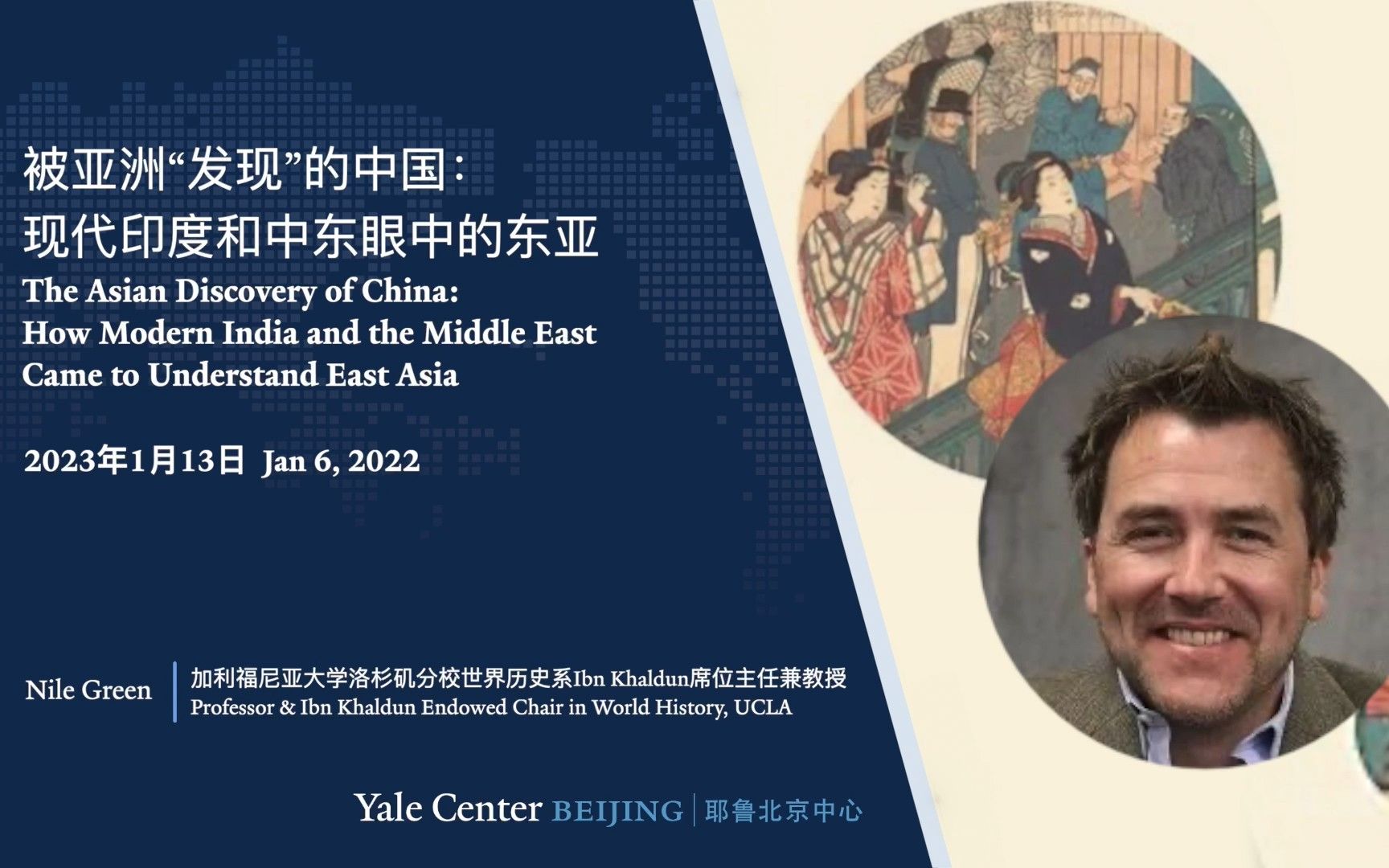
字幕摘录
| 时间 | 英文 | 中文 |
|---|---|---|
| 0:04 | Hello, my name is Devin Lau. | 你好 我叫刘德文 |
| 0:06 | I'm the assistant director for Yale Center Beijing, and very happy to have everybody here. | 我是耶鲁中心北京的助理主任 很高兴大家能来 |
| 0:15 | The rare occasion that we can have the timing just right so that we can get East Coast, West Coast, and China and I think we also have people joining us from Singapore and India. | 难得的机会,我们可以有合适的时机, 这样我们就可以到达东海岸,西海岸, 和中国。 我认为我们也有来自新加坡和印度的人加入。 |
| 0:28 | Probably not Europe, or else I guess they'd be very dedicated to this. | 可能不是欧洲, 否则我猜他们会非常致力于这个。 |
| 0:34 | But good to see everybody. | 但很高兴见到大家。 |
| 0:36 | Welcome again to this event on the Asian discovery of China how modern India and the Middle East came to understand East Asia. | 再次欢迎这次关于亚洲发现中国的事件 现代印度和中东是如何理解东亚的 |
| 0:43 | Special welcome to people who are joining us via RASBJ, as well as the Yale clubs throughout Asia. | 特别欢迎通过RASBJ加入我们的人,以及亚洲各地的耶鲁俱乐部. |
| 0:51 | And this is part of a series that Yale Center Beijing has been doing with Yale University Press to highlight some of the books that are coming out of the press. | 这也是耶鲁中心北京与耶鲁大学出版社合作的系列作品的一部分,以彰显出报界的一些书籍. |
| 1:00 | And we're especially excited for today because obviously being based in China. | 我们今天特别兴奋 因为显然总部设在中国。 |
| 1:07 | This book is very relevant. | 这本书非常相关. |
展开字幕全文(299 条)
| 序号 | 英文 | 中文 |
|---|---|---|
| 1 | Hello, my name is Devin Lau. | 你好 我叫刘德文 |
| 2 | I'm the assistant director for Yale Center Beijing, and very happy to have everybody here. | 我是耶鲁中心北京的助理主任 很高兴大家能来 |
| 3 | The rare occasion that we can have the timing just right so that we can get East Coast, West Coast, and China and I think we also have people joining us from Singapore and India. | 难得的机会,我们可以有合适的时机, 这样我们就可以到达东海岸,西海岸, 和中国。 我认为我们也有来自新加坡和印度的人加入。 |
| 4 | Probably not Europe, or else I guess they'd be very dedicated to this. | 可能不是欧洲, 否则我猜他们会非常致力于这个。 |
| 5 | But good to see everybody. | 但很高兴见到大家。 |
| 6 | Welcome again to this event on the Asian discovery of China how modern India and the Middle East came to understand East Asia. | 再次欢迎这次关于亚洲发现中国的事件 现代印度和中东是如何理解东亚的 |
| 7 | Special welcome to people who are joining us via RASBJ, as well as the Yale clubs throughout Asia. | 特别欢迎通过RASBJ加入我们的人,以及亚洲各地的耶鲁俱乐部. |
| 8 | And this is part of a series that Yale Center Beijing has been doing with Yale University Press to highlight some of the books that are coming out of the press. | 这也是耶鲁中心北京与耶鲁大学出版社合作的系列作品的一部分,以彰显出报界的一些书籍. |
| 9 | And we're especially excited for today because obviously being based in China. | 我们今天特别兴奋 因为显然总部设在中国。 |
| 10 | This book is very relevant. | 这本书非常相关. |
| 11 | So for those of you that are new here, Yale Center Beijing is Yale's only university wide center outside of the US, and we host many programs and events, such as today's to convene thought leaders from all sectors of academia, business, government, etc. | 所以对于你们这些新人来说,耶鲁北京中心是耶鲁唯一一个美国以外的大学宽中心,我们主办许多节目和活动,比如今天的节目,召集学术界,商界,政府等各方面的思想领袖. |
| 12 | To discuss the most cutting edge interesting and important matters facing our world. | 讨论我们世界面临的最尖端的有趣和重要的问题。 |
| 13 | Today we're very grateful to be able to invite Professor now green to speak about his new book, which is published by Yale University Press called how Asia found herself, a story of intercultural understanding the book explores the dramatic story of cross | 今天,我们非常感激能够邀请现在的绿色教授 谈论他的新书, 由耶鲁大学出版社出版, 名为“亚洲如何发现自己”, |
| 14 | knowledge on the world's largest continent in the century from around 1840 to 1940 when empire based globalization caused an Asian communications revolution. | 从1840年左右到1940年,当帝国的全球化引发了一场亚洲通讯革命时,对本世纪世界最大的大陆的知识。 |
| 15 | And today's talk will particularly focus on China's relations with other Asian regions in the first age of modern globalization and understanding and misunderstandings of China that emerged during that period of time. | 而今天的谈话将特别着重于中国与其他亚洲地区在现代全球化的第一个时代的关系,以及那个时期出现的对中国的理解和误解. |
| 16 | Let me introduce our speaker and then I'll turn things over to him. | 让我介绍一下我们的演讲人 然后把事情交给他 |
| 17 | Professor now green is a prize winning author and former Guggenheim fellow with degrees from King's College, Cambridge, as well as SOS. | 现在的Green教授是一个获奖作者和前古根海姆研究员,获得剑桥国王学院以及SOS的学位. |
| 18 | He holds the event called them endowed chair in world history at the University of California Los Angeles, and was the founding director of the UCLA program on Central Asia. | 他在加州大学洛杉矶分校举办这个活动, 被称为世界史上杰出的讲座, |
| 19 | He serves on various editorial and advisory boards. | 他在各种编辑和咨询委员会任职。 |
| 20 | His previous book Bombay Islam, the religious economy of the West Indian Ocean won multiple awards, and he also has two other, maybe more than two but two that caught my attention. | 他之前的著作"孟买伊斯兰教",西印度洋的宗教经济获得了多个奖项,他还有另外两个,也许两个以上,但两个引起了我的注意. |
| 21 | The love of strangers what six Muslim students learned in Jane Austen's London, as well as global Islam, a short introduction, and after decades of traveling and studying the cultures that he describes. | 六名穆斯林学生在伦敦的珍奥斯汀中学到的陌生人的爱, 以及全球的伊斯兰教, 一个简短的介绍, 经过几十年的旅行和研究,他所描述的文化。 |
| 22 | He wrote his latest book which I mentioned, published by Yale University Press. | 他写了最新一书,我提到,耶鲁大学出版社出版。 |
| 23 | So today we'll have Professor now green talk to us, share about his book and focus in on Asia and China, and it'll be about 30 to 40 minutes I think and then we'll turn | 今天我们让教授和我们谈绿色话题 分享他的书 关注亚洲和中国 我想大概有30到40分钟 |
| 24 | things over to q amp a from the audience so if you have questions, please feel free to enter them in the chat box and all my best to sort of collate them and sort of have a good q amp a session at the end. | 如果有问题,请随意进入聊天箱 并尽我所能整理一下,最后会有一个很好的q an会话。 |
| 25 | And then of course at the end you can also raise your hand and I'd be happy to call on you to interact directly with Professor green. | 当然,最后你也可以举起手来, 我很乐意呼吁你直接与绿色教授互动。 |
| 26 | So thank you again for joining us, and I'll turn things over to Professor green. | 再次感谢你加入我们 我会把事情交给绿色教授 |
| 27 | Well, thank you so much, Devin for that very generous introduction and thank you again for the invitation. | 非常感谢你,德文 做了非常慷慨的介绍 再次感谢你的邀请 |
| 28 | Hello and ni hao it's a real pleasure to be speaking to all of you whether in, in China and Southeast Asia and Singapore across the US or Europe wherever | 大家好,我们很高兴能和你们讲话 不管是在中国、东南亚、新加坡、美国还是欧洲 |
| 29 | you may be good morning good evening. | 早上好,晚上好,谢谢 |
| 30 | Well today I'll be speaking then about a part a major part of my new book and things I've been thinking about for quite a few years now since I made my first travels into East Asia to Japan and to to China around a decade ago. | 今天,我将谈论我新书的 一部分, 和很多年以来我一直在思考的事情, 自从我第一次到东亚去日本和中国 大约十年前。 |
| 31 | And as I was faced with with my own attempts to understand and my embattlement really having spent several decades traveling other parts of Asia, I began to wonder how did other Asians in the periods I studied the 18th 19th 20th century. | 当我面对我自己的尝试 和我的战斗 真正花了几十年 旅行亚洲的其他地区, 我开始怀疑其他亚洲人 如何在我的研究 18 19 20 世纪。 |
| 32 | How did they understand East Asia, and this then brought me to the questions really that I'm looking at in my book, how was East Asia, understood by people traveling from or indeed writing from writing in the languages of South and West Asia, which is to | 他们是如何理解东亚的, 然后这让我想到我书中真正研究的问题, 东亚是如何被理解的, 被那些来自或者确实来自写作 南亚和西亚语言的人所理解, |
| 33 | and for days for today's purposes Chinese cultural and historical and linguistic traditions, understood in India, and the Middle East. | 并且为了今天的目的,为了几天,印度和中东所理解的中国文化、历史和语言传统。 |
| 34 | So, my core questions then. | 那么,我的核心问题。 |
| 35 | So, one of the things I began with and I think it's really important to to bring up in any of the discussions that we so often have now of into Asian understanding is whether how we think about Asia, because of course Asia is ultimately in or was began it | 因此,我开始的事情之一 我认为,真正重要的是 在任何讨论 我们经常有 现在亚洲的理解, |
| 36 | life as a European concept as an ancient Greek concept and word. | 生活作为一个欧洲的概念,作为一个古希腊的概念和文字. |
| 37 | It was an ethic and external concept that through a series of interactions between Europe and different regions of the continent designated Asia. | 这是一个伦理和外部概念,通过欧洲与非洲大陆不同区域之间的一系列互动,它指定了亚洲。 |
| 38 | So, this external etiquette term, Asia came to be borrowed came to be an emic term in different languages of Asia came to be us here in the languages of the Middle East, Persian, Arabic, Turkish, etc. | 因此,这个外来的语气学术语,亚洲被借来, 成为亚洲不同语言的缩写词, 我们在这里用的是中东,波斯语,阿拉伯语,土耳其语等语言。 |
| 39 | came to be us here, of course, in Chinese or Yaja in, sorry, Asia in Japanese or Asia in languages such as Gujarati and Bengali. | 当然,我们在这里,在中文或雅雅语中,在日本或亚洲,在古吉拉特语和孟加拉语中。 |
| 40 | And I begin my explorations in the book by really kind of setting up this journey there through a series of translations and through the beginnings of the printing in Middle Eastern and South Asian languages, and indeed the printing of not just atlases su | 我开始在书中探索 通过一系列的翻译 以及中东和南亚语言的 印刷开始 |
| 41 | with the word Asia introducing the term Asia, but also a whole series of translations of geographical and works and maps into other languages. | 与"亚洲"一词一起引入了"亚洲"一词,同时也将地理,作品和地图翻译为其他语言的全系列. |
| 42 | What we can see here, of course, is the famous Kunyu Wang Wu Quan Tu, the map of 10,000 countries of the earth, the translation of Matteo Ricci's famous map into Chinese in 1602. | 当然,我们在这里看到的是著名的昆玉王吴匡图,万国图,马铁尔·里契的著名地图在1602年翻译成中文. |
| 43 | One of the earliest points then in which we see the term Asia moving into the Asian continent. | 当时我们看到亚洲一词进入亚洲大陆的最早点之一。 |
| 44 | At the western end of the continent then, somewhat later in the 18th century, we have the translation of the 17th century famous maps of Mercator, the Dutch geographer, Dutch cartographer being translated and then printed with the beginnings of printing i | 当时大陆西端,在18世纪晚期,我们有荷兰地理学家,荷兰制图学家默卡托尔的17世纪著名地图的翻译,然后随着18世纪中叶开始印刷而印刷. |
| 45 | And here we see a map of Haritai Asia, the continent of Asia. | 这里,我们看到一张亚洲大陆哈里泰亚洲的地图。 |
| 46 | Now, it's really, however, in the 19th and the 20th century that the term Asia picks up more momentum across the continent itself, not least through what I describe as an Asian communications revolution. | 然而,正是在19世纪和20世纪,亚洲一词在整个大陆本身,尤其是通过我所说的亚洲传播革命,获得了更多的动力。 |
| 47 | But through the adaptation of new forms of printing, whether from Europe or indeed through all sorts of intermediaries, we start to have then what I call an Asian wide then public sphere, albeit one which is divided into many different linguistic channels | 但是,通过改编新的印刷形式, 无论是从欧洲还是通过各种中介, 我们开始拥有一个我称之为亚洲广泛的公共领域, 尽管它被分成许多不同的语言渠道。 |
| 48 | And one of the things I'm looking at then is not only the translation of terms such as Asia into Asian languages, but also the challenges and the opportunities that came with this new public sphere of circulating texts that were printed and mass printed. | 当时我所关注的其中一件事, 不仅是将亚洲等术语翻译成亚洲语言, 也带来了挑战与机遇, |
| 49 | The possibilities and challenges of translation between different Asian languages of then of the transmission of knowledge and intercultural, inter-Asian understanding between different regions then of that great continent being called Asia, Asia, Asia, A | 翻译亚洲不同语言的可能性和挑战,即当时知识传播和不同文化间交流,以及当时该大大陆不同区域之间的亚洲理解,被称为亚洲、亚洲、亚洲、亚洲等。 |
| 50 | But let me start off before I jump into the more of the details and the case study then what was known or what became known, understood or misunderstood about China in text printed in the Middle East and South Asia in the 19th through the first half of th | 但是,让我在进入更多的细节和案例研究之前开始,然后在19世纪至20世纪上半叶的中东和南亚印刷的文字中,了解或误解中国的已知或已知。 |
| 51 | What I think is a misleading concept then as much as we must be careful with the term Asia itself, we must be even more careful with that term the Silk Road, which I think in many ways has dominated in the last 30 years our understanding of how we think a | 我认为这是一个误导性的概念,而我们必须谨慎地对待亚洲一词本身,我们必须更加谨慎地对待丝绸之路一词,我认为在过去30年中,丝绸之路在许多方面主导了我们对亚洲间互动的理解。 |
| 52 | Now, as I see it, the Silk Road itself is a concept term that is part of these 19th century, communicational, steamship, railroad, printing press, the global and particularly Asian communication revolution of the 19th century. | 现在,在我看来,丝绸之路本身是一个概念术语,是这19世纪的一部分,通信,蒸汽船,铁路,印刷机,全球,特别是19世纪的亚洲通信革命. |
| 53 | Because of many of you might know the term Silk Road or in its original German form the Seidenstraße in the plural was invented by the German geologist Baron von Richthofen who has been employed by the late Qing government to find whole deposits to make a | 因为你们中许多人可能知道丝绸之路一词或复数中原有的德文形式"Seidenstraße"是德国地质学家冯·里希托芬(英语:Von Richthofen)发明的,他受雇于晚清政府,寻找完整的矿藏,使从北京到西面的清帝国各省的铁路成为可能. |
| 54 | And from there the term gradually was translated into other languages, particularly really only 60 years later when Richthofen's students, the Swedish geographer and traveller Sven Heyden, wrote his famous Swedish book, Seidenwagen in 1930, which was then | 并且从那里开始,这个词逐渐被翻译成其他语言,特别是仅仅60年后,里希托芬的学生,瑞典地理学家和旅行家斯文·海登(Sven Heyden)于1930年写下了他著名的瑞典书"塞登瓦根"(Seidenwagen),后来在1930年代被翻译成英语,后来又被翻译成日语,非常早,但后来更早被翻译成亚洲其他语言. |
| 55 | And then there's also Tariq al-Harir, Rahi Abrishan in Persian, appearing maybe only in the 1960s or so, Tariq al-Harir in Arabic, really only appearing as far as I can tell in any significant way from the early 1990s, and of course Shi Chouzhi Lu in Chin | 还有塔里克·哈瑞尔(Tariq al-Harir),拉希·阿布里希安(Rahi Abrishian)在波斯语中出现,也许只在20世纪60年代左右,塔里克·哈瑞尔(Tariq al-Harir)在阿拉伯语中出现,实际上只有我从20世纪90年代初就能够明显看出的,当然还有史·丘兹·卢(Shi Chouzhi Lu)在中文中出现,但我认为这种新论使我们误解了通过丝绸之路在亚洲的长期持续互动. |
| 56 | that have continued from the period of the Han and Roman connection across Asia, but my story actually is one of much more periods of intervals, of broken, of miscommunications and misunderstandings as much as understandings. | 但实际上,我的故事是一段 间隔的时间,断裂的时间, 错误的沟通和误解的时间 和理解的时间一样多。 |
| 57 | And indeed it's a story of interconnected ports of understanding across a maritime public sphere, in which connections across overland, so-called Silk Roots, were largely insignificant in this period that saw this explosion then of communications and unde | 事实上,这是一个跨越海洋公共领域的互联互通的理解港的故事, 在这个故事中,陆路的互联互通, 所谓的丝绸根系, 基本上在这个时期是微不足道的, 在这个时期里, 我们看到了中国的通讯、理解和陈述, 以不同的语言。 |
| 58 | So certainly, there's a great deal of scholarship, very valuable scholarship about the travels or suspicions about the travels of Ibn Battuta from North Africa through the Middle East, through India, of course to China, or indeed of the interactions betwe | 因此,当然,对于伊本·巴图塔从北非经中东,经印度,当然到中国的旅行,或者对于明中国与帖木儿阿富汗和伊朗在13世纪,特别是14世纪的互动,都有大量的奖学金,非常宝贵的奖学金. |
| 59 | But these connections didn't continue. | 但是这些联系并没有继续. |
| 60 | The knowledge that was written in manuscripts in this period was largely unknown. | 这一时期用手稿书写的知识基本不详. |
| 61 | It's only actually in the mid-19th century that Ibn Battuta is first printed in Arabic. | 实际上直到19世纪中叶,伊本·巴图塔才首次用阿拉伯语印刷. |
| 62 | It's only translated into major languages of other regions of Asia, such as Urdu of India, Pakistan in the 1890s, and only translated and in a sense rediscovered in China, Ibn Battuta in the 1920s. | 它只被翻译成亚洲其他地区的主要语言,如1890年代的印度乌尔都语,巴基斯坦语,并且只在中国翻译和某种意义上重新发现,1920年代的伊本·巴图塔. |
| 63 | So we must be careful then about thinking of these continuities of inter-Asian connections and particularly inter-Asian understanding, whether from the ancient period of the Silk Road or the medieval period of Ibn Battuta and the Ming-Timurid interactions | 因此,我们必须仔细考虑这些亚洲间联系的连续性,特别是亚洲间的理解,无论是从丝绸之路的古代时期,还是伊本·巴特图塔的中世纪时期和明-蒂穆里德的相互作用. |
| 64 | So in my book, I try to discover, try to find, try to locate a series of texts printed in different Middle Eastern and South Asian languages that describe China, but which are also printed and therefore publicly available, whether as books or journal or n | 因此,在我的书中,我试图发现,尝试找到,尝试找到一系列用不同的中东和南亚语言印刷的描述中国的文本,这些文本也是印刷的,因此是公开的,无论是书籍,期刊还是报纸文章都是这个新的公共领域的一部分. |
| 65 | And I was particularly interested in trying to find translations between different Asian languages, especially from Chinese, into the languages of India, Central Asia or the Middle East. | 我特别有兴趣寻找不同亚洲语言之间的译本,特别是中文译本,译成印度,中亚或中东的语言. |
| 66 | One of the most fascinating texts I found was this Persian text printed in Calcutta and Bombay in the 1880s and 90s, which describes in very considerable detail the Chinese Empire as was. | 我发现的最令人着迷的文本之一是1880年代和90年代在加尔各答和孟买印刷的波斯文本,它非常详细地描述了当时的中华帝国. |
| 67 | But it was only as I began reading it slowly and gradually and trying to work out as in a sense its meaning, its content, a penny slowly began to drop. | 但它只是当我开始 慢慢地阅读它, 并试图工作 在一个意义上 它的意义,内容, 一分钱 开始慢慢下降。 |
| 68 | Could it be, could it be, could it possibly be that this was a translation of Matteo Ricci's famous Latin account of China? | 这会不会是Matteo Ricci对中国的著名拉丁语说法的翻译? |
| 69 | And indeed it was. | 确实如此。 |
| 70 | And as I uncovered and realized and described ultimately in detail, what this was, was Matteo Ricci famously left his account of China, of Ming China, working with the Confucian scholars whose works he translated. | 正如我发现和意识到, 并最终详细描述, 这是马特奥·里奇的名声 留下了他对中国的叙述, 对明中国的叙述, 与儒家学者合作, 他翻译了他们的著作。 |
| 71 | He wrote his diaries of China in Venetian Italian dialect. | 他用威尼斯意大利方言撰写了他的中国日记. |
| 72 | They were taken by a fellow Dutch Jesuit to Europe, translated into Latin, published in Augsburg in Germany, a copy of that Latin text found its way to Mughal Delhi in the 1650s or 60s. | 他们被荷兰耶稣会会士带到欧洲,被翻译成拉丁文,在德国的奥格斯堡出版,1650年代或60年代,该拉丁文的复制品找到了通往莫卧儿德里的路. |
| 73 | There was translated by an Iranian Muslim convert to Christianity, translated with Jesuit help into Persian. | 有一位伊朗穆斯林皈依基督教,在耶稣会的帮助下翻译为波斯语. |
| 74 | That manuscript perhaps circulated, perhaps was forgotten for several centuries, but was found in the 1880s and 90s by this new generation of publishers, including | 这本手稿也许已经流传了几个世纪,也许被遗忘了,但是在1880年代和90年代被这新一代的出版商发现,其中包括: |
| 75 | an Iranian exile publisher who thought in this period when Indians and Iranians were trading with Shanghai and Hong Kong and other treaty ports that this might be a valuable commercial project to publish this book. | 伊朗流亡出版商认为,在这段时期,印度人和伊朗人与上海、香港和其他条约港口进行贸易,这可能是出版这本书的宝贵商业项目。 |
| 76 | But of course, by this point, so much of the information about China was no longer of any, as it were, contemporary commercial value. | 但当然,到现在,关于中国的很多信息已经不再是当代的商业价值。 |
| 77 | But nonetheless, this is in many ways the most detailed text up to this point that I found in a South Asian or Middle Eastern language. | 然而,这在许多方面是我在南亚或中东语言中找到的最详细的案文。 |
| 78 | Another somewhat earlier text that printed, written later, but printed earlier, earlier was the Tariq Imam al-Khichin, voluminous, two volume, very detailed history of the Chinese Empire. | 另一个稍早一点的文字,后来印了下来,但更早一点印了下来,是塔里克·伊玛目·希钦(Tariq Imam al-Khichin),篇幅庞大,两卷,非常详尽的中华帝国历史. |
| 79 | And this book was published in Calcutta in the 18, I actually forget, 1840s or 1854, if I remember correctly. | 这本书是18年在加尔各答出版的, 我实际上忘记了,1840年代或1854年代, 如果我记得正确的话。 |
| 80 | Its author, though, was not an Indian. | 不过,其作者不是印度人。 |
| 81 | He was actually an Irishman working together with various Indian scholars, presumably for the East India Company. | 他实际上是一个爱尔兰人,与各种印度学者合作,推测是为东印度公司. |
| 82 | And what he drew together in this text were accounts of China previously written in Persian, previously written in Arabic, so those texts from the medieval Ming, Timurid connections, but particularly he drew on a series of translations of the classical | 而他在这个文本中拼凑出来的是以前用波斯语写成的中国的记述,以前用阿拉伯语写成的,所以那些来自中世纪明代,蒂穆里德联系的文字,但是他特别借鉴了一系列古典的译本. |
| 83 | Confucian canon that by this point been made by Jesuit and by the 1840s and 50s, the new Protestant missionaries to China, such as Medhurst, who had translated the Analects of Confucius, which were also published in Calcutta, albeit in English translation | 孔子舟说,到此为止,耶稣会和1840年,50年代,新教传教士梅德赫斯特等新人到中国传教,曾翻译过"孔子经"(Analections of Confucius),虽然有英文译本,但在加尔各答也出版过,还有著名经典,历史经典的舒静. |
| 84 | That have been attributed to Confucius. | 这都归功于孔子. |
| 85 | So through this kind of complex layering of translations, then we have what had been at this point, the most detailed account of China published in an Indian language. | 因此,通过这种复杂的翻译层次, 然后我们掌握了当时的情况, 这是中国用印度语言出版的最为详细的介绍。 |
| 86 | A decade later, this Bengali text in the middle by Bandopadhyaya, an important Bengali intellectual, the Chinner Etihasa, which literally means the history of China, but again actually drawing not directly on Chinese language accounts, but using a series | 十年后,班多帕迪亚亚(Bandopadhyaya)在中间的这个孟加拉语文本,是孟加拉语的重要知识分子钦纳·伊蒂哈萨(Chinner Etihasa),字面意思是中国的历史,但实际上并没有直接从汉语的帐号上画出来,而是使用一系列的翻译来翻译. |
| 87 | English from Chinese and then from English into Bengali, a phenomenon very familiar to translators and translation theory, known as the use of a pivot language. | 英语从中文开始,然后从英文变成孟加拉语,这种现象对于翻译和翻译理论非常熟悉,被称为使用支点语言. |
| 88 | We do of course have a signaled here in this Gujarati letter from the top right, direct, as it were, communication links between China and India through comments. | 当然,我们在古吉拉特邦的这封信中,从右上方发出一个信号,通过评论来指导中国和印度之间的通信联系。 |
| 89 | And we also have, as found and studied by Michael O'Sullivan, now based at the European University Institute in Italy, a series of Gujarati accounts of China. | 正如现在设在意大利欧洲大学研究所的Michael O'Sullivan所发现和研究的那样,我们还掌握了一系列中国古吉拉特语的叙述。 |
| 90 | Some drawing on direct experience of merchants in China, some again drawing upon European translations. | 有的借鉴了中国商人的直接经验,有的再次借鉴了欧洲译文. |
| 91 | This is also a period through a dynamic I explore in my book, what I call the dialectic of discovery, the dialectic between projection of the self and appreciation of the other. | 这也是通过我书中探索的动态, 即我所说的发现的辩证法, 即自我投射与他人欣赏之间的辩证法。 |
| 92 | The projection of one Asian identity or one Asian culture, being part of an intellectual dialectic that then gradually, when sometimes immediately brings about an appreciation of the culture of the Asian other. | 一种亚洲特征或一种亚洲文化的投射,是知识辩证法的一部分,后来逐渐形成,有时会立即引起对另一种亚洲文化的欣赏. |
| 93 | So I also explore then a series of Buddhist Indian, as well as Sri Lankan Buddhist self projections into China, such as those by the famous Sri Lankan Buddhist missionary Angarika Dharmapala there on the left. | 因此,我还探索了当时一系列佛教印度人,以及斯里兰卡佛教自我投射到中国的情况,比如斯里兰卡著名的佛教传教士安加里卡·达马帕拉(英语:Angarika Dharmapala)在左边的描述. |
| 94 | Also the writings published in Shanghai of the famous Bengali Hindu scholar, proto-Hindu nationalist, one might say, and important early Indian sociologist Bono Benoit Kumar Sarkar, and his book, printed in Shanghai, describes the Chinese religion as he c | 在上海出版的还有著名的孟加拉印度教学者,原兴都民族主义者,可以说是印度早期重要的社会学家博诺·贝诺伊特·库马尔·萨卡尔(Bono Benoit Kumar Sarkar)的著作,以及他在上海出版的著作,其中描述的就是他所说的中国宗教,中国宗教是印度教的一种最终形式. |
| 95 | A self projection then that also came through a series of Indian Buddhist scholars, Indian scholars of Buddhism, who tried, particularly the members of the Greater India Society founded in Calcutta in the 1920s, that tried to understand Chinese history as | 当时的自我投影,也是通过一系列印度佛教学者,印度佛教学者尝试的,特别是20世纪20年代在加尔各答成立的大印度学会的成员,试图将中国历史理解为佛教大印度历史的一部分. |
| 96 | And yet the irony was that at the same period in which Chinese history is trying to be appreciated, or indeed claimed as a part of Indian history, whether Hindu or Buddhist Indian history, we have of course, famous and very distinguished Chinese scholars | 然而具有讽刺意味的是,在同一个时期,中国历史正在试图被赞赏,或者实际上声称是印度历史的一部分,无论是印度教还是佛教印度历史,我们当然有著名的和非常杰出的中国学者,如哲学家和印度哲学家,以及印度哲学家和印度哲学家。 |
| 97 | who at this point is writing his famous essay on the Indianization of China, in which he's claiming that is actually the reception of Indian knowledge, particularly Buddhism, that contributed to the suppression of China's indigenous scientific, philosophi | 他此时正在写他著名的关于中国印度化的散文,他在文中声称这实际上是印度知识的接受,特别是佛教的接受,这助长了对中国本土科学,哲学,知识传统的压制. |
| 98 | Great debates then about the meaning and value then, and the, as it were, who, as it were, who owned different cultures of Asia, whether Buddhism or otherwise. | 然后对当时的意义和价值,以及究竟是谁拥有亚洲的不同文化,无论是佛教还是其他文化,进行了大辩论。 |
| 99 | In trying then to find different linguistic texts then, particularly I was trying to find grammars and dictionaries, or glossaries, any kind of linguistic apparatus, lexicographical apparatus, one might say, that would allow then more direct and deeper cu | 那时我试图找到不同的语言文字, 特别是我试图找到语法和词典, 或词汇, 任何一种语言的机器, 词汇学的机器, 可以说, 这将允许更直接和更深入的文化交流 对历史的理解, |
| 100 | of different Asian regions in their own terms, in their own languages, that would of course then bypass the need for those pivot translations, relying on French, English, Latin, German, Russian, or indeed German texts about different regions of Asia, whic | 当然,它会绕过这些支点翻译的需要, 依靠法语、英语、拉丁语、德语、俄语, 乃至关于亚洲不同地区的德语文本, |
| 101 | One such example I found then was this interesting text, the Chini Zaban, as it's simply called, written here in Urdu as well as in Hindi, in the two scripts of the Hindi and Urdu major languages of northern India and what's now Pakistan. | 我当时发现的一个例子就是这个有趣的文本, Chini Zaban, 它被简单地称作,用乌尔都语和印地语写成, 印地语和乌尔都语两种印度北部主要语言的文字以及现在的巴基斯坦。 |
| 102 | And as the author of this then, this phrase book rather than a dictionary per se, Narayana Prasada, he was a military surgeon working in fact for the British Indian Army, the colonial army, which was then of course partly occupying parts of China through | 而作为这时的作者,这个短语书而不是词典本身,纳拉亚纳·普拉萨达,他是一个实际上为英属印度军队,殖民军队工作的军事外科医生,当时当然是通过"拳击起义"占领了中国部分地区. |
| 103 | And he explains in the introduction to this book that he had compiled it because there was no, otherwise no book about the Chinese language written in Hindi or Urdu, and certainly there was no other book that I've managed to find to contradict his claim. | 他在这本书的导言中解释说,他编纂这本书是因为没有,或者没有关于用印地语或乌尔都语写成的汉语的书,当然没有其他的书,我设法找到了与他的说法相矛盾的书. |
| 104 | But what we can see here reflected what I found in the couple of other Chinese and the few more particularly Japanese guides to Japanese and Chinese, which is the problem of the barriers of not only language, but the particularly challenging orthographic | 但是,我们在这里所看到的情况反映了我在其他中国人和少数日本人对日语和汉语的引导中发现的情况,这不仅是语言障碍的问题,而且是特别具有挑战性的正字形障碍。 |
| 105 | inter-Asian understanding, which is to say the challenges of different Asian writing systems. | 泛亚理解,即指不同亚洲书写系统的挑战. |
| 106 | In this way, inter-Asian understanding was in a sense the victim of the sheer cultural, literary wealth of the Asian continent. | 从某种意义上说,亚洲大陆纯粹的文化、文学财富是亚洲人之间的理解的受害者。 |
| 107 | There are quite simply far more literary traditions, far more literary languages, far more writing systems and alphabets across Asia than there are of course in Europe, which has one, two, three major writing systems, let's say, major alphabets. | 文学传统,文学语言,亚洲各地的书写体系和字母表都比欧洲当然要多得多,欧洲有一,二,三大书写体系,比如主要字母表. |
| 108 | So the challenge of inter-Asian understanding then, if we want to look at this, we really need to reckon with the problem of language, but also the problem of script. | 所以,亚洲间理解的挑战, 如果我们想研究这个问题, 我们真的需要考虑语言问题, 以及脚本问题。 |
| 109 | And so these texts when we do have a linguistic breakthrough, such as this language guide, it's only useful enough to be able to speak, presumably, Beijing, the spoken Beijing dialect. | 所以这些文字,当我们确实有了语言上的突破,比如这个语言指南,只有能够讲,大概是北京话,讲北京话的方言才有用. |
| 110 | But because the entire text is in Hindi and Urdu scripts, it wouldn't help anyone to be able to understand a single word written in Chinese. | 但由于整个文字都是印地语和乌尔都语的文字,因此无法帮助任何人理解一个用汉语写成的单词. |
| 111 | Similarly, of course, then with the language guides to spoken, but not to written Japanese, hence so often then the need for pivot text and translations. | 当然,同样地,还有语言指南来讲,而不是写日语,因此,往往需要主要文字和翻译。 |
| 112 | Nonetheless, by the time we get to the 1920s, we do start to have, not least through the rise of new, more or less improved universities in India, particularly the University of Calcutta and attempts at the Shantinikeyan University as well, established by | 尽管如此,到了20世纪20年代,我们确实开始有了印度新的、或多或少得到改进的大学,特别是加尔各答大学,以及拉宾德拉纳特·塔科雷建立的Shantinikeyan大学的尝试。 拉宾德拉纳特·塔科雷曾到中国旅行,他的作品被翻译成中文,再次通过枢机翻译。 |
| 113 | We start to have attempts to translate Chinese texts and indeed by attempts by Indian scholars, very successful attempts in the case of Professor Prabodchandra Bhakshi at the University of Calcutta to learn classical Chinese and to translate Chinese texts | 我们开始尝试翻译中文文本,印度学者也尝试翻译,加尔各答大学的普拉博德钱德拉·巴克希教授学习古典中文和翻译中文文本的努力非常成功。 |
| 114 | But again, here too, the text that Bhakshi and his affiliate members of the Great Indian Society were interested in were translations of the Chinese Buddhist canon or indeed translations of, he was trying to understand how, as it were, Chinese, sorry, San | 但是,同样在这里,Bhakshi和他的大印度学会的附属成员所感兴趣的文字是中国佛教教宗的译本,或确实是译本,他试图理解印度文是如何被翻译成中文的,如中文,对不起,梵文。 |
| 115 | So again, it's this sense of an understanding of China, an appreciation of China, but which was nonetheless a part of Indian history of Sanskrit Buddhist texts that have of course been famously taken to China by the ancient Chinese Buddhist scholars such | 故又说,是这种对中国的理解感,对中国的欣赏感,然而,印度梵语佛教文字史的一部分,当然被中国古代佛教学者如X桑赞等传入中国而得名. |
| 116 | But nonetheless, since Bhakshi had studied Chinese in Paris in particular, his translations were more often than not made into French rather than into his own first language, Bangla or Bengali. | 但尽管如此,由于巴克希在巴黎特别学习中文,他的译本往往被翻译成法语而不是自己的第一语言孟加拉语或孟加拉语. |
| 117 | Still, there were translations, at least I've managed to find, of Chinese texts, including the famous travelogue of Xuanzang, the great Buddhist scholar and traveler to India, and that's what we have here on the other side of the page. | 尽管如此,还是有译本,至少我已设法找到,包括著名的X赞游记,伟大的佛教学者和到印度的旅行家,这就是我们这里在另一页的作品. |
| 118 | A translation, as it says there nonetheless, not directly from the Chinese, but as it says on the title page, translated from the English. | 不过,正如上面所说的,译文并非直接来自中文,而是标题页上所说的英文译文。 |
| 119 | In this case then a translation, as far as I could work out, from the Reverend Beale's translation, which was itself at least partly based upon an earlier French translation. | 在此情况下,就我所能理解的而言,从Beale牧师的译本中译出一份译本,该译本本身至少部分基于早先的法文译本。 |
| 120 | So again, inter-Asian understanding comes often through these, as it were, a series of intermediary pivot languages, pivot translations, and indeed a complex intellectual geography that is not altogether direct in many cases. | 所以,亚洲之间的理解 往往通过这些,就像它曾经一样, 一系列中间枢轴语言, 枢轴翻译, 以及事实上复杂的知识地理, 在许多情况下并不完全直接。 |
| 121 | I did also find then from the mid 1930s, a translation, a complete translation of one of the works of the classical Confucian canon, which is to say the aforementioned classic of history, the Xujing. | 从1930年代中期起,我也确实找到一本译本,完整地翻译了古典儒家禅宗之一的著作,即前述历史经典"许京". |
| 122 | But here too, in this case then, a text translated by a university educated Indian literary scholar, Asad Ali Anwari, in this case too, this was a translation from an English translation by a rather curious figure, Walter Gorn Old, who was himself not a s | 但这里,在此情况下,还有一位受过大学教育的印度文学学者阿萨德·阿里·安瓦里(Asad Ali Anwari)翻译的文本,在此情况下,这个文本也是一位相当好奇的人物沃尔特·戈尔恩·奥德(Walter Gorn Old)的英文译本,他本人不是罪学家,也不是中国的学者. |
| 123 | He was in fact a member of the Theosophical Society, that great Victorian American and Russian founded occult society that did a great deal actually by various ways to enable inter-Asian understanding and inter-Asian appreciations of different Asian cultu | 事实上,他还是神学学会的成员,这个伟大的维多利亚时代的美国和俄罗斯创立的神秘社会实际上通过各种方式做了很多工作,使亚洲间理解和亚洲间对不同亚洲文化的欣赏,以及欧美新的欣赏,特别是对佛教的欣赏。 |
| 124 | But since Gorn Old himself wasn't a scholar of China, he based his translation upon an earlier missionary translation by Medhurst, the Protestant missionary, particularly to Singapore in fact. | 但自从葛恩之后 年老本人并非中国的学者,他的译名依据的是新教传教士梅德赫斯特(Medhurst)较早的传教士译名,实际上他特别前往新加坡. |
| 125 | So again, we have this series of pivot translations, and yet nonetheless, of course, does this in any way necessarily devalue what we have here, because in fact Anwari was a very careful scholar, even though he was not a sinologist. | 再说一遍,我们有这一系列关键译文, 然而,当然,这在任何方面都必然会贬低我们在这里所拥有的东西的价值, 因为事实上Anwari是一个非常仔细的学者, 尽管他不是一个罪人。 |
| 126 | He wrote alongside the translation into Urdu then of the Xujing, he accompanied his translation by a series of appendices that are around 150 or 200 pages long, in which he drew on a whole series of European language works to actually compare, critically | 他与当时的"许京人"的乌尔都语译本一起撰写了"许京人"的译本,并附上了一系列约150或200页的附录,其中他借鉴了一整套欧洲语言著作,以实际比较,批判性地比较了这个欧洲奖学金,实际上也引导他们向着更多的,因为它是, |
| 127 | inter-Asian language levels of literary appreciation, because by the 1930s, there were a series of Indian as well as of course Chinese and Japanese literary modernists who were very interested in one another's languages, one another's literatures, and one | 泛亚语的文学欣赏水平,因为到20世纪30年代,还有一系列印度人,当然还有中国和日本的文学现代主义者,对彼此的语言,文学,文学传统都非常感兴趣. |
| 128 | Of course, again, the famous travels to China, as well as Japan, of Rabindranath Chogor are the most studied example. | 当然,同样,著名的中国之旅以及日本的拉宾德拉纳特·乔戈尔(Rabindranath Chogor)是研究最多的一个例子. |
| 129 | But what was particularly interesting to me here, as I took a closer look there at this translation, was not only the uses of a pivot of pivot languages, the use of English or at least transliterations of Chinese terms into English, which would then be tr | 但是,我在这里特别感兴趣的是,我仔细地看了一下这一译文,不仅使用枢轴语言,使用英语或至少将汉语词汇译为英语,然后将汉语和汉语译为汉语。 |
| 130 | Confucian concepts and terms transliterated then into Urdu and then explained in Urdu, these attempts then to bring Chinese words into Urdu, into an Indian language, albeit via the mediation then of the Latin, the European script, the use of a pivot langu | 儒家的概念和术语后来转译为乌尔都语,然后在乌尔都语中解释,这些尝试将汉语词汇带入乌尔都语,变成印度语,尽管通过当时的拉丁文,欧洲文的调解,使用支点语言,然后试图创造. |
| 131 | in an Indian and particularly an Indo-Islamic language, Urdu, as well as a language widely read by many Hindus still in this period, to create, as it were, a sinological lexicon, a lexicon of Chinese terms in Chinese studies that nonetheless had to be exp | 以印度语,尤其是印度-伊斯兰教语言乌尔都语,以及这个时期许多印度教徒广泛阅读的一种语言,按照原样,在汉语研究中创立了一种辛亥语词典,是汉语术语的词典,但必须用印度文化术语来解释. |
| 132 | So I won't go into detail here, but this in other texts, one would find, as it were, in Middle Eastern texts too, China being explained in the terms of analogies to Hindu or Islamic theological conceptions that were the closest thing that the authors coul | 因此,我不会在这里详细讨论, 但是,在其它文本中, 人们会发现,像它一样, 在中东文本中, 中国被解释 类似印度教或伊斯兰神学的概念, 这是作者可以发现最接近中国的东西 |
| 133 | Confucianist, in this case, conceptions. | 儒家,在此情况下,是概念. |
| 134 | What also fascinated me too, particularly with the Shu Jing, was the great problem that had confronted European scholars, as well as Indian scholars, and not least Indian Muslim scholars, the great problem of the antiquity of Chinese history, particularly | 同样令我着迷的还有,尤其是舒静人,是欧洲学者以及印度学者,尤其是印度穆斯林学者遇到的大问题,是中国历史的古老问题,当然尤其是舒静人所表达的问题. |
| 135 | And this meant then that just as European Christian and indeed Jesuit scholars in the generations after Matteo Ricci had had to find a way of trying to at least first of all date the chronologies, provide a chronology in the European chronological system | 这就是说,正如Matteo Ricci之后的几代人中的欧洲基督徒和耶稣会学者一样,他们必须找到一种方法,设法至少首先与时间顺序进行约会,提供中国古代欧洲时间顺序制度中的一种时间顺序,但也为时间顺序进行尝试。 |
| 136 | Christian scholars, at least of the 17th, 18th, 19th, and indeed earlier 20th century, to try to reconcile the antiquity of the Chinese past with, of course, the biblical chronology, and particularly the biblical story of the flood. | 基督教学者,至少17世纪,18世纪,19世纪,甚至20世纪早期,试图调和中国古代的古代历史,当然还有圣经的纪年,尤其是关于洪水的圣经故事. |
| 137 | And for Muslim scholars, at least, this is on the one hand, acceptable, because the story of the flood and the story of Adam and Noah, Adam and Noah in the Quran, or indeed in other Islamic languages, are there in Islamic tradition as much as in Quranic t | 而对于穆斯林学者来说,这至少一方面是可以接受的,因为洪水的故事以及"古兰经"中的亚当和诺亚,亚当和诺亚的故事,甚至其他伊斯兰语言中,伊斯兰教传统和"古兰经"传统一样多,如同圣经和基督教传统一样多. |
| 138 | And yet, nonetheless, no Islamic language had developed or Islamic historians hadn't developed an equivalent dating system for ancient history, let alone ancient Chinese history, an equivalent to the BC, the before Christ system that European Christian hi | 然而,尽管如此,没有一个伊斯兰语言发展出来,或者伊斯兰历史学家还没有为古代历史发展出一个等效的约会制度,更不用说中国古代历史,相当于公元前的基督教制度,当然,欧洲基督教历史学家作为自己的基督教和犹太教-基督教历史的一部分,曾经有过这种制度. |
| 139 | What we find then in the Shujing translation into Urdu, as well as other texts written about Chinese or indeed Japanese ancient history, is the translation into Urdu, into Persian, into Arabic, into Ottoman Turkish, or modern Turkish, of the Christian dat | 在当时的舒京译为乌尔都语的译本中,以及其它关于汉语或日本古代历史的文字中,我们所发现的,是将基督教之前的BC的基督教约会系统译为乌尔都语,波斯语,阿拉伯语,奥斯曼土耳其语,或现代土耳其语,后来译为: |
| 140 | for example, becomes translated as before Christ. | 例如,像基督之前一样翻译。 |
| 141 | So in this way, we actually have in different regions of Asia, whether in India, or in Egypt, or in what's now Turkey or Iran or indeed Afghanistan, accounts of the Chinese and Japanese ancient past that are nonetheless using in Islamic texts, the Christi | 因此,实际上,我们在亚洲的不同地区, 无论是在印度,还是在埃及, 还是在现在的土耳其,伊朗,甚至阿富汗, 都记录了中国和日本的古代历史, |
| 142 | or before Christ BC. | 或者在基督公会之前 |
| 143 | So again, here, not so much a pivot language, but what I've coined a phrase I think of pivot chronologies that are used as well, showing us then the kind of complex intellectual journeys there of inter-Asian understanding. | 再说一遍,这里不是一个中枢语言, 而是我所发明的词语,我所想到的 中枢编年史,也被使用过, 向我们展示 那种复杂的知识历程 那里有亚洲之间的理解。 |
| 144 | But nonetheless, the tremendous barriers of language of script of trying to reconcile different theological as well as historiographical and philosophical traditions. | 然而,在文字语言中,试图调和不同神学以及历史和哲学传统的巨大障碍。 |
| 145 | These barriers, of course, were overcome, they were, as it were, capable of being overcome, as of course we've seen by many distinguished inter-Asian scholars, as it were, of the second half of the 20th century and from the 19th and 20th, 19th and 20th on | 当然,这些障碍已经克服了, 它们能够被克服, 正如许多杰出的亚洲学者所看到的那样, 20世纪下半叶, 特别是19世纪和20世纪, 19世纪和20世纪以后, 这些亚洲人之间的接触, 在蒸汽印刷时代, 以及当然的帝国时代, 都使我们得以克服。 |
| 146 | One such figure and one of the most remarkable such figures was known in Arabic, at least as Mohammed Makin or Mohammed Makin from China, Mohammed Makin the Chinese. | 其中一位和最杰出的一位是阿拉伯语,至少是来自中国的穆罕默德·马金或穆罕默德·马金,中国人穆罕默德·马金. |
| 147 | And I'm very grateful to my NYU colleagues to alert me to this text, very hard text to find now, the only copy I could find was actually the National University of Australia, but it's a truly remarkable text of inter-Asian understanding. | 我非常感谢纽约大学的同事 提醒我注意这个文本, 非常难找到的文本, 我所能找到的只有澳大利亚国立大学, 但它是一个真正令人瞩目的 泛亚理解文本。 |
| 148 | Because Mohammed Makin was actually a Hui Chinese Muslim, one of a group of Hui Chinese Muslim modernists, indeed nationalists and patriots, who went to study from China, went to study in India, and then went to study in Egypt in the 1920s and 30s. | 因为穆罕默德·马金其实是回族中国穆斯林,是回族中国穆斯林现代主义者,实为民族主义者和爱国者之一,他从中国留学,到印度留学,后于1920年代和30年代到埃及留学. |
| 149 | They went to study Arabic in particular to renew themselves with the structural sources of their faith, but in doing so, they actually became really key and masterly inter-Asian, as it were, interpreters. | 他们去学习阿拉伯语,特别是用他们信仰的结构性来源来更新自己,但是在这样做时,他们实际上成为真正关键和精通的亚洲人,就像当时那样,是翻译。 |
| 150 | In the case of Mohammed Makin, that as well as pursuing his Islamic and Arabic studies while in China, while in Cairo, he published using his earlier education in Chinese and classical Chinese, he made a translation of what's called here in the Arabic tex | 在穆罕默德·马金(Mohammed Makin)的例子中,除了在中国学习伊斯兰教和阿拉伯语之外,他还在开罗利用他早期的中文和古典中文教育发表著作,他还翻译了阿拉伯文中这里所说的"基塔布·哈瓦尔"一书. |
| 151 | So we have here the first, as far as knowledge tells us so far, it seems, the first direct translation of the Analects of Confucius from Chinese into Arabic. | 因此,我们这里有第一个,就目前为止的知识告诉我们,它似乎是第一个将孔子的"论语"(Analections of Confucius)从中文翻译成阿拉伯语的直接译本. |
| 152 | And yet here too, there were still signs of that early history of the pivot language of Latin, because the name underneath then is not Confucius, but it's Confucius. | 然而,在这里,仍然有拉丁语中枢语的早期历史迹象, 因为当时下面的名字不是孔子,而是孔子。 |
| 153 | So Confucius's name in its Latin version, which had already become by this point by the 1930s when this text was published, that was the name by which Confucius had become known in Arabic as much as in Latin and European languages. | 因此,孔子在拉丁文版本中的名字,到1930年代这个文本出版时,这个字母就已经变成了这个点,这就是孔子在阿拉伯语中与拉丁语和欧洲语中一样成为知名的名字. |
| 154 | There was also a translation, and not so much, well partially a translation, a book written, a 200 page book written in Urdu, which was really a history of the Chinese Muslims, written by another Chinese Hui scholar who went to study in India. | 也有译本,不甚多,部分译本,书本,200页书本用乌尔都语写成,其实是中国穆斯林的历史,是另一位赴印度留学的中国回族学者所写. |
| 155 | And he was studying Persian and Urdu and Arabic in India, and before he left, or just after he, well before he left, he wrote a 200 page history of China, and particularly the Chinese Muslims in Urdu. | 而他在印度学习波斯语,乌尔都语和阿拉伯语,在他离开之前,或者在他离开之前不久,他写了200页的中国历史,特别是乌尔都语中的中国穆斯林. |
| 156 | And we know it was written in Urdu by himself because his Urdu teachers wrote a testimonial on the front page, saying that he had studied Urdu for the last five years and he wrote this himself. | 我们知道这是自己在乌尔都语中写的,因为他的乌尔都语老师在头版上写了一篇证词,说他在过去五年里学习了乌尔都语,他自己也写了这个. |
| 157 | That extraordinary figure Badraddin Sini, as he was known in Arabic, Hui, oh sorry, forgive me, his name escapes me, his Chinese name escapes me, was such an extraordinary linguist that he also wrote a book, a very lengthy book of inter-Asian Islamic-Chin | 这个杰出的人物Badraddin Sini, 他用阿拉伯语, Hui, 哦,对不起,原谅我,他的名字逃避了我,他的中文名字逃避了我, 他是一个非常杰出的语言学家,他还用阿拉伯语写了一本书,一本关于亚洲伊斯兰-中国印度关系的长篇著作。 |
| 158 | He also subsequently became a Chinese diplomat to Iran in the 1930s. | 他也随后在1930年代成为中国驻伊朗外交官. |
| 159 | So essentially then, at least as I was able to find with my own research, members of one of China's smallest communities, the Hui Muslims of China, who became the most skilled inter-Asian interpreters and indeed translators. | 因此,基本上,至少我通过自己的研究能够找到,中国最小的一个社区——中国的回族穆斯林——的成员,他们成为了最熟练的亚洲间口译员和实际上的翻译. |
| 160 | By the 1930s, we also have translations directly from Chinese into Turkish as well, so rather by the 1940s, but these two came through a series of sometimes indirect intellectual routes. | 到1930年代,我们也有直接从中文译成土耳其文的译本,所以更确切地说,到1940年代,这两个人通过了一系列有时间接的知识分子路线. |
| 161 | By the 1930s then with the rise of Nazism in Germany, a series of German Jewish scholars or otherwise German anti-Nazi scholars sought refuge, of course, famously in many parts of the world. | 到1930年代,随着纳粹主义在德国的兴起,一系列德国犹太学者或其他德国反纳粹学者寻求避难,这当然是在世界许多地方著名的. |
| 162 | Shanghai itself, of course, gave refuge to a good many people, Jewish people in particular, fleeing the Nazis. | 当然,上海本身也为逃离纳粹的好人民,特别是犹太人民提供了庇护. |
| 163 | Others, of course, went to Harbin in northern China. | 其他人当然也去了中国北方的哈尔滨. |
| 164 | But a number of German scholars and indeed a very important German sonologist, Wolfram Eberhardt, sought refuge in Kemal Atatürk's modernizing Turkey of the 1930s. | 但是,一些德国学者,实际上还有一位非常重要的德国子学家沃尔夫拉姆·埃伯哈特(Wolfram Eberhardt)在1930年代凯末尔·阿塔图尔克的土耳其现代化中寻求庇护. |
| 165 | Eberhardt was given the position of the first chair of the Chinese language and Chinese studies at Ankara University. | 埃伯哈特被授予安卡拉大学中文和中文研究第一任教席. |
| 166 | He developed a system of transliterating Chinese into modern Turkish, and he trained a number of Chinese scholars, including Muhammed Nabi Özdedin, who then in 1946, after herself making her own journey to China, studying Chinese in China, as well as in A | 他发展了中文转写为现代土耳其语的系统,他培养了一些中国学者,包括穆哈迈德·纳比·厄兹德丁(Muhammed Nabi Özdedin),1946年她自己踏上中国之旅,在中国学习中文,以及安卡拉, |
| 167 | she made a direct translation of the Dao Dijing of Laozi into modern Turkish. | 她将老挝的道·迪京直接译为现代土耳其语. |
| 168 | She subsequently also in the early 1960s compiled a book, Qin Xieledi, a set of translations of classical Chinese poetry into modern Turkish, again, directly from the classical Chinese. | 她后来也在1960年代早期编纂了一本书"秦西立",这是一套古典中国诗歌的译本,又译为现代土耳其语,直接来自古典汉语. |
| 169 | Ah, and here indeed is Haiwell Yang, whose name I'd forgotten a moment ago, Badrdin Sini or Badrdin Sini, that other great Hui Chinese scholar, and there we have on the right his book that was written and published in Urdu, describing then the history of | 啊,这里确实是海威尔·杨, 他的名字我刚刚忘了,Badrdin Sini或Badrdin Sini, 其他伟大的Hui中国学者, 我们右边有他的书, 写和出版于乌尔都语, |
| 170 | and indeed the place of patriotic Chinese Muslims within the history of China across the centuries. | 以及中国历史上几个世纪以来爱国的中国穆斯林的地位。 |
| 171 | So, as I draw to my conclusions then, what I've been exploring in my book then really is the challenges of inter-Asian understanding, and indeed the challenges then for today's purposes of attempts in West Asia, the Middle East, South Asia, India, what's | 因此,当我得出我的结论时, 我在我的书里所探讨的 实际上是亚洲间理解的挑战, 以及今天的挑战, 也就是在西亚,中东,南亚,印度, 现在巴基斯坦,孟加拉国, 了解中国文化。 |
| 172 | Here we're dealing with what the University of Chicago scholar of Chinese, Huan Socius, called the Linguistic Great Wall of China, then the challenge then of trying to access, read, and indeed translate text written in classical or modern Chinese. | 我们在这里讨论的是芝加哥大学的中文学者万·社会(Huan Socious)所说的中国语言长城, 然后是试图获取,阅读, 以及翻译用古典或现代汉语写成的文字的挑战。 |
| 173 | We're moving then outside then the one region of Asia then, in a sense, the Confucian Sinosphere of Japan, of regions of Southeast Asia, Vietnam, etc. | 然后我们移到亚洲的一个地区, 从某种意义上讲,日本的儒家中层, 东南亚,越南等地区。 |
| 174 | And then when we reckon with inter-Asian understanding across the broader length of Asia, taking us all the way to Istanbul then, we find these difficulties that were nonetheless overcome through the use of pivot languages and pivot chronologies, | 然后,当我们考虑到泛泛亚洲的亚洲间理解, 把我们一路带到伊斯坦布尔, 我们发现这些困难 通过使用枢轴语言和枢轴时间, |
| 175 | and ultimately then through the learning then of Chinese, Japanese, or other languages then by different Asian scholars. | 最终通过中文、日文或其他语言的学习 由不同的亚洲学者学习 |
| 176 | Nonetheless, this left challenges of commensurability of whether relying upon Christian, Islamic, theosophical, or indeed Confucian status dynastic concepts in which to understand the Chinese past or indeed the Chinese present. | 尽管如此,这还是给是否依赖基督教、伊斯兰教、神学、乃至儒家地位等概念来理解中国的过去或现在的中国,留下了共鸣的挑战。 |
| 177 | This was the same then in other regions of Asia, whether trying to transfer knowledge of Buddhist or Daoist China, or whether trying to explain Shinto in South Asian or Middle Eastern languages. | 当时亚洲其他地区的情况也一样,无论是试图传授佛教或道教中国的知识,还是试图用南亚或中东语言解释神道。 |
| 178 | My findings then overall then are really reckoning with and trying to confront through finding a corpus of texts that were printed in the public sphere, publicly available, that represented what we can perhaps say with some evidence that was publicly avai | 然后,我的调查结果真的在考虑,并试图通过寻找一套在公共领域印刷的文本来对抗,这些文本是用一些证据也许可以说的,这些证据是亚洲关于亚洲不同地区的公开知识。 |
| 179 | And they show us then the challenges of inter-Asian understanding. | 他们向我们展示了亚洲间理解的挑战。 |
| 180 | The limits then of Pan-Asianism, of the famous phrase then of Okakura Kazuko uttered in 1903 in Calcutta that Asia is one. | 当时泛亚主义的界限,当时冈仓和子的名言,1903年在加尔各答说,亚洲是一体的。 |
| 181 | This is a wonderful idea, but of course, in many ways when we move from ideology to historical research, that unity was much harder, as it were, to make an intellectual, let alone a political reality. | 这是一种很好的想法,但是当然,在我们从意识形态走向历史研究的很多方面,这种统一是很难做到的,就如以前那样,使知识分子,更不用说政治现实了. |
| 182 | And then moving then from inter-Asian understanding, in many ways what I found was a series of intellectual networks that were as much Eurasian across the whole mega continent then of Eurasia, as much as they were solely about Asia. | 然后从亚洲之间的理解出发, 从很多方面来说,我发现的是一系列的知识网络, 这些知识网络在欧亚整个巨型大陆上, 和它们只涉及亚洲一样多。 |
| 183 | I will finish there. | 我会完成那里。 |
| 184 | I think I'm about on time. | 我想我很准时 |
| 185 | My allocated 40 minutes. | 我分配了40分钟 |
| 186 | Thank you very much for listening in and bearing with me and I will be very glad to take questions from you. | 非常感谢你们聆听我的发言和与我在一起,我将非常高兴地接受你们提出的问题。 |
| 187 | Thank you so much. | 非常感谢 |
| 188 | That was fascinating. | 真让人着迷 |
| 189 | So if people have questions, feel free to enter them into the chat box or raise your hand and I'll be happy to call on people. | 所以,如果人们有问题,可以随意进入聊天箱,或者举起你的手,我会很高兴地召唤人们. |
| 190 | So we'll start with Edith. | 我们从伊迪丝开始 |
| 191 | Yeah. | 对 |
| 192 | Hi. | 顿 |
| 193 | This is kind of a very fascinating take on Pan-Asianism, which, as you say, has so often been subject to generalities. | 这是泛亚主义的一个非常吸引人的观点, 正如你所说的,泛亚主义经常受到泛泛论的制约。 |
| 194 | It also coincides very well with late 19th century and early 20th century history, where basically the Chinese | 也与19世纪末和20世纪初的历史非常吻合,这里基本上有中国人 |
| 195 | view Japan as a center of translation of Western learning and therefore took advantage of this sort of pivot language concept to reintroduce Western language and Western concepts into Chinese. | 将日本视为西方学习的翻译中心,因此利用这种支点语言概念,将西方语言和西方概念重新引入中文. |
| 196 | So my question, though, is, if anything, other than the one Muslim scholar, was there any effort to sort of go in the other direction? | 因此,我的问题是,除了一位穆斯林学者之外, 是否有人试图走向另一个方向? |
| 197 | I mean, Turkey was a modernizing force in that same time period, late 19th century and early 20th century. | 土耳其是同一时期的现代化力量 19世纪末20世纪初 |
| 198 | If you move the clock, most of your research seems concentrated in mid to late 19th century, but if you look at that modernizing period in East Asia, | 如果你移动时钟, 你的多数研究似乎集中在19世纪中后期, 但是如果你看看东亚的现代化时期, |
| 199 | is there anything more to say about these interactions? | 关于这些互动,还有什么可说的吗? |
| 200 | You mentioned Rabindranath Tagore's book. | 你提到拉宾德拉纳斯·塔戈尔的书 |
| 201 | I'm sorry to say I haven't read that, but that seems like a sort of an example of interaction coming out of the modernization drive. | 很抱歉,我还没读到这个, 但是这似乎是从现代化驱动器中产生互动的一个例子。 |
| 202 | And so just curious if there are others. | 所以好奇的是,如果还有其他人。 |
| 203 | Yeah, thank you, Professor Terry so much for your comments and your question. | 谢谢你,泰瑞教授 这么多的评论和问题。 |
| 204 | So yes, absolutely. | 所以,是的,绝对。 |
| 205 | I mean, you're quite right. | 你说得对 |
| 206 | I mean, the period I look at in the book really is the period of, I'm primarily guided really by 1840s onwards when we start to have printing really that takes off in the Middle East and South Asia that we don't have before then. | 我的意思是,我从书里看到的这段时期, 主要是1840年代开始, 那时我们开始印刷, 在中东和南亚,我们还没有。 |
| 207 | And also bring in Afghanistan and other regions of Central Asia where printing being is in that period. | 还将阿富汗和中亚其他地区纳入这一时期的印刷工作。 |
| 208 | And then of course with the, in the mid 19th century is exploring Christopher Reed's wonderful book Gutenberg in China, we have a sort of a new Chinese printing revolution too with the adoption and the adaptation of typography and lithography. | 当然,随着19世纪中叶 克里斯托弗·里德的优秀著作"古腾堡"在中国的探索, 我们有了一种新的中国印刷革命, 通过和修改了印刷和印刷。 |
| 209 | So that's when I'm looking this period that we do have, you know, books in the public sphere. | 那时我正在寻找这个时期, 我们确实有,你知道的, 书籍在公共领域。 |
| 210 | And that's what I'm trying to look at not just one, you know, let's say one merchant or five merchants went to China and came back. | 且我今试看,不只看一个,不如说一个商人或五个商人到中国,又回来. |
| 211 | Well, great, but did how you know did they spread that knowledge that understanding to other people. | 好吧,很好,但你怎么知道 他们把知识传播给别人。 |
| 212 | So I'm trying to go beyond let's say the often many ways the, you know, they sometimes the hackneyed figure of world history the merchants the Marco Polos and, you know, the Asian equivalents to actually look about knowledge in the public sphere. | 因此,我试图超越许多方法, 比如说,他们有时是世界历史的黑客人物, 商人马可·波洛斯, 和,你知道,亚洲的等价物, 来看待公共领域的知识。 |
| 213 | So that's the starting date, but certainly you're absolutely right with your with the instinct behind your question that by the 1920s and 30s, and certainly really into the 40s to the of course World War Two of course enormously complicates this transmiss | 所以这是开始的日期, 但当然你完全正确 用你的本能 背后的问题, 到20世纪20年代和30年代, 当然真的进入40年代 当然,二战 使这种知识的传递, |
| 214 | Let's say cooperative parts in some directions. | 不如说合作的部分 在某些方向。 |
| 215 | So yeah, there's a great deal of interest between many modernists. | 因此,许多现代主义者之间有着巨大的兴趣. |
| 216 | But again, as I sort of hinted with, with who show or indeed with with to go when to go is going to China and Japan, he's celebrating the ancient | 但是,正如我所暗示的, 与谁显示或确实与 去何时要去中国和日本, |
| 217 | spiritual traditions of Asia that he thinks will hold Asia together and the kind of spiritual ecumenism, if you like. | 他所认为的亚洲的精神传统 将支撑亚洲 以及那种精神上的全基督教,如果你喜欢的话。 |
| 218 | But when he's meeting and this I'm drawing here on the work of various Chinese and Indian and other scholars of to go in China and to go in Japan. | 但当他见面和这时,我在这里借鉴了中国和印度的众多学者和其他学者在中国和日本的工作. |
| 219 | And he often met a very hostile reception, because the very literary modernist who he was meeting and indeed in some cases, young communists were actually saying well no no no we've had enough of you we don't want you to come electress about how great | 他经常遇到一个非常充满敌意的接待, 因为他正在遇到的非常文学的现代主义者, 实际上在某些情况下, 年轻的共产主义者实际上在说... |
| 220 | Confucianism is we've just got rid of that, you know revolution you know kind of getting rid of the, you know, the Confucianist kind of examination system, etc. | 儒家主义就是我们刚刚摆脱了这个现象,你知道那种革命,你知道一种摆脱儒家那种考试制度,等等. |
| 221 | And so, so, you know, there are cases of that and indeed you know attempts to project a sort of a Sri Lankan reform Buddhism into China and Japan, and again even local Buddhist don't want that even those who are defending Buddhism. | 所以,你知道,有这样的事例,你确实知道,有人试图将某种斯里兰卡佛教改革投向中国和日本,甚至当地佛教也不希望那些捍卫佛教的人这样做。 |
| 222 | And of course, by the 1920s and 30s in Japan, Japan is is downplaying it in many ways suppressing its own Buddhist tradition in in in replace of Shinto, but the various Indian scholars in particular who are turning towards an interest in Japan are interes | 当然,到20世纪20年代和30年代,日本在很多方面都在压制自己的佛教传统,以取代神道,但印度的各种学者,特别是转向日本兴趣的学者,对神道感兴趣。 |
| 223 | anti revolutionaries and political pan Asianist or anti anti anti imperialist anti colonialist to active and these are very well known. | 反革命分子和政治泛亚主义或反帝国主义反殖民主义分子的活动,这些是众所周知的。 |
| 224 | But these are the figures I'm writing about large because they're well known and larger because they spoke and communicated through English, or in many ways through drawing upon let's say Marxism which is, of course, originally, you know, not an Asian tra | 但这些都是我写的关于大的数字, 因为它们是众所周知的和更大的, 因为他们通过英语说话和沟通, 或在许多方面通过借鉴, 让我们假设马克思主义, 当然, 最初,你知道,不是亚洲的传统。 |
| 225 | So in many ways in some cases those, those, those Marxist or anti colonialists were were managing to communicate across Asia, either by using the European language, ironically, or indeed by bringing in a kind of a revolutionary system which would of cours | 因此,在许多情况下,那些马克思主义或反殖民主义分子正在设法在亚洲各地进行交流,或者用欧洲语言进行讽刺,或者实际上引进一种革命制度,当然会推翻亚洲。 |
| 226 | traditional cultures, rather than trying to understand them. | 而不是试图理解传统文化。 |
| 227 | The last thing I would say is actually on World War Two. | 我最后要说的是二战 |
| 228 | There's actually at this point really and particularly Japan at least I've managed to find more than China, because I'm only drawing upon the secondary scholarship for China, I'm not a sonologist. | 实际上,这时候确实,尤其是日本, 至少我找到了比中国更多的东西, 因为我只是借鉴了中国的二级奖学金, 我不是一个儿子学家。 |
| 229 | In Japan, actually, we, there's actually an imperial Japanese language school, the Tokyo Gai Koko Gakko, the Tokyo School of Foreign Languages and they're during World War Two they employ an Indian, an Indian scholar who actually helps the Japanese create | 在日本,实际上,我们,实际上有一个帝国日本语言学校, 东京高考,东京外国语学校 在二战期间,他们雇用了一个印度人,一个印度学者, 他帮助日本人创造了一些 |
| 230 | language books to learn Hindustani, Urdu, effectively, which was of course the language of the colonial Indian army. | 有效学习印度教,乌尔都语的语言书籍,这当然是殖民印度军队的语言. |
| 231 | So, in many ways World War Two blocks certain into Asian interactions, but it also actually enables a number of others as well not least kind of you know kind of putting a good deal of money and resources behind language learning. | 所以,从很多方面来说,二战对亚洲的相互作用是肯定的, 但实际上,它也使得其他的一些人, 特别是你所知道的 将大量的金钱和资源 用于语言学习。 |
| 232 | It's a very long answer, I'll try to keep the next one shorter. | 这是一个很长的答案, 我会尽量保持下一个短。 |
| 233 | Thank you so much. | 非常感谢 |
| 234 | That's okay. | 没关系 |
| 235 | Joshua, go ahead. | 约书亚,去吧。 |
| 236 | So, thanks for Professor such such a good presentation. | 所以,谢谢教授这么精彩的介绍。 |
| 237 | So my question is that I think many enlightenment thinkers like Montesquieu and Voltaire have considered Chinese questions here. | 所以,我的问题是,我认为许多启蒙思想家,如蒙特斯基厄和伏尔泰,都在这里考虑了中国的问题. |
| 238 | Well, so like Montesquieu struck at the weakness of Chinese culture and stated outright that China was by no means the beautiful ideal that Voltaire, the missionaries and others had, you know, extolled. | 那么,就像Montesquieu对中华文化的弱点大打出手,直截了当地说,中国决不是伏尔泰,传教士和其他人所赞美的美丽理想. |
| 239 | Yeah. | 对 |
| 240 | So, do you think this kind of commands have biased, not only Montesquieu have this kind of idea but also many other thinkers like, like Rousseau or yeah, these thinkers. | 所以,你觉得这种命令有偏见吗, 不仅蒙特斯基尤有这种想法, 还有其他许多思想家, 比如卢梭或是的, 这些思想家。 |
| 241 | So do you think these commands do have values today by Europeans? | 那么,你认为这些命令今天确实有欧洲人的价值观吗? |
| 242 | Okay. | 摆 |
| 243 | Well, I think, let me let me kind of just reflect for a moment. | 好吧,我想,让我稍微想想 |
| 244 | Yeah, I mean, really, I mean, this is what's kind of interesting for me here bringing let's say it's the story some of the Europeans, the various the Europeans in many ways the enablers of at least some of these pivot translations and these appreciations | 是啊,我的意思是,真的,我的意思是, 这对我来说是一种有趣的 带来,让我们假设这是的故事 一些欧洲人, 各种欧洲在许多方面 |
| 245 | among different Asians with themselves either sub cases, critics of empire. | 在不同的亚洲人中 无论是子案件, 批评帝国。 |
| 246 | There's some cases people such as the missionaries who had in some cases were actually kind of expressly forbidden for a long time by the imperial powers, for example, were themselves in many ways great critics of the political or the commercial extractio | 有些时候,像传教士这样的人, 在某些情况下,实际上 被帝国强国明令禁止了很长时间, 例如,他们在许多方面都是伟大的批评 政治或商业 提取作为各种传教士。 |
| 247 | Another case is particularly the theosophists or various actually I look at a number of European indeed American converts to Buddhism and converts to Islam as well as, you know, kind of effective European Confucianists, whether Matteo Ricci himself a kind | 另一个例子是理论家或各种理论家 事实上,我看着一些欧洲人 实际上是美国人 皈依佛教 皈依伊斯兰教 以及,你知道,一种有效的欧洲儒家, 无论是马提奥·里奇本人 是儒家天主教徒。 |
| 248 | And, and in many ways, these kind of European appreciators are indeed, you know, the ultimate active appreciation of the other is conversion, I think. | 在许多方面,这些欧洲的欣赏者, 你知道, 对方的终极积极欣赏是转变, 我想。 |
| 249 | And these figures kind of, you know, in many ways kind of created I think it's sort of in a representations, which in some ways were been out of step, which I think was understood you correctly that there were many of course self critics within Asia. | 这些数字,从许多方面来说, 都是一种创造, 我认为,这在一种表达方式中, 在某些方面是不合时宜的, 我认为你正确理解, 亚洲内部当然有许多自我批评者。 |
| 250 | There are many Chinese critics, of course, in the 1920s, 30s, and onwards, of course, of traditional Chinese culture, as indeed there were in India. | 当然,在20世纪20年代,30年代,以及以后,中国传统文化的批评者也很多,就像印度那样。 |
| 251 | So in a sense, that was kind of the, I think, some of my findings rather surprised me that in many ways the more the the critics of Asian culture I found were in many ways in a different Asians themselves, critiquing their own traditions. | 因此,从某种意义上说,我认为,我的一些发现让我相当惊讶, 在许多方面,我发现的亚洲文化的批评者 越多地是在不同的亚洲人身上, 扭曲他们自己的传统。 |
| 252 | The, the were in some ways, let's say, out of step or not part of the same, let's say, idealization that we found with European or American converts, you know, particularly, and indeed, you know, these two were involved in a certain it's a misrepresentati | 在某些方面,比如说,我们与欧美的皈依者一起发现的 理想化, 特别是,事实上,这两个人 卷入了某种活动,这是对佛教的歪曲。 |
| 253 | An example, I'll try to be short here, but there's a really fascinating text, and an Indian scholar has just published a book which I haven't yet got my hands on, which is about the translations which I talk about in my book to have this book the, what to | 举个例子,我会试着简短一点, 但有一个非常迷人的文本, 一位印度学者刚刚出版了一本我还没拿到的书, 这本书是我在书中谈论的翻译, |
| 254 | And this book was translated into so many different languages of South Asia, reintroducing Buddhism to South Asia, very positive picture of the Buddha. | 而这本书被翻译成南亚的众多不同语言,将佛教重新引入南亚,非常正面地描绘了诸佛. |
| 255 | But nonetheless, this was a Buddha that was presented as it were the gentle Christ like Buddha. | 然而,这是一座佛,被呈现出来,因为它是像佛一样温柔的基督。 |
| 256 | So again we have these are kind of very kind of strange entanglements, just at the same point as Hindu revivalists such as | 因此,我们再次有这些 非常怪异的缠绕, 就像印度复兴主义者一样 |
| 257 | Vivekananda, Swami Vivekananda in many ways the founder of modern Hinduism, if we can identify one, he's becoming very critical of Buddhism, just at the same point as actually we have this new celebration of Buddhism and the translation of either Chinese | Vivekananda, Swami Vivekananda 在许多方面是现代印度教的创始人, 如果我们能确定一个, 他变得非常批判佛教, 恰好与我们的新佛教庆典 和中国佛教的翻译一样 |
| 258 | into Urdu, or indeed these kind of Christianized celebrations of Buddhism in a whole series of Asian languages through the translation of the light of Asia. | 通过翻译亚洲的光芒,将佛教用整个系列的亚洲语言进行基督教化的庆祝活动。 |
| 259 | So I hope that some small measure answers your question Joshua. | 所以我希望一些小措施能回答你的问题 约书亚 |
| 260 | Thank you. | 谢谢 |
| 261 | Thanks, and I'm going to jump in here, and since we are running out of time and synthesize a bunch of questions that I've been getting from different people. | 谢谢,我要跳进这里, 既然我们时间不多了, 综合了我从不同的人那里得到的一堆问题。 |
| 262 | So, it's striking that so much of sort of, especially in the beginning you were talking about so much of the use of pivot languages and sort of even pivot cultures, I guess. | 所以,令人惊讶的是, 如此之多的种类, 特别是在一开始,你谈论了很多 使用枢轴语言, 某种甚至枢轴文化,我想。 |
| 263 | It was striking to me also that there, there was, I don't know if it's just based on the sources you found or what's available. | 也让我惊讶的是,有,有,我不知道 它是否只是基于 你找到的来源或什么是可用的。 |
| 264 | There didn't seem to be as much direct sort of inter Asian kind of translation going on. | 似乎没有那么多直接的亚洲人之间的翻译。 |
| 265 | Is that, I'm just curious like is that, is that a consequence of just sources that are available, you know, limitations of you know you only speak eight languages or whatever. | 是,我好奇的是,就像, 是一个结果, 公正的来源是可用的, 你知道,限制你知道你只说八种语言或什么的。 |
| 266 | You know, or, or is it that that there has sort of, there's more to that sort of, you know, you mentioned that Asia itself is a borrowed concept, you know, so East Asia versus South Asia versus what we now call the Middle East sort of what's. | 你知道,或者,或者说,它有, 那种类型的,你知道, 你提到亚洲本身是一个借来的概念, 你知道,所以东亚对南亚, 相对于我们现在所谓的中东 之类的东西。 |
| 267 | How did they envision historically their relationship with each other. | 他们如何设想历史上彼此的关系。 |
| 268 | And, and is that sort of play into why there are such uses of pivot languages and cultures. | 并且,这就是为什么有这种 使用中枢语言和文化。 |
| 269 | Yeah, thank you, Devon. | 谢谢,德文 |
| 270 | Yeah. | 对 |
| 271 | So, yeah, that's a that's one of the great big questions isn't it really so so my answer is sort of yes and yes in a sense that I do think there actually is something, you know, historically, particularly of intellectual history, | 所以,是的,这是一个伟大的问题之一 因为它真的 所以,我的答案 是排序是是和是的, |
| 272 | which I'm trying to do here of course there are merchants or travelers there are diplomats the refugees that political activists or people are moving across Asia they were they even more are in my period. | 我试图在这里做,当然有 商人或旅行者 那里有外交官 政治活动家或人们 移动过亚洲 他们甚至更在我的时期。 |
| 273 | And, and there are actually, you know, kind of a lot of travel logs, you know, and I'm very interested in the travel logs, and I talk about a lot of travel, which are direct firsthand accounts firsthand knowledge in the sense of China or Japan of Southeas | 其实有很多旅行日志 我对旅行日志很感兴趣 我谈论了很多旅行 |
| 274 | firsthand Chinese accounts that scholars have written on, you know, Chinese in India in the 19th and 20th century modernizes Ching officials, you know, kind of Buddhist Chinese Buddhist programs going to to to India to India and India and Sri Lanka. | 学者们在19世纪和20世纪印度的中国人 上书的第一手中国资料 使清朝官员现代化, 你知道, 那种佛教的中国佛学计划 去印度,印度,印度和斯里兰卡。 |
| 275 | But what I try to sort of trace by looking at these travel logs is well okay so what's the difference between when you go to a country as they like when I turned up in Japan the first time didn't know a word of it it's all Asia I'm a scholar Asia but you | 但我通过这些旅行日志来追踪的线索是好的 所以当你去一个他们喜欢的国家时,有什么区别呢? 当我第一次来到日本时,我并不知道它是一个亚洲的学者。 |
| 276 | Okay, I exaggerate but might as well London culture on the moon I couldn't speak a word couldn't read a word. | 好吧,我夸大了,但也许伦敦文化 在月亮上,我不能说一个字,不能读一个字。 |
| 277 | And then reading these travel logs then there are some that you know learn the language to some degree. | 然后读这些旅行日志, 然后有一些你一定程度了解的语言。 |
| 278 | There are some then that tried to what I, what did I call it sort of a. | 也有一些尝试 我,我叫它什么 有点像。 |
| 279 | Anyway, I tried to think about the sort of a come up with this sort of fancy media phrase but sort of try to build upon their own experiences by then drawing upon in some cases, European text or whatever was available in their own language to build upon | 无论如何,我试着想出一种 那种那种花哨的媒体短语, 但那种尝试借鉴他们自己的经验, 然后在某些情况下,借鉴欧洲文本 或以他们自己的语言提供的任何东西。 |
| 280 | what they've observed to understand and describe it in greater detail in their own published writings their travel logs. | 他们所观察到的 在他们自己出版的 旅行日志中更详细地理解和描述它。 |
| 281 | So, between the travel logs let's say in the translations, the you know the range of different types of books I look at. | 因此,在旅行日志之间,让我们在翻译中说,你知道我所看到的不同类型的书籍的范围。 |
| 282 | So, it's more than just pivot languages, but there's that you know the difficulty between between direct experience. | 所以,它不仅仅是一些中枢语言, 但你知道直接体验之间的困难。 |
| 283 | You know, I can wonder around Japan if I don't speak or read the language. | 你知道,我可以怀疑在日本周围,如果我不说或不读语言。 |
| 284 | What meaningfully you know can I read you know tell back to people who speak English. | 你知道什么是有意义的,我能读到 你知道向那些会说英语的人说回话。 |
| 285 | But I can read some books on Japan, and maybe make it more even though I'm not reading Japanese so that you know the levels of of inter-Asian understanding and there's a whole range of books accordingly. | 但我可以读一些关于日本的书籍, 并且也许可以使它变得更多, 即使我不读日语,这样你就可以知道亚洲间理解的程度, 并且有一系列相应的书籍。 |
| 286 | But yes indeed there are fewer translations and the translations that come really start to pick up, as I mentioned, the 20s, the 30s, the 40s, and particularly after that in fact, more particularly. | 但确实,翻译数量较少, 翻译开始真正开始增加, 正如我所提到的,20年代,30年代,40年代, 特别是之后, 更具体地说。 |
| 287 | Is it a reflection of the language I can read in the text available? | 这是否反映了我能在文本中读到的语言? |
| 288 | Yes indeed, but my bibliography has something like I think about 200 primary accounts, so I think that's you know that's big enough to be, you know, something is going on here. | 是的,但我的书目有类似的东西 我想200个主要帐户, 所以我想你知道,这足够大, 你知道,这里正在发生一些事情。 |
| 289 | But really I've written my book, as much as anything to honestly say I have my great limits as a scholar. | 但我真的写了我的书, 就像任何诚实地说我作为学者有我最大的极限。 |
| 290 | These are big projects that need more scholarship but I've tried to sort of suggest a way that we need to find sources empirical evidence, rather than assumptions of Asia and inter-Asia. | 这些都是需要更多奖学金的大型项目, 但我试图提出一种方法 我们需要找到来源的经验证据,而不是亚洲和亚洲之间的假设。 |
| 291 | Let's look at the nitty-gritty, the evidence, the texts, and I hope, I really do hope that other scholars will find much more interesting direct translation than I've managed to find and if I can some way contribute and enable and encourage other scholars | 让我们看看新书,证据,文本, 我希望,我真的希望,其他学者 能找到比我所找到的 更有趣的直接翻译, 如果我能做出一些贡献, 并激励和鼓励其他学者, 那么我将是一个快乐的人。 |
| 292 | Yeah, that's, I mean that's certainly fascinating, and I think a pretty interesting note to end on that there's a lot more work to be done, I guess is the closing note there. | 是的,我的意思是,这当然是令人着迷的, 我认为一个很有趣的注释结尾, 还有很多工作要做, 我想是最后的注释。 |
| 293 | Thank you everybody for joining us, unfortunately we're out of time, I know there are a lot more questions, but I will say that we do like to take a group photo at the end so people, whoever is still around and wants to turn on their webcam, please feel f | 感谢大家加入我们, 不幸的是,我们没有时间了, 我知道还有更多的问题, 但我会说,我们确实喜欢在结尾拍一张集体照片, 所以人们,无论谁还在, 想要打开他们的网络摄像头, |
| 294 | And thank you so much for a fantastic talk. | 谢谢你的精彩演讲 |
| 295 | And I think as we concluded on that last question, still a lot more scholarship can be done and to be done. | 我认为,在我们就最后一个问题得出结论时,还可以做和做更多的奖学金。 |
| 296 | Thank you guys for joining us, and I will go ahead and unmute everybody so that everybody can all thank Professor yourselves. | 感谢你们加入我们, 我会去 并解除每个人,让每个人都可以感谢教授自己。 |
| 297 | Thank you. | 谢谢 |
| 298 | Thank you all for joining me, wherever you are in the world and especially the | 感谢大家加入我,无论你们身在何处,特别是... |
| 299 | Thank you. | 谢谢 |
该视频共有字幕 299 条。解锁更多字幕为会员功能,请移动到 价格