史景迁纪念系列讲座:卫周安×陈晓卿共探明清风味
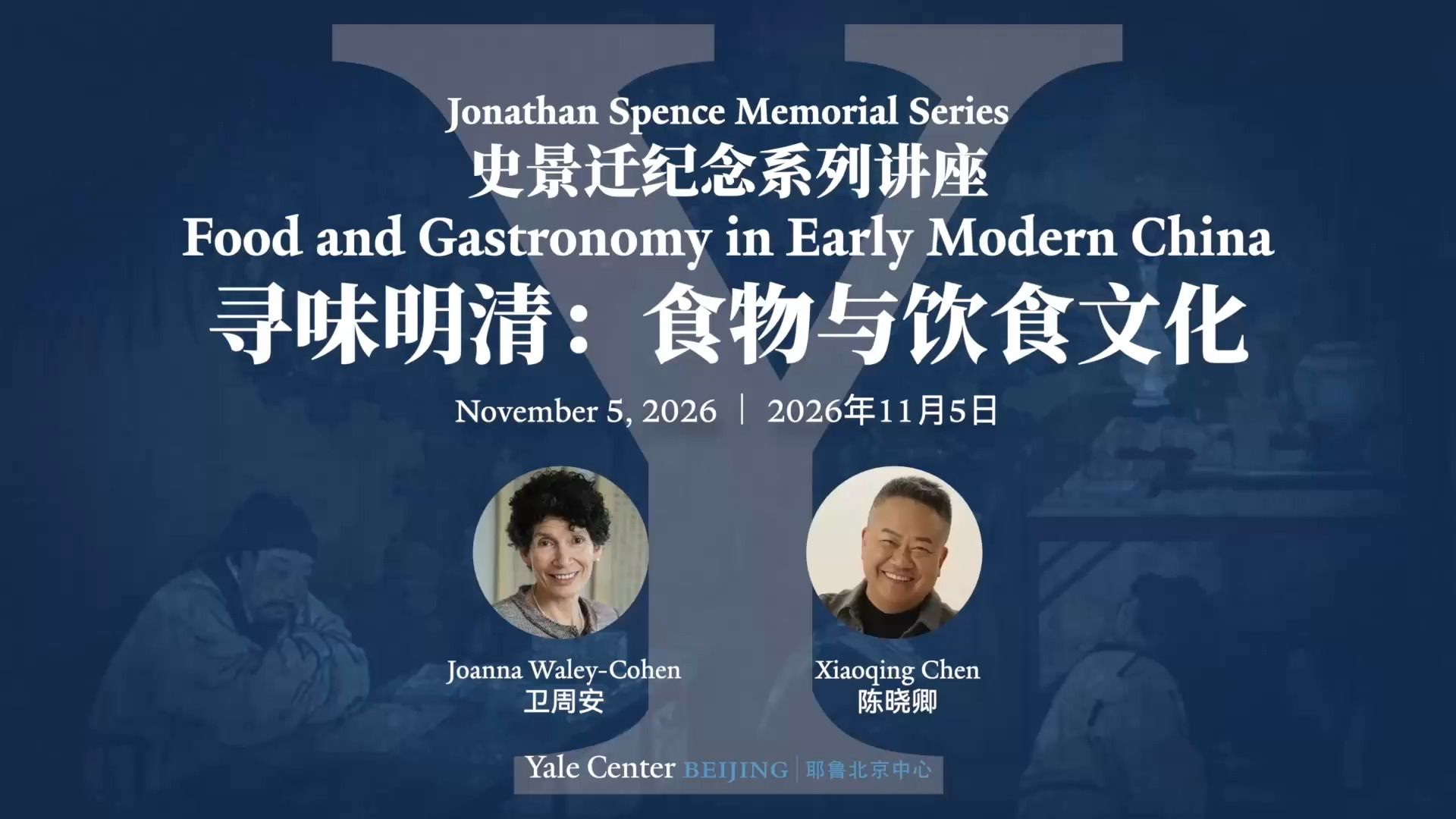
字幕摘录
| 时间 | 英文 | 中文 |
|---|---|---|
| 0:15 | Good evening, everyone. | 大家晚上好,我们走 |
| 0:17 | Welcome to the Yale Center Beijing. | 欢迎来到耶鲁中心北京. |
| 0:20 | This is Yale University's home in China. | 这是耶鲁大学在中国的故乡. |
| 0:22 | My name is Carol Lee Rafferty, and I'm the Executive Director here and also a Yale College alum. | 我叫卡罗尔·李·拉费蒂 我是执行主任 也是耶鲁大学的校友 |
| 0:30 | Next, I would like to introduce you in Chinese, but I would like to especially thank RSBJ, the Royal Asian Association, for promoting this event. | 接下来,我想用中文向大家介绍一下,但我要特别感谢皇家亚洲协会的RSBJ宣传这一活动。 |
| 0:45 | I would also like to especially thank RSBJ for opening it up to their members as well through Joanna's friendships. | 我还要特别感谢区域司法理事会通过乔安娜的友谊向其成员开放。 |
| 1:02 | It is a great honor for us to invite two food-loving masters here to give us a lecture. | 我们非常荣幸地邀请两位热爱食物的主人来作演讲。 |
| 1:15 | We have Professor Wei Zhou'an from Yale University, who is the Honorary Dean of the University of Shanghai, and Professor Julius Silver from the University of New York, who is also a student of more than a dozen teachers. | 有耶鲁大学的魏周安教授,他是上海大学的名誉院长,还有纽约大学的朱利叶斯·西尔弗教授,他也是十多名教师的学生. |
| 1:33 | We also have Director Chen Xiaoxin, who is a famous food-loving film producer and writer. | 我们还有导演陈晓oxin,他是一位著名的爱好食物的电影制片人和编剧. |
| 1:48 | Thank you very much for coming. | 非常感谢你们能来 |
展开字幕全文(2279 条)
| 序号 | 英文 | 中文 |
|---|---|---|
| 1 | Good evening, everyone. | 大家晚上好,我们走 |
| 2 | Welcome to the Yale Center Beijing. | 欢迎来到耶鲁中心北京. |
| 3 | This is Yale University's home in China. | 这是耶鲁大学在中国的故乡. |
| 4 | My name is Carol Lee Rafferty, and I'm the Executive Director here and also a Yale College alum. | 我叫卡罗尔·李·拉费蒂 我是执行主任 也是耶鲁大学的校友 |
| 5 | Next, I would like to introduce you in Chinese, but I would like to especially thank RSBJ, the Royal Asian Association, for promoting this event. | 接下来,我想用中文向大家介绍一下,但我要特别感谢皇家亚洲协会的RSBJ宣传这一活动。 |
| 6 | I would also like to especially thank RSBJ for opening it up to their members as well through Joanna's friendships. | 我还要特别感谢区域司法理事会通过乔安娜的友谊向其成员开放。 |
| 7 | It is a great honor for us to invite two food-loving masters here to give us a lecture. | 我们非常荣幸地邀请两位热爱食物的主人来作演讲。 |
| 8 | We have Professor Wei Zhou'an from Yale University, who is the Honorary Dean of the University of Shanghai, and Professor Julius Silver from the University of New York, who is also a student of more than a dozen teachers. | 有耶鲁大学的魏周安教授,他是上海大学的名誉院长,还有纽约大学的朱利叶斯·西尔弗教授,他也是十多名教师的学生. |
| 9 | We also have Director Chen Xiaoxin, who is a famous food-loving film producer and writer. | 我们还有导演陈晓oxin,他是一位著名的爱好食物的电影制片人和编剧. |
| 10 | Thank you very much for coming. | 非常感谢你们能来 |
| 11 | Today's lecture is a commemorative lecture by Mr. Shi Jingqian, and also a series of lectures by Glinburg. | 今天的讲座是史占ian先生的纪念讲座,也是葛林堡的一系列讲座. |
| 12 | Mr. Glinburg is actually an old man who founded an international insurance company called AIG in Shanghai. | 葛林堡先生实际上是一个老人,在上海创办了一家名为AIG的国际保险公司. |
| 13 | Today we have a grand international exchange. | 今天我们有一个巨大的国际交流。 |
| 14 | Mr. Shi Jingqian is a former alumni of Yale University, and a world-renowned teacher of Chinese history. | 史占ian先生是耶鲁大学前校友,中国历史世界知名教师. |
| 15 | This is why we named this lecture after him. | 这就是为什么我们以他命名这个讲座。 |
| 16 | I will briefly introduce two speakers. | 我将简短地介绍两位发言者。 |
| 17 | Joanna's Chinese name is Wei Zhou'an. | 乔安娜的中文名字是魏周安. |
| 18 | She is an expert on the 17th century of Qianlong's history. | 她是17世纪ian龙史专家. |
| 19 | She is a teacher of Mr. Shi Jingqian and Professor Yu Yingshi. | 她是施静卿先生和俞英石教授的老师. |
| 20 | She usually travels around the world, but she will give lectures in Shanghai and New York during this season. | 她通常会环游世界,但在本赛季她会在上海和纽约举办讲座. |
| 21 | Do you know why it is this season, October? | 你知道为什么这个季节是十月吗? |
| 22 | Yes, because she loves to eat fried crabs. | 是的,因为她喜欢吃炸蟹。 |
| 23 | Every time she comes to China, she comes to give lectures during this season. | 她每到中国来,都会在本赛季来做讲座. |
| 24 | She usually comes to Shanghai, so we are very happy to have her here today. | 她通常来上海,所以我们很高兴她今天在这里。 |
| 25 | I would like to thank you and your team for coming here to give lectures. | 我要感谢你和你的团队来到这里讲课。 |
| 26 | In 18 and 19, we had a wonderful conversation with a professor of Chinese history. | 18年和19年,我们与一位中国历史教授进行了精彩的对话. |
| 27 | I remember that I learned how to make tomato sauce when I was in Fujian. | 我记得我在福建时学会了做番茄酱. |
| 28 | I am looking forward to listening to Ms. Chen's lecture today. | 我期待着今天听取陈女士的演讲。 |
| 29 | There is a saying in English, he needs no introduction. | 有一句英语的谚语 他不需要介绍 |
| 30 | We don't need to introduce him, because we all know who he is. | 我们不需要介绍他,因为我们都知道他是谁。 |
| 31 | He is indeed a very outstanding food documentary producer. | 他确实是一个非常杰出的食品纪录片制作人。 |
| 32 | He and his team made all the food in the world. | 他和他的团队 做了世界上所有的食物。 |
| 33 | We would like to thank them for coming here today. | 我们要感谢他们今天来到这里。 |
| 34 | Today's event is not far from the lab. | 今天的活动离实验室不远. |
| 35 | There is also a center for the efforts of each team. | 每个小组的工作也有一个中心。 |
| 36 | We would like to invite Ms. Chen and Ms. Zhou Enlai. | 我们想邀请陈女士和周恩来女士。 |
| 37 | I would like to invite our two vice presidents, Yang Liu and Peter Wen Teng, | 我想邀请两位副总统 杨刘和彼得文腾 |
| 38 | to introduce the whole process and the gift. | 介绍整个过程和礼物 |
| 39 | Thank you. | 谢谢 |
| 40 | Thank you, Carol. | 谢谢你,卡罗尔。 |
| 41 | Good evening, everyone. | 大家晚上好,我们走 |
| 42 | Welcome to Yilu Beijing Center. | 欢迎来到宜鲁北京中心. |
| 43 | My name is Peter Wen Teng. | 我叫彼得·文腾 |
| 44 | I am the vice president of Yilu Beijing Center. | 我是宜鲁北京中心的副总裁. |
| 45 | I would like to briefly introduce the schedule of today's event. | 我想简要地介绍今天活动的时间安排。 |
| 46 | First of all, we would like to invite Zhou Enlai to give a presentation. | 首先请周恩来作介绍. |
| 47 | We would like to give a presentation based on the historical status of food and food, | 我们想根据粮食和粮食的历史状况作一个介绍, |
| 48 | especially in daily life. | 特别是在日常生活中。 |
| 49 | Second, we would like to invite Ms. Chen Xiaoxin to give an analysis and a presentation | 第二,我们请陈晓新女士进行分析和介绍。 |
| 50 | Finally, we would like to invite two guests to the stage. | 最后,我们想邀请两位嘉宾登台。 |
| 51 | We would like to give everyone a very rare opportunity. | 我们想给大家一个非常难得的机会。 |
| 52 | We would like to give everyone an opportunity to share and interact with two guests by asking questions and interacting with them. | 我们想让大家有机会通过提问和与两位嘉宾进行交流和互动。 |
| 53 | It's very nice to be here. | 来此甚欢喜. |
| 54 | Good evening, everybody. | 晚上好,大家好,谢谢 |
| 55 | And thank you so much to Carol and to Devin, who's not here, for inviting me. | 非常感谢卡罗尔和德文 不在这里的德文邀请我 |
| 56 | And to everyone, including Peter and Yang Liu, who've made my visit so easy. | 也致包括彼得和杨刘在内的大家,使我的拜访变得如此容易. |
| 57 | Thank you all for coming out today. | 谢谢你今天能来 |
| 58 | I am so pleased on every level to be here at Yale Beijing, | 我很高兴能来耶鲁北京 |
| 59 | 参加Jonathan Spence系列纪念讲座, | |
| 60 | talking about one of my favorite topics. | 谈论我最喜欢的话题之一。 |
| 61 | And last but not least, back in Beijing, | 最后但并非最不重要的是,回到北京 |
| 62 | where I first came to visit over half a century ago as an undergraduate. | 半个多世纪前我第一次作为本科生来访问 |
| 63 | About 40 years ago this year, I spent time here, | 今年大概40年前,我在这里呆过 |
| 64 | and I was still a doctoral student doing my dissertation research in the number one historical archives. | 我仍然是一个博士生 在第一历史档案室做论文研究 |
| 65 | And I'm extremely honored and a little bit scared to be on stage with Chen Xiaoxin, | 我非常荣幸 也有点害怕和陈晓彤一起上台 |
| 66 | who, of course, knows far more than I do about all these topics. | 当然,他们比我更了解所有这些主题。 |
| 67 | I was a Spence student in the 1980s when he was really at the height of his powers as a historian of China | 我是20世纪80年代的思朋斯学生 当时他作为中国历史学家 身处绝境 |
| 68 | and as a member of the great Yale history department. | 并担任大耶鲁历史系成员. |
| 69 | I could quite easily, of course, spend the whole evening talking about him. | 当然,我可以轻松地度过整个晚上谈论他。 |
| 70 | But I won't. | 但我不会 |
| 71 | I will just say that despite being a famously prolific writer and a skilled administrator, | 我只想说,尽管是一个著名的 丰富的作家和熟练的管理者, |
| 72 | he was an absolutely wonderful advisor. | 他是一个非常棒的顾问。 |
| 73 | He unfailingly returned drafts within a day or two with detailed markup. | 他一两天内就无懈可击地交回了草稿,并作了详细的标记。 |
| 74 | And I couldn't believe that he had read everything. | 我不敢相信他什么都读过 |
| 75 | I once made something up and put it in a footnote. | 我曾经编了些东西 放在一个脚注里 |
| 76 | I said something like, someone had fallen on their sword, | 我说了一些类似的东西, 有人掉在他们的剑上, |
| 77 | which was not in the materials that I was talking about. | 我所说的材料里没有这个 |
| 78 | And the draft came back in Jonathan's red writing. | 而草稿在乔纳森的红色写作中再次出现. |
| 79 | What is this? | 这是什么? |
| 80 | So I knew he was paying attention. | 所以我知道他在关注他 |
| 81 | At that time he was working on his book on the Jesuit missionary Matteo Ricci. | 当时他正在他的关于耶稣会传教士Matteo Ricci的著作中工作. |
| 82 | At a conference he met someone who lamented that he had masses of wonderful research materials | 在一次大会上,他遇见了一个人,他叹为观止,说他有大批优秀的研究资料 |
| 83 | but no one to read them. | 但没人读过 |
| 84 | No one knew both Latin and Chinese. | 没有人知道拉丁语和中文。 |
| 85 | So Jonathan once said, but Joanna does. | 乔纳森曾经说过 但乔安娜也说过 |
| 86 | And the next thing I knew I was off to a Jesuit seminary | 接下来我知道我要去耶稣会神学院 |
| 87 | talking to former missionaries who had to leave China in the early 1950s. | 与1950年代初不得不离开中国的前传教士交谈. |
| 88 | I was reading the documents that they had collected. | 我在看他们收集的文件 |
| 89 | And having struggled terribly to learn how to use Chinese sources, | 努力学习如何使用中国资源 |
| 90 | I decided not to study the missionaries. | 我决定不研究传教士. |
| 91 | But it's always been a strong side interest and all because of Jonathan. | 但是,这一直是 一个强烈的副兴趣 和所有因为乔纳森。 |
| 92 | He guided me through a discipline on Chinese legal history, | 他指导我学习中国法律史 |
| 93 | which in those days nobody studied. | 在那个年代 没人研究过 |
| 94 | And he supported my shift to military history, which also nobody studied. | 他支持我转向军事历史, 也无人研究。 |
| 95 | And it was during that military phase of my academic career | 是在我学术生涯的军事阶段 |
| 96 | that I realized food was what I really wanted to study. | 我意识到食物是我真正想要学习的 |
| 97 | Not least because, as Napoleon famously said, an army marches on its stunk. | 特别是因为,正如拿破仑著名的所说,一支军队挺身而出。 |
| 98 | So what happened was that I was eating lunch that I had made myself, | 发生的事情是,我正在吃午餐 我做了自己, |
| 99 | some rice noodles and vegetables. | 一些米面和蔬菜。 |
| 100 | And I was struggling, as I always did and still do, | 我在挣扎 就像我一直以来一样 |
| 101 | to understand an 18th century campaign report while I was eating. | 来了解我吃东西时 18世纪的竞选报告 |
| 102 | And the campaign report, I suddenly realized it was really like a light bulb going off. | 竞选报告,我突然意识到 这就像一个灯泡爆炸。 |
| 103 | Feed the troops on rice noodles as I was eating | 吃饭时用米面喂军队 |
| 104 | because we can soak them in water and mix them with vegetables | 因为我们可以把它们浸泡在水里 和蔬菜混合 |
| 105 | without having to light a fire that will attract the enemy's attention. | 无需点燃能引起敌人注意的火力 |
| 106 | So it went without saying from that moment on | 所以从那时起就不用说了 |
| 107 | that I was going to pursue food as my next area of research. | 我打算把食物作为下一个研究领域 |
| 108 | And one last point. | 还有最后一点 |
| 109 | Reading from my second book, after it had been published, | 从我的第二本书读起来, 出版之后, |
| 110 | I thought with horror that I might have inadvertently copied, word for word, | 我惊恐地想 我可能无意中抄袭了 逐字逐句 |
| 111 | a paragraph from something Jonathan Spence had written. | 乔纳森·斯彭斯写的一段 |
| 112 | And I wrote to him to apologize for plagiarizing. | 我写信给他 道歉的抢劫。 |
| 113 | And I said, I'm not sure I did, but if I did, I'm sorry. | 我说,我不确定,但如果我做了,我很抱歉。 |
| 114 | And he didn't reply in a day or two. | 他一两天没回信 |
| 115 | There was a long, long silence, so I was terrified. | 沉默很长,所以我很害怕 |
| 116 | And eventually he wrote back and said, I think it's yours, not mine, don't worry. | 最后,他回信说, 我认为这是你的, 不是我的,不用担心。 |
| 117 | In those kinds of ways, he infiltrated his students' mental lives | 那种方式,他潜入了他的学生的精神生活 |
| 118 | and perhaps, too, his students and their work similarly infiltrated his sometimes. | 也许他的学生和他们的作品 有时也会渗透到他身上 |
| 119 | I really count myself as extraordinarily fortunate | 我真的很幸运 |
| 120 | to have had him as my guide on my academic journey. | 使他成为我学术之旅的导师 |
| 121 | Anyway, enough about me and Jonathan Spence. | 总之,我和乔纳森·斯宾塞的事已经够了 |
| 122 | I'm going to talk about food, which is what you've come to hear about. | 我要谈谈食物,这就是你来听的。 |
| 123 | And I want to start with some broad definitions. | 我想从一些广义的定义开始。 |
| 124 | By gastronomic, I mean the possession of good taste | 从胃学来说,我是说拥有好品味 |
| 125 | in both the aesthetic sense and the gustatory sense. | 无论是审美感还是预言感 |
| 126 | Gastronomy required a wide-ranging appreciation | 胃学需要广泛的欣赏 |
| 127 | and deep knowledge of the culinary arts. | 并深知烹饪艺术. |
| 128 | And it was as integral to the cultivated life | 它和种植生活一样不可分割 |
| 129 | as was familiarity with and knowledge of poetry and painting, | 以及熟悉诗歌和绘画的知识, |
| 130 | which in effect meant that an interest in gastronomy | 这实际上意味着对胃学的兴趣 |
| 131 | permeated elite social, cultural, and sometimes political life. | 渗透到精英的社会、文化,有时甚至政治生活中。 |
| 132 | But at the same time, although some of the most extravagant foods | 但与此同时,虽然一些最奢侈的食物 |
| 133 | were valued at least as much for their supposed nutritional benefits | 被至少同样重视 他们假定的营养效益 |
| 134 | as for their flavor or texture, | 至于他们的口味和纹理, |
| 135 | and although eating ripe still carried some moral weight, | 虽然食用成熟 仍然具有一些道德重量, |
| 136 | a developing gourmet movement, maybe started in the late Ming, | 一个发展中的美食运动,也许始于明末, |
| 137 | shifted elite attention from a focus primarily on eating for health or dietetics | 转移精英的注意力,从主要关注为健康或饮食 |
| 138 | to gastronomy. | 到胃学。 |
| 139 | By the high Qing period in the 18th century, | 到了18世纪的高清时期, |
| 140 | gastronomy and the gourmet life became significant enough elements | 胃学和美食生命 变得足够重要 |
| 141 | of Chinese cultural capital, | 中国文化之都 |
| 142 | but they attracted the attention of the Tiananmen Emperor. | 但他们引起了天安门皇帝的注意 |
| 143 | They ranked high among the aspects of life that he sought to dominate. | 他们在他想要主宰的生活方面排名很高。 |
| 144 | As detailed knowledge about food attained a level of desirability, | 随着对食物的详细了解达到某种程度的可取性, |
| 145 | equivalent to close familiarity with art and literature, | 相当于非常熟悉艺术和文学, |
| 146 | scholarly epicures would analyze particular ingredients, | 学术理论将分析特定成分, |
| 147 | often drawing attention to the exotic or esoteric. | 常引起人们注意异国或异国风情 |
| 148 | They would search the local delicacies and customs | 他们会搜索当地的饮食和风俗 |
| 149 | when they traveled around different regions of the country. | 他们在国内不同地区旅行 |
| 150 | Sometimes they would create annotated recipe collections | 有时,它们会创建附加说明的食谱集 |
| 151 | that they shared or published. | 他们分享或发表。 |
| 152 | Getting together to share food and offering food at every kind of social interaction | 在各种社会互动中共同分享食物和提供食物 |
| 153 | had always been what people did, but now more than ever, | 但现在比以往更加 |
| 154 | debating and writing about food experiences became widespread. | 有关食物经验的辩论和写作变得广泛。 |
| 155 | Restaurants and many other varieties of public eating places popped up all over, | 餐馆和许多其他种类的 公共饮食场所涌现出来, |
| 156 | while cooking skills acquired a new level of respect, | 烹饪技能获得了新的尊重 |
| 157 | offering at least the best cooks the opportunity to rise above social boundaries. | 提供至少最好的厨师 超越社会界限的机会。 |
| 158 | So we can say that early modern gastronomy took two main forms. | 所以我们可以说早期的现代胃学主要有两种形式. |
| 159 | First of all, seeking out and savoring the most delicious, | 首先,寻找和享受最美味的, |
| 160 | the best prepared, and sometimes also the rarest foods. | 最好的准备,有时也是最稀有的食物。 |
| 161 | And second, capturing in written form the ephemeral experience of eating | 第二,以书面形式捕捉到食用麻黄的体验 |
| 162 | and the judgment of the intangible, the judgment of taste, | 和无形的判断,和口味的判断, |
| 163 | for the benefit of absent friends and for posterity. | 以离别的朋友和后世的名义, |
| 164 | And of course, daily sustenance was a paramount concern | 当然,日常生活是最重要的问题 |
| 165 | to members of all classes of society. | 给社会各阶层成员。 |
| 166 | But, well, all classes of society at all times, | 但是,所有社会阶层在任何时候都 |
| 167 | but in the early modern period that I'm talking about today, | 但在今天我所说的早期现代时期, |
| 168 | which I take to be roughly the mid-16th to the late 19th century, | 大约是16世纪中叶到19世纪后期 |
| 169 | but specifically gastronomic concerns, as opposed to just getting enough to eat, | 但具体地说,胃学问题, 而不是仅仅得到足够的吃, |
| 170 | were primarily the province of the influential upper echelon of society, | 主要是有影响力的上层社会, |
| 171 | the wealthy and educated, and people who tried to copy them. | 有钱人和受过教育的人 以及试图模仿他们的人 |
| 172 | So that's what I'm talking about today. | 故今之说. |
| 173 | So a little bit of background history in case there's anybody here who doesn't know it. | 所以有些背景历史 以防有人不知道 |
| 174 | As is well known, for most of this period, the empire ruled from Nanjing under the Ming | 众所周知,在这一时期的大部分时间里,帝国统治着明朝统治的南京. |
| 175 | and from Beijing under the non-Han Chinese Manchu Qing. | 和从北京归附非汉中满清. |
| 176 | It was one of the great world powers of the day. | 它是当时世界大国之一. |
| 177 | During this period, the territorial limits of the empire | 在这个时期,帝国的领土界限 |
| 178 | grew to its greatest extent in history. | 发展到历史上最大的程度. |
| 179 | The population grew to around 400 to 450 million, | 人口增长到4亿到4.5亿左右 |
| 180 | a quarter of the world's population. | 占世界人口的四分之一。 |
| 181 | The economy flourished and moved towards monetization and a general commercialization, | 经济蓬勃发展,走向货币化和普遍商业化, |
| 182 | which in turn brought urbanization and more widespread literacy in its wake, | 这反过来又带来了城市化和更广泛的扫盲, |
| 183 | together with a massive expansion of trade, | 以及贸易的大规模扩张, |
| 184 | both interregionally, within the empire, and internationally. | 在帝国内部和国际上 |
| 185 | One notable aspect of this experience, | 这一经历的一个显著方面, |
| 186 | in part due to the spread of commercialization to the agricultural sector, | 部分由于商业化向农业部门蔓延, |
| 187 | involved trade in food, the topic to which I'll come back in a moment. | 与食品贸易有关 我稍后会回来讨论的话题 |
| 188 | And all these trends moved the merchant class to new levels of wealth and prominence. | 所有这些趋势都使商人阶层进入了新的财富和地位水平. |
| 189 | They purchased property and they educated their sons to such an extent | 他们购买财产,教育他们的儿子 |
| 190 | that the old scholarly elite began to worry | 老学术精英们开始担心 |
| 191 | that they might lose their traditional position at the pinnacle of society. | 他们可能会失去在社会顶峰的传统地位。 |
| 192 | So the elite did their best to fight off this new competition | 所以精英们尽了最大努力 与这场新的竞争作斗争 |
| 193 | and to find new markers of social superiority. | 并寻找社会优越性的新标志。 |
| 194 | So in short, what all this meant was that consuming, | 简言之,这一切意味着 消耗, |
| 195 | in the sense of the possession both of goods, things, | 在拥有货物和物品的意义上 |
| 196 | and of the cultural know-how in terms of refined ways of using them, | 以及利用这些技术的精细方法的文化专门知识, |
| 197 | became an increasingly important way that people differentiated themselves socially. | 成为人们在社会上自我区别的一种日益重要的方式。 |
| 198 | That is to say, connoisseurship and standards of taste | 也就是说 品位和品味标准 |
| 199 | themselves became things to be consumed and commodified. | 自己成为了被消耗和商品化的东西. |
| 200 | And that, in turn, gave rise to an unending quest for novelty, | 这反过来又引发了对新事物的无休止的追求, |
| 201 | both in terms of actual goods and in terms of the range of areas | 实际货物和领域范围 |
| 202 | that were subject to that kind of competition. | 受到这种竞争的 |
| 203 | In other words, a consumer society took hold in China, | 换句话说,一个消费社会在中国扎根 |
| 204 | and it became a characteristic feature of Chinese society | 成为中国社会的特色 |
| 205 | surviving the change of dynasties from Ming to Qing | 从明朝到清朝的变革中幸存下来 |
| 206 | and evolving in response to such factors as, first, | 并因应诸如: |
| 207 | increased cultural intervention, as I mentioned, on the part of emperors, | 正如我所提到的 皇帝们增加了文化干预 |
| 208 | which to some extent shifted the cultural center of gravity. | 这在一定程度上改变了文化重心。 |
| 209 | Second, diminishing status anxiety on the part of the elite | 第二,精英阶层越来越不安 |
| 210 | as merchant competition became normalized. | 随着商家竞争的正常化。 |
| 211 | And third, the regularization of import availability. | 第三,规范进口供应。 |
| 212 | And all these trends bore direct relevance to gastronomy and gastronomic culture. | 所有这些趋势都与胃和胃文化直接相关。 |
| 213 | And given the age-old prominence of food and gastronomy | 鉴于食物和胃学的突出地位 |
| 214 | in Chinese cultural and political life, | 在中国文化和政治生活中, |
| 215 | it went without saying that they became part of the new consumer society. | 不言而喻,他们成为新的消费者社会的一部分。 |
| 216 | In some sense, this wasn't new, in that there were countless stories, | 从某种意义上说,这不是新的, 因为有无数的故事, |
| 217 | for example, about the culinary expertise of earlier scholars in statesmen, | 例如,关于早期政治家的烹饪专业知识, |
| 218 | for whom dishes sometimes were named. | 盘子有时被命名 |
| 219 | Most famously, perhaps, Dunpo pork, as everybody knows, | 也许最有名的是邓波猪肉 大家都知道 |
| 220 | named for the legendary Northern Song scholar and official, Su Dunpo. | 因传说中的北宋学者兼官员苏敦波而得名. |
| 221 | He was known for his gastronomic knowledge | 他以胃学知识著称 |
| 222 | and his cooking skills among other accomplishments. | 他的烹饪技巧 以及其他成就 |
| 223 | And for some later gourmets, he became the model to be emulated. | 而对于后来的一些美食,他成为了被效仿的模特. |
| 224 | So now I want to talk about the importation of food. | 现在我想谈谈进口食品的问题。 |
| 225 | And I put this in a context where we often hear | 我把这个放在一个背景 我们经常听到 |
| 226 | that China was completely closed until the 19th century, | 中国直到19世纪才完全关闭 |
| 227 | but the importation of food alone shows that wasn't true. | 但仅进口食物就表明这不是真的 |
| 228 | Anyway, the importation of food into China originated extremely early, | 总之,中国进口粮食的起源非常早, |
| 229 | for example, as a result of interactions along the Silk Roads. | 例如,由于丝绸之路上的相互作用。 |
| 230 | From the 16th century, not least as a result of the simultaneous occurrence | 从16世纪开始,至少因为同时发生 |
| 231 | of the rising consumerism I mentioned and the growing availability of foods | 我提到的日益严重的消费主义 和越来越多的食品供应 |
| 232 | from the New World and from Southeast Asia, | 来自新世界和东南亚, |
| 233 | the importation of foodstuffs accelerated because of those things. | 由于这些原因,食品进口加速。 |
| 234 | Because Chinese people were just as enthusiastic as people everywhere else | 因为中国人跟别人一样热情 |
| 235 | about the new experiences that the general trend | 总趋势的新经验 |
| 236 | towards globalization brought their way. | 全球化带来了它们的道路。 |
| 237 | So from the New World, China soon began to import | 所以从新世界,中国很快开始进口 |
| 238 | what would become staples in China, sweet potato, corn, and peanuts, | 成为中国的主食的土豆 玉米和花生 |
| 239 | all of which played a part in Holland. | 他们都在荷兰演过戏 |
| 240 | Sweet potatoes and corn and peanuts, | 甜薯条、玉米和花生, |
| 241 | all of which contributed to the growth of the population. | 所有这些都促进了人口增长。 |
| 242 | For instance, sweet potato would grow where almost nothing else would grow. | 例如,甜薯会生长在几乎没有其他东西生长的地方。 |
| 243 | And it was quickly adopted in China, starting in Fujian, | 从福建开始,它很快在中国被采用 |
| 244 | for famine relief purposes as well as being appreciated | 以及受到赞赏 |
| 245 | for its flavor and versatility. | 因为它的风味和多面性。 |
| 246 | New World imports also included vegetables like tomatoes, | 新的世界进口品还包括番茄等蔬菜, |
| 247 | peppers, both hot and sweet, and white potatoes, | 辣椒 辣椒 甜椒 还有白马铃薯 |
| 248 | and fruits like pineapple and papaya. | 还有菠萝和木瓜等水果 |
| 249 | At a minimum, the introduction of these foodstuffs at both the staple and luxury level | 至少在主食和奢侈品两级引进这些食品 |
| 250 | opened up the possibility of new repertoires, | 打开了新的记忆的可能性, |
| 251 | even though it's likely that in most cases | 虽然在多数情况下很可能会 |
| 252 | they were adopted relatively gradually and more quickly in cities | 城市相对逐步和更快地采纳了这些措施。 |
| 253 | and in rural areas. | 农村地区。 |
| 254 | Food imports also came from the jungles and seas of Southeast Asia and even beyond. | 粮食进口也来自东南亚甚至更远的丛林和海洋。 |
| 255 | Again, starting in the later 16th century, | 从16世纪后期开始 |
| 256 | China imported luxury foods such as bird's nests, | 中国进口鸟巢等奢侈食品, |
| 257 | shark's fin, and trepan, which I'll come back to in a minute, | 鲨鱼的鳍,和三棱柱, 我会回来的一分钟, |
| 258 | or sea cucumber, all of which were hard to get, | 或海参,都是很难得到的, |
| 259 | relatively easy to transport because they could be dried, expensive, | 相对容易运输,因为它们可以干燥,昂贵, |
| 260 | and they were valued not only as rare imported delicacies, luxuries, | 他们不仅被珍视为稀有的进口食品和奢侈品, |
| 261 | but also at least as much for their nutritional benefit | 至少也是为了他们的营养利益 |
| 262 | as for their strictly culinary benefit, | 因为他们的纯烹饪利益, |
| 263 | which reflected both the continuing interest in the use of food as medicine | 这反映出人们继续关注将食物作为药物的使用。 |
| 264 | and persistent awareness that an intense interest in food | 并一直意识到对食物的强烈兴趣 |
| 265 | could well veer over from gastronomy into gluttony, | 可能从胃进食到呕吐 |
| 266 | and that was a very fine line that people tried to keep on the right side of. | 这是一条非常好的线 人们试图保持右侧。 |
| 267 | All of these luxury imports offered at once a mode of conspicuous consumption | 所有这些奢侈品的进口都同时成为显眼的消费模式 |
| 268 | and a way to counter excess and boost one's health. | 和一种对抗过度和提升自身健康的方法。 |
| 269 | Bird's nests were said variously to aid the respiratory system, | 鸟的巢穴被说成是帮助呼吸系统 |
| 270 | strengthen one's bones, and help with digestion. | 强化自己的骨骼, 并帮助消化。 |
| 271 | Shark's fin allegedly promoted virility and longevity, | 鲨鱼的鳍据称促进活性 和长寿, |
| 272 | while the low-fat, high-protein sea cucumber had anti-inflammatory | 低脂的高蛋白海参有抗炎药 |
| 273 | and antioxidant properties. | 和抗氧化剂的特性。 |
| 274 | So they're all good for you, they're expensive, | 所以他们都对你有好处,很贵 |
| 275 | so they're a form of conspicuous consumption, | 所以它们是一种明显的消费形式, |
| 276 | they're luxury goods, and they taste good, or they taste interesting, anyway. | 他们是奢侈品, 而且味道很好, 或者它们味道很有趣,反正。 |
| 277 | By the mid-18th century, these luxury foods had become well integrated | 到了18世纪中叶,这些奢侈食品已经完全融合了 |
| 278 | into the menus of the upper classes in China, | 进入中国上层阶级的菜单, |
| 279 | as we can see from some contemporary insights from the 18th century. | 我们从18世纪的一些当代见解中可以看到这一点。 |
| 280 | The first one relates to bird's nests, | 第一个是关于鸟巢的 |
| 281 | harvested with some difficulty in the jungles of island Southeast Asia | 在东南亚岛屿丛林中艰难地收获 |
| 282 | and valued primarily for their health benefits more than for their flavor. | 并主要重视他们的健康福利 而不是他们的口味。 |
| 283 | For instance, the famously opinionated gourmet Yuan Mei, | 例如,著名观赏家袁美人 |
| 284 | upon being served a dish of bird's nests at a friend's house, | 在朋友家的鸟巢里 |
| 285 | expressed his objections on the grounds of both unpleasantness and extravagance, | 以不愉快和奢侈为由表示反对, |
| 286 | claiming he would have been happier to be handed a bowl of pearls | 说要是拿一碗珍珠就更开心了 |
| 287 | if showing off was what his friend was trying to do. | 如果他的朋友想炫耀的话 |
| 288 | But bird's nests nonetheless feature in his recipe collection, | 不过鸟巢的食谱收藏中还是有特色的 |
| 289 | which I am going to talk about in a minute, | 我马上就要谈这个 |
| 290 | and also on a visit to Guangdong province, | 并访问广东省, |
| 291 | he particularly mentioned having had an incredibly good dish | 他特别提到有一个非常棒的菜 |
| 292 | of winter melon and bird's nests. | 冬瓜和鸟巢。 |
| 293 | Around the same time, the Qianlong emperor, | 大约在同一时间,ian龙皇帝, |
| 294 | sometimes wrongly thought to have spurned trade and disdained imports, | 有时被错误地认为是放弃了贸易和蔑视进口, |
| 295 | Qianlong was served the enormously expensive imported bird's nests at every meal, | 香龙每餐都为 昂贵的进口鸟巢服务 |
| 296 | sometimes in more than one dish at a single meal, | 有时在一顿饭的时候,在一个菜肴里, |
| 297 | presumably primarily to one, show off, and two, take advantage of their health-giving qualities. | 可能主要对一个,炫耀,和两个, 利用他们的保健素质。 |
| 298 | And this makes me wonder whether Yuan Mei's scathing comments | 这让我怀疑 袁美君的恶言 |
| 299 | were partly intended as an indirect or covert criticism of imperial extravagance. | 部分是为了间接或隐蔽地批评帝国主义的奢侈行为。 |
| 300 | Qianlong's policy derived from the perspective of the Manchu ruler of a multicultural empire, | Q龙的政策源于一个多元文化帝国的满洲统治者的观点, |
| 301 | the largest of whose ethnicities was Han Chinese. | 其中最大的民族是汉族. |
| 302 | His policy was to pursue total imperial control at every level, | 他的政策是在各个级别上 追求帝国的完全控制 |
| 303 | including in the realm of culture. | 包括文化领域。 |
| 304 | And among other things, that extended to competing with members of the elite from Tiananmen, | 并且,除了其他, 扩展到与来自天安门的精英成员竞争, |
| 305 | the heartland of Chinese culture, | 中国文化的心脏地带, |
| 306 | competing to display his access to and appreciation of the most refined delicacies | 竞相展示他获得和欣赏最精美的美食 |
| 307 | and the most talented cooks to satisfy what he wanted people to know | 和最有才华的厨师 满足他想要人们知道的 |
| 308 | was his extraordinary refined palate. | 是他非凡的优雅 |
| 309 | We could debate about that. | 我们可以就此进行辩论。 |
| 310 | Of course, he was bound to win such a contest, | 当然,他一定会赢得这样的比赛, |
| 311 | but at the same time, his competitive approach had the effect | 但与此同时,他的竞争方式产生了效果 |
| 312 | {\fn华文楷体\fs20\bord1\shad1\1cHE0E0E0\2cH000000}... {\fn华文楷体\fs20\bord1\shad1\1cHE0E0E0\2cH000000}... | |
| 313 | become a model for gourmets all around the empire. | 成为帝国各地美食的模范. |
| 314 | And as for shark's fins, we know from various sources | 至于鲨鱼的鳍 我们从各种来源知道 |
| 315 | that they were expensive enough and in sufficient demand | 价格足够高,需求足够 |
| 316 | that it was worth creating fakes and passing them off as shark's fin. | 值得创造假象 把它们当作鲨鱼的鳍 |
| 317 | A very famous and detailed account of the late 18th century elite life in Yangzhou | 18世纪晚期扬州精英生活的非常有名和详细的叙述 |
| 318 | describing the passion for seafood tells us that, quote, | 描述对海鲜的热情 告诉我们,引用 |
| 319 | people cut the wings off some of the fish from the sea and sell it as shark's fin. | 人们从海中切除一些鱼的翅膀,把它当作鲨鱼的鳍出售. |
| 320 | In other words, like bird's nests, though in a different way, | 换句话说,就像鸟巢一样,虽然方式不同, |
| 321 | this luxury food essentially served as a key marker of the consumerism that characterized the age. | 这种奢侈食品基本上成为了这个时代所特有的消费主义的关键标志. |
| 322 | And finally, we know that trepan was imported not only from nearby oceans, | 最后,我们知道 黑猩猩不仅是从附近海洋进口的, |
| 323 | but from as far away as the waters around Hawaii | 但远至夏威夷周围的水域 |
| 324 | and even from the northern coast of Australia, | 甚至来自澳大利亚北部海岸 |
| 325 | where starting around 1700, | 从1700年左右开始 |
| 326 | Makassans took the long journey from Southeast Asia to trade with local aboriginals | 马卡桑人长途跋涉,从东南亚与当地土著人进行贸易 |
| 327 | and bring sea cucumber to the southern coast of China. | 并把海参带到中国南海岸 |
| 328 | And here you can see doing it. | 在这里你可以看到它。 |
| 329 | But the jungle and marine foods of Southeast Asia weren't the only imported foods | 但东南亚的丛林和海洋食物 并不是唯一的进口食物 |
| 330 | that aroused gourmet excitement in 18th century China. | 这引起了18世纪中国的美食兴奋 |
| 331 | For example, we know about smoked suckling pig from Thailand, Siam, | 例如,我们知道泰国,暹罗的烟熏奶猪 |
| 332 | which is mentioned in the first volume of the great 18th century novel, | 在18世纪的伟大小说第一卷中, |
| 333 | The Dream of the Red Chamber, Hong Ramam, | 红房梦 洪拉曼 |
| 334 | in which reference is made to dining on Cyprus smoked Siamese sucking pig | 其中提到在塞浦路斯的晚餐 抽烟的暹罗猪 |
| 335 | that came in the tribute from Siam. | 从暹罗来的纪念品 |
| 336 | Probably a delicacy passed on from the imperial palace to the upper class family | 可能是从皇宫传到上流社会 |
| 337 | whose life is described in the novel. | 在小说中描述了他的生活 |
| 338 | You can't know whether the Jiao family received the meat already smoked. | 你不可能知道乔家有没有收到已经熏过的肉 |
| 339 | I would love to know whether it was or not, | 我很想知道这是不是, |
| 340 | or whether they had that process done in their own kitchens. | 或者他们是否在自己的厨房里完成了这个过程。 |
| 341 | I want to say something next about regional and local cuisines and preferences. | 接下来我想谈谈区域和地方菜肴和喜好。 |
| 342 | It is probably something you all know more about than I do, | 这大概是你们比我更了解的事 |
| 343 | but anyway, I'm going to talk about it historically. | 但无论如何,我要谈论它的历史。 |
| 344 | It is often said that there's no such thing as a North Chinese cuisine, | 常有说法说,北洋的菜肴,没有这种东西, |
| 345 | only regional and local cuisines, | 只有地区和地方菜肴, |
| 346 | with the implication that until modern times, | 意味着直到现代, |
| 347 | these remained largely separate and distinct, | 它们在很大程度上仍然是独立的和不同的, |
| 348 | with different ingredients and preferences as well as different cooking methods. | 具有不同的成分和偏好以及不同的烹饪方法. |
| 349 | An actual point, that's true, but only up to a point. | 一个实际的点,这是真的,但只有一点。 |
| 350 | In early modern times, Chinese cuisine was generally thought of | 现代早期,中国菜菜一般认为 |
| 351 | in terms of four major varieties, | 就四大品种而言, |
| 352 | Beijing, Huaiyang, Guangdong, and Sichuan. | 分布于北京,淮阳,广东,四川等地. |
| 353 | The first two featured especially prominently in overall gastronomic culture. | 前两项在整体胃文化中特别突出。 |
| 354 | Beijing cuisine, the center of northern cuisine because of where it's located, | 北京菜,因地处北方菜的中央, |
| 355 | was strongly influenced by both Xiangdong cuisine | 受iang东菜的影响很大 |
| 356 | and after Beijing conquest by Manchu preferences. | 和北京征服之后的满洲偏好. |
| 357 | Beijing became a major cosmopolitan center | 北京成为大同市中心 |
| 358 | because of the presence of the court and because of the influence of the emperor. | 因为宫廷的存在和皇帝的影响. |
| 359 | Jiangnan, on the other hand, had long been the homeland of Han Chinese elite culture | 而江南长期是汉族中华精英文化的故乡. |
| 360 | and vied to maintain its role as a major center of gastronomic refinement. | 并积极维护其作为大胃精炼中心的作用. |
| 361 | Beijing was both a center of consumption | 北京是消费中心 |
| 362 | and a place where many different regional specialties were brought to be tried and adopted. | 以及一个使许多不同的区域专业受到审判和通过的地方。 |
| 363 | One way in which regional specialties became more widely known | 使区域专业更加广为人知的一种方式 |
| 364 | was through the practice whereby officials serving around the empire | 这是通过惯例 官员在帝国周围服务 |
| 365 | sent the emperor gifts of food as a form of tribute. | 给皇帝送来食物作为贡品 |
| 366 | While the emperor might have enjoyed sampling these exotic edibles | 虽然皇帝可能喜欢采样这些奇异的食材 |
| 367 | as a form of conspicuous consumption, | 作为一种明显的消费形式, |
| 368 | he rarely ate everything he was given | 他很少吃他得到的一切 |
| 369 | simply because there was more than a single individual could possibly manage. | 仅仅因为有一个以上的人可以管理。 |
| 370 | The distribution of his leftovers, | 他的遗物的分发, |
| 371 | whether from the table or from the flow of tributary gifts, | 无论是从桌子上还是从支流的礼物流中, |
| 372 | was governed by sumptuary law which had strict rules | 由具有严格规则的自律法管辖 |
| 373 | as to who might receive what and how much and in what order. | 至于谁能得到什么,多少,多少顺序。 |
| 374 | Much as an inscription or a colophon on a painting | 大多是画上的铭文或拼图 |
| 375 | added to its value by indicating its provenance and its prior history. | 通过表明其来源和过去的历史,增加了其价值。 |
| 376 | So the fact that the emperor's leftovers had actually been served to the emperor | 皇帝的遗物实际上已经交给皇帝了 |
| 377 | or given to the emperor gave them additional prestige. | 或者授予皇帝 给他们更多的威望。 |
| 378 | But the net effect, or perhaps the side effect, | 但净效应,也许副效应, |
| 379 | was to expand awareness of such products | 旨在提高人们对这些产品的认识; |
| 380 | like venison from the northeast or lichese from the south and others. | 就像来自东北的食肉动物 或是来自南方的食肉动物 |
| 381 | And I remember reading in the archives about lichese from the south | 我记得在档案里看到 南方的Lichese |
| 382 | in which one by one they were distributed to other people. | 在那里,他们被逐个分配给别人。 |
| 383 | They can't have kept all that long. | 他们不可能一直待那么久 |
| 384 | So the cuisine served at imperial banquets often varied based on the occasion | 所以在皇上宴会时 菜肴经常因场合而异 |
| 385 | and it was very common to mix Chinese and Manchu dietary preferences. | 而将中国和满洲的饮食偏好混合在一起是非常常见的. |
| 386 | For example, adding roasted meat, a Manchu favorite, | 例如,加入烤肉,是满洲人最喜欢的 |
| 387 | for an otherwise mostly Chinese-style meal. | 是一种中国菜 |
| 388 | Further fusion of different cuisines likely took place in the imperial kitchens | 帝国厨房里可能还会有不同的菜肴 |
| 389 | because there were cooks with expertise from different regions | 因为有来自不同地区的厨师 |
| 390 | who might well be cooking side by side. | 可能同时做饭 |
| 391 | Within the palace precincts also, | 在宫廷辖区内 |
| 392 | and I'm sure everybody knows this because of the TV show, | 我相信大家都知道 因为电视剧, |
| 393 | also a new cuisine developed that was known as the Manchu Chinese banquet. | 也是一种开发的新菜,被称为"满洲中国宴会". |
| 394 | An eclectic style that was not generally featured in state banquets | 州宴上一般没有的喜悦风格 |
| 395 | but was found in the kitchens of government offices. | 但发现在政府办公室的厨房里 |
| 396 | And given the quest for novelty inherent in a society focused on consuming, | 鉴于人们在追求一个注重消费的社会所固有的新颖性, |
| 397 | that Nanhang Chuanxi became fashionable in the provinces, | 南昌川西在各省变得时髦 |
| 398 | notably in Jiangnan, | 尤其在江南 |
| 399 | and it even developed its own regional variants | 它甚至开发了自己的区域变体 |
| 400 | that might have been far more luxurious than the palace kitchen versions, | 可能比宫殿厨房更奢侈 |
| 401 | for example involving rarefied ingredients like pangolin and bear's paw. | 例如,涉及稀有成分,如潘哥林和熊爪。 |
| 402 | Jiangnan, the home of the great cities of Hangzhou and Suzhou and Nanjing | 江南,杭州,苏州,南京等大城市的故乡 |
| 403 | and across the river Yangzhou, | 和过江扬州, |
| 404 | was the epicenter of elite Chinese culture | 是中华文化精英的中心 |
| 405 | and a major center of consumerism in general and gastronomy in particular. | 以及一般消费主义,特别是胃学的主要中心. |
| 406 | And of the four, Suzhou's cuisine was perhaps the most fashionable, | 四位中,苏州菜肴也许最时髦, |
| 407 | stemming in part from the praises lavished on it | 部分来源于对它的赞美 |
| 408 | by late 16th century first minister Zhang Juzheng. | 到了16世纪晚期,首任大臣张儒正. |
| 409 | And as a would-be cultural pace-setter, | 作为一个可能的文化节奏者, |
| 410 | the Qianlong Emperor made a particular point | 乾隆皇帝说到一点 |
| 411 | of employing Suzhou cooks in the imperial kitchens | 在帝国厨房里雇用苏州厨师 |
| 412 | and of broadcasting his fondness of Suzhou cuisine. | 以及播报他对苏州菜的喜爱 |
| 413 | But I don't think it was true | 但我不认为这是真的 |
| 414 | because the kind of food that Suzhou is known for | 因为苏州有这种食物 |
| 415 | was not what he actually ate. | 不是他吃的东西 |
| 416 | I spent a lot of time looking at his menus, as it were. | 我花了很多时间看他的菜单,就像它一样。 |
| 417 | He much preferred almost more than anything Nanjing-style duck. | 他更喜欢南京风格的鸭子 |
| 418 | So this move of claiming to love Suzhou food | 所以,这举动声称喜欢苏州菜 |
| 419 | may have been more of a gambit to establish his gastronomic credentials | 可能更像是 建立他的胃能力 |
| 420 | than an indication of his actual taste preferences. | 而不是表明他的实际口味偏好。 |
| 421 | Near the 20th century, the food of China was systematized | 近20世纪,中国的粮食被系统化 |
| 422 | into the eight great cuisines familiar in our own tongue, | 进入我们熟悉的八大菜肴, |
| 423 | adding Zhejiang, Anhui, Kunan, and Fujian cuisine | 增加浙江,安徽,贵安,福建菜肴. |
| 424 | to the four that had already been recognized. | 给四个已经得到承认的人 |
| 425 | But that still failed to capture the full richness | 但是,这仍然未能 抓住所有的财富 |
| 426 | of regional and other variations. | 区域和其他变化。 |
| 427 | It left out, for example, Yunnan cuisine, Northwestern cuisine, | 例如云南菜,西北菜, |
| 428 | and it left out specialized cuisines | 它没有专门烹饪 |
| 429 | associated with, for example, particular religions, | 例如,与特定宗教、 |
| 430 | vegetarian restaurants often associated with Buddhism, | 经常与佛教有关的素食餐厅 |
| 431 | some of which served dishes, as they still do, | 有些菜还是做菜的 |
| 432 | that tasted and looked like meat, | 味道和看起来像肉, |
| 433 | or halal restaurants providing for Muslims, | 或供穆斯林食堂, |
| 434 | and this list completely leaves out local specialties. | 本列表完全不包含本地专业. |
| 435 | Also, as a result of a widely held understanding | 此外,由于广泛持有的谅解, |
| 436 | that people are closely connected to the natural world, | 人类与自然世界紧密相连, |
| 437 | there came to be a sense that something similar but not identical | 有一种感觉 类似但并不相同的东西 |
| 438 | to what in Western culture is conceptualized as terroir, | 在西方文化中 被概念为terroir, |
| 439 | namely wind and soil, fengtu, | 即风土,风土,风土, |
| 440 | affected human physiology in complex ways. | 人类生理受到复杂影响。 |
| 441 | And this theory, which also gave rise to regional variation | 而这个理论 也引起了区域差异 |
| 442 | in medical treatment, accounted not only for the existence | 在医疗方面,不仅说明存在 |
| 443 | of regional cuisines, but also for the view | 区域菜肴,但也供观看 |
| 444 | that people not only preferred the cuisine of their native place, | 人们不仅喜欢自己家乡的美食, |
| 445 | but that others could not eat it, | 但别人不能吃它, |
| 446 | or at the very least could not appreciate it, | 或至少不能欣赏它, |
| 447 | and thus could not truly enjoy other cuisines. | 也因此无法真正享受其他菜肴。 |
| 448 | And the notion of fengtu also produced the idea | 芬图的概念也产生了这个想法 |
| 449 | that people from a particular locality | 某个地方的人 |
| 450 | resembled the cuisine of that place, | 和那个地方的烹饪类似 |
| 451 | especially the people from Kunan, | 特别是库南人, |
| 452 | where I just had a delicious meal of Hunanese food. | 我刚吃过湖南菜 |
| 453 | People from Hunan are thought to have a fiery temperament, | 湖南人被认为脾气暴躁 |
| 454 | like the hot peppers that characterize Hunanese cuisine, | 和湖南菜肴的辣椒一样 |
| 455 | and based on the people I know from Hunan, I think this is true. | 从我认识的湖南人来看,我觉得这是事实。 |
| 456 | But there was also a countervailing tendency, | 但也有反补贴倾向, |
| 457 | countering the division of China by cuisine and fengtu | 与中国的分裂斗争 |
| 458 | into many regions and localities, | 进入许多地区和地区, |
| 459 | was the fact that in the early modern period, | 事实上,在早期现代, |
| 460 | to an increasing extent, | 在更大程度上, |
| 461 | and especially from the 16th century on, | 特别是从16世纪开始 |
| 462 | China was on the move. | 中国当时在移动. |
| 463 | Neither its products nor its inhabitants | 无论是产品还是居民 |
| 464 | stayed put to the extent that they almost certainly did | 在他们几乎肯定的情况下, |
| 465 | in earlier times. | 更早的时候 |
| 466 | First of all, the commercialization of agriculture | 首先,农业商业化 |
| 467 | in the Qing period that had begun in the Ming, | 在明清时期, |
| 468 | in the Qing period, led to greater crop specialization | 在清朝时期,导致作物专业化程度提高 |
| 469 | and the great, great expansion of interregional trade. | 以及区域间贸易的巨大扩展。 |
| 470 | And that was especially evidenced as foodstuffs | 这特别证明是食品 |
| 471 | like rice and other grains, soybeans, sugar, oil, tea, fruits, | 如稻谷和其他谷物,大豆,糖,油,茶,水果, |
| 472 | persimmons from the north, lichies from the south, and so on, | 北边的 per,南边的lich,等等 |
| 473 | dried and fresh fish transported off ice | 干鱼和新鲜鱼从冰上运走 |
| 474 | that was stored in fetal caves. | 存放在胎儿洞穴里 |
| 475 | All these foods began to circulate widely. | 所有这些食物开始广泛流通. |
| 476 | And of course, they didn't just circulate on their own. | 当然,他们不只是自行流通。 |
| 477 | Interregional trade in food went hand in hand | 区域间粮食贸易携手并进 |
| 478 | with human circulation, with merchants and other people | 人类的流通 商人和其他人 |
| 479 | moving around the country as well. | 也四处活动 |
| 480 | And in turn, that led to various developments | 反过来,这导致了各种发展 |
| 481 | that contributed to the spread of local culinary preferences. | 这促进了当地烹饪偏好的扩散。 |
| 482 | First was the establishment of hui guan, | 首先是建立辉国, |
| 483 | guild hall associations for individuals from similar businesses | 为来自类似企业的个人举办的荷兰会堂协会 |
| 484 | or localities where they could lodge and eat away from home. | 或远离家住和吃饭的地方。 |
| 485 | And second, there were restaurants catering for regional tastes | 其次,有餐厅 提供区域口味 |
| 486 | for those seeking familiar foods and a taste of home. | 给那些寻求熟悉的食物和家味的人。 |
| 487 | For instance, wherever Anhui merchants were among the most mobile | 例如,安徽的商人在什么地方都流动最多 |
| 488 | and the most successful of all the merchant groups, | 和最成功的商队, |
| 489 | wherever they set up business around the country, | 不论他们在全国各地做生意 |
| 490 | Anhui cuisine restaurants popped up to cater to their preferences. | 安徽 c菜餐厅涌现迎合其喜好. |
| 491 | And the net result of all that was that while restaurants | 所有这一切的净结果 是当餐馆 |
| 492 | with regional specializations weren't new in China, | 地区专业在中国并不新鲜 |
| 493 | they became completely normalized over time. | 随着时间的推移,它们变得完全正常化。 |
| 494 | A second reason, a second countervailing tendency, | 第二个原因,第二个反补贴趋势, |
| 495 | if you like, to the division by regions of cuisine | 如果你喜欢的话,按照烹饪区域划分 |
| 496 | was that people were traveling around for fun | 是人们到处游玩 |
| 497 | much more than they had done, | 比他们做的还要多 |
| 498 | partly as the consequence of improved infrastructure, | 部分由于基础设施的改善, |
| 499 | which was itself attributable to the increase in the volume of trade. | 这本身就是贸易量的增加造成的。 |
| 500 | And that had the effect of introducing travelers to food preferences | 这会让旅行者享受食物 |
| 501 | and specialties from different parts of the empire. | 以及帝国各地的专业 |
| 502 | So a characteristic vegetable or a vinegar | 特产蔬菜或醋 |
| 503 | or a style of cooking previously confined to a particular area | 或一种烹饪风格 以前仅限于特定地区 |
| 504 | could become widely known and often spread well beyond its home base. | 可以广为人知,而且往往远远超出其基地。 |
| 505 | In the 17th century, the scholar Zhang Dai, | 十七世纪学者张戴, |
| 506 | who of course is the subject of Jonathan Spence's book | 谁是乔纳森·斯宾斯的书的主题 |
| 507 | Return from Dragon Mountain, | 从龙山回来 |
| 508 | writing during the dynastic transition from Ming to Qing | 从明朝到清朝光绪年间写作 |
| 509 | about the vanished gastronomic glories of the recent past, | 关于最近消失的胃学荣耀, |
| 510 | Zhang Dai reminisced nostalgically | 张黛怀念怀旧 |
| 511 | about delicious locally branded dishes he had encountered. | 关于他遇到的当地品牌的美味菜肴 |
| 512 | He tells us, | 他说, |
| 513 | I went every year to the places that were further away, | 我每年都去远处的地方 |
| 514 | but to those that were nearer, I went every month or even every day. | 但对那些更接近的人, 我每月甚至每天去。 |
| 515 | And he provides a long, long list of favorite local delicacies | 他提供了一长串 当地最喜爱的美食 |
| 516 | from which a few selections follow. | 从中选取若干品. |
| 517 | And I have to read you this. | 我必须读给你听 |
| 518 | Crab apples, marmots, and horse tooth cakes in Beijing. | 蟹苹果,马鹿,以及北京的马牙饼. |
| 519 | Does anyone know what those are? | 有人知道这些是什么吗? |
| 520 | Horse tooth cakes. | 马牙饼. |
| 521 | Morales, autumn white pear. | 莫拉莱斯,秋白梨. |
| 522 | Golden horn and fruits and berries in Shandong. | 山东金角果浆. |
| 523 | Fresh and preserved oranges, | 新鲜和保存的橙子, |
| 524 | fermented soy cheese and buffalo skin caramels in Fujian. | 福建发酵豆酪和水牛皮焦糖. |
| 525 | Fengchang dried meat and green turnips in Jiangxi. | 凤昌干肉和江西绿萝卜. |
| 526 | Tianhuacai mushrooms from Shaanxi. | 陕西天华ca蘑菇. |
| 527 | (原始内容存档于2018-09-26). Dai guo bao ruo conch. | |
| 528 | Hawthorn berry pastries and preserved olives in Suzhou. | 霍桑莓糕点 苏州保留橄榄. |
| 529 | Watermelon leek sprouts and shoots of black bamboo in Hangzhou. | 西瓜李克芽和射黑竹在杭州. |
| 530 | And so on. | 及诸众生. |
| 531 | He was an amazing recorder as well as eater. | 他是一个惊人的录音师和食人。 |
| 532 | A third important factor in the spread of local cuisines | 当地菜肴传播的第三个重要因素 |
| 533 | {\fn黑体\fs22\bord1\shad0\3aHBE\4aH00\fscx67\fscy66\2cHFFFFFF\3cH808080}是每三年有新职位出现 | |
| 534 | of government officials and their households. | 政府官员及其家属。 |
| 535 | And their households included cooks, | 他们的家庭包括厨师 |
| 536 | who both introduced their own local specialties into a new area, | 他们将自己的地方专业引入一个新的领域, |
| 537 | into a new culinary context, | 进入一个新的烹饪环境, |
| 538 | and had to learn how to incorporate unfamiliar ingredients | 并且必须学会如何加入不熟悉的成分 |
| 539 | in the meals they produced. | 在他们生产的食物。 |
| 540 | And while the officials and their families moved on, | 当官员们和他们的家属继续前进的时候, |
| 541 | sometimes they took their new culinary experiences with them, | 有时他们带着新的烹饪经验 |
| 542 | it sometimes happens that the cooks chose to stay behind. | 有时厨师们会选择留下来 |
| 543 | And that all contributed to culinary diversification. | 这都促进了烹饪多样化。 |
| 544 | And that connects closely to my next topic, | 这与我的下一个话题密切相关 |
| 545 | which is early modern commensality, | 这是早期的现代共鸣, |
| 546 | getting together to enjoy food, | 聚在一起享受食物, |
| 547 | or enjoying food while socializing. | 或者在社交时享受食物 |
| 548 | And that was a major part, as it is today, | 这是今天的主要部分, |
| 549 | of late imperial and early modern social life, | 晚期的帝国主义和早期的现代社会生活, |
| 550 | heightened by the elevation of gastronomy | 气功升高而加剧 |
| 551 | to a level of intense interest and intense cultural kudos, | 高度的兴趣和强烈的文化库多, |
| 552 | and by the strongly consumerist ambiance. | 以强烈的消费主义气氛。 |
| 553 | Hosts and guests, usually men as women, were mostly stuck at home, | 主人和客人,通常是男人和女人, 大多被困在家里, |
| 554 | often focused not only on dishes and ingredients, | 不仅关注菜肴和配料 |
| 555 | favoring those with fleeting seasons, | 优美者, |
| 556 | like autumn crabs in Shanghai or river fish, | 就像上海的秋蟹或河鱼 |
| 557 | like knife fish, from the answer, | 像刀鱼,从答案, |
| 558 | or things that were otherwise hard to get, | 或那些很难得到的东西, |
| 559 | but they also focused on cooks and cooking and their recipes. | 但他们也专注于烹饪和烹饪 及其食谱。 |
| 560 | Commensality, of course, has long been very important in China, | 当然,中国的礼节 早就很重要了 |
| 561 | but in the early modern period it took multiple forms, | 但是在早期的现代时期 它有多种形式 |
| 562 | ranging from formal banquets to picnics and outings | 从正式宴会到野餐和外出 |
| 563 | to visits to restaurants of various kinds. | 参观各种餐馆。 |
| 564 | And the initial impetus for creating public eating places | 最初创造公共饮食场所的动力 |
| 565 | had come about much earlier, | 来得早得多, |
| 566 | primarily as the result of demand for foods from other regions | 主要由于对其他地区食物的需求 |
| 567 | or for specialized diets from people who were away from home, | 或为离家出走者的专食, |
| 568 | for example, in the Song, after the Song was driven to the south. | 例如在宋国,宋人被驱赶到南方之后. |
| 569 | So the idea that one might eat outside the home | 所以这个想法,一个人可能吃 家外 |
| 570 | was very standard by the early modern period, | 在早期的现代时期是非常标准的, |
| 571 | and restaurants were very much part of the urban landscape. | 餐馆是城市景观的一部分 |
| 572 | And they ranged from tea houses serving snacks | 他们从茶馆到小吃店 |
| 573 | to huge establishments capable of serving hundreds of people, | 给能为数百人服务的庞大机构, |
| 574 | as well as smaller outposts specializing in particular foods | 以及专门从事特定食品的小型前哨基地 |
| 575 | or a particular cuisine, | 或特定的烹饪, |
| 576 | so that the gourmet had many options for entertaining | 这样美食就有很多娱乐的选择 |
| 577 | and feasting his friends. | 并宴请他的朋友。 |
| 578 | In the 18th century, as I mentioned, | 18世纪,正如我所提到的, |
| 579 | the city of Yangzhou, famed for its broader cultural life, | 扬州市,以其广泛的文化生活而闻名, |
| 580 | was well documented as a gastronomic delight, | 被充分记录为 胃学喜悦, |
| 581 | its characteristics emblematic of the gastronomic passions | 它的特征象征着 肠胃激情 |
| 582 | of the Jiangnan region, really the empire more broadly. | 在江南地区 更广阔的帝国 |
| 583 | Many Yangzhou restaurants were known | 扬州很多餐馆都出名了 |
| 584 | for their chefs' signature dishes, | 他们的厨师的签名盘子, |
| 585 | which included Wu Yishan's roasted bean curd, | 包括吴义山烤豆腐, |
| 586 | Tianyanmen's deep-fried duck, | 天安门的深炸鸭, |
| 587 | Jiangzhengtan's pig's head ten ways, | 江正坦猪头十种法. |
| 588 | Jiang Sichui's whole lamb, | 蒋锡辉的羊肉 |
| 589 | Wang Yinshan's boneless fish, | 王渊山无骨鱼,...... |
| 590 | and Wang Wanyi's honey-boiled cakes and more. | 和王万义的蜂蜜煎饼等. |
| 591 | Everyone knew about these restaurants by their dishes. | 每个人都知道这些餐馆的盘子。 |
| 592 | While regional specialties from elsewhere were also popular, | 虽然其他地区的专业也很受欢迎, |
| 593 | many of them actually duck dishes, | 其中许多实际上是鸭盘, |
| 594 | like Nanjing-style pressed salted duck | 就像南京式的咸鸭 |
| 595 | and Sichuan-style five-fragment wild duck, | 和四川风格的五裂野鸭, |
| 596 | perhaps reflecting this ongoing competition | 也许反映了这种持续的竞争 |
| 597 | between the imperial powers and the Jiangnan elites. | 帝国列强与江南精英之间. |
| 598 | And I say that because we know how much the emperor loved duck. | 我这么说是因为我们知道皇帝有多爱鸭子 |
| 599 | In addition, while the generally Chinese-style food, | 此外,虽然一般的中式食品, |
| 600 | as we all know, lends itself best to communal eating, | 我们都知道, 最好自己 共同吃, |
| 601 | solo snacking was highly fashionable | 独家小吃很时髦 |
| 602 | in the teahouses and at the street stalls of Yangzhou. | 茶馆和扬州街摊 |
| 603 | Sesame buns stuffed with sweetmeats or meat | 芝麻包子用甜肉或肉塞满 |
| 604 | or with fresh or dry vegetables, | 或用新鲜或干燥的蔬菜, |
| 605 | different kinds of steamed buns and dumplings, | 不同的蒸包和饺子, |
| 606 | some fried and others filled with soup, | 有些是炒的,有些是汤 |
| 607 | were all always in demand | 总是有需求 |
| 608 | and could be eaten by a person on their own. | 被一个人单独吃掉 |
| 609 | And both public eating places and private homes | 还有公共饮食场所和私人住宅 |
| 610 | where gourmet hosts stocked at the most lavish fare they could | 这里的美食招待所 储存着最奢侈的票价 |
| 611 | competed for the best fish and crustaceans | 竞争最好的鱼和甲壳动物 |
| 612 | from the lakes and rivers around the city | 从城市周围的湖泊和河流 |
| 613 | to serve fresh, dried, or pickled. | 以服务新鲜,干燥,或腌制。 |
| 614 | I mentioned crabs earlier, | 我之前提到过螃蟹 |
| 615 | and I told some of you that I had agreed to come back | 我告诉你们一些人 我同意回来 |
| 616 | to my school to teach | 到学校教书 |
| 617 | only if I could come in crab season in Shanghai. | 只有在上海的螃蟹季节才能来 |
| 618 | The particular pleasures of eating crabs are a persistent thread | 吃螃蟹的特殊乐趣 是一种持久的线条 |
| 619 | in accounts of late imperial gastronomic life. | 在晚期的帝国式肠胃生活中 |
| 620 | In the late 16th century, | 在16世纪后期, |
| 621 | they appeared in the poems and paintings of Xu Wei, | 他们出现在许伟的诗和画中 |
| 622 | the poet and painter who gifted sketches of crabs | 诗人和画家 曾为螃蟹画过草图 |
| 623 | among other foods to benefactors | 其他食物的恩人 |
| 624 | in the hope they would buy him a meal | 希望他们能给他买顿饭 |
| 625 | so that it would spark them to say, | 以便他们妄言: |
| 626 | oh, let's go eat some crab. | 我们去吃点螃蟹吧 |
| 627 | In the 17th century, Zhang Dai again celebrates crab feasts | 十七世纪时,张戴再次庆祝蟹宴 |
| 628 | and writes poetically, wonderfully, | 并写诗, |
| 629 | about a crab lover's club whose members gathered in season, | 关于一个螃蟹爱好者俱乐部 其成员聚集在季节, |
| 630 | as I hope to this weekend, | 我希望这个周末, |
| 631 | to savor those delicacies one by one. | 来一个一个地享受这些美味 |
| 632 | I'm going to read you this excerpt from Zhang Dai | 我读张黛的摘录给你听 |
| 633 | because I think it's so great. | 因为我觉得这很棒 |
| 634 | The foods that without additional salt or vinegar | 没有加盐或醋的食物 |
| 635 | are complete in the five flavors | 在五种口味中是完整的 |
| 636 | are sea clams and river crabs. | 它们是海蛤和河蟹。 |
| 637 | River crabs grow fat with the coming of the tenth month | 10个月后 河蟹会变胖 |
| 638 | along with the rice and millet. | 与米饭和小米。 |
| 639 | Their shells are as big as plates and swell up. | 他们的炮弹像板子一样大,膨胀起来. |
| 640 | The purple pincers are as big as fists, | 紫色的针头像拳头一样大 |
| 641 | and the meat, as you pull it out from the little legs, | 和肉,当你把它 从小腿, |
| 642 | is shiny like millipedes. | 闪闪发亮的像小米 |
| 643 | Peel back the shell, | 皮尔背壳, |
| 644 | and the fat is heaped up like jade, ombud, and amber chips, | 肥胖的像玉子、乌贝和琥珀一样, |
| 645 | all clinging together so sweet and rich | 都紧紧地缠在一起 如此甜蜜和富有 |
| 646 | that even the eight precious flavors could not match it. | 连八种珍贵的口味 都无法匹配 |
| 647 | As soon as the tenth month came, | 第十个月一到 |
| 648 | I and my friends and brothers would establish a crab club | 我和我的朋友和兄弟们会成立螃蟹俱乐部 |
| 649 | and arrange to meet afternoon to boil crabs | 然后安排下午开会煮螃蟹 |
| 650 | and eat them six each. | 并各吃六颗. |
| 651 | Being afraid they would get cold and stale, | 害怕他们变得冷酷和僵硬, |
| 652 | we would boil them in batches one at a time. | 我们一次分批煮一次 |
| 653 | To go with it, we had fat salted duck, cow milk junket, | 为了配合它,我们有 肥盐鸭,奶牛垃圾, |
| 654 | wine sea clams like amber, | 酒海蛤如琥珀, |
| 655 | cabbage boiled in duck broth till it was like jade slabs, | 小白菜在鸭肉汤中煮沸 直到它像玉板, |
| 656 | and for fruits, late-season oranges and chestnuts | 水果、季后橘和栗子; |
| 657 | and water chestnuts. | 还有水栗 |
| 658 | To drink, we had a jade pot of ice, | 为了喝酒,我们有一罐冰 |
| 659 | for vegetables, bingkang bamboo shoots, | 为蔬菜,宾康竹射, |
| 660 | for rice, new yuhang white, | 给米饭,新汤杭白, |
| 661 | for a mouth rinse, orchid snow tea. | 为口洗,兰花雪茶。 |
| 662 | Thinking of it now, it truly seems like heavy's kitchen | 现在想到它, 它真的看起来像是沉重的厨房 |
| 663 | and immortal's offerings, | 和不朽的供物, |
| 664 | drinking till merry, eating till stuffed, | 饮至欢乐,食至饱满, |
| 665 | fortune beyond asking. | 财富超越了问。 |
| 666 | And it wasn't, that was not the end of it in literary forms. | 并不是,这不是文学形式的结束。 |
| 667 | You come across descriptions of crab and crab clubs | 你可以看到蟹和蟹俱乐部的描述 |
| 668 | and enjoyment over and over again, | 不断的享受, |
| 669 | including 200 years later in Hongro Monk, | 包括200年后的洪罗和尚, |
| 670 | where he talks about a spontaneously organized feast | 在那里他谈论一个自发的 有组织的宴会 |
| 671 | where multiple generations get together to eat crabs, | 多代人聚在一起吃螃蟹 |
| 672 | warm wine and ginger vinegar dipping sauce, | 温酒和姜醋调料 |
| 673 | as much as one might still do, | 和现在一样 |
| 674 | and then they compete to compose poems on the theme of crabs. | 然后他们竞相创作以螃蟹为主题的诗歌. |
| 675 | So something I really would like to know more about, | 所以,我真的很想知道更多关于, |
| 676 | and I talked about a little bit before, | 我之前聊过一点 |
| 677 | is who did the cooking? | 是谁做的饭? |
| 678 | In this context of acute attention to culinary delights, | 在对烹饪趣味的高度重视下 |
| 679 | cooking skills became a prized commodity of their own | 烹饪技能成为他们自己珍贵的商品 |
| 680 | and one to be countered with for purposes of prestige | 与有声望者对抗, |
| 681 | on the part of an employer. | 雇主方面。 |
| 682 | This situation also offered an opportunity to the best cooks | 这种情况也为最好的厨师提供了机会 |
| 683 | who were usually, or not, or not very literate. | 他们通常,或不,或不识字。 |
| 684 | It offered them an opportunity to transcend | 让他们有机会超越 |
| 685 | their usually fairly lonely origins, | 他们通常相当孤独的出身, |
| 686 | much as the most skilled artisans in stone and other media | 和最熟练的工匠一样 |
| 687 | created their own social niche. | 创造了自己的社会优势。 |
| 688 | Gourmets, whether they were scholar officials | 美食,他们是不是学者官员 |
| 689 | or the emperor himself, were often very well aware | 或皇帝本人, 经常非常清楚 |
| 690 | of who was doing the cooking. | 谁是做饭的。 |
| 691 | Qianlong apparently knew the names | Q龙显然知道名字 |
| 692 | of the best cooks in the kitchen. | 厨房里最好的厨师 |
| 693 | And a fine meal, apart from giving pleasure, | 和一顿美食,除了给乐, |
| 694 | would enhance the reputation of the host as a connoisseur, | 将提高东道主的声望, |
| 695 | much as a particularly talented restaurant chef | 是个特别有才华的厨师 |
| 696 | could enhance a restaurant's prestige and popularity. | 可以提高餐厅的威望和受欢迎度 |
| 697 | We know that at least some gentlemen gourmets | 我们知道,至少一些绅士美食 |
| 698 | took a direct interest in cooking, | 直接对烹饪感兴趣 |
| 699 | but I think it didn't go as far as | 但我认为没有达到 |
| 700 | they're actually doing cooking themselves. | 他们正在自己做饭 |
| 701 | They watched their cooks, they learned from them, | 他们看着他们的厨师, 他们从他们那里学到了, |
| 702 | they learned culinary techniques, | 他们学会了烹饪技巧, |
| 703 | and they learned how to assemble | 他们学会了如何组装 |
| 704 | the finest ingredients to park it. | 最好的原料 停车。 |
| 705 | And they gathered and they sometimes published recipes. | 他们聚集在一起,有时发表食谱。 |
| 706 | In the best situations, the connoisseurship | 在最好的场合, 传教士 |
| 707 | of these scholarly gourmets, | 这些学术美食, |
| 708 | of whom the most famous is probably Yuanmei, | 其中最著名的可能是元美 |
| 709 | would function in partnership with the culinary expertise | 与烹饪专家合作运作 |
| 710 | of professional cooks. | 专业厨师。 |
| 711 | And Yuanmei actually wrote in great detail about his cook, | 元梅写了很多关于厨师的细节 |
| 712 | who worked for him for a decade or more, | 他为他工作了十几年, |
| 713 | in a passage that tells us about the late gastronomic, | 在一段讲述后期胃学的段落中, |
| 714 | late, late period gastronomic practice | 晚期、晚期胃学实践 |
| 715 | from the perspective of both the cook | 从两个厨师的角度 |
| 716 | or the person producing these incredible dishes | 或制作这些不可思议的盘子的人 |
| 717 | and the consumer, the producer and the consumer, | 以及消费者、生产者和消费者, |
| 718 | the cook and the gourmet. | 厨师和美食。 |
| 719 | And Yuan makes it clear that although he benefited | 和袁明白,虽然他受益 |
| 720 | from his cook's skills in the sense | 从他厨师的本领来看 |
| 721 | that he cooked up to the eight wonderful meals regularly, | 他经常煮到八顿好饭 |
| 722 | he also learned an enormous amount from him | 他从他身上学到了巨大的东西 |
| 723 | about the full range of knowledge and technical skill | 有关各种知识和技术能力 |
| 724 | that went into producing them. | 生产它们。 |
| 725 | And yet, although he tremendously admired his cook skills, | 然而,虽然他非常欣赏他的厨艺 |
| 726 | he sometimes referred to him as no more than a petty man | 他有时只说他是个小人 |
| 727 | with petty capacities. | 能力微弱 能力微弱 |
| 728 | Now, by this time, it was not unusual to find writing about food, | 现在,这时候, 找到写食物, |
| 729 | cooks and cooking, and indeed, from the 16th century, | 从16世纪开始, |
| 730 | records on these topics can be found all over the place, | 有关这些议题的记录可以到处找到, |
| 731 | whether in the form of gathering recipes, | 无论是以收集食谱的形式, |
| 732 | as Yuan made it in his famous collection, | 正如袁世凯的名作 |
| 733 | Suiyuan Shudan, published in 1792, | 苏y舒丹,1792年出版, |
| 734 | or describing a particular local specialty | 或描述特定的当地特长 |
| 735 | or talking about a crowd feast or in some other way. | 或谈论一个人群的宴会 或以其他方式。 |
| 736 | And these writings together form part of a trend | 这些著作一起构成一个趋势的一部分 |
| 737 | that was integral to gastronomy's role | 这对胃天文学的作用是不可或缺的 |
| 738 | in China's consumer societies. | 中国的消费社会。 |
| 739 | Educated men often wrote for a living, | 受过教育的男人经常写作为生 |
| 740 | and writing about food captured the ephemeral | 写关于食物的文艺, |
| 741 | in more durable form at the same time | 以更持久的形式同时 |
| 742 | as it allowed gastronomy to take its place | 因为它让胃学取代它的位置 |
| 743 | as an important element of consumer culture. | 作为消费文化的重要组成部分。 |
| 744 | And all these forms of writing were a way to demonstrate | 所有这些写作形式都是证明 |
| 745 | the possession of the otherwise intangible commodity of good taste. | 拥有品味好的无形商品。 |
| 746 | Most upper-class households, back to the cooks, | 大多数上层家庭,回到厨师, |
| 747 | most upper-class households employed one or more cooks, | 大多数上层家庭雇用一名或多名厨师, |
| 748 | and sometimes, interestingly, | 有时,有趣的是, |
| 749 | although we know that women were not usually out there working, | 虽然我们知道妇女通常不在那里工作, |
| 750 | they sometimes employed female cooks, | 她们有时会雇用女厨师 |
| 751 | as well as other kitchen staff. | 还有其他厨房工作人员 |
| 752 | And cooks and their signature dishes | 厨师和他们的标志性菜肴 |
| 753 | were frequent topics for discussion. | 经常讨论的议题。 |
| 754 | There's a memoir of a childhood spent in the countryside, | 有个回忆录说一个童年在农村度过, |
| 755 | somewhere outside Beijing, around 1800, | 大约1800年左右,在北京以外的地方 |
| 756 | that records the use of female cooks | 记录女性厨师使用情况 |
| 757 | among old gentry families in the area. | 在这一地区的老人家庭里 |
| 758 | And just as some elite women who were, as I said earlier, | 就像我之前说过的一些精英女性一样 |
| 759 | stuck at home, expected to stay in the house, | 被困在家里, 期望留在家里, |
| 760 | as they became known beyond the home that they rarely left | 他们从家门外得知 他们很少离开 |
| 761 | by circulating their poetry, | 以他们的诗歌盟誓, |
| 762 | some female cooks were well-known beyond the household | 一些女厨师在家庭之外很出名 |
| 763 | where they worked for their specialties. | 他们为自己的专业工作 |
| 764 | So, for example, Ms. Liang Wu in Wangdao Qi's family | 举个例子,王道齐家的梁武小姐 |
| 765 | was known for roasting meat and making fried crab meat noodles. | 以烤肉和做炸蟹肉面而闻名. |
| 766 | Another female family cook made wonderful roast chicken and other dishes. | 另一位女性家庭厨师做了美味的烤鸡和其他菜肴. |
| 767 | But again, this writer commented that for weddings and funerals, | 但是,这位作家再次评论说, 对于婚礼和葬礼, |
| 768 | when the scale of meal production would ramp up dramatically, | 当餐食生产规模大增的时候, |
| 769 | families usually hired in a family of three or more cooks, | 通常受雇于三个或三个以上厨师的家庭, |
| 770 | father, son, and brothers, to do the work. | 父亲,儿子,兄弟, 做这个工作。 |
| 771 | And even Yuan Mei, even though he totally admired his cook as a cook, | 连元美也一样 虽然他很欣赏厨师 |
| 772 | he did that for special occasions. | 他这样做是为了特殊场合。 |
| 773 | The recipe collections that we have from this time underscored all these trends. | 从那时起,我们收集的食谱突出了所有这些趋势。 |
| 774 | Gastronomy's role as an important part of connoisseurship | 胃学作为学问的重要组成部分的作用 |
| 775 | and more broadly in consumer society. | 以及更广泛的消费社会。 |
| 776 | The collection of regional recipes, | 收集区域食谱, |
| 777 | the balance of healthy eating with gourmet eating, | 平衡健康饮食与美食, |
| 778 | and, of course, accounts of commonality | 当然还有共性 |
| 779 | and of different types of local restaurants | 和不同类型的当地餐馆 |
| 780 | played into all these local, these same concerns or interests. | 在所有这些地方,这些同样的关切或利益。 |
| 781 | So it all comes together, and it really all comes together on the table. | 所以一切都会合而为一, 而且真的会合而为一。 |
| 782 | So I've been talking about the early modern period, Ning Ticheng, | 所以我一直在谈论 早期的现代,宁蒂诚, |
| 783 | but I'm actually not sure how much any of this has changed. | 但我不知道这到底有什么变化 |
| 784 | So, Chen Xiangchen, what do you think? | 那么,陈香琴,你觉得呢? |
| 785 | For example, I recognize the four major cuisines, | 例如,我认识四大菜肴, |
| 786 | how do I recognize the eight major cuisines? | 我怎么认得八大菜? |
| 787 | One of the reasons is that if you search online, | 原因之一是如果你在网上搜索 |
| 788 | you can find the real answer. | 你可以找到真实的答案。 |
| 789 | Why did the four major cuisines turn into the eight major cuisines? | 为甚么四大 c变八大 c. |
| 790 | It has such a ridiculous process. | 这过程太荒谬了 |
| 791 | You can actually find it by searching. | 你可以通过搜索找到它。 |
| 792 | The whole of Manchukuo, including the whole of Manchukuo, | 整个满洲国包括整个满洲国 |
| 793 | was not actually created by the emperor. | 其实不是皇帝创造的 |
| 794 | It was created by the businessmen, the ideal emperors. | 它是由商人,理想的皇帝们创造出来的. |
| 795 | Many of our views are very consistent, | 我们的许多观点非常一致, |
| 796 | and we are very happy about this. | 我们对此非常高兴。 |
| 797 | Professor Meizhouan is a scholar. | 梅州安教授为学者. |
| 798 | I am a person who makes documentaries. | 我是拍纪录片的人 |
| 799 | I am not a professional researcher. | 我不是专业研究员。 |
| 800 | I just make documentaries about food. | 我只是做纪录片 关于食物。 |
| 801 | During the process of making documentaries and research, | 在拍摄纪录片和进行研究的过程中, |
| 802 | I often encounter things related to food. | 我经常遇到与食物有关的东西. |
| 803 | I have to ask different experts, | 我必须问不同的专家 |
| 804 | so I gained a little bit of knowledge. | 所以我得到了一点知识。 |
| 805 | Today, I will share some food with you, | 今天,我会与你分享一些食物, |
| 806 | as well as the story behind it. | 及其背后的故事。 |
| 807 | Joanna brought us back to more than 100 years ago, | 乔安娜让我们回到100多年前 |
| 808 | or even 400 years ago. | 甚至是四百年前的事了 |
| 809 | I hope that everyone can see the past from today's food. | 我希望每个人都能从今天的食物中看到过去。 |
| 810 | I may share a dessert, a drink, a hot pot, and a bowl of noodles. | 我可以一起吃点甜点、饮料、热锅和一碗面条 |
| 811 | When I talk about food, | 当我谈论食物, |
| 812 | there may be a little bit of food. | 可能有一点点的食物。 |
| 813 | This dessert comes from the experience of Panjiayuan. | 这个甜点来自潘家uan的经历. |
| 814 | It was made by the main character Huang Wei. | 由主角黄伟制作. |
| 815 | You can see the process of adding milk and yogurt. | 可以看到加入牛奶和酸奶的过程. |
| 816 | As you may know, this dessert is not very delicate compared to southern desserts. | 如你所知,这种甜点与南方甜点相比不太精致. |
| 817 | However, it has a special taste. | 然而,它具有特殊的味道. |
| 818 | It can be seen in the north, in Beijing, even. | 在北方,北京,甚至都可以看到. |
| 819 | Why is that? | 为什么? |
| 820 | In China's wider region, | 在中国广大地区, |
| 821 | whether it is a delicate dessert or a home-made cake, | 无论是微妙的甜点还是自制的蛋糕, |
| 822 | milk products are rarely used. | 牛奶产品很少使用。 |
| 823 | This dessert comes from Beijing, | 这个甜点来自北京 |
| 824 | and it is a palace dessert, | 这是宫殿的甜点, |
| 825 | so we may have to understand it from a wider perspective. | 因此,我们也许必须从更广泛的角度来理解它。 |
| 826 | In the history of history, | 历史上, |
| 827 | there is a saying that China has a wide history. | 有一种说法认为,中国历史悠久。 |
| 828 | In the history of the Yellow Spring, | 在黄泉的历史上, |
| 829 | the northern tribes have more than half the time to rule. | 北方部落有一半以上的时间来统治。 |
| 830 | There have been countless political changes, | 发生了无数的政治变化, |
| 831 | and almost all the northern tribes have suppressed the southern tribes. | 几乎所有北方部落都镇压了南方部落。 |
| 832 | In addition, the nomadic tribes outside the Yangtze River | 此外,长江以外的游牧部落 |
| 833 | are constantly entering the Central Plains. | 不断进入中央平原 |
| 834 | The indigenous people of the Central Plains are being driven to the south again and again. | 中部平原的原住民不断被驱赶到南部. |
| 835 | Therefore, what China has left in the northern region | 因此,中国在北部地区留下的东西 |
| 836 | may be a very important food. | 也许是很重要的食物 |
| 837 | The food of the original Central Plains | 原中央平原的粮食 |
| 838 | and the food of the southern region, | 和南部地区的粮食, |
| 839 | will be more detailed. | 将更加详细。 |
| 840 | This is the answer we have received today. | 这就是我们今天得到的答案。 |
| 841 | My good friend Xu Hong, a historian, | 我的好朋友许红,历史学家 |
| 842 | once said that | 曾经说过 |
| 843 | without a wide northern region, | 没有广阔的北部地区, |
| 844 | the whole of ancient Chinese history has no beginning. | 整个中国古代历史没有开端. |
| 845 | He said that the whole of ancient Chinese history | 他说整个中国古代历史 |
| 846 | can be said to be almost a history of fiction. | 可以说几乎是虚构的历史. |
| 847 | Everyone should be able to understand this fiction. | 每个人都应该能够理解这个小说。 |
| 848 | He also said that in the southern and northern regions, | 他还说,在南部和北部地区, |
| 849 | there is an important indicator in the history of geography, | 在地理史上有一个重要的指标, |
| 850 | which is the 400-mm water-repellent line. | 这是400毫米的防水线 |
| 851 | The water-repellent line is less than 400 mm, | 水解线不到400毫米, |
| 852 | so it is not suitable for farming. | 因此,它不适合耕作。 |
| 853 | It can only be used for farming. | 只能用于耕作. |
| 854 | It cannot be developed to grow crops. | 无法开发种植作物。 |
| 855 | Therefore, the border line between the northern and northern farmland | 因此,北部和北部农田之间的边界线 |
| 856 | is actually 400 mm water-repellent line. | 实际上是400毫米的水解线。 |
| 857 | Moreover, this line, | 而且,这条线, |
| 858 | because of the changes in the climate, | 由于气候的变化, |
| 859 | for example, in the case of small ice ages, | 例如,在小冰龄的情况下, |
| 860 | such as the Song Dynasty, | 如宋朝时, |
| 861 | the water-repellent line can be drawn to the line between Taiyuan and Xi'an. | 清水线可划入太行至西安的线路. |
| 862 | But we are all familiar with the Great Wall, | 但我们都熟悉长城, |
| 863 | which is built almost according to the border line between the farmland and the border. | 几乎按照农田和边界的边界线建造。 |
| 864 | It can be said that the Great Wall in geography | 可以说地理上的长城 |
| 865 | has been defending the boundary between the north and south. | 一直在保卫南北边界。 |
| 866 | However, the Great Wall in culture | 然而,文化中的长城 |
| 867 | is often broken through, | 经常被突破, |
| 868 | especially in terms of food. | 特别是在食物方面 |
| 869 | The grassland people eat mainly meat and dairy products. | 草原居民主要吃肉和奶制品. |
| 870 | Therefore, it is strange to eat milk incense | 因此,吃奶香是很奇怪的 |
| 871 | in the court desserts of the Qing Dynasty, | 在清朝宫廷甜点, |
| 872 | because they entered the government, | 因为他们进入政府, |
| 873 | they came from outside the government. | 他们来自政府之外。 |
| 874 | In addition to eating milk incense, | 除了吃奶香之外,我还吃奶香 |
| 875 | can we also eat some other foods | 还可以吃点别的吗? |
| 876 | that yield a better taste? | 味道会更好吗? |
| 877 | Actually, the Chinese team has developed | 其实,中国队已经发展了 |
| 878 | the manufacturing technology of dairy products long ago. | 乳制品的制造技术 很久以前。 |
| 879 | In the seven-part book of Xiaci Xie, | 在"谢希七部"中, |
| 880 | the exact process of making milk incense | 乳香的制作过程 |
| 881 | is written in detail. | 详写. |
| 882 | The time of the book is the northernmost point of the North and North Dynasties. | 书时为南北朝最北端. |
| 883 | 也就是贤卑族统治中原的时代。 | |
| 884 | 所以更多的人会认为乳制品的技术本身就是由北方带来的。 | |
| 885 | 大家也都知道大部分时间里我们中原的民族经常喝的是茶。 | |
| 886 | 那为什么饮料里面也会多出来了很多的奶呢? | |
| 887 | 曾经在南北朝,也就是在北魏的时候,有一个小故事。. | |
| 888 | 牛羊好吃,那这喝的就不一样了。 | |
| 889 | 他说了一句话叫,为民不忠,与劳作奴。. | |
| 890 | 就是这茶真不灵,只能给牛奶作奴隶。 | |
| 891 | 老奴实际上在南北朝的时期,一直也都是茶的一个代称。 | |
| 892 | 当时甚至有,比如说皇帝请客的时候,用奶。. | |
| 893 | 其实茶和奶还有再次相遇的时候,味道又有了不同。 | |
| 894 | 我们在牛奶事故文明史里面,一直在一直在一直在一直在一直在一直在一直在一直在一直在一直一直一直一直一直一直一直一直一直一直一直一直一直一直一直一直一直一直一直一直一直一直一直一直一直一直一直一直一直一直一直一直一直一直一直一直一直一直一直一直一直一直一直一直一直一直一直一直一直一直一直一直一直一直一直一直一直一直一直一直一直一直一直一直一直一直一直一直一直一直一直一直一直一直一直一直一直一直一直一直一直一直一直一直一直一直一直一直一直一直一直一直一直一直一直一直一直一直一直一直一直一直一直一直一直一直一直一 | |
| 895 | is milk tea. | 是奶茶,是奶茶吗? |
| 896 | How did milk tea come? | 牛奶茶怎么来的? |
| 897 | When did milk be added? | 什么时候加牛奶的? |
| 898 | One theory is that milk tea was passed down from the Mongolian highlands | 一种理论是 奶茶是从蒙古高原传下来的 |
| 899 | along the Silk Road to the Arab world. | 沿着通往阿拉伯世界的丝绸之路 |
| 900 | Then the Arabs added sugar to the milk tea and passed it on to Europe. | 之后阿拉伯人在奶茶中加入糖,并传到欧洲. |
| 901 | Another theory is that milk tea was passed down from the Silk Road to the Tibetan highlands | 另一种理论是奶茶从丝绸之路传到青藏高原 |
| 902 | along the Silk Road to the Mongolian highlands. | 沿着丝绸之路到蒙古高原. |
| 903 | Milk tea was passed down from the Mongolian highlands. | 奶茶从蒙古高原传下来. |
| 904 | Then the Arabs added spices to the milk tea and passed it on to Europe. | 后来阿拉伯人在奶茶中加入香料,并传到欧洲. |
| 905 | It even affected the eating habits of the whole world. | 它甚至影响了全世界的饮食习惯. |
| 906 | I think it is the biggest agreement between the ancient Chinese and the milk tea people | 我想这是古代中国人和奶茶人最大的协议 |
| 907 | in terms of food. | 在食物方面。 |
| 908 | There is tea and milk. | 还有茶和牛奶。 |
| 909 | This result also affected the eating habits of the whole world. | 这一结果也影响了全世界的饮食习惯。 |
| 910 | I think the milk tea story is very interesting. | 我觉得奶茶的故事很有趣 |
| 911 | In fact, it is a food phenomenon that can be changed through trade or my own acceptance. | 事实上,这是一种可以通过贸易或我自己接受来改变的粮食现象。 |
| 912 | It is a food phenomenon that can be changed through trade or my own acceptance. | 这是一种粮食现象,可以通过贸易或我自己接受来改变。 |
| 913 | In fact, when many northern peoples and tribes entered the Central Plains, | 事实上,当许多北方民族和部落进入中央平原时, |
| 914 | there was also a history of milk tea. | 还有奶茶的历史。 |
| 915 | Milk tea is a very important history. | 奶茶是一个非常重要的历史. |
| 916 | In the period of Jiaqing, there is a record that | 贾青时期,有记载: |
| 917 | in the palace, milk tea, salt, and milk oil were added to the milk tea. | 在宫中,牛奶茶,盐,牛奶油被加入到奶茶中. |
| 918 | The consumption of milk tea was huge. | 奶茶的消费是巨大的。 |
| 919 | It is said that every time Ziguang Pavilion invited the gods, | 据说每次齐光展厅邀请众神 |
| 920 | every time they prepared the tea, they had to spend 150 catties of milk. | 每次准备茶后,他们都要花150克牛奶. |
| 921 | This is a huge amount. | 这是一个巨大的数额。 |
| 922 | Today we all know that milk tea can help us absorb some of the milk. | 今天我们都知道奶茶可以帮助我们吸收一些牛奶. |
| 923 | It can improve our absorption. | 它可以改善我们的吸收。 |
| 924 | This is a very important reason why everyone is willing to drink milk tea. | 这是每个人都愿意喝奶茶的一个非常重要的原因. |
| 925 | I have seen a data. | 我看到一个数据。 |
| 926 | In East Asia, nomads are highly dependent on dairy products. | 在东亚,游牧民高度依赖奶制品。 |
| 927 | In fact, the situation of their milk tea is very serious. | 事实上,他们的奶茶情况非常严重. |
| 928 | There is an investigation that among the nomads of the Mongolian and the Kazakh tribes, | 有调查显示,在蒙古族和哈萨克族游牧民族中, |
| 929 | only 10% to 30% of them have the chance to absorb milk tea. | 只有10%至30%的人有机会吸收奶茶。 |
| 930 | The producer of Milk Tea is also here. | 牛奶茶的生产商也在这里. |
| 931 | For example, when we arrived in Denmark, | 例如,当我们到达丹麦时, |
| 932 | the entire population of Denmark did not have the chance to absorb milk tea. | 丹麦全体人民没有机会吸收奶茶。 |
| 933 | Therefore, the proportion of milk tea is not higher than that of the Chinese in the Northeast. | 因此,奶茶在东北地区的比例并不高于中国人. |
| 934 | Think about it. | 考虑一下 |
| 935 | The ability to absorb milk tea is 30% to the end, | 吸收奶茶的能力是30%到最后, |
| 936 | which is 15% to 30%. | 15%到30%。 |
| 937 | The Chinese in the Northeast are 12%. | 东北地区的华人占12%. |
| 938 | If compared with 100% of the people in Northern Europe, | 如果与北欧100%的人口相比, |
| 939 | the difference is very far. | 差别很大。 |
| 940 | Therefore, they do not rely on inheritance, | 故他们不依恋继承。 |
| 941 | but on cultural adaptation to get used to so many milk foods. | 但是在文化上适应 习惯这么多牛奶食品 |
| 942 | Adding tea to milk is a way to improve the structure of milk, | 在牛奶中加入茶是改善牛奶结构的一种方法, |
| 943 | the molecular structure that allows us to absorb. | 分子结构可以让我们吸收 |
| 944 | Before the tea leaves enter their lives, | 在茶叶进入他们的生活之前 |
| 945 | what do they do? | 他们做什么的? |
| 946 | In fact, the nomads, | 事实上,游牧民, |
| 947 | the nomads use more fermentation methods. | 游牧民使用更多的发酵方法。 |
| 948 | This time, my food guide, | 这次,我的美食指南 |
| 949 | today's program is Lhasa. | 今天的方案是拉萨. |
| 950 | This is the first time I have been to Tibet. | 这是我第一次去西藏 |
| 951 | I am very afraid of the highland reaction. | 我非常害怕高地的反应。 |
| 952 | But I found two delicious things in the highland. | 但我在高原发现了两件好吃的东西 |
| 953 | One is called Lala. | 一个叫拉拉. |
| 954 | When it is not dry, | 当它不干的时候, |
| 955 | the fresh Lala is a bit like Masurita or Bratan Milo. | 新鲜的拉拉有点像马苏里塔或布拉坦米洛. |
| 956 | It can be shredded. | 它可以被粉碎。 |
| 957 | It is very delicious and very pure. | 它非常美味,非常纯洁。 |
| 958 | But when it comes to Lhasa, | 但是当涉及到拉萨时, |
| 959 | you can't eat it. | 你吃不着它。 |
| 960 | It is dry, | 这是干燥的, |
| 961 | you have to chew it. | 你必须嚼它。 |
| 962 | If you want to eat it, | 如果你想吃的话 |
| 963 | you have to eat it. | 你必须吃它。 |
| 964 | Another one is also cheese. | 另一个也是奶酪。 |
| 965 | But it is completely different. | 但这是完全不同的。 |
| 966 | It is a cheese made in summer. | 这是夏天做的奶酪 |
| 967 | Put it in a plastic bag | 放进塑料袋里 |
| 968 | and keep taking it out. | 继续取出来 |
| 969 | In fact, | 事实上, |
| 970 | it is very, very smelly inside. | 里面非常,非常的臭味。 |
| 971 | There are also bugs. | 亦有诸虫. |
| 972 | It needs to be dried, | 它需要干燥, |
| 973 | to remove the bugs, | 要清除错误, |
| 974 | and then continue to ferment, | 然后继续发酵, |
| 975 | and then dry again. | 然后再次干燥。 |
| 976 | Until the new year of Tibet, | 直到西藏的新年 |
| 977 | they will take it out to eat. | 他们会把它拿出来吃。 |
| 978 | This thing in Tibetan is called Qu Rui. | 这在藏语中叫做"u瑞". |
| 979 | I ate the soup made by Qu Rui in Lhasa. | 我吃了拉萨的奎瑞做的汤. |
| 980 | It smells very smelly. | 闻起来很臭 |
| 981 | But it is very fresh when you drink it. | 但喝的时候很新鲜 |
| 982 | The point is, | 重点是, |
| 983 | everyone says, | 每个人都说, |
| 984 | drink more, | 再来一杯 |
| 985 | so you can absorb it. | 这样你就可以吸收它。 |
| 986 | Just like we eat milk, | 就像我们吃牛奶一样 |
| 987 | no, | 没有 |
| 988 | we can eat yogurt. | 我们可以吃酸奶。 |
| 989 | In the nomadic tribe, | 在游牧的部落中, |
| 990 | there were people who couldn't stand sugar. | 有的人受不了糖,他们都受不了糖 |
| 991 | In fact, | 事实上, |
| 992 | most of the time, | 大多数时候, |
| 993 | they were fermented milk products. | 他们是发酵的牛奶产品。 |
| 994 | They fell in love with yogurt | 他们爱上了酸奶 |
| 995 | and Qu Rui's smelly taste. | 和奎瑞味浓. |
| 996 | This is a very special taste. | 这是一个非常特殊的味道。 |
| 997 | After entering the Central Plains, | 进入中央平原后, |
| 998 | many ethnic groups | 许多种族群体 |
| 999 | not only didn't like it, | 不仅不喜欢这样 |
| 1000 | not only did they not become weak, | 他们不是软弱的, |
| 1001 | but they became even better. | 但他们变得更好。 |
| 1002 | People also found something | 人们也发现了一些东西 |
| 1003 | in another plant protein fermentation, | 在另一个植物蛋白质发酵, |
| 1004 | a plant protein that was fermented, | 一个被发酵的植物蛋白质, |
| 1005 | and found a flat surface. | 发现了一个平坦的表面。 |
| 1006 | It has almost the same sour and smelly smell. | 它的酸味和味道几乎一样 |
| 1007 | This sour and smelly smell | 这酸臭的味道 |
| 1008 | attracted them in the opposite direction. | 他们被吸引到相反的方向。 |
| 1009 | They even used it | 他们甚至用过 |
| 1010 | to strengthen their cultural identity | 加强他们的文化特性 |
| 1011 | and maintain the circle. | 并保持圆形。 |
| 1012 | Everyone knows this food. | 每个人都知道这种食物。 |
| 1013 | This is soy sauce. | 这是酱油。 |
| 1014 | Our audiences are very good. | 我们的观众都很好 |
| 1015 | Soy sauce is actually | 酱汁其实是 |
| 1016 | a side product of mung bean vermicelli. | 一种m豆的副产品 |
| 1017 | Mung beans are grinded into fine paste | 豆子被磨成粉末 |
| 1018 | and fermented in the steel. | 并在钢中发酵。 |
| 1019 | What sinks down is starch. | 沉没的是淀粉 |
| 1020 | The starch is used to make vermicelli and vermicelli balls. | 淀粉用于制作白粉球和白粉球. |
| 1021 | The water that sinks to the top | 沉到顶部的水 |
| 1022 | is fermented naturally | 自然发酵 |
| 1023 | and then boiled. | 然后煮沸 |
| 1024 | This is soy sauce. | 这是酱油。 |
| 1025 | Between the two, | 两人之间 |
| 1026 | the water that sinks out | 沉没的水 |
| 1027 | is the mung bean we eat. | 就是我们吃的豆子 |
| 1028 | When I first came to Beijing, | 我第一次来北京的时候 |
| 1029 | I thought this thing was too evil. | 我以为这东西太邪恶了 |
| 1030 | This is the evil image. | 此是恶象. |
| 1031 | It is an evil image. | 这是一个邪恶的形象。 |
| 1032 | But this evil image | 但是这个邪恶的形象 |
| 1033 | actually attracted the Emperor's attention. | 实际上引起了皇帝的注意. |
| 1034 | I have read | 我读过 |
| 1035 | an imperial edict | 帝国法令 |
| 1036 | written by Qianlong | Q龙撰 |
| 1037 | to the Ministry of Internal Affairs. | 致内务部. |
| 1038 | It says, | 上面写着 |
| 1039 | 近日京师, | |
| 1040 | 心心斗之而一物, | |
| 1041 | 如果干净, | |
| 1042 | 就找人当差在宫里专门做。 | |
| 1043 | 就是在宫里面专门做。 | |
| 1044 | 那满族人热爱斗之 | |
| 1045 | 热爱到什么程度呢? | |
| 1046 | 济南大学的老师叫曹雨, | |
| 1047 | 他也是我的美食向导 | |
| 1048 | 第一季第二季的嘉宾。 | |
| 1049 | 他的一本新书 | |
| 1050 | 特别好看,推荐大家看, | |
| 1051 | 一臭万年。 | |
| 1052 | 里面有分享一个文献, | |
| 1053 | 就是大屏幕让大家看到的这个内容。 | |
| 1054 | 这是一本 | |
| 1055 | 乡红旗宗室编写的 | |
| 1056 | 满门教科书。 | |
| 1057 | 相当于我们学英语的时候的 | |
| 1058 | 谁和谁是同学。 | |
| 1059 | 差不多这个。 | |
| 1060 | 这是他们的教科书。 | |
| 1061 | 而且你看, | |
| 1062 | 他特别强调了一个就是 | |
| 1063 | 到了汉人的脾胃, | |
| 1064 | 不但于此不惯, | |
| 1065 | 若勉强给他吃了, | |
| 1066 | 还要嘔吐呢。 | |
| 1067 | 这是翻译过的, | |
| 1068 | 他是满门的。 | |
| 1069 | 就是说到汉族人吃 | |
| 1070 | 不习惯的时候, | |
| 1071 | 他们还是带着优越感的。 | |
| 1072 | 你看上面说 | |
| 1073 | 豆汁,卤虾,酸奶. | |
| 1074 | 本身不是什么尊贵的食物, | |
| 1075 | 但这些发酵的食物, | |
| 1076 | 你看它是能够 | |
| 1077 | 区别统治阶层的身份, | |
| 1078 | 所以都会 | |
| 1079 | 备受推出。 | |
| 1080 | 不过随着 | |
| 1081 | 满清王朝的结束, | |
| 1082 | 满汉民族之间的区别就消失了。 | |
| 1083 | 甚至在西汉革命之前, | |
| 1084 | 豆汁就越出了 | |
| 1085 | 攻墙,成为了 | |
| 1086 | 大众的食物。 | |
| 1087 | 梁师秋先生笔下就有这样的文字, | |
| 1088 | 说制作豆汁的原料 | |
| 1089 | (单位:千美元) | |
| 1090 | 本用于喂猪的。 | |
| 1091 | 但是这种原料 | |
| 1092 | 加水熬煮,却成了 | |
| 1093 | 城里人个个喜欢的食物。 | |
| 1094 | 而且这与阶级无关。 | |
| 1095 | 这是梁先生 | |
| 1096 | 自己的话。 | |
| 1097 | 页:1 | |
| 1098 | 贫富,老少,男女。 | |
| 1099 | 就是大家都喜欢。 | |
| 1100 | 今天我们喝豆汁 | |
| 1101 | 北京人都知道 | |
| 1102 | 喝豆汁必须到 | |
| 1103 | 二环里。 | |
| 1104 | 其实二环里都没有 | |
| 1105 | 做豆汁的了, | |
| 1106 | 都是从顺义运来的。 | |
| 1107 | 但是它留下了一个印记, | |
| 1108 | (二) 国家 | |
| 1109 | 以前是住在城里的人 | |
| 1110 | 才配喝这个。 | |
| 1111 | 过了城墙 | |
| 1112 | 是没有喝这个的 | |
| 1113 | 机会的。 | |
| 1114 | 你看,大家能够看到 | |
| 1115 | 北方民族带来的饮食习惯 | |
| 1116 | 改变了北京,也改变了 | |
| 1117 | 今天中国的饮食风格 | |
| 1118 | 北方菜更粗广, | |
| 1119 | 南方菜更精致。 | |
| 1120 | 这种饮食文化现象 | |
| 1121 | 说白了就是 | |
| 1122 | 历史上政权 | |
| 1123 | 更迭的结果。 | |
| 1124 | 人类学家张光直先生 | |
| 1125 | 有一句话,我经常引用 | |
| 1126 | 页:1 | |
| 1127 | 烹饪建立在极其 | |
| 1128 | 悠久的历史和 | |
| 1129 | 极为广泊的地域之上。 | |
| 1130 | 所以我们有 | |
| 1131 | 草原的肉带奶, | |
| 1132 | 有京东细作的粮食和蔬果, | |
| 1133 | 采有了今天 | |
| 1134 | 我们丰富 | |
| 1135 | 分凡的中餐饮食。 | |
| 1136 | 前面乳茶 | |
| 1137 | 我们讲了征服与妥协, | |
| 1138 | 豆汁讲了区隔与融合。 | |
| 1139 | 有些人看到了 | |
| 1140 | 行踪血雨, | |
| 1141 | 也有历史学家,比如说我们的 | |
| 1142 | 施展老师,他就说 | |
| 1143 | 不同民族之间的互动。 | |
| 1144 | 他听起来就 | |
| 1145 | 会缓和一点。 | |
| 1146 | 在我一个拍片的人 | |
| 1147 | 看看, | |
| 1148 | 无论是残酷的战争, | |
| 1149 | 还是和平时期的通商, | |
| 1150 | 他都在改变食物。 | |
| 1151 | 不同的人站在自己的角度, | |
| 1152 | 看待同一种食物, | |
| 1153 | 都能得到 | |
| 1154 | 不同的答案。 | |
| 1155 | 公厅点心,豆汁以外, | |
| 1156 | 北京还有 | |
| 1157 | 皇家标志的食物, | |
| 1158 | 就是烤鸭和涮羊肉。 | |
| 1159 | 这是能够代表北京的。 | |
| 1160 | 而且呢, 刚才 | |
| 1161 | 雪安娜已经说, | |
| 1162 | 你看看皇上有多喜欢 | |
| 1163 | {\fn黑体\fs20\shad2\2aH82\3aH20\4aH33\fscx95\3cH592001\be1}你觉得呢 | 鸭, |
| 1164 | 有多喜欢鸭子。 | |
| 1165 | 那我来强调涮羊肉。 | |
| 1166 | 那我们看看 | |
| 1167 | 清代的 | |
| 1168 | 暖锅。 | |
| 1169 | 就是钱龙也很喜欢 | |
| 1170 | 涮羊肉,喜欢 | |
| 1171 | 暖锅。他曾经办过 | |
| 1172 | 迁苏宴,把全国 | |
| 1173 | 七十岁朝上的人都请到北京来, | |
| 1174 | 他请大家吃顿饭, | |
| 1175 | 死了一半回去, | |
| 1176 | 因为路途太遥远。 | |
| 1177 | 死了三分之一吧, | |
| 1178 | 死了一半远。 | |
| 1179 | 很多人就在路途上 | |
| 1180 | 就去世了。但是呢, | |
| 1181 | 在迁苏宴上的一个明星的 | |
| 1182 | 食物就是 | |
| 1183 | 暖锅。就是因为 | |
| 1184 | 他是在室外 | |
| 1185 | 冬月,就十一月吃的这个 | |
| 1186 | 反正又在室外,只有这个东西 | |
| 1187 | 是最受欢迎的。 | |
| 1188 | 那当时的暖锅 | |
| 1189 | 有两种其实。第一种呢 | |
| 1190 | 是在吃之前,分醋分层 | |
| 1191 | 满好,底下呢 | |
| 1192 | 是炸粉丝和酸菜,上面 | |
| 1193 | 是血肠白肉, | |
| 1194 | 这个白片鸡 | |
| 1195 | 切补,再浇上高汤 | |
| 1196 | 用炭火,微。 | |
| 1197 | 听上去就是 | |
| 1198 | 如假包换的 | |
| 1199 | {\fn黑体\fs20\shad2\2aH82\3aH20\4aH33\fscx95\3cH592001\be1}你觉得呢? | 冬月乱炖,对吧? |
| 1200 | 页:1 | |
| 1201 | 我没到北京之前,我吃过的 | |
| 1202 | 火锅,没吃涮羊肉之前 | |
| 1203 | 吃到的火锅 | |
| 1204 | 就是这个样子。 | |
| 1205 | 我们老家的羊肉锅 | |
| 1206 | 也是这个样子。 | |
| 1207 | 我们会做非常 | |
| 1208 | 仔细的分层。 | |
| 1209 | 豆腐都好几种,炸的豆腐 | |
| 1210 | 切成豆腐丝的豆腐 | |
| 1211 | 然后那个特别嫩的豆腐 | |
| 1212 | 就为了凑 | |
| 1213 | 要十全锅 | |
| 1214 | 然后就一定要配十样 | |
| 1215 | (二) 国家 | |
| 1216 | * * * * * * | 牛肉,羊肉 |
| 1217 | 猪肉,鸡肉 | |
| 1218 | 再配个鱼肉 | |
| 1219 | 就是能把它分割开来 | |
| 1220 | 叫全家福。 | |
| 1221 | 那第二种呢,第二种火锅呢 | |
| 1222 | 那个清白类抄里面有记载 | |
| 1223 | {\fn黑体\fs22\bord1\shad0\3aHBE\4aH00\fscx67\fscy66\2cHFFFFFF\3cH808080}你觉得呢? | 说,京师冬日里 |
| 1224 | 吃暖锅,是把火 | |
| 1225 | 页:1 | |
| 1226 | 客人自己投下 | |
| 1227 | 页:1 | |
| 1228 | 熟了就吃,这个呢 | |
| 1229 | 就更接近我们今天 | |
| 1230 | 在于德福,在杨大爷 | |
| 1231 | 吃的火锅了。 | |
| 1232 | 不过,涮煮 | |
| 1233 | 页:1 | |
| 1234 | 要早五百年 | |
| 1235 | 那个早在 | |
| 1236 | 南宋的时候,林弘写的 | |
| 1237 | 山家清贡里面 | |
| 1238 | 就有一道叫皮侠贡,这个大家 | |
| 1239 | 页:1 | |
| 1240 | 叫剥侠贡的,这个本来 | |
| 1241 | 古代可能就是一个印 | |
| 1242 | 就是把肉切薄了 | |
| 1243 | 用酒, 酱, 椒料 | |
| 1244 | 沫,沫就是 | |
| 1245 | 沫也千里的沫,就是 | |
| 1246 | 烟沫 | |
| 1247 | 把风炉安在 | |
| 1248 | 座上,水开之后 | |
| 1249 | 用筷子夹进汤里 | |
| 1250 | 摆熟了吃 | |
| 1251 | 红肉在锅里上下翻飞 | |
| 1252 | 就是像刚才 | |
| 1253 | 约安娜 说的 | |
| 1254 | 浪涌情江雪 | |
| 1255 | 风翻晚照霞 | |
| 1256 | 所以叫皮侠贡 | |
| 1257 | 那这个时候 | |
| 1258 | 这种火锅和我们今天 | |
| 1259 | 其实已经很像了 | |
| 1260 | 但是呢,有两个不同 | |
| 1261 | 页:1 | |
| 1262 | 主料是兔肉 | |
| 1263 | 第二个呢,它是没有 | |
| 1264 | 斩料,它是提前 | |
| 1265 | 页:1 | |
| 1266 | 烹饪里面叫前调味 | |
| 1267 | 直到清代 | |
| 1268 | 北京城里出现了完整的 | |
| 1269 | 鲜羊肉的产业链 | |
| 1270 | 有特别具体的数据 | |
| 1271 | 当时北京 | |
| 1272 | 每年消耗的活羊 | |
| 1273 | 是三十万只 | |
| 1274 | 乾隆时期 | |
| 1275 | 页:1 | |
| 1276 | 羊里地,羊肉铺 | |
| 1277 | 就有二十七家 | |
| 1278 | 有一日销量千 | |
| 1279 | 猪万羊的说法 | |
| 1280 | 当时又没有冷冻设备 | |
| 1281 | 羊肉还是先切 | |
| 1282 | 你看,现在的先切 | |
| 1283 | 实际上还是 | |
| 1284 | 那时候要觉得要有冰箱的话 | |
| 1285 | 那有冰箱的肯定是 | |
| 1286 | 是更贵的吃法 | |
| 1287 | 那前朝的 | |
| 1288 | 这个烹饪技巧在清代呢 | |
| 1289 | 遇到了盛行的食材 | |
| 1290 | 页:1 | |
| 1291 | 诞生了 | |
| 1292 | 留存至今的城市美食 | |
| 1293 | 名片,乾隆和慈禧 | |
| 1294 | 都是出了名的暖国大人 | |
| 1295 | 我们来看风年里 | |
| 1296 | 老佛爷晚餐的 | |
| 1297 | 这个饭菜单 | |
| 1298 | 十八道菜,四个点心,一个汤. | |
| 1299 | 其中炖的涮的火锅,各一个 | |
| 1300 | 如果按照这个 | |
| 1301 | 菜单,你今天 | |
| 1302 | 吃涮羊肉的时候,想一想 | |
| 1303 | 过去皇上 | |
| 1304 | 生活不过如此 | |
| 1305 | 这可能是其中 | |
| 1306 | 的一种理解 | |
| 1307 | 那我真正想说的是另一个 | |
| 1308 | 147,1878纽 | |
| 1309 | 慈禧太后还在吃 | |
| 1310 | 火锅,但是呢 | |
| 1311 | 有这么一件事情被记录下来 | |
| 1312 | 慈禧两次宣旨 | |
| 1313 | 说自己每天早晚 | |
| 1314 | 饭只吃一半 | |
| 1315 | 还改吃素,是什么大事呢 | |
| 1316 | 页:1 | |
| 1317 | 每天从四个 | |
| 1318 | 火锅剪到两个 | |
| 1319 | 这个答案呢 | |
| 1320 | 我们可能 | |
| 1321 | 到山西才能找得到 | |
| 1322 | 屏幕上的这些 | |
| 1323 | 碑文,现在还可以 | |
| 1324 | 在山西韵城牛庄村 | |
| 1325 | 您可以看到,这是光绪初年 | |
| 1326 | 也就是1876年1月 | |
| 1327 | 大饥荒的 | |
| 1328 | 惨象 | |
| 1329 | 当时的灾情残酷到了 | |
| 1330 | 后人称他叫 | |
| 1331 | 丁武齐荒 | |
| 1332 | 刚才Jona说了 | 页:1 |
| 1333 | 那新世界的 | |
| 1334 | 食物,比如说 | |
| 1335 | 玉米、花生、红薯 | |
| 1336 | 来到了土豆,来到了中国 | |
| 1337 | 页:1 | |
| 1338 | 到乾隆年前 | |
| 1339 | 竞争了 | |
| 1340 | 将近3亿人口 | |
| 1341 | 12 号 | |
| 1342 | 突然遇到灾荒的 | |
| 1343 | 年景下 | |
| 1344 | 大家就没得吃了 | |
| 1345 | 就像这样的石碑 | |
| 1346 | 当年曾经遍布 | |
| 1347 | 山西,陕西 | |
| 1348 | 甚至河南 | |
| 1349 | 一开始大家还能吃 | |
| 1350 | 枣核,野花 | |
| 1351 | 后来吃鱼树皮,草根面 | |
| 1352 | 猫猫狗狗,飞鸟走兽 | |
| 1353 | 都吃干净了,天地无声了 | |
| 1354 | 不得不吃土 | |
| 1355 | ○大家都知道 | |
| 1356 | 这个山西人今天 | |
| 1357 | 还在吃草芹 | |
| 1358 | 那吃土吃沙 | |
| 1359 | 最后吃尸骨, 甚至 | |
| 1360 | 有一子二十的 | |
| 1361 | 这个传言 | |
| 1362 | 上海有一位 | |
| 1363 | 页:1 | |
| 1364 | 他特别有意思 | |
| 1365 | 他喜欢考据这些 | |
| 1366 | 特别古怪的事情 | |
| 1367 | 他考证过救荒食物 | |
| 1368 | 进入地质 | |
| 1369 | 官方的知识结构 | |
| 1370 | 的历史,其实是非常曲折的 | |
| 1371 | 在明代的时候 | |
| 1372 | 就有一本书叫救荒 | |
| 1373 | 本草,这可能是最早 | |
| 1374 | 研究哪些植物能作为 | |
| 1375 | 被荒食物的著作 | |
| 1376 | 这本书一直被 | |
| 1377 | 逐步被纳入到了 | |
| 1378 | 官方编转的 | |
| 1379 | 农业知识系统里面 | |
| 1380 | 但是呢 | |
| 1381 | 在乾隆时期被删掉了 | |
| 1382 | 我猜测啊 | |
| 1383 | 我猜测, 我觉得 | |
| 1384 | 乾隆可能觉得 | |
| 1385 | 没有办法彰显 | |
| 1386 | 我们帝国的伟大 | |
| 1387 | 就是删掉了 | |
| 1388 | 丁物齐荒之后 | |
| 1389 | 这本书的内容才正式 | |
| 1390 | 再次正式被编到 | |
| 1391 | 朝廷的书里 | |
| 1392 | 零 个 | |
| 1393 | 它进入了 | |
| 1394 | 五年高考三年模拟的 | |
| 1395 | 考题 | |
| 1396 | 当时的科举考试 | |
| 1397 | 甚至都要考这个题 | |
| 1398 | 那如果前面我们说过 | |
| 1399 | 中国史是 | |
| 1400 | 有些专家会认为 | |
| 1401 | 它是个糊化的历史 | |
| 1402 | 其实你也可以说 | |
| 1403 | 中国史,过去的中国史 | |
| 1404 | 几乎是一部旧荒史 | |
| 1405 | 有一本非常有名的历史 | |
| 1406 | 著作就叫中国旧荒史 | |
| 1407 | 里面曾经写过 | |
| 1408 | 自从有了 | |
| 1409 | 气象记录以来 | |
| 1410 | 就是每日的这个气象记录以来 | |
| 1411 | 实际上就是北宋 | |
| 1412 | 惩 | |
| 1413 | 晚唐开始 | |
| 1414 | 几乎每五十到七十年 | |
| 1415 | 中国就有一次全国性的灾荒 | |
| 1416 | 所以旧荒史 | |
| 1417 | 其实比我们想象 | |
| 1418 | 要日常的多 | |
| 1419 | 就像上面背上写过的 | |
| 1420 | 树皮,我小时候就吃过 | |
| 1421 | 割下了一块树皮 | |
| 1422 | 把外表刮干净 | |
| 1423 | 放到嘴里,那就是我童年的 | |
| 1424 | 口香汤 | |
| 1425 | 它没有味道,但是它有大量的 | |
| 1426 | 多糖物质 | |
| 1427 | 有很多的粘液 | |
| 1428 | 直到看到了 | |
| 1429 | 丁武奇荒的记载 | |
| 1430 | 我才知道,当年老百姓也 | |
| 1431 | 利用它来 | |
| 1432 | 粘那些粗粮 | |
| 1433 | 据说这种工艺 | |
| 1434 | 在今天河北 | |
| 1435 | 邯郸的魏县 | |
| 1436 | 吉林 | |
| 1437 | 的吉安,就是通话的 | |
| 1438 | 吉安,都还有 | |
| 1439 | 节目播出的时候给他打的 | |
| 1440 | 就是他的名字,嘉兴面 | |
| 1441 | 这个面,从这儿 | |
| 1442 | 不行三分钟,建华南路的 | |
| 1443 | 乔家大院就可以吃得到 | |
| 1444 | 也是我们的干顺利 | |
| 1445 | 页:1 | |
| 1446 | 但是呢 | |
| 1447 | 他在当地,在山西 | |
| 1448 | 他有另外一个名字 | |
| 1449 | 他叫鱼红面 | |
| 1450 | 就是小麦面粉 | |
| 1451 | 替代的 | |
| 1452 | 就是鱼皮粉 | |
| 1453 | 就是那个鱼树皮的 | |
| 1454 | 磨成的粉 | |
| 1455 | 那更重要的是 | |
| 1456 | 鱼树皮都不在了 | |
| 1457 | 它的名字 | |
| 1458 | 还留在了 | |
| 1459 | 深深的刻在了 | |
| 1460 | 这个面条的 | |
| 1461 | 这个积粒的粒面 | |
| 1462 | 页:1 | |
| 1463 | 再去吃到这个面的时候 | |
| 1464 | 有多少人,在品尝风味之外 | |
| 1465 | 还能想象到一百多年前 | |
| 1466 | 页:1 | |
| 1467 | 三境大地上的人们来说 | |
| 1468 | 这个粗粒的,自然的 | |
| 1469 | 难以下咽的味道 | |
| 1470 | 实际上,它是代表着 | |
| 1471 | 生命的希望 | |
| 1472 | 所以说,站在不同的地 | |
| 1473 | 所以不同的人,站在不同的角度 | |
| 1474 | 沿着不同的路径 | |
| 1475 | 哪怕是看同一种 | |
| 1476 | 食物,总能得到 | |
| 1477 | 不同的答案 | |
| 1478 | 页:1 | |
| 1479 | 皇城之内,还是荒野之外 | |
| 1480 | 对生命来说 | |
| 1481 | 我的感觉 | |
| 1482 | 我觉得食物,它是平等的 | |
| 1483 | 都是祖先给我们 | |
| 1484 | 一流下的 | |
| 1485 | 一种生活的饭食 | |
| 1486 | 而且,这个饭食,还不是什么 | |
| 1487 | 定式 | |
| 1488 | 大家还记得,我引用过张光直先生的话 | |
| 1489 | 《伟大的中餐》 | |
| 1490 | 建立在极其悠久的历史 | |
| 1491 | 和极为广播的地域之上 | |
| 1492 | 它其实,它还有后半句 | |
| 1493 | 我们拍旧片的时候 | |
| 1494 | 大家看这后半句 | |
| 1495 | 它说,但它之所以 | |
| 1496 | 出现,很大程度上 | |
| 1497 | 还要归功于 | |
| 1498 | 有闲的美食家们的努力 | |
| 1499 | 以及,复杂的 | |
| 1500 | 多层次的社会关系所匹配的 | |
| 1501 | 饮食礼仪 | |
| 1502 | 我们拍片的时候,感受是特别深的 | |
| 1503 | 如果没有这些史书的 | |
| 1504 | 页:1 | |
| 1505 | 历史学家的考据 | |
| 1506 | {\fn黑体\fs22\bord1\shad0\3aHBE\4aH00\fscx67\fscy66\2cHFFFFFF\3cH808080}现在 Jona... | |
| 1507 | (单位:千美元) | |
| 1508 | 我们看待食物的时候 | |
| 1509 | 就会少很多的角度 | |
| 1510 | 也体会不出 | |
| 1511 | 风味之下的,更深层次的 | |
| 1512 | 内涵 | |
| 1513 | (b) 与《公约》有关的其他事项 | |
| 1514 | 我们今天的社会 | |
| 1515 | 物质已经 | |
| 1516 | 极大的丰富了 | |
| 1517 | 和,我们刚才说的 | |
| 1518 | 明清时代相比 | |
| 1519 | 我们可能吃的比皇帝都好 | |
| 1520 | 页:1 | |
| 1521 | 想象一下 | |
| 1522 | 当年, 从. | |
| 1523 | 中国走出去的奶茶 | |
| 1524 | 转了一大圈 | |
| 1525 | 页:1 | |
| 1526 | 6,4,6,6,6,6,6,6,6,6,6,6,6,6,6,6,6,6,6,6,6,6,6,6,6,6,6,6,6,6,6,6,6,6,6,6,6,6,6,6,6,6,6,6,6,6,6,6,6,6,6,6,6,6,6,6,6,6,6,6,6,6,6,6,6,6,6,6,6,6,6,6,6,6,6,6,6,6,6,6,6,6,6,6,6,6,6,6,6,6,6,6,6,6,6,6,6,6,6,6,6,6,6,6,6,6,6,6,6,6,6,6,6,6,6,6,6,6,6,6,6,6,6,6,6,6,6,6 | 无论是,他进了 |
| 1527 | 奈雪的茶,霸王冰鸡 | |
| 1528 | 他可能经过某一个 | |
| 1529 | 页:1 | |
| 1530 | 就可以送到你的家里 | |
| 1531 | 图标 | |
| 1532 | 家里,看这段视频 | |
| 1533 | 看着各种傻傻的 | |
| 1534 | 外地人,在喝豆汁 | |
| 1535 | 在拍 | |
| 1536 | 自己一段的那种 | |
| 1537 | 那种形象 | |
| 1538 | 那天冷了,你决定 | |
| 1539 | 去吃一顿 | |
| 1540 | 火锅,该贴秋标了 | |
| 1541 | {\fn黑体\fs22\bord1\shad0\3aHBE\4aH00\fscx67\fscy66\2cHFFFFFF\3cH808080}是吗? | 是吧? |
| 1542 | 那,或者说,你就最终决定 | |
| 1543 | 自己安心的 | |
| 1544 | 在家吃一碗面吧 | |
| 1545 | 听一个播客 | |
| 1546 | 播客里在说 | |
| 1547 | 余树是富含 | |
| 1548 | 膳食鲜卑 | |
| 1549 | 小肠不会吸收 | |
| 1550 | 它会在大肠里 | |
| 1551 | 和你的军群 | |
| 1552 | 生成一种对身体特别有益的 | |
| 1553 | 你看,我们日复一日的 | |
| 1554 | 这个困顿的生活 | |
| 1555 | 页:1 | |
| 1556 | 有多少历史的观照 | |
| 1557 | 我们能够看到 | |
| 1558 | 一个又一个,我们在 | |
| 1559 | 实物里,能够看到 | |
| 1560 | 一个又一个,真实的 | |
| 1561 | 和完全变形的 | |
| 1562 | ○ | 景象 |
| 1563 | 所以,我说 | |
| 1564 | 实物里,隐藏太多的秘密 | |
| 1565 | 无论我们看待世界,还是理解 | |
| 1566 | 人类的历史 | |
| 1567 | 页:1 | |
| 1568 | 谢谢大家 | |
| 1569 | 这个,接下来的话,就是,就是,就是. | |
| 1570 | 我们会请两位嘉宾,一起坐在这边 | |
| 1571 | 页:1 | |
| 1572 | 与两位,这个 | |
| 1573 | 大咖,然后呢 | |
| 1574 | 坐在这样的一个环境下,所以呢 | |
| 1575 | 我们就开放这样的一个 | |
| 1576 | 问答的环节 | |
| 1577 | So, we are going to have the Q&A session | 所以,我们要去的 QQA会 |
| 1578 | So, just before the session | 所以,就在开会之前 |
| 1579 | I just wanna | 我只是想... ... 来... |
| 1580 | Say | 说 |
| 1581 | Please raise your hands | 请举起手来 |
| 1582 | And one of the guest | 还有一个客人 |
| 1583 | One of the speakers will pick up | 其中一个发言者会接 |
| 1584 | Your questions and also please | 你的问题,也请 |
| 1585 | Use this one sentence | 用这句 |
| 1586 | To say who you are, where you're from | 说你是谁,你来自哪里 |
| 1587 | What do you do, something like this | 你做什么,像这样的东西 |
| 1588 | So, the first question | 所以,第一个问题 |
| 1589 | I kindly ask Joanna | 我恳请乔安娜 |
| 1590 | To pick one of the questions | 挑一个问题 |
| 1591 | From the audience to | 从观众到 |
| 1592 | To start with | 开始 |
| 1593 | So, the second | 所以,第二个 |
| 1594 | Question I will ask Director Chen | 我要问陈局长 |
| 1595 | To pick the | 来选择 |
| 1596 | Audience | 观众 |
| 1597 | So, all of you have a microphone | 你们都有麦克风 |
| 1598 | In front of you, so please | 在你面前,请 |
| 1599 | Press the button continuously to speak | 按下按钮继续说话 |
| 1600 | We can hear your voice | 我们能听到你的声音 |
| 1601 | So, let's start | 所以,让我们开始 |
| 1602 | Thank you, Professor | 谢谢,教授 |
| 1603 | For the really insightful talk | 说得真有洞察力 |
| 1604 | I just have a few questions | 我有几个问题 |
| 1605 | Just to keep it short, right? | 只是为了保持简短,对不对? |
| 1606 | I just have a few | иΤ碭 |
| 1607 | Questions, you mentioned about | 你提到的问题 |
| 1608 | The four traditions of | 四大传统 |
| 1609 | Chinese cuisine | 中国菜 |
| 1610 | I've actually read some scholarship arguing | 其实我读过一些奖学金 |
| 1611 | That that framing might be | 那个框架可能是 |
| 1612 | Like a later construction, maybe even | 就像后来的建筑,也许甚至 |
| 1613 | Like post-Mao, rather than | 喜欢后毛,而不是 |
| 1614 | Something people in the Qing thought | 清朝人们想的 |
| 1615 | In like those terms | 像这样 |
| 1616 | So, as a historian, I was just | 所以,作为一个历史学家,我只是 |
| 1617 | Wondering what are your thoughts on that | 不知道你对此有什么想法 |
| 1618 | And were there any archives | 是否有档案 |
| 1619 | That you found from the time that actually | 你从那个时候发现的 |
| 1620 | Encoded like these are the four main cuisines | 像这样编码的 是四大菜肴 |
| 1621 | Or is it really like | 还是真的像 |
| 1622 | More of a retrospective label that | 更是一个追溯标签 |
| 1623 | We've put on the past | 我们把过去 |
| 1624 | And if it's retrospective back then | 如果那回想起来 |
| 1625 | Did Beijing and Jiangnan | 北京和江南有吗? |
| 1626 | Elites actually look at Guangdong | 艾丽丝其实是看广东 |
| 1627 | And Sichuanese food as kind of | 和四川菜类 |
| 1628 | Like exotic or esoteric? | 异国风情还是异国风情? |
| 1629 | Thank you | 谢谢 |
| 1630 | I think that you're probably right | 我想你可能是对的 |
| 1631 | That it is retrospective | 这是回溯 |
| 1632 | But I think it may also | 但我也觉得 |
| 1633 | Have existed at the time | 当时已经存在 |
| 1634 | So, it's a little bit of both | 所以,这是一点点 两者 |
| 1635 | I guess I would say | 我想我会说 |
| 1636 | Yes, I do think people thought that | 是的,我确实认为人们认为 |
| 1637 | For example, Guangdong Sichuan cuisine | 例如广东四川菜 |
| 1638 | Was exotic and from the perspective | 异国情调,从角度看 |
| 1639 | Of Shanghai where a lot of people were coming | 在上海有很多人来 |
| 1640 | They thought it was | 他们以为是 |
| 1641 | Not only exotic but revolting | 不仅异国风情,而且令人厌恶 |
| 1642 | So, I think people have had very strong feelings | 所以,我觉得人们有 非常强烈的感情 |
| 1643 | As perhaps they do today | 和今天一样 |
| 1644 | Sometimes about, you know | 有时候,你知道 |
| 1645 | My food is good and the food from another place | 我的食物是好的,还有别的地方的食物 |
| 1646 | Is too strange | 这太奇怪了 |
| 1647 | And not good | 也不好吗? |
| 1648 | It's very hard to tell | 很难说 |
| 1649 | What is contemporaneous | 当时是什么 |
| 1650 | And what is seen | 所见所见 |
| 1651 | From, you know | 从,你知道 |
| 1652 | Seen from the perspective of | 从以下观点来看: |
| 1653 | Today, but I think it's a little bit | 今天,但我觉得有点 |
| 1654 | Of both | 两者 |
| 1655 | It might be a good question | 这可能是个好问题 |
| 1656 | I personally | 我个人 |
| 1657 | Agree with the four seasons | 同意这四个季节 |
| 1658 | Because | 因为 |
| 1659 | These four places | 这四个地方 |
| 1660 | Whether it's from the material or the climate | 无论是物质还是气候 |
| 1661 | There is a huge difference | 差别很大 |
| 1662 | So, this is my | 所以,这是我的 |
| 1663 | и | |
| 1664 | From summer heat, to the climate | 从夏热到气候 |
| 1665 | To | 改为 |
| 1666 | Sichuan, to | 至四川,州. |
| 1667 | Minnan, to Shandong | 民南,到山东 |
| 1668 | There is actually a big | 其实有个大 |
| 1669 | Difference | 差额 |
| 1670 | We have another method | 我们有另一种方法 |
| 1671 | Which is | 这是 |
| 1672 | It doesn't work in the language | 语言上不行 |
| 1673 | So, you say | 你说 |
| 1674 | Zhe Cai and Su Cai | 浙蔡与苏ai |
| 1675 | A lot of them are the same | 很多都是一样的 |
| 1676 | You can't really | 你不会真的 |
| 1677 | Divide them into one | 把它们分成一个 |
| 1678 | I even think | 我甚至觉得 |
| 1679 | A dish | 一盘菜 |
| 1680 | It might be a whole | 这可能是一个整体 |
| 1681 | Operating system | 操作系统 |
| 1682 | I think it's up to the future generations | 我觉得这要看后世了 |
| 1683 | They will be smarter than us | 他们比我们聪明 |
| 1684 | Thank you for your question | 谢谢你的问候 |
| 1685 | And before | 还有之前 |
| 1686 | Director Chen chooses the second question | 陈局长选第二个问题 |
| 1687 | He didn't say it in Chinese just now | 他刚才没说中文 |
| 1688 | Before everyone asks | 在大家问之前 |
| 1689 | Please introduce yourself in a simple way | 请简单介绍一下自己 |
| 1690 | Director Chen, please choose the second question | 陈局长,请选第二个问题 |
| 1691 | I'll choose this side | 我选这边 |
| 1692 | | |
| 1693 | You hear me | 你听我说 |
| 1694 | First of all, let me introduce myself | 首先,让我自我介绍一下 |
| 1695 | I am a | 我是一个 |
| 1696 | Software engineer | 软件工程师 |
| 1697 | I work in a media company | 我在一家媒体公司工作 |
| 1698 | And I work in a foreign company | 我在一家外国公司工作 |
| 1699 | I want to ask | 我想问 |
| 1700 | Director Chen a question | 陈局长问了个问题 |
| 1701 | You just said it | 你说的 |
| 1702 | It's like | 这就像 |
| 1703 | Northern cuisine | 北边菜 |
| 1704 | Maybe the southern cuisine | 也许南方菜 |
| 1705 | Will be more exquisite | 会更精致 |
| 1706 | Than the northern cuisine | 比北边的菜 |
| 1707 | I don't know if I understood it right | 我不知道我是否理解对了 |
| 1708 | I want to know if there are some | 我想知道有没有 |
| 1709 | In history | 历史上 |
| 1710 | Or some logical reasons | 或者一些逻辑原因 |
| 1711 | Which will gradually | 将逐渐 |
| 1712 | Be different | 不同点 |
| 1713 | This is very obvious | 这很明显 |
| 1714 | I just said | 我只是说 |
| 1715 | That | 那个 |
| 1716 | From the difficulty level | 从难度层面 |
| 1717 | It's like | 这就像 |
| 1718 | I have two groups | 我有两组人 |
| 1719 | To cook for me | 为我做饭 |
| 1720 | Like Fujian | 像福建一样 |
| 1721 | Difficulty level | 难度 |
| 1722 | Or the Hakka people | 或者说哈卡人 |
| 1723 | There may be this | 可能还有这个 |
| 1724 | They bring a lot of different cuisines | 他们带来了很多不同的菜肴 |
| 1725 | To the south | 南边 |
| 1726 | For example, in this season | 比如这个赛季 |
| 1727 | In the North China Sea | 在华北海 |
| 1728 | You can see a kind of board | 你可以看到某种棋盘 |
| 1729 | They call it | 他们叫它 |
| 1730 | Nye | 无 |
| 1731 | Or we call it Gu | 我们叫它顾 |
| 1732 | It has a lot of | 它有很多东西 |
| 1733 | Rivers | 河流 |
| 1734 | It's | 这是 |
| 1735 | Mi Tuan | 美图安 |
| 1736 | It must have come all the way | 一定是一路来的 |
| 1737 | All the way | 一路走来 |
| 1738 | It can go to that place | 它可以去那个地方 |
| 1739 | It doesn't have this river | 它没有这条河 |
| 1740 | All the way to the north | 向北走来 |
| 1741 | It doesn't have this | 没有这个 |
| 1742 | It's just | 这只是 |
| 1743 | People who live in peace | 和平生活的人们 |
| 1744 | People who are afraid of war | 害怕战争的人 |
| 1745 | They will run to the north | 他们往北跑 |
| 1746 | And from the material | 从材料 |
| 1747 | For example | 比如说 |
| 1748 | Chinese cabbage | 中国小白菜 |
| 1749 | Already passed | 已经通过 |
| 1750 | When they arrived in Beijing | 当他们到达北京 |
| 1751 | Just started to cross the Yangtze River | 刚开始跨过长江 |
| 1752 | And | 还有 |
| 1753 | The Chinese cabbage at that time | 当时的中国小白菜 |
| 1754 | It's still like this | 还是这样 |
| 1755 | It's not like this | 不是这样的 |
| 1756 | The Chinese cabbage | 中国小白菜 |
| 1757 | Didn't compare | 没有比较 |
| 1758 | All the way | 一路走来 |
| 1759 | All the way to the Ming Dynasty | 一路走进明朝 |
| 1760 | It just started to burst | 刚开始爆裂 |
| 1761 | To the Qing Dynasty | 到清朝来 |
| 1762 | There is Jiaocai | 家井来了 |
| 1763 | Suzhou has Suzhou Huang | 苏州有苏州黄 |
| 1764 | Jinqing | 振庆 |
| 1765 | Now it's Tianjin | 现在是天津 |
| 1766 | The long Chinese cabbage | 长的中国小白菜 |
| 1767 | To cultivate so much | 种这么多 |
| 1768 | Your climate is too bad | 你的气候太糟了 |
| 1769 | When you think about the Song Dynasty | 当你想到宋朝的时候 |
| 1770 | Yang Wanli was still writing a poem | 杨万里还在写诗 |
| 1771 | It's called the snow comes back to the ground | 这叫雪回地面 |
| 1772 | That's the Chinese cabbage | 那是中国菜 |
| 1773 | At that time, it was still lying on the ground | 当时,它仍然躺在地上 |
| 1774 | Still lying on the ground | 还躺在地上 |
| 1775 | It's like the paddy spinach now | 就像现在的稻田菠菜 |
| 1776 | So the northern climate | 所以北方的气候 |
| 1777 | It's not suitable for so many | 这不适合这么多人 |
| 1778 | Vegetables to grow | 要种植的蔬菜 |
| 1779 | The south | 南方 |
| 1780 | You | 你们 |
| 1781 | The southern seasonings will also | 南方的季节也会 |
| 1782 | More than the north | 比北边还要多 |
| 1783 | This is the cause | 这就是原因 |
| 1784 | In addition to | 况乎. |
| 1785 | Various economic and cultural aspects | 各种经济和文化方面 |
| 1786 | It is indeed richer | 它确实更丰富 |
| 1787 | There is no way | 没有办法 |
| 1788 | Oh, that | 那个 |
| 1789 | Do you want to add anything? | 你想加点什么吗? |
| 1790 | Or do we go to the next one? | 还是我们去下一个? |
| 1791 | Do you want to add anything? | 你想加点什么吗? |
| 1792 | I think | 我觉得 |
| 1793 | What you said about the climate | 你说的关于气候的事 |
| 1794 | That's right | 没错 |
| 1795 | The climate in the north requires | 北部的气候需要 |
| 1796 | A more bold | 更大胆 |
| 1797 | Flavoring | 燃烧 |
| 1798 | And in the south it's easier | 而在南方,这更容易 |
| 1799 | So you can eat more tofu | 这样你就可以多吃豆腐了 |
| 1800 | I think that's probably the reason | 我想这可能是原因 |
| 1801 | Thank you | 谢谢 |
| 1802 | I'll use both Chinese and English | 我用中文和英文 |
| 1803 | To answer the question | 回答这个问题 |
| 1804 | I will | 我会的 |
| 1805 | Elaborate my question | 说清楚我的问题 |
| 1806 | In both Chinese and English | 中文和英文 |
| 1807 | To digest food | 来消化食物 |
| 1808 | But I | 不过 |
| 1809 | Just give an example | 举个例子 |
| 1810 | Our current information | 我们的当前信息 |
| 1811 | First I want to ask you | 首先我想问你 |
| 1812 | What is the way to detect your information? | 如何侦测你的信息? |
| 1813 | Because it sounds like you have a lot | 因为听起来你有很多 |
| 1814 | Advisor | 顾问 |
| 1815 | There are a lot of advisors to help you | 有很多顾问可以帮你 |
| 1816 | To collect these information | 收集这些资料 |
| 1817 | The information channel of these advisors | 这些顾问的信息渠道 |
| 1818 | It seems that for ordinary people | 看来对普通人来说 |
| 1819 | We can't accept | 我们不能接受 |
| 1820 | I want to find something delicious | 我想找点好吃的 |
| 1821 | Or something very rich in culture | 或者是文化上非常丰富的东西 |
| 1822 | I can only find little red books now | 我现在只能找到红色的小书 |
| 1823 | In our information | 在我们的资料中 |
| 1824 | Getting more and more dense | 越来越密集 |
| 1825 | But society | 但社会 |
| 1826 | The way of life is getting more and more monotonous | 生活方式越来越单调 |
| 1827 | Do you think we should | 你觉得我们应该 |
| 1828 | Continue to pass on these delicacies | 继续传递这些美味 |
| 1829 | And the culture behind them | 他们背后的文化 |
| 1830 | In your research | 在你的调查中 |
| 1831 | Do you make an effort | 你努力吗? |
| 1832 | To incorporate | 纳入 |
| 1833 | Sources that are not historical archives | 非历史档案的来源 |
| 1834 | And how do you | 你怎么样 |
| 1835 | Balance that | 余额 |
| 1836 | Since you're not using Chinese | 既然你没有用中文 |
| 1837 | As your primary language | 作为你的主要语言 |
| 1838 | What do you source from | 你从哪里来? |
| 1839 | To complement your historical research | 为了补充你的历史研究 |
| 1840 | In order for it to be comprehensive | 为了做到全面 |
| 1841 | That's a very good question | 问得好 |
| 1842 | I think the answer is | 我认为答案是 |
| 1843 | That actually I haven't | 其实我没有 |
| 1844 | Really done very much research in the last 10 years | 过去10年里,我们做了很多研究 |
| 1845 | Because I've been working as an administrator | 因为我一直在做管理员 |
| 1846 | And I haven't had time | 我没有时间 |
| 1847 | However, while living in Shanghai | 不过,在上海住的时候 |
| 1848 | I always said | 我一直说 |
| 1849 | Every day I'm doing research by eating | 每天我靠吃东西进行研究 |
| 1850 | But as I'm listening to what everybody says | 但当我听到大家说 |
| 1851 | I'm thinking about food | 我想吃东西 |
| 1852 | Outside China | 在中国境外 |
| 1853 | I come from Britain | 我来自英国 |
| 1854 | And everybody says British food is terrible | 大家都说英国菜糟透了 |
| 1855 | And we British | 我们英国人 |
| 1856 | I know there is at least one other Briton in the room | 我知道房间里至少有一个布里顿 |
| 1857 | That would say | 这么说吧 |
| 1858 | Our ingredients are very good | 我们的原料很好吃 |
| 1859 | So we don't need the sources | 所以我们不需要消息来源 |
| 1860 | That they have in French cuisine | 他们的法语烹饪 |
| 1861 | Which are necessary to disguise | 伪装的必要 |
| 1862 | The bad ingredients | 糟糕的成分 |
| 1863 | And this is probably just part of the old | 这也许只是旧的 |
| 1864 | Rivalry between Britain and France | 英国与法国之间的争斗 |
| 1865 | But it may be true | 但也许是真的 |
| 1866 | In different regions of China as well | 在中国不同地区 |
| 1867 | That people are making rude comments | 说人们在发表粗鲁的评论 |
| 1868 | About each other | 关于彼此 |
| 1869 | And about each other's food I think | 关于彼此的食物 我想 |
| 1870 | But to answer your question | 但为了回答你的问题 |
| 1871 | I came | 我来了 |
| 1872 | I love doing research about food | 我喜欢研究食物 |
| 1873 | And I've learned a great deal | 我学到了很多 |
| 1874 | And I think there's a lot to be said | 我觉得有很多话要说 |
| 1875 | But as a historian | 但作为一个历史学家 |
| 1876 | It's hard to make an interesting argument | 很难提出有趣的论点 |
| 1877 | About food | 关于食物 |
| 1878 | I mean you can invent one and sort of wrap your material | 我的意思是,你可以发明一种 并排序包装你的材料 |
| 1879 | Around it | 围绕它 |
| 1880 | But it's not ultimately | 但不是最终 |
| 1881 | All that interesting to say | 所有有趣的说 |
| 1882 | Oh they ate this in the 18th century | 哦,他们在18世纪吃了这个 |
| 1883 | Or oh they cooked that in the 18th century | 或者是18世纪他们做的 |
| 1884 | Okay so what | 好吧,那又怎样? |
| 1885 | And the so what | 那又怎样? |
| 1886 | Is what I found extremely difficult | 是我发现非常困难 |
| 1887 | It's not a linguistic question | 这不是语言问题 |
| 1888 | It's a sort of intellectual question | 这是一个智力问题 |
| 1889 | And that's what I found really difficult | 这就是我发现非常困难 |
| 1890 | By studying food | 通过学习食物 |
| 1891 | Which is why I have published a book about it | 所以我才出版了一本书 |
| 1892 | I really like Shanxi | 我真的很喜欢山西 |
| 1893 | Last month | 上个月 |
| 1894 | I went with some | 我带了些 |
| 1895 | Fuxia | 福霞 |
| 1896 | To Shanxi | 到山西来 |
| 1897 | I went around | 我绕过去 |
| 1898 | From Datong to Yuncheng | 从大同到云中 |
| 1899 | I think Yuncheng | 我觉得云城 |
| 1900 | Shanxi is very very delicious | 山西很美味的 山西很美味的 |
| 1901 | As for | 至于 |
| 1902 | I think | 我觉得 |
| 1903 | You can be a little more open-minded | 你可以更开明一点 |
| 1904 | Where to find this delicious food | 去哪里找这些美味的食物 |
| 1905 | Or which restaurant | 或者哪个餐厅 |
| 1906 | I can | 我当然可以 |
| 1907 | Can | 可以吗? |
| 1908 | Not step on the thunder | 别踩到雷 |
| 1909 | Right? | 对吧? |
| 1910 | It's called not stepping on the thunder | 这叫不踩雷 |
| 1911 | I always | 我总是 |
| 1912 | Have a point of view | 有观点 |
| 1913 | I think not stepping on the thunder | 我觉得不要踩雷了 |
| 1914 | Is actually the tragedy of our lives | 其实是我们人生的悲剧 |
| 1915 | If we eat delicious food every day | 如果我们每天吃美味的食物 |
| 1916 | It's just like the emperor | 就像皇帝一样 |
| 1917 | Life is very boring | 生活很无聊 |
| 1918 | Our | 我们 |
| 1919 | Our consultant | 我们的顾问 |
| 1920 | The psychology professor | 心理学教授 |
| 1921 | Chen Li | 陈立 |
| 1922 | He said in | 他说 |
| 1923 | There is a saying in Zhejiang called | 浙江有个说法叫 |
| 1924 | Don't be a matchmaker | 别做媒人 |
| 1925 | Three generations are good | 三代都不错 |
| 1926 | Three generations are blessed | 三代人有福无福 |
| 1927 | He said actually | 他说真的 |
| 1928 | You want to be a matchmaker | 你想当媒人 |
| 1929 | Help people say matchmaker | 帮助人们说媒人 |
| 1930 | This is a good thing | 这是好事 |
| 1931 | He said this is actually | 他说这是真的 |
| 1932 | A huge impact | 巨大的影响 |
| 1933 | On people's lives | 在人们的生活中 |
| 1934 | You were | 你曾经是 |
| 1935 | There will be more emotional life | 会有更多的感情生活 |
| 1936 | End there | 到那边去 |
| 1937 | As an example | 例如, |
| 1938 | Where I look for food | 我在那里寻找食物 |
| 1939 | That | 那个 |
| 1940 | Almost half of what is delicious and not delicious | 几乎一半的东西是美味的 而不是美味的 |
| 1941 | Half | 半数 |
| 1942 | The worse thing is that you eat something that is not delicious | 更糟的是,你吃的东西不好吃 |
| 1943 | Or go with a friend | 还是跟朋友去 |
| 1944 | You can't be embarrassed to pick | 你别挑错人了 |
| 1945 | But this is life itself | 但这是生活本身 |
| 1946 | I think it's a very happy thing | 我觉得这是件很快乐的事 |
| 1947 | Thank you | 谢谢 |
| 1948 | Hello | 哈罗 |
| 1949 | Can you hear me? | 你能听到我吗? |
| 1950 | My name is Mike | 我叫麦克 |
| 1951 | My father is | 我父亲是 |
| 1952 | 90 years old | 90岁 |
| 1953 | My mother is | 我妈妈是 |
| 1954 | The second generation of Chuang Wendong | 第二代川文东 |
| 1955 | Born in the northeast | 生于东北 |
| 1956 | I was born in Heilongjiang | 我出生在黑龙江 |
| 1957 | My problem is | 我的问题是 |
| 1958 | I hope my problem is appropriate | 我希望我的问题合适 |
| 1959 | I hope my problem is like Douzhen | 我希望我的问题就像杜曾一样 |
| 1960 | mouthful | 口无遮拦 |
| 1961 | Actually I | 其实我 |
| 1962 | I was | и琌 |
| 1963 | In the last message | 在最后一个消息中 |
| 1964 | I heard some | 我听到一些声音 |
| 1965 | Maybe what I understand is right | 或许我明白的是对的 |
| 1966 | My question is | 我的问题是 |
| 1967 | In the future | 将来 |
| 1968 | If one day | 如果有一天 |
| 1969 | You have time | 你有时间 |
| 1970 | Also have money | 还有钱 |
| 1971 | Will you still shoot | 你还会开枪吗? |
| 1972 | That movie | 那部电影 |
| 1973 | Far away in Beijing | 远离北京 |
| 1974 | Will you still shoot that movie | 你还会拍那部电影吗? |
| 1975 | Or will you still shoot | 你还会开枪吗? |
| 1976 | Another movie | 又一部电影 |
| 1977 | Now | 现在 |
| 1978 | Because I want to raise my share | 因为我想提高我的份额 |
| 1979 | Before | 在此之前 |
| 1980 | I can shoot within the system | 我可以在系统内射击 |
| 1981 | Now it's too difficult | 现在太难了 |
| 1982 | If I have money, I will definitely shoot | 如果我有钱,我一定会开枪的 |
| 1983 | Or | 或者说 |
| 1984 | In fact, you really have no worries | 其实你真的不用担心 |
| 1985 | You can't do much | 你帮不了什么忙 |
| 1986 | With your shooting object | 用你的射击器 |
| 1987 | That | 那个 |
| 1988 | The heart can move together | 心脏可以一起运动 |
| 1989 | This will | 这个 |
| 1990 | In fact, it will be quite awkward | 其实,会很尴尬的 |
| 1991 | In fact | 其实 |
| 1992 | I was at home in Beijing | 当时我在家北京 |
| 1993 | I shot in 1993 | 我在1993年开枪 |
| 1994 | I didn't go to shoot in 2003 | 我2003年没去拍戏 |
| 1995 | At that time | 当时 |
| 1996 | I | 一、导 言 |
| 1997 | China is developing too fast | 中国发展太快了 |
| 1998 | We can't do it like BBC | 我们不能像英国广播公司那样 |
| 1999 | Like the UK | 像英国一样 |
| 2000 | Seven years, seven years of life | 7年了 7年了 7年了 |
| 2001 | The film is too difficult | 电影太难看了 |
| 2002 | Thank you | 谢谢 |
| 2003 | Thank you for your concern | 谢谢你的关心 |
| 2004 | I will make a film later | 我以后再拍电影 |
| 2005 | So we are the one | 所以,我们是唯一 |
| 2006 | With dark clothes | 穿着黑衣服 |
| 2007 | Yes | 对 |
| 2008 | Hello guests | 你好,客人们 |
| 2009 | And I also | 我也一样 |
| 2010 | Just one question for two guests | 只问两个客人一个问题 |
| 2011 | And my hometown is | 我的家乡是 |
| 2012 | Shanshan | 香山镇 |
| 2013 | And I studied at the Chinese Media University | 我在中国传媒大学读书 |
| 2014 | The Academy of Television | 电视学院 |
| 2015 | And now I'm working in the Palace Office | 现在我在宫廷办公室工作 |
| 2016 | To study the history of Wanqing Foreign Affairs | 研究万庆外事史. |
| 2017 | So this is | 这就是 |
| 2018 | I think it can cover all of us | 我想它能覆盖我们所有人 |
| 2019 | And now my research target is Yixin | 现在,我的研究目标是叶欣 |
| 2020 | So I want to ask | 所以我想问 |
| 2021 | A very simple but very popular question | 一个很简单但很受欢迎的问题 |
| 2022 | I want to know | и稱笵 |
| 2023 | After 1860 | 1860年后 |
| 2024 | The British and French troops burned the Yuanming Garden | 英法军队烧了元明园 |
| 2025 | And Yixin was under pressure | 义信的压力很大 |
| 2026 | After signing the Beijing Treaty | 签署"北京条约"后 |
| 2027 | This kind of | 这样 |
| 2028 | The Qing Dynasty is getting weaker | 清朝越来越弱 |
| 2029 | And in a state of internal and external changes | 在内外变化的状态下 |
| 2030 | From our topic today | 从今天的主题 |
| 2031 | In terms of food | 在食物方面 |
| 2032 | Especially the food of the royal family | 特别是皇室的食物 |
| 2033 | I want to know if there are any special changes | 我想知道有没有特别的变化 |
| 2034 | Of course, the people can't be cured | 当然,人们无法治愈 |
| 2035 | I feel like this has always been the case | 我觉得一直如此 |
| 2036 | But the royal family | 但是王室的亲信 |
| 2037 | Is really on the bright side | 其实是好的一面 |
| 2038 | Whether it's in the Di Shou Ruo He | 无论是在迪修若贺 |
| 2039 | The food they eat | 他们吃的食物 |
| 2040 | In Xianfeng | 在仙凤 |
| 2041 | Or in Yixin | 或者在义新 |
| 2042 | And Cixi | 还有西茜 |
| 2043 | The royal family | 皇室成员 |
| 2044 | They must have this kind of record | 他们一定有这种记录 |
| 2045 | But I haven't studied this level yet | 但我还没有学过这个水平 |
| 2046 | So I want to know if there are any special | 所以我想知道有没有特别的 |
| 2047 | Changes compared to before | 与以前相比的变化 |
| 2048 | Especially in the case of | 特别是就 |
| 2049 | More and more communication with the West | 与西方越来越多的沟通 |
| 2050 | Whether it's from their species | 是否来自他们的物种 |
| 2051 | Or from their complexity | 或从其复杂性 |
| 2052 | Or from their luxury | 或者他们的奢侈品 |
| 2053 | Is there any change? | 有什么变化吗? |
| 2054 | Thank you | 谢谢 |
| 2055 | Or whether it's simply changing because | 或者它只是改变 因为 |
| 2056 | Different ingredients come in | 不同的成分进来了 |
| 2057 | Or different | 或不一样 |
| 2058 | Maybe you used to make | 也许你曾经做 |
| 2059 | A particular dish with particular | 一个特殊的菜肴 |
| 2060 | Ingredients and then you couldn't get something | 材料,然后你得不到东西 |
| 2061 | And you made the same thing | 你做了同样的事情 |
| 2062 | But you made one substitution | 但你做了一个替代 |
| 2063 | And you realized it was much nicer | 你意识到这更美好 |
| 2064 | And then changes | 然后改变 |
| 2065 | Like that happen all the time | 像那样,经常发生 |
| 2066 | People adapt to what's available | 人们适应现有的 |
| 2067 | And so on and I think that it's much more | 诸如此类,我觉得这更 |
| 2068 | That we have to think | 我们必须思考 |
| 2069 | Of cuisine as an extreme | 烹饪是一种极端的 |
| 2070 | Cuisine in general | 一般饮食 |
| 2071 | As an extremely dynamic thing | 作为极具活力的东西 |
| 2072 | It never stays the same | 永远不变 |
| 2073 | Even in my lifetime | 即使在我这一辈子 |
| 2074 | The things that people | 人们的事物 |
| 2075 | Like to eat have completely changed | 喜欢吃东西都变了 |
| 2076 | And I think that | 我觉得 |
| 2077 | Must have been true | 一定是事实 |
| 2078 | Historically, everywhere | 历史上,到处都是 |
| 2079 | As well | 还有 |
| 2080 | Thank you, Janna | 谢谢你,珍娜 |
| 2081 | I | 一、导 言 |
| 2082 | Study very little | 学习很少 |
| 2083 | Because we | 因为我们 |
| 2084 | More from today's food | 更多来自今天的食物 |
| 2085 | What could it be | 怎么会这样? |
| 2086 | This direction will not be accurate | 这个方向不准确 |
| 2087 | We don't have a special system | 我们没有特别的制度 |
| 2088 | To study a food | 学习食物 |
| 2089 | But I think | 但我觉得 |
| 2090 | Actually | 其实 |
| 2091 | The gap between the rich and the poor | 贫富差距 |
| 2092 | In China is | 在中国 |
| 2093 | Completely incomparable from today | 与今天完全无比 |
| 2094 | Rich people | 有钱人 |
| 2095 | Or | 或者说 |
| 2096 | Not to mention | 更别说了 |
| 2097 | The royal family | 皇室成员 |
| 2098 | Even the rich | 甚至有钱人 |
| 2099 | There is no change | 没有变化 |
| 2100 | Because when we were shooting Shanxi | 因为当我们拍摄山西时 |
| 2101 | Today two people from Shanxi | 今天有两个山西人 |
| 2102 | The people from Shanxi who asked questions | 山西人问话 |
| 2103 | We are in Taiyuan | 我们在大同 |
| 2104 | Just specially | 只是特别 |
| 2105 | Looked at that | 看着 |
| 2106 | Cuisine | 厨艺 |
| 2107 | Cuisine is like Wang's Courtyard | 库西恩就像王家的庭院 |
| 2108 | Qiao's Courtyard | 萧家庭院 |
| 2109 | These rich people | 这些有钱人 |
| 2110 | Their lives | 他们的生活 |
| 2111 | Their rites | 他们的仪式 |
| 2112 | They even | 他们甚至 |
| 2113 | What we see is | 我们看到的是 |
| 2114 | Cuisine and | 厨艺和 |
| 2115 | The rich must | 富人必须 |
| 2116 | From Sichuan | 四川来的 |
| 2117 | To buy | 买 |
| 2118 | So must be from | 所以一定是从 |
| 2119 | Penghuai to buy | 彭怀要买 |
| 2120 | What else must be from | 还有其他的吗? |
| 2121 | Guangdong to buy | 广东要买 |
| 2122 | This is his | 这是他的 |
| 2123 | In the kitchen | 在厨房里 |
| 2124 | The list of purchases | 采购清单 |
| 2125 | Still | 还是 |
| 2126 | All over the country | 全国各地 |
| 2127 | So I don't think | 所以我不认为 |
| 2128 | There will be any changes | 会有变化的 |
| 2129 | It won't | 不会的 |
| 2130 | Have this kind of emotional | 有这种情绪 |
| 2131 | And the consciousness of the country at that time | 以及当时国家的意识 |
| 2132 | There is no | 没有 |
| 2133 | The consciousness of the court | 法院的意识 |
| 2134 | May be more important | 也许更重要 |
| 2135 | Government families | 政府家庭 |
| 2136 | People like Yi Hongzhang for example | 以李鸿章为例 |
| 2137 | Had two kitchens | 有两个厨房 |
| 2138 | In the late 19th century | 19世纪末期 |
| 2139 | With two types of cooking | 有两种烹饪 |
| 2140 | One was western and one was | 一个是西部,一个是 |
| 2141 | Chinese | 中国语 |
| 2142 | And besides that | 除此之外 |
| 2143 | I've been told that I don't know if it's true | 有人告诉我我不知道这是不是真的 |
| 2144 | But it seems to me that | 但在我看来 |
| 2145 | You could regard that as decline | 你可以把这看作是衰落 |
| 2146 | Or you could just regard it as a change | 或者你可以把它当作一个变化 |
| 2147 | But it's a development | 但这是个发展 |
| 2148 | This way | 这边 |
| 2149 | Yes, this way | 对,这边 |
| 2150 | My question | 我的问题 |
| 2151 | Thank you | 谢谢 |
| 2152 | I mainly want to ask this question to Teacher Chen | 我想问陈老师这个问题 |
| 2153 | And I am a | 我是一个 |
| 2154 | Thank you | 谢谢 |
| 2155 | I mainly want to ask this question to Teacher Chen | 我想问陈老师这个问题 |
| 2156 | And I am a high school student from Beijing | 我是来自北京的高中生 |
| 2157 | A certain international school | 某所国际学校 |
| 2158 | And yes, sometimes | 是的,有时 |
| 2159 | My father would take me out to eat some Beijing dishes | 我爸会带我去吃北京菜 |
| 2160 | And he would always tell me | 他总是告诉我 |
| 2161 | This restaurant is different from what he used to eat when he was a child | 这家餐厅和他小时候吃的不一样 |
| 2162 | So I want to ask | 所以我想问 |
| 2163 | Now a lot of local delicacies | 现在有很多地方的美食 |
| 2164 | Will become popular because of documentaries or suitable media | 将会因为纪录片或适当的媒体而流行 |
| 2165 | But in the process of broadcasting | 但是在广播过程中 |
| 2166 | Sometimes they are gradually standardized by commercialization | 有时通过商业化逐渐标准化 |
| 2167 | Even in order to cater to the taste of the public | 即使是为了迎合公众的口味 |
| 2168 | Change the original production method and taste | 改变原生产方法和口味 |
| 2169 | So I want to know how you see this phenomenon | 所以我想知道你是如何看待这个现象的 |
| 2170 | And whether cultural broadcasting is helping the continuation of local culture | 文化广播是否有助于当地文化的延续 |
| 2171 | Or maybe to some extent | 也许在某种程度上 |
| 2172 | To solve its original uniqueness | 解决它最初的独特性 |
| 2173 | Thank you teacher | 谢谢老师 |
| 2174 | Thank you | 谢谢 |
| 2175 | I think it's great | 我觉得很棒 |
| 2176 | To have a high school student | 有个高中生 |
| 2177 | To talk about such a rational topic | 谈论这样一个理性的话题 |
| 2178 | I think it's very good | 我觉得很好吃 |
| 2179 | Very good | 不错 |
| 2180 | Do you think the food your father brought you | 你觉得你的父亲给你带来的食物 |
| 2181 | Is delicious or not | 好吃还是不好吃 |
| 2182 | It's delicious | 好吃吗? |
| 2183 | Actually, the times are changing | 其实,时代变了 |
| 2184 | Our food is changing | 我们的食物正在改变 |
| 2185 | There is also this kind of | 还有这种 |
| 2186 | Because | 因为 |
| 2187 | This is called | 这叫做 |
| 2188 | Attention to the economy | 关注经济 |
| 2189 | This | 这个 |
| 2190 | Once it becomes popular | 一旦流行起来 |
| 2191 | A lot of people will come to pack it | 很多人会来收拾的 |
| 2192 | Then it becomes | 然后它变成 |
| 2193 | No longer handmade | 不再手工制作 |
| 2194 | Become this | 变成这样 |
| 2195 | It may not have | 它可能没有 |
| 2196 | People's taste | 人们的味道 |
| 2197 | There may be changes | 可能会有变化 |
| 2198 | But | 不过 |
| 2199 | I am taking a positive attitude | 我的态度是积极的 |
| 2200 | To look at this | 看这个 |
| 2201 | People are always moving forward | 人们总是向前看 |
| 2202 | People are always | 人们总是 |
| 2203 | Always have a place | 总是有地方 |
| 2204 | Where you can't be poor | 在你无法贫穷的地方 |
| 2205 | There are delicious things waiting for you | 有好吃的东西等着你 |
| 2206 | And also | 还有 |
| 2207 | Can't hold on to this | 不能坚持下去 |
| 2208 | Some things may be | 有些事情也许 |
| 2209 | Because of many, many reasons | 因为很多很多原因 |
| 2210 | Maybe even | 也许甚至 |
| 2211 | Because of nutrition | 因为营养 |
| 2212 | Maybe because of health | 也许是因为健康 |
| 2213 | It is gradually being eliminated | 正在逐渐消除 |
| 2214 | There are also reasons for social customs | 社会习俗也有其原因 |
| 2215 | Now | 现在 |
| 2216 | Very few people eat dog meat, right? | 很少人吃狗肉,对吧? |
| 2217 | You say | 你说 |
| 2218 | This dog meat is | 这狗肉是 |
| 2219 | Our | 我们 |
| 2220 | The earliest | 最早 |
| 2221 | Five places | 5个 |
| 2222 | One of these five places | 这五个地方之一 |
| 2223 | That doesn't make sense | 这没道理 |
| 2224 | People are actually | 人其实是 |
| 2225 | Changing | 变化 |
| 2226 | For example, I have a goddaughter | 比如说,我有个教女 |
| 2227 | She is from Hebei | 她来自河北 |
| 2228 | | |
| 2229 | When she was in college, she said | 她在大学的时候说 |
| 2230 | She didn't drink millet porridge | 她没有喝小米粥 |
| 2231 | Because she is from Hainan | 因为她是海南人 |
| 2232 | She can drink three bowls of millet porridge a day | 她一天可以喝三碗小米粥 |
| 2233 | But millet is because | 但小米是因为 |
| 2234 | It is small | 这是小的 |
| 2235 | It slowly became a small food | 它慢慢变成一种小食物 |
| 2236 | The area where it is planted is getting smaller | 种植面积越来越小 |
| 2237 | I think | 我觉得 |
| 2238 | Our ancestors | 我们的祖先 |
| 2239 | Used dog grass | 用过的狗草 |
| 2240 | To process it | 处理它 |
| 2241 | Into millet and plums | 进小米和梅花 |
| 2242 | They definitely didn't think of this | 他们肯定没想到这个 |
| 2243 | If you say | 如果你说 |
| 2244 | I can't, I have to eat millet | 不行,我必须吃小米 |
| 2245 | It is very healthy | 这是非常健康的 |
| 2246 | It is not healthy enough | 不够健康 |
| 2247 | It is not very effective | 不是很有效吗? |
| 2248 | Maybe from the perspective of our great | 也许从我们伟大的角度看 |
| 2249 | Ancestral medicine | 祖传医学 |
| 2250 | There are various kinds of supplements | 有各种各样的补充 |
| 2251 | But now science has not | 但是现在科学还没有 |
| 2252 | Explained | 解释 |
| 2253 | But if you mean | 不过如果你的意思 |
| 2254 | millet | 小米头 |
| 2255 | It is a river | 这是一条河 |
| 2256 | It is a tree | 这是棵树 |
| 2257 | It is the memory of the country | 这是国家的记忆 |
| 2258 | It is a cold cold | 这是感冒 |
| 2259 | So I have to love it | 所以我必须爱它 |
| 2260 | It is not necessary | 没必要 |
| 2261 | What is the good thing | 什么是好事吗? |
| 2262 | Time is up | 时间到了 |
| 2263 | But thank you very much | 不过谢谢你 |
| 2264 | Today so bravely | 今天这么勇敢 |
| 2265 | From | 从 |
| 2266 | The audience | 观众 |
| 2267 | And guests from abroad | 还有来自国外的客人 |
| 2268 | Let's give a warm applause | 让我们热烈鼓掌 |
| 2269 | Thank them | 谢谢 |
| 2270 | Thank you | 谢谢 |
| 2271 | Thank you so much | 谢谢 |
| 2272 | Thank you so much for | 非常感谢你 |
| 2273 | Coming here from near and far | 从附近到很远的地方 |
| 2274 | To you as well as the audiences | 敬你们和观众 |
| 2275 | And I wish | 我也希望这样 |
| 2276 | Everyone a great evening | 大家一起过个美好的夜晚 |
| 2277 | And many great meals | 和许多大餐 |
| 2278 | Coming their way | 来了 |
| 2279 | Thank you | 谢谢 |
该视频共有字幕 2302 条。解锁更多字幕为会员功能,请移动到 价格