和耶鲁顶尖环境专家从城市的一点一滴出发了解可持续发展
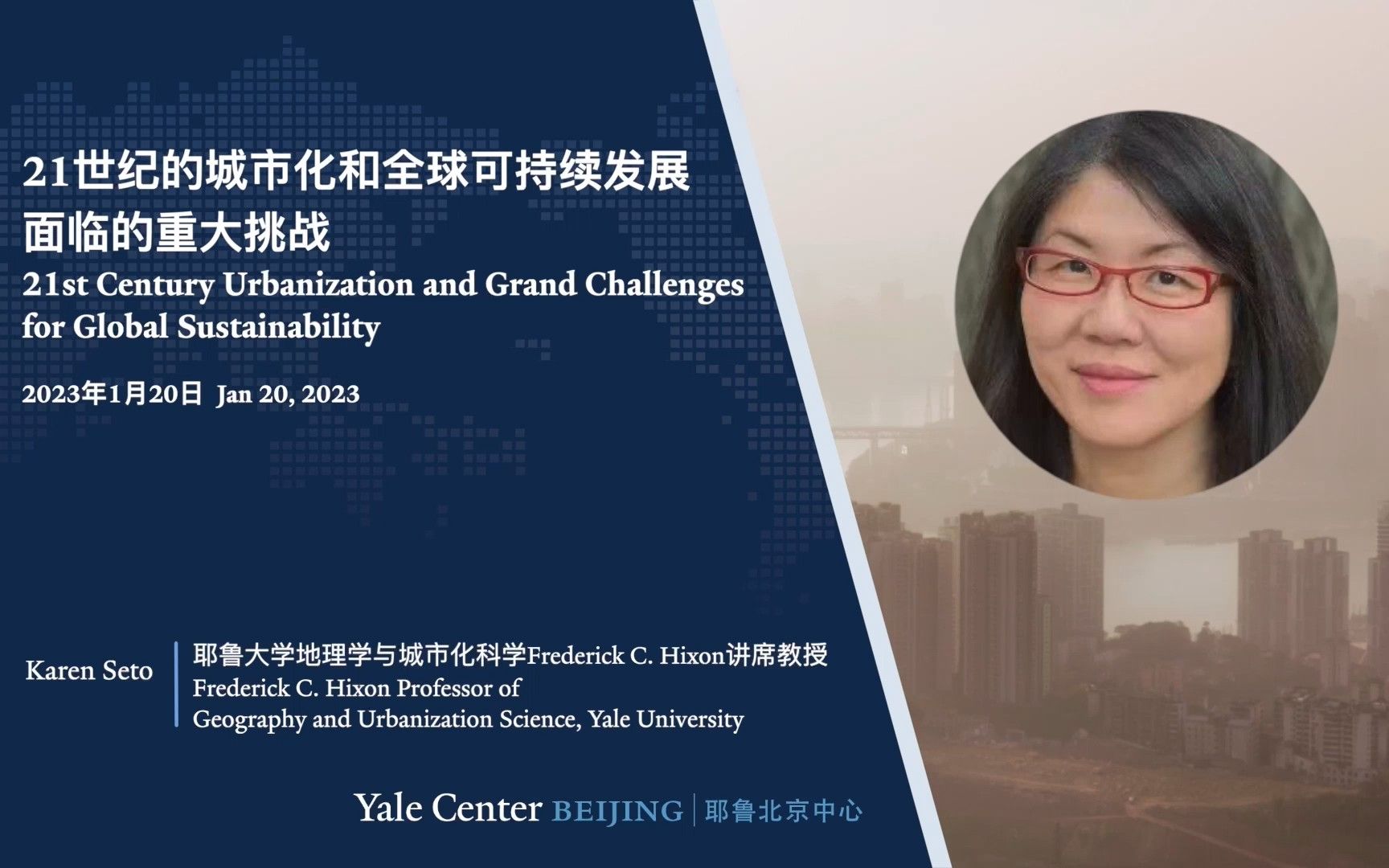
字幕摘录
| 时间 | 英文 | 中文 |
|---|---|---|
| 0:04 | I just want to say good day to everyone, especially to our speaker, Yale professor | 我只是想跟大家说再见 尤其是我们的演讲人耶鲁教授 |
| 0:09 | Karen Zito, and also some of our participants from the 2021 and 2022 Smart Talks on Climate | Karen Zito,以及2021年和2022年气候问题智能会谈的部分参与者 |
| 0:18 | Change program. | 变更程序. |
| 0:20 | Welcome to this Yale Center Beijing event on the 21st century urbanization | 欢迎来到耶鲁中心 北京21世纪城市化活动 |
| 0:27 | and grand challenges for global sustainability, which is part of the Greenberg Distinguished | 以及全球可持续性面临的巨大挑战,这是格林伯格杰出 |
| 0:32 | Colloquium featuring plot leaders who play pivotal roles in building bridges between | 学术讨论会由在建立桥梁方面发挥关键作用的图谋领导人参加。 |
| 0:38 | China and the US. | 中国和美国. |
| 0:40 | 我是北京耶鲁中心执行董事Carolee Rafferty 还有 | |
| 0:46 | a Yale College alumna. | a 耶鲁大学校友。 |
| 0:48 | For those of you who may be new to the Yale Center Beijing or events, | 对于你们中那些刚来过耶鲁中心的人来说 |
展开字幕全文(936 条)
| 序号 | 英文 | 中文 |
|---|---|---|
| 1 | I just want to say good day to everyone, especially to our speaker, Yale professor | 我只是想跟大家说再见 尤其是我们的演讲人耶鲁教授 |
| 2 | Karen Zito, and also some of our participants from the 2021 and 2022 Smart Talks on Climate | Karen Zito,以及2021年和2022年气候问题智能会谈的部分参与者 |
| 3 | Change program. | 变更程序. |
| 4 | Welcome to this Yale Center Beijing event on the 21st century urbanization | 欢迎来到耶鲁中心 北京21世纪城市化活动 |
| 5 | and grand challenges for global sustainability, which is part of the Greenberg Distinguished | 以及全球可持续性面临的巨大挑战,这是格林伯格杰出 |
| 6 | Colloquium featuring plot leaders who play pivotal roles in building bridges between | 学术讨论会由在建立桥梁方面发挥关键作用的图谋领导人参加。 |
| 7 | China and the US. | 中国和美国. |
| 8 | 我是北京耶鲁中心执行董事Carolee Rafferty 还有 | |
| 9 | a Yale College alumna. | a 耶鲁大学校友。 |
| 10 | For those of you who may be new to the Yale Center Beijing or events, | 对于你们中那些刚来过耶鲁中心的人来说 |
| 11 | the center is Yale University's only university-wide center outside of the US. | 中心是耶鲁大学唯一的全美大学中心 |
| 12 | Throughout the year, | 一整年里, |
| 13 | we host activities such as these, convening leaders from all sectors to discuss the most | 我们主办这样的活动,召集所有部门的领导人讨论 |
| 14 | cutting-edge, important, and critical issues facing our world. | 我们的世界面临的尖端、重要和关键问题。 |
| 15 | Today, I'm so delighted | 今天,我很高兴 |
| 16 | to be able to invite professor Karen Zito to discuss trends in urbanization, which is | 能够邀请Karen Zito教授讨论城市化的趋势,即 |
| 17 | happening rapidly and at such an unprecedented scale, and the opportunities and challenges | 迅速发生和规模空前,机会和挑战 |
| 18 | urbanization presents for global sustainability. | 城市化带来了全球可持续性。 |
| 19 | Karen Zito is the Frederick C. Hexen Professor | 凯伦・齐托是弗雷德里克・C・赫克森教授 |
| 20 | of Geography and Urbanization Science at Yale University. | 耶鲁大学地理和城市化科学学院。 |
| 21 | An urban and land change scientist, | 一位城市和土地变化科学家, |
| 22 | she's one of the world's leading experts on contemporary urbanization and global change. | 她是当代城市化和全球变化的世界领先专家之一. |
| 23 | She uses satellite, remote sensing, field interviews, and modeling methods to understand | 她利用卫星、遥感、现场访谈和建模方法来理解 |
| 24 | how urbanization will affect the planet, including land change, food systems, biodiversity, | 城市化将如何影响地球,包括土地变化、粮食系统、生物多样性、 |
| 25 | and climate change. | 气候变化。 |
| 26 | She has pioneered methods to reconstruct urban land use with satellite imagery | 她开创了利用卫星图像重建城市土地利用的方法 |
| 27 | and has developed novel methods to forecast urban expansion. | 并开发了预测城市扩张的新方法. |
| 28 | She has extensive fieldwork experience | 她有丰富的实地工作经验 |
| 29 | in Asia, sorry about that, especially China and India, and I understand that she'll be traveling | 在亚洲,对不起, 特别是中国和印度, 我知道她会旅行 |
| 30 | to India soon, where she has conducted research for over 20 and 10 years respectively. | 不久,她在印度分别进行了20年和10年以上的研究。 |
| 31 | Professor | 教授 |
| 32 | Zito serves on numerous national and international scientific bodies. | Zito在众多国家和国际科学机构任职。 |
| 33 | She currently co-chairs the U.S. | 她目前担任美国共同主席. |
| 34 | National Academy's Climate Security Roundtable, established by the direction of the U.S. Congress | 国家学院气候安全圆桌会议,由美国国会指示设立. |
| 35 | to help better understand and anticipate the ways climate change affects U.S. national security | 帮助更好地了解和预测气候变化如何影响美国国家安全 |
| 36 | interests. | 权益。 |
| 37 | She also co-chairs the U.S. National Academy Subcommittee on U.S.-China Scientific | 她还担任美国国家科学院美国-中国科学小组委员会共同主席。 |
| 38 | Engagement. | 订婚 |
| 39 | She has been a coordinating lead author for the IPCC sixth and fifth assessment | 她一直是气专委第六次和第五次评估的协调牵头作者。 |
| 40 | reports. | 报告。 |
| 41 | From 2000 to 2008, she was faculty at Stanford, where she held joint appointments in | 从2000年到2008年,她在斯坦福大学担任教职,在那里,她曾于2000年和2008年在斯坦福大学联合任职。 |
| 42 | the Woods Institute for the Environment and the School of Earth Sciences. | 森林环境研究所和地球科学学院。 |
| 43 | She has received many | 她收到了许多 |
| 44 | awards for her scientific contributions, including the Outstanding Contributions to | 科学贡献奖,包括 |
| 45 | Remote Sensing Research Award from the American Association of Geographers. | 美国地理学家协会遥感研究奖. |
| 46 | Professor Zito is | 齐托教授 |
| 47 | the member, as a member of the U.S. National Academy of Sciences, the American Academy of Arts | 作为美国国家科学院、美国艺术科学院的成员 |
| 48 | and Sciences, the Connecticut Academy of Science and Engineering, and the American Association for | 康涅狄格科学与工程学院和美国 |
| 49 | the Advancement of Science. | 科学的进步。 |
| 50 | She received her Ph.D. in geography from Boston University. | 她获得了波士顿大学的地理博士学位. |
| 51 | And as a short note, I'm so delighted to welcome her back to the Yale Center of Beijing for an | 简而言之,我很高兴欢迎她回到北京耶鲁中心 |
| 52 | event, albeit virtually, because the last time she was able to come was back in 2014 and 2015, | 事件,尽管几乎是,因为她最后一次能来是在2014年和2015年, |
| 53 | when the Center first started. | 当中心开始。 |
| 54 | So I hope that we might be able to get you back for a tenth year, | 所以我希望我们能把你带回十年 |
| 55 | maybe. | 也许 |
| 56 | So today's event will proceed as follows. | 因此,今天的活动将如下。 |
| 57 | Professor Zito will give a presentation followed | Zito教授随后将发表演讲 |
| 58 | 由Q&A. | |
| 59 | All of you participants are welcome to type your questions in the chat box as we speak, | 欢迎各位与会者在我们发言时 在聊天箱里输入你们的问题 |
| 60 | and I'll select the questions and later unmute some of you to pose your questions. | 我将选择问题 并随后解密 你们中的一些人 提出你的问题。 |
| 61 | I may also | 我也会 |
| 62 | ask some questions that the Yale Center Beijing team has collected in advance. | 问耶鲁中心北京队事先收集的一些问题. |
| 63 | Without further ado, | 不用再多说了 |
| 64 | let's welcome Professor Zito. | 欢迎齐托教授 |
| 65 | Thank you. | 谢谢 |
| 66 | Thank you, Carol. | 谢谢你,卡罗尔。 |
| 67 | And it's really nice to be back to | 回来真好 |
| 68 | Yale Center Beijing, even if it's just virtually. | 耶鲁中心北京,即使它只是几乎。 |
| 69 | But it's nice to see the center behind you. | 但看见你身后的中央真好 |
| 70 | So | 这么说 |
| 71 | it's nice to be here virtually. | 很高兴能来这里 |
| 72 | So I will spend the next 35 or 40 minutes talking about | 所以我接下来要花35到40分钟 |
| 73 | 21st century urbanization trends and really highlighting at a very high level what these | 21世纪的城市化趋势,并在非常高的层次上真正突出 |
| 74 | trends mean for sustainability at the global level. | 趋势意味着全球一级的可持续性。 |
| 75 | So I'm going to focus on the challenges | 所以我要专注于挑战 |
| 76 | that urbanization presents for global sustainability. | 城市化带来了全球可持续性。 |
| 77 | So I'd like to start off with | 所以我想先说 |
| 78 | some general statistics first. | 先是一些一般统计数字。 |
| 79 | So we right now are twenty twenty three. | 所以,我们现在是23。 |
| 80 | Let's see where we're | 让我们看看我们在哪里 |
| 81 | twenty twenty three. | 二十三岁 |
| 82 | We have almost about four and a half billion people living in cities and towns. | 我们大约有45亿人生活在城镇中。 |
| 83 | One of the things that I want to remind everyone is that this is a incredible change over a very | 我想提醒大家的一件事是 这是一个不可思议的变化 而不是一个非常 |
| 84 | short period. | 时间短。 |
| 85 | As recently as 1950, that's less than 100 years ago. | 最近到1950年,还不到一百年前. |
| 86 | We had fewer than one billion | 我们只有不到十亿 |
| 87 | people living in cities and towns. | 居住在城镇的人。 |
| 88 | So in less than 100 years, our urban population has increased | 在不到100年的时间里,我们的城市人口增长了 |
| 89 | significantly to over four, four and a half billion people. | 超过45亿人口 |
| 90 | And the most recent U.N. estimate is that | 联合国最新估计是 |
| 91 | by 2050, our global population will reach 10 billion people. | 到2050年,全球人口将达到100亿人。 |
| 92 | Of those 10 billion people, | 在这100亿人口中, |
| 93 | six point seven billion will be living in cities and towns. | 670亿人口将生活在城镇中。 |
| 94 | So that means that over the next 30 | 所以,这意味着在未来30年 |
| 95 | or so years, we're adding about two and a half billion people to cities and towns. | 大约几年,我们增加了大约25亿人 到城镇。 |
| 96 | Just to put this into perspective, that means that every five days the urban population is | 仅仅从这个角度来说,这意味着每5天城市人口 |
| 97 | increasing by one million people every five days, one million people. | 每五天增加100万人,100万人。 |
| 98 | So here's a picture of | 所以这里的图片 |
| 99 | Shanghai. | 上海报. |
| 100 | Maybe some of you are from Shanghai or based in Shanghai. | 也许你们中有些人来自上海或者总部在上海. |
| 101 | This is a picture of Shanghai | 这是上海的照片 |
| 102 | in the early 80s. | 在80年代早期。 |
| 103 | And this is Shanghai today. | 这是今天的上海。 |
| 104 | So this is a kind of urban development that I imagine | 因此,这是一种城市发展,我想 |
| 105 | many of you on the call have witnessed in your own life. | 你们中的很多人 都亲眼目睹了你们的生活 |
| 106 | But I want to underscore that this is not | 但我要强调,这不是 |
| 107 | only happening in very big cities like Shanghai, it's also happening in rural places. | 只有发生在上海这样的大城市, 也发生在农村。 |
| 108 | We are seeing | 我们看见了 |
| 109 | urbanization in rural places such as what you see here. | 农村的城市化,比如你在这里看到的。 |
| 110 | This is in Nepal. | 这是在尼泊尔。 |
| 111 | This is a picture taken in | 这是一张照片 |
| 112 | one of my field sites in Nepal in the Himalayas. | 在喜马拉雅山的尼泊尔, |
| 113 | This is in the early 90s. | 这是在90年代初。 |
| 114 | And this is the same | 这是相同的 |
| 115 | place just in the 2010s. | 刚刚在2010年代。 |
| 116 | So in about 20 years, we see this pretty significant change even in | 所以在20年左右,我们看到了这个 相当显著的变化,即使是在 |
| 117 | the Himalayas. | 喜马拉雅山脉。 |
| 118 | So urban populations are increasing, but another really important trend is that average | 因此,城市人口正在增加, 但另一个真正重要的趋势是平均 |
| 119 | household size is declining. | 家庭规模正在下降。 |
| 120 | And this is happening again all around the world, where the most recent | 这又发生在世界各地, 在那里最近的 |
| 121 | statistics coming out of China show that this is also a trend happening in China. | 来自中国的统计数字表明,这也是中国出现的趋势。 |
| 122 | So here I show | 所以我在这里展示 |
| 123 | five countries, US, New Zealand, Australia, the UK and Canada. | 五个国家,美国、新西兰、澳大利亚、联合王国和加拿大。 |
| 124 | I could show any country in the world | 我可以向全世界任何国家展示 |
| 125 | and the trend would be the same, very, very similar. | 并且这个趋势是相同的,非常,非常相似。 |
| 126 | The only difference is that the y-axis | 唯一的区别是Y轴 |
| 127 | would be different. | 这将是不同的。 |
| 128 | In the US, the average household size was about three and a half | 在美国,平均家庭规模约为3个半 |
| 129 | in 1960. | (原始内容存档于1960年). In 1960. |
| 130 | And today it is about two and a half. | 今天大约是两个半。 |
| 131 | If we were looking at African countries, | 如果我们看着非洲国家, |
| 132 | this y-axis would be seven or eight, going down to about five or six. | 这个Y轴是7或8, 下降约5或6。 |
| 133 | But again, we would see a very, | 但再说一遍,我们会看到一个非常, |
| 134 | very similar trend all around the world. | 全世界的趋势都非常相似 |
| 135 | So populations are increasing, but household sizes | 因此,人口不断增加,但家庭规模 |
| 136 | are declining. | 正在下降。 |
| 137 | The other big trend is that new home sizes are also increasing. | 另一个大趋势是,新的家庭规模也在增加。 |
| 138 | So in 1973, the average size of a new house in the United States was about 1,600 square feet. | 因此1973年,美国新房子的平均规模约为1600平方英尺. |
| 139 | And today it's almost 2,800 square feet. | 而今天它几乎是2800平方英尺. |
| 140 | And again, this is the same trend all around the world. | 同样,全世界的趋势也一样。 |
| 141 | The only difference is that the y-axis would be different if we were looking at China | 唯一的区别是,如果我们看中国,Y轴会不同 |
| 142 | or other countries. | 或其他国家。 |
| 143 | So what does this all mean? | 这是什么意思? |
| 144 | So these are three big urbanization challenges, | 这就是三大城市化挑战, |
| 145 | increases in population, declining household size, but increasing size of the homes themselves. | 人口增加,家庭规模减少,但家庭本身规模增加。 |
| 146 | I will just briefly, very briefly talk about what this means for land and resources, food, | 我将简短地,非常简短地谈谈这对土地和资源、粮食意味着什么。 |
| 147 | biodiversity, and then I'll end with some discussion about climate change. | 最后我要谈谈气候变化。 |
| 148 | So first of all, the increase in population requires land, right? | 首先,人口增长需要土地,对吧? |
| 149 | We need land to build homes, | 我们需要土地来建造家园 |
| 150 | to build schools, hospitals, roads. | 建造学校、医院、道路。 |
| 151 | And we've done some research in my lab where we have forecasted | 我们在我的实验室做了一些研究 在那里我们预测 |
| 152 | urban land expansion going out to 2050. | 城市土地扩张至2050年. |
| 153 | So I'm showing the work of one of my PhD students, | 所以我在展示我一个博士生的作品 |
| 154 | Hanning Huang, who is now a professor actually in China at NYU Shanghai. | 黄咸宁,现为纽约大学上海分校中国实际教授. |
| 155 | And he has forecasted the growth of land all around the world. | 他预测了世界各地土地的增长。 |
| 156 | And what you see here in this | 你在这里看到的 |
| 157 | map are probabilities that different areas will become urban. | 地图是不同地区将成为城市的概率。 |
| 158 | So anything in red indicates higher | 所以,任何红色的表示 更高 |
| 159 | probability that this will become urban land by 2050. | 有可能到2050年成为城市土地。 |
| 160 | And the lighter colors and yellow | 颜色和黄色 |
| 161 | means that it still has a probability, but not a hundred percent. | 表示它仍然有概率,但不是100%。 |
| 162 | So lower probability, | 这么低的概率, |
| 163 | but still probability that it will become urban. | 但还是有可能变成城市 |
| 164 | If we look at China and India, we see that | 如果我们看看中国和印度,我们就会看到 |
| 165 | there's going, we forecast a lot of new urban expansion in the center part of the country. | 接下来,我们预测,中部地区将出现许多新的城市扩张。 |
| 166 | And if we look at India, what's interesting is that we forecast a lot of new urban development, | 如果我们看看印度,有趣的是 我们预测了很多新的城市发展, |
| 167 | but very small scale. | 但规模很小。 |
| 168 | So you can imagine rather than in China, where you have big mega urban | 所以,你可以想象,而不是在中国, 在这里,你拥有巨大的城市 |
| 169 | regions, in India, you have smaller towns and cities becoming larger. | 在印度,小城镇和城市变得更大。 |
| 170 | So they're more discreet. | 所以他们比较谨慎 |
| 171 | And the same thing we're forecasting for sub-Saharan Africa. | 同样的事情,我们预测 撒哈拉以南非洲。 |
| 172 | But this is one of the | 但这是其中之一 |
| 173 | biggest impacts that we're seeing is land, the loss of land. | 我们所看到的最大的影响是土地,土地的损失。 |
| 174 | If we looked and see what this might | 如果我们看看,看看这可能是什么 |
| 175 | mean in terms of how much new land. | 意味着多少新土地。 |
| 176 | So let's just focus here on this last row. | 所以,让我们集中在这里 最后一行。 |
| 177 | Here, this is the total amount of urban land around the world in square kilometers in 2015. | 这里,这是2015年全世界城市土地的总面积,以平方公里计. |
| 178 | These are different scenarios, SSP 1, 2, 3, 4, and 5. | 这些是不同的情景,SSP 1, 2, 3, 4和5. |
| 179 | SSP 2 is basically a middle of the road. | SSP 2基本上是一个中间路段. |
| 180 | Basically, if we continued, if the world economies continue to develop as is. | 基本上,如果我们继续,如果世界经济继续发展。 |
| 181 | This SSP 5 is one where we see rapid urban and economic development that's really fueled by | 这个SSP 5是我们看到城市和经济发展迅速的地方, 而城市和经济发展真的由 |
| 182 | fossil fuels. | 化石燃料。 |
| 183 | And we can see in this scenario, we can almost see a doubling of the urban | 我们可以看到,在这个情景中, 我们几乎可以看到城市翻了一番 |
| 184 | footprint, nearly a doubling of the urban footprint. | 足迹 城市足迹几乎翻了一番 |
| 185 | Even in the middle of the road, | 即使在路中间 |
| 186 | we're expecting to see over 150,000 square kilometers of new urban land. | 我们期望看到超过15万平方公里的新城市土地。 |
| 187 | The point that I want to highlight here is that there's a very large range, | 我想强调的一点是 范围很广 |
| 188 | depending on what will happen to the world's economy. | 取决于世界经济将发生什么。 |
| 189 | But if we take the average of these | 但是如果我们把平均这些 |
| 190 | forecasts, what this means is that we're expecting to see a lot of new urban development happening | 预测,这意味着,我们期待看到许多新的城市发展 |
| 191 | every single day. | 每一天都这样 |
| 192 | This is a picture of an American football field. | 这是一张美国足球场的照片。 |
| 193 | It is equal to | 这等于 |
| 194 | 20,000 American football fields becoming urban every single day for the next 40 years. | 在接下来的40年里,每天有2万个美国足球场成为城市. |
| 195 | So someplace on the planet, we will see 20,000 American football fields becoming urban. | 地球上的某个地方,我们会看到两万个美国足球场变成城市。 |
| 196 | If we | 如果我们 |
| 197 | were to aggregate all this new land, all this new urban land, it will be the equivalent of these four | 这些新土地,这些新城市土地, 将相当于这四块土地 |
| 198 | countries. | 国家。 |
| 199 | It's a lot of land. | 其地甚广. |
| 200 | So it's the land of these four countries, France, Germany, Spain, | 所以这是这四个国家的土地 法国 德国 西班牙 |
| 201 | Italy combined. | 意大利加起来。 |
| 202 | So it's a lot of land. | 故曰多地. |
| 203 | What does this mean for resources? | 这对资源意味着什么? |
| 204 | So that's just land that | 所以那只是陆地 |
| 205 | we were just talking about. | 我们只是在谈论。 |
| 206 | But if we look at the resources required to build the built environment, | 但是如果我们看看建设建筑环境所需的资源, |
| 207 | I want to highlight what this new urban area will look like. | 我想强调这个新的城市地区将是什么样子。 |
| 208 | These are graphs that show | 这些图显示 |
| 209 | the development of cities in both the lateral dimension, so lateral expansion. | 城市的横向发展,所以横向扩张。 |
| 210 | So this is | 这就是 |
| 211 | outward growth. | 外向增长. |
| 212 | But on the y-axis, this shows upward growth, so vertical development. | 但是在y轴上,这显示了向上增长,所以垂直发展. |
| 213 | The colors indicate increase in density. | 颜色表示密度增加。 |
| 214 | These colors that are purple and black, | 这些颜色是紫黑色的, |
| 215 | they mean that vertical growth in places that were already urban in an earlier period. | 它们意味着在较早时期就已经是城市地区的纵向增长。 |
| 216 | So what I'm showing here are six Indian cities. | 我在这里展示的是六个印度城市。 |
| 217 | And what you can see here is over a 10-year period, | 你可以看到的是10年的时间里 |
| 218 | Indian cities are primarily going to grow outward. | 印度城市主要向外发展. |
| 219 | So they're outward. | 所以他们是外向的。 |
| 220 | So there's this | 是这样的 |
| 221 | lateral expansion. | 横向扩张. |
| 222 | But there's very little upward expansion. | 但向上扩张很少. |
| 223 | Do you see these little arrows here? | 你看到这些小箭了吗? |
| 224 | There's a little bit of upward expansion. | 有一点向上扩张. |
| 225 | So Indian cities are growing out, but they're not | 因此,印度的城市正在成长,但它们不是 |
| 226 | growing up very much. | 长大了很多。 |
| 227 | Okay. | 摆 |
| 228 | So here we see African cities. | 我们在这里看到了非洲城市。 |
| 229 | So African cities over this 10-year period, | 因此在这十年里,非洲城市, |
| 230 | they're also growing outward and a little bit upward, but not very much. | 它们也向外发展 向上增长一点点 但并不太多 |
| 231 | So I want everyone to | 所以我希望每个人都 |
| 232 | put in their chat. | 让他们聊聊天 |
| 233 | If folks can just pull up in the chat, I'm going to show | 如果人们可以拉起 在聊天,我要去显示 |
| 234 | Chinese cities in a minute. | 中国城市一瞬间. |
| 235 | What do you expect Chinese cities to look like? | 中国城市长什么样子? |
| 236 | Can people just type in the chat? | 人们能打个字吗? |
| 237 | What do you expect these arrows to look like? | 你期望这些箭看起来像什么? |
| 238 | Carol, could you just read off some of these? | 卡罗尔,你能读一下这些吗? |
| 239 | Because I can't see my chat right now. | 因为我现在看不到我的谈话 |
| 240 | Sure. | 当然 |
| 241 | Let me see. | 让我看看。 |
| 242 | Upwards dramatically. | 向上明显。 |
| 243 | Okay. | 摆 |
| 244 | Upwards dramatically. | 向上明显。 |
| 245 | Grow both out and up. | 既长出与上. |
| 246 | Higher, but not very much outward. | 更高,但不太对外。 |
| 247 | Okay. | 摆 |
| 248 | All right. | 好吧,我们走。 |
| 249 | So the side, thanks Carol. | 这边,谢谢卡罗尔。 |
| 250 | So the sides of these arrows indicate how much. | 因此,这些箭头的侧面表明了多少. |
| 251 | So the longer the arrow means more expansion. | 所以箭的长度越长,就意味着更多的扩张. |
| 252 | And the longer the arrow, if it's vertical, | 而箭越长,如果它是垂直的, |
| 253 | means very high cities. | 意味着非常高的城市。 |
| 254 | So somebody said high, but not very up. | 所以有人说高,但不太高。 |
| 255 | All right. | 好吧,我们走。 |
| 256 | So A for that student or | 所以A给那个学生,或者 |
| 257 | whoever it is, put that in the chat. | 不管是谁 把那个放到聊天室 |
| 258 | So we can see Chinese cities over this last 10-year period | 因此,我们可以看到中国的城市 在过去10年的时间里 |
| 259 | from 1999 to 2009 have grown dramatically upwards. | 从1999年到2009年,增长迅速。 |
| 260 | So you can see Shanghai, that picture that I just | 这样你就能看见上海,那张照片,我只是 |
| 261 | showed, very, very high. | 显示,非常,非常高。 |
| 262 | A city like Beijing, a lot of upward growth, but not as high as Shanghai | 像北京这样的城市,很多向上增长,但比不上上海 |
| 263 | and a lot of outward growth, much more lateral growth. | 和大量的外向增长, 更多的横向增长。 |
| 264 | And then if we look at smaller cities, | 然后如果我们看看小城市, |
| 265 | so here in the south in Dongguan, you can see it's still upward, but a lot more lateral growth. | 所以在东莞的南部, 你可以看到它仍然向上, 但更多的横向增长。 |
| 266 | And if we were to look at smaller Chinese cities, like in central China or in western China, | 如果我们看看中国较小的城市 比如中国中部或西部 |
| 267 | we would actually see that those cities look a lot more like African and more like Indian cities, | 我们其实会看到这些城市 更像非洲城市 更像印度城市, |
| 268 | that they're smaller in scale and not a lot of upward growth. | 说它们的规模较小,没有太多向上增长。 |
| 269 | So we see a lot of upward growth. | 因此我们看到了很多向上的增长。 |
| 270 | What this means is we can translate this to raw materials, the raw material demand. | 这意味着,我们可以将它转化为原材料,原材料需求。 |
| 271 | And globally, what we are expecting between now and 2050 is with all these cities growing | 从全球来看,现在到2050年,我们所期望的 是所有这些城市都在增长 |
| 272 | out upward, it's going to require a lot of new concrete, steel, and raw materials. | 需要大量新的混凝土 钢材和原材料 |
| 273 | And the UN estimates that the raw materials to build and operate cities will more than double | 联合国估计,建造和运营城市的原材料将增加一倍以上。 |
| 274 | from 40 billion tons a year to 90 billion tons. | 从每年400亿吨到900亿吨。 |
| 275 | And they conclude that the high demand for such | 他们得出结论,这种需求很高, |
| 276 | raw materials far exceeds what the planet can sustainably provide. | 原材料远远超出了地球可持续提供的能力。 |
| 277 | So this is one of | 所以这是其中之一 |
| 278 | the biggest challenges. | 最大的挑战。 |
| 279 | How can we continue to build cities in a way that does not require | 我们如何以不需要的方式继续建设城市? |
| 280 | so much raw materials? | 这么多原料? |
| 281 | This is a big design and engineering challenge. | 这是一个巨大的设计和工程挑战。 |
| 282 | I'm going to transition | 我要去过渡 |
| 283 | to talk about food systems. | 谈论食物系统。 |
| 284 | So if we know that urbanization requires land, so here's a picture | 所以,如果我们知道城市化需要土地, 所以这里有一个图片 |
| 285 | of Chinese city, new urban development encroaching on agricultural land, we know that if cities take | 新的城市发展侵蚀了农地 我们知道如果城市占据 |
| 286 | land, they're going to take land in places that used to be agriculture. | 他们将在曾经是农业的地方夺取土地。 |
| 287 | So here's an example of | 举个例子 |
| 288 | that. | 那个 |
| 289 | But it's not happening only in China. | 但并非只在中国发生. |
| 290 | So this last picture was in China. | 所以,这最后一张照片是在中国。 |
| 291 | This is a picture | 这是一张画 |
| 292 | in the US. | 在美国 |
| 293 | Urban development is also taking up prime agricultural land in the US, but it's not | 城市发展也占据了美国的主要农业用地,但不是 |
| 294 | only happening in the US, it's happening in Egypt. | 只有在美国,它发生在埃及。 |
| 295 | It's happening all around the world. | 普现一切世界. |
| 296 | The most productive agricultural land are being taken up by urban development. | 城市发展占用了生产力最高的农田。 |
| 297 | This is a huge challenge. | 这是一个巨大的挑战。 |
| 298 | Now, this is work also done in my lab. | 这是在我的实验室里做的 |
| 299 | If we were to look globally | 如果我们从全球看 |
| 300 | at the amount of agricultural land that's being lost to urban expansion, | 由于城市扩张而损失的农田数量, |
| 301 | this is the total amount right here. | 这是这里的总金额。 |
| 302 | It's about 2% of the global crop land is being lost to urban | 大约全球2%的耕地被城市占用 |
| 303 | expansion. | 扩张。 |
| 304 | So that's not that much. | 所以,这不是太多。 |
| 305 | But if we look at the productivity of this land, | 但是如果我们看看这片土地的生产力 |
| 306 | if this number was one, it means that the land that's being lost is equal in productivity to | 如果这个数字是一个,这意味着 失去的土地 生产力等于 |
| 307 | the national average. | 全国平均水平。 |
| 308 | This number is 1.77. | 这个号码是1.77。 |
| 309 | So this means that it is almost twice as productive as the | 也就是说它几乎是 |
| 310 | average, more productive than national. | 平均,比国家生产力高。 |
| 311 | And if we look at very specific countries, | 如果我们看看非常具体的国家, |
| 312 | so if we look at, for example, Nigeria, Nigeria is estimated to lose almost 6% of its crop land, | 因此,如果我们看看,例如尼日利亚,估计尼日利亚将损失近6%的耕地, |
| 313 | Pakistan will lose about seven and a half. | 巴基斯坦将损失约7个半. |
| 314 | Egypt is estimated to lose a third of its crop land | 埃及估计损失三分之一的耕地 |
| 315 | to urban expansion. | 到城市扩张。 |
| 316 | And Vietnam will lose about 10%. | 而越南将损失约10%. |
| 317 | So this is really dramatic. | 所以,这是真的戏剧性。 |
| 318 | And if we look at | 如果我们看 |
| 319 | Africa back here, the agricultural land that will be lost is significantly more productive. | 回到这里的非洲,将失去的农业用地的生产力要大得多。 |
| 320 | So this is going to be pretty substantive. | 因此,这将是相当实质性的。 |
| 321 | And if we look at specific crops like maize, rice, | 如果我们看看特定的作物,比如玉米,水稻, |
| 322 | soybean and wheat, we see that for wheat, Africa will lose about a quarter of its wheat production. | 豆类和小麦,我们看到,对于小麦,非洲将损失其小麦产量的四分之一左右。 |
| 323 | China will lose about 13% of its wheat production to urban development. | 中国将损失约13%的小麦产量用于城市发展. |
| 324 | So we're going to lose a | 所以我们会失去一个 |
| 325 | lot of very productive agricultural land due to urbanization. | 许多非常有生产力的农田 由于城市化。 |
| 326 | But the other part of urban | 但另一个城市 |
| 327 | impacts on food system is through demand. | 对粮食系统的影响是通过需求。 |
| 328 | And one of the biggest things that we're seeing with | 我们所看到的其中一件大事 |
| 329 | urbanization, especially in places like in China and also in Africa, is a significant change in | 城市化,特别是在中国和非洲等地的城市化是一个重大变化。 |
| 330 | diets and an increase in food away from home and an increase in fast foods. | 饮食与家外饮食增加,快餐增加. |
| 331 | In the food literature, | 在食物文献中, |
| 332 | there's a very big literature that shows that as countries urbanize and as they get richer, | 有一种非常大 的文献显示, 随着国家城市化 和它们变得更富, |
| 333 | there's what is called a nutrition transition. | 这就是所谓的营养过渡。 |
| 334 | People go from eating, they're foraging for plants, | 人们从吃饭开始, 他们为植物觅食, |
| 335 | they're eating just plants that they find. | 他们只吃他们找到的植物 |
| 336 | They go from that to legumes and from legumes to | 他们从那里到豆类 从豆类到豆类 |
| 337 | wheats and grains. | 小麦和谷物。 |
| 338 | So like rice and wheats. | 故如稻麦. |
| 339 | And from wheats and grains, they go to dairies | 他们从麦子和谷粒中去乳房, |
| 340 | and processed sugars and eating much more meat. | 和加工糖 和吃更多的肉。 |
| 341 | This is a very well-known nutrition transition | 这是一个众所周知的营养转型 |
| 342 | that's been documented all around the world. | 全世界都有记录 |
| 343 | What we see is a new urban transition. | 我们看到的是新的城市过渡。 |
| 344 | In addition to the transition that I just talked about, the other thing that we're seeing is an | 除了我刚才提到的过渡之外,我们看到的另一件事是 |
| 345 | increase in the food away from home. | 增加远离家的食物。 |
| 346 | So these are data from 80 countries. | 这些数据来自80个国家。 |
| 347 | So each dot represents | 所以每个点代表 |
| 348 | a country. | 一个国家。 |
| 349 | And on the y-axis, this is the percentage of the country's population that is urban. | 在Y轴上,这是全国城市人口的百分比。 |
| 350 | And here on the x-axis, this is the percentage of food that is consumed away from home. | 在X轴上,这是离家消费的食物的百分比。 |
| 351 | You see a very clear and positive correlation that the more a population, a country's population | 你可以看到一个非常明确和积极的关联 越是人口,一个国家的人口 |
| 352 | is urban, the larger percentage of the food that is actually consumed away from home. | 城市,实际在家庭以外消费的食品比例较高。 |
| 353 | There's a lot of different reasons for this. | 其原因各异. |
| 354 | Urban populations means that often you have dual | 城市人口意味着你经常有双重性 |
| 355 | incomes. | 收入。 |
| 356 | So both members of both of the heads of households are working. | 因此,两个家庭的户主都在工作。 |
| 357 | So there's less time to | 所以时间不多了 |
| 358 | prepare food and eat at home. | 在家准备食物和吃饭。 |
| 359 | If both people are working at the office, they're more likely to eat | 如果两人都在办公室工作 他们更有可能吃东西 |
| 360 | food at the office going out. | 办公室的食物出去。 |
| 361 | And so what we're seeing is if you imagine a world where | 所以,我们所看到的是 如果你想象一个世界, |
| 362 | most of the population is urban, this means that most of an increasing percentage of our | 大部分人口是城市人口,这意味着我们人口中大多数人口正在增加。 |
| 363 | is actually consumed away from home. | 其实是远离家消耗的。 |
| 364 | Another aspect of this is that as we eat more food away | 另一方面是,当我们吃 更多的食物离开 |
| 365 | from home and as we have longer supply chains, this has a big impact on what is called cold | 我们拥有更长的供应链 这对所谓的冷有重大影响 |
| 366 | chain logistics. | 连锁物流. |
| 367 | So back in the olden day, when we used to shop more frequently for food, | 以前我们经常买东西买东西 |
| 368 | food didn't have to be refrigerated as much. | 食物不需要冷藏这么多 |
| 369 | But as we shop less frequently and we go to a larger | 但是,当我们购物少 频繁,我们去一个更大的 |
| 370 | supermarkets like Carrefour or Walmart, you know, these larger chains, it means that we're | 像家乐福或沃尔玛这样的超市 这些更大的连锁店意味着我们 |
| 371 | actually buying foods that are refrigerated. | 实际购买冷藏食品. |
| 372 | So here on the bottom, you see this picture of a | 因此,这里的底部, 你看这张照片, |
| 373 | storage unit for fruit that has to be refrigerated. | 必须冷藏的水果的储存单位。 |
| 374 | We've seen trucks that have to be refrigerated. | 我们已经看到卡车必须冷藏。 |
| 375 | So this has a really big impact in terms of the energy demand to refrigerate the food, | 这对冷冻食品的能源需求 有很大的影响 |
| 376 | to bring the food to our cities. | 把食物带到我们的城市 |
| 377 | This cold chain logistic is enormous. | 这种冷链物流是巨大的。 |
| 378 | It means that we have to | 这意味着我们必须 |
| 379 | build warehouses like this up in the upper right-hand corner that are all chilled to chill our food | 在右上角建这样的仓库 冷却我们的食物 |
| 380 | so that the food does not spoil during this transportation process. | 在运输过程中,食物不会腐烂。 |
| 381 | And it's also not only | 不仅如此 |
| 382 | for fruits and vegetables, but also for seafood. | 水果和蔬菜,还有海鲜。 |
| 383 | And one of the most interesting innovations | 也是最有趣的创新之一 |
| 384 | around seafood is designing packaging and also cultivating fish that can live outside of water | 海鲜周围正在设计包装和养殖能生活在水外的鱼 |
| 385 | for long periods of time. | 长时期。 |
| 386 | This is fascinating. | 这太有趣了。 |
| 387 | So there are some types of fish now that we are | 所以现在有些种类的鱼了 |
| 388 | eating that are able to live outside of water for like six or eight hours. | 吃着能活在水外6到8个小时的食物 |
| 389 | It's incredible, right? | 这是不可思议的,对不对? |
| 390 | And so anyway, so there's this whole new, you know, development in the food industry | 所以,总之,有 一个全新的,你知道的,食品业的发展 |
| 391 | so that we can have these longer supply chains. | 这样我们就可以拥有更长的供应链。 |
| 392 | So I've talked about land resources. | 因此,我谈到了土地资源。 |
| 393 | I'm going | и璶ǐ |
| 394 | to switch to talking about urbanization's impacts and challenges for biodiversity. | 转向谈论城市化对生物多样性的影响和挑战。 |
| 395 | So what we are seeing is around the world on the Y-X axis, a significant increase in urban land. | 因此,我们所看到的是世界各地在Y-X轴线上,城市土地显著增加。 |
| 396 | So I showed some of those numbers earlier. | 所以,我早些时候展示了其中的一些数字。 |
| 397 | What this means is that there's a significant decline | 这意味着有显著的下降 |
| 398 | in the habitat range, the amount of habitat that's available to species. | 在栖息地范围, 物种可用的栖息地的数量。 |
| 399 | So we look at | 所以我们看 |
| 400 | 1700, we had very little urban land, but we had a lot of habitat. | 1700年,我们拥有的城市土地很少,但我们拥有许多栖息地. |
| 401 | Now we're in the 2000s, | 现在我们在2000年代, |
| 402 | we have a lot of urban land and a lot of agricultural land. | 我们拥有许多城市土地和许多农业用地。 |
| 403 | And there's been this | 还有这个 |
| 404 | significant decline, an 18% decline in habitats available. | 现有生境显著下降,下降18%。 |
| 405 | So one thing is the loss of habitat, | 所以有一件事是失去栖息地, |
| 406 | but the other thing that's being affected is as we have cities, we have lights. | 但另外一件事 正在受到影响 因为我们有城市, 我们有灯。 |
| 407 | And when we have | 当我们有了 |
| 408 | nighttime lights have a big impact on biodiversity. | 夜间灯光对生物多样性有重大影响。 |
| 409 | So they have a big impact on things like bats, | 所以他们对蝙蝠之类的东西有很大的影响 |
| 410 | on owls, on lizards, salamanders, frogs, lots of different animals are actually affected by | 猫头鹰、蜥蜴、山羊、青蛙 许多不同的动物实际上都受到 |
| 411 | nighttime lights and their ability to forage at night, to eat at night, but also many animals | 晚上的灯光和夜里觅食的能力 还有很多动物 |
| 412 | actually meet at night. | 其实是在晚上见面的 |
| 413 | So this has a very big impact on reproduction of species. | 因此这对物种的繁殖有着非常大的影响. |
| 414 | The other | 另一个 |
| 415 | thing is that urbanization is accelerating evolution. | 城市化正在加速进化。 |
| 416 | And so this is being documented | 因此,这是记录 |
| 417 | all around the world and it's many different species that are rapidly evolving, partly because | 世界各地的物种都在迅速演变 部分原因是 |
| 418 | of new environments, but partly because of different species coming together, novel species | 新的环境,但部分原因 不同的物种聚集在一起, 新的物种 |
| 419 | interacting and each species actually evolving rapidly because they are interacting with novel | 相互作用,每个物种都迅速进化 因为它们与新事物相互作用 |
| 420 | species. | 物种。 |
| 421 | What we forecast, so this is again, work being done in my lab, we forecast that future | 我们预测,所以这是再次, 工作在我的实验室,我们预测未来 |
| 422 | urbanization going out to 2050 will have a very big impact on biodiversity loss. | 到2050年的城市化将对生物多样性的丧失产生重大影响。 |
| 423 | We expect that | 我们期望 |
| 424 | will involve at least the loss of more than 400 types of reptiles, more than 200 species of | 将至少涉及400多种爬行动物的丧失,200多种爬行动物的丧失。 |
| 425 | amphibians and over a hundred species of mammals and birds. | 两栖动物和一百多个哺乳动物和鸟类物种. |
| 426 | So this is going to future urbanization | 因此,这是未来的城市化 |
| 427 | will drive more and more biodiversity loss. | 生物多样性将日益丧失。 |
| 428 | So finally, in my last time remaining, I want to | 最后,在我最后剩下的时间,我想 |
| 429 | So about a year ago, we published the sixth assessment report of the IPCC. | 大约一年前,我们发表了气专委的第六次评估报告。 |
| 430 | So this is the | 所以这是 |
| 431 | UN climate report that's published about every five years or so. | 大约每五年出版一次的联合国气候报告。 |
| 432 | And one of the big results from | 最大的成果之一来自 |
| 433 | that report is that in the 10 years between 2010 to 2019, greenhouse gas emissions were the highest | 该报告指出,在2010年至2019年的十年中,温室气体排放量最高。 |
| 434 | they've ever been in human history. | 他们曾经在人类历史上。 |
| 435 | And we have seen that the earth has already warmed one degree | 我们看到地球已经暖和了1度 |
| 436 | C since 1850. | 从1850年起C. |
| 437 | We like to use 1850 as a starting point because that is around the time of the | 我们喜欢用1850年作为起点,因为那是大约在 |
| 438 | industrial revolution. | 工业革命。 |
| 439 | That's around the time when we started using a lot of greenhouse, a lot of | 那时我们开始使用很多温室,很多 |
| 440 | fossil fuels. | 化石燃料。 |
| 441 | We are warming about one degree since 1850. | 我们从1850年起就升温了 |
| 442 | And that the report indicates it | 报告上说 |
| 443 | concludes we are not on track to limit global warming to one and a half degrees C. The reason | 结论是,我们没有走上将全球变暖限制在1.5摄氏度的轨道。 原因 |
| 444 | why we talk about one and a half degrees C, two things I want to emphasize, this one and a half | 为什么我们谈论一个半摄氏度, 两件事我想强调,这个半 |
| 445 | degrees C is from 1850. | C度从1850年。 |
| 446 | So that is the starting point. | 这就是起点。 |
| 447 | Whenever you see people talking, scientists | 当你看到人们说话,科学家们 |
| 448 | talking about the one and a half degrees C limit, it is in comparison to 1850. | 说到一个半摄氏度的极限 和1850年相比 |
| 449 | And the reason why we | 而我们为什么 |
| 450 | talk about one and a half degrees C is really for two reasons. | 谈论一个半摄氏度的C 其实有两个原因 |
| 451 | One is that this is the temperature | 一,这是温度 |
| 452 | increase that has been agreed upon by members of the United Nations as the temperature that we want | * 增加联合国成员商定的温度 |
| 453 | to maintain to limit global warming to. | 保持将全球变暖限制在。 |
| 454 | And the reason why is that scientists, there's a lot of | 原因是科学家,有很多 |
| 455 | science that indicates that warming above one and a half degrees C could have really catastrophic | 科学显示温度上升超过一个半摄氏度 |
| 456 | impacts on human well-being on ecosystems all around the world. | 对人类福祉的影响。 |
| 457 | Now, if we look at the share | 现在,如果我们看份额 |
| 458 | of the world's population that account for emissions, it's actually a very small share | 占世界排放总量的一小部分 |
| 459 | of the world's population that are responsible for the majority of emissions. | (a) 占世界排放量大多数的人口。 |
| 460 | So what I'm showing | 所以,我显示 |
| 461 | here in this graph on the x-axis, this is the share of the world's population. | 在X轴的图中 这是世界人口的比例 |
| 462 | And on the y-axis, | 在你的轴上 |
| 463 | this is the share of the carbon footprint. | 这是碳足迹的一部分。 |
| 464 | You can see that about, oh, let's come here, about 20% | 你可以看到,哦,让我们来这里,大约20% |
| 465 | of the population is responsible for about 60% of the carbon footprint. | 约占碳足迹的60%。 |
| 466 | 40% is responsible for | 40%负责 |
| 467 | about 80% of the carbon footprint. | 大约80%的碳足迹。 |
| 468 | If we look at cities, the top 100 emitting cities account for | 如果我们看看城市,最大的100个排放城市 |
| 469 | almost 20% of the carbon footprint. | 碳足迹的近20%。 |
| 470 | So if these top 100 emitting cities focused on reducing their | 因此,如果这些排放量最大的100个城市侧重于减少其排放量 |
| 471 | greenhouse gas emissions, this would have a very big impact on reducing emissions. | 这将会对减少排放量产生重大影响。 |
| 472 | What we see is | 我们看到的是 |
| 473 | that about two thirds of carbon emissions can be attributed to existing cities and towns. | 大约三分之二的碳排放可归因于现有城市和城镇。 |
| 474 | So if we | 所以,如果我们 |
| 475 | look here, this is on the y-axis, this is the urban per capita emissions. | 你看,这是Y轴, 这是城市人均排放量。 |
| 476 | Developed countries | 发达国家 |
| 477 | like the US, Canada, the cities there are responsible for about 23% of total urban emissions | 就像美国,加拿大,那里的城市 占城市总排放量的23% |
| 478 | and per capita emissions are almost 11 tons of carbon per capita. | 人均排放量近11吨。 |
| 479 | If we look at Asia in the | 如果我们看看亚洲 |
| 480 | developing Pacific, the per capita emissions are much lower, but there are a lot more people in Asia. | 在发展中太平洋,人均排放量要低得多,但亚洲的人口要多得多。 |
| 481 | China and India alone are 2.5 billion, so there are a lot more people. | 仅中国和印度就有25亿,所以人口就多了。 |
| 482 | The other thing to consider is | 还有一件事要考虑 |
| 483 | that in the next 20 to 30 years, we're expecting that per capita emissions in Asia and the developing | 在接下来的20到30年里, 我们期望亚洲和发展中国家的人均排放量 |
| 484 | Pacific to increase and possibly reach those in developed countries. | 太平洋将增加并可能达到发达国家的水平。 |
| 485 | So this is going to be a | 所以,这将是一个 |
| 486 | very big challenge going forward. | 巨大的挑战 前进。 |
| 487 | The good news is that if we look in the future, there's a lot | 好消息是,如果我们展望未来,就有很多 |
| 488 | we can control in terms of future greenhouse gas emissions that come from cities. | 我们可以控制未来来自城市的温室气体排放。 |
| 489 | This graph | 本图 |
| 490 | indicates the emissions that are associated with building future cities. | 说明与建设未来城市有关的排放。 |
| 491 | So if we look at, let's | 所以,如果我们看,让我们 |
| 492 | say in this dark blue, if we use state-of-the-art building design and low carbon infrastructure, | 如果用最先进的建筑设计和低碳基础设施 |
| 493 | this shows how much new carbon emissions will be due to using state-of-the-art building design. | 这表明使用最先进的建筑设计将产生多少新的碳排放。 |
| 494 | If we were to just build cities as we have been building them in the last 20 and 30 years, | 如果我们要像过去20年和30年一样建造城市, |
| 495 | we would envision this total urban greenhouse gas emissions, CO2 emissions, up to about 35. | 我们设想,城市温室气体排放总量、二氧化碳排放量将达到35个左右。 |
| 496 | But if we actually use very state-of-the-art infrastructure, or even better yet, if we use | 但是如果我们真的使用非常先进的基础设施, 或者更好,如果我们使用 |
| 497 | low carbon energy systems, we see these different wedges where we can save on future emissions, | 低碳能源系统,我们看到这些不同的楔形物 我们可以节省未来的排放, |
| 498 | depending on how we build our future cities. | 取决于我们如何建设未来城市。 |
| 499 | But the other thing to keep in mind is that | 但另一个要记住的是 |
| 500 | building cities will affect greenhouse gas emissions. | 建设城市将影响温室气体排放。 |
| 501 | But the other thing is that | 但还有一件事 |
| 502 | as cities expand, they will also affect their local climate. | 随着城市扩张,它们也会影响当地气候. |
| 503 | So I imagine many people here on | 所以我想这里有很多人 |
| 504 | the call are familiar with something called the urban heat iron. | 这个电话是熟悉的 城市热铁。 |
| 505 | Cities are hotter than their | 城市比他们更热 |
| 506 | surrounding areas. | 周围区域。 |
| 507 | But urban expansion, the buildup of the vertical space, the buildup | 但城市扩张 垂直空间的积聚 积聚 |
| 508 | of the outward space, that actually contributes to urban heat. | 外向空间, 这实际上会增加城市的热量。 |
| 509 | And so this is, again, the work | 所以这是,再次,工作 |
| 510 | of one of my doctoral students who shows that urban expansion could increase daytime temperatures | 我的一个博士生 显示城市扩张会增加白天的温度 |
| 511 | up to 5.6 degrees C. This means that urban-driven heat will be even greater than climate change-driven | 最高为5.6°C. 这意味着城市驱动的热量将甚至大于气候变化驱动的热量。 |
| 512 | heat. | 热。 |
| 513 | So let me just say that again. | 所以,让我再说一遍。 |
| 514 | In places where urban expansion will significantly increase | 在城市扩张将显著增加的地方 |
| 515 | heat, in some places, the urban expansion-driven heat will be greater than the heat, the increase | 热量,在一些地方,城市扩张驱动的热量 将大于热量,增加 |
| 516 | in temperature due to climate change. | 由于气候变化,温度上升。 |
| 517 | So I want to wrap this up and bring this all back to the | 所以,我想结束这个 并把这些都带回 |
| 518 | IPCC report, which we concluded that unless there is immediate, rapid, and large-scale reduction | 气候小组的报告,我们的结论是,除非立即、迅速和大规模地减少 |
| 519 | in greenhouse gas emissions, limiting warming to one and a half degrees C will be beyond reach. | 在温室气体排放方面,将升温限制在1.5度C将遥不可及。 |
| 520 | So what do we mean by immediate, rapid, and large-scale reductions? | 那么,立即、迅速和大规模削减意味着什么? |
| 521 | Well, it means | 嗯,这意味着 |
| 522 | completely transforming the energy grid in cities. | 彻底改变城市的能源网 |
| 523 | It means redesigning cities so that we can walk | 意思是重新设计城市 这样我们才能步行 |
| 524 | and bike and use mass transit and not be reliant so much on cars. | 和自行车,并使用大众中转, 不依赖这么多的汽车。 |
| 525 | Again, the good news is we actually | 再说一次,好消息是我们 |
| 526 | have an unprecedented opportunity because more than 60% of the forecasted urban areas in 2050, | 有了前所未有的机会,因为2050年预测的城市地区有60%以上; |
| 527 | they haven't been built. | 他们还没有建成。 |
| 528 | So we have an incredible opportunity to design future cities so that they | 因此,我们有一个不可思议的机会 设计未来的城市,以便他们 |
| 529 | can be low carbon or even better, net-zero carbon, and we can redesign existing cities | 我们可以重新设计现有的城市。 |
| 530 | so that they are more walkable and so that they can transition to low carbon. | 这样它们更容易行走,并可以过渡到低碳. |
| 531 | So I want to thank | 所以,我想感谢 |
| 532 | you for everyone's attention, and I'm happy to take questions. | 请大家注意 我很乐意回答问题 |
| 533 | Great. | 不错 |
| 534 | Thank you very much, | 非常感谢 |
| 535 | Professor Sito. | 西图教授. |
| 536 | I see that there are already questions being typed. | 我看到已经有问题被输入。 |
| 537 | I'll start asking | 我开始问 |
| 538 | Andes, and everyone please feel free to post more questions. | 安第斯,请大家随意张贴更多的问题。 |
| 539 | I may also draw some from the | 我也可以从 |
| 540 | pool of questions we've already collected. | 我们已经收集了很多问题 |
| 541 | So let me try to find you, Andy. | 让我去找你,安迪 |
| 542 | Oh, thank you, Professor, | 谢谢你 教授 |
| 543 | and thank you for your speech. | 并感谢你的发言。 |
| 544 | And my question is that considering the large amount of population | 我的问题是,考虑到大量人口 |
| 545 | and the vast number of rural areas, some experts in China argue that urbanization in China should | 中国的一些专家认为,中国的城市化应该 |
| 546 | not develop that fast, and the paradigm of urbanization is maybe distinct from cases in | 城市化的范式可能不同于 |
| 547 | Western countries, while some others believe that the rate of urbanization in China still has a | 西方国家,而另一些国家则认为,中国的城市化速度仍然 |
| 548 | What is your opinion to the way that China will choose as for urbanization, and will there be a | 你对中国选择城市化的方式有什么看法? |
| 549 | maybe different way for China to develop urbanization? | 也许中国发展城市化的方法不同? |
| 550 | And thank you. | 谢谢 |
| 551 | Yeah, well, | 对啊 |
| 552 | I mean China already, so I spent the first 15 years of my career studying China's urbanization, | 我的意思是中国已经, 所以我在职业生涯的前15年 研究中国的城市化, |
| 553 | and it's very clear that China's path of urbanization is unlike any other country in | 很明显,中国的城市化道路 不像其他任何国家 |
| 554 | history. | 历史 |
| 555 | I don't have those slides ready, those statistics, but basically roughly in about 50 | 我没有这些幻灯片,这些统计, 但基本上大约在50个左右。 |
| 556 | years, it took China to achieve in 50 years what it took the United States about 200 years to | 花了50年时间 美国花了200年 |
| 557 | achieve in terms of urban development, in terms of the resources and infrastructure that is in | 在城市发展、资源和基础设施方面实现 |
| 558 | And I think a really important point to remember is that urbanization is strongly correlated with | 我认为一个非常重要的一点是, 城市化与 |
| 559 | increases in income. | 收入增加。 |
| 560 | And so during this time in China, rapid urbanization has also literally | 因此,在这个时候,中国的快速城市化 也实际上 |
| 561 | pulled tens of millions of people out of poverty, like extreme poverty, and hundreds of millions of | 数以千万计的人摆脱了贫困,如极端贫困,还有数亿人 |
| 562 | into a middle-class lifestyle. | 进入中产阶级的生活方式。 |
| 563 | So, I mean, the achievements of China's urbanization are really | 所以,我的意思是,中国城市化的成就 确实是 |
| 564 | remarkable, and it's one of these things that we are going to be looking back on history and say, | 令人瞩目的是,我们回顾历史并说, |
| 565 | wow, this achievement was remarkable. | 哇,这一成就是惊人的。 |
| 566 | That said, those achievements are amazing. | 尽管如此,这些成就是惊人的。 |
| 567 | That said, | 这么说 |
| 568 | we can always, every country, China included, can always make their cities even better, | 我们永远可以,每一个国家,包括中国, 永远可以让城市变得更好, |
| 569 | can even make them more livable, more walkable, less carbon-intensive. | 甚至可以让它们更可活性,更可步行,更低碳密集. |
| 570 | So I think that's a really | 所以我认为这是真的 |
| 571 | important thing to remember is that China has achieved incredible success with their cities. | 要记住的是,中国在他们的城市中取得了令人难以置信的成功。 |
| 572 | And I mean, just the fact, you know, I used to go to China two to three times a year, | 我的意思是,事实上,你知道, 我曾经去中国 每年两到三次, |
| 573 | and this is probably for you or any of you who are born. | 这可能是为你或你们中任何出生的人。 |
| 574 | So, you know, I was going to China | 我本来要去中国的 |
| 575 | two to three times a year in the mid-1990s, and places that were agriculture, you know, | 在1990年代中期,一年两到三次, 和那些地方是农业,你知道, |
| 576 | three months later, there'd be a factory, and three months later, there'd be another factory, | 三个月后,会有一个工厂, 三个月后,会有另一个工厂, |
| 577 | you know. | 你知道吗? |
| 578 | And, you know, a lot of my research is using satellite data, and I would have satellite | 而且,你知道,我的许多研究 是利用卫星数据, 我会有卫星 |
| 579 | images, and the satellite images that I had from two months before field work did not show the new | 现场工作前两个月的卫星图像没有显示新的 |
| 580 | roads that I was standing on during field work. | 我在野外工作时站在路上 |
| 581 | It was just amazing. | 这太神奇了 |
| 582 | But, you know, sometimes when | 但有时候 |
| 583 | we do things very fast, we may not be able to deliberate what is the best way, and we may not | 我们做的非常快,我们也许无法考虑什么是最好的方法,我们也许不能 |
| 584 | be able to provide, get input from the people who are living in these cities. | 能够提供,获得生活在这些城市的人的投入。 |
| 585 | So I think one of the | 所以我认为其中之一 |
| 586 | big challenges for China cities is to make them more of a human scale. | 中国城市面临的巨大挑战是使它们更具有人性。 |
| 587 | And what I mean by that | 还有我的意思 |
| 588 | is that many of China's cities, you know, I lived in Beijing for a while, you know, many of China | 是中国的许多城市,你知道,我在北京住了一段时间, 你知道,很多中国 |
| 589 | cities like Beijing, the roads are very wide. | 北京等城市,道路十分宽阔. |
| 590 | I lived very close to, I lived on the Beidao campus, | 我住得很近,住在北斗校园 |
| 591 | and I remember there was a couple of boulevards that were like, you know, four lanes wide, and | 我记得有一对夫妇的大道 喜欢,你知道,四条路宽, |
| 592 | it took a very long time to cross. | 花了很长的时间才能穿越 |
| 593 | It's very, you know, that's not really human friendly, right? | 这是非常,你知道, 这不是真的人友好的,对不对? |
| 594 | We | 我们 |
| 595 | like to be, humans like to be actually, you know, this is very related to our time in our mother's | 喜欢,人类喜欢 实际上,你知道, 这与我们的时间 在我们的母亲 |
| 596 | home. | 回家去 回家来 |
| 597 | This is really quite interesting. | 这真的很有趣。 |
| 598 | Humans like to be in cozy places. | 人类喜欢在舒适的地方。 |
| 599 | We like to be in | 我们喜欢加入 |
| 600 | streets with like being surrounded by trees, smaller, smaller, smaller, smaller streets. | 像被树包围的街道, 更小,更小,更小的街道。 |
| 601 | We actually don't feel so good psychologically if we're on very wide streets. | 如果我们在很宽的街道上 心理上我们感觉不太好 |
| 602 | And part of this is | 这其中一部分是 |
| 603 | related back to us simply as humans. | 和我们人类的关系 |
| 604 | If we're in wide places, we're more likely to be at risk | 如果我们在广阔的地方, 我们更可能面临危险 |
| 605 | to be eaten by a predator, right? | 被掠食者吃掉 对吧? |
| 606 | Of course, we don't have those same kind of risks in a city, | 当然,我们没有同样的风险 在城市, |
| 607 | but I'm trying to just illustrate that it is in our DNA to be in smaller, cozier places. | 但我只是想说明 在我们的DNA中 是在较小的,舒适的地方。 |
| 608 | It is in our DNA as evolutionary mammals to evolve as mammals to like certain types of | 在我们的DNA中 进化的哺乳动物 进化的哺乳动物 喜欢某些类型的 |
| 609 | environments. | 环境。 |
| 610 | And so a lot of cities that have been designed that are very big scale, that are | 因此,许多城市 设计 非常大的规模,即 |
| 611 | not at the human scale, we could redesign them. | 不是在人类规模, 我们可以重新设计它们。 |
| 612 | And so, and this is a long answer to your question, | 所以,这是一个很长的答案 你的问题, |
| 613 | Andy, you know, I think that there are many opportunities for Chinese cities to be redesigned. | 安迪,你知道,我认为有很多机会 中国的城市被重新设计。 |
| 614 | And I want to highlight here that it's not just Chinese cities. | 我想在这里强调,这不仅仅是中国的城市。 |
| 615 | A lot of American cities have been | 许多美国城市已经 |
| 616 | redesigned. | 重新设计。 |
| 617 | I did my PhD in Boston, and Boston had a very large, a very large highway that cut | 我在波士顿做了博士,波士顿有条大,非常大的公路 切开 |
| 618 | through the entire city. | 穿过整个城市 |
| 619 | There was a tenure effort to take that big highway and put it underground, | 曾有终身制努力 夺取那条大公路 并把它放在地下, |
| 620 | completely redesigned the city. | 完全重新设计了城市。 |
| 621 | San Francisco is another city that had a very big highway cutting | 旧金山是另一座 公路大割断的城市 |
| 622 | across the city. | 穿过城市 |
| 623 | They redesigned it after the 1989 earthquake. | 他们在1989年地震后重新设计了它. |
| 624 | So it is a natural process for | 所以这是一个自然的过程 |
| 625 | cities to get redeveloped. | 城市被重新开发。 |
| 626 | Cities are always undergoing change. | 城市总是在变化。 |
| 627 | We don't design cities, | 我们不设计城市, |
| 628 | build them, and then, you know, it's not a museum. | 然后,你知道,这不是博物馆。 |
| 629 | And so I think that in this next 10 years, | 所以我认为在这接下来的十年里 |
| 630 | this is an incredible opportunity for Chinese cities to become even better and to become | 这是中国城市变得更美好和 |
| 631 | more human-centric and more sustainable. | 更以人为本,更可持续。 |
| 632 | Thank you, Professor Sito. | 谢谢你,西多教授 |
| 633 | I'm going to ask a question | 我要问一个问题 |
| 634 | that we collected, and it's kind of, it's a composite question from a number of people, | 我们收集, 有点, 这是一个综合问题 从一些人, |
| 635 | actually in academia. | 实际上在学术界。 |
| 636 | And it's about whether you have seen examples, whether in developing | 是关于你是否看到过实例 是否在发展 |
| 637 | or developed countries where countries or policymakers have done a good job in protecting | 国家或决策者在保护 |
| 638 | food systems and biodiversity, for example. | 例如,食物系统和生物多样性。 |
| 639 | For example, one professor from, I believe, | 例如,一名教授,我相信, |
| 640 | the Beijing Language and Culture University cited Britain's so-called anti-urbanization movement | 北京语言文化大学引用了英国所谓的反城市化运动 |
| 641 | and efforts at rural protection. | 以及保护农村的努力。 |
| 642 | What are your thoughts on some of the interesting examples that | 你对一些有趣的例子有什么想法? |
| 643 | cities or about-to-be urbanized places can draw on? | 城市或即将城市化的地方可以借鉴? |
| 644 | Thanks. | 谢谢 |
| 645 | Yeah. | 对 |
| 646 | So there are many examples | 所以有很多例子 |
| 647 | around the world of places that have protected biodiversity, and I think really important is | 在保护生物多样性的地方,我认为真正重要的是 |
| 648 | protecting agricultural land. | 保护农田。 |
| 649 | And one of the things that we've learned from this work and | 我们从这部作品中学到的一件事 |
| 650 | from research is that it's more effective to save agricultural land if multiple cities and regions | 从研究是,如果多个城市和地区,拯救农业用地更加有效 |
| 651 | work together. | 一起行动 |
| 652 | It's not so effective if one city says, you know, so if this is a city, | 如果一个城市说,它不是那么有效 所以如果这是一个城市, |
| 653 | so you can see my little, you know, this is a city and a city says, okay, we're not going to build | 这样你就能看见我的小,你知道, 这是一个城市和一个城市说,好吧,我们不会建造 |
| 654 | outside of the city and save all this land. | 城外救护一切国土. |
| 655 | That actually is not very effective because what | 这实际上不是很有效 因为什么 |
| 656 | happens is if there's another city here, people will just move to this city and this city will grow | 如果这里有另一个城市, 人们会搬到这个城市,这个城市会成长 |
| 657 | and then take up the agricultural land and this city that has its rules about not growing will | 然后占领农地 和这个城市 它的规则是不种植意志 |
| 658 | be impacted by the city and all this new development. | 受到城市和所有这些新发展的影响。 |
| 659 | So cities have to work together as regions, | 因此,城市必须合作 作为地区, |
| 660 | as mega regions to protect their agricultural land. | 保护他们的农业用地。 |
| 661 | That's number one. | 即第一义. |
| 662 | The second thing is that | 第二点是 |
| 663 | cities and regional and national governments must work together. | 城市与区域和国家政府必须共同努力。 |
| 664 | Cities can only do so much. | 城市只能做这么多。 |
| 665 | National governments are in charge of things like railways. | 国家政府负责铁路等事务. |
| 666 | National governments, like in the US, | 国家政府,像美国, |
| 667 | like in China, they're the ones that provide funding for high-speed rail, for transportation | 像中国一样,它们为高速铁路,运输提供资金 |
| 668 | corridors. | 走廊。 走廊。 |
| 669 | They also are the national governments are the ones that direct investments, | 他们也是那些直接投资的国家政府, |
| 670 | direct foreign investments. | 外国直接投资。 |
| 671 | So for example, in China in 1973, with the opening up of China, | 例如1973年随着中国的开放, |
| 672 | the national government directed foreign investments to Shenzhen, right? | 国民政府将外资投向深圳,对吗? |
| 673 | And after | 之后 |
| 674 | Shenzhen, it was to the Pearl River Delta and then to other regions in China. | 深圳,原为珠江三角洲,后又进入中国其他地区. |
| 675 | Same thing in the US, | 同样的事情在美国, |
| 676 | same thing in many other countries. | 在很多其他国家也是这样 |
| 677 | National governments can focus national investments and | 各国政府可集中国家投资, |
| 678 | international investments in a few places. | 在一些地方进行国际投资。 |
| 679 | And if national governments value biodiversity, | 如果各国政府重视生物多样性, |
| 680 | if they value agricultural land, they must work together with regional and local governments to | 如果它们重视农业用地,就必须与区域和地方政府合作, |
| 681 | protect agricultural land. | 保护农田。 |
| 682 | So this must be a multi-tier approach. | 因此,这必须是一个多层次的方法。 |
| 683 | And I think in the countries that | 我想在这些国家 |
| 684 | have done so, and not just countries, I would say cities and regions that have done so end up | 我要说,已经这样做的城市和地区最终会这样做,而不仅仅是国家。 |
| 685 | being the most successful. | 成为最成功的。 |
| 686 | The other thing that's really important to keep in mind is that | 另一件很重要的事是 记住 |
| 687 | many cities have a lot of biodiversity within the city. | 许多城市在城市内部拥有大量的生物多样性. |
| 688 | And so there's an opportunity to actually | 因此,有一个机会 实际上 |
| 689 | preserve biodiversity and inside cities and towns as they are expanding. | 保护生物多样性,以及城市和城镇内部不断扩大的生物多样性。 |
| 690 | So there's just a | 所以,只有一个 |
| 691 | huge amount of opportunity here to design cities as they develop, to maintain the green spaces, | 这里有大量的机会 设计城市 随着它们的发展, 维护绿色空间, |
| 692 | to maintain impervious surfaces. | 保持无孔的表面。 |
| 693 | There are a lot of ways that we can build cities so that they can | 有很多方法,我们可以建造城市 这样他们就可以 |
| 694 | be biologically diverse. | 生物多样性。 |
| 695 | Thank you, Professor Sito. | 谢谢你,西多教授 |
| 696 | For the next question, I'd like to ask | 关于下一个问题,我想问 |
| 697 | Wilbur Zhang, whom I believe is a lawyer from King and Wood Malisons. | 张威尔伯 我相信他是来自国王和伍德马里森斯的律师 |
| 698 | I don't know if you'd | 我不知道你会不会 |
| 699 | like to unmute and ask your question. | 喜欢解密并问你的问题。 |
| 700 | Oh, great. | 哦,伟大的。 |
| 701 | Thanks. | 谢谢 |
| 702 | Oh, thank you. | 谢谢 |
| 703 | Thank you for your | 谢谢你 |
| 704 | presentation. | 介绍。 |
| 705 | So my question is, if I may, I want to know your opinion about the low carbon | 所以我的问题是,如果可以的话, 我想知道你对低碳的看法 |
| 706 | regulations and the low carbon standards in China, because I'm not a professional in environmental | 中国的法规和低碳标准,因为我不是环境专业 |
| 707 | science. | 科学。 |
| 708 | So generally, when I'm practicing in the field of environmental protection and | 一般来说,当我在环保领域练习时 |
| 709 | infrastructure development, I may be responsible for drafting some documents or do something like | 我可能负责起草一些文件 或者做一些类似 |
| 710 | that. | 那个 |
| 711 | But I don't know much about the standards and the logics of the environmental protection | 但我对环境保护的标准和逻辑了解不多 |
| 712 | behind the work. | 在工作后面,我们是... |
| 713 | So I would like to know, do you think China now is making enough progress or | 所以,我想知道,你认为中国现在 已经取得了足够的进步,或者 |
| 714 | is still trying hard to make more low carbon standards and regulations to guide the market? | 仍在努力制定更多的低碳标准和法规来引导市场? |
| 715 | Because from my point of view, it seems we have a lot of | 因为在我看来,我们有很多 |
| 716 | ambiguous roles that generally we heavily depend on some policies instead of mandatory | 通常我们严重依赖某些政策而不是强制性的模糊作用。 |
| 717 | regulations. | 条例。 |
| 718 | And sometimes I think that may not be helpful when we are really trying to | 有时候我觉得这也许没有帮助 当我们真的试图 |
| 719 | make a low carbon society. | 创造一个低碳社会。 |
| 720 | And I just want to know your opinion about that. | 我只想知道你对此的看法。 |
| 721 | Yeah, thank you. | 谢谢 |
| 722 | Yeah, that's a really important question. | 是啊,这是一个非常重要的问题。 |
| 723 | So if I could just break your question down into two | 如果我能把你的问题分成两个 |
| 724 | parts. | 组件。 |
| 725 | So one part is what is China doing in terms of setting policies for low carbon? | 所以有一部分是中国在制定低碳政策方面在做什么? |
| 726 | And then the second part of that is really about implementation. | 然后,第二部分真正涉及执行。 |
| 727 | So here's a good example that I'm | 因此,这里有一个很好的例子,我 |
| 728 | going to give for a moment. | 将给予一分钟。 |
| 729 | So I'm wondering for all of you on the call, how many times your parents | 所以我在想你们所有的人 有多少次你的父母 |
| 730 | set rules for you, any kind of rule. | 为你制定规则 任何规则 |
| 731 | Maybe it's like how much time you can be on the internet or | 也许这就像你有多少时间 可以上网或 |
| 732 | how much exercise or how much sleep you should get. | 多少锻炼或多少睡眠你应该得到。 |
| 733 | That's a good rule. | 这规则不错 |
| 734 | Maybe your parents say, | 也许你的父母说, |
| 735 | this is how much sleep you should get. | 这是你该睡多少觉。 |
| 736 | But it's one thing to say, this is a rule or this is a | 但是,这是一件事,这是规则或这是 |
| 737 | policy. | 政策。 |
| 738 | Maybe the parents don't say it's a policy, but it's another thing to say, I'm now going to | 也许父母不说这是政策, 但这是另一个事情说,我现在要去 |
| 739 | enforce it. | 执行它。 |
| 740 | OK, now it's time to go to bed. | 好了 现在该睡觉了 |
| 741 | OK, now you have to get off your internet. | 好吧,现在你必须离开你的互联网。 |
| 742 | Right. | 对 |
| 743 | So China has done a great job in setting a lot of standards. | 因此,中国在制定许多标准方面成绩斐然. |
| 744 | They have a lot of rules. | 他们有很多规则。 |
| 745 | China's | 中国 |
| 746 | excellent at setting a lot of low carbon standards. | 在设定许多低碳标准方面非常出色. |
| 747 | The implementation is much, much harder. | 执行工作要困难得多。 |
| 748 | And I would say setting the rules is maybe half right. | 我想说,制定规则 也许是一半正确。 |
| 749 | It's very aspirational. | 甚有抱负. |
| 750 | I want to go to sleep and get enough sleep. | 我想去睡觉 得到足够的睡眠。 |
| 751 | I want to be low carbon city. | 我想成为低碳城市。 |
| 752 | I want to be a good | 我想成为一个好人 |
| 753 | student. | 学生。 |
| 754 | But then implementation means I need to get enough sleep. | 但执行意味着我需要 得到足够的睡眠。 |
| 755 | I need to enforce the rules with | 我需要执行规则与 |
| 756 | companies, with agencies, with the people. | 公司,机构,人民。 |
| 757 | And the implementation is very, very difficult. | 执行非常非常困难。 |
| 758 | I want to share a picture with you. | 我想跟你分享一张照片 |
| 759 | I want to share. | 我想分享。 |
| 760 | Let me see. | 让我看看。 |
| 761 | Let me just | 让我来 |
| 762 | see. | 看到没? |
| 763 | Let me want to share something else with you just so you can get an idea | 让我跟你们分享点别的 这样你们就可以有个主意了 |
| 764 | of the different strategies that are available, because it's a quite complicated thing if we're | 不同的策略, 因为它是一个相当复杂的事情 如果我们是 |
| 765 | going to talk about getting to low carbon or net zero carbon. | 说到低碳或净零碳。 |
| 766 | So I'm just sharing you another | 所以,我只是分享你另一个 |
| 767 | just another diagram from a paper that I've written. | 我写的报纸上的另一张图 |
| 768 | So we think about what | 所以我们想 |
| 769 | cities. | 城市。 |
| 770 | This is specifically for cities. | 这是专门针对城市的。 |
| 771 | What can cities do if we think about | 城市能做什么 如果我们想到 |
| 772 | decarbonizing, getting to net zero, getting to low carbon and net zero? | 去碳化,得到净零, 得到低碳和净零? |
| 773 | There are really three big strategies. | 有三个大战略。 |
| 774 | The first strategy is cities need to reduce the demand for | 第一个战略是城市需要减少对 |
| 775 | energy. | 能源。 |
| 776 | And really, there are three I call these things pathways. | 事实上,有三种我称之为路径。 |
| 777 | So strategy is like a big umbrella | 所以,策略就像一个大伞 |
| 778 | and then a pathway is specific. | 然后一个路径是明确的。 |
| 779 | So we can do spatial planning. | 所以我们可以进行空间规划。 |
| 780 | And if we did spatial planning | 如果我们做了空间规划 |
| 781 | where people could walk to work, that would reduce the demand for cars, reduce the demand for energy. | 人们可以步行去工作, 这将减少对汽车的需求, 减少对能源的需求。 |
| 782 | If if our buildings were more efficient, if we had appliances that were more efficient, | 如果我们的建筑更有效率, 如果我们有更有效率的电器, |
| 783 | if we conserve energy, like turn down the thermostat, that would reduce demand. | 如果我们节约能源,比如把自动调温器关掉, 就可以减少需求。 |
| 784 | But | 不过 |
| 785 | the other thing that we need to do is the cities need to switch supply of energy. | 城市需要调换能源供应。 |
| 786 | They need to | 他们需要 |
| 787 | switch supply of energy from coal fired electricity to green electricity. | 将燃煤电力的能源供应改为绿色电力。 |
| 788 | So this is what that means | 所以这就是意思 |
| 789 | by decarbonization of electricity. | 通过电的去碳化。 |
| 790 | So we need to switch our electricity supply from coal to | 所以我们需要把我们的电力供应从煤炭转为 |
| 791 | green energy. | 绿色能源。 |
| 792 | But there are a lot of things that are not using electricity, like a lot of heating | 但有很多东西不使用电, 像很多暖气 |
| 793 | is not using heat electricity. | 不使用热电。 |
| 794 | A lot of our mobility like cars and buses are not using | 我们有很多的机动性 像汽车和公交车没有使用 |
| 795 | electricity. | 电力。 |
| 796 | And the reason why we focus on using electricity or electrifying heating mobility and | 以及为什么我们注重使用电力 或电气化的供暖流动性和 |
| 797 | cooking is we can easily decarbonize electricity. | 烹饪是我们可以轻松去碳化的电力。 |
| 798 | We can use windmills or solar power to generate | 我们可以用风车或太阳能发电 |
| 799 | electricity. | 电力。 |
| 800 | So we use buses running on electricity. | 所以我们使用公共汽车运行在电力上。 |
| 801 | We can then have a decarbonized | 然后我们就可以去碳化 |
| 802 | transport system. | 交通运输系统。 |
| 803 | You can I put the scrap up here because you can see that it would be a | 我可以把废料放在这里,因为你可以看到,这将是一个 |
| 804 | lot easier to set up a lot of rules on decarbonizing all of these things by right. | 建立很多规则 正确去碳化 所有这些东西。 |
| 805 | But it's a lot harder | 但是这很难 |
| 806 | to actually implement them. | 实际执行。 |
| 807 | But one thing and one thing that is relatively easy that is part of the | 但有一件事和一件事 是相对容易的,是其中的一部分 |
| 808 | decarbonization strategy is to enhance carbon uptake. | 非碳化战略是加强碳吸收。 |
| 809 | And so this is related to the earlier | 所以这和以前有关 |
| 810 | question about biodiversity. | 生物多样性问题。 |
| 811 | If cities actually planted trees and had more vegetation, it could | 如果城市真的种树 并拥有更多的植被,它可能 |
| 812 | cities to actually help to sequester carbon. | 城市可以帮助固碳 |
| 813 | And that would have also a positive impact on | 这也会对 |
| 814 | on reducing or actually sequestering CO2. | 减少或实际封存二氧化碳。 |
| 815 | So long answer to your question. | 这么长的时间回答你的问题。 |
| 816 | It's a lot harder to | 难得多 |
| 817 | implement, but China's done quite a good job with putting a lot of things in the books. | 执行,但中国已经做了一个相当好的工作 将很多事情放在书中。 |
| 818 | I put that | 我写了 |
| 819 | graph up there, that figure up there, because I also wanted to illustrate that a lot of the | 上面的图,上面的图, 因为我也想说明很多 |
| 820 | climate change also will require behavior changes for each of us. | 气候变化还需要我们每个人改变行为。 |
| 821 | So it means that if we can, | 所以,这意味着如果我们可以, |
| 822 | we should adopt a more low carbon lifestyle. | 我们应该采取更低碳的生活方式。 |
| 823 | And it will be not only up to | 不仅如此 |
| 824 | governments to implement these changes, but also up to us as individuals. | 政府执行这些改革,但也取决于我们个人。 |
| 825 | Thanks, Professor Tito. | 谢谢,铁托教授 |
| 826 | In the interest of time, I'm going to kind of quickly | 为了时间的考虑,我要快点 |
| 827 | slot in. | 插槽 。 |
| 828 | There's a short question about whether you thought COVID-19 accelerated or impeded | 关于你是否认为COVID-19加速或阻碍 |
| 829 | urbanization in developing countries. | 发展中国家的城市化。 |
| 830 | 我要揭开Christine Ma问你的问题 | |
| 831 | about green cities. | 关于绿色城市。 |
| 832 | And that would be the last question. | 这是最后一个问题。 |
| 833 | Thanks. | 谢谢 |
| 834 | Hi, Professor. | 嗨,教授,你好吗? |
| 835 | Can you hear me? | 你能听到我吗? |
| 836 | Yeah, I hear you fine. | 是啊,我听到你没事。 |
| 837 | Yeah, thank you for a very informative lecture on urbanization and | 是的,谢谢你的演讲 关于城市化和 |
| 838 | its challenges. | 挑战。 |
| 839 | So obviously, I take geography at school. | 很明显,我在学校学习地理。 |
| 840 | And then in our school discussions, | 然后在学校的讨论中, |
| 841 | I heard a lot of some people brought up that, for example, Saudi Arabia has designed a new | 我听到很多人提起过 比如沙特阿拉伯设计了一个新的 |
| 842 | kind of linear city that's supposed to have a green space and a very sustainable net zero | 那种线性城市 应该有一个绿色的空间 一个非常可持续的净零 |
| 843 | kind of city model. | 一种城市模式。 |
| 844 | And then also Malaysia has proposed one that has no cars on the island. | 之后马来西亚也提出在岛上没有汽车的车型. |
| 845 | So obviously, some countries are kind of proposing this kind of environmental-friendly | 很明显,一些国家在提议这种环境友好 |
| 846 | cities that are new, like the newest probably renewable energies that they integrate into their | 城市是新的, 像最新的 可能是可再生能源 他们融入到自己的 |
| 847 | city systems so that they can better achieve the net zero carbon goals or integrate the environment, | 城市系统,以便能更好地实现净零碳目标或整合环境, |
| 848 | for example, having plans on the buildings and everything. | 例如,在建筑物和所有东西上都有计划。 |
| 849 | So obviously, that design is great, | 很明显,这个设计很棒 |
| 850 | but the challenges we're debating all over about it is like, obviously, people wouldn't move to | 但是我们一直在争论的难题是, 很明显,人们不会移动到 |
| 851 | these new cities because they've been living in the old city for years. | 这些新城市 因为他们在老城生活了多年 |
| 852 | And why would they move? | 他们为什么要动? |
| 853 | And then also, it's like how building that city also costs a lot of raw materials. | 还有,这就像建造这座城市 也花费了很多原材料。 |
| 854 | But on the | 不过在 |
| 855 | other hand, improving upon the existing cities is also a challenge because you said it's easy | 另一方面,改善现有城市也是一个挑战,因为你说很简单 |
| 856 | to set the rules and set the goals, but it's hard to implement all the changes. | 来设定规则和设定目标,但很难实施所有的改变. |
| 857 | So for example, | 比如说, |
| 858 | you can change the ways of generating energy, but you have to rebuild all the pipelines and | 你可以改变能源生成方式 但你必须重建所有管道 |
| 859 | all the lines and everything. | 所有线条和一切。 |
| 860 | And then also, I heard, for example, Yale had this system where | 还有,我听说,例如,耶鲁有这个系统 |
| 861 | they can store heat and then use a kind of recycling system where they can use the heat | 他们可以储存热量 然后使用一种循环系统 他们可以使用热量 |
| 862 | to heat up the building in winter. | 冬天给大楼加热 |
| 863 | But then obviously, you can't pluck out a building and | 但很明显,你不能拔出一个建筑 |
| 864 | build an underground vent and then put the building back down. | 建造地下通风口,然后把大楼倒下. |
| 865 | So obviously, building up | 很明显,正在建立 |
| 866 | on the existing city also requires a lot of challenges because it's been there for ages, | 在现有的城市也需要很多挑战 因为它已经存在了很多年了 |
| 867 | and redeveloping it also has challenges. | 并且重新发展它也面临挑战。 |
| 868 | So I was asking you whether having a new city is a | 所以我问你 新城市是不是 |
| 869 | feasible solution to climate change or which kind of side do you take, whether it's building a new | 解决气候变化的可行办法 或者你选择哪一边 不论它正在建立一个新的 |
| 870 | city or improving upon existing ones? | 城市还是现有城市的改善? |
| 871 | Well, Christina, your class is definitely | 克里斯蒂娜 你的课绝对是 |
| 872 | addressing some of the most pressing issues and clearly you have a good handle on them. | 解决一些最紧迫的问题,你显然能很好地处理这些问题。 |
| 873 | There are dozens and dozens of examples in history where governments have tried to build, | 历史上有几十个例子 政府试图建立, |
| 874 | they have tried and they have built new cities as an attempt to be more sustainable and pull people | 他们尝试了,他们建造了新的城市 以试图更可持续和吸引人们 |
| 875 | there. | 这里 |
| 876 | There is not a single example of them being successful because exactly like you just said, | 没有一个例子能证明他们成功,因为正如你刚才所说, |
| 877 | why are people going to move to a city that they have no roots in, for one, but also, | 为什么人们要搬到一个 他们没有根基的城市, 一个人,但是, |
| 878 | there's a real challenge if we think that we know how to design a city, the best city for people to | 如果我们认为我们知道如何设计一个城市, 一个人们最好的城市, |
| 879 | basically know how to do it less wrong than right, but we don't know 100% what the right, | 基本上知道如何做错 而不是正确, 但我们不知道100% 什么是正确, |
| 880 | what all the solutions are. | 所有的解决办法是什么。 |
| 881 | And so I would say the better solution is to actually redesign the | 所以我想说,更好的解决办法是 真正重新设计 |
| 882 | existing cities because also, as you said, Christina, it takes a lot of resources to build | 因为,正如你所说,克里斯蒂娜 建造城市需要大量资源 |
| 883 | these new cities. We basically know how to do it less wrong than right, but we don't know 100% | 这些新城市。 我们基本上知道如何做错小于正确, 但我们不知道100% |
| 884 | And and we're better off taking the land | 我们最好把土地拿走 |
| 885 | that is already a city and redesigning it. | 这已经是一个城市 并重新设计它。 |
| 886 | That takes a lot longer. | 这需要更长的时间。 |
| 887 | But ultimately, it creates much more durable solutions. | 但归根结底,它创造了更持久的解决办法。 |
| 888 | I have a lot of other thoughts on this, but given the time, | 我对此有很多其他想法,但考虑到时间, |
| 889 | I'll just end it there. | 我会在那里结束它。 |
| 890 | But but I think it is important to know that there are so many examples | 但我认为重要的是 要知道 有很多例子 |
| 891 | in history also where cities have been redesigned to be much more sustainable. | 历史上也曾对城市进行重新设计,使其更具可持续性。 |
| 892 | I'll just give one example very quickly, which is in Seville, Spain. | 我很快举一个例子, 在西班牙塞维利亚。 |
| 893 | In two years, the city built over 80 kilometers of bike lanes, | 在两年内,城市建造了80多公里的自行车道, |
| 894 | and they took the bike lanes that were they built them in streets | 他们走的自行车道 他们建在街道上 |
| 895 | that had cars. | 有车。 |
| 896 | Nobody want none of the business owners wanted to get rid of, | 没有人希望任何 企业老板想要摆脱, |
| 897 | you know, space for cars | 你知道,车的空间 |
| 898 | because they thought that was important for their business. | 因为他们认为这对他们的生意很重要 |
| 899 | But ultimately, they were able to do it. | 但最终,他们做到了。 |
| 900 | And it has completely I was in Seville this past summer looking at this | 去年夏天我在塞维利亚 看这个 |
| 901 | completely redesigned the space and changed the city. | 完全重新设计了空间,并改变了城市。 |
| 902 | So, you know, every city can redesign themselves. | 所以,你知道,每个城市都可以重新设计自己。 |
| 903 | It's pretty remarkable. | 这是相当显著的。 |
| 904 | Thank you so much. | 非常感谢 |
| 905 | Well, first of all, thank you very much to Professor | 首先,非常感谢教授 |
| 906 | Karen Cito for making time for this very informative, | 凯伦·西托为这个信息丰富的事准备了时间 |
| 907 | inspiring and engaging talk. | 鼓舞人心的演讲 |
| 908 | I've learned a great deal and I'm sure everybody has as well. | 我学到了很多,我相信每个人都有。 |
| 909 | I really hope that with | 我真的希望这样 |
| 910 | the policy changes with | 政策变化 |
| 911 | in China, that we'll all be able to meet at the Yale Center Beijing soon, | 在中国,我们很快就会在北京耶鲁中心见面 |
| 912 | including Professor Karen Cito, as well as our audiences. | 包括凯伦·西托教授 还有我们的观众 |
| 913 | As a tradition for for our online events, what we do at the end is we | 作为我们网上活动的传统,我们最终要做的就是我们 |
| 914 | try to ask people if you're able to turn on your cameras to turn them on | 试着问人们,如果你能打开你的摄像机 打开它们 |
| 915 | so that we can take a really quick group photo. | 这样我们就可以拍张非常快的团体照片。 |
| 916 | And also, we will unmute you in case you want to say | 而且,我们会解除你 以防你想说 |
| 917 | thank you to Professor Karen Cito. | 感谢凯伦·西托教授 |
| 918 | So I'm going to count down from five. | 故从五下数. |
| 919 | So five or three, three, | 所以五三个,三, |
| 920 | two, one. | 二,一个。 |
| 921 | Say, yeah, yeah, yeah. | 说曰. |
| 922 | And please feel free to unmute yourself and say thank you and | 请放松一下 说声谢谢 |
| 923 | wish everyone a fantastic year of the rabbit. | 祝大家过上完美的一年 |
| 924 | Yes. | 对 |
| 925 | Happy New Year. | 新年快乐 |
| 926 | Yes. | 对 |
| 927 | Happy New Year. | 新年快乐 |
| 928 | This is our last talk | 这是我们最后一次谈话 |
| 929 | before the Chinese New Year. | 在中国新年之前 |
| 930 | So thank you, everyone, for joining and to Professor Cito for the talk. | 感谢大家的加入 感谢西托教授的演讲 |
| 931 | Thanks, Carol. | 谢谢 卡罗尔 |
| 932 | Thank you. | 谢谢 |
| 933 | Thank you, everyone. | 谢谢大家 |
| 934 | Have a good night. | 边 |
| 935 | Bye. | 再见。 |
| 936 | Happy New Year. | 新年快乐 |
该视频共有字幕 938 条。解锁更多字幕为会员功能,请移动到 价格