谁在为帝国作画?耶鲁x布朗x港中文研究者对谈:一段被“贸易”
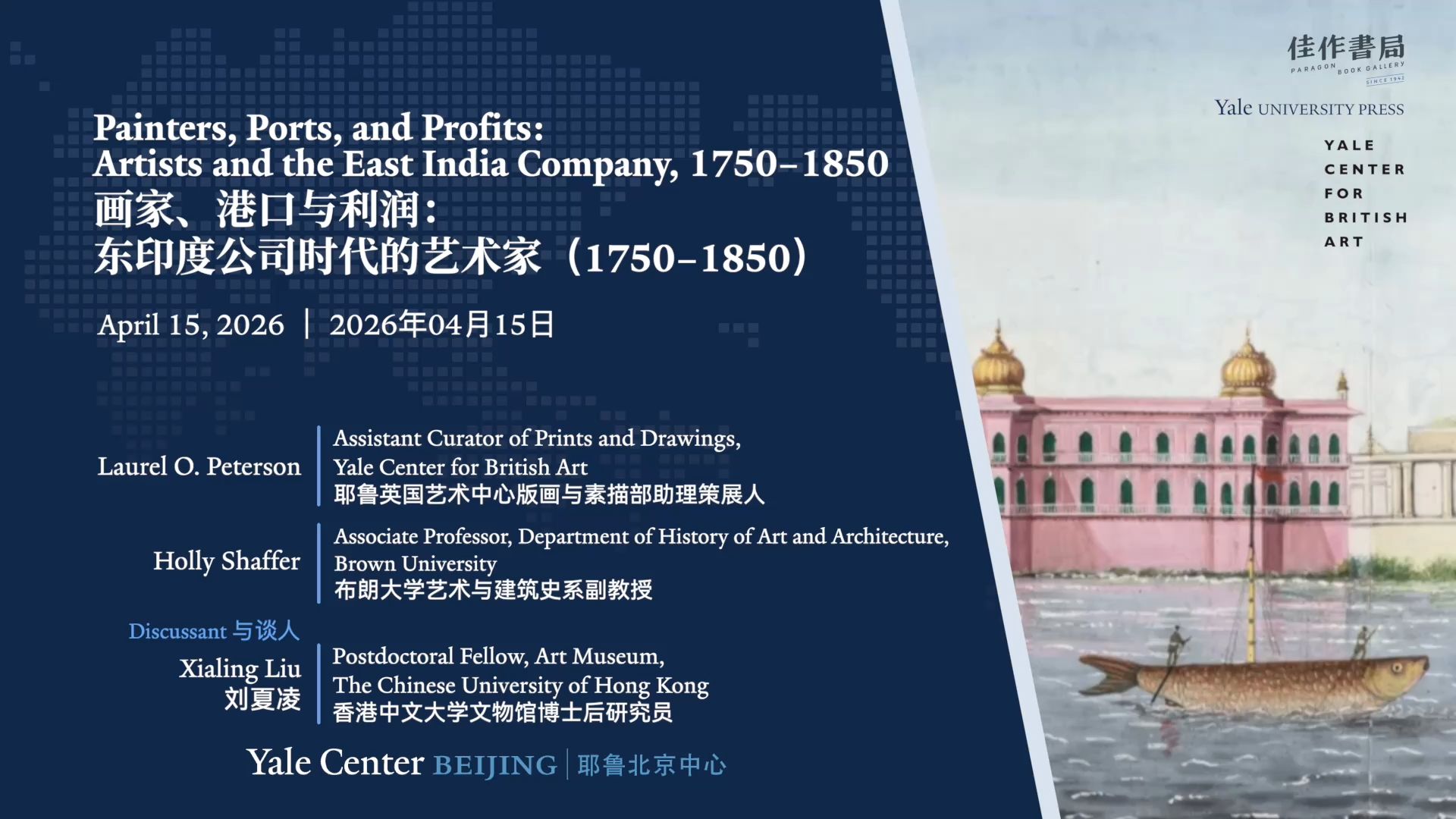
字幕摘录
| 时间 | 英文 | 中文 |
|---|---|---|
| 0:04 | Before we start the lecture, let me introduce the three guests of this lecture. | 在开始讲座之前,让我介绍一下这讲座的三位嘉宾。 |
| 0:10 | The speaker, Raoul Peterson, is the assistant curator of the English Art Centre, | 演讲者拉乌尔·彼得森是英国艺术中心的助理主管, |
| 0:14 | which is based in the Sculpture Department. | 设在雕塑部 |
| 0:17 | His research focuses on 18th-century British art, | 他的研究重点是18世纪的英国艺术, |
| 0:21 | especially the Sculpture Museum. | 尤其是雕塑博物馆 |
| 0:22 | He once designed the wooden statues of John Shing, Sajint, | 他曾经设计过约翰胜,萨金特的木雕塑, |
| 0:27 | architecture, drama, and fantasy, | 建筑 戏剧 幻想 |
| 0:29 | the Sculpture Museums of the Bibiena family, the Zhu'er stone, and the Feshe collection. | 比比埃纳家族的雕塑博物馆,朱尔石刻和费舍收藏. |
| 0:33 | He is currently planning the new exhibition of the Sculpture Museum, | 他目前正在计划 雕塑博物馆的新展览, |
| 0:37 | Gawain、John和Michelang的作品展览, |
展开字幕全文(1579 条)
| 序号 | 英文 | 中文 |
|---|---|---|
| 1 | Before we start the lecture, let me introduce the three guests of this lecture. | 在开始讲座之前,让我介绍一下这讲座的三位嘉宾。 |
| 2 | The speaker, Raoul Peterson, is the assistant curator of the English Art Centre, | 演讲者拉乌尔·彼得森是英国艺术中心的助理主管, |
| 3 | which is based in the Sculpture Department. | 设在雕塑部 |
| 4 | His research focuses on 18th-century British art, | 他的研究重点是18世纪的英国艺术, |
| 5 | especially the Sculpture Museum. | 尤其是雕塑博物馆 |
| 6 | He once designed the wooden statues of John Shing, Sajint, | 他曾经设计过约翰胜,萨金特的木雕塑, |
| 7 | architecture, drama, and fantasy, | 建筑 戏剧 幻想 |
| 8 | the Sculpture Museums of the Bibiena family, the Zhu'er stone, and the Feshe collection. | 比比埃纳家族的雕塑博物馆,朱尔石刻和费舍收藏. |
| 9 | He is currently planning the new exhibition of the Sculpture Museum, | 他目前正在计划 雕塑博物馆的新展览, |
| 10 | Gawain、John和Michelang的作品展览, | |
| 11 | the artist of Trinidad. | 特立尼达的艺术家 |
| 12 | The other speaker, Horace Sheff, | 另一位演讲者霍拉斯·谢夫, |
| 13 | is the art history and architecture professor at Brown University. | 是布朗大学的艺术史和建筑学教授。 |
| 14 | Currently, his research focuses on 18th- to 19th-century British and South Asian art. | 目前,他的研究重点是18世纪到19世纪的英国和南亚艺术. |
| 15 | His works include the works of the 1760s to the 1910s, | 他的作品包括1760年代到1910年代的作品, |
| 16 | and the works of art creation and occupation in the West India War. | 以及西印度战争中艺术创作和占领的作品. |
| 17 | This book has also won several international awards. | 这本书还获得了多个国际奖项. |
| 18 | Horace also wrote the 51st book on Asian art. | 贺拉斯还写了第51部关于亚洲艺术的著作. |
| 19 | This book focuses on the flow of flat art between Asia and Europe. | 这本书主要讲述了平面艺术在亚洲和欧洲之间的流传. |
| 20 | He is currently writing a new book on food, art, and the taste of art. | 他目前正在写一本关于食物、艺术和艺术品味的新书。 |
| 21 | The other speaker, Liu Xiaoling, | 另一位发言者刘晓玲, |
| 22 | is the art history and architecture professor at the Central Academy of Arts and Sciences, | 是中央艺术和科学院的艺术史和建筑教授, |
| 23 | and the post-doctoral researcher at the Hong Kong University of Chinese Arts and Sciences. | 及香港华中文理大学博士后研究员. |
| 24 | She has participated in the research project of the Baixian Foundation. | 她参加了碧霞基金会的研究项目. |
| 25 | Her research focuses on 17th- to 18th-century cross-cultural art history, | 她的研究集中在17世纪到18世纪的跨文化艺术史上, |
| 26 | material culture, and Asian art. | 物质文化与亚洲艺术. |
| 27 | She is particularly concerned about the Chinese style of Chinese flat art and Chinese art. | 她尤其关注中国平面艺术和中国艺术的中国风格. |
| 28 | I believe that our three guests' sharing and communication | 我相信我们三个客人的分享和交流 |
| 29 | will bring us a lot of new inspiration and thoughts. | 将给我们带来许多新的灵感和想法。 |
| 30 | Next, I will hand over the microphone to our presenters today, | 接下来,我今天把麦克风交给我们的演讲人, |
| 31 | Laurel and Holly. | 劳蕾尔和霍莉 |
| 32 | OK, I will pass the microphone to you, Laura and Holly. | 好吧,我会把麦克风传给你,劳拉和霍莉。 |
| 33 | OK. | 摆 |
| 34 | Thank you so much. | 非常感谢 |
| 35 | And thank you for welcoming us to Paragon Bookstore. | 谢谢你欢迎我们来到帕拉贡书店 |
| 36 | We're delighted to be here and to share our exhibition, | 我们很高兴来到这里 分享我们的展览 |
| 37 | Painters, Ports and Profits, Artists and the East India Company, 1750 to 1850. | 画家,港口和利润,艺术家和东印度公司,1750年至1850年. |
| 38 | And we'll also just show you the cover of the book, | 我们还会给你看这本书的封面 |
| 39 | especially as this is such a wonderful bookstore. | 特别是因为这里是个很棒的书店 |
| 40 | And then we'll move on into telling you a little bit about the Yale Center for British Art, | 然后我们再跟你谈谈 耶鲁英国艺术中心 |
| 41 | where the exhibition is on view right now. | 展览现在在景区 |
| 42 | So we are coming to you from New Haven, Connecticut, | 我们从康涅狄格州纽黑文来找你 |
| 43 | just about two hours on the train from New York City. | 大约两个小时 从纽约市出发的火车。 |
| 44 | And this is the museum where the exhibition is being shown right now, | 这是博物馆 展出现在, |
| 45 | the Yale Center for British Art, | 耶鲁英国艺术中心, |
| 46 | 建筑由建筑师Louis Kahn设计 | |
| 47 | And so you're seeing it from the outside and the inside. | 故从内外观之. |
| 48 | The collection is, the museum is about 50 years old, | 藏品是 博物馆有50年的历史 |
| 49 | and it was the gift of a Yale College alumnus, Paul Mellon, | 这是耶鲁大学的校友保罗·梅隆的礼物 |
| 50 | who was the class of 1929, | 1929年的班级 |
| 51 | who came from the Mellon family along a banking dynasty | 他来自梅隆家族 沿着银行王朝 |
| 52 | that was also very interested in art. | 对艺术也很感兴趣 |
| 53 | And he was a passionate collector of British art | 他是一个热情的英国艺术收藏家 |
| 54 | and collected a lot in the 1950s, 60s and 70s | 1950年代,60年代和70年代收集了很多 |
| 55 | and gave his collection to Yale University, | 将他的收藏献给耶鲁大学, |
| 56 | along with the building and an endowment | 与建筑物和捐赠 |
| 57 | to ensure that it could continue to move forward. | 确保它能够继续前进。 |
| 58 | So this is the collection that most of the works in the show | 这就是节目中大部分作品的收藏 |
| 59 | and in the book are coming out of. | 书里写着... |
| 60 | For many people familiar with our museum, | 对于许多熟悉我们博物馆的人来说, |
| 61 | and I'm showing you just three of our sort of prized works in the collection. | 我给你们看的是 我们收藏的三部作品 |
| 62 | But the collection itself, which has, in terms of prints, | 但收藏本身, 就指纹而言, |
| 63 | it has about around 100,000 objects in total. | 它总共约有10万个物体。 |
| 64 | And what we wanted to do when beginning this exhibition | 当我们开始展览时我们想做什么 |
| 65 | was to think about how the representation of works from Asia, | 思考如何代表来自亚洲的作品, |
| 66 | particularly from India and China, | 特别是印度和中国, |
| 67 | and over the course of our research, which took about four years, | 我们花了四年时间进行研究 |
| 68 | we were able to identify more than 2,000 works in the collection | 我们找到了两千多件作品 |
| 69 | that come from this very rich period. | 这个时期非常丰富 |
| 70 | And so this is the kind of context that gave birth to the exhibition. | 因此,这就是产生展览的背景。 |
| 71 | And just this is a virtual walkthrough, essentially. | 这只是一个虚拟的走过,本质上。 |
| 72 | And so we're entering into the exhibition now. | 所以,我们现在进入展览。 |
| 73 | This is kind of the first introductory space. | 这是第一个介绍空间。 |
| 74 | And this is also where we'll introduce the concepts of the show. | 这也是我们介绍节目概念的地方。 |
| 75 | So this exhibition tells the story of artists from India, Britain, and China | 这个展览讲述了来自印度、英国和中国的艺术家的故事 |
| 76 | who worked under one of the most powerful corporations in history. | 在历史上最强大的公司之一下工作 |
| 77 | The British East India Company began in 1600 as a private trading enterprise, | 英国东印度公司始于1600年,是一家私营贸易企业, |
| 78 | but it grew into a military and political force during the 18th and 19th centuries. | 但在18世纪和19世纪,它发展成为一支军事和政治力量. |
| 79 | It waged war to rule large parts of India and to sell opium in China. | 它发动战争,统治印度大片地区,在中国出售鸦片. |
| 80 | To advance its pursuit of profit, | 为了追求利润 |
| 81 | the company encouraged its agents to commission art as a tool of commerce and empire. | 该公司鼓励其代理人委托艺术作为商业和帝国的工具。 |
| 82 | And just to that the company, the court of directors in London, | 公司 伦敦的董事法庭 |
| 83 | they actually did not commission that much art. | 他们实际上并没有委托 那么多的艺术。 |
| 84 | And so we want to clarify this at the beginning. | 所以我们想在开始的时候澄清这一点。 |
| 85 | Rather, they outsourced it, as good business people tend to do. | 相反,他们将它外包,好商人往往这样做。 |
| 86 | They outsourced the labor of commissioning, patronizing art to company agents who then commissioned art. | 他们将委托、赞助艺术的工作外包给公司代理人,然后委托他们从事艺术工作。 |
| 87 | And if they wanted to, they could send a copy back to the East India Company headquarters in London. | 如果他们愿意,他们可以把副本寄回伦敦的东印度公司总部. |
| 88 | This also meant that artists had a lot of agency. | 这也意味着艺术家们有很多代理. |
| 89 | They were able to create works on speculation for a company-oriented market or a potential company audience. | 他们能够为面向公司的市场或潜在的公司受众创作关于投机的作品. |
| 90 | And these works of art could represent commodities. | 这些艺术品可以代表商品。 |
| 91 | They could function as gifts to ease trade deals and to forge military and political alliances. | 它们可以作为礼物发挥作用,以缓和贸易交易,建立军事和政治联盟。 |
| 92 | Or these works could visually record information about the places and societies where the company traded and governed. | 或者这些作品可以视觉地记录公司交易和管理的地点和社会的信息。 |
| 93 | Now, the artists featured here came from many backgrounds. | 现在,这里的艺术家来自许多背景。 |
| 94 | Some trained in art schools in Britain, as well as in military institutes. | 一些在英国的艺术学校以及军事院校接受培训. |
| 95 | Others were trained in Indian courts, others in Chinese workshops. | 其他人在印度法院接受培训,其他人则在中文讲习班接受培训。 |
| 96 | In their artistic exchanges, these artists from very different regions and skill sets combined regional methods with new materials and techniques. | 在艺术交流中,来自非常不同的地区和技能组合的这些艺术家将区域方法与新的材料和技术结合起来. |
| 97 | They interacted in cities where the company sought and claimed power. | 他们在公司寻求并声称拥有权力的城市中进行互动。 |
| 98 | And this exhibition, which is again, as Laurel was saying, is drawn from the Yale Center for British Arts' rich collection of works from Asia. | 正如劳蕾尔所言,这个展览 取自耶鲁大学英国艺术中心 收藏的亚洲丰富的作品 |
| 99 | It takes us on a journey through port cities. | 它带我们去港口城市 |
| 100 | It shows how artists shaped and were shaped by the company's ruthless ventures while creating artworks of great beauty and innovation. | 它显示了艺术家如何塑造和塑造 公司无情的事业 同时创造出 伟大的美和革新的艺术品。 |
| 101 | So the works that we're going to be talking about today were produced in this crucial 100-year period in the history in South Asia and East Asia. | 因此,我们今天将要讨论的作品是在南亚和东亚历史上这个关键的100年时期制作的. |
| 102 | And they were made along the trade routes of the British East India Company. | 而且它们也是沿着英国东印度公司的贸易路线制造的. |
| 103 | The East India Company had been founded in 1600 and held a monopoly on British with Asia. | 东印度公司成立于1600年,与亚洲垄断英国. |
| 104 | But within this 700-year period, the business really transformed itself from the trading enterprise to the military and political force. | 但在这700年的时间内,企业真正从贸易企业转变为军事和政治力量. |
| 105 | And it's worth noting that by the early 19th century, the company's army was the largest in the world. | 而值得注意的是,到19世纪初,该公司的军队是世界上最大的. |
| 106 | It was twice the size of the British military and largely based in India during this period. | 其规模是英国军队的两倍,在此期间主要以印度为基地. |
| 107 | And so the works that you see here just give you a little bit of a taste of the kinds of works that we'll be discussing. | 所以,你在这里看到的作品 只是让你尝尝我们将讨论的作品的味道。 |
| 108 | And I'm also going to show you a map just to give you a sense of the geography that the exhibition discusses. | 我也会给你们展示一张地图 来让你了解展览会讨论的地理环境。 |
| 109 | This is a map that we're using in the exhibition where the key cities are marked, which are cities where we have particular strength in the YCBA collections, | 这是我们在展览中使用的地图 关键城市被标注 在那些城市中 我们拥有特别的力量 在YCBA的收藏, |
| 110 | but are also cities where the company had or was seeking power during the period. | 但同时也是公司在此期间拥有或寻求权力的城市。 |
| 111 | And so we'll be going on a journey through these cities, sort of beginning in Calcutta and Patna, moving up to Lucknow and Faisabad, | 所以我们要穿越这些城市 从加尔各答和帕特纳开始 搬到勒克瑙和费萨巴德 |
| 112 | and then looping around to Bombay and Pune before moving to to Canton and Macau. | 然后绕到孟买和浦那 然后搬到广东和澳门 |
| 113 | And the map is also showing you the land that is controlled by the British East India Company. | 地图上还显示 由英国东印度公司控制的土地 |
| 114 | By 1765, the company held all of the land that was that's marked in the light yellow. | 到了1765年,公司持有了在淡黄色上标注的所有土地. |
| 115 | They were both they were the tax collectors, the governors and the military powers. | 他们既是收税者,又是省长,又是军事力量。 |
| 116 | By 1857, their power had expanded to encompass everything that you see in yellow. | 到了1857年,他们的力量已经扩张到包括你所看到的黄色的一切. |
| 117 | So it's in these areas where they are particular where they have this strength. | 因此,在这些地区 它们特别有这种力量。 |
| 118 | Of course, in Canton and Macau, they're one of many traders during this period, seeking seeking particularly tea and trading in tea. | 当然,在坎顿和澳门,他们都是这一时期众多商人之一,特别寻求茶叶和茶叶贸易. |
| 119 | But they don't have the same kind of governing force that they do in India. | 但是他们没有像在印度那样的统治力量。 |
| 120 | And just just to point out that one of the main reasons they were. | 只是要指出他们的主要原因之一。 |
| 121 | It was because they took were able to take over these regions, including this area around Patna, | 因为他们占领了这些地区 包括帕特纳附近的这个地区 |
| 122 | which is one of the main areas where poppies were cultivated and then processed into opium, | 这是种植罂粟然后加工成鸦片的主要地区之一, |
| 123 | which the East India Company expanded tremendously that the connection between the traded opium for tea produced in China was able to occur. | 东印度公司大大扩展了生产茶叶的鸦片贸易之间的联系。 |
| 124 | And so it is really important that that colonial control of India directly impacted the trade in China. | 因此,对印度的殖民控制直接影响到中国的贸易,这是非常重要的。 |
| 125 | We wanted to start with this water color. | 我们想从水的颜色开始 |
| 126 | It's about this large. | 这是关于这么大。 |
| 127 | I hope everyone can see. | 我希望每个人都能看到。 |
| 128 | And in a way, it kind of projects the fantasy of British East India Company power in India. | 从某种意义上说,它预测了 英国东印度公司在印度的权力的幻想。 |
| 129 | And it's titled Traveling Polenquins. | 它被命名为旅行波伦昆斯。 |
| 130 | And you can see that an East India Company officer, he's wearing the red coat, which identifies him as part of the military, | 你可以看到一个东印度公司的军官, 他穿着红色的外套, 它确定他是军队的一部分, |
| 131 | is lying down in a polenquin being carried by four Indian men. | 躺在一个杆子上 由四个印度人携带。 |
| 132 | And then they're following other men who are employed by the company, | 然后他们跟随其他被公司雇用的人 |
| 133 | who are carrying torches as well as water sprinklers in order to kind of tamp down the earth. | 他们携带火炬和水杯,以便他们在地面上打磨。 |
| 134 | And then in front of them, they're led by East India Company soldiers who are known as sepoys from the Persian four foot soldier in the period. | 然后在他们面前,他们由东印度连士兵率领,这段时期被称为来自波斯四脚士兵的塞波伊人. |
| 135 | Here they're traveling likely in the early morning. | 他们很可能在清晨旅行 |
| 136 | We see the dawn that those first sun rays on the horizon in that cool of the morning. | 我们看到黎明的曙光 太阳照亮地平线 在清凉的早晨。 |
| 137 | And behind them, you can see their luggage being carried as well as another polenquin with the Indian mistress, | 在他们身后,你可以看到他们的行李 和另一个与印度情妇, |
| 138 | essentially, or BB, of the East India Company officer in the central mode of transportation. | 基本上,或BB,东印度公司官员 在中央交通方式。 |
| 139 | This type of image, again, is giving you this sense of how the company is moving on the roads, on the waterways. | 这种形象,再次使你感受到公司如何在公路上,在水道上移动。 |
| 140 | You can see the river in the background across territories in India in pursuit of profit. | 在背景中可以看到河流横跨印度的领土追求利润. |
| 141 | What might initially be less apparent from the composition and the subject of the image is the ingenuity of the artists who made this. | 从构成和形象的主题来看,最初可能不那么明显,就是创作此作品的艺术家的才智. |
| 142 | They are essentially creating a design for the work that can be replicated in order to appeal to many potential company patrons. | 它们基本上正在设计一项可以复制的工作,以便吸引许多潜在的公司赞助者。 |
| 143 | The man in the central polenquin is not a specific portrait. | 中央标杆上的人不是特定的肖像. |
| 144 | He's a generalized officer with the idea and sometimes you see a very similar type of image where the man's face is actually obscured. | 他是一个通俗化的军官,有这个想法 有时你会看到一个非常相似的图像 男人的脸实际上被遮蔽。 |
| 145 | Again, with the idea that anyone, any company officer could, in their imagination, step into this person's position. | 再说一次,任何一位,任何一位,任何一位的军官,在他们的想象中,都可以踏入这个人的位置. |
| 146 | So we can learn a lot from an image like this about how artists were creating works for the East India Company, | 这样我们就能从这样的图像中 学到很多关于艺术家是如何为东印度公司创作作品的 |
| 147 | creating designs that they could repeat for numerous buyers and that would appeal to a company market and be part of their own business. | 创造出他们可以重复给众多买家的设计,并吸引公司市场,成为自己业务的一部分。 |
| 148 | We can also learn a lot from doing technical analysis. | 我们还可以从技术分析中学到很多东西。 |
| 149 | And this was another, a large part of our work in the exhibition was to work very closely with papers and paintings conservators at the Yale Center for British Art, | 这是另一个,我们在展览中的大部分工作 是和耶鲁大学英国艺术中心的 论文和绘画保护者密切合作, |
| 150 | as well as with conservation scientists at Yale's Institute for the Preservation of Cultural Heritage. | 以及耶鲁文化遗产保护研究所的保护科学家。 |
| 151 | And here I'm showing you on the left an x-ray which reveals the watermark of the paper of this work. | 在这里,我给你们看左侧的X光 显示这幅作品的纸上的水印。 |
| 152 | And we've kind of pulled out that watermark in yellow. | 我们拔出了黄色的水印 |
| 153 | It's not actually yellow in the paper. | 在报纸上其实不是黄色的. |
| 154 | That's just to help us see that x-ray. | 那只是为了让我们看到X光 |
| 155 | And it's telling us that this is British made paper. | 它告诉我们这是英国做的纸。 |
| 156 | And then on the right, we're showing you the UV image, which is showing us the fluorescence of a very special pigment, which is known as Indian yellow. | 然后在右边,我们向你们展示紫外线图像, 它向我们展示了一种非常特殊的色素的荧光, 它被称为印度黄色。 |
| 157 | Now, Indian yellow was a pigment that was really made in India in this period. | 现在,印度黄色是印度这个时期真正制造的一种色素。 |
| 158 | So from a historical perspective and a conservation perspective, it allows us to locate where the pigment was made, in this case India. | 因此,从历史角度和养护角度来说, 它使我们能够找到颜料的产地, 也就是印度。 |
| 159 | And it also has this quality of luminescence. | 而且它也具有这种光亮的品质. |
| 160 | Now, what is Indian yellow? | 现在,什么是印度黄色? |
| 161 | Indian yellow is a pigment made from the urine of cows fed exclusively on mango leaves. | 印度黄色是纯靠芒果叶喂食的牛的尿液制成的一种色素. |
| 162 | And it indeed has that brilliant yellow mango-hued color that artists loved for its brilliance, right? | 而且它确实有 辉煌的黄色芒果胡同颜色 艺术家喜欢它的辉煌,对不对? |
| 163 | And that also its permanence. | 这也是它的持久性。 |
| 164 | Yellows are often ephemeral pigments, especially if they're made from flowers or flowers primarily. | 黄常为麻黄色素,尤其是主要用花或花制成的. |
| 165 | And so Indian yellow had this ability to kind of be very bright and very stable as a pigment. | 因此,印度黄色有这种能力 一种非常明亮,非常稳定的色素。 |
| 166 | From a conservation perspective, it's also very wonderful because you can identify only through UV light. | 从保护的角度来看,它也非常奇妙,因为只能通过紫外线识别. |
| 167 | And what this means is you can essentially just take a special flashlight and wave it over a sheet of paper and identify whether Indian yellow has been used. | 这意味着你基本上可以拿个特殊的手电筒 把它挥到一张纸上, 确定印度黄色是否被使用。 |
| 168 | And it's a way to see how pigments and papers were circulating on local as well as company markets. | 并以此来观察颜料和报纸 如何在当地市场和公司市场流通。 |
| 169 | And in this case, we can see that British-made paper, that Indian yellow, Indian-made pigment, these artists are using both, right? | 在这种情况下,我们可以看到 英国制的纸, 印度黄色,印度制的颜料, 这些艺术家正在使用两者,对不对? |
| 170 | So they're using both British materials as well as techniques, as well as Indian materials and techniques. | 所以他们既使用英国的材料,也使用技术,以及印度的材料和技术. |
| 171 | And so with the kind of the stories that we began to unpack with these tools of conservation and conservation science, | 于是我们开始用这些 保存和保存科学工具 整理出的故事 |
| 172 | we wanted to start asking questions, sort of probing what we could know about a work of art, even if we didn't know the artist's name. | 我们想开始问问题, 探究我们所知道的艺术作品, 即使我们不知道艺术家的名字。 |
| 173 | And so I'm showing you the first work that most visitors encounter in the show, which is this really striking watercolor of a bird perched on a flowering branch. | 我给你们看大多数访客在节目中遇到的第一部作品, 这是一只鸟在开花的树枝上栖息的惊人的水彩。 |
| 174 | And it's painted on British-made paper. | 并在英国制造的纸上涂装. |
| 175 | And so we knew that from the outset. | 所以我们从一开始就知道这一点。 |
| 176 | We also knew that when this work initially came to the Yale Center for British Art, | 我们还知道,当这部作品最初来到耶鲁大学英国艺术中心时, |
| 177 | it was thought to be the work of George Edwards, who was a British ornithologist. | 这被认为是乔治·爱德华兹的作品,他是一位英国鸟类学家. |
| 178 | Sometime in the 1990s, someone realized this was a work probably made in India. | 在1990年代的某个时候,有人意识到 这可能是在印度做的。 |
| 179 | But we wondered, can we know that for sure in any way? | 但我们想知道,我们能否肯定这一点? |
| 180 | We also noted the bird and flower together reminded us of some bird and flower paintings from the Chinese tradition. | 我们还注意到,鸟和花一起提醒我们注意中国传统中的一些鸟和花画。 |
| 181 | And so we thought, well, what is it that we can know about this work? | 所以,我们想,嗯,是什么,我们可以知道 关于这项工作? |
| 182 | So as Holly was describing with the previous drawing, we began by shining a UV light over the work. | 荷莉用之前的图画来描述 我们首先用紫外线照亮了作品 |
| 183 | And so this is in our conservation lab. | 这是保存实验室里的 |
| 184 | And the moment that we saw the yellow fluorescing, which was a really exciting moment because this bird known as a yellow-eyed babbler has this bright yellow around the eye indicating that Indian yellow was used. | 当我们看到黄色的风流时, 这是一个非常令人兴奋的时刻, 因为这只被称为黄眼的鸟 眼睛周围有一个明亮的黄色,表明印度黄色被使用。 |
| 185 | But what surprised us was that it wasn't just the eye, but it was also the leaves that were fluorescing. | 但我们惊讶的是,它不仅仅是眼睛, 也是叶子在流淌。 |
| 186 | And you can see in the image on the right how they're kind of lighting up, whereas the reds are quite dull. | 从右侧的图像中可以看到它们是如何点亮的, 而红色则相当沉闷。 |
| 187 | And so we realized that not only was the pigment being used on its own, but it was also being used as a part of a mixture. | 于是我们意识到,不仅颜料被单独使用, 而且它也被用作混合物的一部分。 |
| 188 | And so that prompted us to ask, well, what's the blue that's mixing with this incredible yellow pigment? | 所以这促使我们问, 那么,什么是蓝色 混合这个不可思议的黄色色素? |
| 189 | So the conservation scientists who are all organic chemists brought their amazing analysis tools, which they could do without, which are basically imaging. | 所以所有有机化学家的 保护科学家 都带来了他们惊人的分析工具, 他们可以做的没有, 这些基本上是成像。 |
| 190 | And what you're looking at here is a set of three element maps created by X-ray fluorescence. | 你在这里看到的是一套由X射线荧光所创造的三张元素图. |
| 191 | This is a technique that maps the chemical signals given off by a work of art in this case. | 这个技术可以绘制出 由艺术作品所发出的化学信号 |
| 192 | And so you're seeing mercury on the left, iron at the center, and lead in the right. | 故见汞在左,铁在中,铅在右. |
| 193 | So we see these different chemical signals. | 所以我们看到了这些不同的化学信号。 |
| 194 | The brighter the signal, the brighter it appears on the map, the stronger the pigment. | 信号越亮,它出现在地图上,色素越强. |
| 195 | And the iron was particularly exciting to us because it indicates that the artist is using Prussian blue, which was a pigment that was first synthesized in Europe in the early 18th century and then was exported around the globe. | 铁对我们特别兴奋,因为它表明艺术家正在使用普鲁士蓝,这是一种颜料,最早于18世纪初在欧洲合成,然后出口到全球. |
| 196 | So that showed us that we have a European pigment and an Indian pigment making these rich greens. | 这告诉我们,我们有一种欧洲色素和一种印度色素 制作这些丰富的绿色。 |
| 197 | The red from the mercury, we were able to identify as vermilion, which was almost certainly sourced in China. | 汞的红色,我们可以确定为紫ion,这在中国几乎是肯定的来源。 |
| 198 | So here we have this sort of sense of the global market and pigments being brought together on one page. | 因此,我们有这样的感觉 全球市场和颜料被聚集在一起 在一页。 |
| 199 | The inscription identifying the bird uses the Persian name, sort of misidentifies the bird, but uses a Persian name, indicating that the work indeed probably was made in India, but is very much part of this global network. | 识别鸟类的铭文使用波斯语名称,有点误解了鸟类,但使用波斯语名称,表明此作品的确可能是在印度制作的,但在很大程度上是这个全球网络的一部分. |
| 200 | And probably produced for East India Company agents who were interested in learning about the bird species, the plant species, and the world that they were encountering. | 并且可能为东印度公司(East India Company)的代理人生产,他们有兴趣了解鸟类物种,植物物种,以及他们遇到的世界. |
| 201 | They were interested in finding new commodities. | 他们有兴趣找到新的商品。 |
| 202 | But there's also, and you'll see this in many works in the show, a real sense of wonder that comes out of looking at plants and animals in particular that were new for the patrons who were buying these works of art. | 但是在节目的许多作品中也会看到, 有一种真正的奇观, 由对植物和动物的观察而产生, 对那些购买这些艺术品的赞助者来说, 这是一种新的奇观。 |
| 203 | And from this kind of discussion of the global movement of pigments and papers and also the discovery kind of of plants and animals, we move into the roots that company agents took to move those commodities and ideas around the world. | 从这种关于色素和论文的全球移动的讨论 以及发现种类的植物和动物, 我们进入了公司代理人为把这些商品和想法 带到世界各地而采取的基础。 |
| 204 | And so the first part of the exhibition focuses on ports, the port cities, either on oceans, on rivers, where the East India Company traded. | 因此,展览的第一部分侧重于港口,港口城市,要么是海洋,要么是河流,东印度公司在那里进行交易. |
| 205 | And here we're just showing you two images. | 在这里,我们只是给你们展示两个图像。 |
| 206 | On the right, William Daniels, a quite large scale painting of the European factories at Canton, and on the left, the Taj Mahal from the river in Agra in India, where you can see the boats carrying goods and people right past that kind of amazing monument | 右边是威廉·丹尼尔斯(William Daniels), 画幅相当大,画幅是坎顿的欧洲工厂,左边是印度阿格拉河畔的泰姬陵(Taj Mahal),在那里你可以看见那些载着货物和人员的船只经过那块惊人的纪念碑。 |
| 207 | And what we see in the discussion of port cities is, again, what are the artists trying to tell us about these places? | 我们在讨论港口城市时看到的是, 艺术家们想告诉我们这些地方是什么? |
| 208 | In the case of the Taj Mahal, they want to share the details of this magnificent monument, but also its connection to the river and to cultivation and to gardens. | 就泰姬陵而言,他们想分享这座宏伟纪念碑的细节,但也希望分享它与河流,种植和花园的联系. |
| 209 | On the right, this painting is telling viewers in London, it was for it was exhibited at the Royal Academy about one of the most important places where the British East India Company traded goods in the 18th and 19th century. | 在右边,这幅画告诉伦敦的观众, 因为它在皇家学院展出 英国东印度公司在18和19世纪 进行商品交易的最重要的地方之一。 |
| 210 | And you can see from the image that it's almost as if this is an invitation to trade, right? | 从形象上你可以看到 这几乎就像一个交易邀请,对不对? |
| 211 | The Pearl River is shown as very placid. | 珠江被显示为非常多彩. |
| 212 | All of the boats are easily moving in and out of the port. | 所有船只都很容易进出港口。 |
| 213 | The flags of the different European factories are waving in the breeze, and everything seems at ease and calm. | 不同欧洲工厂的旗帜在微风中挥舞,一切似乎都平静和平静. |
| 214 | Now this is an important vision, right? | 现在,这是一个重要的愿景,对不对? |
| 215 | It's an idyllic vision that is important for the owner of this painting, who happened to be the director of the East India Company docks in London. | 这是一部对这幅画的主人来说很重要的诗歌视觉,他碰巧是伦敦东印度公司码头的主管. |
| 216 | So in London, these docks, which had just recently been built, they're essentially the other side of the trade with Canton, right? | 在伦敦,这些码头是最近才建成的, 它们基本上是与坎顿贸易的另一边,对吧? |
| 217 | So the owner of this work was essentially telling investors in London, this is where your goods are going, and they're safe. | 因此,这部作品的主人 基本上告诉伦敦的投资者, 这就是你的商品去的地方, 他们是安全的。 |
| 218 | They're going to be smoothly unpacked, smoothly repacked, and you're going to, you know, triple, quadruple, whatever it is, you're going to make a profit. | 他们将会被顺利地打包, 顺利地重新包装, 你将会,你知道,三,四, 不管是什么, 你都会得到利润。 |
| 219 | So this is in a way we can tell so much about how art is working on the viewer from works like these. | 因此,从某种意义上讲,我们可以知道 艺术是如何从这些作品中 对观众起作用的。 |
| 220 | And alongside this idyllic vision of trade, we also see artists who are interested in painting commodities. | 除了这种对贸易的沉思之外,我们还看到对绘画商品感兴趣的艺术家。 |
| 221 | And one of the really striking works in the exhibition and the book is this stunning image of a breadnut. | 展览中最引人注目的作品之一 书中写着一个惊人的面包果形象。 |
| 222 | This work was painted almost certainly by artists who were trained in China, but working in the Malacca Straits, so in present day Malaysia. | 这幅作品几乎肯定是由在中国受训的艺术家画的,但在马六甲海峡工作,所以在今天的马来西亚. |
| 223 | And one of the reasons that we know that is because the inscription in the lower right hand corner uses the word Sukun, which is the Malay word for breadfruit as this particular species was identified in the 19th century. | 我们知道的原因之一是 右下手角的铭文使用了苏昆一词, 这是马来语中的面包果一词, 因为这个特定物种在19世纪被确认。 |
| 224 | The breadfruit, the more famous relative of the breadnut, fascinated Europeans in the 18th and 19th centuries because it's a starch that grows very easily with very little care. | 面包果,面包果比较著名的亲戚,在18世纪和19世纪被欧洲人迷住了,因为它是一种淀粉,在很少注意的情况下很容易生长. |
| 225 | The trees grow fast, they produce a lot of fruit, and the fruit is very nutritious. | 树木生长迅速,产出大量水果,果实营养丰富. |
| 226 | So that's how it came to have this name, breadfruit, kind of a natural bread. | 所以才有了这个名字,面包果,一种天然的面包。 |
| 227 | For the Royal Society in London, which is the preeminent scientific society in this period, those in the Royal Society were interested in the breadfruit as a kind of food solution. | 伦敦的皇家学会是这一时期的杰出科学社团,皇家学会的那些人对面包果子作为一种食物解决方案感兴趣. |
| 228 | One of the first trials, experiments that they did was they transplanted these trees from Tahiti, where they're native, to the Caribbean. | 最早的试验之一, 他们做的实验就是将这些树 从原生地塔希提移植到加勒比海。 |
| 229 | And the idea was that the breadfruit could serve as a food for enslaved workers in the Caribbean with the idea that then more of the labor could be devoted to sugar cultivation and less to food cultivation. | 其理念是面包果可以用作加勒比地区被奴役工人的食品,其理念是届时更多的劳动力可以专用于糖种植,而较少用于粮食种植. |
| 230 | This didn't take off. | 这个没有起飞。 |
| 231 | One form of resistance was not eating this breadfruit, although the breadfruit now today is a staple food crop in many islands of the Caribbean. | 一种抵抗形式是不吃这种面包果子,尽管今天的面包果子是加勒比许多岛屿的主食作物。 |
| 232 | In India, where famines had devastated populations, particularly in Bengal, with millions of people dying, there was an attempt to bring the breadfruit as a food source to India as well. | 在印度,饥荒摧毁了人民,特别是在孟加拉,数百万人死亡,印度也试图把面包果作为食物来源。 |
| 233 | Again, it didn't take off, but we get a sense of this fruit being entangled in these imperial networks. | 再说一遍,它没有起飞, 但我们感觉到这个果实 被缠绕在这些帝国网络。 |
| 234 | And the painting itself is actually linked to these imperial networks. | 而这幅画本身实际上是与这些帝国主义网络相连的. |
| 235 | We took an X-ray, so you're seeing in the upper right-hand corner, an X-ray of the work upside down, again with the watermark highlighted. | 我们拍了X光,所以你可以看到右上角的X光, 工作倒挂的X光,再次突出水印。 |
| 236 | In European paper, often, which is produced on a screen, often the papermakers would include their name in this screen in order to kind of brand the paper so that people could identify it, identify the quality, the weight of the paper, and also the date. | 在欧洲报纸中,通常在屏幕上制作,往往造纸者会在屏幕上加上他们的名字,以便打上纸张的烙印,让人们能够识别,识别纸张的质量,重量,以及日期. |
| 237 | What we were really excited to see was not only the name of Watman, which Jay Watman, who's the preeminent papermaker in Britain during this period, but also on the right-hand side, the mark of the British East India Company, so U-E-I-C, the United East I | 我们非常兴奋地看到,不仅是瓦特曼这个名字,Jay Watman是这个时期英国最杰出的造纸师,在右侧也是英国东印度公司的印记,所以U-E-I-C是联合东印度公司. |
| 238 | So we know that actually this paper was made specifically for the company market, and that actually this is one of, as I was researching this work, I found one that looked almost identical to it, and then another. | 所以,我们知道,这篇论文是专门为公司市场的, 事实上,这是其中之一, 当我研究这部作品时, 我发现了一个看起来几乎完全一样的, 还有一个。 |
| 239 | And I've been able to find six different versions of this painting of a breadfruit, probably produced in workshops intended for Europeans who were interested in the fruit. | 我找到了这幅面包果画的六个不同版本, 可能是为对果实感兴趣的欧洲人制作的。 |
| 240 | From thinking about these kind of global movements of commodities and food solutions like the breadfruit through ports, in the book and in the exhibition, we then move into specific port cities where the British East India Company held territorial control | 从这些商品和食品的全球性流动, 比如面包果子通过港口, 在书中和展览中, 我们进入了特定的港口城市, 英国东印度公司在加尔各答, 帕特纳, 和马德拉斯拥有领地控制权。 |
| 241 | And just to state that we're using the historical names, the English historical names, for these cities. | 并且只是说,我们正在使用历史名称, 英国历史名称, 这些城市。 |
| 242 | Part of what guided us to these cities was the strengths in the collections, but also the artist networks that we could identify. | 引导我们到这些城市的部分内容是 藏品中的优势, 以及我们能够确定的艺术家网络。 |
| 243 | We were especially interested in how artists were working across different skill sets, different techniques, as well as different regions. | 我们特别感兴趣的是 艺术家是如何在不同的技能组合, 不同的技术, 以及不同的区域工作。 |
| 244 | Here we're looking at two works by Jairam Das, who was part of a group of artists in Patna, who kind of worked in multiple fashions, who were drawing from Mughal techniques, they were drawing from British techniques in order to appeal to a company market. | 我们在这里看到的是Jairam Das的两部作品, 他是帕特纳的一群艺术家的一部分, 他们以多种方式工作, 他们从莫卧儿技术中汲取, 他们从英国技术中汲取, 以吸引公司市场。 |
| 245 | And here we're looking at two works that would have been part of a series of watercolors connected to cast and occupation. | 在这里,我们可以看到两部作品, 这些作品本来是一系列水彩画的一部分, 与铸造和工作有关。 |
| 246 | So how are people working and kind of what categories of society were they understood to be in in the period? | 那么,人们是如何工作的,以及他们在这个时期被理解为什么社会类别? |
| 247 | Here we also see a hierarchy. | 在这里,我们也看到了一个等级。 |
| 248 | The central figure in each work was understood to be kind of a more elevated class. | 每个作品中的核心人物被理解为是一种更高层次的阶层. |
| 249 | On the left, we're looking at a steward of the household and behind him, the man who is bearing the day's vegetables, as well as to fowl for the day's meals. | 左面看户部侍郎及后侍郎,带日菜者,亦为日食之禽. |
| 250 | On the right, we're looking at two water carriers. | 右边是两艘水母 |
| 251 | Again, the woman at the center and front in the foreground is wearing more elaborate dress. | 再说一遍,前面中央和前面的女人穿着更精心的裙子. |
| 252 | She's wearing a more elaborate sari, as well as jewels, whereas the woman in the background is dressed more plainly. | 她穿着更精细的莎丽,还有珠宝,而背景中的女人则穿着更清晰. |
| 253 | And these hierarchies ended up participating in how the company would classify and identify people. | 而这些等级制最终参与了公司如何对人进行分类和识别. |
| 254 | And these types of works were often used to understand on the part of the company that who was going to work in their households, but it eventually led into state surveillance. | 而这些类型的作品往往被公司用来理解谁将在家庭工作,但最终导致了国家监控. |
| 255 | In this case, we're also seeing in the case of Jairam Das that he worked with and for the opium agent of this region, Charles Doyle, who was an avid amateur artist alongside his wife, Eliza Jane Doyle. | 在这种情况下,我们还在Jairam Das的案例中看到 他和这个地区的鸦片经纪人Charles Doyle合作过 他和他的妻子Eliza Jane Doyle是业余艺术家 |
| 256 | And they formed a society in order of artists to, and I quote, cultivate art in the East. | 他们组成了一个社会, 艺术家们在东方培养艺术。 |
| 257 | And as part of that project, Charles Doyle imported a lithographic press, and Eliza, Jairam Das, and his brother Shiva Dayal all worked together kind of quite playfully, looking at each other's works, printing them on the press, and then placing them next | 作为这个项目的一部分,查尔斯·道尔进口了一台石刻印刷机, 伊丽莎,Jairam Das, 和他的兄弟Shiva Dayal 都合作得相当愉快, 看着彼此的作品, 把它们印在报纸上, 然后把它们放在彼此的旁边。 |
| 258 | And in this case, you see on the left work by Eliza Jane Doyle, and on the right, a work first drawn by Shiva Dayal, and then drawn on that lithographic stone by Eliza Doyle. | 在这个例子中,你可以看到伊丽莎·简·多尔的左手作品, 右手作品是先由希瓦·达雅尔绘制的, 后由伊丽莎·多尔在石刻上绘制。 |
| 259 | So we see artists working on exactly the same image. | 因此,我们看到艺术家们致力于完全相同的图像。 |
| 260 | If you can see, it actually looks quite similar as well to Jairam Das' portrayal of the woman on the right. | 如果你可以看到,它实际上看起来相当类似 Jairam Das对右边女人的描绘。 |
| 261 | And so we can get a sense, not only for the hierarchies that were existing within this society, but also the potential relationships and camaraderie and learning that occurred among artists. | 因此,我们可以得到一种感知, 不仅对于这个社会中存在的等级, 也对于艺术家之间潜在的关系、友情和学习。 |
| 262 | And this one other point to make is that these are artists who are working in the popular market. | 另外一点是,这些艺术家在大众市场工作。 |
| 263 | Jairam Das, Shiva Dayal worked for specific patrons, but they also sold their work from boats on the river. | Jairam Das,Shiva Dayal为特定赞助人工作,但他们也从河上的船只上卖了他们的作品. |
| 264 | They would move to different homes in the Canton Mints in order to sell their work. | 他们将搬到Canton Mints的不同家庭,以便出售他们的作品。 |
| 265 | So they're making their work on speculation as part of a popular market, which contrasts with other works that were produced by the company for specific patrons. | 因此他们把投机作为大众市场的一部分来制作作品,这与公司为特定赞助人制作的其他作品形成对比. |
| 266 | And one of those patrons was Lady Mary Impey, and you're seeing her seated at the center. | 其中一位赞助人是玛丽·伊梅夫人 你看见她坐在中心 |
| 267 | Lady Mary Impey came to Calcutta in the late 1770s with her husband, Elijah Impey, who was one of the first Supreme Court judges for the company. | 玛丽·伊梅夫人于1770年代后期随丈夫以利亚·伊梅来到加尔各答,她是公司最早的最高法院法官之一. |
| 268 | So when the company moves to Calcutta and establishes Calcutta as a seat of power, it also establishes its own administrative systems, including a court system. | 因此,当公司迁往加尔各答并将加尔各答确立为权力所在地时,它也建立了自己的行政系统,包括法院系统. |
| 269 | When Lady Mary Impey arrives in Calcutta, she's 25 years old. | 当玛丽·伊梅夫人到达加尔各答时,她25岁. |
| 270 | She has left her five children back in England. | 她把五个孩子留在了英国 |
| 271 | And she becomes very interested in the natural world around her and begins commissioning works of art by three artists. | 她开始对周围的自然世界非常感兴趣,并开始委托三位艺术家创作艺术作品. |
| 272 | Sheik Zeynaldin, who is the artist you see who painted this scene in her household. | 谢克·泽纳尔丁(英语:Sheik Zeynaldin),是您所看到的画家,她家画的这个场景. |
| 273 | Bhavani Das and Ram Das. | 巴瓦尼达斯和拉姆达斯. |
| 274 | These three artists who had originated, who were working in Patna, where the Doyleys were later, and had moved to Calcutta seeking a kind of patronage that the Impeys provided. | 这三位艺术家的起源,他们当时在帕特纳工作,多利夫妇后来也在那里工作,他们搬到加尔各答,寻求英美夫妇提供的某种赞助. |
| 275 | And one of the really extraordinary works in the exhibition is this image of a great Indian fruit bat or a flying fox. | 展览中一个非常出色的作品是 一个伟大的印度果棒或飞行狐狸。 |
| 276 | This is a bat that would have been flying around Calcutta. | 这只蝙蝠本来会飞到加尔各答 |
| 277 | The Impeys also had a menagerie where they kept birds. | 英美人也有一个美食店 他们把鸟。 |
| 278 | Many of those birds were represented by the artists working for the Impeys. | 许多这些鸟都是由为伊梅家族工作的艺术家代表. |
| 279 | And by the time they left India, they had commissioned more than 300 sheets depicting the birds, mammals, and plants that they were seeing. | 当他们离开印度时, 他们已经委托300多张单子 描绘他们看到的鸟类、哺乳动物和植物。 |
| 280 | With this work of art, we see not only an extraordinary representation of this mammal, but we also see an artist who is exploring new materials and techniques being both challenged and inspired by them. | 有了这种艺术作品,我们不仅看到这个哺乳动物的非凡代表,我们还看到一位正在探索新材料和技术的艺术家既受到挑战,又受到其启发. |
| 281 | Bhavani Das would have trained in a Mughal style of painting. | Bhavani Das原本会用莫卧儿画的风格来训练. |
| 282 | And so he would have trained using a kind of paper called Vasli paper, which is made by burnishing thin sheets of paper together to create a very smooth and almost card-like surface. | 所以他应该用一种叫做Vasli纸的纸来训练, 纸是用烧成薄薄的纸片一起制成的, 以创造一个非常光滑和几乎像卡片的表面。 |
| 283 | Because of the surface of Vasli paper, the smoothness as well as its slight variation, he would have been using very opaque, very dry watercolors to apply onto the surface of the paper, which he would then burnish again to make them smooth and to give the | 由于瓦斯利纸的表面,光滑度及其微小的变异,他本会使用非常不透明,非常干燥的水彩来应用到纸的表面,然后他又会烧焦,使其光滑,并给他们一种类似珠宝的调子. |
| 284 | This is done by either crushing the pigments into the surface and then allowing them to rest on the top. | 这样做的方式是将颜料压入表面,然后允许它们在顶部休息. |
| 285 | Lady Mary Impey presumably gave paper or provided the paper for the artists who are working for her in order to create these images. | 玛丽·伊梅夫人大概为为她工作的艺术家们提供了纸或提供纸,以创造这些图像. |
| 286 | And she was giving them or providing them with European sheets of paper, paper made almost certainly in Britain. | 她给他们或给他们提供欧洲纸片, 纸几乎肯定在英国制造。 |
| 287 | British paper was being produced on a much larger scale than Vasli paper typically was. | 英国的造纸规模比Vasli纸一般要大得多。 |
| 288 | And so it gave artists the opportunity, as one of the authors in the catalog says, to think big and to draw big. | 因此,它给了艺术家一个机会,正如目录中的一位作者所说, 让他们思考和画大。 |
| 289 | And for this bat, this bat has a wingspan of more than five feet, so the opportunity to have a large sheet was great for getting the bat as close to life size as possible. | 对于这只蝙蝠来说,这只蝙蝠的翼展超过5英尺, 所以拥有一个大床单的机会是巨大的,使蝙蝠尽可能接近生命大小. |
| 290 | And the sheet itself is about is about yay big. | 床单本身是关于yay大。 |
| 291 | To make this image, Bhavani Das is using techniques used on that Vasli sheet of paper using a brush made of just a few squirrel hairs to to render these minute details. | 为了制作这个图像,Bhavani Das正在使用在Vasli纸板上所用的技术,用一个只有几只松鼠毛的刷子来制作这些分钟的细节. |
| 292 | You can just see the fur on this fuzzy body and the wonderful whiskers that are sprouting from the bat's nose. | 你可以看到这个模糊的身上的皮毛 和从蝙蝠的鼻子里发芽的奇妙的胡子 |
| 293 | But he also took advantage of the absorbency of British paper, which responds to pigment in a slightly different way. | 但他也利用了英国纸的吸收性,对色素的反应略有不同. |
| 294 | And if we go back to look at the wings, you can see how you get a sense of a bit of the translucency as the pigment, the watercolor pigment sinks into the paper, | 如果我们回去看看翅膀, 你可以看到,你如何得到 一点点的透明感 作为颜料,水彩颜料汇入纸张, |
| 295 | giving you the sense of what it looks like when light shines behind a bat's wing. | 当灯光照在蝙蝠的翅膀后面时 让你感觉到它是什么样子 |
| 296 | So he's working together with these two techniques to create an extraordinary work of art. | 因此,他与这两种技术合作,创作出一种非凡的艺术作品. |
| 297 | And through the work that we did with conservation scientists, we were also able to see that he was using lead white around the edges of the image. | 通过我们与保护科学家的工作,我们也可以看到 他正在使用铅白色 在图像的边缘。 |
| 298 | This is a technique that's frequently seen in Indian art where artists are using white as a kind of white out in order to to correct mistakes or in this case really to crisp up the edges of the bat's wings. | 这种技术在印度艺术中经常被看到 艺术家们把白色当成一种白色 来纠正错误 或者在这种情况下 真正地将蝙蝠的翅膀的边缘打碎 |
| 299 | So you get this incredibly strong crisp line from the lead white. | 所以,你得到这个令人难以置信的强 脆线从铅白色。 |
| 300 | From these stories of artists working together in Calcutta and Patna, we then move into the further north up the Ganges River and to some of its tributaries like the Gomti River in Faisabad and Lucknow in the region of Awadh in northern India. | 从这些艺术家在加尔各答和帕特纳合作的故事中,我们然后进入恒河上游更北端的河段以及印度北部阿瓦德地区的戈姆蒂河和勒克瑙河等一些支流. |
| 301 | And one of the real kind of standout moments of the exhibition is connected to the Lucknow Scroll, which you're seeing on the screen, actually in the paper conservation studio at the Yale Center for British Art. | 而展览的一个真正的突出时刻 与勒克瑙小说有关,你正在屏幕上看到, 实际上是耶鲁英国艺术中心的纸质保存工作室。 |
| 302 | And this is a 37 foot long scroll, which shows the city of Lucknow from on the banks of the River Gomti. | 这是37英尺长的卷轴, 它显示城市勒克瑙 从戈姆蒂河岸。 |
| 303 | And here's the installation shot in the exhibition. | 下面是展览中的安装镜头。 |
| 304 | And we were able, the installation team was actually able to build a case to hold one half of the scroll unrolled for the first half and now we've just rolled up the first half and unrolled the second half for the second half of the exhibition. | 我们做到了,安装团队实际上能够建一个箱子, 将卷轴上半部未卷起的卷轴放在上半部, 现在我们刚刚卷起上半部, 并将下半部的卷轴放在下半部。 |
| 305 | In terms of the, this was also another one of the objects that we focused on a lot in terms of conservation, because there are some mysteries around this work of art, such as who commissioned it, who was it intended for. | 从这个角度来说,这也是我们在保护方面关注的另外一件物品, 因为围绕这件艺术品有一些谜团, 比如是谁委托的, 是谁准备的。 |
| 306 | We know from this work with conservators that it is made up of 36 sheets of paper. | 我们从与保守党人的合作中了解到,它由36张纸组成。 |
| 307 | And here's just a few of those, and you can see the scenes. | 这里只有几段,你可以看到场景。 |
| 308 | Let's see if I can do this. | 看看我能不能做到这一点。 |
| 309 | You can see where those sheets are kind of brought together. | 你可以看到这些床单是放在哪的 |
| 310 | And those, initially those were distributed among different artists and you can sometimes, actually this one you can see how two different artists have worked on the scroll, so that's kind of where we can see those multiple hands. | 这些,最初是在不同艺术家之间分发的, 有时你可以,其实你可以看到 两种不同的艺术家是如何在卷轴上工作的, 所以我们可以看到这些多手。 |
| 311 | And then they were brought together after the city was painted, backed on a cotton backing, and then an artist painted in the sky and painted in the river. | 之后两人在城市被绘画后被聚集在一起,在棉花背上支撑,之后又在天上画了一个艺术家,在河里画画. |
| 312 | Now, what also was very interesting, what we learned from conservation, was that artists used different techniques, similar to what we were seeing with the bat, where Bhavani Das was both using Mughal techniques of painting for very detailed work, and the | 现在,我们从保护学到的也很有趣, 艺术家们使用不同的技术, 类似于我们用蝙蝠看到的, 在那里,Bhavani Das既使用莫卧儿的绘画技术, 也使用一些英国的水彩技术, |
| 313 | Here in the sky, the sky is laid in with those transparent washes of color, very familiar from British watercolor technique, and the river is painted in with opaque watercolor techniques, familiar from Mughal traditions. | 在天空中,天空布置着那些透明的洗涤彩色,从英国水彩技术中非常熟悉,河里漆有不透明的水彩技术,熟悉莫卧儿传统. |
| 314 | So what we're seeing is the kind of bringing together of different traditions of art making in honor of this city. | 我们所看到的是 将不同的艺术传统聚集在一起 来纪念这座城市。 |
| 315 | From the scroll, we see kind of the magnificence of the architecture. | 从卷轴上,我们看到建筑的壮观。 |
| 316 | So here we're looking at palaces, we're also seeing mosques. | 我们在这里看宫殿,我们也看到清真寺。 |
| 317 | In this case, we're also looking at, this is a gazebo surrounded by neoclassical sculptures that was built by the ruler of the period, whose name was Ghazi al-Din Haidar, and these mosques were actually built by famed entertainers of the city, | 在这种情况下,我们也在看,这是一个由新古典主义雕塑环绕的瞪羚,这些雕塑是由这个时期的统治者建造的,他的名字是Ghazi al-Din Haidar,这些清真寺实际上是由这座城市的著名娱乐家建造的, |
| 318 | female entertainers who were dancers, singers, and courtesans. | 女艺人,曾经是舞蹈家,歌手,以及礼仪家. |
| 319 | And so we can really get a sense for the power of women in the period, that they were able to patronize such kind of monumental architecture. | 这样我们就能真正感受到 妇女在这个时期的力量, 她们能够赞助这种 伟大的建筑。 |
| 320 | Here we're also seeing kind of palaces, but alongside these kind of more elite structures, we're also seeing the steps leading down to the river where people and elephants are bathing. | 在这里,我们也看到一些宫殿, 但是除了这些更精英的建筑, 我们还看到通往河边的阶梯, 那里的人们和大象正在洗澡。 |
| 321 | We also see people doing laundry in the river. | 我们还看到人们在河里洗衣服 |
| 322 | This is where the launderers are washing the clothes and laying them out to dry. | 洗衣服的人正在洗衣服 把它们放干 |
| 323 | Here again, we have some more elephants, and we also see kind of the more of the life of the river. | 这里,我们又有了一些大象,我们也看到了河水生活的更多. |
| 324 | Here we're looking at stacks of thatching grass that were used as roofs for vernacular architecture, as well as for animal feed. | 我们在这里看到的是草皮堆积, 用来作为当地建筑的屋顶, 以及动物饲料。 |
| 325 | And again, with the boats on the river, you see logs being transported, and where we'll get to, we also see kind of boats really made more for entertainment, like this kind of amazing fish boat. | 再说一遍,随着河上的船,你可以看到木头被运走, 而我们将到达的地方,我们也看到一些船真的更适合娱乐, 像这种惊人的鱼船。 |
| 326 | And then we also see additional palaces. | 后亦见多有宫殿. |
| 327 | This wonderful pink palace, which graces the cover of the catalog, was where the king's wives resided. | 这个美妙的粉红色的宫殿,它优待了目录的封面,是国王妻子居住的地方. |
| 328 | So again, a nod to that female power. | 所以,再次点头 女性的力量。 |
| 329 | And here we see another wonderful palace built by Claude Martin, who was kind of a French entrepreneur who worked both for the rulers of the city, as well as at different periods, both the British and the French East India companies. | 在这里,我们看到另一个美妙的宫殿, 由克劳德·马丁(Claude Martin)建造, 他是一个法国企业家, 既为城市的统治者工作, 也在不同时期, 英国和法国东印度公司。 |
| 330 | And he was really an inventor, and you can see that from this palace, which actually guided the river through the lower floor to serve as an older form of air conditioning in the hot months of the year. | 他是一个真正的发明家, 你可以从这个宫殿里看到这一点, 这座宫殿实际上引导河流穿过下层, 在一年的热月里充当一种更古老的空调。 |
| 331 | So from this scroll, we really get a sense for the life of the city, the everyday life, the ecology, and how the city was attuned to the river. | 因此,从这个卷轴上,我们真的对城市的生活,日常生活,生态,以及城市是如何适应河流的有了感知. |
| 332 | Now again, what you can see in terms of how we started to think about who this might have been made for, there are Persian inscriptions at the base of the scroll written in white. | 现在再说一遍,从我们如何开始思考这个可能是为了谁, 在卷轴的底部有用白色写的波斯文铭文。 |
| 333 | Persian was the language of northern India used by the administration, by the Mughals, and then also by the British in the initial part, the British East India Company in the initial part of their rule. | 波斯语是政府,莫卧儿人所使用的印度北部语言,后来英国人在最初部分,英属东印度公司在统治初期也使用过. |
| 334 | And from the Persian inscriptions, we really get a sense for the initial patronage of the scroll. | 从波斯语的铭文来看, 我们真的意识到 卷轴的最初赞助。 |
| 335 | It pays attention to that ruler of the period, Ghazi al-Din Haidar, who in this period had formally separated from the Mughal Empire and crowned himself king of this region, so it's a very significant moment. | 它关注这段时期的统治者加齐·丁·海达尔(Ghazi al-Din Haidar),他在此期间正式脱离莫卧儿帝国,加冕为这一地区的国王,因此这是一个非常重要的时刻. |
| 336 | And those Persian inscriptions also call out female patronage of architecture, as I've mentioned, such as this beautiful pink palace and the mosques I mentioned earlier. | 而那些波斯语的铭文也呼唤了女性对建筑的赞助,正如我所提到的,比如这个美丽的粉红色宫殿和我刚才提到的清真寺. |
| 337 | What this is telling us is that in the beginning, perhaps this scroll was commissioned by powerful women of the court in honor of the newly crowned king. | 这告诉我们的是,在一开始,也许这卷卷轴是由宫廷的有权势女性委托的,以纪念新加冕的国王. |
| 338 | However, we know by 1826 that the scroll was in the hands of a company agent because of an English translation of these Persian inscriptions. | 然而,到1826年,我们知道,由于这些波斯文铭文的英文译本,卷轴被公司代理人掌握. |
| 339 | And we also know from conservation that the watermark of the paper is 1819, which means it was likely made in that early 1820s. | 我们也从保护中知道,纸上的水印是1819年,这意味着它很可能是1820年代早期制作的。 |
| 340 | And that some of the sheets are very finely finished and others were kind of rushed to the end. | 并且有些床单非常精细的完成, 另一些则急忙地走到最后。 |
| 341 | And so what this is telling us is that this was likely made for the court of the period, but then perhaps given to a company agent by 1826 as a diplomatic gift. | 所以这告诉我们,这很可能是 为这个时期的法院做的, 但也许到1826年,作为外交礼物送给公司代理人。 |
| 342 | But again, more research needs to be done and it is being done by graduate students currently. | 但是,现在还需要进行更多的研究,而且目前是由研究生进行的。 |
| 343 | Within the courts of Awadh, we also look at the kinds of artistic exchange between artists who are trained in Britain and artists who are trained in India. | 在阿瓦德法院里,我们也研究了在英国受训的艺术家与在印度受训的艺术家之间的艺术交流。 |
| 344 | And we are also thinking about scale as well as material. | 我们也在考虑规模和物质。 |
| 345 | And so one of our sort of favorite pairings in the exhibition, which we also explore in the catalog, is these portraits of Shuja Aldala, who was the Nawab or governor of the region. | 在展览中我们最喜欢的配对作品之一, 我们在目录中也探索过, 就是这些舒贾·阿尔达拉的肖像, 他曾经是纳瓦布或该地区的州长。 |
| 346 | And on the left, you're seeing a very large oil painting that was painted by Tilly Kettle. | 在左边,你看到一幅由Tilly Kettle画的 巨大的油画。 |
| 347 | Tilly Kettle was the first professionally trained artist in Britain, a portrait artist, to travel to India. | Tilly Kettle是英国第一位经过专业训练的艺术家,肖像画家,前往印度旅行. |
| 348 | And he painted more than five paintings of Shuja and Shuja had invited him to his court, intrigued by European styles of portraiture. | 他画了五幅以上舒贾和舒贾的画作,邀请他到他的宫廷,对欧洲的肖像风格产生了兴趣. |
| 349 | The arts in the courts of Awadh were very strong. | 阿瓦德法院的艺术很强壮. |
| 350 | 所以Tilly Kettle不是一个人干的 | |
| 351 | He was working alongside other artists, one of whom was Mir Chand. | 他与其他艺术家一起工作,其中一位是米尔·钱德. |
| 352 | And Mir Chand was commissioned to make copies after Tilly Kettle's portrait. | 而米尔·钱德则受委托在蒂利·凯特尔的肖像之后复制. |
| 353 | And so you're seeing on the right an album page from the Fine Arts Museum of San Francisco, where we see him copying one of the versions of the portraits of Shuja, but positioning him alongside two beautiful women and within these foliate borders. | 在右边你可以看到旧金山美术博物馆的专辑页, 在那里,我们看到他复制了舒贾的肖像, 但是把他定位在两个美丽的女人旁边, 并放在这些小边界之内。 |
| 354 | And again, with this high level of detail and these burnished watercolors and rich golds. | 再说一遍,有了这么高的细节 这些烧焦的水彩和丰富的黄金。 |
| 355 | When Shuja had the opportunity to choose between portraits, the anecdote is that he much preferred the work of Mir Chand to the large scale oil portraits. | 当舒贾有机会在肖像画中做出选择时,传闻是他更喜欢米尔·钱德(Mir Chand)的作品而不是大规模油画画. |
| 356 | And he was very happy for the oil portraits to go back to Europe, where they were used as diplomatic gifts. | 他很高兴油画像能回到欧洲, 在那里它们被用作外交礼物。 |
| 357 | From the port cities and their river cities of Lucknow and Faisabad, in the catalog and in the exhibition, we then moved to Western India to Pune and the Deccan. | 从港口城市和他们的河流城市勒克瑙和费萨巴德,在目录和展览中,我们后来搬到了西印度到浦那和德甲. |
| 358 | And the British East India Company, again, here is seeking power. | 英国东印度公司 也在这里寻求权力 |
| 359 | The reason they send their agents to Pune is in order to negotiate an alliance against their common enemy to the South, whose name was Tipu Sultan of Mysore. | 他们派特工到浦那的原因,是为了谈判一个联盟,对抗他们共同的南方敌人,后者的名字是密索尔的蒂普苏丹. |
| 360 | And Tipu Sultan controlled this very lucrative coastal trade. | Tipu Sultan控制着这一非常有利可图的沿海贸易。 |
| 361 | And so the East India Company was trying to ally with the Western Indian rulers who were known as the Marathas. | 于是东印度公司试图与被称为马拉塔斯人的西印度统治者结盟. |
| 362 | And what we're seeing on the screen is a very special artist whose work is in the Yale Center for British Arts collection. | 我们在屏幕上看到的是一个非常特殊的艺术家, 他的作品在耶鲁大学英国艺术中心收藏。 |
| 363 | His name is Gangaram Chinchaman Tambat, and he was a local artist in Pune who started to work for the British East India Company ambassador to that Maratha court. | 他的名字是Gangaram Chinchaman Tambat,他是浦那的当地艺术家,开始为英国东印度公司驻马拉塔宫廷大使工作. |
| 364 | And the archive at the Yale Center for British Art includes over 80 of his works. | 而耶鲁英国艺术中心的档案中包括了他的80多部作品. |
| 365 | And it's an amazing opportunity to see how a local, a popular artist is working in the period. | 这是一个令人惊叹的机会,看一个当地,受欢迎的艺术家在这个时期是如何工作的. |
| 366 | And we also are able to learn a lot about who Gangaram was as an artist and as a person and how he presented himself. | 我们也能够学到很多关于 谁是甘加拉姆的艺术家,作为一个人,以及他如何表现自己。 |
| 367 | On the right, we're looking at a self-portrait that Gangaram made, again, of himself. | 在右边,我们看着一个自画像, 甘加拉姆再次为自己做。 |
| 368 | And he chose to portray himself in a traditional style of portraiture as an artist in the Mughal and the Rajput tradition. | 他选择以传统的肖像风格把自己描绘成莫卧儿和拉杰普特传统中的艺术家. |
| 369 | And again, it's a sketch. | 再说一遍,这是个草图 |
| 370 | He's seated on the ground with one knee up with a drawing board on his knee drawing. | 他坐在地上,一个膝盖上方,膝盖上绘着画板. |
| 371 | Which for within the Mughal and Rajput traditions was the way that you could best identify a person's face. | 对于莫卧儿和拉吉普特的传统来说 就是你能最好地辨别一个人的脸 |
| 372 | And that's why we see so many profile views in those traditions of working. | 这也是为什么我们从这些工作传统中看到如此多的剖析观点。 |
| 373 | But Gangaram also portrayed himself in other ways. | 但甘加拉姆也以其他方式描绘自己. |
| 374 | On the left, we're looking at a watercolor that includes a workshop scene, right? | 左边是水彩 包括车间的场景 对吧? |
| 375 | We're looking at four Indian artists with one man who we believe to be Gangaram is seated on a chair at a drawing table using a type of optical viewing device. | 我们正看着四个印度艺术家 和一个我们认为是甘加拉姆的人 坐在一张椅子上,坐在一张画台上, 使用一种光学的查看设备。 |
| 376 | And here I'm just going to point that out with the cursor to draw these far temples on the hill, which were used by the Marathas, by the Western Indian rulers of this region. | 在这里,我要指出的是,用光标画出山上的这些遥远的寺庙, 马拉塔斯人,这个地区的西印度统治者们都使用过这些寺庙。 |
| 377 | And so here Gangaram is showing a different style of working, right? | 所以Gangaram表现出了另一种工作风格,对吧? |
| 378 | He's showing a workshop method where four artists are working together, and he's also showing that use of optical devices. | 他展示了一种工场方法,四个艺术家一起工作,他还展示了光学设备的这种使用. |
| 379 | And this either was a camera obscura, which projects the kind of outline of a far building onto a drawing sheet, or it could have been a viewing frame which aids in gridding a far work again onto a sheet. | 这要么是一个相机遮盖, 将远方建筑的轮廓投射到一张图纸上, 要么是一个可以帮助将远方工程重新网格到一张图纸上的视图框架。 |
| 380 | But here we're seeing how Gangaram chose to portray himself in two different modes, essentially an Indian method of depiction and a European one, and that he was immensely skilled in both traditions. | 但这里我们看到甘加拉姆如何选择用两种不同的方式来描绘自己, 基本上是一种印度的描绘方法, 一种是欧洲的, 他非常熟练地掌握两种传统。 |
| 381 | We also see in his work how he again used European techniques, but also molded them to his own vision and understanding of space, in this case architectural space. | 我们在他的作品中也看到了他是如何再次使用欧洲技术的,同时也将技术塑造成他自己对空间的视野和理解,在这种情况下是建筑空间. |
| 382 | This is a monumental facade of a Buddhist temple known as, and this is known as a Chaitiya Hall at Carla. | 这是一座佛教寺庙的纪念碑式外观,被称为卡拉的Chaitiya堂. |
| 383 | It's an ancient site from the first century of the common era, and it's literally carved out of the basalt rock of the region. | 它是共同时代第一世纪的古遗址,字面上刻有该地区玄武岩. |
| 384 | So we call it architecture because you can enter it, but in a way it is more like a monumental sculpture. | 所以我们把它叫做建筑,因为你可以进入它, 但在某种程度上它更像是一座纪念性的雕塑。 |
| 385 | And Gangaram for this work wanted to really give the viewer a sense of space. | 这部作品的Gangaram想给观众一种真正的空间感. |
| 386 | And he joined six separate sheets of British made paper together in order to create again the kind of the surface on which he felt he could express that monumentality. | 他加入了六张英国造纸的单片, 以便再次创造出他觉得可以表达这种纪念性的表面。 |
| 387 | He also, and I hope you can see this, as part of those joinings, he also created wings, essentially, on the side, and you can also see that they're toned a slightly darker shade of gray, both on the right and on the left. | 他也一样,我希望你能看到这一点,作为这些加入的一部分,他也创造了翅膀,基本上,在侧面,你也可以看到,它们被灰色的稍暗的阴影所笼罩,左右两侧都有. |
| 388 | And we believe that he intended for this, them to be folded forward as a diorama, and as you would experience the site, the carved elephants at the site are on either side as you walk into the space, into the Chaitiya Hall. | 我们相信,他打算把它们折叠成一个暗影, 当你体验到现场时, 现场雕刻的象在两边, 当你走进太空时, 进入Chaitiya大厅。 |
| 389 | And again, with this intention of giving you that sense of space. | 再一次,以这个意图 给你这种空间感。 |
| 390 | Gangaram was involved in this project with other artists, Scottish artists, as well as an artist named Josie from Goa, with the intention of depicting the rock carved architecture of the region with four Europeans and an Indian audience who were intereste | 甘加拉姆与其他艺术家,苏格兰艺术家,以及来自果阿的一位名叫乔西的艺术家一起参与了这个项目,意图用四个欧洲人和一个对古物感兴趣的印度观众来描绘该地区的石刻建筑. |
| 391 | And this alongside kind of scientific exploration was of great interest to people across the world, thinking about how antiquities of different regions might compare. | 和科学探索一起, 全世界人民都非常感兴趣, 思考一下不同地区的古迹可以如何比较。 |
| 392 | And here we're looking at those ancient Buddhist sites. | 在这里,我们看看那些古代佛教遗址。 |
| 393 | So from Pune, we move now to China, and we were really interested throughout this exhibition in exploring some of the connections between India and China, because these two regions were so linked closely with the trade and commodities, particularly tea an | 因此,从浦那,我们现在搬到中国,我们在整个展览期间都非常有兴趣探索印度和中国之间的一些联系,因为这两个地区与贸易和商品,特别是茶叶和鸦片有着如此密切的联系。 |
| 394 | And so the next section of the book, as well as the exhibition, focuses on these two commodities. | 因此,书的下一节,以及展览,都集中在这两个商品上. |
| 395 | The British were obsessed with tea. | 英国人迷恋茶叶. |
| 396 | From the beginning of the 18th century, it was a very elite and expensive beverage. | 从18世纪初起,它就是一个非常精英和昂贵的饮料. |
| 397 | But by the early 19th century, people across classes in Britain were consuming tea at a great rate. | 但到了19世纪初,英国各阶层的人正在大量消费茶叶. |
| 398 | The company is all of this tea is coming out of China traded by the East India Company, and that trade was tightly controlled by the Qing dynasty. | 公司就是这些茶叶全部从中国流出,由东印度公司进行贸易,贸易受到清朝的严密控制. |
| 399 | The company was required to pay silver in order to purchase tea. | 该公司被要求支付白银购买茶叶. |
| 400 | This begins to create a significant trade deficit for the British. | 这开始给英国人造成了巨大的贸易赤字. |
| 401 | And so they begin to explore other ways of trying to balance that trade, which they did in a devastating way by beginning to smuggle opium that they had grown in India, in that region in Patna, as well as in Bombay, and smuggling that opium into China, | 因此他们开始探索其他方法 试图平衡这种贸易, 他们做了一个毁灭性的方式 开始走私鸦片 他们种植于印度, 在那个地区 在帕特纳,以及孟买, |
| 402 | So that's the sort of the larger picture that introduces the sort of larger context that introduces this section. | 因此,这就是大画面的一类, 引入了大背景的一类, 引入了这一节。 |
| 403 | But the painting that really commands this section in the exhibition is this painting of tea production that was painted by William Danielle, the same artist who painted that view in Canton that we saw at the beginning. | 但展览中真正指挥这个部分的绘画是一幅由威廉·丹妮尔(William Danielle)所绘的茶叶制作的绘画,那个画家在坎顿画了我们最初看到的那幅景色. |
| 404 | This painting was made by Danielle in Britain 15 years after he had returned from China. | 这幅画是丹妮尔从中国回国15年后在英国创作的. |
| 405 | He had | 他有过 |
| 406 | visited China twice, both en route to India and going back to Britain. | 曾两次访问中国,均在前往印度和返回英国的途中. |
| 407 | And while he was there, | 当他在那里时, |
| 408 | he made many, many sketches of boats, of people, of landscapes, but he probably never saw | 他画了许多,许多的草图 船,人,景观, 但他可能从来没有见过 |
| 409 | anything close to what he's representing here. | 任何接近他代表的东西 |
| 410 | But he paints this painting in order to give | 但他画这幅画是为了给 |
| 411 | the British a sense of tea cultivation in China. | 英国人对中国茶叶种植的感受. |
| 412 | And the painting, which was exhibited at the Royal | 还有在皇家展出的画 |
| 413 | Academy, so this is the preeminent space for displaying contemporary works of art. | 学院,所以这里是展示当代艺术品的显著空间. |
| 414 | He displays | 他显示 |
| 415 | it at the Academy and in the exhibition catalog, which every visitor got, it details every single | 它在学院和展览目录, 每一个访客都得到了, 它详细说明每一个 |
| 416 | step of tea production that you could see in the painting. | 在绘画中可以看到的茶叶生产步骤. |
| 417 | And so if you zoom into the details, | 所以如果你把细节放大 |
| 418 | we can see people planting, cultivating, growing the tea. | 我们可以看到人们种植,种植,种植茶叶。 |
| 419 | Then as you move down the river, | 然后,当你移动下河, |
| 420 | we see leaves being crisped here and the tea being loaded onto a boat to be taken | 我们看见树叶被烤焦 茶被装上船去取 |
| 421 | down to Canton to be sold. | 到广州卖掉 |
| 422 | Now, Westerners were not allowed in this region during the period when tea | 在茶叶时期,这里不允许西方人 |
| 423 | was grown and processed. | 被种植和加工。 |
| 424 | So Danielle could have never seen any of these details. | 所以丹妮尔不可能见过这些细节 |
| 425 | And it's very | 这是非常 |
| 426 | unlikely even that he may have even seen the landscape itself because Western presence in | 连他都不可能看到 风景本身 因为西方的存在 |
| 427 | this region was so tightly controlled. | 这个地区被严密控制 |
| 428 | Really, Westerners could only be present in Canton and | 实际上,西方人只能出现在坎顿 |
| 429 | Kao, so only a very small number of miles within this vast region. | 寇,所以在这个广阔的区域只有很少的几英里. |
| 430 | So how did Danielle make this | 丹妮尔是怎么做到的? |
| 431 | painting? | 画画? |
| 432 | Well, he probably was using sources made by Chinese artists who were producing works | 他可能利用了中国艺术家制作的作品 |
| 433 | for the export market for Europeans who were interested. | 对有兴趣的欧洲人的出口市场而言。 |
| 434 | And one possibility is that he was | 一种可能性是,他是 |
| 435 | looking at sheets such as these. | 看着这样的床单 |
| 436 | These are two sheets from an album on pith paper | 这是一张Pith纸上的专辑上的两张纸 |
| 437 | called The Story of Tea, which shows 12 steps of the tea cultivation. | 叫做"茶的故事",它展示了茶叶种植的十二步. |
| 438 | And you'll note | 你会注意到 |
| 439 | in this, I don't have a detail of it, but this scale that you see here is almost precisely | 我这里没有细节 但你们看到的这个尺度几乎就是 |
| 440 | represented in Danielle's painting. | 在丹妮尔的画里 |
| 441 | But what seems even more likely is that he would have | 但似乎更有可能的是,他会 |
| 442 | seen an oil painting such as this one that you see on the right. | 看到一幅油画,就像你在右边看到的 |
| 443 | This painting is now | 这幅画现在 |
| 444 | in the Peabody Essex Museum in Massachusetts in the United States. | 在美国马萨诸塞州皮博迪埃塞克斯博物馆. |
| 445 | There's also a very similar | 还有一个非常相似的 |
| 446 | version in Denmark. | 丹麦的版本。 |
| 447 | And the thing that's really striking about these paintings is that they're | 这些画最引人注目的是 |
| 448 | almost exactly the same size. | 几乎完全一样大小。 |
| 449 | And we see William Danielle using many of the elements from this | 而我们看到威廉・丹妮尔利用了 从这个很多元素 |
| 450 | from this painting on the right and transforming them into the painting on the left. | 从右边的这幅画 把它们变成左边的画 |
| 451 | And he makes | 他让 |
| 452 | some changes following the kind of the ideal of landscape painting as sort of used in Britain, | 一些改变 沿着那种理想 风景画作为一种 在英国使用, |
| 453 | which is known as the picturesque, which often has a winding river at the center of the composition | 它被称为"彩虹" 它的成分中心经常有一条风向河流 |
| 454 | which fades into a hazy background with the mountains. | 渐渐地与山水同在 |
| 455 | So it seems like he's taken these | 看来他拿走了这些 |
| 456 | elements and recomposed them, but very much drawing on the expertise of artists making paintings in | 元素和重构的元素, 但非常借鉴了艺术家的专长 画作在 |
| 457 | China. | 中国. |
| 458 | And one other quality that you see in the tea painting that you also see in images | 还有你在茶画中看到的另一种品质 在图像中也看到了 |
| 459 | produced about opium is this interest in manufacture. | 生产鸦片就是对制造的兴趣。 |
| 460 | And this is another one of these | 这是另一个 |
| 461 | focuses that we see on the part of artists who are working for the East India Company. | 我们从为东印度公司工作的艺术家的角度 看到了这个重点。 |
| 462 | What brings them together into kind of a shared visual language that they're drawing commodities, | 是什么把他们聚集在一起 一种共享的视觉语言 他们画的商品, |
| 463 | they're also drawing how those commodities were processed. | 他们还在画这些商品的加工方式 |
| 464 | Here we're looking at the production | 在这里,我们看看制作 |
| 465 | of opium in Patna, right? | 帕特纳的鸦片 对吧? |
| 466 | So in the same way that there's this interest in tea in China, | 所以中国对茶有同样的兴趣 |
| 467 | there's also a deep interest in how opium was produced in India. | 印度的鸦片生产方式也有很深的兴趣. |
| 468 | Although this visualization | 虽然这个视觉 |
| 469 | of opium production really only occurs after the opium wars. | 鸦片生产只有在鸦片战争之后才会发生。 |
| 470 | And if you can see, these are | 如果你能看到这些 |
| 471 | lithographs in a book. | 书中的石刻 |
| 472 | A lithograph is a type of print process where you can draw on the stone in | 平面图是一种打印过程,你可以在其中绘制石头 |
| 473 | a very oily crayon. | 非常油腻的蜡笔。 |
| 474 | And printmakers really like it because you can draw text and image on the same | 印刷师们非常喜欢它 因为你可以画出文字和图像 |
| 475 | page. | 页面。 |
| 476 | And you can also produce many, many, many copies that the stone can withhold, | 你也可以生产很多,很多,很多副本 石头可以扣留, |
| 477 | can be used many times through the printing press. | 可以通过印刷机多次使用. |
| 478 | And this was made in 1851. | 而这个是在1851年制作的. |
| 479 | So after the opium | 所以在鸦片之后 |
| 480 | wars. | 战争 |
| 481 | And this is quite interesting to us because as we were working on this exhibition, | 这对我们来说非常有趣 因为当我们在展览时 |
| 482 | we were actually very surprised that this very important but very illegal commodity | 其实我们很惊讶 这个非常重要但非常非法的商品 |
| 483 | was almost never pictured. | 几乎从来没有想象。 |
| 484 | And so here we're really showing you late images of it. | 所以,我们在这里真的 展示它晚期的图像。 |
| 485 | But they share the way they're composed are part of a kind of industrial aesthetic that was very | 但他们的构成方式 属于一种工业美学 |
| 486 | popular in London at the time. | 当时在伦敦很受欢迎 |
| 487 | And here you can see an image of the inside of the factory at Patna. | 这里可以看到帕特纳工厂内部的图像。 |
| 488 | And you can see that this artist who was a company agent, Walter Sherwell, that he's giving you this | 你可以看到这位曾是公司经纪人的艺术家 沃尔特·谢尔威尔 他会给你这个 |
| 489 | sense of this everlasting type of factory, right? | 感觉这种永恒的工厂,对不对? |
| 490 | It has a huge scale. | 它的规模很大。 |
| 491 | It seems very airy and well | 气势好极了 |
| 492 | ventilated. | 通风. |
| 493 | And there's just this endless production. | 而只有这种无尽的制作. |
| 494 | And here you're seeing each one of these | 在这里,你看到每一个这些 |
| 495 | small, round balls. | 小的,圆球。 |
| 496 | They're actually ceramic, would have contained the opium wrapped in poppy | 他们其实是陶瓷, 本来可以装上罂粟包裹的鸦片 |
| 497 | petals for transport. | 用于运输的花瓣. |
| 498 | In Sherwell's images, the figures are quite small. | 在谢尔韦尔的图像中,数字相当小. |
| 499 | Whereas in another, | 而在另一个, |
| 500 | an Indian artist who was making works in a similar period, Shivalal, who's again connected to the | 印度艺术家Shivalal 在类似时期创作作品 他再次与 |
| 501 | artists we spoke about earlier, Jairam Das, he's kind of a descendant of those artists. | 我们之前提到的艺术家 Jairam Das 他是那些艺术家的后裔 |
| 502 | Here he is | 他来了 |
| 503 | the opium factory at a much smaller scale, which is more honest to the actual art because the | 鸦片工厂的规模要小得多, 这更诚实 实际艺术,因为 |
| 504 | architecture is still extant in India. | 建筑业在印度仍然存在。 |
| 505 | And he highlights the laborers, right? | 他强调工人,对不对? |
| 506 | So his real focus | 所以他真正的专注 |
| 507 | is the people who are making the opium and packaging it. | 是制作鸦片并包装鸦片的人。 |
| 508 | And here you see those same | 在这里,你看到同样的 |
| 509 | vessels for the opium versus the kind of expanse of the room. | 鸦片的货船和房间的宽敞度 |
| 510 | So we're really getting a sense for | 所以,我们真的有感觉 |
| 511 | different artists are showing these spaces and highlighting different aspects. | 不同的艺术家正在展示这些空间 并突出不同的方面。 |
| 512 | On the left, | 在左边 |
| 513 | the emphasis is on the manufacturing process. | 重点是制造过程。 |
| 514 | On the right, it's on the labor of production. | 右边是生产劳动 |
| 515 | One of the watercolors that we have in the exhibition represents one of the first shots | 我们展出的一幅水彩 代表了第一镜头 |
| 516 | was fired in the opium wars. | 在鸦片战争中被射杀 |
| 517 | This is a period, 1839, when tensions over illegal opium sales in | 这段时期是1839年 非法鸦片销售的紧张时期 |
| 518 | China had been growing for months. | 中国几个月来一直在增长。 |
| 519 | The devastating rates of addiction among Chinese people prompted | 中国人吸毒成瘾率之高 |
| 520 | Lin Zexu, a Qing dynasty official, to orchestrate the more than two and a half million pounds of | 林泽修,清朝官员,为两百五十余万斤的指挥使. |
| 521 | opium being thrown into the sea. | 鸦片被扔进海里。 |
| 522 | Tensions continued to build between the Qing dynasty | 清朝之间的紧张局势不断加剧 |
| 523 | and the British, who ignored many compelling pleas to cease the trade in opium, eventually | 英国无视许多要求停止鸦片贸易的强烈呼吁,最终 |
| 524 | erupting in the first of two opium wars. | 在两次鸦片战争中第一次爆发 |
| 525 | And British victory ended up forcing China to legalize | 英国的胜利最终迫使中国合法化 |
| 526 | drug trade in some ways that continued to cause widespread suffering and also opened up | 以某些方式进行的毒品贸易继续造成广泛的痛苦,并开放 |
| 527 | further ports for trade. | 进一步开放贸易港口。 |
| 528 | So we wanted to make sure to highlight this important moment in history, | 所以我们想强调这个重要的历史时刻, |
| 529 | although we do not have many representations of it. | 虽然我们对此没有太多说法。 |
| 530 | However, the work that you're seeing here on | 不过,你在这里看到的作品 |
| 531 | the screen was painted by this man here, Joseph Rundle, who was in command of this boat | 银幕是这位指挥这艘船的人 Joseph Rundle画的 |
| 532 | firing. | 开火 |
| 533 | So he's sort of reporting on the battle that he has been a part of. | 所以,他有点报道 他一直参与战斗。 |
| 534 | From this kind of exploration of the economics that undergird the connections between | 从这种对经济学的探究中, |
| 535 | India and China in this period by way of the East India Company, we then really focus on | 这个时期的印度和中国 经由东印度公司, 我们真正专注于 |
| 536 | artistic production in two main cities in China, in Canton and Macau. | 在中国两个主要城市,即坎顿和澳门的艺术制作。 |
| 537 | And here we're really focused | 在这里,我们真的很专注 |
| 538 | on two artists, George Chinnery, who's a very profitable studio was based in Macau. | 两名艺术家,乔治・钦纳利, 他是一个非常赚钱的工作室 总部在澳门。 |
| 539 | And Chinnery | 和钦纳里 |
| 540 | had, in fact, come from, he's British, but he initially established a studio in Calcutta, | 事实上他来自英国 但他最初在加尔各答建立了一个工作室 |
| 541 | and then running away from his wife and his debts, he then moved to Dhaka in what is now Bangladesh. | 然后逃出他的妻子和债务,然后他搬到了现在的孟加拉国达卡。 |
| 542 | And then further fleeing, he then moved to Macau. | 之后进一步逃亡,随后移居澳门. |
| 543 | And then we also look at the studio | 然后我们看看工作室 |
| 544 | and the work of Lamqua, who had established one of the most important and, again, very profitable | 和Lamqua的作品, 他建立了最重要的之一 再次,非常有利可图 |
| 545 | studios in Canton. | 坎顿工作室 |
| 546 | And we discuss their relationships, as well as the people who they | 我们讨论他们的关系 以及他们的人 |
| 547 | were portraying, with an attention especially to the interactions between Chinese businessmen | 尤其关注中国商人之间的互动 |
| 548 | and British and other Western businessmen and doctors. | 还有英国和其他西方商人和医生 |
| 549 | And so we have this wonderful self-portrait of Chinnery just to kind of further reinforce that | 因此,我们有了这个美妙的自画像 钦纳利只是一种 进一步加强 |
| 550 | between India and China. | 印度和中国之间。 |
| 551 | But then in the book, we were able to explore this, | 但后来在书中, 我们探索了这一点, |
| 552 | to think about the way in which Chinnery and Lamqua are working within a very particular | 想想钦纳利和兰夸 在一个非常特殊的 |
| 553 | aesthetic that appealed to British as well as other Western European markets. | 吸引英国以及其他西欧市场的美学。 |
| 554 | And you see here | 你看这里 |
| 555 | a portrait of William Jardine, a British trader in opium, and also Lamqua, one of the | 威廉·贾丁的肖像 英国鸦片商人 还有兰夸 |
| 556 | chief traders who worked with Western traders. | 与西方商人合作的首席商人. |
| 557 | And the portrait by Lamqua is painted by Lamqua | 兰夸的肖像画是兰夸画的 |
| 558 | Chinnery as a model and emulating that. | Chinnery作为一个模范 和效仿。 |
| 559 | And both of these artists are working within a fashion | 这两位艺术家都以某种方式工作 |
| 560 | in European portraiture during this time, which emphasized really bold colors, bravura, | 在欧洲肖像 在此期间, 它强调真正大胆的颜色, bravura, |
| 561 | brushstrokes, these extraordinary, like this red curtain that billows down behind Jardine. | 刷子,这些非凡的, 像这个红色的窗帘 摇摇欲坠的贾丁后面。 |
| 562 | And in both paintings, you can see the way in which they're appealing to this fashion | 在这两幅画中,你可以看到他们吸引人的方式 |
| 563 | and how Lamqua is using very similar elements of this column behind, the elements of business, | 以及Lamqua如何在后面使用这列非常相似的元素 业务元素, |
| 564 | the ship going off into the distance to create portraiture that is very much in dialogue. | 飞船飞到远处 创造出非常适合对话的肖像 |
| 565 | And these two artists really commanding the portrait market in Canton and Macau at the time. | 而这两位艺术家真的指挥了当时广州和澳门的肖像市场. |
| 566 | And for Westerners, they had a lot of time on their hands. | 而对于西方人来说,他们手头的时间很长. |
| 567 | They couldn't travel very far. | 他们走不远的 |
| 568 | They also had a lot of money. | 他们还有很多钱 |
| 569 | And so art was one way that they could spend both of those. | 所以艺术是他们可以花掉这两个东西的一种方法。 |
| 570 | And here in this, and we borrowed two, the Malqua painting and this wonderful watercolor from the | 我们借了两幅 Malqua画和这幅美丽的水彩 |
| 571 | Peabody Essex Museum. | 皮博迪·埃塞克斯博物馆. |
| 572 | And here we can kind of get a glimpse of Tinkwa's studio. | 我们在这里可以看到丁卡瓦的工作室。 |
| 573 | This is one of many | 这是其中之一 |
| 574 | watercolors of a painter's studio in Canton. | 坎顿画室的水彩画. |
| 575 | This is Tinkwa, who's understood to be Lamqua's brother. | 这是廷克瓦,他被理解为兰泉的弟弟. |
| 576 | Sometimes this painting actually has Lamqua on the top, as well as sometimes it has Chinese phrases. | 有时这幅画实际上在顶部有Lamqua,有时也有中文短语. |
| 577 | What this wonderful watercolor allows us to do and invites us to do is to enter into the second | 这个美妙的水彩 允许我们做和邀请我们做 是进入第二个 |
| 578 | floor of an artist's studio in Canton. | 坎顿一个艺术家工作室的地板 |
| 579 | And you can see that the windows are open, | 你可以看到窗户是开着的 |
| 580 | inviting us through the veranda, past the potted plants, into the studio where we can see three | 带我们穿过草坪,穿过盆栽, 进入工作室,我们可以看到三个 |
| 581 | artists hard at work. | 艺术家在工作上很努力。 |
| 582 | And they're likely looking up at a model and then down at the work that they're | 他们很可能在寻找一个模型 然后在他们的工作 |
| 583 | making at the period. | 在时间段。 |
| 584 | And the types of works that they're producing are then on display | 而他们制作的作品种类 则在展出 |
| 585 | on the walls. | 在墙上。 |
| 586 | And those include portraits. | 包括肖像画 |
| 587 | Oh, here. | 哦,这里。 |
| 588 | Oh, oh, here. | 哦,哦,这里。 |
| 589 | Okay. | 摆 |
| 590 | Sorry. | 对不起 |
| 591 | I can't actually | 其实我不能 |
| 592 | see. | 看到没? |
| 593 | I'm not sure. | 我不太确定 说不定 |
| 594 | Okay. | 摆 |
| 595 | These include landscape scenes. | 其中包括景观场景. |
| 596 | And again, those serial scenes of | 再说一遍 那些连续剧情 |
| 597 | manufacture, they include portraits. | 包括肖像画 |
| 598 | They also include poetry, ink painting, and again, poetic | 包括诗歌、油画和诗歌 |
| 599 | verses. | 诗文。 |
| 600 | They also include lanterns, as well as portraits of beauties. | 还包括灯笼,以及美人肖像. |
| 601 | And here you're also seeing | 你们也看到了 |
| 602 | mirrors as well as different accoutrements, such as porcelain vases and other beautiful types of | 镜像以及不同的装饰,例如瓷器瓶和其他美丽的类型 |
| 603 | objects. | 对象。 |
| 604 | And if we actually go back to our previous page, you can see in Lamqua's portrait | 如果我们回到前页,你可以看到林泉的肖像 |
| 605 | of Malqua that some of those types of items like the hanging lamp and the precious objects and | 诸如吊灯、珍贵物品和 |
| 606 | ceramics are on display. | 陶瓷展出. |
| 607 | And one can imagine a person sitting for their portrait in the studio. | 人们可以想象一个人坐在工作室里为他们的肖像而坐。 |
| 608 | And from records, we know that on the third floor of Lamqua and Tinkwa's studios, there was a space | 根据记录 我们知道兰夸和廷克瓦工作室的三楼 有一个空间 |
| 609 | in order to have one's, to sit for one's portrait. | 为了有个人的, 坐一个人的肖像。 |
| 610 | And then on the base floor, again, a space to shop. | 然后在底楼,再次,一个购物空间。 |
| 611 | And so we really do, this is a fantastical image in some respects. | 因此,我们真的做到了, 这是一个令人惊奇的形象 在某些方面。 |
| 612 | We know that Lamqua's studio | 我们知道Lamqua的工作室 |
| 613 | at least moved multiple times over the course of his career, his physical studio. | 在他的职业生涯中,他的物理工作室,至少多次搬家. |
| 614 | But this is kind | 但这是善良的 |
| 615 | of an ideal studio, a type of invitation on the part of potential buyers to enter into this space. | 一个理想的工作室, 一种类型的邀请 潜在买家进入这个空间。 |
| 616 | We also see the types of works that could have been made in those studios. | 我们还看到了这些工作室可以制作的作品类型. |
| 617 | Akin to the portrait of Malqua, we also see an image of a beauty, likely a courtesan. | 与马尔夸的肖像类似,我们也看到一个美人的形象,可能是一位宫女. |
| 618 | And we're seeing her, this is a circle of, this is, we don't know if this is by Lamqua, | 我们正看到她,这是一圈,这是, 我们不知道这是不是Lamqua, |
| 619 | likely it's by the circle of Lamqua or a workshop of Lamqua. | 可能是在兰夸的圆形或兰夸的车间附近 |
| 620 | And, but we can see, | 而且,但我们可以看到, |
| 621 | we can see this kind of, the composition of a portrait and the arresting gaze that this | 我们可以看到这种, 肖像的构成 和逮捕的目光,这 |
| 622 | woman has as she looks out at us and kind of her exquisite adornment, her headdress, | 女人看着我们 和她的精致装饰,她的地址, |
| 623 | as well as her garment that kind of speaks to us across time. | 还有她的衣服 那种对我们说话的时间。 |
| 624 | And so three of the most important works, three of the most important portraits in the exhibition, | 因此,最重要的三部作品, 展览中最重要的三幅肖像, |
| 625 | are these three, which we borrowed from Yale's Medical Historical Library. | 我们从耶鲁医学历史图书馆借来的这三个 |
| 626 | And I think it's the | 我想这是 |
| 627 | first time that they've ever been in an art exhibition. | 他们第一次参加艺术展览 |
| 628 | And Winnie Wong writes a really | 黄云妮写了个真的 |
| 629 | beautiful essay about these works in the catalog, which have often been thought, | 关于这些作品的优美的散文 在目录中,人们经常认为, |
| 630 | have often been thought of in terms of clinical representations. | 在临床表现方面经常被考虑。 |
| 631 | So they were painted for Peter | 所以是给彼得画的 |
| 632 | Parker, who was an American missionary and physician who traveled to, who worked in Canton | 帕克,曾是美国传教士和医生,曾前往坎顿工作 |
| 633 | and performed many surgeries in the hospital there. | 在医院做了很多手术 |
| 634 | And what you're seeing are | 而你们看到的是 |
| 635 | three, two patients, two portraits of one man, Po Ashing, and one of Tan Shi. | 3,2位患者,2幅一人肖像,宝亚兴,谭士一. |
| 636 | And | 还有 |
| 637 | these are three of more than 80 that Yale has and more than 100 that are known in the world. | 这些是耶鲁有的80余种中的3种,世界上已知的100余种. |
| 638 | But we think that, in fact, there are many, many more portraits by Lamqua of these medical patients, | 但是我们认为,事实上, 有很多,更多的肖像 由Lamqua 这些病人, |
| 639 | because as Winnie Wong argues in her essay, what you see is a before and after on the left of this | 因为正如黄荣妮在她的论文中所说 你所看到的是左边的前后 |
| 640 | young man, Po Ashing, who was 23 years old when he came to Parker to have this tumor | 年仅23岁的年轻人,波·艾兴, 他来到帕克患了这个肿瘤 |
| 641 | removed and his arm was amputated. | 他的手臂被切除,他的手臂被截肢。 |
| 642 | And then you see a portrait of him afterwards, | 然后,你看到一幅他的肖像 之后, |
| 643 | standing in a landscape. | 站在一个风景。 |
| 644 | This is the only known before and after pair that survives. | 这是已知唯一的一对夫妇存活前后. |
| 645 | But documentation suggests that there were many, many other after portraits and that part of the | 但有文献表明 有很多,许多其他 之后的肖像 和这部分 |
| 646 | practice was portraying not only the medical condition, but also the healed patients. | 这种做法不仅描绘了医疗状况,而且还描绘了治愈的病人。 |
| 647 | So one of the questions we have is, what happened to these portraits and how do they relate | 因此,我们有一个问题,就是,这些肖像发生了什么 以及它们有什么关系 |
| 648 | to the people they represent? | 他们代表的人? |
| 649 | It seems possible because Lamqua, I mean, because Parker himself | 这似乎是可能的,因为Lamqua, 我的意思是,因为帕克自己 |
| 650 | was not paying for the portraits for the most part. | 大部分时间都不付画像费 |
| 651 | It seems that someone else is paying for | 看来有人要付钱 |
| 652 | them. | 他们。 |
| 653 | Perhaps Lamqua is making them as a in thanks, although that seems somewhat unlikely | 也许Lamqua是把他们当作感谢, 虽然这似乎有点不太可能 |
| 654 | given the volume of the number of portraits. | 考虑到肖像画的数量。 |
| 655 | So perhaps the families are commissioning portraits | 所以也许家人在委托画像 |
| 656 | and these patients were about to undergo a very dangerous and harrowing operation. | 这些病人将要接受非常危险和痛苦的手术。 |
| 657 | You can almost see Po Ashing stoically looking forward before he faces a very risky operation. | 你几乎可以看到宝阿什在面对一个非常危险的手术前, 充满了洞察力地向前看. |
| 658 | So in case of their death, the portrait could serve as a representation of a loved family member | 所以如果他们死了 肖像可以代表亲人 |
| 659 | and the family may have wanted to have a portrait by Lamqua afterwards. | 之后家人可能想要朗夸的画像 |
| 660 | So there may have been some | 所以也许有些 |
| 661 | kind of relationship there. | 那种关系在那里。 |
| 662 | But we see in these portraits, a real attention to the individuals | 但我们从这些肖像中看到 真正关注个人 |
| 663 | that are represented and a sense of them, although they're often portrayed in a very stark | 虽然他们经常被描绘成非常鲜明的 |
| 664 | space without many, they're not in kind of these grand spaces like Lamqua, we get there, | 没有很多空间, 他们不在像Lamqua这样的大空间, 我们到达那里, |
| 665 | they're represented within this three dimensional space looking forward with a real sense of the | 他们代表在这个三维空间中 以真实的感知展望未来 |
| 666 | identity. | 身份证明 |
| 667 | And I think about that a lot in this portrait of Tanshi, who has probably selected | 我想到这幅谭希的肖像里有很多东西, 他可能已经选择了 |
| 668 | the earring that she wears in order to sit for her portrait. | 她戴着的耳环是为了坐着画像 |
| 669 | And what's somewhat remarkable is | 有点了不起的是 |
| 670 | we know so much about these patients, in part because of the case notes that survive. | 我们非常了解这些病人, 部分是因为病例记录 生存。 |
| 671 | We know that Tanshi was 48 years old and that she rallied very well, she survived the operation, | 我们知道Tanshi是48岁 而且她很团结 她活下来了 |
| 672 | which is in contrast to this portrait of a beautiful woman of whom we know very little | 这和这幅美丽的女人的肖像大相径庭 我们对此所知甚少 |
| 673 | and we in fact don't know whether she's a real person or not. | 事实上我们不知道她是不是真人 |
| 674 | And so this question of what we | 因此,我们的问题 |
| 675 | know and what we can't know is one that runs through the course of the exhibition and of the | 而我们不知道的是 穿过展览过程和 |
| 676 | book. | 书。 |
| 677 | And in kind of conclusion and in conclusion again in the exhibition and in our essays in the | 以及展览和我们的论文 |
| 678 | catalog, we really think about one of the big tensions of the exhibition, which is between | 目录,我们真的想到了 展览中最大的矛盾之一, |
| 679 | the kind of ruthless for-profit operations of this giant corporation and the smaller scale stories | 这家巨型公司 那种无情的牟利经营 还有规模较小的故事 |
| 680 | of the artists who worked within the orbit of this company and the works of beauty and | 在公司轨道上工作的艺术家们的作品 以及美貌作品 |
| 681 | profundity that they made. | 他们的保证。 |
| 682 | One question we had is in looking at so many artists from so many regions | 我们有一个问题,就是看这么多地区的艺术家 |
| 683 | with many different trends in many different ways was is there a common thread? | 在许多不同方面有着许多不同趋势,是否有共同的线索? |
| 684 | Is there a type of | 有没有一种类型的 |
| 685 | shared visual language that emerges within this market orientation, within a company or corporate | 公司或公司内这种市场导向中出现的共同视觉语言 |
| 686 | environment? | 环境? |
| 687 | And we think that yes, in fact there is a market-oriented aesthetic that emerges | 我们认为,是的,事实上 出现了面向市场的美学 |
| 688 | and in this period that is and we see this across the works in the types of works that are made. | 在这个时期,我们从作品类型中看到这一点。 |
| 689 | Here we're looking at three kind of buildings and landscapes that are made by three different | 在这里,我们看到三种建筑和景观 由三种不同的建筑和景观 |
| 690 | artists in three different regions that show kind of how an aesthetic is formulated, in this case | 三个不同的地区的艺术家 展示一种美学的形成方式 在这种情况下 |
| 691 | the building's relationship to water, that large sky and its connection to the environment. | 建筑与水的关系, 那个大的天空 以及它与环境的联系。 |
| 692 | But we | 但我们 |
| 693 | see this over and over again in terms of commercial spaces, commodities, manufactured products | 在商业空间、商品和制成品方面反复看到这一点。 |
| 694 | and other types of imagery. | 其他类型的图像。 |
| 695 | And so we just wanted to leave you on or to conclude at this | 所以我们想离开你 或结束这一点 |
| 696 | our first portion of the talk with this attention to artists and to think about how the artists who | 我们讨论的第一部分 如此关注艺术家 并思考如何艺术家 谁 |
| 697 | are working in the orbit of the East India Company both shape how the company sees and are also | 在东印度公司的轨道上工作 既塑造公司的看法 也塑造公司的形象 |
| 698 | shaped by those pressures of a company and the infrastructure that it allows. | 受到公司的压力和公司允许的基础设施的影响。 |
| 699 | And part of what | 和一部分什么 |
| 700 | we learned from the exhibition and that we hope to share and we'll also look so forward to your | 我们从展览中得知,我们希望分享,我们也期待着你 |
| 701 | questions and comments was about the artists, right? | 问题和评论都是关于艺术家的 对吧? |
| 702 | How are artists working? | 艺术家工作怎么样? |
| 703 | How are they | 他们怎么样? |
| 704 | learning from one another? | 互相学习? |
| 705 | How are they experimenting and innovating because of this | 他们是如何实验和创新的 因为这个 |
| 706 | movement of artists as well as materials around the world? | 艺术家和材料在世界各地的流动? |
| 707 | And how do we think about that connection | 我们如何看待这种联系 |
| 708 | and relationship between art and commerce that creates these kind of extremely innovative and | 艺术与商业之间的关系,从而形成这种极为创新和 |
| 709 | thought-provoking works of art that also make us think about our own day, right? | 发人深思的艺术作品 也让我们想到我们自己的一天,对吧? |
| 710 | Where we're still | 我们还在的地方 |
| 711 | in a world that is dominated by corporations and people seeking profit within multiple interconnected | 在一个以公司和人民为主的世界中,在多重相互关联的情况下寻求利润 |
| 712 | markets. | 市场。 |
| 713 | So on that we'll end our first portion of the talk. | 因此,我们将结束 我们的第一部分谈话。 |
| 714 | Okay, thank you so much Laura and Holly | 好吧,非常感谢你 劳拉和霍莉 |
| 715 | for your wonderful sharing. | 为了你美妙的分享 |
| 716 | So hello Dr. Pearson and Professor Shaffer. | 你好,皮尔逊博士和沙弗教授 |
| 717 | It's great to see you both again. | 很高兴再见到你俩 |
| 718 | Thank you so much | 谢谢 |
| 719 | sharing the impressive exhibition with us and I'm truly delighted to be part of this discussion | 和我们分享这个令人印象深刻的展览 我很高兴参加这次讨论 |
| 720 | and to serve as the translator for our audience. | 并担任我们的听众的翻译。 |
| 721 | And many thanks well to the Paragon, Mr. Huang | 多亏了帕拉贡,黄先生 |
| 722 | and Mr. Zhu for inviting me here. | 朱先生邀请我来这里 |
| 723 | And also I received your catalogue from the Paragon here. | 我还收到了帕拉贡的目录 |
| 724 | So I can feel its quality very well. | 所以我能感觉它的质量非常好。 |
| 725 | There's something about being able to touch and | 有一点是能够触摸和 |
| 726 | feel the texture of the physical book which would never be replaced by the e-book. | 感觉物理书的纹理 永远不会被电子书所取代 |
| 727 | So after | 所以说之后 |
| 728 | this very brief hello and as suggested by the Paragon, please allow me to change the channel | 这个很简短的问候 正如帕拉贡建议的那样 请允许我改变频道 |
| 729 | from English to Chinese because I will provide a very short summary for our audience in China. | 从英文到中文,因为我将为我们在中国的观众提供非常简短的总结。 |
| 730 | Thank you so much Dr. Pearson and Professor Shaffer for your very professional help. | 非常感谢你 Pearson博士和Shaffer教授 非常专业的帮助。 |
| 731 | I'm very happy to be part of this discussion because my role in this Paragon is to assist | 我很高兴参加这次讨论 因为我在这个帕拉贡的作用是协助 |
| 732 | our audience. | 我们的观众。 |
| 733 | The most important thing is to provide some necessary translation and communication | 最重要的是提供一些必要的翻译和交流 |
| 734 | assistance to our Chinese audience. | 帮助我们的中国观众。 |
| 735 | So next I will use Chinese to do a brief summary of what | 接下来我会用中文做一个简短的总结 |
| 736 | I have to say about this book. | 我得说说这本书 |
| 737 | First of all, the collection is actually the foundation of the exhibition. | 首先,藏品实际上是展览的基础. |
| 738 | And the establishment of the collection system is not an easy task. | 而建立收集系统并非易事. |
| 739 | So this exhibition is at the | 所以这个展览是在 |
| 740 | British Art Centre at Yale University. | 耶鲁大学英国艺术中心. |
| 741 | And this institution is an art museum and research institution | 这个机构是一个艺术博物馆和研究机构 |
| 742 | under the administration of Yale University. | 由耶鲁大学管理。 |
| 743 | It was founded in 1966 by Yale's alumni, | 它成立于1966年,由耶鲁的校友, |
| 744 | Paul Mellon, who is also a very famous sponsor. | 保罗·梅隆(Paul Mellon),他也是一位非常著名的赞助商. |
| 745 | He donated a lot of his collections to Yale University | 他捐了很多钱给耶鲁大学 |
| 746 | and donated to the building management at that time. | 并捐赠给当时的建筑管理. |
| 747 | And this building was designed by a very | 这栋建筑的设计是... |
| 748 | famous architect, Louis Kahn. | 著名建筑师路易·卡恩. |
| 749 | It was open to the public in 1977. | 1977年对外开放. |
| 750 | So it has been 70 years | 已经70年了 |
| 751 | since the exhibition was founded. | 自从展览成立以来 |
| 752 | So as you can see, many of the collections mentioned by this exhibition | 正如你所看到的 展览中提到的很多收藏 |
| 753 | will be marked by the foundation of Paul Mellon Foundation. | 保罗·梅隆基金会将成立 |
| 754 | And the collection of the British | 还有英国人的收藏 |
| 755 | Art Centre is actually related to this exhibition. | 艺术中心实际上与这次展览有关. |
| 756 | Among them, there are more than 2,000 collections | 其中,藏书2000余件. |
| 757 | And their theme is mainly from India, China, and the Malacca Strait region. | 而其主题主要来自印度,中国,马六甲海峡地区. |
| 758 | So we can feel that the exhibition designed by the two publishers is actually a very deep excavation | 因此,我们可以感觉到两个出版商设计的展览 实际上是非常深入的挖掘 |
| 759 | of the collection of the British Art Centre at Yale University. | 在耶鲁大学英国艺术中心的收藏。 |
| 760 | So this is a situation of the collection of the | 因此,这是一个情况 收集 |
| 761 | collection of the exhibition that Louis Kahn has just shared. | 路易斯・卡恩刚刚分享的展览 |
| 762 | Let me look back very briefly with you. | 让我非常简短地回顾一下。 |
| 763 | This structure can be seen in this drawing. | 这种结构可见于此图. |
| 764 | The structure of the drawing, including the exhibition structure, | 绘图的结构,包括展览结构, |
| 765 | is very clear and worth learning. | 非常清楚,值得学习。 |
| 766 | Then if we are to mark some of its names on this structure, | 如果我们要在这个结构上标上它的一些名称, |
| 767 | It's actually very much like a trip, just like what the curator just shared. | 简直就像旅行一样 就像馆长刚才分享的一样 |
| 768 | It actually marks some of the city of Hong Kong. | 其实是香港一些城市的标志. |
| 769 | Then these painters move around in this place. | 然后这些画家在这个地方四处活动. |
| 770 | Then they also wear their glasses and wander around in different cities. | 之后他们也戴着眼镜,在不同城市徘徊. |
| 771 | Then they invite us to enter such a trip. | 然后他们邀请我们去旅行 |
| 772 | So in the opening part, we see that the first chapter is about Hong Kong trade. | 所以在开头部分,我们看到第一章是关于香港贸易的. |
| 773 | East and West. | 东西南北. |
| 774 | It's like a view of a plane. | 如平面观. |
| 775 | First is a relatively large view. | 首先是相对大的视野。 |
| 776 | Then in the second chapter to the fourth chapter, | 然后在第二章到第四章, |
| 777 | it focuses on the seven cities in India. | 它专注于印度的七个城市。 |
| 778 | Then if we put these seven Indian cities on a map, | 那么如果我们把这七个印度城市放到地图上 |
| 779 | it shows something like this. | 它显示了类似的东西。 |
| 780 | We can see a clear path. | 我们可以看到一条清晰的道路。 |
| 781 | Then along this path, it goes along the Heng River in India. | 然后沿着这条路,它沿着印度的恒河走. |
| 782 | Then along the Garmati River, | 然后沿着加玛蒂河 |
| 783 | it gradually goes from the seaport and port part to the inland area of India. | 它逐渐从海港和港口部分进入印度内陆地区. |
| 784 | Then of course, the driving force behind this path, | 当然,这条路背后的驱动力 |
| 785 | of course, is the expansion of East India Company's map and their business. | 当然,是东印度公司的地图及其业务的扩张. |
| 786 | But at the same time, with the expansion of East India Company, | 但与此同时,随着东印度公司的扩张, |
| 787 | their travels and their records are also gradually expanding. | 他们的旅行和记录也在逐渐扩大。 |
| 788 | So we can see some of the pictures we have today. | 我们可以看到今天的一些照片。 |
| 789 | Then in its fifth chapter, | 然后在第五章中, |
| 790 | it goes from India to China. | 从印度到中国 |
| 791 | Then it discusses some exchanges and interactions between these two countries. | 然后讨论这两个国家之间的一些交流和互动。 |
| 792 | Then in the last chapter, | 在最后一章中, |
| 793 | it focuses on the two port cities in the three corners of China, | 它专注于中国三个角落的两个港口城市, |
| 794 | which are Guangzhou and Macao. | 是广州和澳门 |
| 795 | So this framework, | 因此,这个框架, |
| 796 | first of all, it has the most useful point, | 首先,这是最有用的一点, |
| 797 | or the most worth learning point, | 或最值得学习的点, |
| 798 | is that it is very specific. | 这是非常具体的。 |
| 799 | Because often when we talk about some East-West exchanges, | 因为经常当我们谈论东西方交流时 |
| 800 | there may be a little more left in the national level. | 国家一级可能还有一点剩余。 |
| 801 | For example, the exchanges between China and France, | 例如,中法交流, |
| 802 | the exchanges between China and the Netherlands, | 中国和荷兰之间的交流, |
| 803 | or the interaction between China and Iran, etc. | 或中国与伊朗之间的互动等. |
| 804 | But here, it is further personalized, | 但在这里,它更个性化, |
| 805 | in other words, some specific cities, | 换句话说 一些特定的城市 |
| 806 | and then its specific characters are also included in this framework. | 然后,其具体字符也被纳入这一框架。 |
| 807 | So in this one, | 因此,在这个, |
| 808 | we can see that this place is from India to China. | 我们可以看到这个地方是从印度到中国。 |
| 809 | Then in this part of China, | 然后在中国这个地区 |
| 810 | it also has a special mark, | 它有一个特殊的标记, |
| 811 | a few specific cities. | 一些特定的城市。 |
| 812 | So this kind of design, | 所以这种设计, |
| 813 | it actually allows a lot of artists' eyes | 它实际上允许很多艺术家的眼睛 |
| 814 | to show their new themes, new styles, | 展示他们的新主题,新风格, |
| 815 | new materials and new techniques. | 新材料和新技术。 |
| 816 | Then under the background of this global trade, | 在全球贸易的背景下 |
| 817 | some interactions and some mutual influences are produced. | 产生一些相互作用和一些相互影响。 |
| 818 | Then here, if we look at it with a picture like this, | 然后在这里,如果我们用这样的照片看它, |
| 819 | first of all, we can see the flow of people. | 首先,我们可以看到人的流动。 |
| 820 | Then the people here, they have different identities. | 然后这里的人们, 他们有不同的身份。 |
| 821 | For example, the most intuitive one is these painters, artists. | 例如,最直观的就是这些画家,艺术家. |
| 822 | Some of them are Indian, some are British, some are Chinese. | 有些是印度人,有些是英国人,有些是中国人. |
| 823 | And then there are some travelers in between. | 然后有一些旅行者在中间。 |
| 824 | Then there are some officials, merchants and employees of the East India Company. | 后来还有东印度公司的一些官员,商人和雇员. |
| 825 | And then sometimes these characters | 有时候这些角色 |
| 826 | will also intersect with each other. | 也会互相交织 |
| 827 | There are some overlapping parts. | 有一些重叠的部分。 |
| 828 | So this kind of movement of people, | 所以这种类型的人运动, |
| 829 | it brings a movement of culture and knowledge. | 它带来了文化和知识的运动。 |
| 830 | So when they see a new life, | 当他们看见新的生活时, |
| 831 | a new style is integrated. | 一种新风格被整合。 |
| 832 | And then this new perspective | 然后这个新视角 |
| 833 | will also stimulate their creation. | 也会刺激他们的产生。 |
| 834 | At the same time, in addition to the level of art, | 同时,除了艺术水平, |
| 835 | they also create some new custom needs, | 它们也创造了一些新的习惯需求, |
| 836 | new consumption needs, etc. | 新消费需求等. |
| 837 | This is related to the company part. | 这与公司部分有关。 |
| 838 | Then of course, at the bottom we see that | 当然,在底部我们看到 |
| 839 | with the movement of people, | 随着人们的移动, |
| 840 | in fact, it has more elements that are together. | 事实上,它有更多的元素 在一起。 |
| 841 | Or it is triggered by the movement of people. | 或因人动而引发. |
| 842 | So on the one hand, these moving objects, | 所以一方面,这些移动的物体, |
| 843 | for example, some paintings, | 例如,一些画作, |
| 844 | porcelain, porcelain, silk, silver, etc. | 瓷器 瓷器 丝绸 银器等 |
| 845 | There is also some flow of knowledge | 也有一些知识流传 |
| 846 | for some animals and plants. | 对于一些动物和植物。 |
| 847 | There is also a flow of medicine and medicine. | 亦有药药之流. |
| 848 | And then it is trained. | 然后它被训练。 |
| 849 | Style, technology, materials, etc. | 风格,技术,材料等. |
| 850 | These are an interaction under a global context. | 这些是全球背景下的一种互动。 |
| 851 | So such a landscape | 如此的风景 |
| 852 | is actually the way that the two experts | 其实是两位专家的方式 |
| 853 | want to present in this exhibition. | 想要在这个展览中展示。 |
| 854 | And then for the next discussion, | 然后接下来的讨论, |
| 855 | I will share three research perspectives | 我将分享三个研究观点 |
| 856 | in the field of fast cultural art. | 在快速文化艺术领域。 |
| 857 | Of course, for the understanding of the protagonists, | 当然,为了让主角理解 |
| 858 | I will share in English. | 我将分享英语。 |
| 859 | And then I will also use Chinese | 然后我也会用中文 |
| 860 | to make a brief summary. | 作简要总结。 |
| 861 | So the next I will share three perspectives | 所以,接下来我将分享三个观点 |
| 862 | regarding the transcultural art history | 关于跨文化艺术史 |
| 863 | for our discussion. | 我们的讨论。 |
| 864 | So I will give a very brief proposal. | 因此,我将提出一项非常简短的建议。 |
| 865 | The first very interesting topic | 第一个非常有趣的话题 |
| 866 | is exhibition focused on the individual | 以个人为重点的展览 |
| 867 | and a first-person perspective. | 和第一人称视角。 |
| 868 | So now here I would like to mention | 所以现在我想说 |
| 869 | another exhibition for the reference, | 另一展出参考, |
| 870 | 被称为Canton贸易, | |
| 871 | Botanic, Paintings and Cultural Exchange. | 植物学,绘画与文化交流. |
| 872 | And in the 18th century to 19th century, | 在18世纪到19世纪, |
| 873 | the Guangzhou Maritime Museum. | 广州海事博物馆. |
| 874 | So this exhibition grew out of | 所以这个展览是从 |
| 875 | Professor Chen Mei-Bao, | 陈美宝教授 |
| 876 | came from the City University of Hong Kong. | 来自香港城市大学 |
| 877 | And this book named | 而这本书命名 |
| 878 | Encountering Huang Dong. | 遇黄东. |
| 879 | So this exhibition and the book | 所以这个展览和书 |
| 880 | focuses on a small finger named Huang Dong, | 专注于一个叫黄东的小手指 |
| 881 | who was active in Guangzhou 13 factories | 曾经活跃在广州十三家工厂 |
| 882 | between 1767 and 1796. | 1767年至1796年间. |
| 883 | So through his daily life, | 所以在他的日常生活中, |
| 884 | the travel journeys and friendships, | 旅行和友谊, |
| 885 | particularly his connection | 特别是他的联系 |
| 886 | with the British merchant | 和英国商人 |
| 887 | and plant expert, the Joel Blake, | 和植物专家,乔尔·布莱克, |
| 888 | the exhibition exhibits a presence | 展览展出 |
| 889 | of micro-historical portrait of the time | 时代的微观历史肖像 |
| 890 | from the Huang Dong's perspective. | 从黄东的角度来看 |
| 891 | And for example, here is an illustration | 举例来说,这里有一个插图 |
| 892 | from a Chinese-English dictionary | 出自中英文词典 |
| 893 | compiled by the 18th century | 由18世纪编纂 |
| 894 | British botanist, John Blake. | 英国植物学家约翰·布莱克. |
| 895 | So it shows a British person in China | 显示一个英国人在中国 |
| 896 | actively engaged in learning | 积极参与学习; |
| 897 | and collecting the new knowledge of China. | 收集中国的新知识 |
| 898 | So this is quite interesting | 这很有趣 |
| 899 | because just like the Yale exhibition, | 因为就像耶鲁的展览, |
| 900 | it focuses on the same period, | 它侧重于同一时期, |
| 901 | 18th century to 19th century. | 18世纪到19世纪. |
| 902 | And in this time, we could say | 在这个时候,我们可以说 |
| 903 | how the Chinese viewed British | 中国人怎么看待英国人 |
| 904 | and how the British viewed Chinese, | 英国人如何看待中国人 |
| 905 | and as well as how the painters, | 以及画家们, |
| 906 | the English painters, viewed India. | 英国画家们,看印度。 |
| 907 | So these different perspectives | 因此,这些不同的观点 |
| 908 | together reveal a multi-layered pathway | 一起揭示多层次路径 |
| 909 | of cultural and intellectual exchange | 文化和知识交流 |
| 910 | at that time. | 那时。 |
| 911 | And both of the exhibitions came from | 两个展览都来自 |
| 912 | the perspective of individual | 个人的观点 |
| 913 | and the very specific people. | 和非常特别的人。 |
| 914 | So I think it's very interesting | 所以我觉得这很有趣 |
| 915 | and also is a way deserved to learn. | 也是一种值得学习的方法。 |
| 916 | And the second I would like to mention | 我想提到的第二点 |
| 917 | is the role of India. | 这是印度的作用。 |
| 918 | And I believe we're all very familiar | 我相信我们都很熟悉 |
| 919 | with the East India companies, | 与东印度公司, |
| 920 | such like the British, the French, | 像英国人,法国人, |
| 921 | and the Dutch East India companies. | 和荷兰东印度公司。 |
| 922 | But however, what exactly happened | 但是,到底发生了什么 |
| 923 | in India at that time? | 当时在印度? |
| 924 | So the transit hub of that time | 所以那个时代的中转中心 |
| 925 | is less widely known. | 较不广为人知。 |
| 926 | So what were the local effects | 当地有什么效果? |
| 927 | of the Eastern objects arriving there? | 东方物体到达那里? |
| 928 | This exhibition and its catalogue | 这个展览及其目录 |
| 929 | helped us develop deeper into | 帮助我们深入发展 |
| 930 | what was happening on the ground | 当地发生的事 |
| 931 | in India during that time. | 那时在印度 |
| 932 | And so here, this is a print | 所以这里,这是一个指纹 |
| 933 | depicted the fault of some George | 描述乔治的过错 |
| 934 | on the Coromandel coast, | 在科罗曼德尔海岸, |
| 935 | blowing into the East India Company | 吹进东印度公司 |
| 936 | of England, 18th century. | 英国,18世纪。 |
| 937 | And why I mentioned this painting | 我为什么提到这幅画 |
| 938 | is because, let me also mention | 因为,让我也提一下 |
| 939 | the Coromandel lacquer screen, | 科罗曼德尔粉刷屏幕, |
| 940 | which is the subject of my doctoral dissertation | 这是我博士论文的主题 |
| 941 | and also my personal great passion as well. | 还有我个人的热情 |
| 942 | So they have been used | 所以他们已经使用了 |
| 943 | as the interior decoration in Europe. | 作为欧洲的内部装饰. |
| 944 | For example, this is just an example, | 例如,这只是一个例子, |
| 945 | but there are more examples in Europe. | 但是在欧洲还有更多的例子。 |
| 946 | And this kind of Chinese lacquer screen | 和这种中国的彩绘屏幕 |
| 947 | named Kwancai in China. | 在中国被命名为宽斋. |
| 948 | But however, it has been called | 但是,它被称为 |
| 949 | 欧洲Coromandel 彩绘屏幕 | |
| 950 | for 100 years. | 一百年来。 |
| 951 | And the term Coromandel, | 和科罗曼德尔一词, |
| 952 | it means the name of | 它的意思是名称 |
| 953 | Eastern South Coast of India. | 印度东南海岸. |
| 954 | So this is a very interesting example | 这个例子很有趣 |
| 955 | of the exchange between India and China. | 印度和中国之间的交流。 |
| 956 | And also reflects the very interesting | 也反映了非常有趣 |
| 957 | connections between the India coast | 印度海岸之间的联系 |
| 958 | and China in the global trade. | 和中国在全球贸易中。 |
| 959 | So this chapter in India | 所以印度的这一章 |
| 960 | is highly significant | 意义重大 |
| 961 | before the Eastern objects reached Europe. | 在东方物体到达欧洲之前 |
| 962 | What exactly happened to them | 他们到底怎么了? |
| 963 | at the transit points, | 在过境点, |
| 964 | such as the Indian ports, | 例如印度港口, |
| 965 | and what specific impacts | 具体影响 |
| 966 | they have on the regions along the way. | 它们在沿途的区域。 |
| 967 | So the Yale exhibition here | 所以耶鲁的展览在这里 |
| 968 | and this catalog provide a perfect example | 这个目录提供了一个完美的例子 |
| 969 | and give us an answer. | 并给我们一个答案。 |
| 970 | We can know what happened in India | 我们可以知道印度发生了什么 |
| 971 | during the 18th century and 19th century. | 在18世纪和19世纪 |
| 972 | So it's a very important view. | 所以这是一个非常重要的视图. |
| 973 | And the third, | 第三个 |
| 974 | the exchanges within the Pearl River part, | 珠江地区的交流, |
| 975 | China and Asia. | 中国与亚洲. |
| 976 | So this exhibition concludes | 展览结束了 |
| 977 | in Guangzhou and Macau. | 在广州和澳门 |
| 978 | And regarding the famous painting | 关于那幅名画 |
| 979 | of Tinghua Studio, | 清华工作室, |
| 980 | there have been many studies | 有很多研究 |
| 981 | in academia for this painting, | 在学术界为这幅画, |
| 982 | as well as the different versions. | 以及不同的版本。 |
| 983 | For example, the English version | 例如,英文本 |
| 984 | and another one have the Chinese | 还有一个中国人 |
| 985 | titled version, | 标题版本, |
| 986 | but they are almost identical. | 但它们几乎完全相同。 |
| 987 | And according to another | 根据另一个 |
| 988 | and systematically compiled | 系统汇编 |
| 989 | the series of paintings | 绘画系列 |
| 990 | and identified 13 | 和查明的 13 |
| 991 | nearly identical versions | 几乎相同版本 |
| 992 | till the end of his life in Macau. | 直到他在澳门的一生结束 |
| 993 | So during this period, | 所以在这期间 |
| 994 | he traveled back and forth | 他来回旅行 |
| 995 | between Macau and Guangzhou a lot. | 澳门和广州之间经常发生. |
| 996 | So he has a life between East and West. | 所以他在东西方之间有生活. |
| 997 | And the Tinghua in Guangzhou | 还有广州清华 |
| 998 | and Mr. Chennery in Macau | 陈内里先生在澳门 |
| 999 | also reflects the exchanges | 也反映交流 |
| 1000 | of the Pearl River. | 珠江之滨 |
| 1001 | So these two. | 所以这两个 |
| 1002 | And Linghua learned the oil painting | 玲华学油画 |
| 1003 | following Mr. Chennery. | 跟着陈纳里先生 |
| 1004 | So these two people, | 所以这两个人 |
| 1005 | they're based in Macau and Guangzhou. | 总部设在澳门和广州. |
| 1006 | So this is very interesting. | 这很有趣。 |
| 1007 | And also I would like to invite you | 我也想邀请你 |
| 1008 | to have a look of | 来看看 |
| 1009 | an 18th century lacquer screen. | 18世纪的彩绘屏幕 |
| 1010 | This screen is housed in the | 此屏幕位于 |
| 1011 | Oriental Museum in Lisbon. | 里斯本东方博物馆. |
| 1012 | On one side, | 一边 |
| 1013 | decorated in black lacquer | 黑漆漆装饰 |
| 1014 | with gold painting, | 与金画, |
| 1015 | depicts the map of Guangzhou. | 描绘广州地图. |
| 1016 | And the other side | 而另一边 |
| 1017 | with the red lacquer with gold painting | 用红色的彩绘和金色的画 |
| 1018 | depicts the map of Macau. | 描绘澳门的地图。 |
| 1019 | So this equals the interaction | 所以这等于交互 |
| 1020 | between Guangzhou and Macau at that time. | 当时广州与澳门之间. |
| 1021 | And during this period, | 在此期间, |
| 1022 | a more detailed | 更详细 |
| 1023 | and more concrete exchanges | 更具体的交流 |
| 1024 | between the different cities | 不同城市之间 |
| 1025 | and painters in the Pearl River region | 珠江地区的画家 |
| 1026 | is also a subject | 也是一个主题 |
| 1027 | well worth further exploration. | 值得进一步探索 |
| 1028 | And the curator's attention to | 而馆长的注意力 |
| 1029 | China's pause at the end of the exhibition | 中国在展览结束时的暂停 |
| 1030 | after the pause in India | 在印度暂停之后 |
| 1031 | serves as a mirror. | 成为一面镜子。 |
| 1032 | So reflecting with the earlier discussion | 因此,反映与早期的讨论 |
| 1033 | of the exchange in the India part. | 印度部分的交易所。 |
| 1034 | So I do think this is a very | 所以,我觉得这是一个非常 |
| 1035 | interesting curation work | 有趣的曲艺作品 |
| 1036 | and a very great work. | 和非常伟大的工作。 |
| 1037 | So for these three aspects, | 所以对于这三个方面, |
| 1038 | I personally find interesting | 我个人觉得很有趣 |
| 1039 | and I think | 我觉得 |
| 1040 | which should deserve more... | 应该更值得... |
| 1041 | Okay, so we can have a look of the detail. | 好,让我们看看细节 |
| 1042 | This is the Guangzhou | 这里是广州 |
| 1043 | and this is Macau. | 这是澳门 |
| 1044 | Sorry, a little bit mistaken here. | 对不起,有点误会了 |
| 1045 | So these are the three parts | 这就是三个部分 |
| 1046 | I would like to borrow your brain | 我想借用你的大脑 |
| 1047 | for these three perspectives. | 对于这三种观点。 |
| 1048 | And then I will just | 然后我就会 |
| 1049 | briefly review these three aspects. | 简要回顾这三个方面。 |
| 1050 | In the current research | 在目前的研究中 |
| 1051 | on East-West exchange and mineral painting, | 东西方交流和矿物绘画 |
| 1052 | I personally think there are three aspects | 我个人认为有三个方面 |
| 1053 | that may require more research. | 这可能需要更多的研究。 |
| 1054 | And this exhibition has just provided | 这个展览刚刚提供了 |
| 1055 | a good example. | 一个很好的例子。 |
| 1056 | The first is to pay attention to individuals | 首先是关注个人 |
| 1057 | and then this kind of research and exhibition | 然后这种研究和展览 |
| 1058 | And then especially from the perspective | 特别是从角度看 |
| 1059 | of some minors, | 一些未成年人, |
| 1060 | like that Professor Chen Mei-bao | 像那个陈美宝教授 |
| 1061 | focused on the exhibition of | 重点展览 |
| 1062 | the East-West exchange. | 东西交流. |
| 1063 | He is also at the same time | 他也一样 |
| 1064 | They are both from the 18th century to the 19th century. | 它们都从18世纪到19世纪. |
| 1065 | But he focuses on a Chinese | 但是他只关注中国人 |
| 1066 | in Guangzhou, | 在广州 |
| 1067 | and then his relationship with | 然后他的关系 |
| 1068 | the British in Guangzhou, | 英国人在广州, |
| 1069 | and he also went to the UK | 他去了英国 |
| 1070 | and then wrote various articles in the UK. | 之后在英国写了各种文章. |
| 1071 | So this exhibition about the East | 所以这次关于东方的展览 |
| 1072 | and this exhibition about the artists | 和关于艺术家的展览 |
| 1073 | in India in Yeltsin, | 在印度的叶利钦, |
| 1074 | this kind of painting exhibition, | 这种画展, |
| 1075 | and the research on people's attention, | 和研究人们的注意力, |
| 1076 | in fact, there is more to be expected. | 事实上,还有更多的希望。 |
| 1077 | And then the second is about the role of India. | 第二部是关于印度的角色。 |
| 1078 | About the role of India, | 关于印度的作用, |
| 1079 | In fact, in this book, | 事实上 在这本书里 |
| 1080 | it has some very specific discussions | 它有一些非常具体的讨论 |
| 1081 | and focuses on some cities | 并专注于一些城市 |
| 1082 | that we are not particularly familiar with. | 我们不太熟悉 |
| 1083 | In fact, India is a very important | 事实上,印度是非常重要的 |
| 1084 | mid-way point in global trade. | 全球贸易的中点。 |
| 1085 | In fact, its role is also very big. | 事实上,它的作用也很大。 |
| 1086 | But relatively speaking, | 但相对而言, |
| 1087 | its research is relatively small. | 其研究规模相对较小。 |
| 1088 | Let's take a small example. | 举个小例. |
| 1089 | Like this painting, | 就像这幅画 |
| 1090 | it is presented by the 18th century | 它由18世纪提出 |
| 1091 | of the British East India Company, | 英国东印度公司, |
| 1092 | St. George's Castle, | 圣乔治城堡, |
| 1093 | in the Coromandel coast of India. | 在印度科罗曼德尔海岸 |
| 1094 | Coromandel is also a very interesting place. | 科罗曼德尔也是一个非常有趣的地方. |
| 1095 | Just like what we see here, | 就像我们在这里看到的一样, |
| 1096 | this kind of seven-square-footed Chinese, | 这种七平方英尺的中国人 |
| 1097 | they are made in China. | 是中国制造的 |
| 1098 | Their name in China is Kuancai Pingfeng. | 在中国,他们的名字是宽辽平丰. |
| 1099 | But when they arrived in Europe, | 但当他们到达欧洲时, |
| 1100 | the French gave them the name | 法国人给他们起的名字 |
| 1101 | Coromandel Seven-square-footed. | 科罗曼德尔七平足. |
| 1102 | Coromandel is the name of the Indian coast. | 科罗曼德尔是印度海岸的名称. |
| 1103 | This kind of naming has been | 这种命名是 |
| 1104 | continued for hundreds of years. | 持续了数百年。 |
| 1105 | Until today, the western world | 直到今天,西方世界 |
| 1106 | uses the name Coromandel in India | 印度的科罗曼德尔 |
| 1107 | to name this kind of | 来命名这种 |
| 1108 | from the Chinese coast. | 从中国海岸。 |
| 1109 | So, in fact, like in the 18th century, | 所以,事实上,就像在18世纪, |
| 1110 | in India, | 在印度, |
| 1111 | when Chinese and Eastern goods | 当中国和东方商品 |
| 1112 | were mid-way there, | 中途还在那里, |
| 1113 | what happened to them? | 他们怎么了? |
| 1114 | For example, did they have some interactions | 比如说,他们有没有互动 |
| 1115 | or some influence on the local people? | 或对当地人的影响? |
| 1116 | For example, these studies | 例如,这些研究 |
| 1117 | have not yet seen | 还没有看到 |
| 1118 | some deep excavations. | 一些深入挖掘。 |
| 1119 | So, this book | 所以,这本书 |
| 1120 | has brought a lot of | 带来了很多 |
| 1121 | views on the Indo-Indian | 关于印度-印度的观点 |
| 1122 | cross-cultural exchange, | 跨文化交流, |
| 1123 | especially the track of | 特别是轨道 |
| 1124 | the real activities of East India | 东印度的实际活动 |
| 1125 | and further specificization. | 进一步具体化。 |
| 1126 | For academic research, | 对于学术研究, |
| 1127 | it is also a very important link. | 这也是一个非常重要的联系。 |
| 1128 | The third one is about | 第三个是 |
| 1129 | the interaction between | 之间的相互作用 |
| 1130 | China and Asia. | 中国与亚洲. |
| 1131 | In fact, this is also something | 事实上,这也是个东西 |
| 1132 | that many teachers | 这么多老师 |
| 1133 | will pay attention to and mention | 将注意并提及 |
| 1134 | Because we are now doing a lot of research | 因为我们现在做了很多研究 |
| 1135 | focused on the interaction | 侧重于互动 |
| 1136 | between East and West. | 东西方之间. |
| 1137 | We will discuss a lot of | 我们将讨论很多 |
| 1138 | the flow of foreign art, | 外国艺术的流传, |
| 1139 | the flow of goods. | 货物流动。 |
| 1140 | But in China, | 但在中国, |
| 1141 | like China, Japan, Korea, | 像中国,日本,韩国, |
| 1142 | and even more specifically, | 更具体地说, |
| 1143 | in the Triangle region, | 在三角区域, |
| 1144 | such as Macau, | 例如澳门, |
| 1145 | Guangzhou, | 广州 |
| 1146 | the knowledge of those times, | 那些时代的知识, |
| 1147 | the flow of people, and so on. | 人口流动,等等。 |
| 1148 | These studies are still not enough. | 这些研究仍然不够。 |
| 1149 | These more focused | 这些更有重点 |
| 1150 | and personal studies | 个人学习 |
| 1151 | should still be needed. | 仍应如此。 |
| 1152 | So, this book | 所以,这本书 |
| 1153 | by these two researchers | 两位研究员 |
| 1154 | is also a perspective | 也是一个视角 |
| 1155 | provided to us. | 为我们提供。 |
| 1156 | They have also paid attention to | 他们还注意: |
| 1157 | Macau and Guangzhou | 澳门和广州 |
| 1158 | and some specific cities. | 和一些特定的城市。 |
| 1159 | This painting here | 这幅画 |
| 1160 | has a set of paintings | 有一套画 |
| 1161 | Finally, | 终于 |
| 1162 | these two people, Lin Gua, | 这两个人,林瓜 |
| 1163 | are studying oil painting with Mr. Qian Dali. | 和钱大理先生一起研究油画 |
| 1164 | At that time, | 当时, |
| 1165 | they had a very frequent | 他们经常在一起 |
| 1166 | relationship. | 关系。 |
| 1167 | For example, the seven-square wind | 例如,七平风 |
| 1168 | is also painting Macau | 还画着澳门 |
| 1169 | and Guangzhou at the same time. | 与广州同时. |
| 1170 | So, this shows | 所以,这个显示 |
| 1171 | the knowledge | 知识 |
| 1172 | between these cities | 这些城市之间 |
| 1173 | and the flow of | 流动情况 |
| 1174 | maps and so on | 地图等 |
| 1175 | is very close. | 离我们很近 |
| 1176 | But it seems that | 但看起来 |
| 1177 | there is not enough research | 没有足够的研究 |
| 1178 | to discuss these items. | 讨论这些项目。 |
| 1179 | Macau is also | 澳门也是 |
| 1180 | in the position of East-West exchange. | 在东西方交流的位置。 |
| 1181 | In fact, it is also a part | 事实上,它也是一个部分 |
| 1182 | of East-West exchange. | 东西向交流 |
| 1183 | So, this book | 所以,这本书 |
| 1184 | provides three perspectives | 提供三个视角 |
| 1185 | for this discussion. | 本次讨论。 |
| 1186 | Mr. Huang | 黄先生 |
| 1187 | also asked a few questions. | 也问了几个问题。 |
| 1188 | I think I will | 我想我会的 |
| 1189 | answer them | 回答他们 |
| 1190 | after these two researchers | 在两位研究者之后 |
| 1191 | respond. | 回应。 |
| 1192 | Okay, so | 好吧,这样吧 |
| 1193 | Laura and Holly, | 劳拉和霍莉, |
| 1194 | I just finished. | 我刚说完 |
| 1195 | Sorry. | 对不起 |
| 1196 | Should we | 我们是否应该 |
| 1197 | respond first to your wonderful | 先回应你的美妙 |
| 1198 | questions or comments? | 问题或评论? |
| 1199 | Yeah, please. | 是的,请。 |
| 1200 | Please feel free to share | 请随意分享 |
| 1201 | any thoughts. | 任何想法都一样。 |
| 1202 | Yes. | 对 |
| 1203 | So, first of all, | 因此,首先, |
| 1204 | thank you. | 谢谢 |
| 1205 | This was such a rich | 这太有钱了 |
| 1206 | response and we're grateful | 我们对此表示感谢 |
| 1207 | to you for sharing these ideas with | 与你分享这些想法 |
| 1208 | us | 我们 |
| 1209 | and connecting it to your own research, | 把它与你自己的研究联系起来 |
| 1210 | which is completely fascinating, and we're really | 这是完全迷人的, 我们真的 |
| 1211 | looking forward to reading more. | 期待更多阅读。 |
| 1212 | I think | 我觉得 |
| 1213 | to the first question, | 第一个问题, |
| 1214 | the movement of people and this idea | 人的流动和这个想法 |
| 1215 | of the first-person perspective, and it was | 从第一人称视角看,这是 |
| 1216 | thank you for bringing the other | 谢谢你带来了另一个 |
| 1217 | wonderful exhibition | 精彩的展览 |
| 1218 | into dialogue with this | 输入与此对话 |
| 1219 | one. | 一个 |
| 1220 | And this | 还有这个 |
| 1221 | was one of our goals was | 我们的目标之一是 |
| 1222 | and this is | 这是 |
| 1223 | I think the tension that everyone sees | 我觉得大家都看到紧张 |
| 1224 | within this period is that you | 在此期间,你 |
| 1225 | have these very powerful | 有这些非常强大的 |
| 1226 | kind of macro large-scale forces, | 一种宏观大规模的力量, |
| 1227 | right? | 对吧? |
| 1228 | A giant | 一个巨人 |
| 1229 | corporation, which is really hard to imagine. | 公司,这是很难想象的。 |
| 1230 | And then we | 然后我们 |
| 1231 | have these smaller-scale stories. | 有这些规模较小的故事。 |
| 1232 | And we definitely | 我们绝对 |
| 1233 | tried to bring both. | 试图带来两者。 |
| 1234 | So the first and | 所以第一个 |
| 1235 | last room of the exhibition are | 展览的最后一间是 |
| 1236 | global, and then we really hone in | 全球,然后我们真的在 |
| 1237 | on specific individuals. | 关于具体个人。 |
| 1238 | And we did try to bring | 我们确实试图带来 |
| 1239 | out the stories of specific | 说出具体的故事 |
| 1240 | people. | 人们 |
| 1241 | So like | 喜欢 |
| 1242 | for example, we spoke | 例如,我们谈过 |
| 1243 | 关于Jairam Das和查尔斯 | |
| 1244 | Doily, as well | 多莉也一样 |
| 1245 | as the Impey's, Murchand | 作为伊梅的,默尚德 |
| 1246 | and Tilly Kettle, | 和提利・凯特尔, |
| 1247 | Gangaram Thumbot and | 甘加拉姆·通博特和 |
| 1248 | James, I didn't actually mention his name | 詹姆斯,我其实没提到他的名字 |
| 1249 | but and his connection to the Scottish artist | 但他和苏格兰艺术家的关系 |
| 1250 | James Wales. | 詹姆斯·威尔士。 |
| 1251 | And then, of course, | 然后,当然, |
| 1252 | Chinry and Lamqua. | 钦里与兰泉. |
| 1253 | And I think this was also part | 我觉得这也是 |
| 1254 | of our | 我们的 |
| 1255 | motivation | 动机 |
| 1256 | is also | 也为 |
| 1257 | how do we know about | 我们怎么知道 |
| 1258 | people in the past? | 过去的人? |
| 1259 | How do we know about artists? | 我们怎么知道艺术家? |
| 1260 | How do we | 怎么样 |
| 1261 | think about their stories? | 想想他们的故事? |
| 1262 | And this is also | 这也是 |
| 1263 | where we were so invested | 在那里我们如此投资 |
| 1264 | in the story of conservation, | 在保护的故事, |
| 1265 | which was such a key part | 这是如此关键的一部分 |
| 1266 | for us. | 为了我们 |
| 1267 | Because I | 因为我 |
| 1268 | think one of the things, there are many | 想想其中一件事情,有很多 |
| 1269 | artists in the show whose names | 艺人的名字 |
| 1270 | are now unknown. | 现在未知。 |
| 1271 | Certainly those individuals | 当然,这些人 |
| 1272 | were known at one time, but they may have been | 曾经是已知的,但他们可能是 |
| 1273 | part of a workshop that was never intended | 研讨会中从未有过的 |
| 1274 | to be kind of linked to an individual | 与个人有关 |
| 1275 | person. | 个人。 |
| 1276 | But | 不过 |
| 1277 | that | 那个 |
| 1278 | in and of itself is a story. | 这本身就是个故事 |
| 1279 | And so by thinking about | 所以,通过思考 |
| 1280 | the techniques for me, I think | 对我来说的技巧 |
| 1281 | for that work | 做那个工作 |
| 1282 | that I talked about, the Babler | 我所谈论的,巴布勒 |
| 1283 | on a branch, by looking | 在树枝上,通过寻找 |
| 1284 | and exploring those materials, | 并探索这些材料, |
| 1285 | I was able to imagine that word coming | 我完全可以想象这个词会来 |
| 1286 | into being. | 进入了现实 |
| 1287 | And for me, | 对我来说, |
| 1288 | that brought me closer to this artist | 让我更接近这位艺术家 |
| 1289 | whose identity | 其身份 |
| 1290 | I don't know, but I know about | 我不知道,但我知道... ... ...... |
| 1291 | how he was applying paint | 他是如何施展颜料的 |
| 1292 | and how he was sort of thinking through | 以及他是如何思考的 |
| 1293 | the work. | 这工作。 |
| 1294 | And so that first-person | 所以第一个人 |
| 1295 | perspective, especially when | 视角,特别是 |
| 1296 | you're dealing with this big | 你面对的就是这个大 |
| 1297 | massive corporation, | 大型公司, |
| 1298 | to find those | 找到这些 |
| 1299 | moments of kind of wonder and awe | 奇迹和敬畏的时刻 |
| 1300 | within the individual stories. | 在个人的故事。 |
| 1301 | Yeah, and just | 对,而且... |
| 1302 | to echo | 以回声 |
| 1303 | what Laurel's saying, | 劳蕾尔说的 |
| 1304 | when we don't | 当我们不 |
| 1305 | know the names of artists, | 知道艺术家的名字, |
| 1306 | we can still learn a lot | 我们还能学到很多东西 |
| 1307 | about them. | 关于他们。 |
| 1308 | And I think that | 我觉得 |
| 1309 | this, I think it was kind of | 这个,我觉得是种 |
| 1310 | a revelation of the show | 节目的启示 |
| 1311 | was how | 怎么样 |
| 1312 | productive it can be to work and | 能够产生成果 |
| 1313 | think through conservation, | 通过保护思考, |
| 1314 | especially when there are so many | 特别是有这么多 |
| 1315 | unrecorded artists. | 未录艺人. |
| 1316 | And we | 我们 |
| 1317 | want to stress the unrecorded. | 想要强调没有记录。 |
| 1318 | Now | 现在 |
| 1319 | we don't know as much about | 我们不知道多少 |
| 1320 | the artists, but surely in the time | 艺术家,但肯定在当时 |
| 1321 | we could have known more about them. | 我们可以多了解他们 |
| 1322 | So it's also | 这么说也是 |
| 1323 | kind of just to | 有点只是 |
| 1324 | gesture to the fact that archives | 档案的姿态 |
| 1325 | and records | 和记录 |
| 1326 | reference some people, but not | 提到一些人,但没有 |
| 1327 | others. | 别人。 |
| 1328 | And so how do we as | 所以,我们如何是 |
| 1329 | historians and curators | 历史学家和馆长 |
| 1330 | bring out these, | 把这些拿出来, |
| 1331 | bring out people and voices and hands | 带来人 声音和手 |
| 1332 | from the past | 从过去 |
| 1333 | if they're not | 如果他们不是 |
| 1334 | recorded in text, | 记录在文本中, |
| 1335 | right? | 对吧? |
| 1336 | And of course that's like why we're art | 当然,这就是为什么我们是艺术 |
| 1337 | historians and why we all love | 历史学家和为什么我们都爱 |
| 1338 | art so much. | 艺术这么多。 |
| 1339 | But I think | 但我觉得 |
| 1340 | it is really a powerful | 真的很厉害 |
| 1341 | aspect is that in fact | 问题是事实上 |
| 1342 | so much does remain | 这么多还剩 |
| 1343 | in these gorgeous works of art. | 在这些华丽的艺术品。 |
| 1344 | How can we interpret them also | 我们怎么解释呢? |
| 1345 | through people | 通过人 |
| 1346 | and through this first person perspective | 并通过这一第一人称视角 |
| 1347 | as you so nicely framed it. | 就像你精心设计的那样 |
| 1348 | And there is also the possibility that | 还有一种可能 |
| 1349 | their identities will be uncovered | 他们的身份将被揭穿 |
| 1350 | to the two works by | 两人的作品 |
| 1351 | Jairam Das. | 贾伊拉姆·达斯. |
| 1352 | Pali was able to | 帕利能够 |
| 1353 | identify they had previously | 证明他们以前 |
| 1354 | been unknown. | 不详。 |
| 1355 | So it's | 所以这是 |
| 1356 | in putting the work out forward, we | 在推进工作方面,我们 |
| 1357 | hope that more of those individual stories | 希望更多的这些个人故事 |
| 1358 | Yeah. | 对 |
| 1359 | Thank you so much for the feedback. | 谢谢你的反馈 |
| 1360 | And I think also bringing the unknown | 我想也带来了未知的 |
| 1361 | artist is also very | 艺术家也非常 |
| 1362 | meaningful for this exchange. | 对这次交流有实际意义。 |
| 1363 | And then to your wonderful | 然后敬你的美好 |
| 1364 | question about the role of India. | 关于印度作用的问题。 |
| 1365 | And you know, as we were working | 你知道,在我们工作的时候 |
| 1366 | on this, and again, we | 我们再次 |
| 1367 | One, so | 一个,所以 |
| 1368 | because the, and this also | 因为,还有这个 |
| 1369 | actually taps into one of the questions | 实际挖掘到一个问题 |
| 1370 | we noticed in the chat, because | 我们在聊天时注意到了 因为 |
| 1371 | we're focused primarily on the | 我们主要专注于 |
| 1372 | British East India Company. | 英国东印度公司. |
| 1373 | It's one | 是一个 |
| 1374 | of other companies. | 其他公司。 |
| 1375 | But because the British | 但因为英国人 |
| 1376 | East India Company | 东印度公司 |
| 1377 | really gained territorial | 真正获得的领地 |
| 1378 | control of parts of India, | 控制印度部分地区, |
| 1379 | most of the | 大多数 |
| 1380 | works, many of the works | 作品,许多作品 |
| 1381 | in the YCB's | 在YCB的游戏中 |
| 1382 | collections connect to India. | 藏品连接印度. |
| 1383 | But we were quite committed | 但我们很坚定 |
| 1384 | in the exhibition | 在展览中 |
| 1385 | to tell the story across | 告诉整个故事 |
| 1386 | Asia. | 亚洲。 |
| 1387 | And this is where | 这里 |
| 1388 | it's, and especially between India | 特别是在印度之间 |
| 1389 | and China, again, through that | 和中国,再次,通过这个 |
| 1390 | Malika Strait region. | 马利卡海峡地区. |
| 1391 | And this | 还有这个 |
| 1392 | is also connected to what the East | 也和东方有关 |
| 1393 | Indies is. | 印地安群岛是。 |
| 1394 | And | 还有 |
| 1395 | in the period, the East | 东部地区 |
| 1396 | Indies was understood | 印地安人被理解为 |
| 1397 | as essentially everything | 基本上就是所有的东西 |
| 1398 | between the Strait of Magellan | 麦哲伦海峡之间 |
| 1399 | and South America to the Cape | 南美洲到开普 |
| 1400 | of Good Hope in South, | 南方的美好希望, |
| 1401 | at the southern tip of Africa, | 在非洲南端, |
| 1402 | which is essentially everything | 这基本上是一切 |
| 1403 | but the Atlantic Ocean. | 但却是大西洋 |
| 1404 | So it's | 所以这是 |
| 1405 | a really vast amount | 一大笔钱 |
| 1406 | of the world. | 这个世界。 |
| 1407 | And it also connects | 而且它也连接 |
| 1408 | the Americas and | 美洲和加勒比 |
| 1409 | Asia and Africa. | 亚洲和非洲。 |
| 1410 | And it only, it kind of just doesn't | 只不过,它只是没有 |
| 1411 | contain, it doesn't include Europe | 包含,它不包括欧洲 |
| 1412 | and it doesn't include | 而不包含 |
| 1413 | that part of America. | 那是美国的一部分。 |
| 1414 | So it's really | 所以这是真的 |
| 1415 | vast. | 广大。 |
| 1416 | but it does | 但确实如此 |
| 1417 | highlight this word India | 突出此词印度 |
| 1418 | in it. | 进去吧 |
| 1419 | And the | 还有 |
| 1420 | area of South Asia, which | 南亚和东南亚 |
| 1421 | we focus on in its | 我们的重点是: |
| 1422 | connections to, again, Southeast | 再次连接东南 |
| 1423 | and East Asia, | 和东亚, |
| 1424 | really | 痷 |
| 1425 | comes out because of that | 因为这个才出来 |
| 1426 | territorial | 领土 |
| 1427 | acquisition. | 获取。 |
| 1428 | And how does that happen? | 怎么会这样? |
| 1429 | It's that | 就是这样 |
| 1430 | the East India Company, the British | 东印度公司,英国人 |
| 1431 | East India Company, is able to gain more | 东印度公司能赚更多 |
| 1432 | trading privileges in India than it can | 印度的贸易特权 无法 |
| 1433 | in other parts of the world. | 在世界其他地区。 |
| 1434 | Now, in Southeast Asia, that's | 现在,在东南亚,这是 |
| 1435 | because the Dutch East India Company | 因为荷兰东印度公司 |
| 1436 | has taken control | 已经控制了 |
| 1437 | of many parts of Southeast Asia. | 东南亚许多地区。 |
| 1438 | And so | 这样 |
| 1439 | the British East India Company keeps trying | 英国东印度公司不断尝试 |
| 1440 | to gain control | 获取控制权 |
| 1441 | in what | 在什么情况下 |
| 1442 | is now Malaysia and Indonesia. | 现为马来西亚和印度尼西亚。 |
| 1443 | But they only | 但只有他们 |
| 1444 | gain very short-lived | 获得很短的寿命 |
| 1445 | strongholds there. | 那里有据点 |
| 1446 | But we do have multiple, | 但我们确实有多个 |
| 1447 | we have works from Malacca | 我们有从马六甲来的作品 |
| 1448 | in particular | 特别是, |
| 1449 | in the exhibition where | 在展览中 |
| 1450 | many Chinese artists were working. | 许多中国艺术家都在工作 |
| 1451 | And we do think that the breadfruit, | 我们确实认为面包果 |
| 1452 | what was known as | 被称为 |
| 1453 | the breadfruit in the period, was made | 这段时期的面包果 |
| 1454 | by, likely made by | 可能由 |
| 1455 | Chinese artists. | 中国艺术家. |
| 1456 | And there are also | 还有 |
| 1457 | Chinese artists working in India in this period | 这一时期在印度工作的中国艺术家 |
| 1458 | as well. | 临Τ |
| 1459 | That's where I'll start. | 我从这里开始 |
| 1460 | Yeah, and I would just also, one of the | 是啊,我也会,一个 |
| 1461 | sort of fascinating things when, | 那种迷人的东西,当, |
| 1462 | especially earlier in the 18th | 特别是18日早些时候 |
| 1463 | century when looking at | 世纪观赏 |
| 1464 | records | 记录 |
| 1465 | about goods that are coming from | 关于货物来自 |
| 1466 | Asia into Britain is | 亚洲进入英国 |
| 1467 | often they're referred to as Indian | 他们经常被称为印度人 |
| 1468 | even when they're coming from | 即使他们来自 |
| 1469 | China. | 中国. |
| 1470 | And that's because they're on | 那是因为他们在 |
| 1471 | East India Company ships. | 东印度公司的船只. |
| 1472 | So they'll talk about | 所以他们会谈论 |
| 1473 | Indian wallpaper, which is actually | 印度壁纸,其实是 |
| 1474 | wallpaper that's made in China. | 中国制造的壁纸. |
| 1475 | But because it's come on an East India | 但是,因为它的到来 一个东印度 |
| 1476 | Company boat, it gets this name. | 公司船,它得到这个名字。 |
| 1477 | So there's a real kind of, | 所以有种真实的, |
| 1478 | there's a little bit of confusion | 有点混乱 |
| 1479 | given the great distance | 距离很远 |
| 1480 | of course during this period. | 当然,在此期间。 |
| 1481 | It took many | 花了很多时间 |
| 1482 | months to travel from | 每月旅费 |
| 1483 | Europe to Asia. | 欧洲到亚洲. |
| 1484 | So there's a sort of | 这么说来,有种 |
| 1485 | a game of telephone | 电话游戏 |
| 1486 | or like there can be | 或者像有 |
| 1487 | things confused. | 事情混乱。 |
| 1488 | And this actually leads into | 这实际上导致 |
| 1489 | your wonderful research on | 您对 |
| 1490 | those amazing screens | 这些惊人的屏幕 |
| 1491 | because | 因为 |
| 1492 | we do see these | 我们确实看到了这些 |
| 1493 | conflations, right, | 错位,没错, |
| 1494 | between regions. | 区域之间。 |
| 1495 | when I looked at, when I saw | 当我看着,当我看到 |
| 1496 | the screens that you | 显示您所在的屏幕 |
| 1497 | just showed, I immediately thought of this | 刚刚显示,我立刻想到 |
| 1498 | series of tapestries that were made | 制造的一系列挂毯 |
| 1499 | in England for Elihu | 在英国为Elihu服务 |
| 1500 | Yale. | 耶鲁. |
| 1501 | Now Elihu Yale, | 现在以利胡·耶鲁 |
| 1502 | for whom Yale University, after whom | 耶鲁大学,毕业后 |
| 1503 | Yale University is named, | 耶鲁大学的名字, |
| 1504 | Elihu Yale | 以利胡·耶鲁 |
| 1505 | was an East India | 是东印度人 |
| 1506 | Company merchant. | 连商. |
| 1507 | And he became the governor of Madras, | 他成为马德拉斯的总督, |
| 1508 | now Chennai, in | 现在香奈,在 |
| 1509 | on the Coromandel coast. | 在科罗曼德尔海岸 |
| 1510 | And | 还有 |
| 1511 | it's | 这是 |
| 1512 | and that's how he made his money, right? | 他就是这样赚钱的,对吧? |
| 1513 | He made his money in trade, especially in | 他赚了他的钱 在贸易,特别是 |
| 1514 | textiles and diamonds. | 纺织品和钻石。 |
| 1515 | In an earlier period. | 更早的时候 |
| 1516 | It's about 100 years before | 大约一百年前 |
| 1517 | or not quite, it's 75 years | 或不是,这是75年 |
| 1518 | or so before we | 在我们之前 |
| 1519 | really focus, that we really focus on in | 真正集中,我们真正集中 |
| 1520 | an exhibition. | 一个展览。 |
| 1521 | But it is a very important | 但是这很重要 |
| 1522 | moment. | 等会儿 |
| 1523 | And the textiles that I'm thinking | 还有我想的纺织品 |
| 1524 | of, which are, four of which are in | 其中4个在 |
| 1525 | the Yale University Art Gallery, | 耶鲁大学美术馆 |
| 1526 | at least one of which is in the Metropolitan | 至少其中一个在首都 |
| 1527 | Museum of Art, they are | 艺术博物馆,他们是 |
| 1528 | mimicking the Japan | 仿造日本 |
| 1529 | technique, but in textile | 技术,但纺织 |
| 1530 | form. | 表单。 |
| 1531 | And | 还有 |
| 1532 | they have | 他们有 |
| 1533 | a border, or at least | 边界,或至少 |
| 1534 | the ones at Yale have a border, | 耶鲁有边界 |
| 1535 | at the Yale University Art Gallery, | 在耶鲁大学美术馆, |
| 1536 | have a border of commodities, | 拥有商品边界, |
| 1537 | of fruits, vegetables, animals, | 水果、蔬菜、牲畜, |
| 1538 | all of the plants and animals that are moving | 所有正在移动的动植物 |
| 1539 | between, kind of across | 之间,一种跨越 |
| 1540 | the so-called East Indies, | 所谓的东印度群岛, |
| 1541 | kind of across the so-called East Indies, | 那种横跨所谓的东印度群岛, |
| 1542 | And then in the main part of the tapestry, | 然后在挂毯的主要部分, |
| 1543 | you see scenes from the Americas, | 你看到美洲的场景, |
| 1544 | from India or South Asia and from China. | 来自印度或南亚和中国。 |
| 1545 | And so you see all of this, you see how there are, | 所以,你看到这一切, 你看如何有, |
| 1546 | there's almost, and there was a recent book published | 差不多,还有一本最近出版的书 |
| 1547 | called Amharasia, right? | 叫阿姆哈拉西亚,对吧? |
| 1548 | You see how in the period, this idea of the East Indies | 你看这段时期,东印度群岛的想法 |
| 1549 | kind of conflated different regions, traditions, | 不同的地区,传统, |
| 1550 | subjects within, into this kind of nebulous form | 进入这种模糊形式的主体 |
| 1551 | of the East Indies. | 东印度群岛 |
| 1552 | And you see this across artists or artistic traditions. | 你从艺术家或艺术传统中看到这一点。 |
| 1553 | But some of those, some, many artists also played on that. | 但是,有些,有些,许多艺术家也在上面演奏。 |
| 1554 | And I think one of the great examples in India, at least, | 我认为印度的伟大例子之一,至少, |
| 1555 | is the production of textiles, such as chintzes. | 是纺织业的生产,如瓷器。 |
| 1556 | And we included one very beautiful hand painted chintz, | 我们包括一个非常漂亮的手画的瓷器, |
| 1557 | which is a hand painted cotton textile in the show. | 这是一张手画的棉纺织 在节目中。 |
| 1558 | And these works and the artists who made them, | 这些作品和制作这些作品的艺术家, |
| 1559 | they really changed the designs | 他们真的改变了设计 |
| 1560 | based on where they were going | 基于他们要去哪里 |
| 1561 | and often brought multiple designs together. | 并且经常将多个设计组合在一起. |
| 1562 | And so they're very, artists are very savvy, right? | 因此他们非常, 艺术家是非常有爱心的,对不对? |
| 1563 | And there are some chintzes | 还有一些瓷器 |
| 1564 | and actually the one in our exhibition, | 而实际上我们展览中的那个 |
| 1565 | which is also why it was so arresting to us | 这也是为什么它如此逮捕我们 |
| 1566 | and paired so well with the yellow-eyed babbler, | 和黄眼睛的摇摆乐伴奏 |
| 1567 | was that it really does draw on kind of Indian traditions | 它确实借鉴了印度的传统 |
| 1568 | of kind of animated nature, | 某种动画性质, |
| 1569 | very vibrant kind of design-oriented depiction | 非常充满活力的以设计为导向的描绘 |
| 1570 | of the natural world with their ideas of Chinese plants | 自然界的中国植物 |
| 1571 | and design, as well as European ones. | 和设计,以及欧洲的。 |
| 1572 | And they do circulate a lot of these kind of styles, | 并且它们会循环很多这种风格, |
| 1573 | images, associations, kind of move between worlds | 图像、关联、世界之间的移动 |
| 1574 | in these kind of really fascinating ways | 以这种非常迷人的方式 |
| 1575 | on these networks. | 这些网络上。 |
| 1576 | Yeah. | 对 |
| 1577 | Thank you so much for sharing the other examples | 感谢大家分享其他例子 |
| 1578 | of materials. | 资料。 |
| 1579 | It's a very, very interesting circulation in that part. | 这个部分的流通非常非常有趣. |
该视频共有字幕 1579 条。解锁更多字幕为会员功能,请移动到 价格