用最大的望远镜研究最"小"的星系,耶鲁天文学家带你"追捕"夜
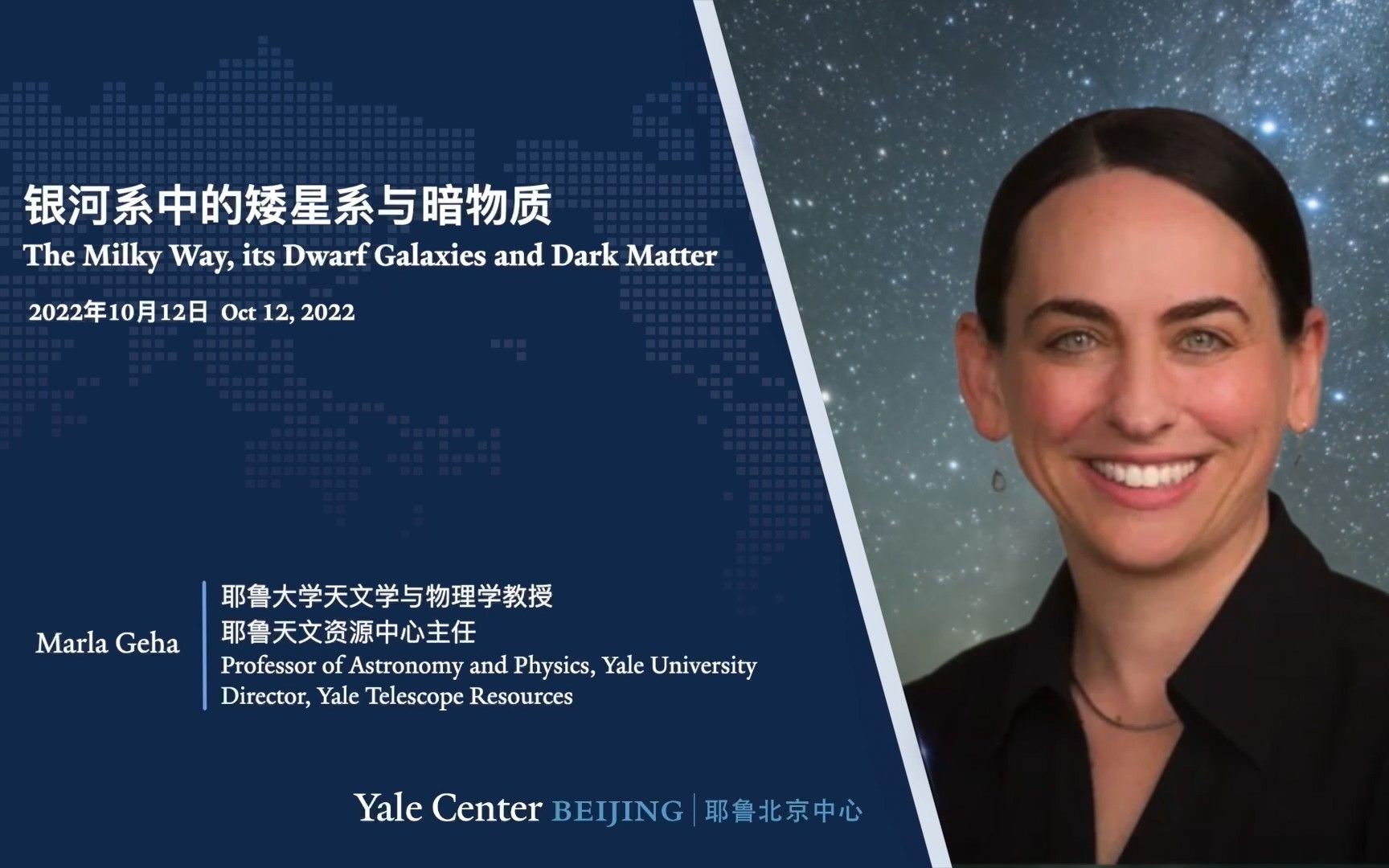
字幕摘录
| 时间 | 英文 | 中文 |
|---|---|---|
| 0:04 | All right, hello everybody. | 好了,大家好,你们好 |
| 0:05 | Thank you for joining us | 谢谢你加入我们 |
| 0:08 | for another talk with Yale Center Beijing. | 和北京耶鲁中心再谈一次 |
| 0:12 | First things first, thank you for joining us. | 首先,谢谢你加入我们。 |
| 0:14 | My name is Devin Lau. | 我叫刘德文 |
| 0:15 | I'm the Associate Director of Yale Center Beijing | 我是北京耶鲁中心副主任 |
| 0:18 | and we're glad to have you join us. | 我们很高兴你能加入我们 |
| 0:20 | If this is your first time joining us | 如果这是你第一次加入我们 |
| 0:21 | for a online talk with Yale Center Beijing, | 与耶鲁中心北京, |
| 0:25 | we've been hosting many of the different Yale professors | 我们接待了许多不同的耶鲁教授 |
展开字幕全文(1255 条)
| 序号 | 英文 | 中文 |
|---|---|---|
| 1 | All right, hello everybody. | 好了,大家好,你们好 |
| 2 | Thank you for joining us | 谢谢你加入我们 |
| 3 | for another talk with Yale Center Beijing. | 和北京耶鲁中心再谈一次 |
| 4 | First things first, thank you for joining us. | 首先,谢谢你加入我们。 |
| 5 | My name is Devin Lau. | 我叫刘德文 |
| 6 | I'm the Associate Director of Yale Center Beijing | 我是北京耶鲁中心副主任 |
| 7 | and we're glad to have you join us. | 我们很高兴你能加入我们 |
| 8 | If this is your first time joining us | 如果这是你第一次加入我们 |
| 9 | for a online talk with Yale Center Beijing, | 与耶鲁中心北京, |
| 10 | we've been hosting many of the different Yale professors | 我们接待了许多不同的耶鲁教授 |
| 11 | across the different fields throughout the pandemic. | 跨越整个大流行病的不同领域。 |
| 12 | And we've done everything from art history to biology, | 我们从艺术史到生物学 都做了很多事 |
| 13 | to economics and philosophy. | 在经济学和哲学。 |
| 14 | And so we're very excited to have Professor Marla Keeha today | 所以今天有玛拉・基哈教授 我们非常兴奋 |
| 15 | give us a talk on astronomy, | 给我们讲讲天文学 |
| 16 | which of course with all the recent images being sent in | 其中当然包括所有最近发送的图像 |
| 17 | and we've been able to see things | 我们可以看到一些东西 |
| 18 | that we've never been able to see before literally. | 我们以前从未见过 |
| 19 | And so it's great to have somebody join us | 很高兴有人加入我们 |
| 20 | who can actually explain to us what's going on | 谁能向我们解释到底发生了什么 |
| 21 | and why we should be so excited. | 为什么我们应该这么兴奋。 |
| 22 | And so we have very interesting talk today | 所以我们今天有非常有趣的谈话 |
| 23 | on the Milky Way, dwarf galaxies and dark matter. | 在银河系,矮星系和暗物质。 |
| 24 | I will introduce our speaker and then turn it over to her. | 我将介绍我们的发言者,然后交给她。 |
| 25 | So Professor Marla Keeha is Professor of Astronomy | 玛拉・基哈教授是天文学教授 |
| 26 | and Physics at Yale University | 耶鲁大学物理系 |
| 27 | as well as Director of Yale Telescope Resources. | 以及耶鲁望远镜资源部主任。 |
| 28 | She uses the world's largest telescopes | 她用的是世界上最大的望远镜 |
| 29 | to study the universe's smallest galaxies. | 研究宇宙最小的星系 |
| 30 | In understanding how the smallest known galaxies form, | 在理解已知的最小星系是如何形成的 |
| 31 | she uses these galaxies to understand the nature | 她利用这些星系来理解大自然 |
| 32 | of dark matter and the underlying cosmology | 暗物质及其基础宇宙学 |
| 33 | of the universe. | 和宇宙一样 |
| 34 | She obtained her bachelor's in applied | 她申请了学士学位 |
| 35 | and engineering physics from Cornell University | 康奈尔大学的工程物理学 |
| 36 | and her PhD in astrophysics | 和她的天体物理学博士 |
| 37 | from the University of California, Santa Cruz. | 加州大学圣克鲁斯分校 |
| 38 | And she's of course received various honors, | 她当然获得了各种荣誉 |
| 39 | including an Alfred P. Sloan research fellowship, | 包括阿尔弗雷德·P·斯隆研究研究金, |
| 40 | Guggenheim fellowship, | 古根海姆研究金, |
| 41 | and most recently was awarded a Dylan Hickson prize | 最近还颁发了迪伦·希克森奖 |
| 42 | for teaching excellence in the national sciences at Yale. | 在耶鲁教授优秀的民族科学 |
| 43 | So we're very lucky to have her join us | 所以我们很幸运她能加入我们 |
| 44 | and I will turn it over to her. | 我会把它交给她。 |
| 45 | Awesome, thank you so much. | 太棒了,非常感谢。 |
| 46 | It's a real honor to be able to speak with you. | 能与你说话真是荣幸 |
| 47 | And it's so cool to see a lot of kids. | 见到很多孩子真是太酷了 |
| 48 | I wanna say hi to you guys. | 我想跟你们打个招呼 |
| 49 | I just dropped my seven-year-old son at school. | 我刚把七岁的儿子扔在学校了 |
| 50 | And so I definitely welcome questions, | 所以我肯定欢迎提问, |
| 51 | but I definitely welcome questions from kids as well. | 但我也欢迎孩子们的提问 |
| 52 | Let me get started. | 让我开始吧 |
| 53 | So I'm excited to chat with you about | 我很高兴能和你谈谈 |
| 54 | small little galaxies around our Milky Way. | 银河系周围的小星系 |
| 55 | And there's been so much happening, | 发生了很多事 |
| 56 | really even just in the last couple of weeks in this field. | 甚至就在最近几周的这个领域 |
| 57 | And so what I want to do is kind of guide you | 所以我想做的是引导你 |
| 58 | through why the field has become super exciting. | 通过为什么球场变得超刺激。 |
| 59 | I will also end with some data | 我最后还要说一些数据 |
| 60 | from the James Webb Space Telescope. | 来自詹姆斯·韦伯太空望远镜 |
| 61 | I was actually down in Baltimore | 其实我在巴尔的摩 |
| 62 | where they actually control the telescope | 他们实际上控制了望远镜 |
| 63 | and I had the honor of going to the control room itself. | 我有幸去了控制室 |
| 64 | It was like a fan, it was super exciting. | 这就像一个粉丝, 它是超级刺激。 |
| 65 | And so I will explain how the James Webb Space Telescope | 我将解释詹姆斯·韦伯太空望远镜 |
| 66 | connects to small galaxies around our Milky Way. | 连接着银河系周围的小星系 |
| 67 | But first, let me kind of give everyone | 但首先,让我给大家 |
| 68 | a bit of a tour of the Milky Way | 银河之旅 |
| 69 | so that we all have the same images in our heads | 这样我们就能在脑海中看到同样的画面 |
| 70 | when I talk about this. | 当我谈论这个。 |
| 71 | So this is an image not of the Milky Way, | 这是银河系以外的影像 |
| 72 | but of what we think our Milky Way galaxy looks like. | 但我们认为银河系是什么样的 |
| 73 | So this is an image of the Andromeda M31 galaxy. | 这就是安朵美达M31星系的图像。 |
| 74 | It's our nearest neighbor, nearest large neighbor. | 这是我们最近的邻居 最近的大邻居 |
| 75 | And we think the Milky Way looks pretty similar. | 我们认为银河看起来很相似。 |
| 76 | We, the sun, the planets and everything we have ever, | 我们,太阳,行星和我们曾经的一切, |
| 77 | most of the stars that you see in the night sky | 你们在夜空中所见的大部分星宿, |
| 78 | are all in a fairly small region, | 在一个相当小的区域, |
| 79 | just the tip of that arrow | 箭头的尖端 |
| 80 | out in the outskirts of the Milky Way. | 在银河系外 |
| 81 | We're about three quarters of the way out from the center. | 我们离中心约四分之三的路程。 |
| 82 | Most of the stars that are forming in the Milky Way | 在银河系形成的大部分恒星 |
| 83 | are formed in a disc, sort of a disc of stars. | 形成在一盘, 排序的恒星盘。 |
| 84 | And if we could see this image kind of tip it over, | 如果我们能看到这幅图 把它翻过来 |
| 85 | that disc of stars that the sun in the solar system is in | 太阳系中的恒星盘 |
| 86 | is actually quite thin. | 其实很薄 |
| 87 | And if you are in a region where you had very dark skies, | 如果你在一片漆黑的天空中 |
| 88 | which most of us are not, | 我们多数人不是, |
| 89 | but if you travel somewhere | 但是如果你去别的地方 |
| 90 | that you can see the night sky well, | 你将看见夜空, |
| 91 | you can actually prove to yourself | 你可以证明给自己 |
| 92 | that the Milky Way is a disc of stars | 银河是一盘恒星 |
| 93 | by just looking up the Milky Way, | 看着银河 |
| 94 | the sort of white glow that you can see overhead | 那种白色的光芒,你可以看到上面 |
| 95 | is where you are looking into the disc of the Milky Way | 就是你们在银河系的圆盘里 |
| 96 | where there's lots of stars. | 那儿有很多星星 里面有很多星星 |
| 97 | And on either side, | 在两边, |
| 98 | you're looking above or below the plane of the Milky Way. | 你在银河系的飞机上或下看 |
| 99 | For the purpose of this talk, | 为了这次谈话 |
| 100 | I'm actually interested in two things in this image. | 我其实对这幅画面的两件事感兴趣. |
| 101 | There are this one and this one. | 有这个和这个。 |
| 102 | So these two regions right here and here | 因此,这两个区域就在这里和这里 |
| 103 | are galaxies in their own right. | 是星系本身的权利。 |
| 104 | They are small galaxies. | 它们是小星系。 |
| 105 | These two happen to be about a 10th the mass | 这两个刚好是质量的第十位 |
| 106 | of the Milky Way. | 银河系 |
| 107 | And we are now realizing that the Milky Way | 我们现在意识到银河系 |
| 108 | has many tens of these satellite galaxies | 有很多卫星星系 |
| 109 | and they are super important for helping us understand | 它们对于帮助我们理解 |
| 110 | both how galaxies form, | 星系的形成方式 |
| 111 | but also the cosmology of the universe | 宇宙的宇宙学 |
| 112 | and what is the nature of the mass in the universe. | 宇宙中质量的本质是什么? |
| 113 | So in order to explain why these small galaxies | 所以为了解释为什么这些小星系 |
| 114 | are so important, | 这么重要 |
| 115 | I'm gonna try and show you a movie. | 我试着给你看一部电影 |
| 116 | This movie is going to be of, | 这部电影将会是, |
| 117 | it's a numerical simulation | 这是一个数字模拟 |
| 118 | of starting around the beginning of the universe | 从宇宙的开始开始 |
| 119 | and going through time until roughly present day | 直到现在 |
| 120 | and we're gonna focus on the formation of the Milky Way. | 我们将专注于银河的形成。 |
| 121 | And I'm gonna cross my fingers that this movie plays. | 我要交叉我的手指 这电影播放。 |
| 122 | It only happens like half the time. | 它只发生 像一半的时间。 |
| 123 | If it doesn't, we will adjust. | 否则,我们会调整。 |
| 124 | So let's see how it goes. | 因此,让我们来看看它如何去。 |
| 125 | Ooh, it's gonna play, fabulous. | 哦,它会发挥,太棒了。 |
| 126 | So this is a movie of the formation of the Milky Way. | 这是一部银河系形成的电影。 |
| 127 | And what you can see is that there are lots of small things | 你可以看到,有很多小东西 |
| 128 | kind of hanging around | 那种徘徊在身边 |
| 129 | and occasionally one of those small things | 偶尔还有一件小事 |
| 130 | will crash into the center and merge with the larger object. | 将坠入中心,与更大的对象合并。 |
| 131 | And so we are slowly building up structure | 所以我们慢慢地建立起来 |
| 132 | that will eventually form today's Milky Way. | 最终将形成今天的银河 |
| 133 | This is the process of, | 这个过程 |
| 134 | it's called hierarchical galaxy formation. | 它被称为分级星系形成. |
| 135 | That is small things merge | 这是小事合并 |
| 136 | to create bigger and bigger things. | 创造更大的东西。 |
| 137 | And so our Milky Way was made out of hundreds, | 因此我们的银河 是用数百块做的 |
| 138 | if not thousands of smaller galaxies. | 如果不是数千个小星系 |
| 139 | And so that same image, if I then show you where | 所以同样的图像,如果我再告诉你在哪里 |
| 140 | that image I showed you in the first slide is, | 我在第一个幻灯片上给你看的图像是, |
| 141 | the stars in the Milky Way form | 银河系中的恒星 |
| 142 | kind of right in the center of this structure. | 这结构的正中央 |
| 143 | And then there's a prediction from this theory | 然后再从这个理论中预言 |
| 144 | that there should be hundreds, if not thousands | 应该有数百人,如果不是数千人 |
| 145 | of objects left over from this process | 此进程遗留的对象 |
| 146 | that are satellite galaxies, small galaxies | 卫星星系,小星系 |
| 147 | that haven't yet merged into the Milky Way's environment. | 还没有融入银河系的环境 |
| 148 | And here is where the problem lay. | 这就是问题所在。 |
| 149 | So this is now 10 years ago, 15 years ago, | 所以这是十年前,15年前, |
| 150 | almost 20 years ago, we only knew of 11 satellite galaxies. | 大约20年前,我们只知道11个卫星星系。 |
| 151 | So this is around 2005. | 所以这是2005年左右。 |
| 152 | And if you had talked to me then, | 如果你当时跟我说话 |
| 153 | I would have said, oh yeah, only 11 galaxies | 我会说,只有11个星系 |
| 154 | maybe we're missing one or two, but definitely not more. | 也许我们缺一两个, 但绝对不会更多。 |
| 155 | And at the time, this was called very creatively | 在当时,这被称为非常有创意的 |
| 156 | the missing satellite problem. | 失踪的卫星问题 |
| 157 | That is we were predicting many satellites | 这就是我们预测许多卫星 |
| 158 | around the Milky Way, we only knew of a handful. | 在银河系周围,我们只知道一小撮。 |
| 159 | However, since 2005, | 然而,自2005年以来, |
| 160 | the number of satellites has increased dramatically. | 卫星数量急剧增加。 |
| 161 | So here is a graph, a plot, this is as a function of time. | 这是图,图,这是时间的函数。 |
| 162 | So this is year on the bottom. | 因此,这是一年的底部。 |
| 163 | So this is a hundred years ago. | 这是一百年前的事了 |
| 164 | You can, and this is the number of satellites | 你可以,这就是卫星的数量 |
| 165 | known around the Milky Way. | 已知的银河系。 |
| 166 | And so here we are right here at 2005, | 因此,我们在这里 在2005年, |
| 167 | you know, you kind of whatever. | 你知道,你有点像什么。 |
| 168 | And then all of a sudden something happened | 然后突然发生了一些事情 |
| 169 | and the number of galaxies shot up. | 和星系的数量 被击中。 |
| 170 | And then there was a little pause | 然后有一点点停顿 |
| 171 | and then another galaxy shot up again. | 然后另一个星系又被击中了 |
| 172 | At this point, and this plot is about half a year | 此时此刻,这个情节大约是半年 |
| 173 | out of date, there were just four more galaxies | 过时了,还有四个星系 |
| 174 | discovered in a paper last week. | 上周在报纸上发现的 |
| 175 | And so what's going on? | 所以这是怎么回事? |
| 176 | Like why, first of all, how do we miss these things? | 比如为什么,首先,我们怎么错过这些东西呢? |
| 177 | They were so important, how could we have missed them? | 他们是如此重要,我们怎么会错过他们呢? |
| 178 | And what is happening that we are finding them now? | 我们现在找到他们了? |
| 179 | So what we'll do is go through each of these | 所以,我们要做的是,通过每一个这些 |
| 180 | sort of three stages and explain how galaxies were found. | 并解释星系是如何被发现的 |
| 181 | So first of all, let's just talk about | 所以首先 让我们谈谈 |
| 182 | how galaxies were found before 2005. | 2005年之前如何发现星系. |
| 183 | And so here is an, this is actual data of stars in the sky. | 这是关于天空中恒星的实际数据。 |
| 184 | This data is amazing. | 这个数据是惊人的。 |
| 185 | This is coming from the Gaia telescope. | 这是来自盖亚望远镜。 |
| 186 | It's a space telescope launched by the Europeans | 是欧洲人发射的太空望远镜 |
| 187 | looking at individual stars in the Milky Way. | 看着银河系中的单个恒星 |
| 188 | And what you can see are these two things right here. | 你可以看到的是这两件事。 |
| 189 | These are the two brightest satellites around the Milky Way. | 这是银河系周围最亮的两颗卫星 |
| 190 | These are the Magellanic clouds. | 这些是麦哲伦云 |
| 191 | If you are in the Southern hemisphere, | 如果你在南半球 |
| 192 | you can actually see these with your naked eye. | 你用肉眼就能看见这些 |
| 193 | So here is just a beautiful image. | 这里只是一个美丽的图像。 |
| 194 | I'm not even sure where this is from. | 我甚至不知道这是从哪里来的 |
| 195 | I think this is in Australia. | 我想这是在澳大利亚。 |
| 196 | These are two, the two galaxies here | 这里的两个星系 |
| 197 | are the Magellanic clouds. | 是麦哲伦云 |
| 198 | These are the two brightest galaxies, | 它们是两个最亮的星系, |
| 199 | satellite galaxies around the Milky Way. | 环绕银河的卫星星系 |
| 200 | So they were found by visual searches. | 所以通过视觉搜索发现了它们. |
| 201 | And in fact, the other nine galaxies | 事实上,其他九个星系 |
| 202 | that were found prior to 2005 | 2005年之前发现的 |
| 203 | were also found via visual searches. | 也通过视觉搜索找到。 |
| 204 | So these were found by photographic plates | 所以这些是用照相板找到的 |
| 205 | of people just looking through and scanning | 正在浏览和扫描的人 |
| 206 | for something that looked like a galaxy. | 对于一个看起来像一个星系的东西。 |
| 207 | And so here is an image for one of the more faint, | 所以这里有一个更昏暗的画面 |
| 208 | oops, sorry, one of the more faint galaxies | 对不起,星系比较微弱的一个 |
| 209 | found by visual searches. | 通过视觉搜索找到的。 |
| 210 | But when you look at it, you're like, oh yeah, | 但当你看着它,你喜欢,哦,是的, |
| 211 | definitely a galaxy sitting right there. | 肯定有一个银河系坐在那里。 |
| 212 | And so that was the state of the art until 2005. | 这就是2005年前的艺术水平 |
| 213 | And what changed in 2005 was that we were able | 2005年的改变是,我们做到了 |
| 214 | to use digital cameras and digital images | 使用数码相机和数字图像 |
| 215 | to fully map the sky. | 以充分映射天空。 |
| 216 | And so the Sloan Digital Sky Survey was, | 因此,斯隆数字天空测量是, |
| 217 | is still a collaboration of thousands of astronomers | 仍然与成千上万的天文学家合作 |
| 218 | across the whole world that have been mapping | 环绕着全世界 |
| 219 | the sky systematically. | 天空有计划。 |
| 220 | And we're able now to use different techniques | 现在我们可以使用不同的技术 |
| 221 | to find galaxies. | 寻找星系 |
| 222 | And so let's talk for a second about what I mean | 所以,让我们谈一下 关于我的意思 |
| 223 | by digital mapping. | 通过数字绘图。 |
| 224 | The technology and indeed the camera that's used | 技术,事实上是 使用的相机 |
| 225 | in digital mapping and basically all astronomy cameras | 在数字绘图和基本上所有天文学相机 |
| 226 | at this point is actually the same as in your phone. | 此时此刻 和手机里一样 |
| 227 | So, you know, in your camera phone, you have a detector. | 所以,你知道,在你的相机电话里, 你有一个探测器。 |
| 228 | It has a bunch of little plastic lenses | 有一堆塑料镜 |
| 229 | and there is a detector right there. | 那里有探测器 |
| 230 | It's very similar to what we use in astronomy. | 它与我们在天文学中使用的非常相似. |
| 231 | There's one big difference is that in astronomy, | 天文学上有个很大的区别 |
| 232 | our detectors are just slightly bigger. | 我们的探测器有点大 |
| 233 | And so here is the Sloan Digital Sky Survey camera. | 这是斯隆数字天空测量摄像机。 |
| 234 | You know, it's about a foot wide, | 你知道,这是大约一英尺宽, |
| 235 | which would be hard to put in your pocket. | 很难放进你的口袋里 |
| 236 | iPhone,最新的iPhone,我没有, | |
| 237 | but I looked it up is about 12 megapixels. | 但我查过了 大概有12兆像素 |
| 238 | The Sloan Digital Sky Survey camera is 120 megapixels, | 斯隆数字天空测量摄像机是120兆像素, |
| 239 | but this was built in 1998, right? | 但这是1998年建造的,对吧? |
| 240 | And so the technology is similar. | 因此技术是相似的。 |
| 241 | It's just on a different scale | 它只是在一个不同的尺度 |
| 242 | and it's also slightly more expensive. | 价格也稍高一点 |
| 243 | So the Sloan Digital Sky Survey surveyed most of the sky | 因此斯隆数字天空调查 调查了大部分天空 |
| 244 | and the part of the sky that it surveyed up until 2010 | 和2010年前所调查的天空的一部分 |
| 245 | is in sort of grayish regions. | 在灰色的地区。 |
| 246 | And you can see the, what are these? | 你可以看到这些是什么? |
| 247 | Maybe blue, light blue dots. | 也许蓝色,浅蓝色点。 |
| 248 | These are the galaxies that were found | 这些是被发现的星系 |
| 249 | in the Sloan Digital Sky Survey. | 在斯隆数字天空测量中。 |
| 250 | However, if I show you an image of these, | 但是,如果我给你看这些照片, |
| 251 | you can't actually see the galaxy in this. | 你看不到银河系 |
| 252 | So let's kind of zoom in on this. | 所以,让我们有点放大。 |
| 253 | So this is an image of where a galaxy found | 这就是银河系发现的图像 |
| 254 | in the Sloan Digital Sky Survey is. | 在斯隆数字天空测量是。 |
| 255 | But the problem is that most of the bright things | 但问题是 大部分的亮点 |
| 256 | that you see in this image are actually foreground stars | 在图像中看到的其实是前景星 |
| 257 | in the Milky Way's disk. | 在银河系的磁盘。 |
| 258 | And so imagine we are looking through the disk | 想象一下我们在通过磁盘查看 |
| 259 | of the Milky Way out to a galaxy | 银河系到银河系 |
| 260 | a little bit farther past us. | 离我们更远一点 |
| 261 | Most of the bright stars are foreground stars | 大部分明亮的恒星都是前面的恒星 |
| 262 | and we can't tell the difference necessarily between these | 我們無法分辨這兩樣的區別 |
| 263 | just by an image, but what we can do | 只是一个图像, 但我们能做什么 |
| 264 | is digitally remove the foreground stars. | 数字化删除前景星。 |
| 265 | And so we can identify stars that are in the foreground | 这样我们就能辨别出前面的恒星 |
| 266 | based on their color and their brightness. | 基于他们的颜色和亮度。 |
| 267 | And if I remove those stars, this is what I see. | 如果我去掉那些星星,这就是我看到的。 |
| 268 | And so these are the same images, | 所以这些是相同的图像, |
| 269 | except that I have removed the things | 惟我已解除一切, |
| 270 | that I think are in the foreground in front of me. | 我认为是在前方 在我面前。 |
| 271 | So you can kind of see it, but definitely, | 这样你就能看出来,但绝对 |
| 272 | it would be hard to tell | 很难说 |
| 273 | without being able to do this digitally. | 却无法通过数字方式完成 |
| 274 | And so all of the galaxies that were found | 所以所有被发现的星系 |
| 275 | in this sort of blitz of activity | 在这种闪电活动中 |
| 276 | were found in the Sloan Digital Sky Survey. | 在斯隆数字天空调查中发现的 |
| 277 | So you can imagine if we have a little blip here | 所以,你可以想象 如果我们有一点点blip在这里 |
| 278 | and then there's another boost, | 然后还有另一个助推, |
| 279 | this must be some kind of technology change. | 这一定是某种技术变革。 |
| 280 | And indeed, these galaxies between 2018 to 20 | 事实上,这些星系在2018到20年间 |
| 281 | were found in the Dark Energy Camera Survey. | 在暗能量相机调查中发现的 |
| 282 | This is a camera that was installed, | 这是一个安装的相机, |
| 283 | again, now about 10 years ago. | 也是,现在大约十年前。 |
| 284 | This camera had a huge detector, 520 megapixels, | 这台摄像机有一个巨大的探测器, 520兆像素, |
| 285 | and the same kind of techniques | 和同样的技术 |
| 286 | where we digitally remove foreground stars | 数字化去除前景星 |
| 287 | did what happened in that survey. | 做了调查中发生的事 |
| 288 | The gray region here is the region | 这里的灰色区域就是这个区域 |
| 289 | that that survey has surveyed, | 调查已经调查, |
| 290 | and we found a whole bunch more satellites. | 我们发现了一大堆卫星 |
| 291 | Now you know that there seem to be more red points, | 现在你知道,似乎有 更多的红色点, |
| 292 | sort of like the density of red points is higher here | 有点像这里的红色点密度更高 |
| 293 | than in other regions. | 与其他区域相比。 |
| 294 | This survey was a little bit deeper. | 这一调查稍稍深入。 |
| 295 | It got images that were a little bit more sensitive. | 它的图像有些敏感。 |
| 296 | And so you can imagine now, | 现在你可以想象 |
| 297 | thinking about how many satellites | 想想有多少颗卫星 |
| 298 | should be around the Milky Way, | 应该就在银河系附近 |
| 299 | we can start to realize | 我们可以开始意识到 |
| 300 | that maybe they're regions of the sky we haven't surveyed, | 也许他们是天空的地区 我们还没有调查, |
| 301 | maybe they're regions that we haven't gone deep enough. | 也许它们是我们不够深入的地区 |
| 302 | And so here coming back, | 所以这里回来, |
| 303 | although we know of 60 satellites around the Milky Way, | 虽然我们知道银河系周围有60颗卫星 |
| 304 | we actually can do some corrections for our incompleteness. | 我们实际上可以做一些纠正 我们的不完整。 |
| 305 | And we think that there should be something | 我们认为应该有 |
| 306 | like 200 or 250 satellites around the Milky Way. | 就像银河系周围的200或250颗卫星 |
| 307 | We hope many of those will be found | 我们希望能够找到其中很多 |
| 308 | in the next couple of years. | 在接下来的几年里。 |
| 309 | There is a new telescope that will come online | 有一个新的望远镜会上线 |
| 310 | in the next couple of, | 在接下来的夫妇中, |
| 311 | within the next year called the Rubin Observatory. | 在接下来的一年里 被称为鲁宾天文台 |
| 312 | The Rubin Observatory, excuse me, | 鲁宾天文台,对不起 |
| 313 | the Rubin Observatory has a 3.2 gigapixel camera. | 鲁宾天文台有一台3.2千兆像素相机. |
| 314 | It will take not only a digital image of the full sky, | 不仅需要满天的数码影像 |
| 315 | it will take a digital image of the full sky | 它将需要一个数字的 整个天空的图像 |
| 316 | every two days over 10 years. | 每两天一次 10年。 |
| 317 | And so we'll actually have a digital movie of the sky. | 因此,我们实际上将会有一部关于天空的数字电影。 |
| 318 | So we're really excited about that. | 我们对此非常兴奋。 |
| 319 | I just was looking at my email this morning | 今天早上我刚看邮件 |
| 320 | and the camera, this 3.2 gigapixel camera | 和相机,这个3.2千兆像素相机 |
| 321 | is just about to go online | 马上就要上网了 |
| 322 | to be placed in the telescope itself, | 放在望远镜上, |
| 323 | which is really exciting. | 这真的很令人兴奋。 |
| 324 | So this is how these objects were found. | 这就是这些物体的发现方式。 |
| 325 | However, from just images, | 然而,从图像来看, |
| 326 | these are candidate galaxies. | 这些是候选星系。 |
| 327 | And so you can see here, | 所以,你可以看到这里, |
| 328 | there's red dots and open circles. | 有红点和开圆. |
| 329 | And so it says confirmed versus candidate. | 上面写着确认候选人 |
| 330 | When we do this search for these galaxies, | 当我们搜索这些星系时, |
| 331 | we call them candidate galaxies. | 我们称之为候选星系。 |
| 332 | So here you might say, well, look, | 所以在这里,你可以说, 好吧,你看, |
| 333 | you have a bunch of stars. | 你有一堆星星。 。 。 |
| 334 | They seem to be in the same place in the sky, | 他们似乎在天空的同一位置, |
| 335 | but how do you know this isn't just random? | 你怎么知道这不仅仅是随机的? |
| 336 | That is, there aren't stars that, | 也就是说,没有星星, |
| 337 | they just happen to be moving all over the place | 他们只是碰巧到处移动 |
| 338 | and you just caught them at a very special time | 你却在非常特殊的时刻抓住他们 |
| 339 | when they all happen to be near each other. | 当他们都碰巧 彼此接近。 |
| 340 | And if you waited a little while, | 如果你再等一会儿, |
| 341 | maybe they would move and disperse. | 也许他们会移动和分散。 |
| 342 | And so the answer, | 因此,答案是, |
| 343 | and this is really where most of my group's work is focused, | 这正是我集团大部分工作的重点 |
| 344 | is we need to measure the velocity | 我们需要测量速度 |
| 345 | or the speed of these stars to figure out, | 或这些恒星的计算速度, |
| 346 | first of all, do they all have the same speed? | 首先,他们都有同样的速度吗? |
| 347 | That is, are they all gravitationally | 也就是说,他们都是引力 |
| 348 | associated with each other? | 互相牵扯? |
| 349 | And as a bonus, | 作为奖金 |
| 350 | we can actually figure out the mass of those galaxy, | 我们实际上可以找出这些银河系的质量, |
| 351 | of that galaxy by looking at the relative speed of stars. | 通过观察恒星的相对速度 |
| 352 | So let's kind of talk about that | 我们来谈谈 |
| 353 | in a little bit more detail. | 更详细一点 |
| 354 | So let me explain why we need to get the speed of stars | 让我来解释为什么我们需要 获得恒星的速度 |
| 355 | in order to tell if it's associated. | 以辨其有无关联. |
| 356 | And I'll try and do this with a cartoon. | 我会试着用漫画来做这个。 |
| 357 | I think this works okay, | 我觉得这行得通 |
| 358 | but hopefully I'll be able to explain it slowly. | 但愿我能慢慢解释 |
| 359 | So here, imagine that we are sitting on earth | 在这里,想象一下我们坐在人间 |
| 360 | and we are in the Milky Way. | 我们在银河系 |
| 361 | So here we are, | 所以,我们在这里, |
| 362 | let's say the sun is right here in the Milky Way. | 假设太阳就在银河系里 |
| 363 | And we are looking through the Milky Way | 我们在银河中寻找 |
| 364 | out to let's say this galaxy, which we call Segway 1. | 说到这个星系 我们称之为Segway 1 |
| 365 | The name of galaxies, it's really a terrible convention. | 星系的名称, 这真的是一个可怕的会议。 |
| 366 | So Segway is the name of the survey | 所以Segway是调查的名称 |
| 367 | that the galaxy was originally found in. | 银河系最初被发现 |
| 368 | So the survey was called Segway. | 于是调查名为塞格威. |
| 369 | So here we are, | 所以,我们在这里, |
| 370 | we're looking through the Milky Way | 我们正在银河中寻找 |
| 371 | to stars in this galaxy. | 到这个星系中的恒星。 |
| 372 | And so here are, let's say the sun is here. | 因此,这里,让我们假设太阳在这里。 |
| 373 | We look through the Milky Way's disk out to a dwarf galaxy, | 我们从银河系的磁盘中看到一个矮星系 |
| 374 | out to a small galaxy, | 到一个小星系, |
| 375 | which has a collection of stars here. | 里面有一堆星星 |
| 376 | And so you imagine, | 所以,你想象着, |
| 377 | we're looking through the Milky Way | 我们正在银河中寻找 |
| 378 | to stars that are in this galaxy. | 到这个星系中的恒星 |
| 379 | And if we get an image, | 如果我们得到一个图像, |
| 380 | we just get an image of a bunch of these stars. | 我们只看到一帮星星的画面 |
| 381 | Maybe one or two are actually stars in the Milky Way's disk. | 也许一两颗是银河系的恒星 |
| 382 | Maybe a handful are stars in the galaxy, | 也许是银河系的星星 |
| 383 | but from the image alone, | 但仅凭这幅画, |
| 384 | we can't tell which star is which. | 我们不知道哪颗星星是哪颗 |
| 385 | However, the stars in the Milky Way | 然而,银河中的星星 |
| 386 | are moving altogether around the Milky Way itself. | 整个银河系都在移动 |
| 387 | So the stars are all moving with one speed. | 所以星星都以一个速度移动 |
| 388 | The dwarf galaxy, so let's call that yellow. | 矮星系,让我们叫黄色。 |
| 389 | So they're all moving with this yellow speed. | 所以他们都以这种黄色的速度移动. |
| 390 | The dwarf galaxy is moving in a different direction | 矮星系正在向另一个方向移动 |
| 391 | and all those stars are moving in a direction | 所有恒星都在朝一个方向移动 |
| 392 | and we'll say that's the red direction. | 我们说这就是红色的方向。 |
| 393 | And so if I take an image, I can't tell, | 所以如果我拍个像,我看不出来 |
| 394 | but if I get able to measure the speed | 但如果我能测量速度 |
| 395 | of each of these stars, | 每一颗恒星, |
| 396 | then instead of the image, I can get a velocity, a speed. | 而不是图像,我可以得到速度,速度。 |
| 397 | And now it's really obvious, right? | 现在它真的很明显,对不对? |
| 398 | I have some yellow stars. | 我有黄色的星星。 |
| 399 | Oh, those must be in the foreground. | 哦,这些一定是在前方。 |
| 400 | I have some red stars. | 我有红星 |
| 401 | Those must be part of the galaxy. | 这些一定是银河系的一部分 |
| 402 | And if they're all moving with the same speed, | 如果他们都以同样的速度前进 |
| 403 | those stars in the dwarf galaxy are moving together. | 矮星系的恒星在移动 |
| 404 | And so they must be associated with each other. | 所以他们必须互相联系。 |
| 405 | So now the next question is, | 现在下一个问题是, |
| 406 | okay, how do you measure the speed of a star? | 好吧,你怎么测量恒星的速度? |
| 407 | How do you measure the velocity of a star? | 如何测量恒星的速度? |
| 408 | And to do that, we need to get the spectrum, | 要做到这一点,我们需要得到光谱, |
| 409 | a spectrum of a star. | 恒星的光谱。 |
| 410 | So here is a spectrum. | 这里有一个光谱。 |
| 411 | When I say spectrum, | 当我说光谱, |
| 412 | what I mean is just take the light of the star, | 我的意思是只是拿 星星的光, |
| 413 | let it go through, let's say a prism or a grating | 让它通过,让我们说 棱镜或咆哮 |
| 414 | that disperses the light as a function of wavelength. | 将光作为波长的函数 |
| 415 | And you'll notice here that you have a very beautiful rainbow. | 你会发现这里的彩虹很漂亮 |
| 416 | So I've split the stars on light from red out to green, | 所以我把星光从红到绿 |
| 417 | red, purple, and you'll notice these dark lines. | 红色,紫色,你会注意到这些暗线。 |
| 418 | These dark lines are due to chemical elements, | 这些暗线是化学元素造成的 |
| 419 | different chemical elements in the atmosphere of the star. | 恒星大气层中不同的化学元素. |
| 420 | And because the chemicals and atoms and molecules | 因为化学物质 原子和分子 |
| 421 | are quantized, they steal light | 被量化,他们偷光 |
| 422 | at very specific points in the spectrum, | 在谱系中非常具体的地方, |
| 423 | it's very specific points in wavelength. | 它的波长非常具体 |
| 424 | These different lines, we know exactly where they should be | 这些不同的线,我们知道它们应该在哪里 |
| 425 | and we know exactly what wavelength they should be. | 我们完全知道它们应该是什么波长。 |
| 426 | When a star is moving, | 当恒星移动的时候, |
| 427 | those stars are all gonna be shifted | 那些星星都会被转移 |
| 428 | at the same way in the same way. | 以同样的方式。 |
| 429 | This is a Doppler shift. | 这是多普勒的班 |
| 430 | So all the stars are, the star is moving, | 所以,所有的星星是, 星星在移动, |
| 431 | all the lines will be shifted in the same direction | 所有线路都往同一方向转 |
| 432 | and we can measure a velocity for that particular star. | 我们可以测量恒星的速度 |
| 433 | So this pattern of line shifts as the star is moving | 所以随着恒星的移动,这种线状变化 |
| 434 | and we can tell whether it's moving away for us | 我们能分辨它是否为我们而消失 |
| 435 | or towards us, this is a Doppler shift. | 或对我们来说,这是多普勒的转变。 |
| 436 | And so that is all the stars are moving, | 如此,所有恒星都在移动, |
| 437 | all the lines are moving because the star is moving. | 所有线路都在移动 因为星星在移动 |
| 438 | And so we can figure out the velocity | 这样我们就能找出速度 |
| 439 | of each one of these stars by getting a spectrum. | 每个恒星的光谱。 |
| 440 | So we can tell if this is a random collection | 这样我们就能分辨这是不是随机收集 |
| 441 | or not by measuring the speed. | 或者不是通过测量速度。 |
| 442 | So really, let me change that to say, | 所以,真的,让我改变 说, |
| 443 | we'll get the spectrum of each star. | 我们会得到每个恒星的光谱。 |
| 444 | And so in order to do this, we need to go to a telescope | 因此,为了做到这一点, 我们需要去望远镜 |
| 445 | to get a spectrum of a star. | 以获得恒星的光谱。 |
| 446 | I am super lucky at Yale, I am able to have access | 在耶鲁我非常幸运,我可以进入 |
| 447 | to a fantastic telescope in order to measure spectra. | 以测量光谱。 |
| 448 | So the Keck 10 meter telescope in Hawaii | 夏威夷的凯克10米望远镜 |
| 449 | is the biggest optical telescope in the world. | 是世界上最大的光学望远镜 |
| 450 | Yale has access to 20 nights per year on this telescope. | 耶鲁每年可以通过这台望远镜进入20晚. |
| 451 | I, as director of telescopes, we write proposals, | 我,作为望远镜的主管, 我们写提案, |
| 452 | so everyone at Yale is allowed to write a proposal | 所以耶鲁大学的每个人都可以写提案 |
| 453 | to get time on this telescope. | 以获得时间 在望远镜上。 |
| 454 | I often will get a night or two per year on this telescope. | 我经常会得到一两个晚上 每年在这个望远镜上。 |
| 455 | Each of those nights, I just work really hard | 每一晚,我都会努力工作 |
| 456 | for about a month before in order to schedule | 大约一个月前,为了安排 |
| 457 | exactly every minute of that time for that night. | 正好是那个晚上的每分钟 |
| 458 | Usually, I will control the telescope from New Haven, | 通常,我会控制 望远镜从纽黑文, |
| 459 | so I'll do it remotely. | 所以我会远程做 |
| 460 | Once in a while, I can go out to Hawaii to do things there, | 偶尔,我可以去夏威夷做一些事情, |
| 461 | but most of it's done remotely. | 但大部分都是远程完成的 |
| 462 | So what I do is that one night per year, | 所以我每年做一个晚上 |
| 463 | I will get spectra of individual stars | 我会得到每个恒星的光谱 |
| 464 | in these candidate galaxies | 在这些候选星系中 |
| 465 | and search for these absorption lines in the spectrum. | 并寻找这些吸收线的光谱。 |
| 466 | So here is a little piece of data. | 这是一个小数据。 |
| 467 | I not only get one spectrum per time, | 我不仅每次得到一个光谱, |
| 468 | I usually get 100 spectra per exposure per observation. | 我通常每次观测都得到100个光谱. |
| 469 | And so what you're looking at here, | 所以,你在这里看到的, |
| 470 | each one of these vertical lines is a spectrum of a star. | 每个垂直线都是恒星的光谱。 |
| 471 | All these other horizontal lines that look kind of annoying | 所有这些横向线看起来有点烦人 |
| 472 | are lines from the atmosphere itself. | 是大气本身的线条 |
| 473 | So our atmosphere is glowing | 所以我们的大气在发光 |
| 474 | and it glows at particular wavelengths. | 它在特定的波长下发光 |
| 475 | I have a lot of software that I've written | 我写了很多软件 |
| 476 | to get rid of those lines. | 以摆脱那些线条。 |
| 477 | And so here, if I thought the brightness of the line | 所以在这里,如果我想到 线的亮度 |
| 478 | going up in this direction, | 朝这个方向前进, |
| 479 | here the black and red lines are a little bit of that data. | 这里的黑线和红线是数据的一部分。 |
| 480 | And these dips in that line, those three dips, | 这条线上的这些水泡,那三个水泡, |
| 481 | are dark lines due to a particular chemical element. | 是某一化学元素引起的暗线。 |
| 482 | In this case, these are three lines from calcium. | 在这种情况下,这些是来自钙的三行. |
| 483 | And those lines are shifted just slightly | 而那些线只是略微改变 |
| 484 | from where I would have expected them | 从我期待的地方 |
| 485 | if they were not moving. | 如果他们不动。 |
| 486 | And so what I'm able to do is measure their velocity. | 所以我能做的就是测量它们的速度。 |
| 487 | And so here I come back to my image. | 所以我回到我的形象。 |
| 488 | I can now measure the velocity of those stars. | 我现在可以测量这些恒星的速度。 |
| 489 | And as a bonus, if I can measure the relative velocities | 作为奖金,如果我能衡量相对速度 |
| 490 | of those stars, I can measure the mass of this galaxy. | 我可以测量这个星系的质量 |
| 491 | Okay, so let's talk about that. | 好吧,让我们谈谈。 |
| 492 | So here is a little plot. | 这里有一个小阴谋。 |
| 493 | I've got the velocity of each individual star | 我有每个恒星的速度 |
| 494 | in this image. | 在这个图像中。 |
| 495 | So most of the stars that are in the Milky Way, | 所以大多数银河系的恒星 |
| 496 | they have a velocity that's very similar to the sun. | 它们的速度与太阳非常相似. |
| 497 | So a star that's in the Milky Way | 银河系的恒星 |
| 498 | would be moving with the sun. | 将会随太阳而移动 |
| 499 | And so it wouldn't have much of a relative difference | 这样它就不会有什么相对的不同 |
| 500 | in how much it's moving. | 它在移动多少。 |
| 501 | So we think these stars between zero, zero | 因此,我们认为这些恒星在0,0之间 |
| 502 | and about a hundred kilometers a second | 大约一百公里一秒 |
| 503 | are associated with the Milky Way. | 和银河系有关 |
| 504 | And then all of a sudden we have this huge spike of stars | 然后突然间我们有了一大堆星星 |
| 505 | at a velocity that's well beyond | 速度远远超出 |
| 506 | what the Milky Way stars should have. | 银河系的星星应该有的 |
| 507 | They all have very similar velocity. | 它们的速度都非常相似。 |
| 508 | So they are all moving together with the same velocity. | 所以它们都以同样的速度移动。 |
| 509 | And from the width of this distribution, | 从这个分布的宽度来看, |
| 510 | from the change in different velocities here, | 从不同速度的变化, |
| 511 | I can measure the mass of that galaxy. | 我可以测量那个星系的质量。 |
| 512 | So you can imagine if a galaxy was really massive, | 所以你可以想象 如果一个银河系真的很大, |
| 513 | the stars would be moving with some relative motion. | 恒星会随着相对运动而移动 |
| 514 | If they're moving really fast, | 如果他们移动得真快 |
| 515 | there has to be mass that's kind of holding them together. | 一定有质量 那种把它们粘在一起。 |
| 516 | If the stars are moving a little bit slower, | 如果星星移动得慢一点 |
| 517 | that means there isn't as much mass to hold them together. | 这意味着没有那么多的质量来支撑它们在一起。 |
| 518 | If there was a lot of mass, | 如果有很多质量, |
| 519 | the stars would fly off in a different direction. | 星星会飞向另一个方向 |
| 520 | And so we can measure the mass, the dynamical mass, | 这样我们可以测量质量,动态质量, |
| 521 | that is the mass that I infer from how fast the stars | 这是我从星宿的速率中推断出来的质量。 |
| 522 | are moving relative to each other. | 互相移动 |
| 523 | And the crazy thing, so those are the Milky Way stars, | 和疯狂的事情, 所以那些是银河恒星, |
| 524 | the relative mass, the relative velocity of stars | 相对质量,恒星的相对速度 |
| 525 | is proportional to its total mass. | 与总质量成正比。 |
| 526 | The crazy thing here is that the mass I measure | 疯狂的是,我测量的质量 |
| 527 | from the relative motion is fairly high | 从相对运动的高度相当高 |
| 528 | in comparison to the mass that I actually see. | 和我所看到的质量相比 |
| 529 | That is, I can go and say, all right, | 那就是,我可以说,好吧, |
| 530 | I see how many stars are in this image. | 我见此像中有多少星. |
| 531 | I know roughly how much mass a particular star has. | 我知道一个恒星有多少质量 |
| 532 | I'll make some correction for the stars | 我会做一些修正 星星 |
| 533 | that are probably too faint. | 可能太虚弱了 |
| 534 | I'll maybe make some other correction | 我可能会做一些其他的更正 |
| 535 | for like a little bit of gas or dust | 就像一点点的气体或灰尘 |
| 536 | in that object. | 在那个物体。 |
| 537 | Even with all of those corrections, | 即使所有这些更正, |
| 538 | the amount of mass that I infer | 我推断的质量量 |
| 539 | from this velocity distribution is about 10 times higher | 从这个速度分布 大约10倍 |
| 540 | than all of the mass that I see in stars. | 比我在星星上看到的所有质量 |
| 541 | Another way to say that is that this galaxy | 另一种说法是这个星系 |
| 542 | seems to have a lot of mass that I don't see. | 似乎有很多质量,我没有看到。 |
| 543 | That is, there's a lot of mass that is dark, | 也就是说,有很多质量是黑暗的, |
| 544 | that is segue one seems to have a lot of dark matter. | 似乎有很多暗物质 |
| 545 | And at this moment, when I say dark matter, | 而此时此刻 当我说暗物质 |
| 546 | I literally just mean mass that I can't see. | 我是指我看不见的质量 |
| 547 | There are other observations | 还有其他意见 |
| 548 | that suggest that this mass is weird | 这说明这个质量是奇怪的 |
| 549 | and isn't made out of the normal stuff | 而不是用普通的东西做的 |
| 550 | that we sort of interact with every day. | 我们每天都在交往 |
| 551 | That's a subject for a different talk. | 这是另一个话题 |
| 552 | But it turns out that almost every galaxy | 但发现几乎每个星系 |
| 553 | that I do this exercise, | 我做这个练习, |
| 554 | that is I go and I measure the mass of the stars and gas | 那就是我走了,我测量了恒星和气体的质量 |
| 555 | and I compare that to the mass that I infer | 我将它与我推断出来的质量相比较 |
| 556 | from the stars moving around. | 从星宿中转动, |
| 557 | Every time I do that in almost every galaxy, | 每次我在几乎每个星系里都这样做 |
| 558 | I seem to have evidence for a lot of dark matter | 我似乎有很多暗物质的证据 |
| 559 | in these objects. | 在这些对象中。 |
| 560 | Indeed, in the Milky Way, | 在银河中, |
| 561 | we see that about 90% of the total mass of the Milky Way | 银河系总质量的90% |
| 562 | is in this dark matter. | 是在这个暗物质。 |
| 563 | It's in something that we can't see. | 是在我们看不到的东西。 |
| 564 | These faintest really low mass galaxies, | 这些最微弱的质量极低的星系, |
| 565 | these satellites that we're just finding | 我们刚刚发现的卫星 |
| 566 | are interesting because their mass is completely dominated | 很有趣 因为他们的质地完全被控制 |
| 567 | by mass that we don't see. | 以我们看不见的质量表示。 |
| 568 | Only about 0.1% of the mass is from stars | 只有0.1%的质量来自恒星 |
| 569 | and luminous things that we can actually see. | 和光亮的东西,我们实际上可以看到。 |
| 570 | And so these make them incredibly interesting places | 因此,这些使得它们 令人难以置信有趣的地方 |
| 571 | to study dark matter | 研究暗物质 |
| 572 | and to try and understand the nature of dark matter. | 尝试了解暗物质的性质 |
| 573 | And so that's something we're doing quite a bit of. | 这就是我们做的很多事情。 |
| 574 | Coming back to this image I showed you earlier, | 回到我之前给你看的这个画面 |
| 575 | these newest galaxies seem to be easing | 这些最新的星系似乎在放松 |
| 576 | this missing satellites. | 这颗卫星不见了 |
| 577 | That is, we seem to now find enough satellites | 也就是说,我们现在似乎找到足够的卫星 |
| 578 | that it agrees with the predictions that I showed you | 它同意我给你的预测 |
| 579 | from the very beginning of the talk. | 从谈话开始 |
| 580 | We can also use these galaxies | 我们也可以利用这些星系 |
| 581 | to try and start understanding | 尝试并开始理解 |
| 582 | the nature of dark matter as well. | 还有暗物质的性质 |
| 583 | One of the last kind of point that I'll talk about | 我要说的最后一点 |
| 584 | is we can study these galaxies | 我们可以研究这些星系 |
| 585 | using other types of telescopes | 使用其他类型的望远镜 |
| 586 | and try and understand the properties of these objects. | 并尝试了解这些对象的属性。 |
| 587 | So using the James Webb Space Telescope, | 使用詹姆斯·韦伯太空望远镜 |
| 588 | we can point James Webb at one of these low mass galaxies | 我们可以把詹姆斯·韦伯指向这些低质量星系之一 |
| 589 | and try and start to understand the properties | 并尝试并开始理解属性 |
| 590 | of these newly discovered satellites. | 这些新发现的卫星。 |
| 591 | And indeed, I'm on a team, | 事实上,我是一个团队, |
| 592 | it's called one of the early release science teams. | 它被称为早期发布科学团队之一. |
| 593 | We were able to get data from James Webb. | 我们从詹姆斯·韦伯那里得到了数据 |
| 594 | We've actually proposed many years | 我们实际上已经提议了很多年了 |
| 595 | before the launch of the telescope. | 在望远镜发射之前 |
| 596 | And in fact, so here is a little log | 事实上,这里有个小日志 |
| 597 | of when data was taken. | 数据采集时间。 |
| 598 | This line right here is one of the newest Milky Way satellites. | 这里的这条线是最新的银河卫星之一。 |
| 599 | It was taken on July 3rd. | 7月3日拍摄. |
| 600 | This was almost the very first science data | 这几乎是第一个科学数据 |
| 601 | taken with the James Webb Space Telescope. | 与詹姆斯·韦伯太空望远镜。 |
| 602 | So one of these super faint new galaxies around the Milky Way | 银河系周围的 超级微弱的新星系之一 |
| 603 | was one of the first science targets | 是首批科学目标之一 |
| 604 | for the James Webb Space Telescope. | 詹姆斯·韦伯太空望远镜 |
| 605 | What we are hoping to learn is we will measure stars | 我们想要学的就是测量恒星 |
| 606 | that are really, really faint in this galaxy. | 在银河系里非常的昏暗 |
| 607 | We're trying to understand when the stars | 我们试图理解 当星星 |
| 608 | in those galaxies were formed | 在这些星系中形成 |
| 609 | and what their chemical compositions are. | 他们的化学成分是什么 |
| 610 | And so, oops, I switched slides around. | 于是,OOS,我换了幻灯片。 |
| 611 | Let me switch that there. | 让我换一下 |
| 612 | Don't look at that, come back this way. | 不要看,回来这边。 |
| 613 | So this is an image from James Webb | 这是詹姆斯·韦伯的图像 |
| 614 | of that ultra faint galaxy. | 超微弱的星系 |
| 615 | So of one of the new Milky Way satellites here, | 银河系新卫星之一 |
| 616 | most of the things that you see if you zoom into this | 大部分你看到的东西 如果你放大到这里 |
| 617 | are actually background galaxies. | 实际上是背景星系。 |
| 618 | So this orange thing here and orange thing there, | 橙色的东西在这里,橙色的东西在那里, |
| 619 | those are background galaxies. | 这些是背景星系。 |
| 620 | And if you zoom in really, really close | 而且如果你放大 真正,非常接近 |
| 621 | and this image is actually up on Twitter, | 这张照片实际上在Twitter上, |
| 622 | there's where I got this from. | 这是我从哪里得到的。 |
| 623 | There are a bunch of small dots in here | 这里有很多小点 |
| 624 | and those are the stars in this faint galaxy. | 这些是银河系中的恒星。 |
| 625 | The data will allow us to learn when these stars formed. | 数据可以让我们了解这些恒星形成的时间。 |
| 626 | My early analysis, it looks like these are formed, | 我的早期分析 看起来像这些是形成的 |
| 627 | the stars were formed at the very beginning of the universe | 恒星形成于宇宙的开始 |
| 628 | and were able to measure | 并且能够测量, |
| 629 | their chemical compositions as well. | 他们的化学成分。 |
| 630 | So really, really exciting stuff. | 所以,真的,真的很刺激的东西。 |
| 631 | One of the things I said I would mention is that | 我说我要提到的一件事就是 |
| 632 | I was actually in the control room doing this analysis | 我当时在控制室做这个分析 |
| 633 | or I was doing the analysis on a floor above. | 或者我在楼上做分析 |
| 634 | The James Webb Space Telescope is controlled | 詹姆斯·韦伯太空望远镜被控制 |
| 635 | from a building in Baltimore | 巴尔的摩的一座建筑 |
| 636 | just off of the Johns Hopkins campus. | 刚离开约翰霍普金斯校园 |
| 637 | You're not allowed on the floor | 不许你趴在地上 |
| 638 | where they actually control the telescope | 他们实际上控制了望远镜 |
| 639 | without a lot of permissions. | 没有太多权限 |
| 640 | And so although I was working on the floor above, | 所以,虽然我在楼上工作, |
| 641 | usually I can't get into this room. | 通常我不能进入这个房间。 |
| 642 | We got permission to go down into the control room | 我们得到了进入控制室的许可 |
| 643 | and so this is what it looks like. | 这就是它的样子。 |
| 644 | It's a whole bunch of computer screens as you would expect. | 这是一大堆电脑屏幕 如你所料。 |
| 645 | We actually aren't allowed into the region | 我们实际上不允许进入这个地区 |
| 646 | where the computer screens are, | 电脑屏幕在哪里, |
| 647 | but we were able to see it, which was super exciting. | 但是我们可以看到它, 这非常令人兴奋。 |
| 648 | And I'm happy to answer questions | 我很乐意回答问题 |
| 649 | about that visit was quite fun. | 关于那次访问,很有趣。 |
| 650 | And so we're gonna be able to learn a whole bunch | 所以我们可以学一整群 |
| 651 | about these ultra faint galaxies | 关于这些超微弱的星系 |
| 652 | from the James Webb Space Telescope. | 来自詹姆斯·韦伯太空望远镜 |
| 653 | I'm actually gonna wrap up a little early, | 其实我要早点结束 |
| 654 | but I wanna take the questions | 但我想接受问题 |
| 655 | and answer some questions as well. | 也回答一些问题。 |
| 656 | So let me kind of summarize what I've said | 让我总结一下我说的话 |
| 657 | and then take some questions. | 然后问几个问题 |
| 658 | So we have discovered a whole bunch | 所以我们发现了一大堆 |
| 659 | of new satellites around the Milky Way. | 银河系周围的新卫星 |
| 660 | We've gone from just 11 satellites up to 60, | 我们从11颗卫星到60颗卫星 |
| 661 | but now we know that that 60 isn't complete. | 但是现在我们知道那60个还没完成 |
| 662 | And we think there are probably 200 to 300 galaxies | 我们认为可能有200到300个星系 |
| 663 | that are around the Milky Way | 环绕银河 |
| 664 | that are waiting for us to be discovered. | 等待我们被发现 |
| 665 | The satellites have been discovered | 这些卫星被发现了 |
| 666 | due to improved technology. | 由于技术的改进。 |
| 667 | So due to digital imaging | 所以,由于数字成像 |
| 668 | and larger and larger digital cameras, | 和更大的数码相机, |
| 669 | we're able to find these new galaxies. | 我们找到了这些新的星系 |
| 670 | The new galaxies, if we go and follow them up using spectra, | 新的星系,如果我们用光谱跟踪它们, |
| 671 | we're able to constrain the mass of these objects | 我们能控制这些物体的质量 |
| 672 | and we're able to use them | 我们能使用它们 |
| 673 | to constrain the nature of dark matter. | 限制暗物质的性质。 |
| 674 | The James Webb Space Telescope is now starting to point | 詹姆斯·韦伯太空望远镜现在开始定位 |
| 675 | at some of these new galaxies. | 在一些新的星系。 |
| 676 | And we'll be able to not only get better views | 我们不仅可以得到更好的观点 |
| 677 | of these faint systems, | 这些微弱的系统, |
| 678 | be able to understand when stars were formed | 能够理解恒星的形成 |
| 679 | and the ages and chemical compositions of those stars. | 这些恒星的年代和化学成分 |
| 680 | And so a couple of places, if you want to learn more | 如果你想多学点东西的话,就找几个地方 |
| 681 | about sort of all these different issues, | 关于所有这些不同的问题, |
| 682 | the astronomy picture of the day is a great place | 今天的天文图画是一个伟大的地方 |
| 683 | to just go and see awesome images across all of astronomy. | 去看所有天文学的精彩画面 |
| 684 | If you want to get a little bit higher level, | 如果你想再高一点 |
| 685 | Astrobites是一个伟大的地方。 | |
| 686 | These are undergraduate students | 他们是本科生 |
| 687 | who write public explanations of professional papers | 专业论文的公开解释; |
| 688 | that are being published. | 现予公布。 |
| 689 | And so there'll be a paper published on something. | 会有一篇论文发表在某方面。 |
| 690 | It will be sort of translated | 一定能翻译出来 |
| 691 | for a general audience on this site. | 供一般观众在这个网站。 |
| 692 | And so this is a great place to sort of keep up | 因此,这是一个伟大的地方 排序跟上 |
| 693 | on the professional literature | 专业文献 |
| 694 | in a way that is sort of more understandable. | 以一种更能理解的方式 |
| 695 | And so let me pause there, stop there, | 让我暂停一下,停下来 |
| 696 | and I'm super happy to take questions. | 我非常乐意回答问题 |
| 697 | Great, thank you so much. | 太好了,非常感谢。 |
| 698 | What a fascinating talk and I've learned so much | 多么迷人的谈话 我学到了很多 |
| 699 | and thank you for being able to translate it for us | 谢谢你能为我们翻译 |
| 700 | into general public understandable language. | 成为通俗易懂的语言。 |
| 701 | So anybody that has questions, | 所以任何有疑问的人 |
| 702 | feel free to either enter it in the chat box | 可以在聊天框中任意输入 |
| 703 | or raise your hand. | 或者举起手来 |
| 704 | And I would love to call on some people | 我很想打电话给一些人 |
| 705 | so that we can have some interaction going with, | 这样我们就可以进行一些互动, |
| 706 | between the audience and professor. | 观众和教授之间 |
| 707 | I do see a direct message that I can read and then answer. | 我确实看到一个直接的信息,我可以阅读,然后回答。 |
| 708 | And so the question was, | 所以问题在于, |
| 709 | this is a physics student who learned about resolution. | 这位是物理系的学生 他了解解析度 |
| 710 | And so trying to understand | 所以试图理解 |
| 711 | whether or not a galaxy is resolved or not. | 一个星系是否解决。 |
| 712 | And when you can tell it, it's a real galaxy. | 当你能说出来,它是一个真正的星系。 |
| 713 | So we're talking about spatial resolution. | 所以我们在谈论空间分辨率。 |
| 714 | That is how fine in an image you can actually see. | 这就是你可以看到的图像的精细。 |
| 715 | The galaxies around our Milky Way | 我们银河周围的星系 |
| 716 | and out to just kind of the local universe, | 并且只是 那种局部的宇宙, |
| 717 | we're able to resolve those galaxies into individual stars. | 我们可以把星系分解成单个恒星 |
| 718 | And that's actually where we can do a lot of science. | 这正是我们可以做很多科学的地方。 |
| 719 | So by resolving a galaxy individual stars, | 因此,通过解析一个星系个体恒星, |
| 720 | we can measure the motion of those individual stars. | 我们可以测量这些个体恒星的运动。 |
| 721 | We can measure their compositions | 我们可以测量他们的构成 |
| 722 | out beyond sort of the very local universe. | 超越了本地的宇宙 |
| 723 | Kind of our spatial resolution means | 我们的空间分辨率意味着 |
| 724 | that the galaxy is kind of all motioned to one. | 银河系已经移动到一个了 |
| 725 | And so as you go out, | 当你出去的时候 |
| 726 | you can start to not resolve stars in those galaxies. | 你无法在星系中解析恒星 |
| 727 | And so then you can still learn something about the galaxy. | 这样你才能了解银河系 |
| 728 | You can kind of learn what the overall composition is. | 你可以知道总体构成是什么。 |
| 729 | You can learn what the overall mass is, | 你可以知道整体质量是什么 |
| 730 | but you can't learn quite as much as the resolved galaxies | 但是,你无法学习 相当多解析星系 |
| 731 | that we see in the Milky Way. | 我们在银河系中看到的 |
| 732 | And so part of the reason we're super excited | 所以部分原因 我们超级兴奋 |
| 733 | about James Webb is that it has fantastic spatial resolution. | 关于詹姆斯·韦伯, 它有惊人的空间分辨率。 |
| 734 | It will allow us to see individual stars | 它能让我们看到个别的恒星 |
| 735 | about a factor of 10 farther out in the universe. | 在宇宙中还有10个因素 |
| 736 | So now we have a much larger volume | 现在我们的体积要大得多 |
| 737 | where we can measure individual stars | 在那里我们可以测量单个恒星 |
| 738 | and do the same science that we've been doing | 并做同样的科学 我们一直在做 |
| 739 | so far in the Milky Way. | 目前银河系 |
| 740 | It will also allow us to see unresolved galaxies | 它也会让我们看到尚未解决的星系 |
| 741 | out to much farther distances as well. | 距离也很远 |
| 742 | And so the James Webb will allow us to see galaxies, | 所以詹姆斯·韦伯会让我们看到星系 |
| 743 | unresolved galaxies, | 未解决的星系, |
| 744 | out to almost the very beginning of the universe. | 几乎是宇宙的开始 |
| 745 | And we're really excited about that as well. | 我们对此也很兴奋。 |
| 746 | So that's a really good question. | 这是一个非常好的问题。 |
| 747 | And again, as technology gets better, | 再说一遍,随着科技的改进 |
| 748 | we'll be able to get better and better spatial resolution. | 我们能得到更好的空间分辨率 |
| 749 | Another comparison, here's another good question, | 另一个比较,这是另一个好的问题, |
| 750 | is asking the difference between the James Webb | 问詹姆斯·韦伯的区别 |
| 751 | Space Telescope and the Hubble Space Telescope. | 空间望远镜和哈勃空间望远镜. |
| 752 | And actually it comes down to resolution. | 事实上,它降格为分辨率。 |
| 753 | So the Hubble Space Telescope | 所以哈勃太空望远镜 |
| 754 | is a 2.4 meter primary mirror. | 是2.4米的主镜。 |
| 755 | James Webb is an eight meter primary mirror. | 詹姆斯·韦伯(James Webb)是一面8米的主镜. |
| 756 | And the size of the mirror actually directly, | 而镜子的大小实际上直接, |
| 757 | it's directly related to the spatial resolution. | 它与空间分辨率直接相关. |
| 758 | So the larger the primary mirror, | 所以主镜越大 |
| 759 | the finer a spatial resolution you can get. | 空间分辨率越细。 |
| 760 | And so the Hubble Space Telescope | 哈勃太空望远镜 |
| 761 | has a particular spatial resolution. | 具有特定的空间分辨率。 |
| 762 | The James Webb Space Telescope has a factor | 詹姆斯·韦伯太空望远镜有一个因素 |
| 763 | of several better spatial resolution. | 具有更好的空间分辨率。 |
| 764 | And so we'll be able to do just that much better job. | 这样我们就能做得更好 |
| 765 | So not only does that larger mirror | 不仅那面更大的镜子 |
| 766 | allow you to collect more light, | 让你收集更多的光, |
| 767 | it also allows you to see finer detail in the image itself. | 也可以让您看到图像本身的细微细节。 |
| 768 | And so the difference between two meters and eight meters | 所以两米和八米的区别 |
| 769 | is just, it's gonna be really exciting. | 只是,它会是 真的很刺激。 |
| 770 | Anybody wanna raise their hand | 谁想举起手来 |
| 771 | and ask a question directly? | 直接问一个问题吗? |
| 772 | Ah, yeah, this is a great question. | 啊,是的,这是一个伟大的问题。 |
| 773 | So there are the giant telescope | 所以有巨大的望远镜 |
| 774 | that's in the Southwest of China, that's called FAST. | 这在中国的西南部, 叫做FAST。 |
| 775 | And that is amazing. | 这是惊人的。 |
| 776 | So that is a radio telescope. | 那是个射电望远镜。 |
| 777 | And it's, I think, holy cow, | 我认为,这是,神圣的牛, |
| 778 | I think it's 500 meters across. | 我认为它有500米的跨度。 |
| 779 | So like totally different scale. | 所以像完全不同的尺度。 |
| 780 | It is a radio telescope where is the Hubble | 这是射电望远镜 哈勃在哪里 |
| 781 | and everything that I talked about in this talk | 和我在这场演讲中谈到的一切 |
| 782 | is mostly focusing on optical. | 主要是光学 |
| 783 | So what we see with our eyes or out to the infrared. | 所以,我们用我们的眼睛看到 或走出红外线。 |
| 784 | So just slightly redder than what we see. | 所以比我们看到的略微红一些。 |
| 785 | The techniques, sort of the technology that you use | 你使用的技术 |
| 786 | to study optical and infrared are just a bit different | 光学和红外线研究只是有点不同 |
| 787 | than what you do to study radio. | 而不是你研究无线电的方法 |
| 788 | So the FAST telescope is a radio telescope. | 因此FAST望远镜是射电望远镜. |
| 789 | What you get with radio telescopes, | 你得到的无线电望远镜, |
| 790 | usually there's a lot of different cool science | 通常有很多不同的酷科学 |
| 791 | you can do with radio telescopes. | 你可以使用射电望远镜。 |
| 792 | One of the things that FAST will be able to do | FAST能够做的一件事 |
| 793 | is to measure gas. | 是测量气体。 |
| 794 | So hydrogen gas in galaxies. | 银河系中的氢气 |
| 795 | So from optical, you can kind of see gas | 所以从光学上看,你可以看到气体 |
| 796 | but you can't really map how fast it's moving. | 但你不能真正地绘制它移动的速度。 |
| 797 | The FAST telescope will be able to map gas in galaxies. | FAST望远镜将能够映射星系中的气体. |
| 798 | You can also measure things like pulsars and neutron stars | 也可以测量脉冲星和中子星 |
| 799 | and do a lot of super cool science there. | 并做很多超级酷的科学在那里。 |
| 800 | And so that telescope is going to be amazing | 望远镜会很棒 |
| 801 | and some early results look really cool. | 一些早期的结果看起来真的很酷。 |
| 802 | The ultra faint galaxies around the Milky Way | 银河系周围的超微弱星系 |
| 803 | don't have any gas and they don't seem to have | 没有汽油,他们似乎没有 |
| 804 | very many pulsars or other things that emit radio waves. | 很多脉冲星或其他能发出无线电波的东西 |
| 805 | And so I don't think FAST will be a big player | 所以我不认为FAST会是一个大角色 |
| 806 | in this particular subject, but for other things | 但对于其他问题 |
| 807 | like studying the Milky Way and studying galaxies | 比如研究银河 研究星系 |
| 808 | that do have gas, it really is gonna be pretty awesome. | 那确实有汽油, 它真的会是相当真棒。 |
| 809 | But that's a great question. | 但是,这是一个伟大的问题。 |
| 810 | Anybody else have questions? | 还有谁有问题吗? |
| 811 | Feel free to just keep them coming either in the chat box. | 让他们留在聊天盒里吧 |
| 812 | Oh my gosh. | 天呐 |
| 813 | Suggestions on how to get a seven-year entrance in space. | 关于如何在空间获得七年入口的建议. |
| 814 | So I have to say my seven-year-old | 所以我得说我的七岁小孩 |
| 815 | doesn't care about it at all. | 一点都不在乎 |
| 816 | He's like, oh yeah, that's what mom does. | 他就像,哦,是啊, 这是妈妈做的。 |
| 817 | And he's totally not interested in which, | 他完全不感兴趣, |
| 818 | I think that's exactly what you do with your parents. | 我想这正是你对你父母做的事 |
| 819 | Let's see, there are so many cool videos online. | 让我们看看,网上有这么多很酷的视频。 |
| 820 | Where are ones that we watch? | 我们看的呢? |
| 821 | I'm trying to think. | 我试图思考。 |
| 822 | There's some neat videos. | 有一些精致的视频。 |
| 823 | StoryBots is one of our favorites right now. | 故事包是我们最喜欢的之一 现在。 |
| 824 | It's a really great science program. | 这是一个非常伟大的科学计划。 |
| 825 | But yeah, I don't know, getting online. | 但是,是的,我不知道, 上线。 |
| 826 | I wish I had a really quick answer for you, | 我希望我有一个非常快的答案给你, |
| 827 | but I don't have a really good answer | 但我没有很好的答案 |
| 828 | for getting kids into space. | 让孩子们进入太空 |
| 829 | I have to say how I got into it, | 我不得不说,我是如何进入它, |
| 830 | I think I was something like seven actually. | 我觉得我其实是七岁 |
| 831 | And I saw on TV, I saw one of the space shuttle launches | 我在电视上看到 航天飞机的发射 |
| 832 | that gives you a sense of how old I am. | 让你知道我多大了 |
| 833 | And I just, I love the idea of things being launched | 而我只是,我喜欢被推出的东西的想法 |
| 834 | into space and it was something that just stuck in my head. | 进入太空时,我脑子里就想着一样东西 |
| 835 | And so as I got older, I wanted to study it more and more. | 当我长大了,我想研究它。 |
| 836 | And so right now I'm actually teaching | 所以,现在我实际上教 |
| 837 | a gigantic classic at Yale. | 耶鲁大学的经典 |
| 838 | It's actually for non-science majors. | 其实是用于非科学专业的. |
| 839 | We just wrapped up, we study rocket science. | 我们刚整理好 研究火箭科学 |
| 840 | And so for the last couple of weeks, | 所以在过去的几周里 |
| 841 | we've been talking about how you send rockets into space. | 我们一直在谈论你如何将火箭送入太空 |
| 842 | What are the satellites and how you use satellites in space? | 卫星是什么 如何在太空使用卫星? |
| 843 | Their homework assignment, which is due next Tuesday, | 他们的作业任务, 下星期二, |
| 844 | is to write a proposal for a new satellite to launch | 写一份新卫星发射提案 |
| 845 | that orbits earth. | 环绕地球 |
| 846 | And so whether that's for science and astronomy | 所以这是否适用于科学和天文学 |
| 847 | or to do something sort of more earthbound. | 或者做一些更土生土长的事 |
| 848 | And we've just started on Thursday, no, sorry, | 我们周四才刚开始 抱歉 |
| 849 | on Tuesday's lecture yesterday, | 昨天星期二的讲座 |
| 850 | we started learning about black holes. | 我们开始了解黑洞 |
| 851 | And so the next couple of weeks we'll do black holes | 所以接下来的几周 我们做黑洞 |
| 852 | and then we'll move on to talking about exoplanets. | 然后我们再谈外行星 |
| 853 | And so trying to get the non-science majors into science, | 所以想让非科学专业进入科学领域 |
| 854 | hopefully I'm doing an okay job there. | 希望我的工作还不错 |
| 855 | Well, I suspect that there will be a lot of increase | 我怀疑会增加很多 |
| 856 | in science in China in the next couple of years | 在接下来的几年里,中国的科技 |
| 857 | because of all that's been going on. | 因为一直以来的一切。 |
| 858 | For sure, and in fact, it's funny, | 当然,事实上,这很有趣, |
| 859 | I have a telecon tomorrow with folks at Tsinghua | 我明天在清华跟大家有电话 |
| 860 | to there's a new satellite that they're just trying | 他们正在尝试一个新的卫星 |
| 861 | {\fn黑体\fs22\bord1\shad0\3aHBE\4aH00\fscx67\fscy66\2cHFFFFFF\3cH808080}有点像发展任务概念 | |
| 862 | So it's a brainstorming telecon tomorrow | 所以明天是集思广益会 |
| 863 | to sort of start thinking about this particular satellite | 开始思考这个卫星 |
| 864 | and the science that it could do. | 以及它能做的科学 |
| 865 | So I'm excited to hear a little bit more about the ideas | 所以,我很高兴听到更多 关于想法 |
| 866 | and to brainstorm a little bit with folks there. | 和大家一起集思广益 |
| 867 | Amazing, yeah. | 厉害,是的。 |
| 868 | We've got a couple more questions in the chat box. | 聊天盒里还有几个问题 |
| 869 | Awesome, black holes, | 伟大的,黑洞, |
| 870 | everyone gets excited about black holes. | 大家都对黑洞很兴奋 |
| 871 | Let's see, so a couple of questions I see. | 让我看看,我看到了几个问题。 |
| 872 | So what is the biggest black hole we have ever found? | 我们发现的最大黑洞是什么? |
| 873 | So the biggest black, so black holes come in two varieties. | 所以最大的黑,黑洞分两个品种。 |
| 874 | There are massive black holes that are found | 发现了巨大的黑洞 |
| 875 | only in the centers of galaxies. | 只有在星系的中心。 |
| 876 | And then there are black holes that are roughly | 还有黑洞,大概是 |
| 877 | the mass of our sun or so. | 我们太阳的质量左右。 |
| 878 | In the centers of galaxies, | 在星系的中心, |
| 879 | the most massive one that has been found so far | 迄今发现的最庞大的 |
| 880 | is a couple billion times the mass of our sun. | 是太阳质量的几十亿倍 |
| 881 | I forget which galaxy that's in. | 我忘了那个银河系 |
| 882 | I think it might be M87, but it may be a different one. | 我想可能是M87,但可能不一样 |
| 883 | I actually, just this morning, literally, | 其实,只是今天早上,字面上, |
| 884 | I was on a paper that discovered | 我在一篇论文上发现 |
| 885 | the first stellar mass black hole | 第一个星座质量黑洞 |
| 886 | orbiting around a normal star. | 环绕正常恒星运行 |
| 887 | And so this black hole, it's not super massive. | 所以这个黑洞不是超大的。 |
| 888 | It's actually kind of light. | 其实是种光. |
| 889 | It's about 10 times the mass of our sun, | 是太阳质量的十倍 |
| 890 | but it's the very first and the closest black hole | 但这是第一个最接近的黑洞 |
| 891 | that we know of. | 我们知道。 |
| 892 | And so this morning there was a paper | 所以今天早上有一篇论文 |
| 893 | finding the closest black hole to us, | 找到离我们最近的黑洞 |
| 894 | which is kind of exciting. | 这有点令人兴奋。 |
| 895 | Let's see, another question. | 让我们看看,另一个问题。 |
| 896 | Let's see, ah, so the question is, | 让我们看看,啊,所以问题是, |
| 897 | how do we actually calculate the distance between, | 我们怎么计算距离? |
| 898 | how do we actually, those, | 我们实际上如何,这些, |
| 899 | so I think the question is asking about those dark lines | 所以我觉得问题在于 关于那些暗线 |
| 900 | in the spectrum, how do we actually get a motion | 在光谱中,我们如何真正得到一个运动 |
| 901 | out of that data? | 数据? |
| 902 | And so we can actually get the motion of stars | 这样我们就可以真正得到 恒星的运动 |
| 903 | from a single snapshot, just a single epoch, | 从单一的快照,只是一个时代, |
| 904 | a single spectrum. | 一个光谱。 |
| 905 | And what I do is I measure the shift, | 我所做的是测量变化 |
| 906 | the wavelength at which those dark lines are measured at. | 用来测量暗线的波长。 |
| 907 | So let's say there's a dark line at a wavelength | 所以说波长有一道暗线 |
| 908 | of 6,000 angstroms, which is kind of red. | 6000盎格鲁,这有点红。 |
| 909 | I compare that to the wavelength | 我比较一下波长 |
| 910 | I think it should have been at. | 我认为它应该是。 |
| 911 | And so I measure a difference in wavelength | 所以我测量波长的不同 |
| 912 | and that's where I get the speed or the velocity out. | 这就是我得到的速度或速度。 |
| 913 | And I do that fairly often. | 我经常这样做。 |
| 914 | So I'm writing software. | 所以我在写软件。 |
| 915 | Most of my job actually is writing software. | 我的大部分工作其实是写软件。 |
| 916 | Really, I'm a computer programmer. | 真的 我是电脑程序员 |
| 917 | So most astronomers tend to use Python as their language, | 所以大多数天文学家倾向于使用Python作为语言, |
| 918 | computer language of choice. | 计算机语言。 |
| 919 | I teach undergraduate classes for our majors | 我为本科生上课 |
| 920 | and it's really just a programming class. | 而这其实只是一个编程课。 |
| 921 | And so what we do is we get data off of the telescope, | 所以我们要做的就是从望远镜上提取数据 |
| 922 | it comes on the computer and then we write computer programs | 然后我们写电脑程序 |
| 923 | to measure, let's say the shift in those dark lines, | 来测量,让我们假设这些黑暗线的转变, |
| 924 | super, super accurately. | 超级,超级准确。 |
| 925 | And so it will take me months to write a computer program | 所以我要花几个月时间写一个电脑程序 |
| 926 | in order to measure those quantities in great detail. | 为了非常详细地衡量这些数量。 |
| 927 | I see a hand. | 我看见一只手 |
| 928 | Yes, let's call on the person raising their hand, Leslie. | 是的,让我们打电话给举手的人,莱斯利。 |
| 929 | Well, hi professor. | 你好,教授,你好吗? |
| 930 | This is a student from, I'm a high school student in Beijing | 这是学生,我是北京的高中生 |
| 931 | and I'm studying my 11th grade. | 我在读11年级 |
| 932 | And actually the first telescope was mentioned | 实际上,第一个望远镜被提到 |
| 933 | and I was actually really lucky to be able | 我真的很幸运能够 |
| 934 | to get into your project. | 进入你的项目。 |
| 935 | And the project was asking for the team leaders | 计划是找队长 |
| 936 | all over the country and to like make some proposals | 到处都想提点建议 |
| 937 | for the telescope and the proposal I made | 以及我的提议 |
| 938 | and I was luckily chosen. | 我幸运地被选中了 |
| 939 | And it was about dark matter and especially to study | 是关于暗物质,特别是研究 |
| 940 | about dark matter inside compact galaxy groups. | 关于紧凑星系群中的暗物质 |
| 941 | And because you know, FAST is a radio telescope | 而且因为你知道, FAST 是射电望远镜 |
| 942 | and the way I chose to use is about to measure | 我选择使用的方式即将衡量 |
| 943 | the hydrogen spectral lines and they can be used to, | 氢光谱线,它们可以用来, |
| 944 | yeah, they can be used to detect the, | 是的,它们可以用来检测, |
| 945 | to measure the velocity of the stars. | 用来测量恒星的速度。 |
| 946 | And it is actually how dark matter was first found | 事实上,暗物质是如何被首次发现的 |
| 947 | or first getting people's views. | 或首先获得人们的看法。 |
| 948 | And also when I look up for some materials, | 当我寻找一些材料, |
| 949 | I noticed in an article that the dark matter can be, | 我在文章中注意到 暗物质可能是 |
| 950 | its distribution can be measured through probing | 其分布可通过探测测量 |
| 951 | the velocity and flux of the neutral hydrogen | 中性氢的速度和通量 |
| 952 | and carbon monoxide lines. | 和一氧化碳线。 |
| 953 | And, but that is the only information I can get | 但这是我能得到的唯一信息 |
| 954 | from the article. | 从文章。 |
| 955 | It just mentioned it really slightly. | 它只是略微提到它。 |
| 956 | So I- | 所以,我... |
| 957 | Yeah, sorry. | 是的,对不起。 |
| 958 | Oh yeah, well, so I just wonder | 哦,是的,所以我只是在想 |
| 959 | if you have ever heard about this saying and- | 如果你听说过这个说法... |
| 960 | Absolutely. | 当然 |
| 961 | Yeah, would you please tell me more about this? | 是的,请告诉我更多关于这个? |
| 962 | Yeah, so what FAST is measuring, | 是的,所以FAST的测量, |
| 963 | as I said, it's measuring the gas. | 如我所说,它是测量气体。 |
| 964 | So the hydrogen gas in a galaxy or in a galaxy group. | 所以一个星系或一个星系群中的氢气. |
| 965 | And you can do the same thing that we were talking about. | 你可以做同样的事情 我们谈论。 |
| 966 | You can measure the speed of that hydrogen gas. | 你可以测量氢气的速度。 |
| 967 | And if you're lucky enough to have a galaxy | 如果你幸运到有银河系 |
| 968 | or a galaxy group that is moving, is rotating, | 或正在移动、旋转的星系群, |
| 969 | you can measure how fast it's rotating from the gas | 你可以测量它从气体中旋转的速度 |
| 970 | and also infer a mass and therefore, | 并暗示一个质量, |
| 971 | and then compare it to the luminous | 然后把它比作灿烂的、 |
| 972 | and infer that there's dark matter. | 并推断有暗物质。 |
| 973 | And so in galaxies or places that have gas, | 所以在星系或有气体的地方, |
| 974 | FAST will be fantastic for doing a similar exercise | FAST会很棒的 做类似的练习 |
| 975 | as we talked about. | 正如我们谈论的。 |
| 976 | In the Milky Way satellites, | 在银河系卫星中 |
| 977 | the problem there is that there is no gas. | 问题是没有煤气 |
| 978 | And so there is nothing for FAST to actually measure. | 因此没有FAST可以实际测量的. |
| 979 | And so that's why we're doing the same experiment, | 这就是为什么我们做同样的实验, |
| 980 | but measuring the motion of stars in those galaxies. | 但测量星系中的恒星运动 |
| 981 | And so it's super complimentary | 所以这是超赞美的 |
| 982 | and being able to measure the motion, however you do it, | 并且能够测量 运动,无论你做什么, |
| 983 | whether it's through gas or stars, | 无论是通过气体还是恒星, |
| 984 | that's where we can measure whether or not | 那就是我们可以衡量是否 |
| 985 | there is dark matter in a galaxy. | 银河系里有暗物质 |
| 986 | So congratulations for getting the time. | 恭喜你抽出时间 |
| 987 | It's a great proposal and I hope the data are awesome. | 这是一个伟大的建议 我希望数据是真棒。 |
| 988 | Well, thanks a lot for your answer and that really helps. | 谢谢你的回答 这真的有帮助 |
| 989 | Great, thank you. | 很好,谢谢 |
| 990 | And we have another hand, Lucas. | 我们有另一只手,卢卡斯。 |
| 991 | Hey Lucas. | 嘿,卢卡斯。 |
| 992 | Hi, I'm Lucas. | 嗨,我是卢卡斯。 |
| 993 | I'm in Shanghai experimental school. | 现就读于上海实验学校. |
| 994 | My question is why did different planets | 我的问题是 为什么不同的星球 |
| 995 | have different speed to move? | 移动的速度不同吗? |
| 996 | Oh, that's a good question. | 哦,这是一个很好的问题。 |
| 997 | So let's say in the solar system, | 因此,在太阳系, |
| 998 | our planets are moving around at different speeds. | 我们的星球正在以不同的速度移动 |
| 999 | And that is a wonderful question. | 这是一个很好的问题。 |
| 1000 | Why are they moving around at different speeds? | 他们为什么以不同的速度移动? |
| 1001 | So all the planets are rotating around the sun, | 所以所有行星都在围绕太阳旋转 |
| 1002 | orbiting around the sun. | 环绕太阳飞行 |
| 1003 | And what's super cool is that depending on | 超级酷的是,取决于 |
| 1004 | how far away you are from the sun, | 你离太阳有多远? |
| 1005 | gravity tells you exactly how fast you have to orbit. | 引力告诉你,你必须运行多快。 |
| 1006 | And as you move farther and farther away from the sun | 当你远离太阳时 |
| 1007 | in your orbit, those orbits get slower and slower. | 在你的轨道上,那些轨道越来越慢。 |
| 1008 | And so a planet that is super far away | 因此,一个超级遥远的星球 |
| 1009 | will orbit around the sun. | 将环绕太阳运转 |
| 1010 | It'll just take a lot longer and it goes slower and slower. | 它只是需要更长的时间 并且会越来越慢。 |
| 1011 | But if that planet decided, | 但如果那个星球决定了 |
| 1012 | okay, I'm gonna just move and come in closer | 好,我走近一点 |
| 1013 | to the sun, it's not allowed to do that. | 对太阳,它不允许这样做。 |
| 1014 | But if it had decided to, it would start moving faster. | 但是,如果它决定这样做,它就会开始更快地前进. |
| 1015 | And so the motion of something when it's orbiting | 所以当物体在轨道上运动时 |
| 1016 | is completely decided by gravity. | 完全由重力决定 |
| 1017 | It doesn't have any choice in the matter. | 其事无择. |
| 1018 | And so when you're orbiting, you have to orbit by gravity. | 因此,当你在轨道运行时, 你必须按重力运行。 |
| 1019 | And if you're orbiting farther out, you have to orbit slower. | 如果你在更远的轨道上, 你必须慢的轨道。 |
| 1020 | And that's actually true on the earth as well. | 地球上也是这样 |
| 1021 | So if you had, let's say a satellite, | 因此,如果你有, 让我们说卫星, |
| 1022 | a manmade satellite around the earth, | 环绕地球的人造卫星, |
| 1023 | if you have a satellite really close to the earth, | 如果你有一个卫星 真正接近地球, |
| 1024 | it orbits super fast and goes around the earth | 它绕着地球快速运行 |
| 1025 | very, very many times per day. | 非常,非常多次的一天。 |
| 1026 | If you had a satellite, let's say a little farther out, | 如果你有卫星,让我们说远一点, |
| 1027 | that satellite orbits around slower. | 那颗卫星的轨道转慢 |
| 1028 | And so it's true for satellites, it's true for planets, | 对卫星来说是真实的 对行星来说是真实的 |
| 1029 | it's also true for stars that are orbiting around something. | 对于环绕着某物绕行的恒星来说也是如此. |
| 1030 | So really good question. | 问得好 |
| 1031 | Great, thanks. | 很好 谢谢 |
| 1032 | Since we do have a lot of kids, | 既然我们有很多孩子 |
| 1033 | and this is sort of some of the questions | 这是一些问题 |
| 1034 | that have been asked, you've mentioned computer science, | 你提到过计算机科学 |
| 1035 | you've mentioned chemistry, you've mentioned physics, | 你提到化学,你提到物理, |
| 1036 | you've mentioned cosmology. | 你提到宇宙学 |
| 1037 | So for people who are interested in becoming an astronomer | 所以对于有兴趣成为天文学家的人来说 |
| 1038 | or studying space, it seems like there's a lot to study. | 或研究空间, 它似乎有很多研究。 |
| 1039 | So what is sort of your general advice for somebody | 所以,什么是你的一般建议 对某人 |
| 1040 | who might be interested in studying more | 可能有兴趣学习更多 |
| 1041 | about astrophysics or astronomy, | 关于天体物理学或天文学, |
| 1042 | sort of what would you have them do? | 你会让他们怎么做? |
| 1043 | Yeah, so for astronomy, really it's physics. | 对,对天文学来说,其实是物理学。 |
| 1044 | And so I was a physics major both in high school, | 所以我是高中物理专业的 |
| 1045 | I did physics, and then as my undergraduate degree | 我做物理,然后作为我的本科生 |
| 1046 | was applied physics. | 被应用物理。 |
| 1047 | And so it actually was in astronomy, | 因此,事实上它是在天文学, |
| 1048 | even though I wanted to do astronomy the whole time. | 尽管我一直想做天文学 |
| 1049 | And so most of our students coming into graduate school | 所以大多数学生都进入研究生院 |
| 1050 | who do PhDs and then become professional astronomers | 谁做博士,然后成为专业天文学家 |
| 1051 | have done physics throughout most of their background. | 在他们的大部分背景中都做过物理学 |
| 1052 | So physics and math, it is becoming more important | 因此,物理学和数学越来越重要 |
| 1053 | and more important to study computer science as well. | 更重要的是研究计算机科学 |
| 1054 | And so often when I talk to high school students | 我经常跟高中生说话 |
| 1055 | who wanna do astronomy, I say stay in physics, stay in math, | 谁想做天文学, 我说留在物理,留在数学, |
| 1056 | 边上学点Python | |
| 1057 | or some kind of computer programming on the side. | 或某种计算机编程的侧面。 |
| 1058 | Because I find that students who come into undergraduate, | 因为我发现那些本科生 |
| 1059 | into graduate degrees, | 进入研究生学位, |
| 1060 | if they know how to program really well, | 如果他们知道怎么编程 |
| 1061 | it's just kind of one leg up on some of the other students | 只是一些学生的腿有点高 |
| 1062 | because most of what we do is programming. | 因为我们做的大多是编程。 |
| 1063 | So I'd say programming, physics and math. | 所以我要说编程,物理和数学。 |
| 1064 | And I think this is a question that gets asked quite a lot, | 我想这是一个问题 被问了很多, |
| 1065 | especially with the general audience is sort of, | 特别是一般观众 有点, |
| 1066 | why are we doing all this? | 我们为什么要这么做? |
| 1067 | Yeah, that's a great question. | 是啊,这是一个伟大的问题。 |
| 1068 | Why are we making all these space observations? | 我们为什么要进行所有这些空间观测? |
| 1069 | Why are we going into space? | 为什么我们要去太空? |
| 1070 | So maybe that's sort of something you wanna tackle. | 所以也许这就是你想要处理的问题。 |
| 1071 | So I love to tackle that. | 所以我喜欢处理这个。 |
| 1072 | So I, and I'm gonna tell a story first. | 所以我,我要先讲一个故事。 |
| 1073 | When Einstein was publishing his theory of general relativity, | 当爱因斯坦发表他的一般相对论时 |
| 1074 | so this is 1915 or so, so a hundred years ago. | 所以这是1915年左右, 所以一百年前。 |
| 1075 | At the time, people were like, this is totally theoretical. | 当时人们都认为,这完全是理论上的。 |
| 1076 | I don't care. | 我无所谓 |
| 1077 | Why are you doing this? | 你为什么要这么做? |
| 1078 | And it was true. | 这是真的。 |
| 1079 | At the time, there were no obvious practical applications. | 当时没有明显的实际应用. |
| 1080 | Today, you probably don't even know it, | 今天,你可能甚至不知道这一点, |
| 1081 | but you use general relativity | 但你使用一般相对论 |
| 1082 | almost every moment of the day. | 几乎是一天的每一刻。 |
| 1083 | Why is that? | 为什么? |
| 1084 | So our GPS satellites, so GPS that is, | 所以,我们的GPS卫星, 所以GPS是, |
| 1085 | when you get on your phone and try and figure out | 当你在你的手机上 并试图找出 |
| 1086 | where you are when you walk somewhere new, | 当你走在新的地方, |
| 1087 | those satellites use general relativity | 这些卫星使用一般相对论 |
| 1088 | to make sure you know where you are. | 确保你知道你在哪里。 |
| 1089 | And the reason is, is because you're on the ground. | 原因是, 因为你在地面上。 |
| 1090 | The satellite is up in space. | 卫星在太空上 |
| 1091 | The clocks on those two satellites are slightly different. | 这两颗卫星上的时钟略有不同. |
| 1092 | So your clock on the ground and your clock in space | 所以,你的时钟在地面,你的时钟在太空 |
| 1093 | are moved at slightly different rates. | 以略微不同的费率移动。 |
| 1094 | And if we didn't account for general relativity, | 如果我们不考虑广义相对论 |
| 1095 | you would be lost within 10 minutes, | 你会在10分钟内消失, |
| 1096 | unless you have a really great sense of direction. | 除非你有非常伟大的方向感。 |
| 1097 | But if you're depending on GPS, | 但如果你依赖GPS的话 |
| 1098 | you'll be lost in a couple of minutes. | 几分钟后你就会迷路了 |
| 1099 | So that was an example of something | 所以那是个例子 |
| 1100 | that was purely theoretical and sort of seemed not important. | 这纯粹是理论性的,似乎并不重要。 |
| 1101 | All of a sudden, 100 years later, | 突然间,一百年后 |
| 1102 | becoming something that we utterly depend on | 成为我们完全依赖的东西 |
| 1103 | and we can't do without. | 我们不能没有。 |
| 1104 | And so that's kind of a story to say that this sort of more, | 所以,这是一个故事 说这种更多的, |
| 1105 | sort of maybe esoteric or not obviously practical research | 那种也许 eotic 或不明显的实际研究 |
| 1106 | often has huge ramifications for our daily life, | 经常对我们的日常生活产生巨大的影响, |
| 1107 | but it's just in a timescale that we can't quite see. | 但它只是在一个时间尺度 我们无法完全看到。 |
| 1108 | And so I think that there's a real utility | 所以我觉得有真正的用途 |
| 1109 | to this sort of pure research | 这种纯粹的研究 |
| 1110 | that doesn't have obvious today practical application, | 今天没有明显的实用性 |
| 1111 | but might have in the future. | 但将来也许会有 |
| 1112 | And we don't know what will and will not be super important. | 而我们不知道什么会 和不会是超级重要。 |
| 1113 | And so I think these sort of things are important. | 所以我认为这些事情很重要。 |
| 1114 | I also think just understanding our place in the universe, | 我也认为只要理解我们在宇宙中的地位 |
| 1115 | understanding how did stars form? | 知道恒星是如何形成的吗? |
| 1116 | How did our solar system form? | 我们的太阳系是如何形成的? |
| 1117 | Are there other planets out there? | 还有别的行星吗? |
| 1118 | Those sort of questions give us a little bit more perspective | 这些问题让我们更了解一些 |
| 1119 | on our own situation as well. | 我们自己的情况也是如此。 |
| 1120 | And so I think that sort of both of those | 所以我觉得这两个 |
| 1121 | really motivate astronomical research. | 真正激发了天文研究 |
| 1122 | And I understand that there is no practical obvious thing | 而且我明白,没有什么实际的明显的事情 |
| 1123 | that will come out of it for tomorrow. | 明天会从里面出来 |
| 1124 | Great. | 不错 |
| 1125 | And I think this is another question that I see in the chat, | 我想这是另一个问题 我在聊天时看到的, |
| 1126 | sort of connecting what is hot right now | 那种连接 什么是热现在 |
| 1127 | and sort of AI and machine learning and how has that- | 和某种AI和机器学习 如何有 - |
| 1128 | Let's talk about it. | 师便打. |
| 1129 | Yeah, so machine learning and AI. | 是啊,所以机器学习和AI。 |
| 1130 | So there isn't too much AI at the moment. | 所以现在没有太多AI。 |
| 1131 | And so AI is sort of that kind of deep learning. | 所以AI就是那种深层次的学习。 |
| 1132 | Machine learning is something | 机器学是一种东西 |
| 1133 | that we do use a little bit more of. | 我们确实多用一点 |
| 1134 | All of my students wanna do some machine learning project. | 我所有的学生都想做一些机器学习项目。 |
| 1135 | And I'm like, okay, just hold up. | 而我喜欢,好吧,只是等待。 |
| 1136 | In astronomy, and I think this is true | 在天文学界 我觉得这是真的 |
| 1137 | in many other fields as well, | 在许多其他领域, |
| 1138 | there are a few problems that are very well solved | 有些问题已经解决了 |
| 1139 | or good to solve with machine learning. | 或者通过机器学习解决问题 |
| 1140 | So something like if you're trying to classify | 所以,类似的东西 如果你试图分类 |
| 1141 | two types of galaxies, | 两种星系, |
| 1142 | or if you're trying to ask where are the groupings | 或者,如果你试图问 在哪里组 |
| 1143 | in a particular set of data, | 在一组特定数据中, |
| 1144 | the problem with both machine learning and AI | 机器学习和AI的问题 |
| 1145 | is that it can do some cool stuff. | 它可以做一些很酷的东西。 |
| 1146 | So it can say, all right, | 所以它可以说,好吧, |
| 1147 | I'm giving you a bunch of galaxies | 我给你一堆星系 |
| 1148 | and the AI can say, here are some galaxies | AI可以说,这里有一些星系 |
| 1149 | that have this property and some have this property, | 有这种财产的人,有这种财产的人, |
| 1150 | but it can't tell you why, right? | 但它不能告诉你为什么,对不对? |
| 1151 | And so it can't understand why is something happening | 所以它无法理解为什么会发生什么 |
| 1152 | or why have I grouped these things | 或为什么我把这些东西集合起来 |
| 1153 | into two different categories. | 分为两类。 |
| 1154 | And so there are some things | 所以有些东西 |
| 1155 | that machine learning works pretty well for, | 那个机器学习很有效, |
| 1156 | but there are a lot of things where it doesn't work very well. | 但很多事情都不太顺利 |
| 1157 | Not only does it not work, | 不仅不起作用, |
| 1158 | it actually kind of can fool you | 这其实可以骗你 |
| 1159 | into thinking you're learning something | 进入思考 你正在学习的东西 |
| 1160 | where actually you're not really learning something. | 在那里你并没有真正学到什么。 |
| 1161 | And so I have kind of put the reins on my students. | 所以,我有点 在我的学生。 |
| 1162 | There are a couple of places | 这里有几个地方 |
| 1163 | where they can do machine learning stuff | 在那里他们可以做机器学习的东西 |
| 1164 | and there are other places where I'm just like, | 还有一些地方,我只是喜欢, |
| 1165 | no, it's not helping us here. | 不,这不是帮助我们在这里。 |
| 1166 | Weirdly enough, many of the problems in astronomy | 奇怪的是,天文学的许多问题 |
| 1167 | don't have enough data. | 没有足够的数据。 |
| 1168 | And you think, oh man, astronomy, | 你认为,哦,人,天文学, |
| 1169 | like you must have tons of data. | 就像你一定有很多数据 |
| 1170 | But actually, for images of galaxies, | 但实际上, 对于星系的图像, |
| 1171 | usually we're talking about 100,000 objects | 通常我们说的是十万个物体 |
| 1172 | or a million objects. | 或百万个物体。 |
| 1173 | And particularly AI works much better | 特别是人工智能更有用 |
| 1174 | when you're talking about billions or more data. | 当你在谈论数十亿或更多数据时。 |
| 1175 | And so while we talk about it, | 所以,当我们谈论它, |
| 1176 | there are papers every day | 每天都有报纸 |
| 1177 | that try and do something in astronomy | 尝试在天文学中做一些事情 |
| 1178 | about machine learning. | 关于机器学习。 |
| 1179 | In fact, I still think it's a bit of a, | 事实上,我还是觉得有点... |
| 1180 | it's a nice tool, | 这是一个很好的工具, |
| 1181 | but we have many other tools in our toolbox | 但我们工具箱里还有许多其他工具 |
| 1182 | to ask and answer questions. | 问及答问. |
| 1183 | But it's a great question. | 但问妙法. |
| 1184 | And I guess the last question is sort of, | 我想最后一个问题是, |
| 1185 | since you are in charge of telescopes at Yale, | 既然你在耶鲁负责望远镜 |
| 1186 | what is the difference between sort of earthbound telescopes | 那种地球望远镜有什么区别? |
| 1187 | and telescopes we're sending into space | 和望远镜 我们发送到太空 |
| 1188 | and what are the advantages in this? | 这有什么好处? |
| 1189 | Yeah, those are good questions. | 是啊,这些是很好的问题。 |
| 1190 | So basically I use all different types. | 所以基本上我使用各种类型。 |
| 1191 | I use ground-based telescopes. | 我使用地面望远镜。 |
| 1192 | I use space-based telescopes | 我用太空望远镜 |
| 1193 | and they each answer slightly different questions. | 他们回答的问题都有些不同 |
| 1194 | So as we were talking just earlier, | 刚才我们说话的时候 |
| 1195 | the space-based telescopes are fabulous | 太空望远镜太神奇了 |
| 1196 | when you're trying to look at the fine detail in an image, | 当你试图看 在图像的细微细节, |
| 1197 | that is to get really great spatial resolution. | 即得到非常大的空间分辨率。 |
| 1198 | From the ground, | 从地上 |
| 1199 | the atmosphere tends to wiggle all of that out | 大气往往会让这一切发生波动 |
| 1200 | and smooth things out. | 和平滑的东西出来。 |
| 1201 | And so from the ground, | 所以从地面上, |
| 1202 | it's hard to get really high resolution | 这很难得到真正的高分辨率 |
| 1203 | spatial resolution images. | 空间分辨率图像。 |
| 1204 | But from the ground, | 但从地面上 |
| 1205 | we can build gigantic telescopes, right? | 我们可以建造巨大的望远镜,对吧? |
| 1206 | 10 meter telescopes, 500 meter telescopes. | 10米望远镜,500米望远镜. |
| 1207 | And so those are really great | 所以这些真的很棒 |
| 1208 | when you just need to get lots and lots of light. | 当你需要很多和很多光。 |
| 1209 | And so when I'm taking my spectra, | 所以当我拿我的光谱, |
| 1210 | I much prefer to have a gigantic telescope | 我更喜欢大望远镜 |
| 1211 | because I don't care about the sort of fine spatial details. | 因为我不在乎什么细微的空间细节 |
| 1212 | And so astronomers like to use | 所以天文学家喜欢使用 |
| 1213 | various different kinds of telescopes | 各种望远镜 |
| 1214 | to answer a single question in different ways. | 以不同的方式回答一个问题。 |
| 1215 | One of the things we're beginning to get worried about | 我们开始担心的一件事 |
| 1216 | from the ground is that there are a lot more | 从地上说 还有很多 |
| 1217 | earthbound satellites that are being launched. | 正在发射的地球卫星。 |
| 1218 | There are these constellation of satellites | 有这些卫星星座 |
| 1219 | that are being launched. | 正在启动。 |
| 1220 | And you can see them in the sky. | 你可以在天空看到他们。 |
| 1221 | And in fact, ground-based telescopes, | 事实上 地面望远镜 |
| 1222 | we're starting to see more and more data | 我们开始看到越来越多的数据 |
| 1223 | where we actually either have to throw it out | 我们要么扔出去 |
| 1224 | or make some correction for it | 或者做一些更正 |
| 1225 | because we see streaks from these satellites | 因为我们看到这些卫星的痕迹 |
| 1226 | in the ground-based data. | 在地面数据。 |
| 1227 | That Rubin telescope, the Rubin Observatory, | 鲁宾望远镜 鲁宾天文台 |
| 1228 | that will have a 3.2 gigapixel camera | 将有一个3.2千兆像素相机 |
| 1229 | for the next few years is probably fine. | 接下来几年可能还不错 |
| 1230 | There will be sort of some data we won't be able to use | 有些数据我们无法使用 |
| 1231 | because of satellite streaks, | 因为卫星的运行, |
| 1232 | but as more and more satellites are being launched, | 但随着越来越多的卫星被发射, |
| 1233 | this is becoming more and more of a concern. | 这越来越令人关切。 |
| 1234 | And so we'll see what happens in 10 years or 15 years, | 然后我们看看10年或15年后会发生什么 |
| 1235 | whether or not we will still be able | 我们是否仍然能够 |
| 1236 | to do ground-based astronomy | 进行地面天文学研究 |
| 1237 | because so many satellites are gonna be up | 因为这么多的卫星会升起 |
| 1238 | in low earth orbit. | 在低地球轨道。 |
| 1239 | And so it's something that we're keeping our eye on | 所以,这是的东西 我们正在观察 |
| 1240 | and are a little bit concerned, but we'll see what happens. | 有点担心,但我们会知道会发生什么。 |
| 1241 | Very interesting. | 非常有趣,你觉得呢? |
| 1242 | All right, I think we're out of time, unfortunately. | 好吧,我想我们没有时间了,不幸的是。 |
| 1243 | But thank you everybody for wonderful questions | 不过谢谢大家的好问 |
| 1244 | and thank you professor for a fabulous talk. | 谢谢你教授的精彩演讲 |
| 1245 | I'm sure we've all learned so much. | 我相信我们都学到了这么多 |
| 1246 | I'm going to unmute everybody. | 我要让大家放松一下 |
| 1247 | Thank you for the opportunity. | 谢谢你给我这个机会 |
| 1248 | I really appreciate it. | 我真的很感谢你 |
| 1249 | Yeah, we are so appreciative. | 是的,我们非常感谢。 |
| 1250 | And I'm gonna unmute everybody | 我要让大家放松一下 |
| 1251 | so that everybody can thank you personally. | 这样大家都可以亲自感谢你。 |
| 1252 | Have a good evening. | 祝你们晚上愉快 |
| 1253 | Thank you. | 谢谢 |
| 1254 | Bye-bye. | 再见 |
| 1255 | I'm the guy. | 我是那个家伙。 |
该视频共有字幕 1260 条。解锁更多字幕为会员功能,请移动到 价格