你真的无法“叫醒一个装睡的人”吗?耶鲁教授为你重释社会心理学
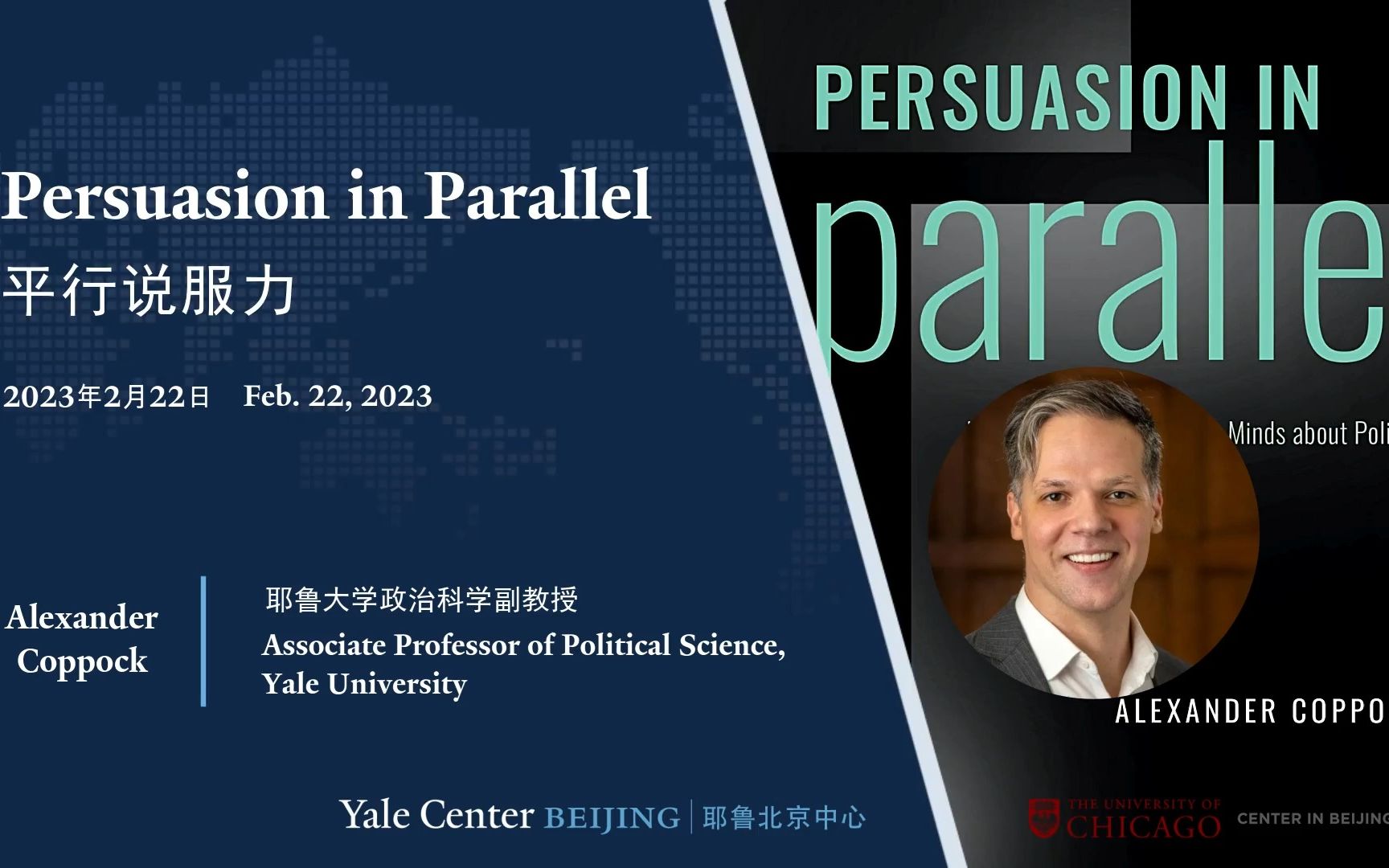
字幕摘录
| 时间 | 英文 | 中文 |
|---|---|---|
| 0:04 | Hello, everybody. | 哈罗,大家好。 |
| 0:05 | Good morning for those of you guys joining us from the US and good evening | 早上好,你们这些家伙从美国加入我们,晚安 |
| 0:10 | if you're joining us from China or elsewhere in Asia. | 如果你从中国或亚洲其他地方加入我们 |
| 0:14 | Good to see everybody. | 很高兴见到大家 |
| 0:15 | For those | 给那些 |
| 0:16 | of you guys that are able to, it'd be great if you could turn on your webcam just so that | 如果你们能打开你的网络摄像头 那就太好了 |
| 0:20 | we can see some faces so we're not just talking to a wall of blank screens and random names. | 我们可以看到一些面孔 所以我们不只是在谈论 空白屏幕和随机名称的墙壁。 |
| 0:28 | It's always good to be able to put some faces to names here as we're still getting back to | 总是能把一些面孔 给这里的名字,因为我们仍然 回到 |
| 0:39 | in person, but it's still great to be able to do these Zoom meetings and be able to connect | 但还是很棒的 能够做这些Zoom会议和连接 |
| 0:44 | from people all over the world. | 从世界各地的人。 |
展开字幕全文(1022 条)
| 序号 | 英文 | 中文 |
|---|---|---|
| 1 | Hello, everybody. | 哈罗,大家好。 |
| 2 | Good morning for those of you guys joining us from the US and good evening | 早上好,你们这些家伙从美国加入我们,晚安 |
| 3 | if you're joining us from China or elsewhere in Asia. | 如果你从中国或亚洲其他地方加入我们 |
| 4 | Good to see everybody. | 很高兴见到大家 |
| 5 | For those | 给那些 |
| 6 | of you guys that are able to, it'd be great if you could turn on your webcam just so that | 如果你们能打开你的网络摄像头 那就太好了 |
| 7 | we can see some faces so we're not just talking to a wall of blank screens and random names. | 我们可以看到一些面孔 所以我们不只是在谈论 空白屏幕和随机名称的墙壁。 |
| 8 | It's always good to be able to put some faces to names here as we're still getting back to | 总是能把一些面孔 给这里的名字,因为我们仍然 回到 |
| 9 | in person, but it's still great to be able to do these Zoom meetings and be able to connect | 但还是很棒的 能够做这些Zoom会议和连接 |
| 10 | from people all over the world. | 从世界各地的人。 |
| 11 | So my name is Devin Lau. | 我叫刘德文 |
| 12 | I am the Associate Director of Yale | 我是耶鲁大学的副院长 |
| 13 | Center Beijing, and I'm very glad today to have you guys join us for a talk on a new book by | 北京中心,我很高兴今天有你们 加入我们讨论一本新书 |
| 14 | Professor Alex Kabak on a very pertinent and relevant topic that I'm sure in this increasing | Alex Kabak教授的话题很贴切 我相信这个话题越来越重要 |
| 15 | age of polarization and extreme views is more important than ever, and so very excited to | 时代的两极分化和极端观点比以往任何时候都更加重要,因此非常激动 |
| 16 | have you all join us. | 请大家加入我们 |
| 17 | Let me quickly introduce our speaker and then we'll get right to it. | 让我很快介绍一下我们的演讲人 然后我们马上开始 |
| 18 | So Professor Alex Kabak is Associate Professor of Political Science at Yale as well as a Resident | Alex Kabak教授是耶鲁大学政治学副教授 也是一名居民 |
| 19 | Fellow of the Institution for Social Policy Studies and the Center for the Study of American | 社会政策研究所和美国研究中心研究员 |
| 20 | Politics. | 政治学. |
| 21 | After completing his bachelor's at the University of Chicago, he received his PhD | 完成芝加哥大学的学士学位后,他获得了博士学位 |
| 22 | in political science from Columbia University. | 哥伦比亚大学政治学专业。 |
| 23 | His principal interest research as I said earlier | 我之前说过他的主要兴趣研究 |
| 24 | lies in political persuasion and its implications for the malleability of public opinion, especially | 在于政治说服及其对公众舆论的可塑性的影响,特别是 |
| 25 | in the context of elections, which is of course the subject of his new book in today's talk, | 在选举的背景下 这当然是 他的新书的主题 今天的谈话, |
| 26 | but he's also the co-author of Research Design in the Social Sciences Declared Diagnose Redesign, | 但他也是"社会科学公开诊断重新设计研究设计"的共同作者, |
| 27 | which is a research design textbook that introduces a language for describing research design and an | 这是一本研究设计教科书,介绍了描述研究设计的语言,以及 |
| 28 | algorithm for evaluating the properties. | 用于评价属性的算法。 |
| 29 | So for those of you that are in political science or | 所以,对于你们这些在政治学或 |
| 30 | interested in more of the nuts and bolts of his work, that's I think also an | 对更多他作品的坚果和螺栓感兴趣 我想这也是 |
| 31 | interesting topic he'd be willing to discuss. | 有趣的话题 他会愿意讨论。 |
| 32 | And so lots of interesting things to talk about today, | 今天有很多有趣的事情要谈 |
| 33 | so I'm just going to turn it over to him and then we'll have some time for questions at the end. | 所以我要把它交给他 然后我们有时间提问 |
| 34 | Great. | 不错 |
| 35 | Thank you so much Devin. | 非常感谢德文 |
| 36 | Thanks to Yale Center Beijing for inviting me to come talk to | 感谢耶鲁中心邀请我来 |
| 37 | you about this. | 你 关于这个。 |
| 38 | This book has been such a long time coming. | 这本书来得太久了 |
| 39 | It was my dissertation work seven | 这是我的论文作品七 |
| 40 | years ago and at the time I was just so focused on the empirical findings that I did not really take, | 几年前,当时我只 如此专注于经验性 发现,我没有真正采取, |
| 41 | even though my advisors were telling me to, I didn't really take the | 尽管我的顾问告诉我, 我并没有真正采取 |
| 42 | step backwards to understand what it all means for politics. | 向后退一步,以了解这一切对政治意味着什么。 |
| 43 | So now I can, you know, | 所以,现在我可以,你知道, |
| 44 | it's finally in print and I can wave it at you and that's really exciting for me. | 它终于印下来了 我可以向你挥手 这对我来说真的很刺激 |
| 45 | But I also have had | 但我也有过 |
| 46 | intervening seven years when rewriting it from the very beginning and re-encountering all of | 7年的干预,从一开始就重写它 并重新面对所有 |
| 47 | the experiments. | 实验 |
| 48 | I've had an opportunity now to really understand what it does mean for politics. | 我现在有机会真正理解它对于政治的意义. |
| 49 | And so what I hope that I can do in this talk is give you a sense of the main claim, how I came to | 所以,我希望我能在这个演讲中 做一个让你感觉 主要的主张,我是如何来到 |
| 50 | that main claim, but also what it does mean for politics more generally. | 这主要主张, 但也意味着政治更普遍。 |
| 51 | I'm going to focus the | 我将集中精力 |
| 52 | talk around three key ideas. | 围绕三个关键思想展开讨论. |
| 53 | And so if you're, if you come along with me for that first key idea, | 所以,如果你是, 如果你跟我来 第一个关键的想法, |
| 54 | I think then you'll be happy to go along to the second. | 我想你会很高兴去第二。 |
| 55 | And if you're okay with one and two, | 如果你一两个可以的话 |
| 56 | then you might be okay with the third idea, but you're under no obligation. | 那你也许可以接受第三个想法 但你没有义务 |
| 57 | So if you, if you | 所以,如果你,如果你 |
| 58 | don't agree, that's okay. | 不同意,没关系。 |
| 59 | I'm happy to answer questions throughout if they come up for you or | 我很乐意回答所有的问题 如果他们来找你或 |
| 60 | we can save them to the end. | 我们可以把他们救到最后 |
| 61 | It's totally up to you. | 这完全取决于你。 |
| 62 | Okay. | 摆 |
| 63 | I'll share screen now. | 我现在就分享屏幕 |
| 64 | Oh no, | 哦,没有, |
| 65 | you're going to get to see the whole talk. | 你会看到整个谈话。 |
| 66 | One second. | 一秒钟。 |
| 67 | All right. | 好吧,我们走。 |
| 68 | So that first idea, | 所以第一个想法 |
| 69 | that first key idea is that the persuasion and parallel pattern is common. | 第一个关键点是说服和平行模式是常见的。 |
| 70 | I'm trying to say that | 我想说 |
| 71 | what normally happens when people encounter persuasive political information is that they | 当人们遇到有说服力的政治信息时 通常会发生什么 |
| 72 | change their minds a little bit in the direction of information and that that change, that change | 改变他们的想法 一点点方向的信息 改变,改变 |
| 73 | in their attitudes is similar for different groups. | 不同群体的态度类似。 |
| 74 | And so if you were to make a picture of | 所以如果你要拍张照片 |
| 75 | what that looks like, it looks like parallel lines. | 看起来像是平行线 |
| 76 | So this pair of persuasion and parallel | 所以这对说服和平行 |
| 77 | pattern is the thing that I'm claiming is general. | 我所声称的规律是一般的 |
| 78 | Now, of course that that has to be an over claim | 现在,当然,那必须是 超额索赔 |
| 79 | because I have only studied people in the U S who might take surveys. | 因为我只研究过美国可能接受调查的人 |
| 80 | So I'm trying to generalize | 所以我想概括一下 |
| 81 | that claim to people in the U S who might not take surveys and to people who live in Canada, | 对美国可能不参加调查的人和居住在加拿大的人的权利要求, |
| 82 | who might and might not take surveys and people who live in France, people who live in Argentina | 可能或不会接受调查的人 住在法国的人 住在阿根廷的人 |
| 83 | and indeed in China and people who live in the 23rd century and people who live in the 16th century. | 在中国和生活在23世纪的人 以及生活在16世纪的人 |
| 84 | Like I'm trying to make a general claim about what happens when people encounter persuasive | 就像我试图对人们遇到有说服力的情况 提出一个一般性的主张 |
| 85 | information. | 资料。 |
| 86 | But of course, I've only studied the people that I did do that I did study, right? | 但当然,我只研究过 我做过的人,我确实学习,对不对? |
| 87 | So | 这么说 |
| 88 | that generalization is going to be have to be made not on the basis of an actual empirical finding, | 不得根据实际经验结论进行概括, |
| 89 | but instead on the basis of the theoretical generalization. | 但以理论概括为基础。 |
| 90 | And I'm hoping that you'll be | 我希望你会 |
| 91 | willing to come with me on that particular on that particular journey. | 愿意与我一起踏上这一段旅程。 |
| 92 | Let me show you a picture of | 让我给你看一张 |
| 93 | what the persuasion and parallel pattern looks like. | 说服和平行模式是什么样子的。 |
| 94 | This is a stylized version. | 这是一个结构化的版本。 |
| 95 | So these are not | 所以这些不是 |
| 96 | data. | 数据。 |
| 97 | This is the, this is a schematic version. | 这是,这是一个图表版本。 |
| 98 | Imagine there are two kinds of people in the world. | 想象世界有两种人 |
| 99 | There are blue people and there are red people and they disagree on average about some policy. | 有蓝色的人和红色的人 他们平均不同意一些政策。 |
| 100 | So the vertical axis of this figure is policy support. | 因此,这个数字的垂直轴是政策支持. |
| 101 | You can see that the blue people on | 你可以看到,蓝色的人在 |
| 102 | average support the policy at a higher rate than the red people. | 平均支持政策的比例高于红色人群。 |
| 103 | And that's when you don't give | 当你不给 |
| 104 | them any persuasive information. | 任何有说服力的信息 |
| 105 | If you go over to the right side of the graph, now this is what | 如果你去右侧的图表, 现在这是什么 |
| 106 | happens when you give positive persuasive information. | 当你给出有说服力的正面信息时 |
| 107 | That is to say, facts and | 也就是说,事实和 |
| 108 | argumentation that has a target attitude that you're trying to move in the positive direction. | 具有目标态度的争论 你正试图朝着积极的方向发展 |
| 109 | So for people who are in the blue group, that information is congenial. | 所以对于在蓝色人群中的人来说, 这些信息是同源的。 |
| 110 | Like they already agree | 好像他们已经同意了 |
| 111 | and they like that information. | 他们喜欢这个信息。 |
| 112 | They move in the direction of information and support the policy | 他们向信息方向发展,支持政策 |
| 113 | even more. | 更何况. |
| 114 | For people who are in the red group, that group is counter attitudinal. | 对于属于红色群体的人来说,这个群体是反态度。 |
| 115 | They don't like | 他们不喜欢 |
| 116 | that information, but nevertheless they update in the direction of information. | 这些信息,但从信息的方向加以更新。 |
| 117 | My argument is | 我的论点是 |
| 118 | fully symmetric. | 完全对称。 |
| 119 | So if you were to instead see negative persuasive information, you would move | 所以,如果你看到负面的说服性信息, 你会移动 |
| 120 | in the negative direction. | 在负方向。 |
| 121 | And that would be, so that would be pro attitudinal for the people who | 这将是,所以这将是 支持人们的态度 |
| 122 | are in the red group, but it would be counter attitudinal for people who are in the blue group. | 属于红色群体,但对于属于蓝色群体的人来说,这是反面的态度。 |
| 123 | So that's just, that's the, that's the persuasion parallel pattern in a nutshell. | 所以,这就是, 简言之,这就是说服的平行模式。 |
| 124 | That's what I'm | 这就是我 |
| 125 | trying to claim is commonplace, is that people update their views in the direction of information | 人们试图声称,这是司空见惯的, 是人们更新 他们的观点方向信息 |
| 126 | by a small amount. | 以少许之数. |
| 127 | And it's not different for the red group and the blue group, right? | 对红组和蓝组来说也没什么不同 对吧? |
| 128 | That's the | 就是这样 |
| 129 | key thing is that there is a central similarity in the way that people respond to political | 关键是人们对政治的反应有中心相似性 |
| 130 | information. | 资料。 |
| 131 | Let me say a couple of other comments about this figure, about what is | 让我就这个数字,什么是 |
| 132 | included in the argument and what is excluded. | (b) 列入论点和排除的内容。 |
| 133 | So I'm only talking about treatments that | 所以我只说治疗 |
| 134 | you could put on this axis, on the horizontal axis. | 您可以在此轴上, 在水平轴上。 |
| 135 | Other kinds of treatments are not persuasive | 其他种类的治疗没有说服力 |
| 136 | information. | 资料。 |
| 137 | So for example, a group Q is not persuasive political information. | 例如,一个Q团体并不具有说服力的政治信息。 |
| 138 | A group Q is | 一个组Q是 |
| 139 | like what some other group in society thinks. | 就像社会上其他群体的看法 |
| 140 | So in the U S context, you might say Republicans | 所以在美国,你可以说共和党人 |
| 141 | support the policy. | 支持这项政策。 |
| 142 | And then the causal effect of that on Republican respondents | 这对共和党人的影响 |
| 143 | views is going to be to increase their support, but among Democrats, that would be to decrease | 观点将会增加他们的支持, 但在民主党人中, 这将减少 |
| 144 | their support. | 他们的支持。 |
| 145 | So you get oppositely signed treatment effects of that kind of a group Q | 所以,你得到相反签名 治疗效果 类组Q |
| 146 | treatment. | 治疗。 |
| 147 | So that's not what I'm talking about when I'm talking about persuasive information. | 因此,我说的不是说服性的信息。 |
| 148 | There I'm talking about like trying to make an argument to change your mind on a particular | 我说的就是 试图提出一个论点 改变你对某个 |
| 149 | issue using facts and logic and argumentation. | 利用事实、逻辑和论证。 |
| 150 | Another important thing is what is scoped in | 另一件重要的事情是,什么是范围在 |
| 151 | on this vertical axis? | 是否在此垂直轴上? |
| 152 | What are the kinds of outcome variables that we're talking about? | 我们谈论的结果变量是什么? |
| 153 | And that's going to be anything that can be construed as a policy support variable, not | 这会是任何可以被理解为 政策支持变量,而不是 |
| 154 | other things that are sometimes measured in these persuasion experiments, like how much you like the | 有时在这些说服实验中测量的其他东西 比如你喜欢什么 |
| 155 | information or how much you like the speaker, right? | 信息或者你有多喜欢演讲者,对吧? |
| 156 | So those sorts of evaluations are not | 所以这些评价不是 |
| 157 | what I'm talking about here. | 我在这里说的。 |
| 158 | I'm talking instead about policy support. | 我说的是政策支持。 |
| 159 | Okay. | 摆 |
| 160 | Let me give you an | 让我给你一个 |
| 161 | example of persuasion in parallel from one of these experiments. | 与其中一项实验平行说服的例子。 |
| 162 | This is a study done by | 这份研究是由 |
| 163 | Chong and Druckmann in 2010 in the U S. The policy area we're studying here is support for | 2010年,Chong和Druckmann在美国效力. 我们研究的政策领域是支持 |
| 164 | Patriot Act, which was a policy introduced after 9 11. | 《爱国者法》,这是在9月11日之后实行的一项政策。 |
| 165 | Republicans, when you don't do anything to | 共和党人,当你不做任何事情 |
| 166 | them, they support the policy at a higher rate than do Democrats. | 他们支持政策的速度比民主党高 |
| 167 | If you give them pro information, | 如果你给他们专业信息 |
| 168 | so these were six arguments in a row that the subjects were exposed to, six arguments about | 因此,这些是连续6个论点 被主体接触到, 关于 |
| 169 | why the Patriot Act is so good, why we should support the Patriot Act. | 为什么爱国者法案这么好,为什么我们应该支持爱国者法案. |
| 170 | It's going to keep us | 它会让我们留下 |
| 171 | safer in a dangerous world. | 在一个危险的世界里更安全 |
| 172 | We're going to beat the terrorists, et cetera. | 我们要打败恐怖分子等等 |
| 173 | And when Republicans | 当共和党人 |
| 174 | are exposed to that information, they increase their support for the Patriot Act. | 面对这种信息,他们加强了对《爱国者法》的支持。 |
| 175 | And so do | 我也一样 |
| 176 | Democrats. | 民主党人. |
| 177 | So Democrats are also persuaded just like Republicans by about the same amount. | 因此,民主党人也像共和党人一样,以大约相同数量被说服. |
| 178 | There is a alternative treatment condition to which subjects could be randomly assigned. | 还有一个其他治疗条件,可以随机分配对象。 |
| 179 | And | 还有 |
| 180 | that was to get six arguments about why the Patriot Act is very bad. | 也就是说 爱国者法案为什么非常糟糕 |
| 181 | It impinges upon our | 它影响我们 |
| 182 | personal freedoms. | 个人自由。 |
| 183 | It's a violation of privacy, et cetera, that causes Democrats to decrease their | 这是一种侵犯隐私等行为,导致民主党人减少 |
| 184 | support for the Patriot Act, but also for Republicans. | 支持爱国者法案,但也支持共和党. |
| 185 | So that was the original study | 这就是最初的研究 |
| 186 | 由Chong和Druckmann在2010年之前主持。 | |
| 187 | I don't know, maybe 2008. | 我不知道,也许2008年。 |
| 188 | I came along in graduate | 我毕业就来了 |
| 189 | school and simply redid the study on a new sample. | 重新整理研究样本 |
| 190 | So this is the Mechanical Turk sample. | 这就是土耳其机械公司的样本。 |
| 191 | Mechanical | 机械 |
| 192 | Turk is a service provided by Amazon where you can essentially get like online workers to take | Turk是亚马逊公司提供的一项服务, 你可以基本上得到像网上工人一样接受 |
| 193 | surveys. | 调查。 |
| 194 | It's completely unrepresentative of the national population, right? | 这完全不能代表全国人民,对吧? |
| 195 | They're just | 他们只是 |
| 196 | weirdos on the internet. | 网上的怪人 |
| 197 | And you can see that they have different average, like the Republicans | 你可以看到,他们有不同的平均, 像共和党 |
| 198 | on Mechanical Turk have a different average opinion from the Republicans in the national | 与全国共和党相比, |
| 199 | probability sample. | 概率样本。 |
| 200 | Even so, on Mechanical Turk, the treatments had very similar effects. | 即便如此,对于机械突厥来说,这些治疗方法也有非常相似的效果. |
| 201 | So | 这么说 |
| 202 | Republicans on Mechanical Turk updated their opinions in line with the treatments that they | 共和党人关于机械土耳其 更新他们的意见 根据他们的待遇 |
| 203 | saw. | 锯. |
| 204 | If you saw the pro treatment, you became more pro. | 如果你看到专业治疗, 你变得更专业。 |
| 205 | If you saw the con treatment, you became | 如果你看到骗局,你就变成 |
| 206 | more con. | 更多的骗局。 |
| 207 | There's actually three instances of the persuasion and parallel pattern in this figure. | 这个数字中实际上有三个说服和平行模式的例子. |
| 208 | You've got the persuasion and parallel pattern on the left-hand side. | 你左手边有说服力和平行模式 |
| 209 | You've got the persuasion | 你有说服力 |
| 210 | and parallel on the right-hand side. | 右侧是平行的。 |
| 211 | And also you have one where you can see that people who | 还有你可以看到的人谁 |
| 212 | are Mechanical Turkers respond to this information and people who are not Mechanical Turkers respond | 机械突厥人回应这个信息 而那些不是机械突厥人的人回应 |
| 213 | to this information by about the same amount, right? | 对这个信息,大约相同数量,对不对? |
| 214 | So that's to say, this is one of the | 也就是说,这是其中之一 |
| 215 | research design implications of this work is you can't use like these online convenience samples | 研究设计的影响是 你不能像这些在线方便样本一样使用 |
| 216 | to do descriptive research. | 进行描述性研究。 |
| 217 | You're going to get the wrong answer about the level of opinion because | 你会得到错误的答案 关于意见的程度,因为 |
| 218 | of all of the normal sampling bias things that you're taught in introductory statistics class, | 所有正常的抽样偏差 东西,你教 在入门统计课程, |
| 219 | right? | 对吧? |
| 220 | Mechanical Turkers are not representative of the population. | 机械突厥人不代表人口. |
| 221 | Absolutely. | 当然 |
| 222 | But for the kinds | 但对于这些种类 |
| 223 | of things we study in survey experiments, when we're studying the causal effects of treatments, | 当我们研究治疗的因果时 |
| 224 | those are typically quite similar from person to person. | 它们通常在人与人之间相当相似。 |
| 225 | And so that's the reason why you | 所以这就是你为什么 |
| 226 | can study those things on non-representative samples and still learn something about human | 还可以在非代表性样本上研究这些东西 并且仍然了解人类 |
| 227 | beings in general, right? | 人一般,对不对? |
| 228 | I'm giving you the substantive talk today, but there is a whole | 我今天给你实质性的演讲,但有一个整体 |
| 229 | research design side of this, which takes advantage of the fact that when you know that | 研究设计方面, 利用这一事实,当你知道 |
| 230 | the treatment effects are going to be relatively homogeneous, you can generalize from one sample | 治疗效果会相对一致,你可以从一个样本中概括 |
| 231 | to another, even though there's no design-based reason for that. | 虽然没有设计上的理由, |
| 232 | Okay. | 摆 |
| 233 | So the book is 23 of those | 那本书是23本 |
| 234 | kinds of experiments, okay? | 那种实验,好吗? |
| 235 | And so chapter five of the book is extraordinarily boring. | 所以书的第五章特别无聊。 |
| 236 | It's like | 这就像 |
| 237 | a justification over and over and over again of why that experiment counts on the horizontal axis | 一次又一次地说明为什么实验依赖于水平轴 |
| 238 | and why that experiment counts on the vertical axis. | 以及为什么实验依赖于垂直轴. |
| 239 | And so it's just like a slog to get through | 所以,它只是像一个slog通过 |
| 240 | all of those experiments. | 所有这些实验。 |
| 241 | It would be very boring for you, and it would be very boring for me to | 对你来说会很无聊,我也会很无聊 |
| 242 | go through all 23 of those experiments. | 经历所有23个实验 |
| 243 | And so what I'm going to do is I'm just going to flash | 所以,我要做的是,我只是要闪耀 |
| 244 | on the screen the picture that shows up from all of them. | 在屏幕上显示的图片 从所有他们。 |
| 245 | So you get a sense of how parallel | 所以,你得到的感觉 如何平行 |
| 246 | and how commonplace this parallel persuasion finding is. | 而这种平行的说服结论是多么的常见。 |
| 247 | Let me pull that up. | 让我拉起来。 |
| 248 | So here's | 所以这里 |
| 249 | chapter five of the book. | 该书第五章。 |
| 250 | Here's an experiment where people update in parallel, approximately. | 这里有一个实验,人们平行更新,大约。 |
| 251 | Here's another experiment where people update in parallel. | 这里还有另一个实验,人们可以平行更新. |
| 252 | There's more parallelism. | 更有并行论. |
| 253 | This is the | 这是 |
| 254 | one we were just looking at. | 一个我们刚刚看到的。 |
| 255 | That's the Patriot Act experiment. | 这是爱国者法案的实验。 |
| 256 | Here's some more parallelism, | 这里有一些比较平行的, |
| 257 | still more. | 还有更多 |
| 258 | This one, the negative treatment was more powerful than the positive treatment, | 这个,负面的治疗 比正面的治疗更强大, |
| 259 | but you can see that it's still similar across different groups from the left and the right. | 但是,你可以看到,它仍然相似 在不同的组 从左右。 |
| 260 | This page is just nothing but parallel lines. | 此页面只是平行行。 |
| 261 | So is this one. | 这个也是 |
| 262 | So is that one. | 那个也是 |
| 263 | So are these. | 这些也是 |
| 264 | So is that. | 这也是。 |
| 265 | Okay, that's it. | 好了 就这样 |
| 266 | So the point of showing you all those things was to very briefly | 所以,告诉你所有这些事情的要点 是非常简短的 |
| 267 | convince you that across this set of experiments that includes | 让你相信,在这一系列实验中 |
| 268 | some experiments that I did with collaborators, others where I was replicating somebody else's | 我和合作者做了一些实验 其他的我复制别人的实验 |
| 269 | work on a new sample and a third set where I was just like, I need some more persuasion experiments | 新的样本和第三套的样本 我需要更多的说服实验 |
| 270 | and there's this organization called TESS where if you get a grant from TESS, you get to run your | 有个叫TESS的组织 如果你从TESS那里得到一笔赠款 你就可以运行你的 |
| 271 | experiment on a representative sample, but the requirement is that the data from that experiment | 进行具有代表性的样本实验,但要求从实验中获得的数据 |
| 272 | be posted online. | 在线发布。 |
| 273 | So I just downloaded a whole bunch of persuasion experiments and showed that | 于是我下载了一大堆说服实验 并显示 |
| 274 | it is also true in those ones. | 在那些方面也是如此。 |
| 275 | In no way am I trying to say that I have sampled at random | 我绝不是想说我随机抽样 |
| 276 | from the set of possible persuasion experiments. | 从一套可能的说服实验。 |
| 277 | There's no design, and it's not in any way like | 根本就没有设计,根本就没有 |
| 278 | of the ones that have ever been done. | 那些曾经做过的 |
| 279 | If I were to redo this study now, I would choose a different | 如果我现在重新做这个研究,我会选择一个不同的 |
| 280 | set of 23 experiments to do. | 23个实验 |
| 281 | I'm gratified to know that when I look at persuasion experiments, | 我很高兴知道 当我看说服实验时 |
| 282 | now that the book is printed and all the rest of it, and I look at new ones, I keep finding | 现在书已经印了,其他的都印了 我看着新的,我一直发现 |
| 283 | the same pattern. | 同样的模式。 |
| 284 | I was talking to a Chinese scholar earlier this week and he showed me his | 我本周早些时候和一位中国学者谈过 他给我看了他的 |
| 285 | persuasion experiment, and then by people who are predisposed to support the government and | 说服实验,然后由那些 倾向于支持政府和 |
| 286 | people who are predisposed to oppose the government, you see very similar treatment effects of | 那些倾向于反对政府的人 你可以看到非常相似的治疗效果 |
| 287 | information even in the Chinese context. | 信息甚至在中文背景。 |
| 288 | So this is not something that is specific to American | 所以这不是美国特有的 |
| 289 | people. | 人们 |
| 290 | This is a feature of human beings, or so I claim, that people are persuaded a small amount | 这是人类的一个特点,所以我声称, 人们被说服了少量 |
| 291 | of information in that. | 里面的资料。 |
| 292 | I'm not trying to confine that finding to any particular policy area or to | 我并不想把发现局限于任何特定政策领域或 |
| 293 | any particular person or to any particular way to divide up the subgroups. | 任何特定的人或任何划分分组的特定方式。 |
| 294 | It's a general finding. | 这是一般的发现。 |
| 295 | I look forward to, in the future, people finding exceptions to that, and that's the way this goes. | 我期待着,在未来,人们 找到例外, 这是这种方式。 |
| 296 | But what's important, I think, is to instead of focusing on all the ways that we're different, | 但是,我认为重要的是, 而不是专注于我们不同的方式, |
| 297 | we should focus on the ways in which we are quite similar, and we are quite similar in our | 我们应集中探讨我们相当相似的方式,我们相当相似。 |
| 298 | susceptibility to persuasive information. | 容易获得有说服力的信息。 |
| 299 | Okay, I'm going to go back to sharing and I'm going to | 好吧,我要回去 分享,我要去 |
| 300 | give you a way to summarize all that information that's slightly different from just flashing | 给您一个方法来总结所有那些 稍有不同的信息 与只是闪光 |
| 301 | those pictures at you. | 那些照片对你。 |
| 302 | Okay, so this figure is a way of looking at all of the experiments all at | 好吧,这个数字是看所有实验的方法 |
| 303 | once. | 曾经 |
| 304 | I'm going to take each experiment and standardize it so that the effects are expressed | 我要把每个实验都标准化 这样效果就能表达出来 |
| 305 | not in whatever scale happened in that experiment, but instead in standardized units divided by the | 并不是在试验中发生的任何规模,而是在标准单位中,除以 |
| 306 | standard deviation in the control group so that now we can understand a treatment effect in terms | 控制组中的标准偏差,这样我们现在就可以理解一个处理效果 |
| 307 | of what fraction of a standard deviation have we moved people. | 我们移动了多少人 |
| 308 | The horizontal axis on this figure | 此图上的横向轴 |
| 309 | is the average treatment effect among people who call themselves Democrats. | 也就是所谓的民主党人的平均治疗效果 |
| 310 | The vertical axis is | 垂直轴为 |
| 311 | that same thing, the average effective information among people who call themselves Republicans. | 同样的事情, 平均有效的信息 在人们 自称共和党人。 |
| 312 | What you can see from this figure is that when Democrats have a large treatment effect, | 从这个数字中可以看出,当民主党人有巨大的治疗效果时, |
| 313 | so too do Republicans. | 共和党人也一样 |
| 314 | They share that. | 他们也一样 |
| 315 | When they have a middling treatment effect, | 当他们有 干预治疗效果, |
| 316 | so too do Republicans. | 共和党人也一样 |
| 317 | That's just to say that the treatment effects across all of these | 也就是说,治疗效果 贯穿所有这些 |
| 318 | are quite correlated in the sense that whatever the effect is going to be for Democrats, that's | 相当相关 意思是不管对民主党的影响是什么 |
| 319 | what you're going to find for Republicans. | 你会为共和党人找到什么 |
| 320 | The reason is that both of them have effects that | 原因是他们两个都有影响 |
| 321 | are quite similar to the overall average effect. | 与总体平均效应相当相似。 |
| 322 | This is just to say that the effects are quite | 这只是说, 效果相当 |
| 323 | homogeneous by partisanship. | 由党派而同质。 |
| 324 | If I do the same thing by racial group, so now on the horizontal axis, | 如果我做同样的事情 种族集团, 所以现在在水平轴上, |
| 325 | I have the effect of treatment among white respondents correlated with the effect of | 我对白人回应者有治疗效果 |
| 326 | treatment among black respondents. | 黑人受访者的待遇。 |
| 327 | You can see that this scatterplot is less tightly correlated | 你可以看到,这个散点的紧密关联性较小 |
| 328 | and there's a very clear understanding of why that's the case. | 并且对原因有非常清楚的理解. |
| 329 | There are far fewer black | 黑的要少得多 |
| 330 | respondents in these samples than there are white respondents, so the confidence intervals in the | 这些样本中的受访者比白人受访者要多,因此,在样本中的置信间隔是: |
| 331 | horizontal direction are quite tight. | 水平方向相当紧凑. |
| 332 | That just creates attenuation in a correlation. | 这只会在关联中产生减弱 |
| 333 | That's a straightforward consequence of the different amounts of measurement error that | 这是不同程度的测量错误造成的直接后果 |
| 334 | we're seeing from the racial comparison versus the partisanship comparison. | 我们从种族对比和党派对比来看 |
| 335 | Now we can look at | 现在我们可以看 |
| 336 | this pattern by six different ways of dividing up the population. | 以六种不同的方式划分人口。 |
| 337 | We had partisanship and race. | 我们有党派和种族。 |
| 338 | We can also look at ideology. | 我们还可以审视意识形态。 |
| 339 | We can look at gender. | 我们可以看性别。 |
| 340 | We can look at age. | 我们可以看年龄。 |
| 341 | We can look at | 我们可以看看 |
| 342 | education. | 教育。 |
| 343 | In all of these cases, we've got good evidence that the effects are correlated. | 在所有这些案件中,我们都有确凿的证据 证明影响是相互关联的。 |
| 344 | If it's | 如果是这样 |
| 345 | larger for one subgroup, it's also going to be larger for the other subgroup. | 对于一个小分组来说,它也会是另一个小分组中更大的. |
| 346 | The correlation is | 相关性是 |
| 347 | tighter when those things are estimated with more precision and it's less tight when that's | 当那些东西被更精确地估算出来时 收紧点 当那样的时候 |
| 348 | estimated with less precision. | 估计的准确性较低。 |
| 349 | That's just to say any differences that we're seeing by these | 那只是说我们所看到的区别 |
| 350 | covariates is just a straightforward consequence of having less information about those people. | 共变只是对这些人了解较少的一个直接后果。 |
| 351 | It is this picture that convinces me that the persuasion and parallel pattern is common. | 正是这张照片让我相信,说服和平行模式是常见的。 |
| 352 | That's | 这是 |
| 353 | the basis on which I'm trying to convince you that the persuasion and parallel pattern is common. | 我试图说服你 说服和平行模式是常见的 |
| 354 | I don't have any further proof for you than what is in this figure. | 我没有任何进一步的证据给你 比这个数字是什么。 |
| 355 | Here ends the empirical | 这里结束经验 |
| 356 | portion of the talk. | 谈的部分。 |
| 357 | If you're not convinced now, I won't be able to convince you further | 如果你现在不说服我 我就无法进一步说服你 |
| 358 | because I have no more information to do that with. | 因为我没有更多的信息 这样做。 |
| 359 | I don't know whether I have convinced you, | 我不知道我是否说服过你 |
| 360 | but suppose that I have. | 但假设我有 |
| 361 | Suppose that you now believe that the persuasion and parallel pattern | 假设你现在相信 说服和平行模式 |
| 362 | is common, then your next question is, Alex, you say that it's common, but why don't we see it all | 亚历克斯,你的下一个问题是 你说这是常见的,但为什么我们不看到这一切 |
| 363 | the time if it is? | 如果是时间呢? |
| 364 | I'm going to give you three explanations for this. | I三释此. |
| 365 | The first is, in order to | 首先,为了 |
| 366 | see the persuasion and parallel pattern, you need to have a randomized experiment. | 请看说服和平行模式, 你需要有一个随机化的实验。 |
| 367 | You need to see | 你该看看 |
| 368 | units in their untreated condition and you need to see units in their treated condition. | 处于未治疗状态的单位,需要看到处于治疗状态的单位. |
| 369 | If you don't have that, then you can't draw the lines between what people would say on average | 如果你没有,那你就不能 划清人们平均说的界限 |
| 370 | if they weren't treated and what they would say on average if they were. | 如果他们没有被治疗 和他们平均会说什么 如果他们是。 |
| 371 | What do we have instead? | 我们还有什么? |
| 372 | We have repeated cross-sectional polls of the same kinds of people. | 我们重复了同一类人的跨部门投票。 |
| 373 | This is a figure that displays | 这是一个显示 |
| 374 | attitudes towards gay marriage in the US by seven different ways to divide up the population, | 美国以七种不同方式对待同性恋婚姻的态度, |
| 375 | partisanship, ideology, religion, religious attendance, race, generation, gender. | 党派,意识形态,宗教,宗教出席,种族,世代,性别. |
| 376 | In all | 总之 |
| 377 | of these subgroups, people went from not supporting gay marriage as much to supporting gay marriage at | 人们从不支持同性恋婚姻到支持同性恋婚姻 |
| 378 | a much higher level. | 更高级 |
| 379 | They do that in parallel for basically all of these lines. | 他们这样做的平行 基本上所有这些线。 |
| 380 | Even those who really | 连那些真的 |
| 381 | do not support gay marriage, white evangelical Protestants, for example, they have a very low | 不支持同性恋婚姻, 白人福音派新教徒, 例如,他们有非常低的 |
| 382 | level of support. | 支助水平。 |
| 383 | Even they increase their support for gay marriage over the course of this period. | 即使他们在此期间也增加了对同性恋婚姻的支持. |
| 384 | People who have very high support, so liberal Democrats, they increase their support even more | 支持度很高的人, 自由民主党, 他们增加了他们的支持 |
| 385 | during this time. | 在此期间。 |
| 386 | You can find instances of this parallel public's finding. | 你可以找到这个平行的公众发现的例子. |
| 387 | This is a classic | 这是经典 |
| 388 | finding in the political science literature that many, many issues have this feature. | 在政治学文献中发现,很多,许多问题都有这一特点. |
| 389 | Here's an | 这个 |
| 390 | example of an issue where they do not have that feature. | 例如,它们没有这种特征的问题。 |
| 391 | I did not know before starting this | 开始之前我不知道 |
| 392 | research that in the 80s, Democrats and Republicans had the same average opinions about whether or | 在80年代,民主党和共和党对 |
| 393 | not people should be allowed to have abortions. | 不应该允许人们堕胎。 |
| 394 | Over the course of this period, Democrats and | 在此期间,民主党和 |
| 395 | Republicans have absolutely split and diverged in their opinions. | 共和党人的意见绝对分裂和分歧. |
| 396 | There are other issues like | 还有其他问题 |
| 397 | immigration, for example. | 例如,移民问题。 |
| 398 | Immigration attitudes have diverged over time, not moved in parallel. | 移民的态度随着时间的推移而有所差异,而不是同时移动。 |
| 399 | This kind of information about people's attitudes, I argue you can't use it to understand whether or | 这种关于人们态度的信息,我认为你不能用它来理解是否 |
| 400 | not it's the case that people update their views in the direction of information in a similar | 而不是人们更新 他们的观点方向的信息 类似 |
| 401 | amount. | 金额。 |
| 402 | You can't use this information to study the question that I'm trying to study. | 你不能用这个信息来研究我试图研究的问题. |
| 403 | The reason | 原因 |
| 404 | is that what's the treatment variable in these graphs? | 这些图表中的治疗变量是什么? |
| 405 | It's time. | 是时. |
| 406 | Many things move with time, | 许多事情随时间而移动, |
| 407 | not just information. | 不仅仅是信息 |
| 408 | We don't really know what the treatment is. | 我们不知道治疗是什么 |
| 409 | We also don't know that people | 我们还不知道有人 |
| 410 | who are Democrats and people who are Republicans are getting the same treatment. | 他们是民主党人 共和党人得到同样的待遇 |
| 411 | They could be | 他们可能是 |
| 412 | getting exposed to different information. | 接触不同的信息 |
| 413 | That's another possibility. | 这是另一种可能性。 |
| 414 | A third problem | 第三个问题 |
| 415 | is that the kinds of people who call themselves Republicans now are different from the kinds of | 现在自称共和党人的人 和那些 |
| 416 | people who called themselves Republicans before. | 以前自称共和党人的人 |
| 417 | There's generational replacement. | 代代代代相传. |
| 418 | There's also | 还有 |
| 419 | been wild changes in party leadership. | 党的领导权发生了巨大的变化。 |
| 420 | Some people have selected out of calling themselves | 有些人选择了自己 |
| 421 | Republicans and some people have selected in. | 共和党人和一些人已经入选. |
| 422 | There's no sense in which it's the same people | 没有什么意义是同一个人 |
| 423 | over time in these graphs. | 随时间推移在这些图表中。 |
| 424 | It's just the set of people who call themselves Democrats and | 只是一群自称民主党人 |
| 425 | Republicans. | 共和党人. |
| 426 | That's all to say. | 即说一切法. |
| 427 | It's not like I think that public opinion polling like this is | 这不像我认为 民意调查像这样 |
| 428 | not useful. | 无用。 |
| 429 | It does not tell us about the causal effects of information. | 它没有告诉我们信息的因果关系。 |
| 430 | For that, you need an | 为此,你需要一个 |
| 431 | experiment. | 实验。 |
| 432 | Then there's a third reason. | 后有第三因缘. |
| 433 | This third reason is more of a sociological critique | 第三个原因是社会学批评 |
| 434 | of our discipline of political science, which is that suppose you do your experiment and you look | 我们的政治学学科, 这就是假设你做你的实验,你看着 |
| 435 | at the average effect. | 在平均效果。 |
| 436 | Fantastic. | 厉害 |
| 437 | You've got statistical significance. | 你有统计意义。 |
| 438 | You have shown that | 你已经证明 |
| 439 | your persuasive treatment does, in fact, move attitudes. | 事实上,你的有说服力的治疗会改变态度 |
| 440 | Then someone in the audience will say, | 然后观众会说 |
| 441 | well, that's nice, but is it different for different kinds of people? | 嗯,这是很好的, 但它是不同的人吗? |
| 442 | They'll raise that | 他们会提高这个 |
| 443 | question. | 问题。 |
| 444 | Perhaps you've been in an audience when someone has raised such a question. | 也许有人提出这样的问题的时候你一直在观众席上 |
| 445 | Perhaps you've | 也许你已经 |
| 446 | asked such a question yourself. | 你自己问了这样一个问题。 |
| 447 | The researchers, they go back to their office and very dutifully | 研究者们,他们回到自己的办公室,非常忠诚 |
| 448 | run that regression where you check to see whether or not the effects are different for | 运行返回,请检查效果是否不同 |
| 449 | those two. | 那两个 |
| 450 | It's not. | 这不是。 |
| 451 | It doesn't happen. | 亦不发生. |
| 452 | Then that analysis somehow doesn't make it into the paper. | 那这个分析不知怎的 无法写进报纸里 |
| 453 | It doesn't make it into the press release. | 它没有进入新闻稿。 |
| 454 | It doesn't make it into the way that people talk | 它不会让别人说话的方式 |
| 455 | about the experiment. | 关于实验。 |
| 456 | If anything, it ends up as a footnote in the paper, and we checked | 如果有什么,它最后作为 报纸的脚注,我们检查 |
| 457 | for heterogeneity by this, that, and the other thing. | 对于异性 由这个,那,还有另一件事。 |
| 458 | We didn't find anything. | 我们什么也没找到 |
| 459 | All right. | 好吧,我们走。 |
| 460 | The fact of homogeneity is frequently an afterthought for researchers. | 同源性这个事实对于研究者来说经常是一个事后思考. |
| 461 | When you discover | 当你发现 |
| 462 | homogeneity, you don't make the paper about that. | 同质性,你不做论文 关于这一点。 |
| 463 | It's only when you find differences in | 只有在你发现差异时 |
| 464 | treatment effects that you make a whole new theoretical section to explain that difference. | 治疗效果,你做了一个全新的理论部分 来解释这种差异。 |
| 465 | I think this is a pathology of our discipline to do it that way. | 我认为这是我们纪律的病理 这样做。 |
| 466 | Instead, we should be focusing | 相反,我们应该集中精力 |
| 467 | on the ways in which people are similar, since what we're trying to do is learn generalizable | 关于人们相似的方式, 因为我们试图做的是 学习一般的 |
| 468 | things about people. | 关于人的事情。 |
| 469 | I don't have any proof that that's the reason why we don't see the | 我没有证据说明为什么我们看不到 |
| 470 | precision and parallel pattern, but that's my intuition is that there's a sociological problem. | 精确和平行的图案, 但我的直觉是有一个社会学问题。 |
| 471 | I'm going to not discuss these design objections in detail, but you might have concerns that these | 我不打算详细讨论这些设计上的反对意见 但你可能担心这些 |
| 472 | experiments somehow don't answer the question as we've described. | 实验并没有如我们所描述的那样回答问题。 |
| 473 | Some of those parallel lines | 其中一些平行线 |
| 474 | aren't exactly parallel. | 并不完全平行。 |
| 475 | There's a defense of that, which is that you really have to believe | 有个理由,那就是你必须相信 |
| 476 | very strongly in your measurement technique that a move from two to three is exactly equal to a move | 在你的测量技术中非常强烈地认为,从2到3的移动完全等于一个动作 |
| 477 | from five to six. | 从五至六. |
| 478 | Essentially, in someone's heart, that that measurement really reflects | 基本上,在某人的心目中,这种测量确实反映了 |
| 479 | exactly the same thing, and I'm unwilling to make that claim too strongly. | 同样的事情, 我不愿意 提出这种说法太强烈。 |
| 480 | You might say, | 你可能会说, |
| 481 | Alex, congratulations. | 亚历克斯,恭喜你 |
| 482 | You have looked at six covariates, but that's not the relevant one. | 你看过6个共变体, 但这不是相关的一个。 |
| 483 | You have to look at some further way that human beings differ from each other. | 你必须更深入地审视人类彼此不同的方式。 |
| 484 | There's always a | 总是有 |
| 485 | new proposal for some difference between people that will explain why they are more or less | 新的建议,在人们之间有所区别, 以解释为什么他们多少 |
| 486 | persuadable. | 疑惑无边. |
| 487 | I don't know that I have measured the correct X. | 我不知道我测量了正确的X。 |
| 488 | It's not possible for me to know that | 我不可能知道这一点 |
| 489 | it's an infinite. | 这是一个无限的。 |
| 490 | It's always another one that you could ask. | 它总是另一个你可以问。 |
| 491 | You could be worried about | 你可能会担心 |
| 492 | measurement error in these experiments. | 这些实验中的测量错误。 |
| 493 | What if people know what you're after, and so then they | 如果人们知道你在追求什么 那么他们 |
| 494 | just give you the answer that you want to hear, so-called demand effects, or perhaps people are | 只是给你一个答案 你想听到, 所谓的需求效应, 或者也许人们是 |
| 495 | shy and are worried about embarrassment, and so then they don't tell you the truth | 害羞和担心尴尬, 所以他们不告诉你真相 |
| 496 | about what they think. | 关于他们的想法。 |
| 497 | They instead give you what they think you want to hear. | 他们给了你他们想听的 |
| 498 | Both of those are possible. | 两者都是可能的。 |
| 499 | I don't have any proof that they're not happening. | 我没有证据证明他们没发生 |
| 500 | All I have is | 我唯一拥有的就是 |
| 501 | indirect evidence from other domains where when we look for that kind of a problem, we look for | 其它领域的间接证据 当我们寻找这种问题时,我们寻找 |
| 502 | demand effects, we look for sensitivity bias, we are unable to demonstrate that it would be a | 需求效应,我们寻找灵敏度偏差,我们无法证明这将是 |
| 503 | problem in a setting like this. | 在这样的环境下出现问题。 |
| 504 | I don't know for sure, but it's not like I'm unaware of the problem. | 我不知道,但我不是不知道这个问题。 |
| 505 | Let me move on now to the second key idea. | 我现在谈谈第二个关键想法。 |
| 506 | Thus far, what I've been talking about is the effect | 到目前为止,我一直在谈论的是效果 |
| 507 | of persuasive information on policy attitudes, what I'm going to call Z1 on Y1. | 关于政策态度的说服力信息, 我要称之为Z1对Y1。 |
| 508 | I want to | и稱 |
| 509 | distinguish persuasive information from another kind of treatment, which is group cues. | 区分有说服力的信息与另一种治疗方式,即群体提示。 |
| 510 | Again, | 再说一遍 |
| 511 | like I said earlier, group cues are treatments that tell you not why you should support a policy. | 正如我之前说过的, 团体提示是治疗 告诉你,你为什么不支持一个政策。 |
| 512 | Here's the reasons why. | 这就是原因 |
| 513 | Instead, it's what somebody else in society thinks. | 相反,这是社会上其他人的想法. |
| 514 | Group cues | 分组提示 |
| 515 | absolutely generate differently signed treatment effects for different people. | 绝对产生不同的签名 治疗效果不同的人。 |
| 516 | For an in-group | 对于一组 |
| 517 | member, an in-group cue is going to increase their support for the policy. | 将增加他们对政策的支持。 |
| 518 | For an out-group member, | 对于一个外组成员, |
| 519 | that same cue will decrease their support for the policy. | 同样的提示会减少他们对政策的支持。 |
| 520 | There's all kinds of interesting work to | 有各种各样的有趣的工作 |
| 521 | on group cues. | 在组合提示。 |
| 522 | We have overlapping identities. | 我们有重叠的身份。 |
| 523 | We have many different groups that we're members of. | 我们有很多不同的团体 我们的成员。 |
| 524 | Is it the case that you can be cued by any group that you're a member of? | 你是否被任何你所属的团体指使? |
| 525 | Does it depend on the | 这取决于 |
| 526 | strength of your attachment to that group? | 你对这个团体的忠诚? |
| 527 | Are there some groups that you allow to speak for | 你们是否允许一些团体发言? |
| 528 | politics and other groups that you don't? | 政治和其他你没有的团体? |
| 529 | These are questions that we don't know the answers to | 这些都是我们不知道答案的问题 |
| 530 | just yet. | 还没有 |
| 531 | It's really important, even though we don't know the answers to those questions, | 尽管我们不知道这些问题的答案, |
| 532 | it's really important to distinguish this kind of treatment from that kind of treatment | 要区分这种治疗和这种治疗 |
| 533 | because if someone comes to me, Alex, I did an experiment. | 因为如果有人来找我 Alex 我做了个实验 |
| 534 | I found oppositely signed treatment | 我发现相反的签名治疗 |
| 535 | effects. | 效应。 |
| 536 | You're wrong. | 你错了 |
| 537 | People aren't persuaded in parallel, but it's actually a group cue treatment. | 人们没有被说服 平行, 但实际上这是一个团体提示治疗。 |
| 538 | Then we haven't actually shown that it's not true that people update their views in parallel | 那么,我们并没有实际显示, 不是真的 人们更新 他们的观点平行 |
| 539 | to persuasive political information. | 向有说服力的政治信息。 |
| 540 | That's the treatment distinction I want to make. | 这就是我想要的治疗区别。 |
| 541 | Now, an outcome distinction I want to make is drawing the distinction between | 现在,我要作出的一个成果区分是区分 |
| 542 | people's policy attitude. | 人们的政策态度。 |
| 543 | That's the thing that the persuasive information is trying to change | 说服力的信息就是想改变 |
| 544 | from something I'm calling an affective evaluation. | 从我所谓的 感人评价。 |
| 545 | That means how much you like the person | 这意味着你有多喜欢这个人 |
| 546 | who's telling you that, how much you like the message that you're saying. | 谁在告诉你,你多么喜欢 你所说的信息。 |
| 547 | Do you think that it | 你觉得 |
| 548 | is high quality? | 高质量吗? |
| 549 | Do you think that it is unbiased? | 你觉得这是没有偏见的吗? |
| 550 | Do you think that it is persuasive? | 你觉得这有说服力吗? |
| 551 | All of these | 所有这些 |
| 552 | that other measurements are about rating that treatment and rating that messenger. | 其他的衡量标准是 评分治疗和评分信使。 |
| 553 | The effects of persuasive information on those ratings are also heterogeneous. | 对这些评级的说服性信息的影响也各不相同。 |
| 554 | If you are the | 狦琌 |
| 555 | kind of person who likes the information, then your affective evaluation goes up when you see it. | 那种喜欢信息的人, 然后,你的感性评价升 当你看到它。 |
| 556 | But if you dislike the information, your affective evaluation goes down. | 但是如果你不喜欢信息, 你的感性评价会下降。 |
| 557 | Many people who have been trying to study the effects of persuasion have | 许多试图研究说服效果的人 |
| 558 | mistaken the effects on affective evaluations for the effects on policy attitudes. | 错误地认为对情感评价的影响对政策态度的影响。 |
| 559 | People reject | 人们拒绝 |
| 560 | information with which they disagree. | 他们不同意的信息。 |
| 561 | No, no, no. | 不,不,没有。 |
| 562 | People criticize information with which they | 人们批评他们用的信息 |
| 563 | disagree. | 意见不一。 |
| 564 | That doesn't mean that they reject it. | 这并不意味着他们拒绝。 |
| 565 | You are updating your views in line with the | 您正在按照 |
| 566 | information even though you don't like it. | 尽管你不喜欢信息 |
| 567 | That's what I really want you to understand from this key | 我真的很希望你能从这把钥匙里明白 |
| 568 | number two is that, yes, people dislike things that are counter attitudinal, but no, they don't | 第二是,是的,人们不喜欢 东西反态度,但是不,他们不 |
| 569 | reject the information. | 拒绝信息。 |
| 570 | They update in direction of it. | 他们向它的方向更新。 |
| 571 | Let me give you a summary of those | 让我给你一个总结 |
| 572 | predictions. | 预言。 |
| 573 | Persuasion Parallel is about studying the effect of persuasive information on a target | 劝导平行是研究有说服力的信息对目标的影响 |
| 574 | policy attitude. | 政策态度。 |
| 575 | My claim is that that's positive for all groups. | 我的主张是,这是积极的 所有团体。 |
| 576 | That's the main claim. | 这就是主要主张. |
| 577 | If you're | 如果你喜欢 |
| 578 | we have oppositely signed treatment effects, it'll be positive for people who are in the in-group | 我们有相反的签名 治疗效果, 这将是阳性 在人群中的人 |
| 579 | and negative for people who are in the out-group. | 对在外人来说,是否定的。 |
| 580 | As I said, I think there's interesting | 我说过了,我觉得很有趣 |
| 581 | boundaries to that question that we as social scientists need to map out. | 我们作为社会科学家需要找出这个问题的界限。 |
| 582 | What about the effects | 那效果怎么样? |
| 583 | of persuasive information on those affective evaluations? | 关于这些有说服力的评价的有说服力的资料? |
| 584 | These are going to be oppositely | 这些是相反的 |
| 585 | signed. | 签名。 |
| 586 | It'll be positive for people who are policy proponents, and they will be negative | 对支持政策的人来说是正面的 他们也会是负面的 |
| 587 | for people who are policy opponents. | 给那些反对政策的人。 |
| 588 | We really can't get this and this confused. | 我们真搞不懂这些 |
| 589 | This fourth | 这第四个 |
| 590 | group is very odd. | 团体非常奇怪。 |
| 591 | What's the affective evaluation of a group Q? | Q组的情感评价是什么?. |
| 592 | Imagine you're watching a newscaster | 想象一下你在看一个新闻机 |
| 593 | who tells you, ah, the Republicans support policy X. | 共和党支持X政策 |
| 594 | You're not really going to update your views | 你不会真的要更新你的观点 |
| 595 | about that newscaster. | 关于那个新闻机。 |
| 596 | It's just a weird fourth category, and there are no experiments that I'm | 这只是一个奇怪的第四类, 没有实验,我 |
| 597 | investigated. | 调查。 |
| 598 | It's just on the plot because it is the intersection of that treatment and that | 因为它是治疗的交汇点 |
| 599 | outcome, but it's not of particular interest to us today. | 结果,但今天我们并不特别感兴趣。 |
| 600 | Let me talk now about the politics | 我现在谈谈政治 |
| 601 | implications of that typology. | 这种类型的影响。 |
| 602 | This is the most important one. | 这是最重要的。 |
| 603 | Persuasive information | 劝导性信息 |
| 604 | works to change people's minds in the direction of information a little bit, but it comes at a cost. | 努力改变人们在信息方向上的想法 但代价不菲 |
| 605 | It comes at a cost of them disliking you. | 这是他们让你失望的代价 |
| 606 | If you try to change someone's mind, it'll work a little | 如果你试图改变某人的想法, 它会有点工作 |
| 607 | bit, but they'll be angry at you. | 但他们会生你的气 |
| 608 | In fact, you'll know that it's working when they get angry. | 事实上,你会知道,当他们生气时,它就起作用了. |
| 609 | Effective persuasion will seem to backfire in the sense that people get angry. | 从人们生气的意义上说,有效的说服似乎会反弹。 |
| 610 | I was scrolling | 我在滚动 |
| 611 | through my TikTok yesterday, and one of the congresspeople here, AOC, was like, | 昨天通过我的TikTok, 和这里的一位国会议员,AOC, 喜欢, |
| 612 | if you're out there trying to make change, and the haters are coming for you, don't stop. | 如果你在外面试图改变, 而仇恨者来找你, 不要停止。 |
| 613 | That's | 这是 |
| 614 | how you know that you're doing it right. | 你怎么知道你这样做是对的 |
| 615 | It's like, wow, I don't know how AOC, how you knew | 就像,哇,我不知道如何 AOC,你怎么知道 |
| 616 | so well about this point because it's kind of subtle, but it's absolutely right. | 这一点很好,因为它有点微妙, 但这是绝对正确的。 |
| 617 | She's right | 她说得对 |
| 618 | about that, that when you try to convince people, you will be effective, and yet they will be mad | 当你试图说服别人的时候,你会是有效的,但他们是疯的。 |
| 619 | at you. | 对你 |
| 620 | For a long time, people have been confusing that the negative affective response that people | 长久以来,人们一直混淆人们的负面反应 |
| 621 | have for saying that you've ended up further apart than when you started. | 不得不说,你结束了 比你开始。 |
| 622 | Ah, this persuasive attempt | 啊,这个有说服力的尝试 |
| 623 | was counterproductive, and that's just this misunderstanding of the effects on Y2. | 只会适得其反,而这只是对Y2效应的误解. |
| 624 | Those | 这些 |
| 625 | negative effects on affective evaluations, you can't avoid that. | 对情感评价的负面影响,你不能避免。 |
| 626 | That's just the way that it goes. | 就是这样的 |
| 627 | People have a negative response to being persuaded. | 人们对于被说服有消极的反应. |
| 628 | You can, of course, sugarcoat things. | 你当然可以穿好衣服 |
| 629 | Many news channels have learned this, where they package things that are not palatable in nice | 许多新闻频道都知道了这一点, 在那里,他们包装的东西 是不好的 |
| 630 | packages so that you don't dislike it quite so much. | 包,以免你非常讨厌它。 |
| 631 | You can do other things to make people like | 你可以做其他事情 让人们喜欢 |
| 632 | you. | 你们 |
| 633 | There are many books on how to be persuasive at work, and those are not really about | 有很多书 关于如何说服工作, 这些不是真的关于 |
| 634 | what arguments work best for different people. | 什么样的论据对不同的人最有效。 |
| 635 | It's about how do you make people like you? | 在于如何造化众生. |
| 636 | How | 怎么样 |
| 637 | do you make it so that they are not as angry at you? | 你这样做是为了不让他们对你生气吗? |
| 638 | Weirdly, that's right. | 奇怪,这是正确的。 |
| 639 | It's mistaking | 这是错的 |
| 640 | persuasion for making people like you, but you can offset the affective costs with sugarcoating. | 说服别人像你一样 但你可以用糖涂抹来抵消影响成本 |
| 641 | If you're trying to persuade people on the other side, don't use group cues. | 如果你试图说服对方的人, 不要使用团体提示。 |
| 642 | Group cues will cause | 组提示将引起 |
| 643 | people to go in opposite directions, and that's not what you want to do. | 人们走相反的方向, 而这不是你想做的。 |
| 644 | Many politicians who are | 许多政治人物 |
| 645 | doing their campaign advertisements have already learned this in some way. | 他们的竞选广告已经以某种方式了解到这一点。 |
| 646 | In the U.S., TV ads | 在美国,电视广告 |
| 647 | run by congresspeople almost never use partisan labels. | 议员们几乎从不使用党派标签 |
| 648 | They don't remind people of what party | 他们不会提醒人们什么派对 |
| 649 | they're a member of, and that's because they understand that we'll have oppositely signed | 他们是其中的一员, 那是因为他们明白 我们将会相反地签署 |
| 650 | treatment effects. | 治疗效果。 |
| 651 | I don't know that all members of our political communication establishment have | 我不知道我们的政治通讯机构所有成员 |
| 652 | understood this. | 理解这一点。 |
| 653 | Group cues are part of how we talk about politics, and this has polarizing | 团体提示是我们如何谈论政治的一部分, 这已经使两极分化 |
| 654 | effects. | 效应。 |
| 655 | If you want to be persuasive, you want to avoid those group cues. | 如果你想有说服力,就想避开那些团体提示. |
| 656 | Many campaigns try to target the people they think are going to be persuadable, so-called swing | 许多运动试图针对那些他们认为 将会被说服的人,所谓的摇摆 |
| 657 | voters in the middle. | 选民在中间。 |
| 658 | I think this is misguided in the sense that everyone is a little bit | 我认为这是误导 意思是每个人都有点 |
| 659 | persuadable. | 疑惑无边. |
| 660 | You might be missing out on people whose minds you could change if you are targeting | 你可能会错过的人 如果你的目标,你可能会改变想法 |
| 661 | too narrowly to people who are in the middle. | 对中间的人来说太狭隘了 |
| 662 | A vote that comes from taking people from 90% | 从90%的选票上投票 |
| 663 | support to 91% support, that counts just as well as taking someone from 10% support to 11% support. | 支持91%的支持,同样重要的是将某人从10%的支持到11%的支持。 |
| 664 | That targeting is possibly misguided. | 这种瞄准可能是错误的。 |
| 665 | There are times when the amount of persuasion that you're | 有时你被说服的程度 |
| 666 | doing is too small to make someone go from being an opposition person to being a supporter. | 这样做太小了,不能使人从反对派转变为支持者。 |
| 667 | When the thing is right at that cut point between supporting and not supporting, | 当事情恰好在支持和不支持之间的切点时, |
| 668 | maybe it makes sense to find people who are at that cut point. | 也许找到那些处在切点的人是有意义的。 |
| 669 | For that reason, you might want | 因此,你也许想要 |
| 670 | to target. | 目标。 |
| 671 | The standard explanations of, well, those people are not persuadable because they're | 这些人的标准解释是,嗯,他们不是 被说服,因为他们是 |
| 672 | already convinced or they're unconvincible, and it's just the people in the middle that we need | 已经相信了,或者他们无法相信, 而我们只需要中间的人 |
| 673 | to target. | 目标。 |
| 674 | I think that's misguided. | 我认为这是误导。 |
| 675 | There are some research design implications of this. | 这涉及到一些研究设计问题。 |
| 676 | One is that you can't just ask people to rate treatments to understand their persuasiveness. | 一是不能只要求人们给治疗评分来理解他们的说服力. |
| 677 | How persuasive do you think this will be? | 你觉得这会有多有说服力? |
| 678 | You're not going to get the right answer because people | 你不会得到正确的答案 因为人们 |
| 679 | don't know that. | 这还不知道 |
| 680 | You can't use ratings to judge persuasiveness. | 你不能用收视率来判断说服力. |
| 681 | Since I've been out here trying | 自从我一直在这里尝试 |
| 682 | to tell people that the effects of treatments are mostly homogeneous, people have come at me | 告诉人们治疗的效果 大多是同质的 人们来找我 |
| 683 | with counterexamples, and I look forward to that. | 与反例,我期待着这一点。 |
| 684 | I think it's great that people are coming at me | 我觉得人们冲我过来真好 |
| 685 | with counterexamples, but a lot of times the treatment ends up actually being more of a group | 但很多时候 治疗结果都更像是一组 |
| 686 | cue, and so then that doesn't count. | 所以这不算数 |
| 687 | Sometimes it ends up being an affective evaluation outcome, | 有时它最终是 一种具有情感的评价结果, |
| 688 | and that doesn't count either. | 那也不算数 |
| 689 | Really what I'm trying to say is that these distinctions | 我想说的是这些区别 |
| 690 | are important for understanding how people respond to information, so these are not | 对了解人们如何应对信息很重要,因此这些不是 |
| 691 | counterexamples in my opinion. | 反例在我看来。 |
| 692 | Counterexamples could easily happen. | 反实例很容易发生。 |
| 693 | Go do an experiment where | 去做个实验 |
| 694 | it's really a persuasive treatment, a persuasive information treatment, and show oppositely signed | 这真的是一种有说服力的治疗, 一种有说服力的信息治疗, 显示相反的签名 |
| 695 | treatment effects. | 治疗效果。 |
| 696 | Then that would be an exception. | 那这将是一个例外。 |
| 697 | We don't see that. | 我们没有看到。 |
| 698 | All right, the last point. | 好吧,最后一点。 |
| 699 | Now this is a theoretical point that matters especially | 现在,这是一个理论问题 尤其重要的是 |
| 700 | from political science theory and less for politics. | 从政治学理论 少用于政治。 |
| 701 | If you're less interested in political | 如果你对政治不感兴趣 |
| 702 | science theory, you don't have to pay attention to this part, but this is what I've been talking | 科学理论,你不必注意这部分, 但我一直在谈论这个 |
| 703 | about so far. | 目前为止 |
| 704 | The previous section was about how it matters for politics, and this is how it matters | 上一节是关于政治的重要性,这就是它的重要性 |
| 705 | for our theories of how people understand political information. | 我们的理论 人们如何理解政治信息。 |
| 706 | Motivated reasoning theory | 有动机的推理理论 |
| 707 | is a large body of theory that presupposes that people have motivations and that they use those | 是一个庞大的理论体系,它预示着人们有动机,使用这些 |
| 708 | motivations to arrive at particular attitudes. | 产生特殊态度的动机。 |
| 709 | In particular, you are supposed to have accuracy | 尤其是,你应该有准确性 |
| 710 | goals on the one hand and directional goals on the other, so an accuracy goal is trying to arrive | 一方面是目标,另一方面是方向目标,所以准确的目标就是试图达到 |
| 711 | at the correct answer. | 在正确的答案。 |
| 712 | That's you're motivated to get the correct answer. | 这就是你得到正确答案的动机 |
| 713 | You're trying to arrive | 你试图到达 |
| 714 | at the right policy attitude. | 在正确的政策态度。 |
| 715 | The directional goal is trying to arrive at a particular policy | 方向目标是试图达成一个特定政策 |
| 716 | like you have in order to protect your group identity. | 就像你为了保护自己的群体身份而拥有的 |
| 717 | What you're going to try to do is reason | 你要做的是解释 |
| 718 | your way to finding out that you hold that attitude. | 你如何发现你持有这种态度。 |
| 719 | That's a directional goal. | 这是一个方向目标。 |
| 720 | These two things are supposed to interact with what happens when you encounter persuasive | 这两件事应该 与发生 当你遇到说服力 |
| 721 | information. | 资料。 |
| 722 | Depending on your directional goals and your accuracy goals, information will have a | 根据您的方向目标和准确性目标,信息将有一个 |
| 723 | different effect. | 不同的效应。 |
| 724 | This expression is to say, well, let's talk about, let's just write it a little | 这个表情是说,好吧,让我们谈谈,让我们写一下 |
| 725 | differently. | 不一样 |
| 726 | What is the effective counter attitudinal information? | 什么是有效的反态度信息? |
| 727 | That's the interesting | 这是有趣的 |
| 728 | case. | 案例。 |
| 729 | So whatever directional motivation you have and whatever accuracy motivation you have, | 所以不管你有什么方向动机 也不管你有什么精确动机 |
| 730 | the only thing that's going to change in this expression is whether or not you get that | 这个表情唯一要改变的就是 你是否明白 |
| 731 | counter attitudinal information. | 反态度信息。 |
| 732 | This expression is going to be positive if your accuracy goals | 如果您的精确目标, 此表达式将是正的 。 |
| 733 | dominate. | 统治。 |
| 734 | If your accuracy goals are the things that matter more for you, then when you get that | 如果你的精确目标对你更重要, 当你得到它时 |
| 735 | information, you're going to update in the direction of information. | 信息,您要向信息方向更新. |
| 736 | But if the directional goals are | 但如果目标是 |
| 737 | things that dominate, then the effect of that information will be negative. | 主导事物,那么信息的效果将是负面的。 |
| 738 | That's the claim | 这就是要求 |
| 739 | of motivated reasoning. | 动机的推理。 |
| 740 | But I just told you the persuasion and parallel pattern is common. | 但我刚刚告诉你 说服和平行模式是常见的。 |
| 741 | If you | 如果你们 |
| 742 | agree with me that the persuasion and parallel pattern is common, then you have to conclude | 同意我的观点,即说服和平行模式是常见的,然后你必须得出结论 |
| 743 | either accuracy goals always dominate or motivated reasoning theory is not a great model | 精确目标总是占优势 或动机推理理论不是一个伟大的模型 |
| 744 | of political information processing. | 政治信息处理。 |
| 745 | I'm not really being honest here. | 我在这里不是真的诚实。 |
| 746 | None of the motivated | 没有动机 |
| 747 | reasoning theorists think this. | 推理理论家认为这一点。 |
| 748 | They don't think that accuracy goals always dominate. | 他们不认为精确目标总是占优势. |
| 749 | That's the | 就是这样 |
| 750 | reason why they built the theory. | 他们为什么建立这个理论。 |
| 751 | I'm obviously on this side of the argument. | 我显然站在这一边 |
| 752 | I don't think it's a | 我觉得这不是 |
| 753 | particularly good model of information processing. | 特别是良好的信息处理模式。 |
| 754 | But again, I'm not able to show that the whole | 但我还是不能证明 |
| 755 | theory is wrong. | 理论是错误的。 |
| 756 | It's just that this particular prediction isn't right. | 只是这个特别的预测是不正确的. |
| 757 | You might say, but aren't | 你可能会说,但不是 |
| 758 | there studies that show that motivated reasoning is right? | 有研究显示有动机的推理是正确的吗? |
| 759 | Isn't that what those people did is that | 那些人就是这么做的 |
| 760 | they demonstrated that those theories are correct? | 他们证明这些理论是正确的吗? |
| 761 | And what I want to tell you is, and this is where | 我想告诉你的是,这里是 |
| 762 | it ties back into research design, that the research designs that those studies used were weak. | 它与研究设计相关联 这些研究所用的研究设计很薄弱 |
| 763 | So I'm going to just briefly explain how it is that those studies were weak. | 所以我想简单解释一下 这些研究是如何薄弱的。 |
| 764 | The first one is | 第一个是 |
| 765 | a paper by Lord Ross and Leper. | 罗斯勋爵和麻风病的论文 |
| 766 | In 1979, they brought 48 Stanford undergraduates into the lab. | 1979年,他们把48名斯坦福本科生带入实验室. |
| 767 | Half of them were pro-capital punishment. | 其中一半是赞成死刑的。 |
| 768 | Half of them were anti-capital punishment. | 其中一半是反死刑。 |
| 769 | They showed | 他们显示 |
| 770 | them a bundle of information and then asked them, how, if at all, did your attitude change on the | 然后问他们 你的态度怎么改变 |
| 771 | scale from negative eight to eight? | 缩放从负八到八? |
| 772 | Proponents said that their attitudes became more pro by 1.5 | 支持者说,他们的态度以1.5比1. |
| 773 | skill points, and opponents said that their attitudes became less pro by negative 1.7 skill | 对手说,由于负1.7的技巧,他们的态度变得不那么有利。 |
| 774 | points. | 点。 |
| 775 | So this is oppositely signed effects, or so it seems. | 因此,这是相反的签名效果,或者看起来是这样。 |
| 776 | But you can't just ask somebody | 但你不能随便问别人 |
| 777 | what their effect is. | 他们的效果是什么? |
| 778 | You can't just ask for their treatment effect. | 你不能仅仅要求他们的治疗效果。 |
| 779 | That requires | 这需要 |
| 780 | like introspection into your soul to know what your counterfactual attitude would have been had | 就像你内心的回顾 知道你的反事实态度会是什么 |
| 781 | seen the other information. | 看过其他信息 |
| 782 | This is not something that subjects can do. | 这不是课题所能做的. |
| 783 | It doesn't take advantage | 没用的 |
| 784 | of anything like a random assignment to information in order to figure out what the effect of | 诸如随机分配信息之类的东西 以便找出什么效果 |
| 785 | information is. | 资料是。 |
| 786 | So when my co-author Andy Guess and I read this in grad school, we lost our minds. | 所以当我的合著者 Andy Guess和我在研究生院读到这个的时候 我们失去了理智 |
| 787 | We're like, this is not how you learn the answer to this question. | 我们想,这不是你如何 学习这个问题的答案。 |
| 788 | So we did a replication study | 所以我们做了一个复制研究 |
| 789 | where we embedded exactly this condition in a random assignment study so that we could compare | 我们把这个条件 完全嵌入到随机任务研究中 这样我们就可以比较 |
| 790 | what happens now in 2018. | 2018年发生的事 |
| 791 | If you analyze the data exactly as Lord Ross and Leper did, | 如果你分析的数据准确 罗斯勋爵和莱珀所做的, |
| 792 | we also get that crazy finding. | 我们也得到了疯狂的发现。 |
| 793 | Proponents say that they became 2.7 skill points more pro, | 支持者说,他们成为2.7 技能点 更专业, |
| 794 | and opponents became 2.7 skill points less pro. | 而对手则成为2.7个技能点 不如专业。 |
| 795 | But that's ridiculous. | 但这是荒谬的。 |
| 796 | We're not supposed to ask, | 我们不应该问, |
| 797 | but when we just analyze it according to the random assignment, we see exactly parallel lines | 但是,当我们只是分析它 根据随机的任务,我们看到完全平行的行 |
| 798 | again. | 再来 |
| 799 | So the problem here is this measurement is that people are not able to tell you what the | 所以这里的问题是,这个测量是 人们不能告诉你什么是 |
| 800 | causal effects of things are. | 事物的因果关系是。 |
| 801 | Instead, they report the level of their opinion. | 相反,他们报告自己意见的程度。 |
| 802 | When you ask people, | 当你问人们, |
| 803 | how well or poorly do you think this study was conducted? | 你认为这次研究有多好或差? |
| 804 | So that's an affective evaluation | 所以,这是一个感人的评价 |
| 805 | outcome. | 结果。 |
| 806 | This is where you get an X. | 这就是你得到一个X。 |
| 807 | This is where the proponents think that the pro study was really | 这就是支持者认为专业研究真的 |
| 808 | done and the con study was very badly done, whereas the opponents think the con study was | 而对手则认为 |
| 809 | well done and the pro study was very poorly done. | 做得很好 专业研究做得很差 |
| 810 | So this is what people were thinking when they're | 这就是人们当时的想法 |
| 811 | talking about people rejecting information, is that they give negative evaluations. | 谈论人们拒绝信息, 是他们给出负面评价。 |
| 812 | Yes, | 对 |
| 813 | they do give negative evaluations, but they nevertheless are updated in the right direction. | 它们的确作出负面评价,但都是朝着正确的方向更新的。 |
| 814 | That's just to say that this study doesn't show what it claims to show, and when you fix it, | 也就是说,这个研究并没有显示它声称要显示什么,当你修复它时, |
| 815 | you get the persuasion and parallel finding. | 你得到说服和平行的发现。 |
| 816 | I'm going to skip this last study, and instead, | 我要跳过这最后的学习,相反, |
| 817 | I'm going to sum up. | 即总结. |
| 818 | I tried to get three key ideas across in this talk, and the first one is | 我试图得到 三个关键的想法 在这个谈话,第一个是 |
| 819 | that the persuasion and parallel pattern is common. | 说服和平行模式是常见的。 |
| 820 | I'm trying to make a general claim that | 我试图做出一个一般性的声称: |
| 821 | what normally happens is that people update their views in the direction of information, | 通常发生的情况是 人们更新 他们的观点方向的信息, |
| 822 | and it doesn't matter. | 无所谓 |
| 823 | It just doesn't matter what your background is. | 你的背景并不重要 |
| 824 | You update a small amount | 你更新一个小数额 |
| 825 | in the direction of information, and even though you dislike it when it's kind of attitudinal, | 尽管你不喜欢这种态度 |
| 826 | you still update in the direction of information. | 您仍然可以向信息方向更新。 |
| 827 | This second key idea is distinguishing between two | 第二个关键想法是区分 |
| 828 | kinds of treatments, persuasive information and group cues, versus on the treatment side and then | 治疗方式、有说服力的信息和群体提示,与治疗方面相对,然后 |
| 829 | the outcome side. | 结果方面。 |
| 830 | I want to distinguish between policy attitudes and affective evaluations. | 我要区分政策态度和积极评价。 |
| 831 | Keeping these two separate lets you understand that important trade-off that, yes, you can change | 保持这两个分开,让你明白 重要的取舍,是的,你可以改变 |
| 832 | minds, but it comes at an affective cost. | 思想,但它来 以情感的代价。 |
| 833 | We all have to manage where we are on that trade-off, | 我们都得处理好我们的权衡 |
| 834 | at dinner with your family. | 和家人一起吃晚饭 |
| 835 | You might want to change their minds on something, | 你也许想改变他们的心意 |
| 836 | but they would be mad at you if you did. | 但他们会生你的气,如果你这样做。 |
| 837 | We sometimes avoid that conflict, | 我们有时避免冲突, |
| 838 | even though it would be a little bit effective. | 虽然会有点有效 |
| 839 | That same trade-off is happening in the political | 同样的权衡 发生在政治 |
| 840 | arena. | 竞技场。 |
| 841 | The last one is this theory point that one theory of mind is called motivated reasoning, | 最后一个是这个理论点 一个思想理论叫做动机推理, |
| 842 | and I don't think that a major prediction of that theory holds up. | 我认为对这个理论的主要预测并不成立。 |
| 843 | It makes me worry about the theory | 这让我担心理论 |
| 844 | in general, but I am not offering an alternative. | 总的来说,但我并没有提出一个替代办法。 |
| 845 | There are frustrating research design reasons for | 有令人沮丧的研究设计原因 |
| 846 | that. | 那个 |
| 847 | It's very hard to come up with a theory of what's happening in people's minds. | 于众生心所现种种法界皆难思议. |
| 848 | All I can | 尽我所能 |
| 849 | really do is show that when I present people with persuasive information, this is how their | 真正证明的是,当我向人们介绍有说服力的信息时, 这就是他们如何 |
| 850 | responses change. | 反应变化。 |
| 851 | Then I'm not drawing extra inferences about what's going on in between. | 之后我也不会对这两者之间发生的事情做出额外的推论. |
| 852 | Thank you very much. | 谢谢 |
| 853 | That's all I've got for you. | 这就是我给你的。 |
| 854 | I'd be happy to take your comments and questions. | 我很乐意接受你的评论和提问 |
| 855 | Great. | 不错 |
| 856 | Thank you so much. | 非常感谢 |
| 857 | What a fascinating talk and lots of information to process there. | 多么令人着迷的谈话和很多信息 处理在那里。 |
| 858 | We can open it up for some audience Q&A. | 我们可以打开它一些观众QQA。 |
| 859 | If anybody has a question, please feel free to raise your | 如果有人有问题 请随意举起你的 |
| 860 | hands, and we can call on you to have some discussion. | 我们可以请你们讨论一下 |
| 861 | If you are particularly shy, | 如果你特别害羞的话 |
| 862 | you can also just enter your question onto the chat box, and I will do my best to moderate those | 你也可以把问题输入到聊天框里 我会尽力调和 |
| 863 | questions. | 问题。 |
| 864 | I know people take a while to formulate their questions, so as we're waiting, I will | 我知道人们要花些时间来提出他们的问题, 所以当我们等待的时候,我会 |
| 865 | throw out the first question, which I was very intrigued by this idea of when you were talking | 扔出第一个问题, 我非常感兴趣 这个想法,当你说话 |
| 866 | about AOC and how it actually works. | 关于AOC和它是如何实际工作的。 |
| 867 | You mentioned after that the idea of polarization and how | 之后你提到了两极分化的想法 以及如何 |
| 868 | politicians or people may not purposely will not say Democrats believe this or Republicans believe | 政客或人民可能不会故意说 民主党人相信这一点 或者共和党人相信 |
| 869 | this, but it seems like nowadays there are certain people who purposely use group cues to incite | 不过现在似乎有人故意利用团体提示来煽动 |
| 870 | polarization and to cause that divergent effect. | 造成这种不同的效果。 |
| 871 | Am I understanding that correctly in terms of | 我的理解是正确的,从 |
| 872 | the implication for what our political situation looks like now, at least in the U.S.? | 对我们现在的政治局势的影响, 至少在美国? |
| 873 | Yes. | 对 |
| 874 | I think that it's just quite clear that many politicians are dividing up the U.S. especially | 我认为非常清楚的是,许多政客正在分裂美国,特别是美国。 |
| 875 | into camps, and they're saying those Democrats are horrible and stupid and we Republicans are | 他们却说那些民主党人 既可怕又愚蠢 我们共和党人 |
| 876 | vice versa. | 反之则曰. |
| 877 | Their goal is not at all to persuade the other side of their policy positions. | 他们的目标根本不是说服政策立场的另一面。 |
| 878 | Instead, | 相反, |
| 879 | they are presumably trying to seek reelection, and they think that that's a good strategy. | 他们大概是想寻求连任 他们认为这是个好策略 |
| 880 | Those districts are ones where it's very difficult for one or the other party to win, | 那些地区是很难赢的 |
| 881 | and so they don't pay the electoral cost of failing to persuade the other side, | 所以他们不支付选举费用 不说服对方, |
| 882 | and so they are free to use those group cues to forward other objectives beyond trying to | 因此,他们可以自由地使用这些团体提示来推进其他目标,而不是试图 |
| 883 | change the minds of other people. | 改变别人的思想 |
| 884 | Persuasion is not always the goal of elected politicians. | 劝导并不总是当选政治家的目标. |
| 885 | With respect to the AOC's comment, it was just poignant for me to hear her say, | 关于AOC的评论,我听到她说, |
| 886 | whenever you're out there trying to affect change in the world, when you're successful, | 当你在那里试图影响世界的变化, 当你成功的时候, |
| 887 | the haters come for you, and it's not evidence that you're doing a bad job. | 仇恨者来找你, 这不是你做坏事的证据。 |
| 888 | Instead, it's evidence | 而是证据 |
| 889 | that when you try to persuade people, they get angry about it. | 当你试图说服人们, 他们对此感到愤怒。 |
| 890 | That's so interesting. | 这太有趣了 |
| 891 | With these groups or these people who are purposely inciting | 与这些团体或这些人 故意煽动 |
| 892 | polarization, do you feel like they actually have this data and are purposely doing this, | 极化,你觉得他们真的有这个数据 并且有目的地这样做, |
| 893 | or is this something that they intuitively feel like doing? | 还是他们直觉上想做的事? |
| 894 | That's fascinating. | 这太迷人了 |
| 895 | One thing I can tell you is many politicians have now turned towards | 我可以告诉你一件事,很多政客现在转向了 |
| 896 | survey experimentation to test their messages. | 调查实验测试他们的信息。 |
| 897 | It used to be that social scientists were the | 以前社会科学家是 |
| 898 | ones who were like, oh, we've got random assignment. | 那些像,哦, 我们有随机任务。 |
| 899 | We can learn about the world | 我们可以了解世界 |
| 900 | through experimentation, and campaigns would be relying on focus groups or just their own | 通过实验,运动将依赖焦点小组或仅仅是他们自己的 |
| 901 | intuition or campaign consultants to come up with their messages. | 直觉或竞选顾问 提出他们的信息。 |
| 902 | Nowadays, they have switched to a | 现在,他们换成了 |
| 903 | that runs a survey experiment, and then they pick the best performing one in that survey experiment. | 然后他们选择在调查实验中表现最好的 |
| 904 | One cool wrinkle is that one of those companies made a condition of using their services that | 一个很酷的皱纹是,其中一家公司创造了一个条件 利用他们的服务, |
| 905 | the data would be made available to academics. | 数据将提供给学术界。 |
| 906 | Now we have this huge treasure trove of what | 现在我们有了这个巨大的宝藏 |
| 907 | those campaign experiments are up to. | 这些运动实验是值得的。 |
| 908 | That is to say that it is possible that the political | 也就是说,政治方面有可能 |
| 909 | establishment has learned what we now have learned from these experiments. | 我们从这些实验中学到了什么。 |
| 910 | I don't think | 我不觉得 |
| 911 | that really explains some of the comments from Marjorie Taylor Greene or stuff like that. | 这真的解释了马乔里·泰勒·格林的一些评论 或者类似的东西。 |
| 912 | I | 一、导 言 |
| 913 | don't think she's thinking that way, but it is true that some campaigns have become the social | 别以为她是这样想的 但确实有些运动变成了社交活动 |
| 914 | scientist. | 科学家。 |
| 915 | I see a question here in the chat. | 我在聊天时看到一个问题 |
| 916 | Hi, since the persuasion parallel is common, | 嗨,因为说服平行是常见的, |
| 917 | does it mean that having a proper way to expression, even with different people, | 这是否意味着有 适当的表达方式, 即使与不同的人, |
| 918 | can work well as each other? | 彼此能合作吗? |
| 919 | That's a great question. | 问曰. |
| 920 | That's a really great question. | 这是一个非常好的问题。 |
| 921 | I understand this question to be, suppose that you believe me that given a particular treatment, | 我理解这个问题是,假设你相信我 给予特殊待遇, |
| 922 | everyone responds the same. | 大家都一样 |
| 923 | My problem is still picking what do I say to people, | 我的问题仍然是选择我对别人说什么 |
| 924 | and which treatments are more or less effective. | 以及哪些治疗或多或少有效。 |
| 925 | This book is not about that. | 这本书不是关于那个的。 |
| 926 | So that's just to say you pointed out here that it's still totally possible that some treatments | 也就是说你在这里指出 某些治疗还是完全可能的 |
| 927 | are more effective than others. | 比别人更有效 |
| 928 | Some things that you say won't be effective, some things that you | 你说的一些事情不会有效 有些事情你 |
| 929 | say will be effective. | 说会有效 |
| 930 | How can you know which ones are which? | 你怎么知道是哪个? |
| 931 | I don't know. | 师曰. |
| 932 | I don't know how to | 我不知道该如何 |
| 933 | tell you that. | 告诉你 |
| 934 | One thing that I can say is when I was just describing that treasure trove of | 我可以说的一件事是 当我刚刚描述 宝藏的 |
| 935 | experiments where campaigns have tried out just hundreds and hundreds of messages. | 实验中,运动试验了数百条信息。 |
| 936 | Now we have | 现在我们有了 |
| 937 | experiments that test those. | 实验测试这些。 |
| 938 | The average effect across all of them is about a 0.8 percentage point | 他们的平均影响约为0.8个百分点 |
| 939 | effect on vote choice. | 对投票选择的影响。 |
| 940 | So it's very small, very small effect on vote choice. | 所以对投票选择的影响很小,非常小. |
| 941 | Then you ask, well, | 然后你问,嗯, |
| 942 | how much better is the best one than the average? | 最好的比一般好多少? |
| 943 | How much worse is the worst one than the average? | 最差的比一般的还要差多少? |
| 944 | The standard deviation is about 0.4 percentage points. | 标准差约为0.4个百分点. |
| 945 | An ad that's 50% better than the average | 广告比一般广告好50% |
| 946 | is about 1.2 points. | 大约1.2分。 |
| 947 | An ad that is 50% worse than the average is about 0.4 points. | 广告比平均水平差50% 约为0.4分. |
| 948 | That is just to | 这只是为了 |
| 949 | say that the amount of difference that we're talking about from really good ones to average | 说我们所说的差别 从真正的好到平均 |
| 950 | bad ones is pretty small. | 坏的还很小 |
| 951 | The thing to probably think about more is what are the things that you | 可能更想的事情是 什么是你的东西 |
| 952 | can do to make it so that people will listen to you? | 能让别人听你的? |
| 953 | It's not so much the thing that you deliver | 这不是什么你送的东西 |
| 954 | once they're listening. | 一旦他们听。 |
| 955 | It's all of the stuff that you need to do in order to get their attention | 这是所有的东西,你需要做的 为了引起他们的注意 |
| 956 | that that really makes a difference. | 这真的有区别。 |
| 957 | That kind of stuff is going to depend on what kind of person | 那种东西要看是什么样的人 |
| 958 | you are. | 没错 |
| 959 | Different kinds of people will pay different attention depending on what they | 不同种类的人会视其不同而给予不同的关注 |
| 960 | think about you. | 想着你。 |
| 961 | Anyway, that's a long-winded answer to say, I don't really know, but the | 总之,这是一个很长的答案 说,我真的不知道,但 |
| 962 | differences are small. | 差异很小。 |
| 963 | The main thing that you need to be concerned about is how do you get people | 你最需要关心的是 你如何让人们 |
| 964 | to listen? | 听着? |
| 965 | I'm going to piggyback off that. | 我要从那上爬下去 |
| 966 | A lot of people in the audience are coming from a more | 观众中很多人都来自 |
| 967 | business perspective. | 商业视角。 |
| 968 | A lot of the questions revolve around, most of your examples I think | 有很多问题围绕, 大多数你的例子,我想 |
| 969 | are more policy-oriented or at least politics or anything. | 更注重政策,或至少政治或任何东西。 |
| 970 | Does this apply across different | 这是否适用于不同的 |
| 971 | domains? | 域吗 ? |
| 972 | The standard business setting is going to be what is the appeal that will make you buy | 标准的业务设置将会吸引你 |
| 973 | the product? | 产品? |
| 974 | Here, there is extremely good evidence of heterogeneity. | 这里,有极佳的异质性证据. |
| 975 | There are ads that | 有广告 |
| 976 | have different effects on purchasing behavior. | 对购买行为有不同的影响。 |
| 977 | There's good evidence that if you target your ad | 有确凿的证据表明 如果你瞄准你的广告 |
| 978 | to the right audience, you will get them to buy, whereas if you were to target the same ad to a | 给合适的观众,你会得到他们购买, 而如果你是针对同一广告 |
| 979 | different audience, you would not get them to buy. | 不同的观众,你不会让他们买。 |
| 980 | That's because what the advertisements are doing | 那是因为广告在做 |
| 981 | is informing you of what your choices are. | 让你知道自己的选择是什么 |
| 982 | It's only the people who would want that thing | 只有人们才会想要那东西 |
| 983 | that are ever going to buy, and then what you're trying to do is you're solving an information | 永远要买, 然后你试图做的是 你正在解析一个信息 |
| 984 | problem. | 问题。 |
| 985 | I'm not a business school professor. | 我不是商学院教授 |
| 986 | I'm sure it's much more complicated than that, | 我敢肯定,这比这复杂得多, |
| 987 | but that is the essential difference with politics. | 但这是与政治的根本区别。 |
| 988 | Here, we are not trying to match | 在这里,我们不试图匹配 |
| 989 | consumers with products. | 消费者与产品。 |
| 990 | Instead, we've got policies that we're trying to increase or decrease | 相反,我们有政策 我们试图增加或减少 |
| 991 | support for. | 支助。 |
| 992 | It's a very different choice setting, which is why, by the way, the advertisements to | 这是一个非常不同的选择设置, 这就是为什么,顺便说一句,广告到 |
| 993 | which we are all exposed are algorithmically determined. | 我们都被暴露了 算法上是确定的 |
| 994 | The advertisements that I get are | 我得到的广告是 |
| 995 | going to be very different from the advertisements that you get, and that's because they make a lot | 和你得到的广告大不一样 因为他们赚了很多 |
| 996 | more money when they do it that way, and they have learned that. | 当他们这样做的时候,会有更多的钱, 他们已经学会了这一点。 |
| 997 | They have learned that | 他们知道 |
| 998 | through direct experimentation. | 通过直接实验。 |
| 999 | So there's wild heterogeneity in the effects of advertising appeals | 广告呼吁的效果很不一样 |
| 1000 | on purchasing behavior. | 在购买行为。 |
| 1001 | The same is just not true for trying to change people's minds about things. | 试图改变人们对事物的思考,情况也并非如此。 |
| 1002 | Great. | 不错 |
| 1003 | Any last questions from anybody in the audience? | 有观众最后的问题吗? |
| 1004 | All right. | 好吧,我们走。 |
| 1005 | Well, if not, thank you so | 那么,如果没有,谢谢 |
| 1006 | much, Alex, for a fascinating talk. | 爱丽克丝 说得真有趣 |
| 1007 | And I'm sure that people do actually have questions. | 我相信人们确实有疑问。 |
| 1008 | And so | 这样 |
| 1009 | please- Zoom is an odd platform. | 请 - 缩放是一个奇怪的平台。 |
| 1010 | It's totally fine. | 没关系 |
| 1011 | Thanks very much for listening. | 非常感谢你的聆听。 |
| 1012 | In any case, | 无论如何, |
| 1013 | I really appreciate it. | 我真的很感谢你 |
| 1014 | It's great talking to you all. | 很高兴跟大家聊天 |
| 1015 | So be on the lookout for the book, | 注意看书 |
| 1016 | and Persuasion in Parallel. | 和平行劝导。 |
| 1017 | And there it is. | 就是这样 |
| 1018 | And thank you again, everybody, for joining us. | 再次感谢大家加入我们 |
| 1019 | Thank you, Alex, again, for a fascinating talk. | 谢谢你,亚历克斯,再次, 一个迷人的谈话。 |
| 1020 | And we'll see everybody next time. | 下次见大家 |
| 1021 | All right. | 好吧,我们走。 |
| 1022 | Bye-bye. | 再见 |
该视频共有字幕 1023 条。解锁更多字幕为会员功能,请移动到 价格