60分钟听懂那些“改变历史的战争”
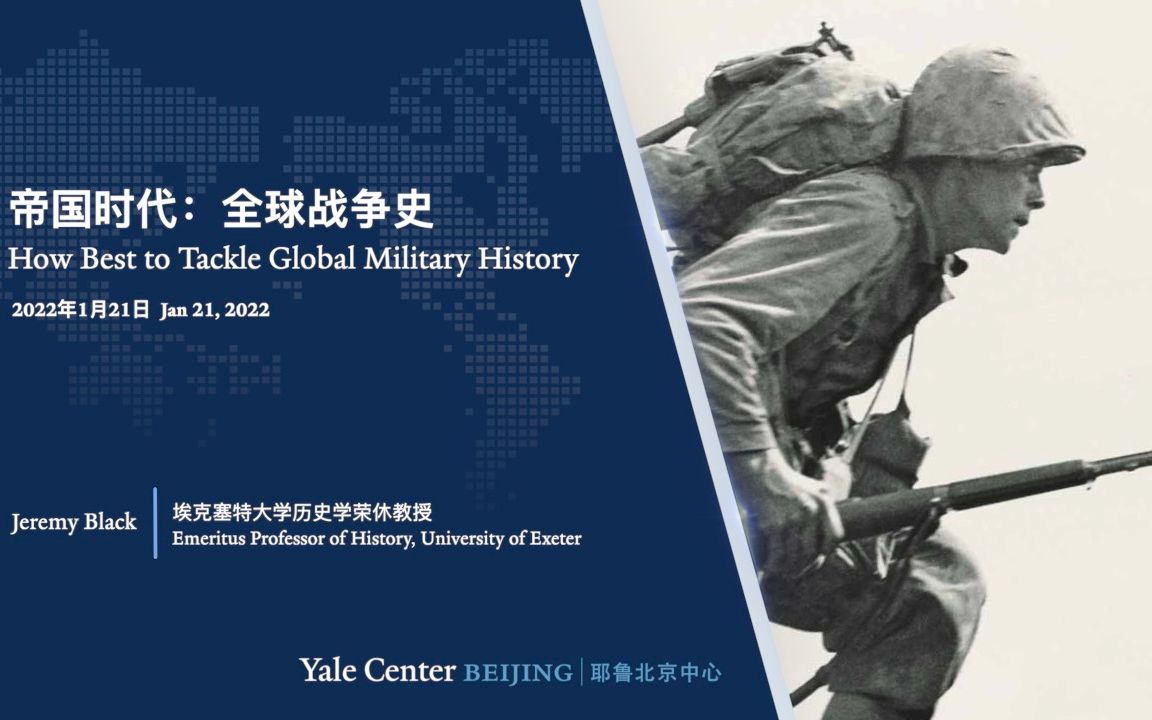
字幕摘录
| 时间 | 英文 | 中文 |
|---|---|---|
| 0:04 | All right. | 好吧,我们走。 |
| 0:04 | Hello everyone. | 產 |
| 0:06 | Welcome. | 欢迎 |
| 0:07 | My name is Devin Lau. | 我叫刘德文 |
| 0:08 | I'm the assistant director for Yale Center Beijing, and I know that many of you guys are joining us from China so a good evening to you. | 我是耶鲁中心北京的助理主任 我知道你们很多人 都从中国来参加我们的晚宴 |
| 0:18 | I'm based in the US, so it's bright and early for me. | 我总部在美国,所以对我来说很明亮很早. |
| 0:22 | And it's the middle of the day in the UK so we, this is probably one of the first events that we had at least three nodes connected. | 今天是英国的正午,所以我们, 这可能是我们最早连接到三个节点的事件之一。 |
| 0:36 | I know that we have a lot of people tuning in from around the world but to have speaker and an audience and the moderator all in different parts of the world is quite quite unique to the time that we're in. | 我知道,我们有很多人从世界各地调音, 但有演讲者、观众和主持人 在世界各地都是相当独特的时间。 |
| 0:48 | So, before we get started, I just wanted to say welcome to all of you guys that are joining us for the first time, a little bit about Yale Center Beijing. | 所以,在我们开始之前,我只想向大家表示欢迎, 第一次加入我们, 一点点关于耶鲁中心北京。 |
| 0:59 | You know center Beijing was founded in 2014. | 你知道北京中心成立于2014年. |
展开字幕全文(361 条)
| 序号 | 英文 | 中文 |
|---|---|---|
| 1 | All right. | 好吧,我们走。 |
| 2 | Hello everyone. | 產 |
| 3 | Welcome. | 欢迎 |
| 4 | My name is Devin Lau. | 我叫刘德文 |
| 5 | I'm the assistant director for Yale Center Beijing, and I know that many of you guys are joining us from China so a good evening to you. | 我是耶鲁中心北京的助理主任 我知道你们很多人 都从中国来参加我们的晚宴 |
| 6 | I'm based in the US, so it's bright and early for me. | 我总部在美国,所以对我来说很明亮很早. |
| 7 | And it's the middle of the day in the UK so we, this is probably one of the first events that we had at least three nodes connected. | 今天是英国的正午,所以我们, 这可能是我们最早连接到三个节点的事件之一。 |
| 8 | I know that we have a lot of people tuning in from around the world but to have speaker and an audience and the moderator all in different parts of the world is quite quite unique to the time that we're in. | 我知道,我们有很多人从世界各地调音, 但有演讲者、观众和主持人 在世界各地都是相当独特的时间。 |
| 9 | So, before we get started, I just wanted to say welcome to all of you guys that are joining us for the first time, a little bit about Yale Center Beijing. | 所以,在我们开始之前,我只想向大家表示欢迎, 第一次加入我们, 一点点关于耶鲁中心北京。 |
| 10 | You know center Beijing was founded in 2014. | 你知道北京中心成立于2014年. |
| 11 | And the goal is to connect, like we're doing today, thought leaders from around the world. | 目标是像我们今天所做的那样, 把来自世界各地的思想领袖联系起来。 |
| 12 | In order to discuss the latest research and publications and ideas, and we've covered you know everything from philosophy to music to science, and today we're doing a little bit of history, but we're also doing a very expansive bit of history here. | 为了讨论最新的研究、出版物和想法,我们报导了你们从哲学到音乐到科学的一切知识,今天我们做了一点历史,但我们在这里也做了非常宽广的历史。 |
| 13 | And so, it should be a very fun conversation. | 所以,这应该是一个非常有趣的谈话。 |
| 14 | For those of you guys that are able to, I will ask that if you could turn on your webcams that's always fun so that our speaker is not just speaking to a black screen with random names. | 对于你们这些有能力的人, 我会问,如果你可以打开你的网络摄像头 那总是很有趣的, 这样我们的演讲者 不只是在黑幕上说话 随机的名字。 |
| 15 | It's always nice to see people so if you're able to, that would be great. | 见到人们总是很愉快的 如果你能,那会很棒的 |
| 16 | And so with that let me introduce our speaker today. | 因此,让我介绍今天的发言者。 |
| 17 | Jeremy Black是100多本书的作者。 | |
| 18 | I think almost 200 we were just discussing covering British European and American political diplomatic and military history, as well as history of the press photography warfare as we're going to discuss today culture and the very nature and use of history | 我想有将近200个我们在讨论 英国的欧美政治外交和军事史 以及新闻摄影战的历史 当我们将要讨论今天的文化 以及历史本身的性质和用途时 |
| 19 | So quite an expansive list. | 这么宽广的名单。 |
| 20 | He is emeritus professor of history at the University of Exeter, where he's joining us from today and extra, and he's studies study both at Oxford and Cambridge, and it has also taught at Durham and Exeter. | 他是埃克塞特大学历史学的荣誉教授,他从今天和额外地加入我们,他还在牛津和剑桥两地学习研究,它还在达勒姆和埃克塞特教书. |
| 21 | He's lectured extensively around the world in Australia, Canada. | 他在澳大利亚,加拿大在世界各地广泛发表演讲. |
| 22 | All throughout Europe, of course, and the US, where he's also held visiting chairs at various institutions including West Point. | 整个欧洲,当然, 和美国, 在那里,他还在各种机构,包括西点。 |
| 23 | Today he will be discussing his newest book from Yale University Press, where he's worked often with our press at Yale University, and today's book is a short history of war. | 今天他将讨论他最新的耶鲁大学出版社著作,他经常在耶鲁大学与我们的出版社合作,今天的书是战争的短史. |
| 24 | Many of his books have been published by you know Yale University Press, and are actually available in China. | 他的许多著作都是由你认识的耶鲁大学出版社出版的,实际上在中国也有. |
| 25 | For those of you guys that are tuning in are interested. | 对于你们这些正在调整的人来说 是有兴趣的。 |
| 26 | If you go to JD calm to know many of his books are available so if after the discussion if you're interested in reading more, please do so. | 如果你去JD镇静,知道很多他的书是可用的,所以如果在讨论之后,如果你有兴趣阅读更多,请这样做. |
| 27 | And so with that, I will turn it over to Jeremy it's all yours. | 因此,我会把它交给杰里米 它是你的了。 |
| 28 | He'll do about a 20 minute or so talk, introducing the book. | 他约20分钟左右,介绍这本书。 |
| 29 | And while he's giving us talk please feel free to use the chat button on the bottom of your zoom screen to enter any questions that you | 当他给我们说话时 请随意使用放大屏幕底部的聊天按钮 输入任何你的问题 |
| 30 | Right, thank you very much. | 好的,非常感谢 |
| 31 | And hello everybody. | 大家好,你们好 |
| 32 | And what I want to try and do is to look, not so much at the book I mean people can read the book if they want to and don't have to if they don't want to I want to look rather at the question of how best to study global military history | 我想试试看,不怎么看这本书 我的意思是人们可以读这本书 如果他们想,不用 如果他们不想,我想看看 如何最好地研究全球军事历史的问题 |
| 33 | which is the topic I've chosen. | 这是我选择的主题。 |
| 34 | And let's start off with what I hope is a given for those people listening, which is that the history of war and the history of military matters is important. | 首先,我想给那些倾听的人一个礼物, 那就是战争的历史和军事事务的历史是重要的。 |
| 35 | People may not wish it to be important. | 人们可能不希望它很重要。 |
| 36 | That's another issue, but it is important, and it is not simply some epiphenomena, which arises from other dynamics in history, whether socio economic sociological geopolitical, but is actually both a product of other contexts | 这是另一个问题,但它是重要的, 并且它不仅仅是一些 epephenomena, 它产生于历史的其他动态, 无论社会经济社会地缘政治, |
| 37 | and also has an independent and autonomous development. | 并且拥有独立自主的发展. |
| 38 | Now the question then arises as to how best to consider it. | 现在的问题是,如何最好地考虑这个问题。 |
| 39 | And I think it's fair to say, I'm speaking obviously in English, under the auspices of, of Yale, I think it's fair to say that one of the problems with the subject | 我觉得应该说 我在耶鲁的赞助下 用英语说话 我觉得说一个问题 |
| 40 | for much of its study is that it's been understood primarily in a kind of Eurocentric chronology Eurocentric analysis. | 对于大部分研究来说,它主要是在一种欧洲中心编年史分析中被理解的. |
| 41 | Now, as we are aware, I need hardly say this to a Chinese audience, this has enormous number of deficiencies and disadvantages. | 现在,正如我们所知,我几乎不需要对中国观众说,这有许多缺陷和缺点。 |
| 42 | It's not only that for most of history, the major powers on land were non European, and indeed linked to that much of the conflict confrontation deterrence through force on warfare has actually taken part outside the West. | 不仅在大多数历史中,陆地上的主要势力是非欧洲的,而且实际上与通过武力进行战争来阻止冲突的许多因素,实际上都参与了西方以外的地区. |
| 43 | It is also that the analytical suppositions developed for Western military history, and including the chronological periods in time, do not necessarily fit more generally. | 这也是为西方军事史所发展的分析假设,包括时间上的时段,不一定更普遍. |
| 44 | So that's point number one. | 这就是第一点 |
| 45 | And I tried in fact to address that in a Yale book that came out in the mid 90s, called war and the world 1450 to 2000, which was an attempt to offer a different military history and militants much big, it's a big book, a military | 我试图在90年代中期出版的耶鲁书里 提到这个问题, 叫做战争和世界 1450年到2000年, 试图提供不同的军事历史和激进分子 |
| 46 | history, in which the West is just one of the players. | 历史,其中西方只是玩家之一. |
| 47 | But I think it's fair to say that the inexorable pressure in publishing of the Anglo American sphere has ensured that we remain dominated by Western paradigms. | 但我认为公平地说,盎格鲁美域出版的不可阻挡的压力,确保了我们仍被西方范式所支配. |
| 48 | And the paradigms are of various types. | 而范式各异. |
| 49 | First of all, chronological the note, the nature, the idea that there are essentially four periods of warfare, ancient medieval early modern late modern, which Western scholars tend to differentiate in terms of their own | 首先,时间顺序的注解,性质,认为基本上有四个战争时期,古代中世纪早期的现代晚期,西方学者倾向于从自身的角度加以区分. |
| 50 | history, and then try and ascribe the analysis accordingly of the changes from one to another, as if they were consequential, not just for the world as not just for Europe as a whole, but for the world as a whole. | 历史,然后尝试并相应地描述对各种变化的分析,似乎这些变化是后果,不仅对全世界来说,不仅是对整个欧洲,而且对整个世界来说。 |
| 51 | So you see, for example, the thesis that's been advanced of an early modern military revolution advanced by a British scholar in the mid 1950s Michael Roberts was then propounded on the global scale in the 1980s, as an apparent explanation of changes else | 因此,你可以看到,例如,一个英国学者在1950年代中期提出的早期现代军事革命的论文,然后迈克尔·罗伯茨在20世纪80年代被提出来,作为其他地方变化的明显解释, |
| 52 | which, you know, you can debate the rights and wrongs of that I so happen to think that's a deeply flawed analysis other people would not take would not go that far. | 你知道,你可以辩论 的正确和错误 我碰巧认为 这是一个严重缺陷的分析 其他人不会做的 不会走那么远。 |
| 53 | But what it does is it reduces agency to non Western peoples and powers, because they are as it were presented | 但是,它所做的是减少非西方民族和权力的代理, 因为他们是被介绍的 |
| 54 | as effective and as having capability, if they borrow from the Western analysis now I think that's really very flawed very limited and inaccurate. | 如果它们从西方的分析中借来的话 我认为这确实非常有缺陷 非常有限和不准确 |
| 55 | And what I would argue, you should really have is to treat military history as an aspect of global studies and aspect of | 我认为,你真的应该把军事历史 当作全球研究的一个方面 |
| 56 | global studies as a global subject. | 全球研究作为一个全球课题。 |
| 57 | Now in treating it as a global subject that doesn't mean that you necessarily go along with the present conceit, which exists of so called decolonization decolonization doesn't help you at all in looking at military history because | 现在把它当作一个全球主题,并不表示你一定同意现在的自负,这种所谓非殖民化的存在根本无助于你审视军事历史,因为 |
| 58 | it is, as it were, tries to define it in terms of an ideology of the present day. | 它正试图以当今的意识形态来界定它。 |
| 59 | And much that goes wrong comes when the analytical supposition is is defined accordingly. | 当分析假设得到相应的定义时,就会出现很多错误。 |
| 60 | So I've already mentioned the notion of military revolutions that came from Western progressivist | 我已经提到过西方进步主义的 军事革命的概念 |
| 61 | ideology of the 1960s and 70s and a bit before that, which was then overly easily read into military studies to give a developmental pattern. | 20世纪60年代和70年代 稍早一点, 这一点被过度容易读到军事研究 给出发展模式。 |
| 62 | Now, the problem with the that standard approach is manyfold, but one of the standard problems is the assumption that there is a | 现在,该标准方法的问题有很多倍,但标准问题之一是假设存在一种 |
| 63 | universal narrative, that this narrative easily establishes what is important, that that that what is important is then measured in terms of becoming more modern, that modernity is necessarily more successful than what has come before. | 普遍叙事,这种叙事容易确定什么是重要的,然后用更加现代化来衡量什么是重要的,现代性必然比以前更成功. |
| 64 | And therefore that we give plus points to those who are seen as modernizers and modern and negative points to those who are seen not in that light. | 因此,我们给那些被视为现代化者的人加点数,给那些不被这样看待者加点数,加点现代和负面点数。 |
| 65 | Now, when you think about it, I mean, that might sound obvious to some people, but when you think about it, you realize that that is very problematic, because the modern itself changes radically. | 现在,当你想到它,我的意思是, 这听起来对一些人来说是显而易见的, 但是当你想到它,你意识到,这是非常有问题的, 因为现代本身发生了巨大的变化。 |
| 66 | So if we look at, well, I mean, obviously, Chinese scholars will know that military doctrine and military locating of military thought in China has changed quite considerably in the last 60 years, and they will know that better than me. | 所以,如果我们看一看,我的意思是,很明显,中国学者会知道,军事理论和军事思想在中国的定位在过去60年中已经发生了相当大的变化,他们将比我更清楚这一点. |
| 67 | But that is more of more obviously the case if you look at things at a global level. | 但更明显的是,如果从全球角度审视情况。 |
| 68 | So the basic narrative in the 1980s was about confrontation between advanced industrial powers deploying nuclear weaponry, that they were seen as the acme, the pivot, the center of the military system. | 因此,1980年代的基本叙述是关于部署核武器的先进工业大国之间的对抗,即它们被视为军事体系的中心。 |
| 69 | In the 1990s, you start to get a bifurcation, you start to get on the one hand, what are known as war among the peoples, as in the struggle in Rwanda or fighting in Congo. | 在20世纪90年代,你开始得到一个两极分化,你开始得到一方面,人们称之为人民之间的战争,例如在卢旺达或刚果的斗争中。 |
| 70 | And on the other hand, the American embrace of the so-called Revolution in Military Affairs, and the Revolution in Military Affairs was very much perceived by Western commentators as demonstrated by the campaign at the end of the 2001 that overthrew the T | 而另一方面,美国拥抱所谓的"军务革命","军务革命"则被西方评论家非常深刻地看待,2001年底推翻伊拉克塔利班的战役就是证明,2003年随即迅速征服萨达姆·侯赛因的伊拉克. |
| 71 | And at that point, a lot of commentators saw the modern as defined by technologically driven warfare, and as a very rapid process that, as it were, was quite clear cut in the ascribing capability, and then looked to the past for previous Revolution in Mil | 而此时,许多评论家将技术驱动的战争所定义的现代观看成一个非常迅速的过程,尽管如此,这个过程在写字能力上是相当明显的割裂,然后展望过去的军事事务革命. |
| 72 | And then from the perspective of the United States and its allies, including Britain, I ought to mention, it all went wrong. | 然后,从美国及其盟友的角度,包括英国的角度,我应该提到,一切都是错误的。 |
| 73 | The process of stabilization, control, whatever term you wish to use in both Afghanistan and Iraq proved intractable. | 在阿富汗和伊拉克,无论你想使用什么术语,稳定、控制的进程都证明是棘手的。 |
| 74 | And in the end, Western forces were evacuated from both with a strong sense of failure. | 而最终西方势力以强烈的失败感从两者中撤出. |
| 75 | And what this was linked to in the 2000s and the early 2000s and teens was a rethinking of military effectiveness to include much more the question of controlling | 在2000年代和2000年代早期 和十几岁的时候 与此相关的是 重新思考军事效能 以包含更多的控制问题 |
| 76 | civilian populations towards much more the question of counterinsurgency warfare and towards defining and developing doctrine, procurement, strategy, operational methods and tactics accordingly. | 平民更倾向于反叛乱战争问题,并据此界定和发展理论、采购、战略、行动方法和战术。 |
| 77 | And obviously, as with any change in the military system, people's careers were redefined in terms of how much they or their units were able to embrace that. | 很明显,与军事系统的任何变化一样,人们的职业生涯被重新定义为他们或他们的单位能够接受多少。 |
| 78 | And, you know, this theory was then taken forward by the episode in Crimea in the mid two teens and the notion of hybrid warfare. | 这个理论后来被 克里米亚在两岁半的剧集 和混合战争的概念推向前进。 |
| 79 | And then we move in a different direction in the last few years, with the embrace by major powers of very much technologically | 然后,我们在过去几年中朝着一个不同的方向前进, 得到大国的拥抱 从技术上来说, |
| 80 | cutting edge warfare and procurement and doctrine accordingly, symbolized by, for example, the interest on the part of the United States, China and Russia in hypersonic warfare. | 例如,美国、中国和俄罗斯对超音速战争的兴趣就体现了尖端战争、采购和理论。 |
| 81 | Now, what this demonstrates is that the modern is a changeable feast that there is no one modern that the notion of capability based on the modern is very much a changeable and to mission driven or what I use the phrase I use is determined by tasking. | 现在,这证明,现代是一个可以改变的盛宴, 没有人能知道,基于现代的能力概念在很大程度上是一个可以改变的, 对于使命驱动的,或者我使用的短语是由任务决定的。 |
| 82 | In other words, if your prime task is, let us say, controlling an ocean space, you are more likely, much more likely to be concerned with state of the art weaponry, because you'll only be dealing with a certain number of weapons systems in that space. | 换句话说,如果你的首要任务是,让我们说,控制一个海洋空间, 你更有可能, 更可能关注最先进的武器, 因为你只会处理 一定数量的武器系统在该空间。 |
| 83 | Whereas conversely, if what you're really concerned about, as many militaries in the world are concerned about, is control within your own country, maybe to your own benefit the benefit of the political groups you're linked to, and certainly the suppressi | 反之,如果你真正关心的, 正如世界上许多军人所关心的, 是在你们自己国家内部的控制权, 也许是为了你们自己的利益, |
| 84 | insurgency movements, and that is, for example, commonplace in the military history of Latin America or sub-Saharan Africa, then you will have a different set of tasks, and it is not that one is necessarily whatever you would mean by superior or more mode | 例如,在拉丁美洲或撒哈拉以南非洲的军事历史上,叛乱运动是司空见惯的,那么,你会有一套不同的任务,而且不一定一个是比另一个更好或更现代的东西。 |
| 85 | These are a range of tasks requiring different capabilities and indeed different analyses. | 这些任务需要不同的能力和不同的分析。 |
| 86 | Now the problem is intellectually that we have tended to privilege a set of tasks over another. | 现在的问题是,在知识上,我们倾向于把一系列任务置于另一任务之上。 |
| 87 | So particularly when looking at war, we have privileged state to state warfare using whatever is the high tech weaponry of the period above other forms of warfare. | 因此,特别是当我们审视战争时,我们有特权使用高于其他战争形式时期的高技术武器进行国家战争。 |
| 88 | Now this is, you know, not very helpful. | 这没什么用 |
| 89 | If you want an analysis of military history, it has to work for Germany and the United States, but it also has to work for Madagascar, Peru or Paraguay. | 如果你想分析军事历史,就必须为德国和美国服务,但也必须为马达加斯加,秘鲁或巴拉圭服务. |
| 90 | And the point is that in most states in the world, state to state warfare is not necessarily foremost. | 而要点是,在世界上大多数州,状态到国家战争并不一定是最重要的. |
| 91 | If you take South America, for example, the last significant operation by militaries against other states will leave out the very short term conflict between | 例如,如果你占领南美洲, 军方针对其他国家发动的最后一次重大行动, 将排除短期冲突。 |
| 92 | Argentina and Britain over the Falkland Islands in 1982, but the last one between Latin American states was the Grand Charco War between Bolivia and Paraguay from 1932 to 1935. | 1982年阿根廷和英国飞越福克兰群岛,但拉丁美洲各州之间的最后一次战争是1932年至1935年玻利维亚和巴拉圭之间的大沙尔科战争. |
| 93 | So since 1935, Latin America has not much been concerned. | 因此,自1935年以来,拉丁美洲一直不怎么关心. |
| 94 | The Brazilians sent forces to help in World War II to help the Allies, particularly in Italy, but you know, states such as Chile, Peru, Venezuela, Colombia have not been fighting each other. | 巴西人派遣部队在二战中帮助同盟国,特别是在意大利,但是你知道,智利,秘鲁,委内瑞拉,哥伦比亚等国家并没有互相对抗. |
| 95 | There have been antagonisms, for example, between Chile and Argentina, but they have not led to war. | 例如,智利和阿根廷之间曾发生对立,但并未导致战争。 |
| 96 | But that does not mean that there is not a military history of Latin America, because if we're thinking of the states, you have had military coups in states like Brazil and Argentina and Chile and governments accordingly. | 但这并不意味着没有拉丁美洲的军事历史,因为如果我们想到各州,你们就在巴西,阿根廷,智利等州和相应的政府发生了军事政变. |
| 97 | And you have also had counterinsurgency warfare in states like Peru and Colombia. | 而且你们在秘鲁和哥伦比亚等国也曾有过反叛乱战争. |
| 98 | So in other words, warfare is much more central to the South American experience than would be suggested if you looked at most histories of war, which tend to leave | 换句话说,战争对南美的经验来说 要比你看看大多数战争历史 更重要 |
| 99 | Latin America, South America out apart from, if they include it, a small number of the wars that have been fought between states. | 拉丁美洲,南美洲除了,如果包括,还有少数国家间的战争。 |
| 100 | So you would get the Grand Charco War. | 这样你就能参加大夏洛克战争了 |
| 101 | Before that, you'd get the War of the Pacific in the late 19th century involving | 在此之前,你会得到 太平洋战争 在19世纪后期涉及 |
| 102 | Chile, Peru and Bolivia. | 智利、秘鲁和玻利维亚。 |
| 103 | You'd get the War of the 1860s involving Paraguay, Brazil, Uruguay and Argentina, and you'd get the War of Liberation, Independence, whatever you want to call it, against Spain at the beginning of the century. | 你会得到1860年代的战争 涉及巴拉圭,巴西,乌拉圭和阿根廷, 你会得到解放,独立战争,无论你想称之为什么, 在世纪初对西班牙。 |
| 104 | And that's it, which for a period of 200 years is not very many wars, and on the whole, Latin America is left out. | 就是这样,200年的战争并不多, 总的来说,拉丁美洲被排除在外。 |
| 105 | So that's problem number one. | 所以这是第一个问题。 |
| 106 | It is a very unequal treatment of the world. | 这是对世界的一种非常不平等的待遇。 |
| 107 | Problem number two is when you do have areas considered, the analysis of them is often deeply flawed. | 问题二是,当你确实考虑过一些领域时,对它们的分析往往有很深的缺陷。 |
| 108 | Let me give you an example. | 让我举个例子。 |
| 109 | India in the 18th century. | 18世纪的印度. |
| 110 | If you look at textbook after textbook on India in the 18th century, it will refer to one battle, the Battle of Plassey in 1757, in which British and British trained forces defeated the army of the Nawab of Bengal and became the dominant power | 如果你在18世纪的教科书之后再看教科书,它将指一战,1757年的普拉西战役,英英训练部队在其中击败了孟加拉的纳瓦布军队,成为统治力量. |
| 111 | around Calcutta. | 在加尔各答附近 |
| 112 | And that is generally held to signify the superiority of Western military systems, the superiority of volley fire, the superiority of infantry tactics. | 而一般认为这表示西方军事系统的优越性,伏力火力的优越性,步兵战术的优越性. |
| 113 | Okay. | 摆 |
| 114 | And the argument then is made that those Indian powers that tried to copy the Europeans were serious military powers and those that didn't were not. | 而当时有人提出,那些试图模仿欧洲人的印度强国是严肃的军事强国,那些没有模仿的强国不是. |
| 115 | That's the standard approach. | 这是标准的方法。 |
| 116 | It's totally wrong. | 这完全是错误的。 |
| 117 | The biggest battles in India in the 18th century arose from armies invading from Northwest. | 18世纪印度最大的战役源于从西北入侵的军队. |
| 118 | Number one, the Persian or Iranian army which defeated the Mughals at Karnal near Delhi in 1739, capturing Delhi subsequently. | 第一,波斯或伊朗军队于1739年在德里附近的Karnal击败莫卧儿人,随后夺取德里. |
| 119 | And number two, the Afghans who defeated the Maharatas in the Third Battle of Panipat outside Delhi in 1761. | 第二,1761年在德里外的第三次帕尼帕特战役中击败马哈拉塔斯人的阿富汗人. |
| 120 | These were much larger battles, they demonstrated the significance of cavalry forces. | 这些战斗规模大得多,显示了骑兵部队的重要性. |
| 121 | And yet they get left out because they don't fit the Western paradigm of development. | 然而,它们却被排除在外,因为它们不符合西方的发展模式。 |
| 122 | So I'm coming towards a close of my time here before we move to questions. | 所以在开始提问之前,我就要结束了 |
| 123 | But what I would argue is that in order to understand military history, it has to be approached globally. | 但我认为,为了了解军事历史,必须从全球着手。 |
| 124 | It has to give weight to conflict within states, as well as between states. | 它必须重视国家内部以及国家之间的冲突。 |
| 125 | It needs to give due weight to conflict in parts of the world, other than those of the Europeans and Americans or involving them. | 它需要适当重视世界一些地区的冲突,而不是欧洲人和美国人的冲突,或让他们参与冲突。 |
| 126 | So for example, in the 19th century in scale, the biggest war would have been the Taiping War in the mid 19th century. | 例如,在19世纪的规模上,最大的战争应该是19世纪中叶的太平战争. |
| 127 | The biggest war since 1945 is the war in China in the late 40s. | 自1945年以来最大的战争是40年代末的中国战争. |
| 128 | People need to consider these and they need to consider how these other conflicts present us with the not just possibility but with the need to engage in different paradigms of military capability and tasking, and we need to dismantle rather crude, | 人们需要考虑这些,他们需要考虑这些其他冲突如何给我们带来不仅可能,而且需要参与不同的军事能力和任务模式,我们需要拆除相当粗糙的, |
| 129 | progressiveist accounts based on Western notions of developmental ideology. | 基于西方发展思想观念的渐进主义说法. |
| 130 | Great. | 不错 |
| 131 | That was surprisingly succinct and to the point for such a grand topic. | 这是令人惊讶的简明扼要,对于这样一个宏伟的话题来说是十分有意义的。 |
| 132 | So if people have questions, please feel free to enter them into the chat box or use the raise hand function. | 因此,如果人们有问题,请随意进入聊天框或使用提升手功能. |
| 133 | And I will happily call on anybody who may have a question to interact directly with Professor Black here. | 我很高兴地呼吁任何有问题的人 直接和布莱克教授联系 |
| 134 | I guess to kick us off, then I think you do a very good job of sort of pointing out the major flaws. | 我猜我们被踢走了,然后我觉得你做的非常好 指出主要缺陷。 |
| 135 | I guess my first kind of thought is, is it even possible then to to fully encapsulate all the things that you've talked about? | 我想,我的第一种想法是,甚至有可能 然后完全封装所有的东西 你已经谈论过? |
| 136 | I mean, it seems like it would be such a Herculean task to do so. | 我的意思是,它似乎 这将是如此艰巨的任务这样做。 |
| 137 | Well, I mean, obviously I and others have tried to do that and each book that attempts or each lecture course that attempts should be judged on its merits. | 我的意思是,很明显,我和其他人 已经尝试这样做, 每本书尝试 或每一个讲座课程 尝试应该根据它的优点来判断。 |
| 138 | I mean, I've been trying, for example, on the podcast of the critic website in Britain to be offering, as it were, a complete military history course in that respect. | 我的意思是,我一直在尝试,例如,在英国的批评者网站播客上, 提供一个完整的军事历史课程, 在这方面。 |
| 139 | I think it can be done as long as people understand that any account is tentative. | 我认为只要人们知道任何账户都是暂时的,就可以这样做。 |
| 140 | One of the great problems is that too many scholars write their books as if there's only one answer. | 最大的问题之一是,太多的学者写书,好像只有一个答案一样. |
| 141 | And what a surprise. | 何等为奇. |
| 142 | It's their answer. | 这是他们的答案。 |
| 143 | And those books then get puffed accordingly or reviewed accordingly. | 然后这些书会因此被夸大或审查 |
| 144 | This is absolutely ridiculous. | 这太荒谬了 |
| 145 | So again, we have a Chinese audience here. | 再说一遍,这里有中国观众。 |
| 146 | You will be well aware that some of the biggest campaigns of World War Two occurred in China. | 你们将很清楚,二战中一些最大的运动发生在中国. |
| 147 | For example, the big 1944, 1945 fighting against the Japanese in southern China, Operation Aichi-Go, the fighting in central China in 1942 against the Japanese. | 例如1944年,1945年中国南部抗日大战,爱知-戈行动,1942年中国中部抗日战争. |
| 148 | And yet these will tend to be left out of books that are supposedly definitive accounts of World War Two. | 然而,这些往往被从被认为对二战有明确记载的书籍中遗漏。 |
| 149 | And what I'm talking about is the same thing at the global scale. | 我所说的是全球范围内同样的事情。 |
| 150 | I mean, there is an additional complication, which I didn't really comment on, which is that one needs in one's analysis to also include how best to tackle and whether to tackle separately, both naval and air warfare, because these are different capabilit | 我的意思是,还有另一个复杂问题,我并没有真正评论, 也就是说,在一个人的分析中,我们还需要包括如何最好地应对,以及是否单独应对海战和空战, 因为这些能力是不同的,它们与人类不自然行动的领域有关。 |
| 151 | So there is the question of how best to consider those and each of those has a technological dimension, which is not that which is so dominant on land. | 因此,有一个问题,即如何最好地考虑这些方面,而每一个方面都有技术层面,而技术层面并不是在陆地上如此占主导地位的层面。 |
| 152 | But having said that, if you look at naval, for example, the standard approach to naval history and I have written a history of naval warfare, naval power, the standard approach is to look at deep draft vessels taking part in transoceanic operations, whic | 但是,如果说到海军,比如说,对海军历史的标准方法,我写了海战史,海军实力,标准方法就是考察参加跨洋行动的深层舰艇,这当然是15世纪后期开始的欧洲规范. |
| 153 | What that underplays is the role of inshore capability, in other words, close to the shore, and the nature of maritime environments which are rivers, lakes, deltas and estuaries. | 浅显之处是岸边能力的作用, 也就是靠近岸边, 以及河流、湖泊、三角洲和河口等海洋环境的性质。 |
| 154 | So, those of you who are Chinese who are listening will know that naval operations on both the Yangtze and the Yellow River were very important in Chinese history and were of a considerable scale. | 所以,你们中听话的中国人,会知道,长江和黄河两岸的海战在中国历史上是非常重要的,规模相当大. |
| 155 | As of course also for many powers were what you would call inshore operations, in other words, operations within 50 miles of shorelines, which are not those for which you require deep draft vessels and in which in many cases not always deep draft vets on | 当然,对于许多强国来说,也是所谓的岸上作业,换句话说,就是在海岸线50英里以内作业,你要求的不是深层船体,在很多情况下,深层船体在水的浅层上不一定是深层船体。 |
| 156 | And yet it's within 50 miles of the coast that most fishing has taken place historically, that most trade has taken place historically, and if you wish to project naval power against coastlines, you obviously have to come in on the whole quite close, and | 然而,在距海岸50英里以内,大多数的捕鱼活动都是在历史上进行的, 大部分贸易都是在历史上进行的, 如果你想对海岸线投射出海军力量, 你显然必须进入到一个相当近的海面上, 然而,这个维度并没有被放在首位。 |
| 157 | Right. | 对 |
| 158 | And do you want to talk about air warfare a little bit as well? | 你想谈谈空战吗? |
| 159 | Yes, I mean in the cat and I've done a separate book on air power. | 是的,我的意思是猫 我做了一本关于空气动力的书。 |
| 160 | In the case of air warfare, you have a standard narrative on, you know, sort of development, World War One, interwar air power theory, World War Two, which tends to focus attention, and then post war use of air power | 在空战中,你有一个标准的叙述,你知道, 某种发展,一战, 战争间空力理论,二战, 往往集中注意,然后战后使用空力 |
| 161 | both unsuccessfully, Americans in Vietnam, and maybe more successfully elsewhere. | 在越南的美国人都失败了 也许在别处更成功 |
| 162 | Advantages and disadvantage. | 优点和缺点。 |
| 163 | Well, big disadvantage is so many books on air power leave out where air power is often most effective in combat terms, which is warfare at sea. | 最大的缺点是很多关于空中动力的书籍 都忽略了空中动力在战斗中最有效的地方, 也就是海上战争。 |
| 164 | Because again, there is only so many targets to engage with if you can suppress those targets, you've actually are in a much stronger position. | 因为如果你能压制那些目标, 目标就只有这么多了, 你实际上已经处于更强大的地位。 |
| 165 | So, you know, I deliberately on the cover of my air power book, put an aircraft carrier. | 所以,你知道,我故意在我的航空动力手册的封面上, 设置了航空母舰。 |
| 166 | In fact, a Japanese illustration of a Japanese aircraft carrier, because I wanted to make the point that it wasn't just a European or European and American monopoly. | 事实上,日本对日本航空母舰的插图,因为我想指出这不仅仅是一个欧洲或欧美的垄断. |
| 167 | Second of all, and linked to that, there is a fascination with certain types of use of air power for combat and for conflict, not others. | 第二,与此相关联的是,人们对使用某些种类的空中力量进行战斗和冲突,而不是其他类型的空中力量,有一种兴趣。 |
| 168 | So transport aircraft tend to be underplayed. | 因此运输机往往被低估. |
| 169 | The use of air power for for close support of troops tends to be underplayed because most air power theorists are interested in air power as an independent arm. | 将空力用于部队的近距离支援往往被低估,因为大多数空力理论家都对空力作为独立的手臂感兴趣. |
| 170 | And then linked to that, and this is a debate that would be understood, many parts of the world. | 然后与它相关联,而这是一个可以被理解的辩论, 世界许多地方。 |
| 171 | There is the question of whether air power is a separate strategic arm, or is at best an operational means that could be used for just to help armistice and | 问题是,空中力量是一个独立的战略武器,还是充其量是一种行动手段,可以仅仅用来帮助停战和停战。 |
| 172 | I would tend towards the latter interpretation. | 我倾向于后一种解释。 |
| 173 | Clearly, air power is changing in its characteristics now through the development of combat drones, but the interesting thing about combat drones is they exemplify the extent to which air power is an adjunct of existing | 显然,现在通过研制战斗无人机,空气动力正在改变其特性,但是战斗无人机的有趣之处在于,它们能够说明空气动力在多大程度上是现有无人机的副作用。 |
| 174 | force structures, particularly army force structures, rather than necessarily being an independent arm of its own. | 部队结构,特别是军队结构,不一定是自己的独立部门。 |
| 175 | Great. | 不错 |
| 176 | I do see a question in the chat box, but it's a very broad and vague question, which is what is your perspective on the Han China. | 我在聊天盒里确实看到一个问题,但这是一个非常宽泛和模糊的问题,这就是你对汉中的看法. |
| 177 | Maybe the person who asked that, if you could sort of specify a little bit more. | 或许是那个问这个的人 如果你能多说一点 |
| 178 | No, no, no, I don't mind. | 不,不,不,我没有介意。 |
| 179 | I mean, first of all, they could read what I've said in the in my book, my new book. | 我的意思是,首先,他们可以读 我在书里说的话,我的新书。 |
| 180 | I find Han China is very interesting. | 我发现汉中非常有趣 |
| 181 | It's usually counterpointed with the classic Roman Empire of that period. | 它通常与那个时期的古典罗马帝国相对立. |
| 182 | I think those about that's a, a helpful approach, although of course there is a greater degree of ethnic cohesion to the Han Chinese Empire than there was to the Roman Empire. | 我认为,这些是有用的方法,虽然当然对汉中帝国的种族凝聚力比对罗马帝国的民族凝聚力要大. |
| 183 | And then as far as China itself is concerned, and China remained a formidable military power into the close of the 18th century. | 而就中国本身而言,中国在18世纪末仍然是强大的军事强国. |
| 184 | So well after the Han period. | 如此汉时期之后. |
| 185 | And, you know, by origin, I'm an 18th century, and in the 18th century. | 而且,你知道,根据出身,我是一个18世纪,在18世纪。 |
| 186 | China was able to operate successfully in Tibet in Sinki in Mongolia. | 中国得以成功在蒙古信基的西藏运作. |
| 187 | In the late 17th century to driven the Russians out of the Amur Valley. | 17世纪后期将俄国人赶出阿穆尔河谷. |
| 188 | Chinese forces power projected into Taiwan, they went further west into Central Asia than China does today. | 中国力量向台湾投射,它们比中国今天更向西进入中亚. |
| 189 | And there were one or two failures there was failure in Burma in the minima in the late 1760s. | 而在1760年代后期的迷你战役中,缅甸出现了一两次失败. |
| 190 | And in Tonkin Vietnam in the late 1780s, but by the standards of any world power. | 而在1780年代后期的东金越南,但按照任何世界强国的标准. |
| 191 | The Chinese are doing better than anybody else and if you think about it compared to that, the British failure in North America to suppress the American War of Independence is much more serious and severe. | 中国人做得比别人都好,如果比这更想一想,那么英国人在北美镇压美国独立战争的失败就严重得多了. |
| 192 | And if you think about it, if you're looking at the very end of the 18th beginning of the 19th century. | 如果你考虑一下,如果你看的是19世纪初的18世纪末。 |
| 193 | Berlin falls to the French in 1806 Amsterdam has fallen to them in 1795 Madrid falls to them in 1808 Moscow briefly forced them in 1812 and in turn, Paris falls to attack in both 1814 and 1815. | 柏林在1806年落入法国人之手 阿姆斯特丹在1795年落入他们之手 马德里在1808年落入他们之手 莫斯科在1812年短暂地强迫他们 反过来,巴黎在1814年和1815年都陷入了进攻 |
| 194 | China itself remains in control of its core area until the conflicts with Western powers from the late 1830s onwards, and that is a extraordinary achievement. | 中国本身一直控制着核心地区,直到从1830年代后期开始与西方列强的冲突,这是一个非凡的成就. |
| 195 | And if you're looking at the infrastructure of Chinese military power. | 而若看中国军事实力的基础设施. |
| 196 | It's generally agreed that the infrastructure the support networks, the deployment of force that took Chinese forces forward towards and into Central Asia were extraordinary achievements. | 一般认为,支持网络的基础设施,使中国部队向中亚前进和进入中亚的兵力的部署,是非凡的成就. |
| 197 | So, I would say China is a very major military power into the beginning of the 19th century arm, it then has a period of grave difficulty, part of which relates to internal tensions and divisions as I've already mentioned the typing Civil War is a very se | 因此,我要说,中国是进入19世纪初的一个非常重要的军事强国,然后它有一个严重的困难时期,其中一部分与内部紧张和分裂有关,因为我已经提到过打字内战是一个非常严重的内战. |
| 198 | In the mind, mid 19th century. | 在思想中,19世纪中叶. |
| 199 | And I think it's fair to say that the boxer pro the boxer movement is another is another period of weakening as is the warlord period. | 我认为公平地说,拳击手职业拳击手运动是另一个弱化时期,军阀时期也是如此. |
| 200 | But what is interesting is if you look at the war between China and Japan in the late 1930s early 1940s. | 但有趣的是,如果看看1930年代后期1940年代初的中日战争. |
| 201 | What is really interesting is the resilience that China shows I mean, you know, if you think about it, the Japanese initially did very well they capture | 真正有趣的是中国表现出的韧性 我的意思是,如果你考虑一下,日本人最初表现得很好 |
| 202 | the major Chinese centers of population, Beijing Shanghai Nanjing Guangzhou, they defeat the divisions of the central army which is the really core force, but what the Japanese have failed sufficiently to appreciate is what I think is an absolutely crucia | 北京上海南京广州 击败了中央军的师 真正的核心力量 |
| 203 | that warfare is about outcome, not output output is killing people output is winning specific battles output is taking particular territories, but outcome is getting your opponent to accept your will, and to stop stop fighting, and the Japanese totally an | 但结果让你的对手接受你的意愿 停止战斗 日军完全停止战斗 |
| 204 | failed to do that in China. | 中国失败了 |
| 205 | And I think this is a very well absolutely crucial episode in world history, be if Hitler had had any sense and he didn't. | 我认为这是世界历史上非常关键的一集 如果希特勒有理智,他没有 |
| 206 | He would have understood from that the folly of his attacking the Soviet Union in 1941, because again, capturing territory killing a lot of Soviets did not mean that they were going to stop fighting. | 他应该能从1941年他进攻苏联的愚蠢中理解,因为再次夺取领土杀死了许多苏联人并不意味着他们将停止战斗. |
| 207 | So there is this broader question of the feasibility of tasks in light of the political context that exists. | 因此,鉴于现有的政治背景,任务的可行性是一个更广泛的问题。 |
| 208 | And I think that's a very very very significant one, when you're looking at global military history as a whole, but also, you know, Chinese history | 我认为这是一个非常重要的, 当你看全球军事历史 整体,但,你知道,中国历史 |
| 209 | as well as other histories. | 以及其他历史 |
| 210 | That's very, very good insight. | 这是非常,非常好的洞察力。 |
| 211 | I see that someone has raised her hand Amy. | 我看到有人举起她的手艾米。 |
| 212 | Hi Professor, thank you for a wonderful presentation. | 教授,谢谢你的精彩演讲 |
| 213 | So I have read a book about Chinese history, and in that book on the author raises an idea that sometimes ancient China started wars against foreign nations in order to solve the problem of overpopulation | 所以,我读过一本关于中国历史的书, 在一本关于作者的书中, 提出了一个想法,有时古代中国 发动对外国的战争,以解决人口过多的问题 |
| 214 | within the country. | 在国内。 |
| 215 | And I find this idea very different to my common sense. | 我发现这个想法与我的常识非常不同。 |
| 216 | So I would like to ask you on whether you find this idea true and other parts of the world. | 所以我想问你,你是否认为这个想法是真实的,以及世界其他地方。 |
| 217 | Well, I myself do not see that as a factor. | 我本人不认为这是个因素。 |
| 218 | People go to war for a whole host of reasons and I've written a book called war and its causes people go to war for a whole host of reasons. | 人们去打仗的原因很多 我写了一本叫做战争的书 人们去打仗的原因很多 |
| 219 | Some of those reasons you might say are clear cut, they leave a trace in the archives, there has been a, as it were a memorandum a council meeting cabinet discussion in which people make clear why they have done things. | 你可能说这些原因中有些是明确的, 它们在档案中留下了痕迹, 有一个,因为它是一份理事会会议内阁讨论的备忘录, 人们在其中阐明了为什么他们这样做。 |
| 220 | In other cases, you have scholars commentators extrapolating imposing or analyzing the situation in order to try and explain things. | 在其他情况下,有学者评论家推论强加或分析情况,以尝试解释事物. |
| 221 | So let's start with number one. | 故先标第一. |
| 222 | Why do people usually go to war. | 为什么人们通常去打仗。 |
| 223 | Well historically they've usually gone to war for both defensive and offensive reasons the two are not always completely separate but there is a big difference between them. | 历史上,他们通常为了防御和攻势而参战,两者并非始终完全分开,但两者有很大的不同. |
| 224 | In defensive factors you feel yourself under threat, or you are indeed under attack in some respect, or other, and you respond to the other power you may be acting in an aggressive fashion but the key thing is you think you're acting defensively. | 在防御因素中,你感到自己受到了威胁, 或者你确实受到了某种意义上的攻击, 或者其他方面, 你回应了另一种力量 你可能以攻击性的方式行事, 但关键是,你认为你的行为是防卫性的。 |
| 225 | Separately, act explicitly acting for aggressive purposes now that can be to spread an ideology which you believe needs to be spread a religion, for example, it can be in order to seize land or material goods, and in seizing land in the past, often provid | 单独地说,为了侵略目的明确采取行动,现在可以传播一种你认为需要传播的意识形态,例如,它可以用来夺取土地或物质货物,并且在过去夺取土地,常常提供 |
| 226 | an aristocracy with more territory so for example, the Anglo Norman and baronage sort of conquering Wales in the 12th century is a, you know, and in it and into the 13th century is an instance of that. | 例如,在12世纪征服威尔士的盎格鲁·诺曼和男爵 是一个,你知道,在其中,进入13世纪就是一个例子。 |
| 227 | I do not find the argument about population pressure necessarily helpful. | 我认为关于人口压力的论点不一定有用。 |
| 228 | It has been argued that that was one of the reasons why there was support for expansion in Manchuria in Japan in the early 1930s, but I would argue that in so far as the Japanese were after | 有观点认为,这是1930年代早期日本满洲国有人支持扩张的原因之一,但我想说,就日本人所追求的 |
| 229 | resources, it was more that they were after coal, I mean Japan was resource poor Manchuria was resource rich. | 更何况日本是资源贫乏的满洲国, |
| 230 | It also was a continuation of the Japanese pattern. | 这也是日本模式的延续. |
| 231 | At that period of expansionism in East Asia they'd already conquered Korea, for example, and I would also suggest that it reflected tensions within the Japanese military with some groups being keen on conquest and others not. | 在东亚的扩张主义时期,他们已经征服了韩国,例如,我还要指出,这反映了日本军队内部的紧张,有些集团热衷于征服,而另一些则不然. |
| 232 | I wouldn't say that there was anybody sitting there in some bunker saying, right, we've got population pressure which Japan definitely did have, let us do x as a result. | 我不会说有人坐在地堡里 说,对,我们得到了人口压力 日本确实有,让我们做x的结果。 |
| 233 | So I would say you often have to slow up things and think about things much more in the specific decisions | 所以我会说,你常常不得不 慢一些事情 思考更多的事情 在具体的决定 |
| 234 | made at that particular moment, but I agree with you entirely looking at the tasks of why people set out to embrace a conflict helps to explain the factors that motivated them, and therefore how they measured success in that particular conflict. | 但是,我完全同意你的看法,即人们为什么开始拥抱冲突,有助于解释促使他们参与的因素,以及他们如何衡量在这场特定冲突中的成功。 |
| 235 | So thank you, Amy. | 谢谢你,艾米。 |
| 236 | Right. | 对 |
| 237 | There's a couple more questions in the chat box. | 聊天盒里还有几个问题 |
| 238 | This one coming from, I don't know if you guys want to ask directly. | 这个来自,我不知道 你们想直接问。 |
| 239 | But the question pertains to if you could offer some sort of framework for understanding the potential Russia and Ukraine conflicts. | 但是,这个问题涉及你能否提供某种框架来了解俄罗斯和乌克兰潜在的冲突。 |
| 240 | Well, I mean there's all sorts of frameworks you can argue on so you can certainly look at a framework politically, in which you have two very different political drives. | 我的意思是,有各种各样的框架 你可以争论 这样你肯定可以看一个框架 政治上, 其中你有两个非常不同的政治动力。 |
| 241 | President Putin's idea of dominating a sort of near Russia and trying to recreate what he sees as the essentials of Russian strength versus a Ukrainian sense of national identity and wishing for sovereignty. | 普京总统主张统治俄罗斯附近地区, |
| 242 | So the political element is very clear in military terms, Russia, very much dominates the situation. | 所以政治因素在军事上是非常明确的,俄罗斯,非常支配局势. |
| 243 | And it's a little difficult to see whether if it rate reached a full scale war, it would be anything other than a relatively speedy outcome. | 也很难看它是否达到全面规模的战争,除了相对迅速的结果之外,还有别的什么. |
| 244 | On the other hand, from the Russian point of view, that would leave them with the need to maintain a relatively costly in terms of the manpower occupation force in Ukraine, and I'm not sure whether in broader strategic terms that's what they want to do or | 另一方面,从俄罗斯的角度来看,这使他们需要保持相对昂贵的乌克兰人力占领部队,我不确定在更广泛的战略意义上他们是否希望这样做. |
| 245 | I think they would like to absorb Ukraine. | 我认为他们想吸收乌克兰。 |
| 246 | I don't think they want a long term conflict. | 我认为他们不希望长期冲突。 |
| 247 | And I think that's an interesting dichotomy there for them. | 我认为这对他们来说是一个有趣的二分法。 |
| 248 | It seems people are kind of interested in particular wars here. | 看来人们对这里的战争感兴趣 |
| 249 | So somebody asked if you could give a quick evaluation or analysis of the Korean War in the 1950s. | 所以有人问您是否可以对1950年代的朝鲜战争进行快速的评估或分析. |
| 250 | Well, often they have interest in particular was going to write an essay about it. | 他们常常特别感兴趣 打算写一篇关于它的文章 |
| 251 | Korean War 1950 to 53 arose, I would say, from the instability in the Korean Peninsula, which, which, which sort of was a product of the end of empire in the case of empire there | 我想说,1950至53年的朝鲜战争产生于朝鲜半岛的不稳定,而朝鲜半岛的不稳定是朝鲜帝国结束的产物。 |
| 252 | So it's Japanese Empire. | 故曰大日本帝国. |
| 253 | The end of Empire means that you get what you see in a lot of post imperial episodes, which is struggles between forces. | 帝国的终结意味着你得到了很多后帝国事件所看到的,这就是力量之间的斗争. |
| 254 | So you've got that in Angola after the Portuguese left. | 在葡萄牙人离开后,你在安哥拉有这个 |
| 255 | In the case of Korea, you've got one which look one side which, as it were, looks to the Soviet Union, and the other side which looks to we're talking here at the late 40s. | 就韩国而言,你有一个看起来一面, 照原样看苏联, 另一面看我们在这里谈论 40年代末。 |
| 256 | The other side which looks to the United States, low level conflict, a degree of territorial stabilization derived from the occupation of Korea between Soviet forces and American forces at the end of the war. | 另一边面向美国,低水平冲突,从战争结束时苏联军队和美国军队对朝鲜的占领中获得一定程度的领土稳定. |
| 257 | This spins out of control this low level conflict in 1950, because the North perceives an advantage and opportunity, it is militarily much stronger. | 1950年这场低级冲突已经失控,因为北方人认为这是一个优势和机会,因此军事上要强大得多。 |
| 258 | There is no doubt it is encouraged by Stalin, the Soviet leader who wishes to put pressure on the West and sees this as an opportunity to do so. | 毫无疑问,它受到斯大林的鼓舞,这位苏联领导人希望向西方施加压力,认为这是这样做的机会. |
| 259 | The American response is much stronger than the North and Stalin had anticipated. | 美国的反应比北方和斯大林预期的要强得多. |
| 260 | Stalin doesn't want to go to full scale conflict with the United States, and he leans quite hard on Mount Zetung for have Chinese participation. | 斯大林不想同美国发生全面冲突,他相当努力地倚靠泽东山,因为有中国人参与. |
| 261 | And the Chinese government understands that that's also in its interests because it doesn't want American forces on the Yalu River on its more immediate border, and because there is still a process in 1950 of the, as it were, the last stages of the Chines | 而中国政府也明白,这也符合它的利益,因为它不希望雅鲁河上的美军在其更近的边界上,并且因为1950年中国内战的最后阶段仍有一个过程. |
| 262 | The Chinese Communist forces taking the island of Hainan, for example, and this seems to be a aspect of that. | 例如,中国共产党部队占领海南岛,这似乎是其中的一个方面。 |
| 263 | So you have Chinese intervention that pushes back the American, the UN forces in the North, and you then end up with a situation of quite incessant conflict in central Korea, much of it | 所以你们有中国的干预 推倒美国, 北方的联合国部队, 然后你们最后在韩国中部 陷入了长期冲突, |
| 264 | a sort of World War One type conflict between entrenched forces, a lot of artillery, not much mobility or maneuverability, and that goes on until 1953, when the new American government, the government of Dwight Eisenhower, wishes to disengage from full sc | 一种世界大战 一种类型的冲突 根深蒂固的力量, 很多大炮, 没有多少机动性 或机动性, |
| 265 | effectively with the North Koreans, and it also offers the threat that if there isn't an armistice, it will use nuclear weapons, and that leads to an uneasy armistice in the Korean War, which in a sense is what's lasted till the present day. | 与朝鲜人有效地合作,它也带来这样的威胁:如果没有停战,它就会使用核武器,从而导致朝鲜战争中的不安定停战,从某种意义上讲,这就是一直持续到今天的事情. |
| 266 | My book on the Cold War, I think, would be of interest to people because in my book on the Cold War, what I do is put much more emphasis on the Cold War in Asia, whereas, as you, as you will know, the conventional account of the Cold War is very Berlin ce | 我认为,我关于冷战的书会引起人们的兴趣,因为在我的关于冷战的书中, 我所做的是更强调亚洲的冷战, 而正如你们所知道的, 冷战的常规说法非常以柏林为中心, 因为它是,我不认为那是有用的。 |
| 267 | I think that from the late 1850s onwards, so in other words, the Arrow War plus the Russian occupation of the Amur Valley, you know, the foundation of that of Ostok in 1860, Western occupation of Beijing in 1860, I think from then onwards, there was reall | 我认为从1850年代后期开始 换句话说 箭战加上俄国占领阿穆尔河谷 你知道 1860年奥斯托克的基础 1860年西方占领北京 |
| 268 | conflict or confrontation in East Asia on the Pacific littoral until the China Vietnam War at the end of the 70s. | 东亚在太平洋沿岸的冲突或对抗,直到70年代末的中国越战. |
| 269 | So I think that you need to link the conflicts of the late 1850s to the end of the Taiping War, to the Sino-Japanese War of the 1890s, | 所以,我认为你需要把1850年代后期的冲突与太平战争结束,1890年代中日战争联系起来, |
| 270 | to the Russian-Japanese War of the 1900s, to growing Japanese presence in the Far East on the mainland, including participation in the Russian Civil War and intervention in China in the late 1910s, early 20s, to the short small scale | 1900年代的俄日战争,日本在大陆的远东势力日益壮大,包括参与俄国内战和1910年代末,20年代初对中国的干涉,到短暂的小规模. |
| 271 | Manchuria-Russia War, Soviet Union War of 1929, to the Japanese moving into Manchuria in 1931 and the conflict that continued to 45, to the Chinese Civil War, to the Korean War, to the wars in Indochina and then Vietnam. | 满洲国-俄罗斯战争,1929年苏联战争,1931年日本人迁入满洲国,持续到45年的冲突,中国内战,朝鲜战争,印度支那和后来的越南战争. |
| 272 | And then you culminate with the wars after the Americans left Vietnam, the conflict in Cambodia and the China Vietnam border war. | 然后你们就以美国人离开越南后的战争,柬埔寨的冲突和中国的越南边境战争为高潮. |
| 273 | And what I would argue is all of these are incredibly important in military history, they're incredibly important in international relations, and they tend to be very seriously downplayed because of the focus on Europe. | 我想说的是,所有这些在军事史上都非常重要, 在国际关系中都非常重要, 而且由于关注欧洲,它们往往被严重低估。 |
| 274 | I mean, what is hilarious about military history is so much of the time people spend focusing on losers. | 军事历史的有趣之处 在于人们把注意力集中在失败者身上 |
| 275 | As I wrote in an essay once, what is the point of writing at great length about Napoleon? | 正如我曾经在一篇散文中写的那样,对拿破仑作长篇小说有什么意义呢? |
| 276 | Napoleon failed. | 拿破仑失败了 |
| 277 | What is the point of writing at great length about Germany? | 长篇大论德国有什么意义? |
| 278 | Germany lost World War I and lost World War II. | 德国输掉了第一次世界大战,输掉了二战. |
| 279 | It is much more consequential to look at the major powers and the two major powers in the world at the present moment, China and the United States, and to consider their military history, their strategic geography, their particular type of military | 现在看一看世界上的大国和两大大国——中美两国,考虑其军事历史,战略地理,特殊类型的军事,就更具有影响. |
| 280 | tasking, their individually distinctive patterns, but also the extent to which they both helped to construct, exemplify and reflect more general tendencies in the history of war. | 说明和反映战争史上更普遍的趋势。 |
| 281 | That's really interesting. | 这真的很有趣。 |
| 282 | I'm fascinated. | 我很着迷。 |
| 283 | Why do you think there is this sort of obsession with the losers of the war? | 为什么你认为对战争的失败者有这种痴迷? |
| 284 | Well, I think, first of all, there is this Euro-centricity. | 嗯,我想,首先, 有一个欧洲中心。 |
| 285 | I mean, you know, you look at a book like Michael Howe and so on, or actually a much more egregious example, an unnecessary example. | 我的意思是,你知道,你看一个书 像迈克尔·豪等等, 或实际上一个更惊人的例子, 一个不必要的例子。 |
| 286 | If you look at Martin Van Crayfeld's study of logistics, which was the major study, I'd like to think my replacement is better, but others can make their mind up of that. | 如果你看看马丁·范克莱费尔德对后勤学的研究,这是主要的研究,我想觉得我的替补更好,但其他人可以想到这一点. |
| 287 | Crayfeld's study of logistics went from the sort of French Revolutionary Napoleonic system, essentially, he had a little bit earlier on Europe, essentially up to the end of World War II. | 克雷费尔德对后勤学的研究从法国革命拿破仑制度(英语:French Revolutional Napolanic system)的一类开始,基本上,他在欧洲问题上稍早一点,基本上直到二战结束. |
| 288 | It was essentially European centered. | 它基本上以欧洲为中心。 |
| 289 | He didn't manage to consider China or Japan or India states that you would really think worth bothering about. | 他没有考虑中国 或日本 或印度说 你真的认为值得打扰。 |
| 290 | And I think you could say the same about most of Michael Howard's writing. | 我想你对迈克尔·霍华德的大部分写作 也可以这么说 |
| 291 | So it's not surprising that they focus on these European struggles. | 因此,他们专注于这些欧洲斗争并不奇怪. |
| 292 | There's the endless obsession with the Germans. | 对德国人的痴迷无休止 |
| 293 | There's been writing on this, a number of American scholars have written on the American fascination with the Wehrmacht. | 关于这一点,有不少美国学者曾写过"美国对韦尔马克特的迷恋". |
| 294 | In the same thing, though, you get in American history towards the Civil War. | 同样的,你进入美国历史 走向内战。 |
| 295 | I mean, what's interesting about the Civil War is the Union's success. | 我的意思是,内战的有趣之处是联盟的成功. |
| 296 | That's the most interesting thing. | 这是最有趣的事情。 |
| 297 | A lot of people, though, prefer to focus on the Confederate failure. | 不过,很多人更喜欢专注于邦联的失败. |
| 298 | And again, I don't think that's tremendously helpful at understanding things, not least because when you look at the loser, you tend to adopt the loser's point of view. | 再说一遍,我认为这对理解事物毫无帮助, 特别是因为当你看着失败者时, 你倾向于采纳失败者的观点。 |
| 299 | In fact, it's interesting. | 事实上,这很有趣。 |
| 300 | People will always tell you history is written by the winner. | 人们总是会告诉你 历史是由胜利者写的。 |
| 301 | It isn't. | 这不是。 |
| 302 | The winner doesn't need to write history. | 胜者不必写历史. |
| 303 | They've won. | 他们赢了。 |
| 304 | They're actually running the show. | 他们正在主持这个节目 |
| 305 | The people that are invested in writing history are the losers because they want to justify themselves. | 被投入写作历史的人是失败者,因为他们想为自己辩护. |
| 306 | They want to say, oh, it wasn't our fault. | 他们想说 这不是我们的错 |
| 307 | You know, we were really better, but we were out resourced or we were unlucky. | 你知道,我们真的很好, 但我们没有资源 或者我们运气不好。 |
| 308 | You know, the sort of we were out resourced, the Confederate view of American Civil War or the German view of World War II. | 你知道,那种我们资源匮乏, 美国内战的邦联观点或 二战的德国观点。 |
| 309 | Actually, no, the Germans were out fought. | 不,德国人出战了 |
| 310 | You know, that's the key element of it. | 你知道,这是它的关键要素。 |
| 311 | But obviously, it's much easier for them to take a different perspective. | 但是很明显,他们采取不同的观点要容易得多. |
| 312 | And there were also specific reasons. | 还有具体的原因。 |
| 313 | I mean, the American planners, for example, during the Cold War, wanted to take the view that maybe the Wehrmacht, if it hadn't been run by Hitler, could have actually beaten the Soviet Union because that suggested that maybe they could beat the Soviet Un | 我的意思是,美国的规划者们,比如在冷战期间, 想要采取这样的观点,也许Wehrmacht号,如果它没有被希特勒管理的话, 可能实际上已经打败了苏联, 因为这表明他们也许可以打败苏联。 |
| 314 | Actually, no, I mean, the major problem with German fighting quality is the gap between it and the Soviets was never as great as they like to think. | 实际上,不,我的意思是,德国战斗质量的主要问题是它和苏联人之间的鸿沟从来没有像他们想的那样大. |
| 315 | In fact, from day one of Operation Barbarossa, the Germans were losing more troops and armor than they'd anticipated. | 事实上,从巴巴罗萨行动的第一天起,德国人就损失了比他们预期的更多的军队和装甲. |
| 316 | Two, the German military, not just Hitler, the German military didn't know how to plan and linked to that. | 二,德国军方,不只是希特勒,德国军方并不知道如何对此进行策划和联系. |
| 317 | Three, it's the output and outcome thing. | 三,产出和结果问题. |
| 318 | They had no real way of gauging how you mean move from operational style victory. | 他们没有真正的方法来判断你的意思 如何摆脱作战风格的胜利。 |
| 319 | We will create this pocket of our opponents around Kiev and force them to surrender to outcome. | 我们将在基辅周围制造我们的对手的这个口袋,迫使他们屈服于结果. |
| 320 | We will obtain our strategic goal. | 我们将实现我们的战略目标。 |
| 321 | They will surrender. | 他们会投降的 |
| 322 | They had no idea about that. | 他们对此一无所知。 |
| 323 | So fascinating. | 这么迷人。 |
| 324 | I think this relates pretty well to one of the other questions in the chat box, which is, how do we implement learning of military history so that it's not limited to such singular perspectives, especially a westernized one. | 我认为这与聊天框中的其他问题之一非常相关,即我们如何实施军事历史的学习,这样它就不限于这种独特的视角,特别是西方化的视角. |
| 325 | Well, I think that's a very good question. | 嗯,我认为这是一个非常好的问题。 |
| 326 | What I would say is, first of all, I think there's a tremendous value in different national traditions, and as it were presenting those broader than that of just simply the history of the armed forces of those countries, but looking at individual strategi | 我想说的是,首先,我认为不同的民族传统有着巨大的价值, 因为它展现的这些比仅仅那些国家的武装部队的历史更宽广, 但看看个别的战略地理, |
| 327 | individual political focuses and producing work that can then be integrated at a global level. | 个人政治重点和产生工作,然后可在全球一级加以整合。 |
| 328 | Second, and linked to that, in order to do your own military history well, you need to understand the points of views of others. | 第二,与此相关联的是,为了做好自己的军事历史工作,你需要理解别人的观点. |
| 329 | So, classic problem for the United States engaging in say Iraq or Afghanistan, or for the, for that matter the Germans engaging against in Yugoslavia in occupation was just not understanding that there were different perspectives not understanding that yo | 因此,对于美国介入伊拉克或阿富汗, 或对于这个问题, 德国人参与反对南斯拉夫 占领,只是不理解 有不同的观点 不理解你不能 |
| 330 | force your equations of victory and defeat suffering and loss you know they've lost 20 men we've only lost two men therefore we've won well actually no, not if they're prepared to take that loss of 20 men and keep fighting. | 强迫你方程式的胜利和失败 痛苦和损失 你知道他们已经损失了20人 我们只损失了2人 因此我们赢了 |
| 331 | So you need to have a broader cultural pattern of understanding in order to make sense of your own military history. | 因此,你需要有更广泛的文化理解模式,以便理解你自己的军事历史。 |
| 332 | Now we're coming up to close, obviously in time terms. | 现在,我们即将结束, 很明显的时间。 |
| 333 | I don't want to just simply say to people you want to read my books, and I would like to think people would read them. | 我不想简单地对人们说 你想读我的书, 我想人们会读它们。 |
| 334 | I think the important thing is that any author, and I've tried to do this should look at the multiplicity of foci, but also should try and de center their | 我认为重要的是,任何作者, 我尝试过这样做, 应该看看多倍的焦点, |
| 335 | military history so you know I've done specific books just on the 18th century just on the 17th century, just on the period 1450 to 1600, and I've tried to go in for what I call de centered military history to not have the view that there is one paradigm | 军事史上,你知道我刚写过 18世纪的书 就在17世纪, 就在1450年到1600年的时期, 我试图进到我所说的 以军事史为中心 而不认为有一个范式 |
| 336 | explanation one narrative that you need to study. | 解释一个你需要研究的叙述。 |
| 337 | So to take up that very last question, the best way to understand it is to understand there is no one answer that all of history is an interim report that you do your best to provide as good an account | 所以说,要回答最后一个问题, 最好的理解方法就是理解, 没有人会回答,所有的历史都是一份临时报告, 你尽力提供一个很好的叙述。 |
| 338 | But you are aware that issues of the present day and it was one of your speakers that raised the question of Russia versus Ukraine will affect public interest and actually the analytical constructions that are used. | 但是,你们知道,今天的问题,也是你们发言者之一,提出了俄罗斯对乌克兰的问题,这将影响公共利益,而且实际上会影响所使用的分析概念。 |
| 339 | So therefore you have to understand that the historical analysis, like war itself is a plastic changing endlessly remolded philosophy, and not something that is fixed in any one account. | 因此,你必须明白, 历史分析,就像战争本身, 是一个塑料 改变无止境的重现哲学, 而不是一个账户固定的东西。 |
| 340 | I've tried to do as well as I can. | 我尽力了 |
| 341 | Other people offer differing accounts. | 其他人提供不同的说法。 |
| 342 | It's important to realize that there is a variety, and if you are looking for quality and analysis. | 重要的是要认识到有各种各样的, 如果你在寻找质量和分析。 |
| 343 | It's the person that tells you that there are different ways that to do this is the person worth paying | 是那个人告诉你有不同的方法 这样做是值得付钱的人 |
| 344 | attention to. | 注意点 |
| 345 | Thank you very much. | 谢谢 |
| 346 | My greetings to everybody. | 我向大家问好 |
| 347 | I hope you get a chance to read my stuff, and don't hesitate to ask me to be on again. | 我希望你有机会读我的东西 并且不要犹豫 要求我再次加入 |
| 348 | Thank you. | 谢谢 |
| 349 | Thank you so much that I couldn't have thought of a better way to end that. | 非常感谢,我无法想出更好的办法结束这一切。 |
| 350 | Thank you so much. | 非常感谢 |
| 351 | We have a tradition at our events which is we ask everybody to turn on their camera so we can take a group photo. | 我们有一个传统 在我们的活动中,我们要求每个人打开他们的相机 这样我们就可以拍摄一个团体的照片。 |
| 352 | And so, if people could smile and turn on their cameras, so that we can all take a group photo. | 所以,如果人们可以微笑,打开相机, 这样我们就可以拍一张集体照片。 |
| 353 | That would be great. | 这将是伟大的。 |
| 354 | And then at the same time I'm going to unmute everybody so that you guys can all thank Professor Jeremy Black for yourself. | 然后同时我要揭发所有人 这样你们就可以感谢Jeremy Black教授了 |
| 355 | Okay, thank you very much everybody for joining us again. | 好吧,非常感谢大家 再次加入我们。 |
| 356 | Thank you. | 谢谢 |
| 357 | All the very best to everybody. | 对大家都好 |
| 358 | Cheers then. | 那就来一杯吧 |
| 359 | Bye. | 再见。 |
| 360 | Thank you. | 谢谢 |
| 361 | Bye. | 再见。 |
该视频共有字幕 361 条。解锁更多字幕为会员功能,请移动到 价格