耶鲁法学教授张泰苏新书开讲:清代的国家能力为何格外薄弱?
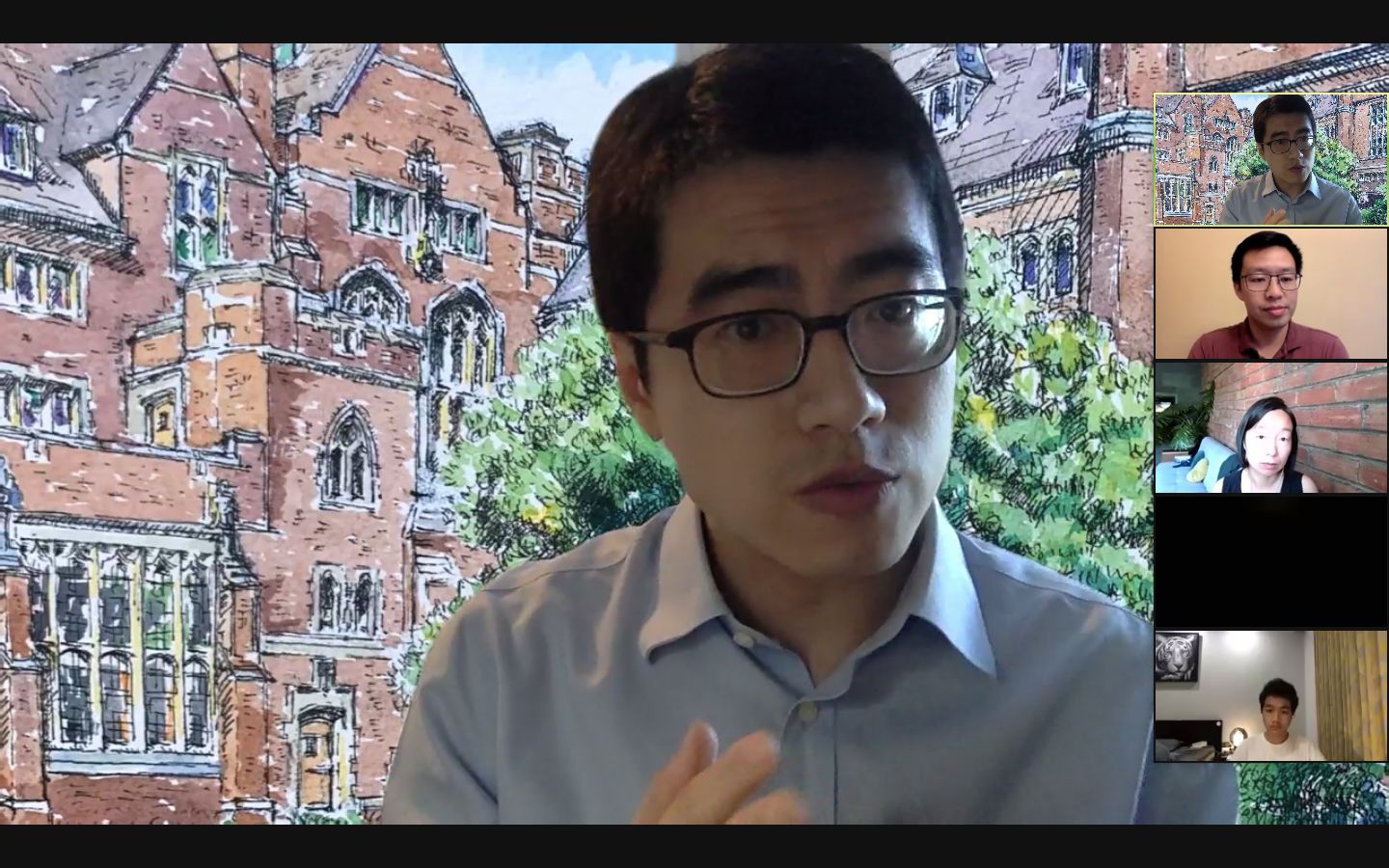
字幕摘录
| 时间 | 英文 | 中文 |
|---|---|---|
| 0:04 | Good morning to those of you guys joining us from the US | 早上好,你们这些家伙 从美国加入我们 |
| 0:08 | and good evening to those of you guys | 祝你们晚安 |
| 0:09 | joining us from China. | 从中国加入我们。 |
| 0:11 | And I know that there are many of you guys joining us | 我知道有很多人加入我们 |
| 0:13 | from elsewhere around the world. | 从世界各地。 |
| 0:15 | Welcome to everybody. | 欢迎大家光临 |
| 0:17 | My name is Devin Lau | 我叫刘德文 |
| 0:17 | and I'm the Assistant Director for Yale Center Beijing. | 我是耶鲁北京中心助理主任 |
| 0:21 | Thank you for joining us today | 谢谢你今天能来 |
| 0:23 | for what is proving to be quite the popular topic. | 被证明是热门话题 |
展开字幕全文(1524 条)
| 序号 | 英文 | 中文 |
|---|---|---|
| 1 | Good morning to those of you guys joining us from the US | 早上好,你们这些家伙 从美国加入我们 |
| 2 | and good evening to those of you guys | 祝你们晚安 |
| 3 | joining us from China. | 从中国加入我们。 |
| 4 | And I know that there are many of you guys joining us | 我知道有很多人加入我们 |
| 5 | from elsewhere around the world. | 从世界各地。 |
| 6 | Welcome to everybody. | 欢迎大家光临 |
| 7 | My name is Devin Lau | 我叫刘德文 |
| 8 | and I'm the Assistant Director for Yale Center Beijing. | 我是耶鲁北京中心助理主任 |
| 9 | Thank you for joining us today | 谢谢你今天能来 |
| 10 | for what is proving to be quite the popular topic. | 被证明是热门话题 |
| 11 | Quick word of introduction | 简短的介绍词 |
| 12 | because I know that we have so many people on today | 因为我知道我们今天有这么多人 |
| 13 | that maybe not everybody is familiar | 也许不是每个人都熟悉 |
| 14 | with Yale Center Beijing. | 与耶鲁中心北京. |
| 15 | Yale Center Beijing is the first | 耶鲁中心 北京是第一个 |
| 16 | and only university-wide center for Yale University | 并且只有耶鲁大学的全大学中心 |
| 17 | outside of New Haven, of course, established in 2014. | 当然,纽黑文之外,成立于2014年. |
| 18 | And our mission is to continue to highlight | 我们的任务是继续强调 |
| 19 | and promote all the work that goes on at Yale, | 并宣传所有在耶鲁进行的工作, |
| 20 | especially for our audience in China. | 尤其对我们在中国的观众来说 |
| 21 | But ever since the pandemic, of course, | 但自从流行以来,当然, |
| 22 | we've expanded our reach | 我们扩大了我们的范围 |
| 23 | to include quite the global audience. | 包括全球观众 |
| 24 | And in the past year and a half or so, | 在过去的一年半左右, |
| 25 | we've been lucky to have many of these Zoom talks | 我们很幸运能有这么多的演讲 |
| 26 | spanning all sectors of Yale, | 横跨耶鲁的所有部门, |
| 27 | including today's talk, which is a talk on history, | 包括今天的谈话, 这是一个关于历史的谈话, |
| 28 | but also we have, of course, | 当然我们也有 |
| 29 | Professor John Taisu in the law school, | 约翰教授 法学院的太素 |
| 30 | but we've also had many activities | 但我们也有很多活动 |
| 31 | spanning the sciences and economics and the arts, | 科学、经济学和艺术, |
| 32 | so on and so forth. | 诸如此类. |
| 33 | And so we're very lucky today | 所以我们今天很幸运 |
| 34 | to have quite the interesting topic. | 有相当有趣的话题。 |
| 35 | So Professor Taisu Zhang is a professor of law | 张太素教授是法学教授 |
| 36 | at Yale Law School, as well as a professor of history. | 在耶鲁法学院 以及历史教授 |
| 37 | He works on comparative legal and economic history, | 他致力于比较法律和经济史, |
| 38 | private law theory, and contemporary Chinese law and politics. | 私法理论,以及当代中国法律与政治. |
| 39 | He holds three degrees from Yale, | 他持有三度耶鲁, |
| 40 | BA in history and mathematics, | 历史和数学学士, |
| 41 | a JD as well as a PhD in history. | a 法学博士和历史博士。 |
| 42 | And he's also taught at the Duke University School of Law, | 他还在杜克大学法学院任教 |
| 43 | the University of Hong Kong, Brown University, | 香港大学 布朗大学 |
| 44 | and the Tsinghua University School of Law. | 和清华大学法学院. |
| 45 | Today's talk is actually part of a planned trilogy | 今天的谈话其实是计划三部曲的一部分 |
| 46 | of books that he's been working on, | 他一直在写的书, |
| 47 | on the institutional and cultural origins | 体制和文化渊源 |
| 48 | of early modern economic divergence. | 早期现代经济差异。 |
| 49 | His first book of this trilogy, | 他这三部曲的第一本书, |
| 50 | The Laws and Economics of Confucianism, | 儒学的法律与经济学, |
| 51 | Kinship and Property in Pre-Industrial China and England, | 工业前中国和英国的金矿和财产, |
| 52 | was published by Cambridge University Press | 由剑桥大学出版社出版 |
| 53 | and received in 2018 the President's Award | 并在2018年获得总统奖 |
| 54 | from the Social Science History Association, | 来自社会科学历史协会, |
| 55 | as well as the Gadda Smith Book Prize | 以及加达·史密斯书奖 |
| 56 | from the McMillan Center for International | 麦克米兰国际中心 |
| 57 | and Area Studies. | 和地区研究。 |
| 58 | So this is a quite long ranging | 所以这是很长的距离 |
| 59 | and wide ranging topic that he's looking into. | 他正在研究的话题很广 |
| 60 | And today's talk is looking into | 今天的谈话正在调查 |
| 61 | a more specific aspect of that. | 更具体的方面。 |
| 62 | And so without further ado, | 所以不用再多说了 |
| 63 | I will turn it over to Professor Taisu Zhang. | 我把它交给张大秀教授 |
| 64 | All right, thank you, Devin. | 好的 谢谢 德文 |
| 65 | And it's nice to be doing something with the YCB | 和YCB做点什么真好 |
| 66 | for I think the first time, actually. | 因为我觉得第一次,实际上。 |
| 67 | Back in the day when I was first admitted to Yale | 我第一次考耶鲁大学那天 |
| 68 | as an undergrad, there was this thing in Beijing | 作为本科生,北京有这种东西 |
| 69 | called the Yale Beijing Club, | 被称为耶鲁北京俱乐部, |
| 70 | which was like this less formal bunch of alumni | 就像这群不太正式的校友 |
| 71 | who did things occasionally together. | 他们偶尔会一起做事 |
| 72 | And we had these like lunches with speakers, | 我们用喇叭吃午饭 |
| 73 | sometimes from Yale. | 有时来自耶鲁. |
| 74 | Very often, like usually it was at the Swiss Hotel, | 经常 就像通常在瑞士酒店一样 |
| 75 | I think in like right outside of Dong Si Shi Tiao | 我想就在东思孝外面 |
| 76 | in Chaoyang. | 在朝阳. |
| 77 | Now, of course, YCB is a massive upgrade from that. | 当然,YCB是一个巨大的升级。 |
| 78 | And it's nice to see Yale having more formal | 很高兴看到耶鲁更正式 |
| 79 | and sophisticated program in Beijing. | 北京的精密计划 |
| 80 | Unfortunately, during the pandemic, | 不幸的是,在流行期间, |
| 81 | I can't go back there, but I would love to see you guys | 我不能回去,但我很想见你们 |
| 82 | when I manage to make it back to Beijing sometime. | 当我设法回到北京的时候 |
| 83 | And thank you to the audience for joining me this morning. | 感谢观众今早的光临 |
| 84 | This talk is not going to be like, | 这次谈话不会是... |
| 85 | I was under the impression that the main audience | 我当时的印象是主要观众 |
| 86 | for YCB talks was going to be alumni. | 对于YCB的会谈 将是校友。 |
| 87 | Apparently that was a mistaken impression is for this one. | 这显然是一个错误的印象 对于这个。 |
| 88 | But nonetheless, this talk is geared not necessarily | 不过,这段话不一定适合 |
| 89 | towards an academic audience. | 面向学术观众。 |
| 90 | It's kind of like a simplified, | 这有点像一个简化, |
| 91 | hopefully made more interesting summary of some ideas. | 希望对一些想法作出更有趣的总结。 |
| 92 | That I've developed in book two of the trilogy | 我在三部曲的第二本书中有所发展 |
| 93 | that Devin just mentioned, which is now complete | 德文刚才提到的, 现在已经完成了 |
| 94 | and in the final process at Cambridge. | 在剑桥的最后阶段 |
| 95 | And hopefully it'll come out perhaps late next year, | 希望明年晚些时候能出来 |
| 96 | I think, given their speed. | 我认为,考虑到他们的速度。 |
| 97 | But the book is complete and I'm happy to talk | 但书是完整的,我很高兴谈 |
| 98 | about some of the ideas. | 关于一些想法。 |
| 99 | It has a lot of wide range of comparative elements, | 它有很多广泛的比较因素, |
| 100 | both with other Chinese dynasties | 和中国其他王朝一样 |
| 101 | and also with other early modern empires. | 还有其他早期的现代帝国 |
| 102 | So although technically this is a book and a talk | 所以,虽然从技术上讲,这是一本书和一篇谈话 |
| 103 | on a certain facet of Qing dynasty history, | 在清朝历史的某个方面, |
| 104 | I do believe it has implications well beyond that. | 我相信它的影响远不止于此。 |
| 105 | So let me start the talk | 让我开始说 |
| 106 | and let's begin by sharing my screen. | 让我们开始分享我的屏幕。 |
| 107 | All right, so the talk is called, | 好吧,所以谈话叫做, |
| 108 | why was the late imperial Chinese state so weak? | 为什么后来的帝国中国国家如此软弱? |
| 109 | By late imperial, basically I mean Qing. | 说到晚期的帝国主义,基本上是指清. |
| 110 | And whoops, yeah. | 和呜咽,是的。 |
| 111 | So let's just talk about some of the basic motivation | 我们来谈谈一些基本动机 |
| 112 | for this project very quickly. | 很快完成这个项目。 |
| 113 | So despite being known as a despotic regime, | 所以尽管被称作专制政权, |
| 114 | I'm sure some of you guys are familiar | 我相信你们中有些人很熟悉 |
| 115 | with the term oriental despotism. | 与东方专制一词。 |
| 116 | That supposedly exercised enormous power over its subject. | 这据称对其主题行使了巨大的权力。 |
| 117 | The late imperial Chinese state was in fact, | 后期的中国帝国其实是 |
| 118 | especially after something like 1700, a pretty weak one | 特别是在1700年之后,一个很弱的 |
| 119 | in terms of both administrative courses and fiscal capacity. | 在行政课程和财政能力方面。 |
| 120 | If you track the broader trends in Chinese state capacity, | 如果你跟踪中国的国力发展趋势 |
| 121 | there was, so if you start out during the Tang, right? | 有,所以如果你开始 在唐人时期,对不对? |
| 122 | The Tang has a certain measure of state capacity. | 唐人有一定的国力. |
| 123 | It has a large amount of military capacity, | 它拥有大量的军事能力, |
| 124 | but governance capacity and administrative capacity | 但治理能力和行政能力 |
| 125 | was not terribly high. | 也不算高,因为... |
| 126 | Then it went up quite sharply during the Song, | 之后,在宋国时期急剧上升 |
| 127 | which really was the peak of Chinese state capacity | 这真的是中国国力的顶峰 |
| 128 | prior to 1912. | 在1912年之前。 |
| 129 | And then from the Song onwards, | 从宋以来 |
| 130 | it was kind of downhill all the way, right? | 一直走下坡,对吧? |
| 131 | So you go to the Yuan, the Ming and to the Qing | 所以你们去元,明,清 |
| 132 | and state capacity, at least by measures of coercive power | 和国家能力,至少采取强制措施 |
| 133 | and formal governmental power, | 和正式的政府权力, |
| 134 | it's kind of going down all the time. | 总是在下降 |
| 135 | Now, the most direct measure of this, | 最直接的衡量标准是 |
| 136 | perhaps like most intuitive way of measuring this, | 也许就像最直观的测量方法, |
| 137 | which is not the only possible way. | 这不是唯一的可能办法。 |
| 138 | And it's a slightly controversial topic | 这是一个有点有争议的话题 |
| 139 | that we can talk about later on in the Q&A. | 稍后我们可以在"QQA"里谈 |
| 140 | But the most direct measure is probably fiscal capacity. | 但最直接的措施可能是财政能力。 |
| 141 | The state's ability to extract taxes from the population. | 州能从民中取税. |
| 142 | Now, this declined quite severely | 现在,这个下降相当严重 |
| 143 | over the course of the second millennium. | 在第二个千年期间。 |
| 144 | Peaks in the, across Chinese, across pre-modern, | 跨越中国,跨越现代前期 |
| 145 | pre-19, let's just say pre-1927 in Chinese history, | 19世纪前,我们只说1927年前的中国历史, |
| 146 | basically peaks in the Song reaching at the time | 基本上宋人到达时的高峰 |
| 147 | over probably over 10% of estimated GDP. | 估计超过国内生产总值的10% |
| 148 | This was at the time, | 这是当时, |
| 149 | one of the highest levels in the world. | 是世界上最高的级别之一 |
| 150 | Then it comes back down to around 5% in the Ming, | 然后,它回到5%左右 在明, |
| 151 | which was more or less where it was in the Tang as well. | 或多或少地在唐人的地方 |
| 152 | You can kind of think of this as like the common plateau | 你可以把这当成普通高原 |
| 153 | for Chinese universities. | 中国的大学。 |
| 154 | The Song was abnormally high. | 宋时异常高. |
| 155 | Beyond the Ming, the Qing was abnormally low, | 明人之外,清人异常低落, |
| 156 | but by the mid Qing, by the mid to late Qing, | 但至清中,至清中后期, |
| 157 | government taxation was basically less than 1% of GDP, | 政府税收基本不到国内生产总值的1%, |
| 158 | at least formal governmental taxation. | 至少正式的政府税收。 |
| 159 | Now, there are some parts of this narrative | 现在,这个故事有些部分 |
| 160 | that should be flagged right away, right? | 应该马上被标记下来,对吧? |
| 161 | The Song, saying that it was all the way down | 宋人说,这是一路下去 |
| 162 | from the Song, a little bit, | 从宋人,一点点, |
| 163 | it kind of masks the fact that the Song is really unique. | 它掩盖了一个事实, 歌是真正独特的。 |
| 164 | And in pure Chinese history, it was, | 在纯粹的中国历史中, |
| 165 | not only was it the high point for state fiscal | 不仅是国家财政的高点 |
| 166 | and administrative capacity, | 行政能力, |
| 167 | the Song also has some pretty unique features. | 宋人也有一些相当独特的特征. |
| 168 | Compared to the Tang, the Ming and the Qing, | 与唐人,明人,清人相比, |
| 169 | and of course the Yuan, | 当然还有元 |
| 170 | it's the only major dynasty that wasn't really | 这是唯一一个没有真正 |
| 171 | kind of like a central East Asian empire. | 就像一个中亚帝国 |
| 172 | It had clear boundaries. | 它有明确的界限。 |
| 173 | It was relatively constrained in geographical reach. | 其地理范围相对有限。 |
| 174 | And because it was militarily weaker, | 因为它在军事上较弱 |
| 175 | then it's Northern and eventually the Northwestern neighbors, | 然后是北方 最终是西北邻居 |
| 176 | the Liao and even the Xia. | 辽乃至夏. |
| 177 | The Song was, it was kind of boxed in, | 歌是,它是一种 拳击英寸 |
| 178 | in terms of boundaries. | 在边界方面。 |
| 179 | Whereas in comparison, right, | 相比之下,是的, |
| 180 | the Tang, the Yuan, the Ming, the Qing, | 唐人 元人 明人 清人 |
| 181 | these are all kind of the expansionist, | 他们都是扩张主义者 |
| 182 | somewhat central Asian empires that have boundaries | 有边界的中亚帝国 |
| 183 | that are kind of constantly trying to expand. | 这是一种不断尝试 扩张。 |
| 184 | The Qing especially is the subject | 特别是清人 |
| 185 | of this massive academic literature that you guys may know, | 你们可能知道的大量学术文献 |
| 186 | new Qing history, stuff which tells the story | 新清史,讲故事的东西 |
| 187 | of how the Qing goes into Central Asia, | 清人如何进入中亚, |
| 188 | expands into what is now Xinjiang and Tibet, | 扩张到现在的新疆和西藏 |
| 189 | and so on and so forth. | 诸如来等. |
| 190 | Now, the fact the Song was a centralized state | 现在,事实上宋国是一个中央集权的国家 |
| 191 | with clear boundaries may well be an explanation | 有明确的界限很可能是一个解释 |
| 192 | for why Song fiscal capacity was unusually strong | 为什么宋财政能力异常强大 |
| 193 | because it's much easier to have strong fiscal capacity | 因为拥有强大的财政能力要容易得多 |
| 194 | in these kind of like more compact, | 在这种像更紧凑, |
| 195 | clearly bounded states. | 明确界限的国家。 |
| 196 | So in some ways, like the Song, | 因此,在某些方面,如宋人, |
| 197 | you can kind of think of the Song | 你可以想到歌声 |
| 198 | as this abnormal high points, | 作为这个异常的高点, |
| 199 | whereas the Tang and Ming were kind of like norm | 唐人和明人好像很平常一样 |
| 200 | for Chinese dynastic state capacity. | 用于中国的无动力状态能力。 |
| 201 | But even within that comparison set, | 但是即使在这个对比中 |
| 202 | the Qing is unusually weak. | 清人异常虚弱 |
| 203 | All right, and this begins demand for their explanation. | 好吧,这开始要求他们解释。 |
| 204 | Now, the Qing also breaks a relatively common pattern, | 现在,清人也打破了一个比较常见的模式, |
| 205 | actually a largely universal pattern | 实际上是一种普遍模式 |
| 206 | of amongst major Chinese dynasties. | 在中国各主要王朝中 |
| 207 | Every other major Chinese dynasty | 中国其他各大王朝 |
| 208 | more or less has the following fiscal history. | 大致有以下财政历史. |
| 209 | You start off relatively low levels | 你从较低的水平开始 |
| 210 | at the start of the dynasty | 在王朝初期 |
| 211 | because you just took over from the previous dynasty | 因为你刚刚接替了前王朝 |
| 212 | after a period of likely significant chaos. | 在一段时期的混乱之后 |
| 213 | You wanna show your benevolence, so you lower taxes. | 你想表现你的仁慈, 所以你降低税收。 |
| 214 | At some point, the population recovers, | 在某个时候, 人口恢复, |
| 215 | the economy recovers, and you discover | 经济恢复,你发现 |
| 216 | that your fiscal income is not enough | 你的财政收入还不够 |
| 217 | to meet the administrative demands of expanding dynasty. | 以满足扩大王朝的行政需求. |
| 218 | So what tends to happen is around mid-dynasty, | 通常发生在王朝中期 |
| 219 | there is a set of fiscal reforms | 有一套财政改革 |
| 220 | that tries to expand the tax base | 试图扩大税收基础 |
| 221 | and make it simpler and easier to collect taxes. | 并让税收更加简单和容易。 |
| 222 | And there is fiscal expansion, | 还有财政扩张, |
| 223 | at least in absolute terms, | 至少在绝对值上 |
| 224 | not necessarily as a percentage of GDP, | 不一定占国内生产总值的百分比, |
| 225 | but the state does make an effort at least | 但国家至少要努力 |
| 226 | to keep the overall volume of taxation | 保持税收总量 |
| 227 | somewhat on par with economic recovery and expansion. | 与经济复苏和扩大相当。 |
| 228 | The Qing is a major break, | 清人是个大突破 |
| 229 | perhaps the only significant break to this pattern | 或许是这种模式的唯一重大突破 |
| 230 | in Chinese history. | 在中国历史上。 |
| 231 | And of course, not only was the Qing, | 当然,不仅是清, |
| 232 | so the core characteristic of the Qing, | 所以清人的核心特征 |
| 233 | as we're gonna talk about in a second, | 我们马上就要谈了 |
| 234 | is that basically the total, | 基本上,这是总数, |
| 235 | the absolute volume of its fiscal income stagnates | 其财政收入的绝对数额停滞不前; |
| 236 | from essentially 1720 onwards, | 从1720年起, |
| 237 | all the way towards the end of the dynasty, | 一直到王朝末期, |
| 238 | and especially one core component, | 特别是一个核心组成部分, |
| 239 | the agricultural tax, completely stagnates. | 农业税,完全停滞。 |
| 240 | This had not been the case in any other previous dynasty. | 在以前的任何其他王朝,情况并非如此。 |
| 241 | In every other major previous dynasty, | 在以前的每一大王朝中 |
| 242 | the agricultural tax, | 农业税, |
| 243 | which is the core component of the tax system, | 这是税收制度的核心组成部分, |
| 244 | always expands somewhat after the dynasty, | 总是在王朝之后有所扩张 |
| 245 | and in most cases, very significantly so. | 而且在多数情况下,这一点非常重要。 |
| 246 | Of course, the Qing is also an extreme outlier | 当然,清人也是极外人 |
| 247 | in the early modern world. | 在早期现代世界。 |
| 248 | So we've talked about these vertical comparisons | 所以我们讨论过这些纵向比较 |
| 249 | with previous Chinese dynasties. | 与之前的中国王朝. |
| 250 | If you look at horizontal comparisons | 如果你看水平比较 |
| 251 | with other early modern states | 与其他早期现代国家 |
| 252 | compared to the Ottoman Empire, the Russian Empire, | 与奥斯曼帝国,俄罗斯帝国相比, |
| 253 | it was even compared with these other | 它甚至被比作这些其他的 |
| 254 | land-based Asian empires, | 陆基亚洲帝国, |
| 255 | they usually taxed at around 4% to 5% of GDP. | 他们通常按国内生产总值的4%至5%征税。 |
| 256 | So more or less on par with what the Ming and Tang did, | 和明和唐人一样 |
| 257 | the Qing was extremely low. | 清朝当时地位极低. |
| 258 | Compared with European states, with the Brits, | 比起欧洲国家 和英国人 |
| 259 | with the French, with the Germans, | 和法国人,和德国人, |
| 260 | those were usually 10% or higher. | 通常为10%或以上。 |
| 261 | The English were much higher at something like 15% | 英语比15%高得多 |
| 262 | for most of its early modern history. | 因为它的早期现代历史。 |
| 263 | And compared with, say, Japan, | 与日本相比 |
| 264 | even prior to the major restoration, Japan, | 甚至在大修复之前 日本 |
| 265 | the Daimyo, the shogunates combined, | 戴米约人, |
| 266 | they were taxing something like 20% or more | 他们收了20%或更多税 |
| 267 | of Japanese GDP, bringing it into official government coffers. | 进入官方政府库 |
| 268 | So whether you compare the Qing horizontally or vertically, | 所以,无论你比较 清横向或纵向, |
| 269 | it's abnormally weak in terms of fiscal capacity. | 财政能力异常薄弱. |
| 270 | And this is the thing that this entire book | 这本书就是这么写的 |
| 271 | is designed to explain. | 是用来解释的 |
| 272 | Now, the core problem with sync taxation | 现在 同步征税的核心问题 |
| 273 | was its inability, or you could perhaps say | 是因为它没有能力 或者你可以说 |
| 274 | its unwillingness to increase agricultural taxes. | 不愿意增加农业税。 |
| 275 | So as we'll talk about in a bit more detail, | 所以,我们再详细谈谈, |
| 276 | the total volume of the agricultural tax | 农业税总额 |
| 277 | basically stagnates after 1680 | 基本上在1680年后就停滞了 |
| 278 | and really extremely, so after 1720. | 所以在1720年后 |
| 279 | And again, this is quite unique. | 同样,这是相当独特的。 |
| 280 | Now, of course, during the same period of time, | 当然,在同一期间, |
| 281 | this was not like, you could say, okay, | 这不像,你可以说,好吧, |
| 282 | tax the total volume of agricultural taxes, | 征收农业税总额, |
| 283 | does that mean that the overall agri-growing economy | 这是否意味着整个农业增长经济 |
| 284 | has also stagnated? | 也停滞不前吗? |
| 285 | Of course not, right? | 当然不是,对吧? |
| 286 | So during the same period of time from 1680 | 所以在1680年的同一时期 |
| 287 | to let's say 1900, the total volume | 比方说1900年的总量 |
| 288 | of agricultural production in the Qing triples, | 清三代的农业生产, |
| 289 | but perhaps more than triples. | 但也许不止三倍。 |
| 290 | But the amount of tax that the state extracts | 但国家提取的税额 |
| 291 | from this tripling sector remains completely the same, | 从这个三连串的区段 完全没有变化 |
| 292 | almost completely the same. | 几乎完全一样。 |
| 293 | So essentially like per capita tax rates plummet on plummet, | 就像人均税率暴跌一样 |
| 294 | just completely shrink to the point | 只是完全缩小到重点 |
| 295 | of virtual non-existence by the 19th century. | 到19世纪时 虚拟不存在 |
| 296 | And of course, even within the same fiscal system, | 当然,即使在同一财政体制内, |
| 297 | the agricultural tax was treated differently | 农业税待遇不同 |
| 298 | than non-agricultural taxes, right? | 比非农业税,对不对? |
| 299 | So commercial taxes, taxes on industry, | 所以商业税,工业税, |
| 300 | salt taxes, and so on and so forth. | 盐税等. |
| 301 | Those taxes actually did not stagnate, right? | 那些税实际上并没有停滞,对不对? |
| 302 | They largely kept up with the pace of economic growth | 它们基本跟上了经济增长的步伐 |
| 303 | from the 1650s all the way to the 1840s. | 从1650年代一直到1840年代. |
| 304 | And after 1850, after the Taiping rebellion | 1850年后,太平军叛乱 |
| 305 | throws the Qing into this massive fiscal crisis. | 将清人推入这场大规模财政危机. |
| 306 | All of these non-agricultural taxes | 所有这些非农业税 |
| 307 | increased very rapidly in response | 反应迅速增加 |
| 308 | to this massive escalation in fiscal demand. | 财政需求大幅攀升。 |
| 309 | But of course, the sharp contrast is the agricultural tax, | 当然,尖锐的对比是农业税 |
| 310 | the traditional linchpin of the system | 传统系统的关键 |
| 311 | continues to stagnate. | 继续停滞不前。 |
| 312 | So by the end of the Qing, | 故至清末时. |
| 313 | the agricultural tax is not even the most important tax | 农业税甚至不是最重要的税 |
| 314 | in the fiscal structure. | 在财政结构中。 |
| 315 | That honor goes to the commercial taxes, | 这个荣誉是商业税 |
| 316 | which is quite shocking | 这太令人震惊了 |
| 317 | because the Qing cannot rely so heavily, | 因为清人不能如此依赖 |
| 318 | no Chinese dynasty relied so heavily on commercial taxation | 没有中国王朝如此依赖商业税 |
| 319 | since pretty much the peak of the Song. | 因为几乎是宋末时期 |
| 320 | So if you want to talk about this | 所以,如果你想谈这个 |
| 321 | in somewhat academic jargon, | 以某种学术术语, |
| 322 | to a large extent, Qing non-agricultural taxation | 在很大程度上,清非农业税 |
| 323 | was more or less rational. | 或多或少是理性的。 |
| 324 | It responded to fluctuations in demand. | 它应对了需求的波动。 |
| 325 | It made an effort to keep up | 它努力跟上 |
| 326 | with economic and demographic expansion. | 伴随着经济和人口的增长。 |
| 327 | In contrast, the agricultural tax | 相反,农业税 |
| 328 | was essentially completely unresponsive | 基本上完全没有反应 |
| 329 | to any of these demand side or supply side changes. | 这些需求方或供应方的变化。 |
| 330 | And in the end, if you're talking about | 最后,如果你在说 |
| 331 | one primary culprit for Qing fiscal weakness, | 清财政不景气的罪魁祸首 |
| 332 | you have to talk about this extremely unusual stagnation | 你得谈谈这种异常的停滞 |
| 333 | of the agricultural tax. | 农业税。 |
| 334 | Now, does this mean like one simple explanation | 现在,这是否意味着一个简单的解释 |
| 335 | that immediately comes to mind for this entire narrative | 立即想到这个故事 |
| 336 | is perhaps this is because non-agricultural tax hikes, | 也许是因为非农业税的上涨, |
| 337 | especially after 1850, | 特别是1850年后 |
| 338 | they suffice to meet the fiscal demands of the state. | 它们足以满足国家的财政需求。 |
| 339 | Of course, if you look at the history carefully, | 当然 如果你仔细看历史 |
| 340 | this was clearly not the case. | 情况显然并非如此。 |
| 341 | And the dynasty was consistently unable | 而王朝始终无法 |
| 342 | to meet its spending needs, | 满足其开支需要, |
| 343 | whether militarily or economically or otherwise, | 不论军事或经济或其他方面, |
| 344 | just on the basis of raising non-agricultural taxes. | 只是为了提高非农业税 |
| 345 | Now, of course, this should not be surprising whatsoever, | 现在,当然,这不应该是令人惊讶的, |
| 346 | given that throughout the entire Qing, | 鉴于整个清朝 |
| 347 | some 70 to 80% of the economy was agricultural. | 约70-80%的经济是农业。 |
| 348 | So if you're not raising taxes | 所以,如果你不提高税收 |
| 349 | on 70 to 80% of your economy, | 你70%到80%的经济, |
| 350 | it doesn't really matter too much. | 这并不重要。 |
| 351 | What matters is you're never going to be able | 重要的是你永远无法做到 |
| 352 | to basically get enough taxes just by raising taxes, | 基本上通过提高税收来获得足够的税收, |
| 353 | out of the remaining 20 to 25%. | 其余的20%至25%。 |
| 354 | So there was the man side pressure | 所以有男人的侧压 |
| 355 | to raise agricultural taxes. | 提高农业税。 |
| 356 | They were just consistently resistant. | 他们只是坚持不懈地抵抗。 |
| 357 | Now, what explains all this? | 现在,什么解释这一切? |
| 358 | That's the central question of this entire talk. | 这是整个谈话的中心问题。 |
| 359 | And so any good explanation, as we saw on the setup, | 任何很好的解释 正如我们在设定上看到的 |
| 360 | has to perform at least three basic questions. | 至少要处理三个基本问题 |
| 361 | First, it has to explain the refusal | 首先,必须解释拒绝的原因 |
| 362 | to raise agricultural taxes. | 提高农业税。 |
| 363 | Second, it has to explain the differential treatment | 第二,必须解释差别待遇 |
| 364 | of agriculture versus non-agricultural taxes. | 农业税和非农业税。 |
| 365 | So why do you treat agriculture versus commerce differently? | 那你为什么对农业对商业有不同的处理? |
| 366 | Third, it has to manage to explain the difference | 第三,它必须设法解释区别 |
| 367 | at least between the Qing and previous Chinese dynasties, | 至少是在清朝和之前的中国王朝之间 |
| 368 | because the Qing was, again, a major outlier. | 因为清军再次成为主要外敌 |
| 369 | So let me just give at this point a very short history | 所以,让我在此 给一个非常短的历史 |
| 370 | of Qing agricultural taxation. | 清农税. |
| 371 | So it starts off after the Manchu conquest | 所以从满洲征服后开始 |
| 372 | with some turbulence, as is always the case | 和往常一样 |
| 373 | in early dynastic situations in China. | 在中国的早期状态下 |
| 374 | It coalesces around the Ming tax levels eventually | 最终在明税水平上汇合 |
| 375 | at some point around 1680. | 1680年左右的某个时候 |
| 376 | And from then, the absolute volume of agricultural taxes | 从那时起,农业税的绝对数量 |
| 377 | remains basically locked in place until 1900. | 基本上一直被锁到1900年 |
| 378 | There was one moderate expansion of around 10 to 15%, | 一次适度扩张约10%至15%, |
| 379 | around 1725, but that was almost kind of like the exception | 1725年左右, 但几乎有点像例外 |
| 380 | that proved the rule, because that one relatively moderate | 这证明了规则,因为一个相对温和 |
| 381 | attempt to expand the agricultural tax base | 努力扩大农业税基础 |
| 382 | triggered this apolitical backlash so large after 1740, | 1740年后引发了政治反弹 |
| 383 | after 1735, that it just served to further entrench | 1735年后,它只是帮助进一步巩固 |
| 384 | this generally conservative outlook | 这一普遍保守的前景 |
| 385 | of the Qing fiscal states. | 清财政州。 |
| 386 | And that's basically just like the backlash | 这基本上就像反弹 |
| 387 | that attempted further just completely entrenched | 试图进一步彻底巩固 |
| 388 | the political refusal to raise taxes. | 政治拒绝提高税收。 |
| 389 | In the meantime, as we talked about, | 在此期间,正如我们谈论, |
| 390 | the economy triples, the population triples per capita, | 经济三倍,人均人口三倍, |
| 391 | consumption per capita income by most estimates, | 按大多数估计数分列的人均收入 |
| 392 | perhaps like slightly declines in a very moderate way, | 也许像在非常温和的方式略微下降, |
| 393 | but for the most part stays stable. | 但大部分情况保持稳定。 |
| 394 | You had pretty much the same living standards | 你的生活标准差不多一样 |
| 395 | in let's just say 1840 as you did perhaps around 1725. | 我们只说1840年,也许1725年左右 |
| 396 | And yet the total volume of the economy, | 然而经济总量, |
| 397 | the possible tax base that state could tap into | 国家可能利用的税收基础 |
| 398 | basically either doubles or triples depending on your estimate. | 基本上或者双倍 或者三倍取决于你的估计。 |
| 399 | The agricultural taxes remained stagnant | 农业税停滞不前 |
| 400 | and they continued to do so after 1850 | 1850年后他们继续这样做 |
| 401 | when the state was plunged into non-stop fiscal crisis, | 当国家陷入持续的财政危机时, |
| 402 | the typing, after that was the Yang Wu movements | 之后是杨武运动 |
| 403 | where the state was trying to basically spend lots of money | 州政府想花很多钱 |
| 404 | on industrialization programs. | 关于工业化方案。 |
| 405 | After that, it was the Song of Japanese War. | 后为抗日战争之歌. |
| 406 | Defeat was kind of, the defeat in that war was catastrophic | 那场战争的失败是灾难性的 |
| 407 | and created another round of fiscal crisis after 1901. | 并制造了1901年后的另一轮财政危机. |
| 408 | And that like from 1850 to 1911, | 就像从1850年到1911年 |
| 409 | these final 61 years of the dynasty, | 这些王朝的最后61年, |
| 410 | the state is pretty much in a perpetual state | 国家几乎处于永久状态 |
| 411 | of either full blown fiscal crisis | 要么彻底爆发财政危机 |
| 412 | or semi-fiscal crisis. | 或半财政危机。 |
| 413 | And during this point, | 在此期间, |
| 414 | even while commercial taxes were basically, | 即使商业税基本上是, |
| 415 | the commercial taxes by 1911 | 到1911年征收商业税 |
| 416 | were more than 10 times higher than what they were in 1850. | 比1850年高十倍多 |
| 417 | Even in 1901, they were already like four to five times | 即使在1901年,他们已经四五次了 |
| 418 | higher than what they were in 1850, | 比1850年还要高 |
| 419 | but agricultural taxes, | 但农业税, |
| 420 | nonetheless continued to stay up until 1901. | 尽管如此,一直持续到1901年。 |
| 421 | So there are, of course, as you can imagine, | 所以,当然,你可以想象, |
| 422 | this is perhaps like one of the, | 这也许就像其中之一, |
| 423 | I would personally argue this is arguably | 我个人认为这可以说是 |
| 424 | the single most important kind of institutional narrative | 唯一的最重要的一种体制性叙事 |
| 425 | for the entire thing, honestly. | 整件事,说实话。 |
| 426 | So of course it has drawn some academic attention | 当然,它引起了一些学术关注 |
| 427 | and there are three major kinds of explanations. | 并有三种主要的解释。 |
| 428 | So first is the things they didn't need to raise taxes. | 所以首先是他们不需要提高税收的东西. |
| 429 | Second is they didn't have the capacity to do so. | 第二,他们没有这样做的能力。 |
| 430 | Or third, they lack the ideological will to do so. | 第三,他们缺乏这样做的意识形态意愿。 |
| 431 | In their current forms, | 以目前的形式 |
| 432 | all of these are somewhat incomplete. | 所有这些都有些不完整。 |
| 433 | Given the amount of time that we have, | 鉴于我们的时间, |
| 434 | I'm gonna try to basically just be really fast | 我要尽量做到快一点 |
| 435 | in talking about these. | 在谈论这些。 |
| 436 | And if we have questions | 如果我们有疑问 |
| 437 | on how exactly these explanations work, | 关于这些解释的具体作用, |
| 438 | we can talk about them more in the Q&A. | 我们可以在"QQA"里多谈一下 |
| 439 | So the first category is the most popular. | 故第一类最受欢迎. |
| 440 | There's a large literature that says, | 有大量文献说 |
| 441 | because the Chinese they fought through wars, | 因为他们的中国人 经历了战争, |
| 442 | it was under less fiscal pressure than its European peers | 其财政压力低于欧洲同行 |
| 443 | or perhaps even Japanese peers. | 甚至是日本同行 |
| 444 | And so therefore it naturally taxed less | 因此,它自然会减税 |
| 445 | than these countries that fought more wars. | 比那些打过更多战争的国家还要多 |
| 446 | Now, of course, this has many problems. | 当然,这有很多问题。 |
| 447 | The first of all, | 初一颂. |
| 448 | the Qing was actually a relatively warlike dynasty. | 清人实际上是一个相对战争般的王朝. |
| 449 | It fought a lot of wars, expansionist wars. | 它经历了许多战争,扩张主义战争. |
| 450 | Between 1780, before 1780, | 1780年间,1780年之前, |
| 451 | after 1840, it fights wars all the time. | 1840年以后,它经常进行战争. |
| 452 | And also, especially this can't explain | 还有,特别是这不能解释 |
| 453 | the Sino-Japanese comparison | 中日对比 |
| 454 | because for most of the Tokugawa and Japan | 因为对于大部分德川和日本 |
| 455 | was a pretty peaceful society. | 一个相当和平的社会。 |
| 456 | The second category, | 第二类 |
| 457 | the Qing lacked the administrative capacity to raise taxes. | 清廷缺乏提高税收的行政能力. |
| 458 | This is proven wrong with what happens after 1901. | 事实证明,这与1901年以后发生的事情不符。 |
| 459 | So after 1901, | 所以在1901年之后, |
| 460 | because the Qing state is so desperate for fiscal income, | 因为清国急于财政收入 |
| 461 | it finally clenches its teeth | 终于把牙关了 |
| 462 | and decides to raise agricultural taxes | 决定提高农业税 |
| 463 | for the first time in two centuries. | 这是两个世纪以来第一次 |
| 464 | At this point, | 此时此刻 |
| 465 | the Qing state's administrative capacity | 清政府的行政能力 |
| 466 | was arguably at its weakest point | 在最弱处 |
| 467 | at any point since 1680. | 1680年后的任何时候 |
| 468 | And so despite being at its administrative nadir | 所以,尽管在行政纳迪尔 |
| 469 | for over this 2.2 century period, | 在这2.2个世纪中 |
| 470 | it actually manages to raise agricultural taxes | 它可以提高农业税 |
| 471 | quite successfully. | 相当成功。 |
| 472 | There were no major revolts. | 没有发生重大叛乱。 |
| 473 | There were some moderate acts of tax resistance. | 有一些温和的抗税行为。 |
| 474 | In the localities, they were dealt with very easily. | 在这些地区,他们很容易得到处理。 |
| 475 | As a general matter, it didn't really destabilize. | 一般来说,它并没有真正破坏稳定. |
| 476 | The dynasty's collapse after 1911 | 1911年后王朝崩溃. |
| 477 | had virtually nothing to do with the agricultural tax hike. | 与农业税的提高几乎没有关系。 |
| 478 | So the logic has to go | 因此,逻辑必须去 |
| 479 | if you can raise taxes successfully after 1901. | 如果你能在1901年后成功提高税收。 |
| 480 | And of course, after 1911, | 当然 1911年以后 |
| 481 | all these successor states, the Qing, | 这些继承国,清人, |
| 482 | keep the agricultural taxes at this heightened level | 将农业税保持在这一高水平 |
| 483 | successfully for the next several decades | 未来几十年的成功 |
| 484 | and they even raise them further. | 他们甚至把他们抬高。 |
| 485 | So if you can raise taxes pretty successfully after 1901, | 所以如果你能在1901年后 成功提高税收 |
| 486 | even though your administrative capacity | 尽管你的行政能力 |
| 487 | is unusually weak by your own standards, | 以自己的标准来说,是异常的软弱, |
| 488 | it stands to reason that you probably could have done so | 你可能这样做是有道理的 |
| 489 | at any point before 1901 and not, | 在1901年以前的任何时候, |
| 490 | and perhaps have been, | 也许已经, |
| 491 | you likely would have been even more successful | 你可能会更成功 |
| 492 | in engineering and pushing through this tax hike. | 在工程和推动 税收提高。 |
| 493 | So the capacity point is likely wrong as well. | 因此能力点也可能是错误的. |
| 494 | Of course, wrapped into the capacity of one | 当然,包裹在一个能力 |
| 495 | is this kind of like a third possible possibility. | 这是第三种可能性。 |
| 496 | Perhaps Qing political elites | 也许是清政治精英 |
| 497 | just didn't wanna pay taxes themselves | 只是不想自己交税 |
| 498 | and so they kept taxes low. | 故他们降低税收。 |
| 499 | Well, if that's the case, right, | 如果是这样的话 |
| 500 | then it becomes extremely puzzling | 然后它变得非常令人费解 |
| 501 | why political elites agreed to raise commercial taxes, | 为什么政治精英同意提高商业税 |
| 502 | but not agricultural taxes, | 但不是农业税, |
| 503 | because for the most part, | 因为大多数时候 |
| 504 | compared with the average peasant on the grounds, | 与一般农民相比, |
| 505 | your average Qing elite, | 你的普通清教徒们 |
| 506 | either political leader or economically, | 或政治领袖或经济, |
| 507 | they're much more tapped into commerce in many ways | 在许多方面,他们更被利用到商业领域 |
| 508 | than they are into agriculture. | 比他们喜欢农业。 |
| 509 | So they would have still to lose much more, | 所以他们还要损失更多 |
| 510 | and many of them did from the commercial taxes. | 他们中有许多人是靠商业税的。 |
| 511 | And there was a lot of elite unhappiness | 和很多精英不高兴 |
| 512 | over the commercial taxes, | 管理商业税, |
| 513 | but the state still got it through. | 但州政府还是挺过来的 |
| 514 | In comparison, agricultural taxes, | 相比之下,农业税, |
| 515 | which was perhaps like a lesser self-interested issue | 这也许就像一个 较小的自我利益的问题 |
| 516 | for the elites, that was the holy grail. | 对精英来说,那是圣洁的护身符 |
| 517 | That was the sacred cow that never got touched whatsoever. | 这是神圣的牛 从来没有被触碰过。 |
| 518 | So to wrap this up, | 所以为了结束这一切 |
| 519 | the Qing state almost certainly had huge incentives | 清州几乎肯定有巨大的刺激 |
| 520 | to raise agricultural taxes. | 提高农业税。 |
| 521 | It also certainly had the ability to do so. | 它当然也有能力这样做。 |
| 522 | So what's left, right? | 那还剩什么,对吗? |
| 523 | So there's a traditional school of thought | 所以有个传统的思想学校 |
| 524 | that basically tries to argue that, okay, | 基本上试图争论,好吧, |
| 525 | if these like rationalist like exclamations | 如果这些像理性主义者 像叹息 |
| 526 | don't completely work, | 别完全工作 |
| 527 | let's talk about ideology and culture, | 让我们谈谈意识形态和文化, |
| 528 | especially Confucian culture. | 特别是儒家文化. |
| 529 | And the idea here is that there's a Confucian moral bias | 这里的想法是,有儒家道德偏见 |
| 530 | against tax environments and peasants. | 对抗税收环境和农民。 |
| 531 | There's a famous phrase in the Luoyang about, | 洛阳有句名言 |
| 532 | so Confucius does not speak of profit | 所以孔子不讲利润 |
| 533 | because it's unbefitting of a gentleman. | 因为它不适合一个绅士。 |
| 534 | And so the idea is that this moral kind of like, | 所以这个想法是 这种道德类型喜欢, |
| 535 | not quite assault, but this like moral sneering | 不算是伤人,但这是道德的嘲讽 |
| 536 | at taxation and at accumulation of wealth | 捐税和积聚财富; |
| 537 | was responsible, created kind of like | 负责的,创造的类似 |
| 538 | a general political attitude | 一般政治态度 |
| 539 | in which it was not very easy | 在其中,这是不容易的 |
| 540 | to raise agricultural taxes, especially. | 特别是提高农业税。 |
| 541 | Now, again, like this seems to make some sense, | 现在,再次, 像这样似乎有些道理, |
| 542 | but then you have to consider again, like it never, | 但你必须再考虑一次, 就像它从来没有, |
| 543 | this kind of mentality, | 这种心态, |
| 544 | if it were doing work in Chinese politics, | 如果它在中国政治方面起作用 |
| 545 | it must have been doing work | 它一定在工作 工作吗? |
| 546 | for the entirety of Chinese history | 整个中国历史 |
| 547 | because Chinese history has always been somewhat Confucian | 因为中国历史一直有点儒家 |
| 548 | and Chinese politics has always been | 中国政治一直如此 |
| 549 | since the Han dynasty heavily Confucian | 汉朝以来,儒家很重 |
| 550 | in ideological orientation. | 在意识形态导向。 |
| 551 | So like, for whatever reason, | 喜欢,无论什么原因, |
| 552 | the Confucian bias never stopped | 儒家的偏见从未停止过 |
| 553 | previous Chinese dynasties from raising taxes, | 前中国王朝从提高税收, |
| 554 | but somehow it did so in the Qing. | 但不知何故,它在清朝时就是这样 |
| 555 | That seems weird, doesn't it, right? | 这似乎很奇怪,不是吗? |
| 556 | So like what changed in the Qing? | 所以,像什么改变 在清? |
| 557 | Like did somehow this Confucian ideology | 就像这种儒家思想 |
| 558 | suddenly get weaponized in the Qing | 突然在清军中装上武器 |
| 559 | in ways that it didn't in previous dynasties? | 在之前的王朝里不是这样吗? |
| 560 | Well, if that's the case, | 如果是这样的话 |
| 561 | then the story's not so much about the bias itself, | 故事不是关于偏见本身的 |
| 562 | it's about how the bias got politically activated, right? | 关键是偏见是如何在政治上被激活的 对吧? |
| 563 | So it's like this kind of explanation | 所以这就像这样的解释 |
| 564 | simply begs the question of what changed in the Qing. | 仅仅恳求问清时有何变化. |
| 565 | Now, one possible theory is maybe this is all | 现在,一个可能的理论是,也许这一切 |
| 566 | because of Manchu rule, right? | 因为满洲的统治,对不对? |
| 567 | The Qing is a conquest dynasty | 清朝是征服的王朝 |
| 568 | in the same way that the Yuan was. | 和袁世凯一样 |
| 569 | When you're a conquest dynasty, | 当你是一个征服王朝, |
| 570 | you're a little bit more nervous | 你有点紧张 |
| 571 | about how the population is gonna respond to taxation | 民众如何应对税收 |
| 572 | because they're less happy with you, | 因为他们对你不太满意 |
| 573 | you have a little bit less inherent political legitimacy. | 你的内在政治合法性少了一点 |
| 574 | Now, the interesting thing here | 现在,有趣的事情在这里 |
| 575 | is that this doesn't seem to explain | 这似乎无法解释 |
| 576 | the overall trend of taxation across the Qing | 全清税收总趋势. |
| 577 | because the Han resistance to Manchu | 因为汉人反抗满洲 |
| 578 | will progressively weaken over the course of the dynasty. | 将在王朝时期逐渐削弱. |
| 579 | But at the same time, | 但与此同时, |
| 580 | if you track the political commitments | 如果你跟踪政治承诺 |
| 581 | to fiscal conservatism, | 对财政保守主义, |
| 582 | that increases in intensity | 强度增加 |
| 583 | over the course of the dynasty all the time, | 在整个王朝期间 |
| 584 | especially vis-a-vis agricultural taxation, right? | 尤其是农业税,对吧? |
| 585 | So at the same time that Han resistance | 所以同时汉族的反抗 |
| 586 | to Manchu conquest rule is weakening, | 到满洲征服统治正在削弱 |
| 587 | your commitment to not raising taxes | 您承诺不提高税收 |
| 588 | is actually strengthening. | 正在加强。 |
| 589 | This seems logically consistent | 这似乎逻辑上一致 |
| 590 | with the Manchuriness of the Qing dynasty | 和清朝的曼彻里人 |
| 591 | being a major factor in entrenching | 成为巩固 |
| 592 | this ideological orientation against raising taxes. | 这种反对提高税收的意识形态导向。 |
| 593 | So this is the point where I'm gonna spend the final 10 | 所以这就是我要花最后10年的时间 |
| 594 | to 15 minutes just talking about my own theory. | 15分钟前刚刚谈了我的理论 |
| 595 | We're not gonna be able to go into any detail about this. | 我们无法详谈这件事 |
| 596 | So the claim that I want to give, | 所以,我想说, |
| 597 | and this is the claim that will hopefully explain | 希望能解释的是, |
| 598 | why the Qing was different | 清人为何不同 |
| 599 | from all these other previous dynasties, | 是从以前所有的王朝, |
| 600 | was you have to consider, | 你要考虑一下 |
| 601 | for any ideology, for any kind of ideological idea | 任何意识形态,任何意识形态思想 |
| 602 | to become politically, | 成为政治, |
| 603 | to become really politically powerful, | 成为真正的政治力量, |
| 604 | it has to have two different dimensions. | 它必须有两个不同的维度。 |
| 605 | There has to be, yes, | 必须有,是的, |
| 606 | there always has to be kind of like a normative message. | 总是有种 像一个规范的信息。 |
| 607 | You can't do X or you must do A. | 你不能做X 或者你必须做A。 |
| 608 | But at the same time, | 但与此同时, |
| 609 | for that message to really have political force, | 为了让这个信息真正具有政治力量, |
| 610 | you've got to be able to predict what's gonna go wrong | 你得能预测出什么会出错 |
| 611 | if you don't follow the message. | 如果你不听话的话 |
| 612 | So this is where the pragmatic empirical dimension | 所以这就是实用的经验层面 |
| 613 | of ideology comes. | 意识形态的出现。 |
| 614 | And this is the far less talked about dimension | 而这是远远 少谈论的维度 |
| 615 | of an ideology. | 是一个意识形态。 |
| 616 | If you guys think about like the conventional ideologies | 如果你们像传统意识形态一样思考 |
| 617 | that you see in the world today, | 你们在今天的世界里所看见的, |
| 618 | like every single major highly influential ideology | 就像每个有影响力的意识形态 |
| 619 | has both of these components. | 有两个组成部分。 |
| 620 | So to give you one example, | 所以,给你一个例子, |
| 621 | let's just talk about liberalism, right? | 让我们只谈自由主义,对不对? |
| 622 | Like liberalism has a normative, | 就像自由主义有规范 |
| 623 | has a set of normative ideas, | 有一套规范的想法, |
| 624 | freedom, rights, democracy, so on and so forth. | 自由、权利、民主等等。 |
| 625 | It has also just as powerful | 它同样强大 |
| 626 | as sort of empirical pragmatic predictions | 作为一种实证实用的预测 |
| 627 | {\fn黑体\fs22\bord1\shad0\3aHBE\4aH00\fscx67\fscy66\2cHFFFFFF\3cH808080}什么会出问题 | |
| 628 | if you don't obey these normative ideals, | 如果你不服从这些规范的理想, |
| 629 | where it predicts economic inefficiency, perhaps collapse. | 它预测经济效率低下,也许崩溃。 |
| 630 | It predicts political instability and public uprising. | 它预测政治不稳定和公众起义. |
| 631 | Like that empirical dimension of liberalism | 就像自由主义的经验层面 |
| 632 | is as important to the political success of liberalism | 对自由主义的政治成功同样重要 |
| 633 | because it spooks, it kind of scares people | 因为它吓人,它有点吓人 |
| 634 | into not wanting to risk the outcomes | 不想冒险的结果 |
| 635 | of being illiberal, | 不自由, |
| 636 | just as much as the normative exhortions | 就像规范的劝告 |
| 637 | of let's all be free, be democratic, whatever. | 让我们都自由,民主,无论什么。 |
| 638 | The same is true of communism, right? | 共产主义也是如此,对吧? |
| 639 | There's a normative ideal of communism. | 共产主义有一个规范的理想. |
| 640 | Then there's the pragmatic stuff, | 还有实用的东西, |
| 641 | which is the part about Marxism | 这是关于马克思主义的部分 |
| 642 | that you get taught in Chinese history classes, | 在华人历史课上教书 |
| 643 | which is the movement from capitalism to communism | 这就是从资本主义走向共产主义 |
| 644 | is unstoppable, it's inevitable, | 是不可阻挡的,这是不可避免的, |
| 645 | it's a natural course of history. | 这是历史的自然规律 |
| 646 | Any kind of resistance is futile. | 任何一种抵抗都是徒劳的. |
| 647 | Don't try it. | 别试. |
| 648 | So the claim here is that political actors | 所以这里的说法是政治人物 |
| 649 | may respond to normative exhortions | 可响应规范性劝告 |
| 650 | just in and of themselves, | 只是他们自己, |
| 651 | but they're not gonna do so very consistently. | 但他们不会一直这样 |
| 652 | The response becomes much stronger | 反应变得更强 |
| 653 | when both of these dimensions work together. | 当这两个维度合作。 |
| 654 | So the claim that I want to make | 所以我想说 |
| 655 | is this Chinese normative ideal against taxing peasants | 这是中国对农民征税的规范理想吗? |
| 656 | was not terribly, like for the most part, | 并不是太可怕, 就像大多数时候, |
| 657 | it was normative prior to this thing. | 在这件事情之前就已经规范了 |
| 658 | It had a normative message. | 它有一个规范的信息。 |
| 659 | It didn't only have a terribly strong empirical punch-in, | 它不仅有非常强大的经验 冲进, |
| 660 | but after the Ming-Ting transition, | 但明廷转型后 |
| 661 | due to the nature of Ming collapse, | 由于明倒塌的性质, |
| 662 | this normative messaging gains a very powerful, | 这个规范信息获得了非常强大的, |
| 663 | very deeply entrenched empirical side. | 极深的经验面。 |
| 664 | All of a sudden, the message goes | 突然,消息传出去了 |
| 665 | from being largely normative, | 从基本规范, |
| 666 | and in many cases, purely normative, | 在许多情况下,纯粹是规范性的, |
| 667 | and largely deontological. | 并且基本上属于道德范畴。 |
| 668 | It goes from that to being pragmatic and empirical. | 它从这一点变为务实和经验。 |
| 669 | And the major catalyst for this change was Ming collapse. | 而这种变化的主要催化剂是明倒塌. |
| 670 | Now, the thing that you want to keep in your head | 现在,你想保持的东西在你的脑海里 |
| 671 | as we move forward about Ming collapse | 明倒塌的时候 |
| 672 | is yes, Chinese dynasties collapsed | 是,中国王朝崩溃了 |
| 673 | for all kinds of reasons, | 出于各种原因, |
| 674 | and many of them are preceded by peasant rebellions | 在他们之前,有许多农民, |
| 675 | and so on and so forth. | 诸如来等. |
| 676 | There was only one major Chinese dynasties | 当时只有一个主要的中国王朝 |
| 677 | that was actually directly killed off | 这其实是直接杀死的 |
| 678 | by a peasant rebellion, and that was the Ming. | 由农民的叛乱, 这就是明。 |
| 679 | The peasant rebellions at the end of the Han, | 汉末农民叛乱, |
| 680 | the Han, the Tang, | 汉人 唐人 |
| 681 | even the kind of anti-Mongol rebellions | 即使是反蒙古的叛乱 |
| 682 | at the end of the Yuan, | 元末时, |
| 683 | that was not packaged as a peasant rebellion, | 他们没有被包装成农民叛乱, |
| 684 | but that was kind of like this general, | 但是,这有点像这位将军, |
| 685 | it was pitched as an anti-Yuan, anti-Mongol | 被布置成反袁,反蒙古 |
| 686 | kind of like ethno-nationalist rebellion. | 就像民族民族主义的叛乱 |
| 687 | Whereas the pure peasant rebellions | 而纯粹的农民叛乱 |
| 688 | at the end of the Han and the Tang | 汉和唐末时期 |
| 689 | actually didn't kill off the dynasties, | 实际上没有杀死王朝, |
| 690 | they just weakened it and made it more viable | 他们只是削弱了它,使它更可行 |
| 691 | for warlords who put down the peasant rebellion | 给那些镇压农民叛乱的军阀 |
| 692 | to also then stage coups against the dynasties. | 然后发动针对王朝的政变 |
| 693 | The Ming is the only example of a major Chinese dynasties | 明朝是中国主要王朝的唯一例子 |
| 694 | being directly killed off by a peasant rebellion. | 被农民叛乱直接杀害 |
| 695 | These are kind of sacks gaging forces | 这些是麻袋的滋味 |
| 696 | Chongzhen to commit suicide. | 崇en间自杀. |
| 697 | That psychological shock to the Chinese elite | 对中国精英的心理冲击 |
| 698 | cannot be overstated because again, | 不能夸大,因为, |
| 699 | this is something that at that point | 此时此刻 |
| 700 | had never actually happened before. | 以前从未发生过 |
| 701 | And it was seen as a much larger | 它被视为一个更大的 |
| 702 | and more serious failure of the Ming system, | 更严重的明制失败, |
| 703 | at least vis-a-vis a stream of peasants, | 至少对一流的农民, |
| 704 | than the way the Tang or Han collapsed, right? | 而不是唐人或汉人崩溃的方式 对吧? |
| 705 | And so to observe this transition, | 因此,为了观察这一过渡, |
| 706 | you can just look at, these are rough caricatures | 你看,这些是粗糙的漫画 |
| 707 | of like pretty detailed kind of historical survey | 像相当详细的历史调查 |
| 708 | of political arguments done in the Ming court | 明法庭的政治争论 |
| 709 | against raising taxes and done in the Qing court | 在清廷反对提高税收 |
| 710 | against raising taxes. | 反对提高税收。 |
| 711 | So during the late Ming, | 所以在明末时期 |
| 712 | there were standard anti-tax argument goes like this. | 有标准的反税辩论是这样的。 |
| 713 | Raising taxes against peasants, it's normal to the bad, | 提高农民的税收, 这是正常的坏, |
| 714 | the classic say as much. | 经典的话也是 |
| 715 | It might inside rebellion, but frankly, | 它可能存在于叛乱之中,但坦率地说, |
| 716 | because the last time there was a serious peasant rebellion | 因为上次发生了严重的农民叛乱 |
| 717 | was all the way back at the end of the Tang. | 早在唐末时期 |
| 718 | So we don't really have like a historically | 所以我们没有像历史一样 |
| 719 | proximate example of a peasant rebellion | 农民叛乱的近似例子 |
| 720 | in response to tax hikes. | 为了应对税收上涨。 |
| 721 | So we don't quite, and plus the Tang peasant rebellions | 所以我们不完全,再加上唐农民的叛乱 |
| 722 | weren't exactly in response to tax hikes. | 并不是因为税费上涨 |
| 723 | So we think these tax hikes might inside rebellion, | 所以,我们觉得这些税费上涨 可能内部叛乱, |
| 724 | but we don't really know | 但我们不知道 |
| 725 | how serious the rebellion is gonna be. | 叛乱有多严重? |
| 726 | We don't know if the rebellion is gonna kill us. | 我们不知道叛乱会杀死我们 |
| 727 | So in the end, the gist of our argument, | 最后,我们辩论的要点是 |
| 728 | the weight of it really lies on the normative messaging, | 它的份量真正在于 规范性信息, |
| 729 | not the prediction of what might happen if you raise taxes. | 而不是预测 如果你提高税收会发生什么。 |
| 730 | Nonetheless, the normative considerations | 尽管如此,规范方面的考虑 |
| 731 | are strong enough that you shouldn't do it. | 足够强大,你不应该这样做。 |
| 732 | Now, if you compare this with how early Qing elites | 现在,如果你把这比作 早清的精英 |
| 733 | write about the same subject, | 写同样的主题, |
| 734 | the tone completely changes. | 音调完全改变。 |
| 735 | So the earliest Qing memorials about taxes | 所以最早的清末纪念日 是关于税收的 |
| 736 | usually go like this. | 通常像这样走 |
| 737 | We all knew beforehand that it was normative batch | 我们早知道是规范的批次 |
| 738 | to tax peasants. | 对农民征税 |
| 739 | We suspected that things could go wrong, | 我们怀疑事情会出错 |
| 740 | but now we have proof, right? | 但现在我们有证据了 对吧? |
| 741 | Now we know based on the lightening experience | 现在我们知道,根据 光亮的经验 |
| 742 | that once you raise taxes beyond a certain threshold, | 一旦你提高税收超过一定的限度, |
| 743 | you're gonna have massive peasant rebellions | 你会有大规模的农民叛乱 |
| 744 | that can destroy the entire dynasty. | 它可以摧毁整个王朝 |
| 745 | If we want to avoid the same fate, | 如果我们想避免同样的命运 |
| 746 | if we don't wanna be killed by peasant rebellions, | 如果我们不想被农民叛乱杀死 |
| 747 | we can't raise taxes beyond that level. | 我们不能提高税收超过这个水平。 |
| 748 | So as you can easily imagine, | 所以,你可以轻易想象, |
| 749 | doing X will kill us is a much stronger political message | 做X会杀死我们 是一个更强大的政治信息 |
| 750 | than simply doing X was morally wrong. | 不仅仅是做X在道德上是错误的。 |
| 751 | Of course, you want both of these things. | 当然,你想要这些东西。 |
| 752 | You want to say something is morally wrong | 你想说一些道德错误的话 |
| 753 | and it's gonna kill us. | 它会杀死我们。 |
| 754 | If you wanna have maximum effect, | 如果你想达到最大效果 |
| 755 | but having the doing X, | 但拥有做X, |
| 756 | like being able to say with confidence | 就像能够自信地说 |
| 757 | and with proximate psychologically salient evidence | 并有近乎明显的心理证据 |
| 758 | that doing X will kill us is quite essential in the end | 做X会杀死我们 最终相当关键 |
| 759 | to making an ideological message politically powerful. | 发出具有政治影响力的意识形态信息。 |
| 760 | And so of course, Qing political discourse | 当然还有清政治论 |
| 761 | was of the doing X will kill us type, | 是做X会杀死我们的类型, |
| 762 | whereas preaching discourse | 却说: |
| 763 | was largely only doing X was morally wrong. | 基本上只是做X是道德上的错误。 |
| 764 | So in the end, it's not that surprising | 所以到头来,没什么大不了的 |
| 765 | that preaching dynasties think, | 那些传教者以为: |
| 766 | okay, it's morally wrong, | 好吧,这是道德错误, |
| 767 | but there are also more moral arguments to tax | 但也有更多的道德理由来征税 |
| 768 | if we're gonna spend the money on good things. | 如果我们要把钱花在好事上 |
| 769 | So yeah, it's kind of like makes us feel a little bit dirty, | 所以,是的,它有点像 让我们感觉有点脏, |
| 770 | but whatever. | 随便吧 |
| 771 | But once the message turns into doing X will kill us, | 但一旦信息变成X就会杀死我们 |
| 772 | then of course, everyone's like, | 那当然,每个人都喜欢, |
| 773 | okay, we can't do this | 好吧,我们不能这样做 |
| 774 | because we don't wanna risk the outcomes. | 因为我们不想冒险 结果。 |
| 775 | Now, of course, we don't really have time to go this, | 现在,当然,我们没有时间 这样做, |
| 776 | like the interpretation of the Ming dying | 就像对明人垂死的解释 |
| 777 | to the Ming collapsing the peasant rebellions | 明军瓦解农民叛乱 |
| 778 | that were caused by tax hikes, | 由加税造成的, |
| 779 | that's a very iffy interpretation. | 这是一个非常轻浮的解释。 |
| 780 | Most historians who study the era will tell you | 大多数研究这个时代的历史学家都会告诉你 |
| 781 | there is massive historical controversy | 历史争议很大 |
| 782 | amongst modern historians | 在现代历史学家中 |
| 783 | of whether that was actually the case, | 是否确实如此, |
| 784 | which means in some ways, | 这在某些方面意味着, |
| 785 | like the fact that the early Qing elite | 就像早清的精英们 |
| 786 | almost like just like instantaneously coalesced | 就像瞬间凝结在一起一样 |
| 787 | around the belief that the Ming collapsed | 相信明军崩溃 |
| 788 | because of high taxes. | 因为高税。 |
| 789 | That's something that is not necessarily kind of the, | 这不一定是那种... |
| 790 | that itself is not an ideologically neutral position | 这本身并不是意识形态中立的立场。 |
| 791 | because ideologically neutral observers | 因为思想中立的观察者 |
| 792 | will not have coalesced around that position | 将不与该位置相连 |
| 793 | nearly as aggressively. | 几乎一样激烈。 |
| 794 | Instead, there would have been massive debate | 相反,本来会进行大规模的辩论 |
| 795 | because frankly, the facts don't always support this. | 因为坦率地说,事实并不总是支持这一点。 |
| 796 | So of course, the fact is the question | 所以,当然,事实是问题 |
| 797 | of why did they actually believe this | 他们为什么真的相信 |
| 798 | in the early Qing and that has to do in some ways | 在早期的清朝,这必须在某些方面 |
| 799 | with the ideological bias of Confucian elites | 与儒家精英的思想偏见 |
| 800 | or like when you think that taxing peasants | 或者当你认为对农民征税时 |
| 801 | is morally dubious and something could go wrong | 在道德上是可疑的 可能会出问题 |
| 802 | and then something happens that would seem | 然后发生一些事情 似乎 |
| 803 | at least that like first glance to seem to support that, | 至少,像第一眼 似乎支持这一点, |
| 804 | right, there are a bunch of tax hikes | 对,有一堆税费上涨 |
| 805 | from 1580 to 1608 and then to 1620 and the Ming | 从1580年到1608年,然后到1620年和明朝 |
| 806 | and right after that, they're followed cornologically | 紧接着,他们被跟踪 在玉米学上 |
| 807 | by peasant rebellions. | 由农民的叛乱。 |
| 808 | Now, most of us know better than to say | 现在,我们大多数人知道 比说 |
| 809 | the peasant rebellions were caused by the tax hikes. | 农民的叛乱 是由增税造成的。 |
| 810 | You guys can read this, | 你们可以读这个 |
| 811 | I'm not really gonna talk about it too much | 我不会说太多的 |
| 812 | because of time concerns. | 因为时间问题 |
| 813 | We, like most of us know that there's no necessary | 我们,和大多数人一样,知道没有必要 |
| 814 | causal connection between those two things | 这两件事之间的因果关系 |
| 815 | and it's a very complicated debate. | 辩论非常复杂 |
| 816 | However, if you have a cognitive bias, | 但是 如果你有认知偏差 |
| 817 | if you have like ideological bias | 如果你喜欢思想偏见 |
| 818 | that tells you that taxing peasants is morally dubious | 这说明对农民征税在道德上是可疑的 |
| 819 | and you're already anxious when you raise taxes, | 而且你已经焦急 当你提高税收, |
| 820 | then when something goes wrong, | 当事情发生时, |
| 821 | your immediate instinct based on a huge amount | 你的直觉基于巨大的金额 |
| 822 | of cognitive theory will naturally be to blame | 认知理论自然要责备 |
| 823 | the tax hikes for the peasant rebellions. | 农民叛乱的税费上涨。 |
| 824 | So in some ways, the idea, this pragmatic component | 因此,在某些方面,这个想法,这个务实的部分 |
| 825 | of raising taxes will kill us, | 提高税收会害死我们 |
| 826 | that was created under the kind of like cognitive view | 这是在认知视角下创造的 |
| 827 | and bias that was created by the normative component | 和规范部分造成的偏见 |
| 828 | of the ideology itself in the first place. | 首先,意识形态本身。 |
| 829 | So there's a certain kind of like cognitive reinforcement | 因此,有某种 像认知强化 |
| 830 | ideological bias story to tell about the formation | 思想偏见的故事 讲述的形成 |
| 831 | of the pragmatic idea, but nonetheless, | 务实的想法,但是, |
| 832 | the pragmatic idea could not have been formed | 务实的想法不可能形成 |
| 833 | without this like major catastrophic events | 没有这样的重大灾难事件 |
| 834 | of the main collapse, right? | 主崩塌,对不对? |
| 835 | So you have to have both of these things, | 所以,你必须拥有这些东西, |
| 836 | the a priori normative bias | 预先的规范性偏见 |
| 837 | and the actual interpretable invets. | 和可解释的隐匿物。 |
| 838 | The combination of these two things | 这两件事的结合 |
| 839 | produces the pragmatic empirical, | 产生实用的经验, |
| 840 | doing X will kill us narrative. | 做X会杀死我们的叙述。 |
| 841 | Now, once you have the narrative, | 现在,一旦你得到叙述, |
| 842 | the team swings dramatically in the direction | 球队向着这个方向剧烈地转动 |
| 843 | of being fiscally conservative | 财政保守 |
| 844 | and not raising every couple of taxes | 而不提高每对夫妇的税收 |
| 845 | beyond the main levels, but that begs the question. | 超越了主要层面, 但这是问题所在。 |
| 846 | Okay, so this perhaps explains why in the early scene | 好吧 这也许可以解释为什么在早期 |
| 847 | there was this deep commitment | 有这种深刻的承诺 |
| 848 | towards fiscal conservatism. | 走向财政保守主义. |
| 849 | Now, how does that explain the longevity of this idea? | 这能解释这个想法的寿命吗? |
| 850 | Like after all, it seems fiscal conservatism | 毕竟,这似乎是财政保守主义 |
| 851 | has like a 220 year history. | 有类似220年的历史。 |
| 852 | Surely an idea that comes into existence | 肯定有一个想法出现 |
| 853 | in like the 1750s, in the 1650s, | 像1750年代,1650年代一样, |
| 854 | can't have just on its own way to that much force | 不能只靠自己的力量 |
| 855 | by like 1840. | 大约1840年。 |
| 856 | Now, this is the part of the story | 现在,这是故事的一部分 |
| 857 | that gets very interesting, right? | 变得很有趣,对不对? |
| 858 | So the Qing is not the only Chinese dynasty, | 所以清朝不是唯一的中国王朝 |
| 859 | is not merely the only Chinese dynasty | 不仅是中国唯一的王朝 |
| 860 | that refuses to raise agricultural taxes. | 拒绝提高农业税。 |
| 861 | It's also the only major Chinese dynasty | 也是中国唯一的大王朝 |
| 862 | that never conducts a land survey. | 从未进行过土地调查。 |
| 863 | In fact, it legally bans land survey after 1740. | 事实上,它在法律上禁止了1740年后的土地调查. |
| 864 | Now, why did they ban land survey? | 为什么他们禁止土地调查? |
| 865 | Because interestingly, the assumption was that, | 因为有趣的是,假设是, |
| 866 | frankly, if you do a land survey, | 老实说 如果你做土地调查 |
| 867 | the peasants will know right off the bat | 农民们就会知道 |
| 868 | that the only reason why the government | 这是政府的唯一原因 |
| 869 | was gonna do a land survey | 本来打算做一次土地调查 |
| 870 | is because it wants to raise taxes. | 因为它想提高税收。 |
| 871 | Like that's frankly the only reason why | 老实说,这就是为什么 |
| 872 | the government would sink money into doing a land survey. | 政府会花钱进行土地调查 |
| 873 | So essentially a land survey sends a signal | 基本上土地调查发出信号 |
| 874 | that we're trying to raise taxes down the road. | 我们试图提高税收 在路上。 |
| 875 | So if you're so deathly fearful | 所以如果你这么害怕的话 |
| 876 | of the political consequences of raising taxes, | 提高税收的政治后果, |
| 877 | then by the same logic, | 以同样的逻辑, |
| 878 | you want to avoid sending the signal | 您想要避免发送信号 |
| 879 | that you're gonna raise taxes | 你会提高税收 |
| 880 | by conducting the land survey. | 进行土地调查。 |
| 881 | So the Qing never conducts a land survey, | 所以清人从不进行土地调查 |
| 882 | which means that for most of its fiscal history, | 也就是说 在其大部分财政历史上 |
| 883 | it's actually flying blind | 其实是盲飞的 |
| 884 | in terms of its empirical understanding | 在经验理解方面 |
| 885 | of how large the economy is, right? | 经济有多大,对不对? |
| 886 | So the agricultural economy actually triples in size | 因此,农业经济的规模实际上增加了三倍 |
| 887 | from 1680 to the end of the dynasty, | 从1680年到王朝末期, |
| 888 | but for the most part, and shockingly so, | 但大部分, 令人震惊的是, |
| 889 | the official government figures stay | 官方数字留下 |
| 890 | at pretty much their 1700 levels for the entire dynasty. | 几乎是整个王朝的1700级 |
| 891 | So according to official records, | 所以根据官方记录 |
| 892 | there's an actual no growth. | 实际无增长. |
| 893 | Now, elites know this is inaccurate, | 现在,精英们知道 这是不准确的, |
| 894 | but they still don't want a risk of land survey. | 但他们还是不想冒土地调查的风险 |
| 895 | But the thing is, if you want to overturn | 但问题是 如果你想推翻 |
| 896 | this dominant idea that we can't raise taxes, | 这个主导思想,我们不能提高税收, |
| 897 | well, you better be able to say | 你最好能说 |
| 898 | that given what's going on in the overall economy, | 考虑到整个经济的发展, |
| 899 | we can raise taxes and not have a problem, right? | 我们可以提高税收,没有问题,对不对? |
| 900 | You want to be able to point to concrete evidence, | 你想指出具体的证据 |
| 901 | politically usable evidence that you can raise taxes | 政治上有用的可以提高税收的证据 |
| 902 | and not trigger pesimability. | 而不是引发悲观感。 |
| 903 | Now, that evidence in this kind of pre-modern setting | 现在,这种前现代环境的证据 |
| 904 | can really only come in the form | 只能以表格形式出现 |
| 905 | of governmentally sanctioned information | 政府批准的信息 |
| 906 | about the overall size of the economy. | 关于整个经济规模。 |
| 907 | And again, the only source of that kind of information | 再说一遍,这种信息的唯一来源 |
| 908 | was the land surveys, | 曾经是土地调查, |
| 909 | which every other major dynasty had conducted | 其他各大王朝都曾执行过 |
| 910 | prior to the Qing with some regularity. | 在清朝以前,有一点规律。 |
| 911 | So without land surveying, | 所以没有土地调查, |
| 912 | it becomes politically impossible | 政治是不可能实现的 |
| 913 | to overturn the assumption that if you raise taxes, | 推翻假设 如果你提高税收, |
| 914 | peasants will kill us. | 农民会杀了我们。 |
| 915 | People know that official figures are inaccurate, | 人们知道官方的数字是不准确的, |
| 916 | but the thing is the burden of proof | 但事情是举证责任 |
| 917 | is always going to be on the people who propose a change, | 总是在人民 谁提出改变, |
| 918 | and they can't point to any concrete | 他们不能指任何混凝土 |
| 919 | politically authoritative evidence | 政治权威证据 |
| 920 | that the economy has grown enough that we can't raise taxes, | 经济已经发展到无法提高税收的程度, |
| 921 | that we actually can't raise taxes. | 我们实际上不能提高税收。 |
| 922 | So just to wrap it up very quickly, | 所以就快把它收起来 |
| 923 | how did all this all descend? | 这一切是怎么发生的? |
| 924 | Well, at some point this becomes untenable | 那么,在某个时候,这变得无法维持 |
| 925 | because the tax levels just start too low | 因为税额太低了 |
| 926 | to meet spending needs. | 满足支出需要。 |
| 927 | After 1900, astronomical war and then the peace | 1900年后,天文战争,然后和平 |
| 928 | against the Japanese and against Western powers | 对抗日本和西方列强 |
| 929 | Boxer叛乱期间 | |
| 930 | forced the Qing state into pure desperation. | 迫使清国陷入纯粹的绝望之中. |
| 931 | They raise agricultural taxes during this period | 他们在此期间提高农业税 |
| 932 | very tentatively and very nervously for the first time. | 第一次很短暂很紧张 |
| 933 | They're still kind of flying blind, | 他们仍然在盲目飞行 |
| 934 | but they have to do it | 但他们必须这么做 |
| 935 | because otherwise they're just facing immediate collapse. | 否则他们就要崩溃了 |
| 936 | Elites expect disaster from the agricultural tax hikes. | Elites预计农业税上涨会引发灾难. |
| 937 | Turns out none came. | 结果没人来 |
| 938 | Now, once this happens, it breaks the spell | 现在,一旦发生这种情况, 它打破了咒语 |
| 939 | because people realize, oh, my God, | 因为人们意识到, 哦,我的上帝, |
| 940 | we've raised taxes for the first time in two centuries. | 我们两个世纪以来第一次提高税收了 |
| 941 | We were expecting some kind of massive peasant rebellion. | 我们期待农民发生大规模叛乱 |
| 942 | Nothing happened. | 什么也没有发生。 |
| 943 | Maybe we can go again. | 也许我们可以再去一次。 |
| 944 | So there's some Bowdoin's successor regimes to the Qing, | 因此,有一些鲍多因的继承政权在清朝, |
| 945 | even though they frankly were even a minister of the weaker | 虽然他们都是弱者 |
| 946 | in the Qing for quite some time, | 在清朝已经很久了 |
| 947 | to raise taxes even further. | 更进一步提高税收。 |
| 948 | And so between, let's just say, 1911 and 1937, | 在1911年和1937年之间 |
| 949 | agricultural taxes triple in volume. | 农业税额为三倍。 |
| 950 | And frankly, the peasantry, | 老实说,农民们, |
| 951 | because the taxes start off at such a low base, | 因为税从这么低的基础开始, |
| 952 | even after they triple, it's still bearable. | 即使三倍后,它仍然可以承受。 |
| 953 | And of course, in the early PRC, | 当然,在早期的中华人民共和国, |
| 954 | the communist government is a very high tax regime | 共产主义政府是一个非常高的税收制度 |
| 955 | relative to the Qing. | 相对清人. |
| 956 | It triples the taxes further from the Republican base. | 税收比共和党的两倍多了 |
| 957 | And so by the 1950s, the volume and rate of taxation | 到20世纪50年代 税收的数量和税率 |
| 958 | paid by the rural economy is about 10 times as high | 由农村经济支付大约10倍 |
| 959 | or even higher than what it was in 1900. | 甚至比1900年还要高 |
| 960 | So once the myth is shattered, | 一旦神话破灭 |
| 961 | there's no putting it back together. | 无法重新组合 |
| 962 | And instead, the Chinese state swings decisively | 相反,中国国家果断地摇摆 |
| 963 | towards this relatively high tax, | 对这个相对高的税, |
| 964 | high state capacity model | 高州能力模式 |
| 965 | that frankly we continue to see in operation even today. | 坦率地说,即使在今天,我们仍在运作。 |
| 966 | This account that I've just told you | 我刚刚告诉你的这个账户 |
| 967 | has a number of benefits. | 有一些好处。 |
| 968 | It explains why post-1840, | 它解释了为什么1840年后, |
| 969 | even in the face of these massive demand hikes, | 即使面对这些巨大的需求扩张, |
| 970 | there was still for 60 years | 还有60年 |
| 971 | an insistence to not raise the agricultural taxes. | 坚持不提高农业税。 |
| 972 | It explains the vertical uniqueness of the Qing | 解释清人的纵向独特性 |
| 973 | vis-a-vis the Ming and the Song and the Tang. | 相对于明人,宋人,唐人. |
| 974 | It helps with horizontal uniqueness, | 它有助于横向的独特性, |
| 975 | at least vis-a-vis Japan. | 至少对日本 |
| 976 | And it also explains very crucially | 这也非常关键地解释了 |
| 977 | why agricultural taxes were treated differently | 农业税为何受到不同待遇 |
| 978 | from non-agricultural taxes, | 从非农业税, |
| 979 | because in the origin story, | 因为起源故事中 |
| 980 | the Ming collapses because of peasant rebellions. | 明军因为农民叛乱而崩溃. |
| 981 | It doesn't collapse because of merchant rebellions. | 它不会因为商人叛乱而崩溃. |
| 982 | So the assumption that raising taxes will kill us | 因此,假设提高税收会杀死我们 |
| 983 | extends only to the peasantry | 仅限农民 |
| 984 | and not to the commercial community. | 而不是商业界 |
| 985 | So everyone thinks that we can raise non-agricultural taxes | 所以大家都认为我们可以提高非农业税 |
| 986 | and still be safe. | 并且仍然安全。 |
| 987 | But the minute that we touch agricultural taxes, | 但一旦我们触及农业税, |
| 988 | well, then we're attempting fate. | 好吧,那么我们尝试命运。 |
| 989 | And there's a large likelihood | 也有很大的可能性 |
| 990 | that we could be swamped by a massive peasant rebellion | 我们可能会被大规模农民叛乱所淹没 |
| 991 | in short order. | 简而言之。 |
| 992 | So this explains why agricultural taxes | 这解释了为什么农业税 |
| 993 | are treated differently from non-agricultural taxes. | 待遇不同于非农业税。 |
| 994 | And then there's a conclusion, which I'm just gonna skip. | 然后有一个结论,我只是要去跳过。 |
| 995 | There's some general theorizing | 有个一般理论 |
| 996 | about call ideologies function. | 关于所谓的意识形态功能。 |
| 997 | I'm just gonna kind of leave this up there for the Q&A. | 我要把这个留在上面给QQA |
| 998 | But other than that, that's the basic narrative | 但除此之外,这是基本的叙述 |
| 999 | that I want to tell you guys. | 我想告诉你们 |
| 1000 | And there are many things that we can talk about | 我们有很多事情可以谈 |
| 1001 | in terms of how this works in its more technical details | 在技术细节方面 |
| 1002 | and also about the general implications of this idea | 以及这一想法的一般影响 |
| 1003 | of how ideologies function, but I'm gonna stop there. | 关于意识形态如何运作, 但我会停下来。 |
| 1004 | And hopefully we can have a conversation now. | 希望我们能谈谈 |
| 1005 | All right. | 好吧,我们走。 |
| 1006 | Thank you so much for a very thorough | 非常感谢你这么彻底 |
| 1007 | and fascinating discussion. | 和迷人的讨论。 |
| 1008 | So we'll move now into a Q&A session. | 所以,我们现在要进入一个QQA会话。 |
| 1009 | And again, please feel free everybody to ask questions | 再说一遍,请大家随意提问 |
| 1010 | in either Chinese or English. | 中文或英文。 |
| 1011 | You can either raise your hand | 你可以举起手来 |
| 1012 | and I will be able to call on you | 我就能召唤你 |
| 1013 | so that you can interact directly with Professor Zhang, | 这样你就可以直接和张教授互动 |
| 1014 | or you can leave some questions in the chat box as well. | 或者你也可以把一些问题放在聊天框里 |
| 1015 | And in the interest of time, | 为了时间考虑 |
| 1016 | I may not be able to get to everything, | 我可能无法做到一切 |
| 1017 | but I can certainly try to filter | 但我肯定可以试着过滤 |
| 1018 | through some of those questions. | 通过其中一些问题。 |
| 1019 | So anybody that has questions, feel free to raise your hand. | 所以,任何有疑问的人, 请随便举手。 |
| 1020 | I'm going to actually preemptively ask a question | 我要先发制人地提问 |
| 1021 | because I know as, I don't want to call myself a historian, | 因为我知道 我不想自称历史学家 |
| 1022 | but with an undergrad history degree, | 但有研究生历史学位, |
| 1023 | I will say that the first question that pops up to my mind | 我会说,第一个问题 出现在我脑海里 |
| 1024 | is a question about sources and sort of, | 这是一个关于来源的问题 和排序, |
| 1025 | you've obviously had a very wide ranging discussion here, | 你显然在这里进行了非常广泛的讨论, |
| 1026 | but if you could just talk a little bit | 但是,如果你可以 只是说话一点点 |
| 1027 | about what sources you used in your research, I think. | 关于你用什么来源 在你的研究,我想。 |
| 1028 | So because I'm focused on the kind of like | 所以,因为我专注于那种 |
| 1029 | the domestic aspect of the Qing, | 清国国内方面, |
| 1030 | like how it treated its core Han population, | 喜欢它如何对待核心汉族人口, |
| 1031 | I see in the chat box, | 我从聊天盒里看到 |
| 1032 | people are asking about the Manchu sources. | 人们在问满洲消息 |
| 1033 | I have RAs who read Manchu | 我有读满洲的RAs |
| 1034 | who have read a few of them for me. | 他曾为我读过其中的几篇。 |
| 1035 | It turns out that like, | 原来是这样 |
| 1036 | when you're talking about how to tax the Han population, | 当你谈论如何征税 汉族人口, |
| 1037 | the vast, vast, vast majority of your sources | 绝大多数的消息来源 |
| 1038 | are in Chinese, not in Manchu. | 是中文,不是满洲 |
| 1039 | The Manchu sources are mainly are useful for, | 满洲人主要有用 |
| 1040 | like Manchu was used as the primary language | 就像满洲作为第一语言一样 |
| 1041 | for imperial conquests | 帝国的征服 |
| 1042 | and for managing say Xinjiang, Tibet or Manchuria. | 并因管理说新疆,西藏或满洲. |
| 1043 | If you're talking about taxing like Zhongyuan or Jiangnan, | 若说税如崇y或江南. |
| 1044 | the dominant language is going to be Chinese | 汉语是主语 |
| 1045 | and the main people who are discussing the policies | 以及讨论这些政策的主要人士 |
| 1046 | are actually going to be the Han Chinese advisors | 其实是汉族的顾问 |
| 1047 | to the Qing court. | 至清宫. |
| 1048 | So the dominant set of materials that I use | 所以我使用的主导材料 |
| 1049 | are like this vast collection | 就像是这个巨大的收藏 |
| 1050 | that I had to pull from the archives | 我不得不从档案中提取 |
| 1051 | and some other sources of basically political writings | 以及一些其他基本是政治著作的来源 |
| 1052 | and political debates at the Qing courts. | 以及清廷的政治辩论. |
| 1053 | Most of my sources are memorials. | 我的消息来源大多是纪念馆 |
| 1054 | And then I have, I think by last count, | 然后我,我想最后数, |
| 1055 | something like 2,000 of these | 差不多两千个 |
| 1056 | stretching across the entire dynasty. | 横跨整个王朝 |
| 1057 | Not all of them are useful. | 并不是所有这些都有用。 |
| 1058 | Then we pick the ones that like we find | 然后我们选那些像我们找到 |
| 1059 | and pick the ones that actually are. | 并选择那些其实是。 |
| 1060 | And apart from that, | 除此之外, |
| 1061 | like we supplement that by a pretty large amounts | 就像我们补充了相当大一笔钱 |
| 1062 | of these political writings, essays, | 这些政治著作,论文, |
| 1063 | and so on and so forth. | 诸如来等. |
| 1064 | So this is relatively standard | 所以这是比较标准的 |
| 1065 | Qing elite political and ideological history, | 清末政治思想史 |
| 1066 | which means the sources that I use are not so different | 这意味着我使用的来源 并没有那么不同 |
| 1067 | from the sources that everyone uses | 从每个人使用的来源 |
| 1068 | to discuss this kind of thing. | 讨论这种事情。 |
| 1069 | It's a combination of memorials, essays, | 这是纪念品,散文, |
| 1070 | private books, and so on and so forth. | 私书等. |
| 1071 | Great, all right. | 太好了,没事的。 |
| 1072 | So we've already got quite a few questions from people. | 我们已经从人们那里得到了很多问题。 |
| 1073 | So I'll just go down the line here, Gavin. | 所以,我只要走下去 在这里,加文。 |
| 1074 | And again, everybody in the interest of time, | 再说一遍,大家为了时间的利益 |
| 1075 | please try to keep your questions to be actually questions | 请尽量把问题留作问题 |
| 1076 | and to keep it relatively concise. | 并保持它相对简洁。 |
| 1077 | All right, thank you, Devin. | 好的 谢谢 德文 |
| 1078 | Thank you so much, Professor Zhang | 谢谢你,张教授 |
| 1079 | for this wonderful, very intriguing presentation. | 对于这个精彩的,非常有趣的介绍。 |
| 1080 | I just have one clarification and one question. | 我只得到一个澄清和一个问题。 |
| 1081 | So for clarification, | 所以,为了澄清, |
| 1082 | when you're talking about the Song dynasty | 说宋朝时 |
| 1083 | as the dynasty that has the strongest state capacity, | 作为拥有最强大国家能力的王朝, |
| 1084 | do you mean the entire Song period | 你是说整个宋时期吗? |
| 1085 | or you mean the Beishong or Nansong period? | 还是说北宋还是南宋时期? |
| 1086 | Is there like a difference? | 有区别吗? |
| 1087 | Yes, this is surprisingly even the Nansong | 对,连南宋都想不到 |
| 1088 | has stronger fiscal capacity than any other Chinese dynasty. | 其财政能力比其他中国王朝都强. |
| 1089 | And frankly, the Southern Song | 老实说,南宋人 |
| 1090 | actually has higher fiscal capacity | 实际上财政能力比较强 |
| 1091 | on a kind of like a racial basis than the Northern Song, | 和北宋相比,有种种族 |
| 1092 | mainly because it was under stronger military pressure. | 主要是因为它受到更强大的军事压力. |
| 1093 | So, yeah. | 对 |
| 1094 | Okay, I mean, it's really interesting | 好吧,我的意思是,这真的很有趣 |
| 1095 | that you're trying this kind of notion | 你在尝试这种想法 |
| 1096 | that wars built strong state | 战争建立了强大的国家 |
| 1097 | and that you talk about how Song | 说起宋江 |
| 1098 | that's kind of roughly weak, | 有点软弱 |
| 1099 | throughout the military base, | 在整个军事基地, |
| 1100 | but it's actually a strong state physically wise. | 但它实际上是一个强大的状态 物理上明智。 |
| 1101 | And my question, I think- | 我的问题,我想... |
| 1102 | Well, the thing about the Song | 歌谣的事 |
| 1103 | is that the Song has a larger military | 是宋军有更大的军队 |
| 1104 | on a per capita basis | 按人均计算 |
| 1105 | than any of the other Chinese dynasty. | 比其他任何中国王朝都重要 |
| 1106 | It has to, right? | 它必须,对不对? |
| 1107 | The military was really poorly run and inefficiently organized. | 军队的运行确实很差,组织效率低下. |
| 1108 | So it loses lots of wars, | 因此,它失去了许多战争, |
| 1109 | but that doesn't mean the Song | 但这并不代表宋人 |
| 1110 | didn't spend on military capacity, it does. | 不花在军事能力上,它是。 |
| 1111 | Okay. | 摆 |
| 1112 | Okay, interesting. | 好吧,有趣的是,我们是... |
| 1113 | Well, my question is actually is about like how, | 嗯,我的问题其实是 像如何, |
| 1114 | like why, like how the cognitive bias is so strong | 像为什么,像如何 认知偏执是如此强烈 |
| 1115 | to the point that for Qing dynasty | 对清朝来说 |
| 1116 | that, you know, conquer the Zhongyuan area | 征服了崇远地区 |
| 1117 | and have like all these, like for me, | 和我一样, |
| 1118 | like kind of draconian policy, | 像一种严肃的政策, |
| 1119 | like like all these conquests | 像所有这些征服 |
| 1120 | and like all these capacities, | 像所有这些能力, |
| 1121 | they have a strong coercive apparatus, | 他们有一个强大的强制装置, |
| 1122 | but then they, like how can the cognitive bias | 但是,然后他们,像 如何可以认知偏差 |
| 1123 | be so strong to the point that they were like, | 坚强到他们喜欢, |
| 1124 | no, like we are not, we can't do that. | 不,就像我们不是, 我们不能这样做。 |
| 1125 | Even though, I mean, if they think about the late Ming period, | 虽然,我的意思是,如果他们想到 晚明时期, |
| 1126 | they have much more like, | 他们更喜欢, |
| 1127 | like from my point of view, | 像我的观点, |
| 1128 | more like coercive apparatus to do so | 更像是强制装置 |
| 1129 | if they can just simply raise taxes. | 如果他们能只是提高税收。 |
| 1130 | Oh, so you, I think you're right. | 哦,所以你,我认为你是对的。 |
| 1131 | The Qing, the early Qing, even the early Qing, | 清人,早清人,连早清人, |
| 1132 | likely actually has more control over a lot of regions | 很可能对很多地区有更大的控制权 |
| 1133 | than the late Ming did. | 比后来的明人还厉害 |
| 1134 | And so perhaps there was more capacity, | 所以也许还有更多的能力, |
| 1135 | but the thing is, you have to think about | 但问题是, 你必须想想 |
| 1136 | what these Chinese literati had just been, right? | 这些中国文字刚刚是什么,对不对? |
| 1137 | They had just observed this 300-year-old dynasty | 他们刚刚看到这个三百年的王朝 |
| 1138 | collapse to a peasant rebellion. | 倒向农民的叛乱。 |
| 1139 | The capitalist act, | 资本主义行为, |
| 1140 | the, there was a massive butchering | 有个大屠夫 |
| 1141 | of the Beijing political elite by Li Zichang's armies | 李子昌的军队 |
| 1142 | that's followed by catastrophic invasion | 之后又发生了灾难性的入侵 |
| 1143 | from the Manchus, the emperor hangs himself. | 从满洲,帝自吊之. |
| 1144 | Like none of this had ever happened previously, right? | 好像以前没发生过这种事 对吧? |
| 1145 | So the perception was like, | 所以感觉就像, |
| 1146 | we failed more dramatically in this instance. | 我们这次失败的更严重。 |
| 1147 | We, in terms of like the governing class, the literati, | 我们,就像统治阶级, 利特拉蒂, |
| 1148 | like this is the most serious example | 像这样,这是最严重的例子 |
| 1149 | of our domestic failure, perhaps in Chinese history. | 我们国内的失败,也许在中国历史上。 |
| 1150 | Like across the thousands of years of Chinese history, | 就像中国几千年的历史 |
| 1151 | we have never quite failed like this. | 我们从未如此失败过 |
| 1152 | And so of course, like the ascologues have shown, | 所以,当然,像 星座显示, |
| 1153 | like the Ming-Ting transition was enormously traumatic | 就像明廷的转变 造成了巨大的创伤 |
| 1154 | for pretty much every, like near even the guys | 几乎每个,像接近甚至家伙 |
| 1155 | who switched over to the Qing | 转投清军 |
| 1156 | and offered their allegiance to the new Manchu court. | 并效忠于新满洲国朝廷. |
| 1157 | Even for them, this was a massively traumatic experience, | 即使对他们来说,这是一次巨大的创伤经历, |
| 1158 | the psychological shame, the humiliation, | 心理上的耻辱 羞辱 |
| 1159 | the extreme anxiety, right? | 极度焦虑,对不对? |
| 1160 | So they've just been through like a concentrated | 所以,他们刚刚经历了 像集中 |
| 1161 | 10 to 15-year period in which their entire world | 全世界10至15年期间 |
| 1162 | has blown to smithereens. | 已经吹到了这里。 |
| 1163 | When you come out of that period, | 当你走出那个时期, |
| 1164 | what you immediately want to do | 你马上想做的事 |
| 1165 | is you want to find a usable political message | 您想要找到一个有用的政治信息 |
| 1166 | to show that you've learned from this experience. | 来证明你从这段经历中吸取了教训. |
| 1167 | Or like every single crisis, | 或者像每一次危机, |
| 1168 | and you see this in modern politics every single time, | 你每次都在现代政治中看到这一点 |
| 1169 | every single crisis is followed immediately | 每一次危机都会立即发生 |
| 1170 | by like massive illegalization | 就像大规模非法化 |
| 1171 | to get a usable message out of the crisis. | 从危机中获取有用的信息。 |
| 1172 | COVID has done this, the financial crisis in 2008 did this. | COVID做到了这一点,2008年的金融危机做到了这一点。 |
| 1173 | Elites try to call us around one centralized message | Elites试图给我们打电话 围绕一个集中的信息 |
| 1174 | really quickly. | 动作很快 |
| 1175 | And of course, the psychological incentive to do so | 当然, 这样做的心理激励 |
| 1176 | after the Ming collapse was much, much stronger | 明军垮台后,更强大 |
| 1177 | because of the nature of the trauma | 因为创伤的性质 |
| 1178 | than any modern trauma, like any modern crisis | 比任何现代的创伤, 像任何现代的危机 |
| 1179 | that we've encountered in our lifetimes. | 我们一生中遇到的 |
| 1180 | So you have to put yourself into their shoes. | 所以,你必须把自己 在他们的鞋子。 |
| 1181 | Now, of course, from the Qing court perspective, | 当然,从清廷的角度来看 |
| 1182 | it wants to pacify the populations | 它想安抚民众 |
| 1183 | when you have like nearly every single Han Chinese advisor | 当你喜欢几乎每一个汉族中国顾问 |
| 1184 | to you who presumably these guys know the country | 你猜他们知道这个国家 |
| 1185 | much better than you do. | 比你强得多 |
| 1186 | Just like lying down on the tracks | 就像躺在铁轨上一样 |
| 1187 | and saying that like, my God, | 然后说,就像,我的上帝, |
| 1188 | if you raise taxes beyond this level, | 如果你把税收提高到这个水平以上, |
| 1189 | you're gonna just repeat the mistakes of the Ming | 你要重复明朝的错误 |
| 1190 | and you're gonna suffer the same fate. | 你会遭受同样的命运 |
| 1191 | You as a new conquest dynasty | 你是一个新的征服王朝 |
| 1192 | hoping to appease the local population somewhat, | 希望安抚当地居民, |
| 1193 | you have a pretty strong incentive to listen to them. | 你有很强的动力去倾听他们的声音 |
| 1194 | So that explains this massive shift | 所以这解释了这个巨大的转变 |
| 1195 | towards fiscal conservatism in the early dynasty. | 在早期的王朝向财政保守主义. |
| 1196 | Now, of course, the entrenchment and continuation | 现在,当然,巩固和延续 |
| 1197 | of that swing has a different logic to it. | 秋千的逻辑不同 |
| 1198 | And then there we go more into the realm of like, | 然后,我们进入 更多的领域,喜欢, |
| 1199 | if you don't do land surveys, | 如果你不做土地调查, |
| 1200 | the politics are such that you can't | 政治是这样的,你不能 |
| 1201 | even correctly propose raising taxes. | 甚至正确建议提高税收。 |
| 1202 | That's a bit of a different rationale | 这理由有点不同 |
| 1203 | than the original ideological swing and the early Qing. | 比最初的意识形态摇摆 和早期的清。 |
| 1204 | But for the other ideological swing, | 但对于另一个思想摇摆, |
| 1205 | you have to put yourselves into their shoes | 你必须把自己的鞋子。 |
| 1206 | and try to see the world from their point of view. | 试着从他们的角度看待世界 |
| 1207 | And that point of view is an incredibly tragic one. | 这种观点令人难以置信的悲剧。 |
| 1208 | All right, thank you so much, professor. | 好吧,非常感谢,教授。 |
| 1209 | Great, let's move on here. | 很好,我们继续吧 |
| 1210 | Wang Dantie. | 王丹铁. |
| 1211 | Thank you, Dan. | 谢谢你,丹。 |
| 1212 | And thank you, Professor John, | 谢谢你,约翰教授 |
| 1213 | for this amazing presentation. | 为了这个惊人的演示。 |
| 1214 | So I'm Albert, I'm from the University of Pennsylvania | 我是艾伯特,宾夕法尼亚大学的 |
| 1215 | studying mathematics, economics, and political science, | 学习数学、经济学和政治学, |
| 1216 | and looking for further study in law school | 并寻求在法学院深造 |
| 1217 | and public policy school. | 和公共政策学校。 |
| 1218 | So I'm quite interested in what you have discussed | 所以我对你讨论过的事很感兴趣 |
| 1219 | about like this amazing presentation. | 喜欢这个惊人的演示。 |
| 1220 | So one of the quick questions that I want to ask is that | 所以我想问的一个问题是 |
| 1221 | when we're talking about the agriculture taxation | 当我们谈论农业税时 |
| 1222 | for the Qing dynasty, I was wondering like how much, | 对于清朝,我在想... 有多少 |
| 1223 | like what's the portion of like the agriculture tax serves | 比如说农业税是多少 |
| 1224 | as a fiscal revenue income, | 作为财政收入, |
| 1225 | fiscal revenue source for the Qing dynasty. | 清朝财政收入来源. |
| 1226 | And therefore the real question is how important it is | 因此,真正的问题在于它有多重要 |
| 1227 | to finance the fiscal like foundations of the empire | 以资助财政 就像帝国的基础 |
| 1228 | through the agriculture tax. | 通过农业税。 |
| 1229 | Yeah, so for most of the Qing, right? | 是啊,所以大多数清人,对不对? |
| 1230 | Like, you know, your overall economy is 70% agricultural. | 比如,你知道,你的总体经济 是70%的农业。 |
| 1231 | This actually goes up in the late Qing to about 80%. | 这实际上在晚清上升到了大约80%. |
| 1232 | But for most of the Qing, it's 70%, | 但对于大多数清人来说,是70%, |
| 1233 | which corresponds to roughly something between 70 to 80% | 大约相当于70%至80% |
| 1234 | of governmental revenue came from agriculture. | 政府收入来自农业。 |
| 1235 | After 1850, commercial taxes just dramatically shoot up, | 1850年后 商业税大幅上涨 |
| 1236 | whereas agricultural taxes continue to stagnate. | 而农业税却继续停滞不前。 |
| 1237 | So by 1900, commercial taxes overtake our agricultural taxes | 到1900年,商业税就超过我们的农业税 |
| 1238 | as the primary source of income. | 作为主要收入来源。 |
| 1239 | But the problem is this is not an economy | 但问题是这不是经济 |
| 1240 | in which commerce is economically dominant, right? | 商业在经济上占主导地位,对吧? |
| 1241 | Like agriculture is still economically dominant. | 如农业在经济上仍然占主导地位。 |
| 1242 | So when more than half of your income | 所以当你收入超过一半的时候 |
| 1243 | comes from 20% of your economy, | 从你20%的经济, |
| 1244 | you can easily imagine why that's an economic problem, | 你很容易想象为什么这是个经济问题, |
| 1245 | because you're sharply undertaxing parts of your economy | 因为你在经济中严重减税 |
| 1246 | and you're arguably overtaxing | 你可能太过税了 |
| 1247 | the more economically modernized | 经济现代化程度越高 |
| 1248 | productive parts of your economy. | 经济的生产部分。 |
| 1249 | So one of the interesting things | 所以其中一件有趣的东西 |
| 1250 | is that after they raise taxes on commerce, | 在他们提高商业税后, |
| 1251 | which mainly is borne by industrial product, | 主要由工业产品承担, |
| 1252 | like manufacturing and so on and so forth, | 像制造等等, |
| 1253 | the goal of the late Qing dynasty | 清朝末年的目标 |
| 1254 | is constantly to try to industrialize, right? | 是不断尝试 工业化,对不对? |
| 1255 | But partly because of their fiscal policy, | 但部分是由于他们的财政政策, |
| 1256 | the share of the economy that is agricultural | 农业在经济中的份额 |
| 1257 | actually goes up during this period. | 这段时期真的上升了 |
| 1258 | And in some ways, that's just kind of like | 在某些方面 这就像 |
| 1259 | a rational response to governmental fiscal policy, right? | 对政府财政政策的合理反应,对不对? |
| 1260 | If you invest in manufacturing or commerce, | 如果你投资于制造业或商业, |
| 1261 | you're gonna pay very high taxes. | 你会付很高的税。 |
| 1262 | If you invest in agriculture, | 如果你投资农业, |
| 1263 | you're gonna pay nearly none of this in taxes | 你几乎不付这些税 |
| 1264 | at the same time. | 同时。 |
| 1265 | So a lot of elite money actually pours into buying land, | 所以,很多精英的钱 实际上投入购买土地, |
| 1266 | and investing in agriculture during this period in which the government actually would have wanted | 在政府实际希望的这一时期,农业投资 |
| 1267 | that money to go into industry. | 那些钱进入工业。 |
| 1268 | So from the late Qing court's perspective, a lot of this | 因此,从晚清朝廷的角度来看,很多这样的 |
| 1269 | commercial tax hiking was kind of counterproductive and destructive for their own | 商业税徒步旅行对其自身有反作用和破坏性 |
| 1270 | purposes. | 目标。 |
| 1271 | But at the same time, they're still under such a tight ideological straitjacket, | 但与此同时,他们仍然 处于如此紧张的意识形态束缚, |
| 1272 | raising agricultural taxes is just out of the question. | 提高农业税是完全不可能的。 |
| 1273 | So you can see why, given the scale and | 所以,你可以看到为什么,考虑到规模和 |
| 1274 | the shape of the economy, this kind of like late Qing commercially oriented fiscal transition was | 经济的形态,就像晚清商业导向的财政转型 |
| 1275 | not exactly that sustainable. | 不完全可持续。 |
| 1276 | So a follow-up question is a somehow similar logic to the | 因此,一个后续问题是一个有点相似的逻辑 |
| 1277 | regular economics. | 常规经济学。 |
| 1278 | That is, if you reduce the taxes and incentivize the increase of the tax base, | 也就是说,如果你减税 激励增加税基, |
| 1279 | let's say the agricultural production, you actually have more tax income than | 比起农业生产,你的税收收入还多 |
| 1280 | you have been before. | 你以前去过 |
| 1281 | But it seems that from your perspective, even though the agriculture tax | 但从你的观点来看,尽管农业税 |
| 1282 | income might increase over time, but on the other hand, it's stifles the increase of the manufacturer | 收入可能随时间而增加 但另一方面 却抑制了制造商的增长 |
| 1283 | and the industrial sector, which overall hampers the productivity and the national capacity of the | 和工业部门,总体上妨碍生产力和国家能力 |
| 1284 | economy. | 经济。 |
| 1285 | Yeah. | 对 |
| 1286 | So you look at the Japanese experience, right? | 所以,你看看日本的经验,对不对? |
| 1287 | So what does a less | 那么,什么是少一点 |
| 1288 | ideologically hampers say do when it wants to stimulate industry? | 意识形态上的障碍是,当它想刺激工业时,它会做什么? |
| 1289 | Oh, what the Japanese | 哦,什么是日本人吗? |
| 1290 | he said was they tax the hell out of agriculture after the major transition, after the major | 他说,他们在大转型之后, 在大转型之后, 征收农业税。 |
| 1291 | restoration. | 修复。 |
| 1292 | And they use that money to fund national banks and investments in industry, | 他们用这笔钱资助国家银行和产业投资 |
| 1293 | what you actually want to be doing is extract resources from your non-industrial sectors and | 你实际上想要做的是从你的非工业部门提取资源, |
| 1294 | pour the money into industry. | 把钱倒进工业 |
| 1295 | Now, what the Chinese government was doing more or less was | 现在,中国政府所做的是 |
| 1296 | actually the opposite. | 其实恰恰相反。 |
| 1297 | And I think it knew the problems of doing that, but in its own mind, | 我想它知道 这样做的问题, 但是在它自己的想法, |
| 1298 | it thought that it had no choice. | 它认为它别无选择。 |
| 1299 | Yeah. | 对 |
| 1300 | Just a final question. | 最后一个问题 |
| 1301 | And yes, | 没错, |
| 1302 | my apologies for taking so much time. | 很抱歉我花了这么多时间 |
| 1303 | And just the final question, which is a more broadly question. | 最后一个问题,这是一个更广泛的问题。 |
| 1304 | If you have more questions, I think we should move on. | 如果你有更多的问题, 我认为我们应该继续前进。 |
| 1305 | But if you have more questions, | 但如果你还有问题 |
| 1306 | just email me. | 直接给我发邮件 |
| 1307 | Okay. | 摆 |
| 1308 | All right. | 好吧,我们走。 |
| 1309 | Sure. | 当然 |
| 1310 | So from the from the shift from | 所以从班级开始 |
| 1311 | Go ahead and you can email directly. | 你可以直接发邮件 |
| 1312 | All right. | 好吧,我们走。 |
| 1313 | Let's move on to rain. | 动向雨. |
| 1314 | So basically you mentioned that Ting did not like just leave the military and just there, | 所以,基本上你提到,丁不喜欢 只是离开军队,就在那里, |
| 1315 | but spent some of the taxes collected towards the military construction, but it was just | 但把部分税收花在了军事建设上 |
| 1316 | really bad. | 真的很严重。 |
| 1317 | However, that Ting spending money towards the military would mean that it didn't | 然而,丁向军方花钱意味着没有 |
| 1318 | see it as insignificant. | 视其无足轻重. |
| 1319 | So why did it collapse so badly? | 那么,为什么它崩溃这么严重? |
| 1320 | No. | 没有 |
| 1321 | So could you clarify the question? | 你能澄清一下问题吗? |
| 1322 | What I said about the military being inefficient was | 我说军队效率低下 |
| 1323 | not the same, right? | 不一样,对不对? |
| 1324 | The Ting actually had a very efficient military. | 丁军实际上拥有非常高效的军队. |
| 1325 | Yeah. | 对 |
| 1326 | But like, why did it still fail to defend itself against the attacks that happened later on? | 但是,为什么它仍然未能抵御后来发生的攻击? |
| 1327 | Oh, you mean this? | 哦 你是说这个? |
| 1328 | Why was the Ting military unable to like ward off Western | 为什么丁军不能喜欢西方的防守 |
| 1329 | gunships and things like that? | 武装之类的? |
| 1330 | Well, there's a like the military gap between industrial and | 嗯,有一个类似军事 差距在工业与 |
| 1331 | non-industrial states really can't be covered just by efficient organization. | 非工业国家真的不能 仅仅通过高效的组织覆盖。 |
| 1332 | So at some point, | 所以,在某些时候, |
| 1333 | the fact that you're a pre-industrial power and the Brits, the English and the French and the | 你是一个工业前强国 英国人,英国人,法国人 |
| 1334 | Germans are industrialized, and even the Japanese are on their path are pretty heavily industrialized. | 德国人是工业化的,即使是日本人也走上了他们的道路,相当的工业化. |
| 1335 | By the 1890s, that becomes impossible to overcome if you don't have your own industrial capacities, | 到了1890年代,如果你没有自己的工业能力,那就变得无法克服, |
| 1336 | right? | 对吧? |
| 1337 | So in many ways, like that doesn't only have, those defeats don't have that much to do | 所以,在许多方面,像那不只是有, 那些失败没有太多做 |
| 1338 | with either fiscal capacity or military capacity in the traditional sense, unless | 财政能力或传统意义上的军事能力,除非 |
| 1339 | you want to believe, as I do, but this is kind of like a roundabout belief, that the weak fiscal | 你想相信,像我一样, 但这有点像一个环绕的信念, 弱的财政 |
| 1340 | capacity of the Qing state had detrimental effects on its capacity to industrialize and build kind | 清国的能力对其工业化和造型能力产生了不利影响 |
| 1341 | of like a military industrial complex. | 就像一个军事工业综合体 |
| 1342 | Perhaps the best comparison is between like the Qing and the | 也许最好的比较是像清和清 |
| 1343 | Japanese. | 日语. |
| 1344 | They start off around 1860, both embark on this path towards trying to rapidly industrialize | 他们开始于1860年左右, 他们都走上这条道路 试图迅速工业化 |
| 1345 | and to rapidly build up a modern military. | 并迅速建立一支现代化的军队。 |
| 1346 | The Japanese state has a far higher level, | 日本国家的地位要高得多 |
| 1347 | even in absolute terms, of fiscal capacity than the Qing state does. | 即使是绝对的,财政能力也比清国强. |
| 1348 | And so it spends much of | 所以它花了很多钱 |
| 1349 | that money trying to basically build up an industrial framework to beef up its military. | 那些钱试图基本建立 工业框架 来强化它的军队。 |
| 1350 | Once it does that, by the 1890s, its industrial production capacities have completely outstripped | 一旦它这样做, 到1890年代, 它的工业生产能力已经完全超过 |
| 1351 | what you see in the Qing. | 清时所见. |
| 1352 | And the tactics, the outcome of the First Sino-Japanese War in 1895 | 战术,1895年第一次中日战争的结果 |
| 1353 | are pretty much a consequence of that. | 这几乎是后果。 |
| 1354 | So you can draw a connection between weak fiscal capacity in | 这样你就可以在财政能力薄弱之间建立联系 |
| 1355 | the Qing and weak military capacity, but it's not quite so direct as it was when you're purely just | 清军实力薄弱,但并不那么直接 |
| 1356 | comparing pre-modern military. | 比较前现代军事。 |
| 1357 | I remember at the beginning of the Qing dynasty, they had one of the | 我记得清朝初期 他们有一个 |
| 1358 | most advanced military embankments. | 最先进的军事堤防 |
| 1359 | So is it due to like how their cities were arranged | 也是因为他们的城市是怎样安排的 |
| 1360 | and how their communities worked that it gradually faltered? | 他们的社区如何运作? |
| 1361 | No, I mean, like even by, I would say | 不,我的意思是,像甚至,我会说 |
| 1362 | like, you know, in terms of domestic, military, and even by the Taiping, like even by 1850, | 比如,在国内,军事方面,甚至太平军方面,就像1850年以前, |
| 1363 | when the Qing is not fighting a modernized, industrialized opponent, it still mobilizes | 当清军没有与现代化的 工业化的对手作战时, 清军仍然在动员 |
| 1364 | pretty fast and in some ways pretty efficiently. | 相当快 在某些方面还相当有效 |
| 1365 | So there was decay and corruption | 所以有腐朽和腐败 |
| 1366 | in its military through the centuries. | 数世纪以来的军队 |
| 1367 | But no, like you look at the mobilization | 但是,不,就像你看 动员 |
| 1368 | against the Taiping, it was pretty fast, pretty efficient. | 对抗太平军,速度很快,效率相当高. |
| 1369 | And by like pre-modern standards, | 和像前现代标准, |
| 1370 | it was quite effective. | 这是相当有效的。 |
| 1371 | The Qing's major defeats, its major military failures all come in the face | 清军大败,大败,大败军,都来了 |
| 1372 | of industrialized foreign powers banging down on stores. | 外国工业化势力在商店里捣乱 |
| 1373 | And for that, I mean, no amount of efficient | 为此,我的意思是,没有多少效率 |
| 1374 | organization is going to save you when you're trying to fight a gunpowder-oriented industrialized | 组织会拯救你 当你试图战斗 一个面向火药 工业化 |
| 1375 | opponent with pre-modern weapons. | 与前现代武器。 |
| 1376 | So for me, industrialization is like the sine qua non | 所以对我来说,工业化就像一个必要条件 |
| 1377 | of being able to fight with any kind of parity against industrialized opponents. | 能够以任何一种对等方式对抗工业对手。 |
| 1378 | If you don't | 如果你没有 |
| 1379 | have that, regardless of decay or not in institutional terms, you're going to lose. | 不管在体制上是否衰败 你都会输的 |
| 1380 | Thank you. | 谢谢 |
| 1381 | All right, thank you. | 好吧,谢谢你。 |
| 1382 | Eric? | 埃里克吗? |
| 1383 | Thank you, Devin, and thank you, Professor, for your amazing speech. | 谢谢你,德文,谢谢你,教授, 你的精彩演讲。 |
| 1384 | I'm Eric, an incoming freshman at Yale and US College. | 我是艾瑞克,是耶鲁和美国学院新生 |
| 1385 | And my question is, | 我的问题是, |
| 1386 | how did the fact that the ruling Manchu were ethnically different from the majority of the | 统治的满洲民族 如何与多数民族不同 |
| 1387 | nation playing to this topic we've been talking about? | 国家玩这个话题 我们一直在谈论? |
| 1388 | Is there perhaps an ethnic narrative here? | 这里是不是有种族叙事? |
| 1389 | Right, so exactly. | 没错,没错 |
| 1390 | As I talked about during the course of the presentation, this is one | 正如我在演讲中谈到的,这是一个 |
| 1391 | you could use. | 你可以用起来。 |
| 1392 | It's not exactly a terribly persuasive one for the following reasons. | 这不是一个非常有说服力的问题,原因如下。 |
| 1393 | One is that if you just look at the sources, they don't mention the Manchurianism of the | 一个是,如果你只是看来源, 他们没有提到满洲主义 |
| 1394 | Dias Dias as a reason to not raise taxes very often. | 迪亚斯·迪亚斯作为不经常征税的理由. |
| 1395 | In fact, like after like 1670, | 事实上,就像1670年后, |
| 1396 | effectively not at all. | 完全没有。 |
| 1397 | If it were a continuing rationale, you would have expected this concern | 如果这是个持续的理由 你本该想到的 |
| 1398 | over ethnic tensions to at least be mentioned. | 至少应提及种族紧张关系。 |
| 1399 | It was not taboo to mention this in the context | 在背景中提及这一点并非禁忌 |
| 1400 | of high-level political debates, right? | 高层政治辩论,对不对? |
| 1401 | But it never was mentioned. | 但它从来没有被提及。 |
| 1402 | The second thing is, as I said, the ethnic tensions receded over the course of the dynasty. | 第二件事,正如我所说的,民族矛盾在王朝时期逐渐消退. |
| 1403 | So the ethnic tensions are highest at the beginning of the dynasty, right after the conquest. | 因此民族矛盾在王朝初期最高,紧接征服之后. |
| 1404 | Eventually, there's some synthesization of the Manchu ruling elite. | 最终,对满洲统治精英进行了一些合成. |
| 1405 | They get merged into Han | 他们被合并为汉族 |
| 1406 | culture a little bit. | 一点点文化。 |
| 1407 | The Han elites get used to the Manchu rule. | 汉族精英习惯了满族的统治. |
| 1408 | They get merged into | 他们被合并到 |
| 1409 | these ruling institutions a little bit. | 这些统治机构 一点点。 |
| 1410 | And so this process of mutual adaptation | 所以这个相互适应的过程 |
| 1411 | by 1700s produces what you would likely consider to be a pretty stable, durable regime. | 到1700年代,你可能会认为是一个 相当稳定,持久的制度。 |
| 1412 | It keeps getting better from that point onwards, at least in terms of ethnic tensions. | 从那时起,情况不断好转,至少在种族紧张关系方面是如此。 |
| 1413 | At the same time, the Qing fiscal stagnation does not really set in until after 1700, right? | 同时,清政府的财政停滞直到1700年以后才真正形成,对吗? |
| 1414 | So right when your ethnic tensions are falling, your level of political commitment to fiscal | 所以,当你的种族矛盾 下降,你对财政的政治承诺水平 |
| 1415 | stagnation and conservatism is actually peaking and increasing over time, right? | 停滞和保守主义实际上正随着时间的流逝而达到顶峰和增加,对吧? |
| 1416 | So if you compare that trajectory, one is declining, one is going up, | 所以如果你比较一下轨迹 一个在下降 一个在上升 |
| 1417 | it seems kind of dubious to explain one or the other, right? | 这似乎有点可疑 解释一个或另一个,对不对? |
| 1418 | So this is not to say that the | 所以,这不是说 |
| 1419 | Manchus of the Qing court didn't have any effect, and the early Qing elite did. | 清朝宫廷的满族没有产生任何影响,早期的清朝精英也产生了影响. |
| 1420 | But the later | 但后来 |
| 1421 | entrenchment, the later escalation and institutionalization of the fiscal stagnation, | 财政停滞的巩固、后来的升级和制度化, |
| 1422 | it's hard to say that had too much of a connection with the ethnic tensions caused by the Manchu | 很难说这跟满洲人造成的种族矛盾有太多关系 |
| 1423 | conquest. | 征服 |
| 1424 | Great. | 不错 |
| 1425 | And I think we can squeeze in maybe one or two more, if that's okay. | 如果可以的话 我们可以再挤一两个 |
| 1426 | All right, Nick. | 好吧,尼克,你好吗? |
| 1427 | Systemically learning Western theories, for example, the Western democratic theory | 系统学习西方理论,例如西方民主理论 |
| 1428 | or the Western tax theory, also caused China's own original tax, | 或西方的税收理论, 也引起中国自己的原始税收, |
| 1429 | and then the entire system, and then it collapsed, and then it led to the final corruption of the Qing dynasty. | 而后整个制度瓦解,导致清朝最终腐败. |
| 1430 | Um, I think this question has to be divided into a few parts. | 我想这个问题应该分成几个部分 |
| 1431 | The first question is whether the Qing dynasty is | 第一个问题是,清朝是否 |
| 1432 | the same as the Qing dynasty, and the second question is whether the Qing dynasty is the same as the Qing dynasty. | 与清朝相同,第二个问题是清朝是否与清朝相同. |
| 1433 | I think it's hard to say. | 我觉得很难说 |
| 1434 | There's not much difference between the Qing dynasty and the Ming dynasty in this respect. | 清朝和明朝在这方面的区别不大. |
| 1435 | Of course, when it comes to the end of the Qing dynasty, of course, it's that all the states have started to | 当然,在清朝末年,当然,所有的州都已经开始了. |
| 1436 | make a fuss about local autonomy, and so on. | 解决地方自治问题,等等。 |
| 1437 | But the problem is that this is a fruit, not a cause, | 但问题是,这是一个水果,不是原因, |
| 1438 | for the financial difficulties I'm talking about. | 我说的是财政困难 |
| 1439 | Because after you enter the financial | 因为在你进入财务后 |
| 1440 | difficulties, the authority of the central government and its power of force are lower than before. | 困难,中央政府的权威及其武力力量比以前低. |
| 1441 | That's why there's a lot of local autonomy. | 故地方自治甚多. |
| 1442 | It's because the local government can't get money from the central government. | 因为当地政府不能从中央政府那里得到钱财. |
| 1443 | The local government needs to arrange for itself. | 当地政府需要自行安排. |
| 1444 | In this case, they, of course, | 在这种情况下,当然,他们 |
| 1445 | say that to some extent, with the decentralization and localization of the financial system, | 在某种程度上,随着金融系统的权力下放和地方化, |
| 1446 | the various kinds of administrative decentralization has also become more obvious. | 各种行政权力下放也变得更加明显。 |
| 1447 | And then the people who come at any time are politically localized. | 然后随时前来的人 在政治上是本地化的 |
| 1448 | So that's why I think | 所以我觉得 |
| 1449 | your cause-and-effect relationship may be reversed. | 您的因果关系可能会被逆转。 |
| 1450 | It's not that these things have led to the | 并不是这些事情导致了 |
| 1451 | weakening of the Qing dynasty's finances. | 削弱清朝财政. |
| 1452 | The weakening of the finances had already existed for a long time | 财政的削弱已经存在了很长时间 |
| 1453 | before the decentralization of the central government. | 在中央政府下放权力之前 |
| 1454 | It's that the weakening of the finances led to decentralization. | 这是因为财政的削弱导致了权力下放. |
| 1455 | As for learning about the Western financial system, how do you say it? | 至于学习西方金融系统,如何说? |
| 1456 | What is the main thing about the Western financial system? | 西方金融系统的主要内容是什么? |
| 1457 | Their biggest innovation is that we rely less on some, that is, we rely less on agricultural taxes and more heavily on business taxes. | 他们最大的创新是,我们较少依赖一些人,也就是说,我们较少依赖农业税,更依赖商业税。 |
| 1458 | The Qing dynasty has learned this very well. | 清朝对此非常了解. |
| 1459 | It's just that in the most successful places in the West, | 只是,在西方最成功的地方, |
| 1460 | they will increase agricultural taxes at the same time as they promote business taxes. | 他们将提高农业税,同时促进商业税。 |
| 1461 | Because you need to build a new financial system to promote business taxes. | 因为你需要建立一个新的金融系统来推广商业税. |
| 1462 | And the construction of this financial system requires cost. | 而这种金融系统的建设需要成本. |
| 1463 | Where does this cost come from? | 这笔费用从何而来? |
| 1464 | You can only get it from old taxes. | 你只能从旧税中获得它。 |
| 1465 | So every country that has successfully established a sustainable | 因此,每一个成功建立可持续 |
| 1466 | tax system needs to rely heavily on agricultural taxes to build this system. | 税收制度需要严重依赖农业税来建立这一制度。 |
| 1467 | The biggest problem with the Qing dynasty is that when it was building a business system, | 清朝最大的问题是,在建商代时, |
| 1468 | the agricultural tax was not moving, and it was definitely insufficient. | 农业税没有转移,这绝对是不够的。 |
| 1469 | So the Qing dynasty's business system was built in a bad way. | 于是清朝的商朝制度就以不好的方式建立起来. |
| 1470 | So although it has a business system, it has made a lot of money. | 因此,虽然它有一个商业系统,但它赚了很多钱。 |
| 1471 | But its operations and capabilities have not reached the highest level in terms of system. | 但其业务和能力在系统方面尚未达到最高水平. |
| 1472 | Therefore, even if you want to learn the system of the West to build a business system, | 因此,即使你想学习西方的体系 来建立一个商业体系, |
| 1473 | you have to rely heavily on agricultural taxes to build a more successful business system. | 需要大量依靠农业税来建立更成功的商业体系。 |
| 1474 | And the biggest problem with the Qing dynasty is that when it was building a business system, | 而清朝最大的问题在于,当清朝建立商业制度时, |
| 1475 | agricultural taxes were basically broken. | 农业税基本上被打破。 |
| 1476 | So it may not be very good at learning, | 所以可能不太擅长学习 |
| 1477 | but you don't necessarily have to look at the West to learn these things. | 但你不必看西方才能学这些东西 |
| 1478 | In Chinese history, there has not been a relatively successful business system. | 中国历史上没有相对成功的商业体系. |
| 1479 | In the Song dynasty, it started from agricultural taxes to business taxes in the northern part of the Song dynasty. | 宋朝时,从农业税开始到宋朝北部的商税. |
| 1480 | And in the northern part of the Song dynasty, the main tax of the country is actually business taxes. | 而在宋朝的北方地区,国家的主要税收实际上是商业税. |
| 1481 | But the Song dynasty's business system is actually much more successful. | 但宋朝的商朝制度实际上比较成功. |
| 1482 | It is more scientific and more effective. | 它更科学、更有效。 |
| 1483 | The reason is that when it was built, the country's overall tax based on agriculture was relatively strong. | 原因是建成时,国家以农业为主的总税额比较强. |
| 1484 | Therefore, it has enough money to build a reasonably stable and rational business tax system. | 因此,它有足够的资金来建立一个比较稳定合理的商业税制度。 |
| 1485 | Unlike the Qing dynasty, which later established the Li Jin system, it is a little more complicated. | 与后来建立李 Jin制度的清朝不同的是,这种制度比较复杂. |
| 1486 | I think that's all for now. | 我想现在就这样 |
| 1487 | Sorry if people are not understanding both English and Chinese. | 如果人们不懂英语和中文,那就抱歉了. |
| 1488 | It's a little hard to do. | 有点难做 |
| 1489 | And then I think Kelly, do you have a question? | 然后我想凯莉 你有问题吗? |
| 1490 | Oh, yes. | 对 |
| 1491 | Hello, Professor Zhang. | 张教授你好 |
| 1492 | And thanks for the really, really inspiring talk. | 感谢大家的激励 |
| 1493 | And actually, I want to follow the next question to ask a question about like the different regional economic system, economic situation in the Qing dynasty. | 而实际上,我想听下个问题来问一个问题,比如不同的地区经济体制,清朝的经济形势. |
| 1494 | When you talk about, for example, in the southern part of China, for example, the trade ports and some of the exchanges between China and Southeast Asia or the labor trade at that time. | 以中国南部为例,谈贸易港口和中国与东南亚的一些交流或当时的劳务贸易时. |
| 1495 | Would that also help with the economic situation of the Qing dynasty? | 这是否也有利于清朝的经济形势? |
| 1496 | Or it does not help that much? | 还是没有那么多帮助? |
| 1497 | I'm a bit curious about that. | 我有点好奇 |
| 1498 | So if you're asking about like a cross-regional trade with Southeast Asia or something like that, there was quite a bit of that. | 所以,如果你问到像一个跨区域贸易 东南亚或类似的东西, 有相当一部分。 |
| 1499 | So that was one of the one of the bases for which the Qing could still survive after 1850 for more than half a century. | 所以那是清人1850年后仍能生存半个多世纪的根据地之一. |
| 1500 | Are largely on the basis of trying to raise commercial taxation. | 主要是在试图提高商业税收的基础上。 |
| 1501 | A huge part of commercial taxation is tariffs. | 商业税的一大部分是关税。 |
| 1502 | Because of the relatively large volume of foreign trade that the Qing had both with maritime powers and also with this kind of land-based border trade with Southeast Asia, the tariffs were quite significant in the late Qing. | 由于清军既有海上势力,也有这种与东南亚的陆基边境贸易,对外贸易量相对较大,因此关税在清末相当显著. |
| 1503 | And that was perhaps the only relatively well-run parts of the Qing fiscal system in the late 19th century. | 而这可能是19世纪后期清政府财政体制中唯一一个运行较为良好的部分. |
| 1504 | Now, again, the problem with that is that, well, yes, that stuff is important, but still you really shouldn't rely on foreign trade, which is at this point 10% of the economy to be the main pillar of your entire fiscal income. | 现在,再次,问题在于,嗯,是的, 东西是重要的, 但是,你还是不应该依赖外贸, 也就是现在经济的10% 成为你整个财政收入的主要支柱。 |
| 1505 | If you do that, then something's out of whack and it's likely not going to be that sustainable. | 如果你这样做,那么的东西的 疯了,它可能不会是那么可持续。 |
| 1506 | So the Qing has all kinds of regional variations and commerce was robust across regions and so on and so forth. | 故清人有各种区域变异,商 commerce横跨地区等地,商业蓬勃发展. |
| 1507 | So to some extent, that made this commercial tax-heavy strategy of the late Qing viable for a time. | 因此在某种程度上,这使得晚清的这种商业税重策略在一段时间内是可行的. |
| 1508 | But in the end, the fundamentals of the economy are such that the share of agriculture in the economy is actually growing during this period from 70 to 80%. | 但归根结底,经济的基本要素是,农业在这一时期在经济中所占的份额实际上正在从70%增长到80%. |
| 1509 | If you can't tax agriculture relatively effectively, nothing else that you do is going to matter much. | 如果你不能相对有效地对农业征税, 你所做的其他事情就不重要了。 |
| 1510 | Thank you very much. | 谢谢 |
| 1511 | All right. | 好吧,我们走。 |
| 1512 | Well, I think in the interest of time, we can stop there. | 好吧,我想为了时间, 我们可以停下来。 |
| 1513 | Thank you, everybody, so much for a good round of questions and for staying on. | 谢谢你,大家,这么多的好 回合的问题和留下来。 |
| 1514 | Thank you, Professor Taixu Zhang for a fantastic presentation and for being so generous in answering all those questions. | 谢谢你,张泰旭教授的精彩演讲 和慷慨解囊地回答了所有这些问题 |
| 1515 | And as per Yale Center Beijing tradition, I'm actually going to unmute everybody so you guys can all thank Professor Zhang yourself. | 根据耶鲁中心北京的传统, 我将揭开每个人的怒火, 这样你们就可以亲自感谢张教授。 |
| 1516 | And for those of you guys that are able to, please turn on your webcams. | 对于你们这些有能力的人,请打开你的网络摄像头。 |
| 1517 | We're going to do a group picture as best as we can here via webcam, so please. | 我们将尽可能通过网络摄像头 来拍一张合拍的照片 |
| 1518 | Thank you, Professor. | 谢谢你,教授 |
| 1519 | Thank you, sir. | 谢谢你,先生。 |
| 1520 | Thank you, Professor. | 谢谢你,教授 |
| 1521 | Thank you. | 谢谢 |
| 1522 | Thank you, Professor. | 谢谢你,教授 |
| 1523 | Thank you. | 谢谢 |
| 1524 | Bye-bye. | 再见 |
该视频共有字幕 1526 条。解锁更多字幕为会员功能,请移动到 价格