大浪淘沙三千年的历史,这本书为何从黄河成为黄河以前开始讲起?
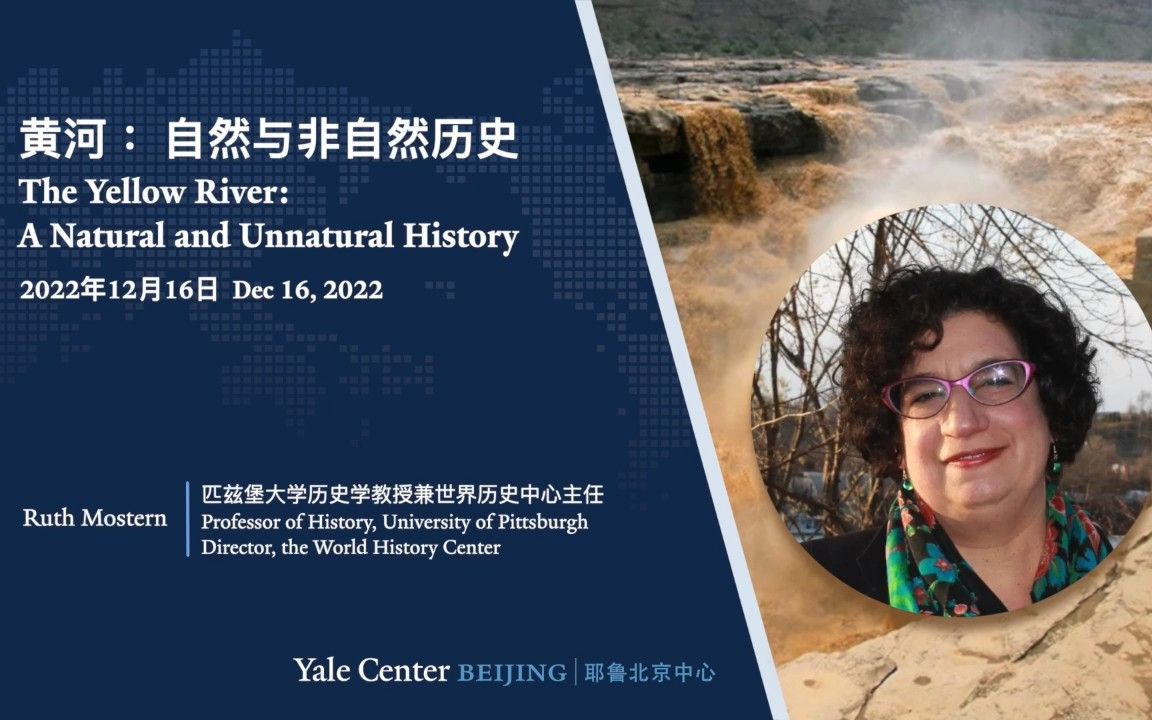
字幕摘录
| 时间 | 英文 | 中文 |
|---|---|---|
| 0:04 | Good day, everyone, and especially to our speaker, | 日安,各位,特别是我们的演讲者, |
| 0:07 | Ruth Mostern from the University of Pittsburgh. | 匹兹堡大学的露丝·莫斯特恩 |
| 0:10 | Welcome to this talk on her book, The Yellow River, | 欢迎来到她的书《黄河》里 |
| 0:15 | which is part of the Yale Center Beijing, | 是耶鲁中心北京的一部分 |
| 0:18 | Yale University Press, Find Your Next Great Read series. | 耶鲁大学出版社,"寻找你的下一个伟大阅读"系列. |
| 0:22 | I'm also very excited to share with you | 我也很高兴能与你分享 |
| 0:24 | that Professor Mostern's book | 摩斯特教授的书 |
| 0:26 | is going to be translated into Chinese. | 将翻译成中文。 |
| 0:29 | And so stay tuned at our WeChat account | 并保持调用我们的微信账户 |
| 0:33 | for news about when her book is coming out in China. | 她的书什么时候在中国出版 |
展开字幕全文(1108 条)
| 序号 | 英文 | 中文 |
|---|---|---|
| 1 | Good day, everyone, and especially to our speaker, | 日安,各位,特别是我们的演讲者, |
| 2 | Ruth Mostern from the University of Pittsburgh. | 匹兹堡大学的露丝·莫斯特恩 |
| 3 | Welcome to this talk on her book, The Yellow River, | 欢迎来到她的书《黄河》里 |
| 4 | which is part of the Yale Center Beijing, | 是耶鲁中心北京的一部分 |
| 5 | Yale University Press, Find Your Next Great Read series. | 耶鲁大学出版社,"寻找你的下一个伟大阅读"系列. |
| 6 | I'm also very excited to share with you | 我也很高兴能与你分享 |
| 7 | that Professor Mostern's book | 摩斯特教授的书 |
| 8 | is going to be translated into Chinese. | 将翻译成中文。 |
| 9 | And so stay tuned at our WeChat account | 并保持调用我们的微信账户 |
| 10 | for news about when her book is coming out in China. | 她的书什么时候在中国出版 |
| 11 | So today the book is on her book, | 所以今天这本书在她的书上 |
| 12 | which is published by the Yale University Press | 由耶鲁大学出版社出版 |
| 13 | called The Yellow River, A Natural and Unnatural History. | 被称为"黄河,自然和非自然历史". |
| 14 | For those of us who grew up here in China, | 对于在中国长大的人来说 |
| 15 | we've always learned about the Yellow River | 我们一直知道黄河的事 |
| 16 | as the cradle of our civilization, the mother river. | 作为我们文明的摇篮, 母河。 |
| 17 | And Professor Ruth Mostern | 还有鲁斯·莫斯特恩教授 |
| 18 | have done some very, | 已经做了一些非常, |
| 19 | she has done some really interesting work | 她已经做了一些非常有趣的工作 |
| 20 | weaving together multiple disciplines | 编织多个学科 |
| 21 | from Neolithic times to the present day, | 从新石器时代到今天, |
| 22 | the Yellow River and its watershed | 黄河及其分水岭 |
| 23 | have both shaped and been shaped by human society. | 由人类社会塑造和塑造 |
| 24 | So she uses the Yellow River | 所以她用黄河 |
| 25 | to illustrate the long-term effects | 以说明长期影响 |
| 26 | of environmentally significant human activity | 具有重大环境意义的人类活动 |
| 27 | and unravels the long history | 揭开漫长的历史 |
| 28 | of human relationship with water and soil | 人类与水和土壤的关系 |
| 29 | and the consequences, which are at times disastrous | 后果,有时是灾难性的 |
| 30 | and ecological transformations | 和生态变化 |
| 31 | that resulted from human decisions. | 这是人类决定的结果。 |
| 32 | Professor Mostern and I were just chatting | 莫斯登教授和我只是聊天 |
| 33 | that this could be a book about COVID | 这可能是一本关于COVID的书 |
| 34 | and many of the seismic changes | 以及许多地震变化 |
| 35 | that we've been going through in the world | 我们一直在经历的世界 |
| 36 | and in this society. | 在这个社会中 |
| 37 | And today we're so grateful | 今天我们非常感激 |
| 38 | to be able to have her talk about this book, | 能让她谈这本书 |
| 39 | the transformation, the ecological history | 转变,生态历史 |
| 40 | and the profound conclusions that we could draw | 以及我们可以得出的深刻结论 |
| 41 | from how the natural system evolve | 从自然系统是如何演变的 |
| 42 | and how we shape the natural system in good and bad ways. | 以及我们如何以优劣的方式塑造自然系统。 |
| 43 | Professor Ruth Mostern is professor of history | 鲁斯·莫斯特恩教授是历史教授 |
| 44 | and director of the World History Center | 世界历史中心主任 |
| 45 | at the University of Pittsburgh. | 在匹兹堡大学 |
| 46 | She is the author of two books, | 她是两本书的作者, |
| 47 | Dividing the Realm in Order to Govern, | 把王国分给戈文 |
| 48 | the Spatial Organization of the Song State, 960 to 1276 CE | 宋国空间组织,960年至1276年 |
| 49 | and The Yellow River, | 和黄河, |
| 50 | which is what we're gonna talk about today. | 这就是我们今天要谈的 |
| 51 | She's the author or co-author of over 30 articles | 她是三十多篇文章的作者或共同作者 |
| 52 | published in books and peer-reviewed journals. | 发表在书籍和同行评审期刊上。 |
| 53 | She's the principal investigator and project director | 她是首席调查员兼项目主任 |
| 54 | of the World Historical Gazetteer, | 世界历史地名典, |
| 55 | which is a prize-winning digital infrastructure platform | 这是一个获奖的数字基础设施平台 |
| 56 | for integrating databases | 数据库整合 |
| 57 | of historical place name information. | 历史地名信息。 |
| 58 | Her research has been funded by entities | 她的研究是由实体资助的 |
| 59 | that include the US National Endowment for the Humanities, | 包括美国国家人文基金, |
| 60 | the US National Science Foundation, | 美国国家科学基金会, |
| 61 | the American Council of Learned Societies and others. | 美国学会理事会等。 |
| 62 | Today's event will go as follows. | 今天的活动如下。 |
| 63 | Professor Mostern will be giving a presentation | 莫斯特恩教授将作演讲 |
| 64 | and then I will invite our Zoom participants | 然后,我将邀请我们的"缩放"参与者 |
| 65 | to comment and post questions in the chat box | 在聊天框中评论和张贴问题 |
| 66 | as they pop up. | 当他们弹出。 |
| 67 | I would like to invite all of you to stay muted for now | 我想请大家暂时保持安静 |
| 68 | and depending on the remaining time after her presentation, | 根据她发言后的剩余时间, |
| 69 | I may either unmute you or in the interest of time, | 我也许可以不责怪你 或者为了时间考虑 |
| 70 | I may post the questions that you post in the chat box. | 我可以把您在聊天箱里发的问题贴上 |
| 71 | I'm very much looking forward to this talk | 我很期待这次谈话 |
| 72 | and I hope you are too. | 我希望你也一样。 |
| 73 | And without further ado, | 再不说下去 |
| 74 | let's welcome Professor Ruth Mostern, thank you. | 欢迎露丝·莫斯特恩教授 谢谢 |
| 75 | Great, well, thank you so much for that kind introduction. | 非常感谢你的介绍 |
| 76 | I am so happy to be with you today | 今天跟你在一起我很高兴 |
| 77 | and to talk about my book. | 谈谈我的书 |
| 78 | Let me go ahead and share my screen. | 让我来分享我的屏幕 |
| 79 | So I'm talking today as Carol said about my book | 今天我讲的是卡罗尔说的我的书 |
| 80 | published about a year ago, | 大约一年前, |
| 81 | The Yellow River, A Natural and Unnatural History. | 黄河 A 自然与非自然历史. |
| 82 | And I wanna start by introducing to you a version of a map | 我想首先向你们介绍地图的版本 |
| 83 | which in some ways is probably very familiar to you. | 在某些方面你可能非常熟悉。 |
| 84 | In other ways, I think provides a different perspective | 换句话说,我从不同的角度看问题 |
| 85 | on the Yellow River, a river that you see | 在黄河上,你看到的河流 |
| 86 | on all of the maps of China that you peruse. | 在所有的中国地图上,你浏览。 |
| 87 | And you can see here on this map, | 你可以从地图上看到 |
| 88 | the river itself is visible. | 河本身是可见的。 |
| 89 | If you can see my cursor, right? | 如果你能看到我的光标,对不对? |
| 90 | You can see the line of the river. | 可见江河之线. |
| 91 | But my intention on this map and in all my work | 但我在地图上和所有作品上的意图 |
| 92 | is to ask what if instead of seeing the river | 是问,如果不是看到河 |
| 93 | as a line of water passing through a dry landscape | 作为一条流经干燥景观的水线 |
| 94 | to instead to see it as part of an entire watershed. | 而是把它视为整个流域的一部分。 |
| 95 | And so that's what you see here | 所以这就是你在这里看到的 |
| 96 | is the entire watershed of the Yellow River, | 是黄河的整个分水岭, |
| 97 | including the headwaters of the river in the far west | 包括远西的河头 |
| 98 | in Qinghai at the edge of the Tibetan Plateau, | 在青海青藏高原边缘, |
| 99 | including outlined here in white. | 包括这里的白话 |
| 100 | This is such an important part of the story | 这是故事的重要部分 |
| 101 | I'm telling here is the Les Plateau | 我告诉这里是Les高原 |
| 102 | and then to the east of the Les Plateau, | 然后在莱斯高原以东 |
| 103 | the alluvial plain of the river in East China. | 东莞河冲积平原. |
| 104 | And so in addition to all of the watershed of the river, | 所以除了河流的所有分水岭之外 |
| 105 | you can also see here the range of soil types, | 您也可以在这里看到土壤种类的范围, |
| 106 | vegetation cover actually on the river, | 河上植被覆盖, |
| 107 | which includes in light green arable land, | 包括绿地, |
| 108 | in dark green forests and highland places, | 在深绿森林和高原地区, |
| 109 | in dark browns or medium toned brown is grasslands | 深棕色或中棕色是草原 |
| 110 | and in yellow is desert. | 黄色是沙漠。 |
| 111 | And so this shows, I think really vividly | 因此,这个显示, 我认为非常生动 |
| 112 | so much about the history of the river, | 这么多关于河的历史, |
| 113 | which is a history of people expanding agriculture | 这是人民扩大农业的历史 |
| 114 | wherever agriculture can be expanded | 在农业能够扩大的地方 |
| 115 | while also placing settlements on grasslands | 同时在草原上安置居民点 |
| 116 | and also dealing with the sort of complex multi-ethnic world | 处理复杂的多种族世界 |
| 117 | of these sort of ecotone regions, | 这些生态松区域, |
| 118 | these transition regions between grassland and desert. | 草原和沙漠之间的过渡区域。 |
| 119 | And so this is the river, but it's the river depicted, | 这就是河流,但这是描述的河流, |
| 120 | I hope in a novel and thought-provoking way. | 我希望有一个小说和发人深省的方式。 |
| 121 | One other version of the same watershed here focusing again | 同一流域的另一个版本再次聚焦于此 |
| 122 | on this dynamic relationship between the Les Plateau | 关于莱斯高原之间动态关系的 |
| 123 | in Shanxi, part of Shanxi, Gansu, | 在山西,山西,甘肃的一部分, |
| 124 | and the alluvial plain to the east. | 和东边的冲积平原 |
| 125 | And here focusing on the fact that over the course | 而这里集中的事实, 在整个过程中 |
| 126 | of prehistoric and recorded history, | 史前史前史书和史书 |
| 127 | the river, as I'm sure all of you know, | 河流,我相信你们都知道, |
| 128 | has changed course many, many times, | 改变过很多次,很多次, |
| 129 | has really occupied the entirety of the alluvial plain, | 真正占据了整个冲积平原, |
| 130 | sometimes in multiple simultaneous courses, | 有时在多个同时课程, |
| 131 | sometimes in successive courses. | 有时在连续的课程。 |
| 132 | Historically, the entirety of the Yellow River Plain here | 历史上,这里的黄河平原 |
| 133 | would have been lakes, wetlands, marshes, | 本来是湖泊、湿地、沼泽 |
| 134 | multiple tributaries, a shallow river | 多条支流,一条浅河 |
| 135 | through a very flat landscape | 通过非常平坦的景观 |
| 136 | that can meander across all of that territory. | 能穿越整个领土 |
| 137 | And one of the other things that I stress | 还有一件事,我强调 |
| 138 | sort of as I look at this map is that when the river does | 我看着这张地图时 发现当河里有 |
| 139 | that, it's not doing something disastrous, right? | 它不会做灾难性的事,对吧? |
| 140 | So the behavior of the river, which is just simply | 所以,河的行为,这只是简单的 |
| 141 | to be water occupying a world in the context of ecosystems | 在生态系统中成为水所占据的世界 |
| 142 | and in a context of the dynamics of gravity, right? | 在重力的动态背景下,对不对? |
| 143 | The river is just being the river. | 河只是为河. |
| 144 | And that behavior only becomes something that people see | 而这种行为只会变成人们所看到的 |
| 145 | as problematic and disastrous at the point | 问题和灾难性 |
| 146 | that they are building cities, expanding agriculture | 他们正在建设城市,扩大农业 |
| 147 | and doing the things that they have to do | 做他们必须做的事 |
| 148 | in order for that to be successful, | 为了成功, |
| 149 | like building levees, extinguishing wetlands and so on. | 譬如建堤,灭湿地等. |
| 150 | So this is the view of the river | 这就是河的风景 |
| 151 | that I am presenting in my book. | 在我的书中。 |
| 152 | I like to say that this is a book that is about soil | 我想说,这是一本关于土壤的书 |
| 153 | as much as it's about water. | 何等为水. |
| 154 | It's about the way that human activity | 这是关于人类活动的方式 |
| 155 | on the West Plateau causes erosion | 在西高原上造成侵蚀 |
| 156 | and the way that that eroded less soil | 以及侵蚀较少土壤的方式 |
| 157 | makes its way into the river, down to the flood plain | 进入河中,进入洪水平原 |
| 158 | and is then as the level of the riverbed rises | 然后随着河床水平的上升 |
| 159 | is the source of the floods that are so much | 是洪水的源头 如此多 |
| 160 | of the dynamic of the way that people talk | 人们说话方式的动态 |
| 161 | about the Yellow River. | 关于黄河. |
| 162 | And this quote that I have here | 我这里有一句引言 |
| 163 | in the bottom right side of my slide | 在我的幻灯片右下方 |
| 164 | is a really important piece of what I'm doing here. | 我在这里做的事很重要 |
| 165 | And it's from a couple of environmental scientists. | 这是来自几个环境科学家。 |
| 166 | I read a lot of environmental science | 我读了很多环境科学 |
| 167 | as well as works of history | 以及历史著作 |
| 168 | and as well as doing geographical analysis. | 以及进行地理分析。 |
| 169 | And the idea is that less is very resistant to erosion | 而这个想法是 较少的抗侵蚀能力 |
| 170 | under vegetation cover, but readily erodible without it. | 在植被的覆盖之下, 但很容易被欣赏,没有它。 |
| 171 | And what this is telling us is that the history of erosion, | 这告诉我们的是 侵蚀的历史 |
| 172 | the history of the rising sediment in the Yellow River | 黄河中不断上升的沉积物的历史 |
| 173 | is a history of the removal of ground cover | 是去除地面覆盖的历史 |
| 174 | on the West Plateau. | 在西高原上。 |
| 175 | And the microscopic image that you can see | 你可以看到的微缩图像 |
| 176 | on the top right hand side of this slide | 此幻灯片右上方 |
| 177 | is demonstrating that the reason why | 说明为什么 |
| 178 | sort of a significant characteristic of less soil | 一种土壤较少的重要特征 |
| 179 | is that it's comprised of tiny grains of multiple shapes | 由多种形状的小颗粒组成 |
| 180 | which means that it is a sort of a very loose type of soil | 意思是它是一种非常松散的土壤 |
| 181 | when it's covered with ground cover. | 盖地时. |
| 182 | It's also why it can so easily just sort of blow away | 这也是为什么它可以这么容易 只是那种吹走 |
| 183 | through wind and water processes as a fine dust. | 作为细微的尘埃,通过风和水的过程 |
| 184 | Also why it has historically as many of you probably know | 也是为什么历史上 你们中很多人都知道 |
| 185 | in imperial times been used as a building material | 在帝国时代被用作建筑材料 |
| 186 | as hard as concrete, there's still pounded | 像混凝土一样坚硬 仍然被击倒 |
| 187 | less soil structures visible in the landscape | 景观上可见的土壤结构较少 |
| 188 | across this region. | 整个区域 |
| 189 | And the series of photos on the left I call my less selfies | 左边的系列照片,我叫小自拍 |
| 190 | and that's just me holding a clump of the soil | 那只是我拿着一块土 |
| 191 | and demonstrating that it can just easily kind of fall apart | 并证明它很容易崩溃 |
| 192 | into this fine wind-borne dust. | 进入这微尘埃中 |
| 193 | And so another piece of this story, of course, | 所以这个故事的另一个部分,当然, |
| 194 | or another way of saying that same piece of the story | 或另一种说法 同样的故事 |
| 195 | is that the amount of erosion on the West Plateau | 是西高原的侵蚀程度 |
| 196 | throughout the Yellow River Basin | 整个黄河流域 |
| 197 | has changed dramatically over time. | 随着时间的推移,情况发生了巨大变化。 |
| 198 | And this is another one of the insights that I've acquired | 这是我获得的又一洞察力 |
| 199 | from reading the work of environmental scientists. | 从阅读环境科学家的工作。 |
| 200 | And so the chart you see here is derived from soil cores | 因此,你在这里看到的图表 来源于土壤核心 |
| 201 | taken throughout the basin | 整个流域 |
| 202 | that contain enough organic material that it's possible | 含有足够有机材料的 |
| 203 | to date when soil was deposited | 土壤沉积至今 |
| 204 | and to come up with a 12,000 year timeline | 提出12 000年的时间表 |
| 205 | of changing erosion rates, | 侵蚀率变化, |
| 206 | which begin at the end of the ice age | 从冰河时代结束开始 |
| 207 | 在Pleistocene时代,低侵蚀, | |
| 208 | which rises only a little bit | 它只升起一点点 |
| 209 | (原始内容存档于2019-09-21). In the Holocene climate bestival. | |
| 210 | This is the period from about 9,000 to 6,000 years ago | 这是9000到6000年前的时期 |
| 211 | when people started engaging in agriculture. | 当人们开始从事农业。 |
| 212 | It was a warm and moist time. | 那是一个温暖湿润的时间。 |
| 213 | Agriculture in that era, of course, was not very intensive | 当然,那个时代的农业并不十分密集 |
| 214 | and also the ability of vegetation to regrow | 以及植被重新生长的能力 |
| 215 | was really high. | 实在是太高了 |
| 216 | The story really takes off | 故事真的开始 |
| 217 | during the Neolithic and the Bronze Age. | 在新石器时代和青铜时代. |
| 218 | So basically from the Neolithic into the Western Joe, | 所以基本上从新石器到西乔 |
| 219 | the War of States period, | 战争时期, |
| 220 | when you can see rapidly rising rates of erosion | 当你看到快速上升的侵蚀率 |
| 221 | as people started engaging in more intensive agriculture, | 随着人们开始从事更密集的农业, |
| 222 | in deforestation in order to power forges and mills. | 以制造伪造和磨坊 |
| 223 | And then really dramatically, | 然后非常戏剧化, |
| 224 | you can see this very, very rapid raise | 你可以看到这个非常,非常迅速的升起 |
| 225 | in the rate of erosion during the Imperial Age. | 在帝国时代的侵蚀率。 |
| 226 | Always there were low rainfall years. | 降雨量一直很低。 |
| 227 | There's a relationship because the human impact on erosion | 有关系是因为人类对侵蚀的影响 |
| 228 | was so profound, it really overtakes climate impacts. | 它是如此深刻, 它真的超过气候影响。 |
| 229 | That's something that became really clear | 事情变得非常清楚 |
| 230 | that I did not expect to find when I began this research. | 当我开始这个研究时,我没想到会发现 |
| 231 | But, and so long-term trends in climate | 但是,如此长期的气候趋势 |
| 232 | don't make much of a difference, | 别多管闲事 |
| 233 | but always each year's weather is really significant. | 但每年的天气都很重要 |
| 234 | There are always years of low rainfall | 降雨量一直很低 |
| 235 | when there is much less erosion, | 当侵蚀减少的时候, |
| 236 | much less of a risk of flooding, | 更不要说洪水的风险了 |
| 237 | as well as high rainfall years | 以及高降雨量年份 |
| 238 | when really accumulations of sediment | 当沉积物真正积累时 |
| 239 | could all wash into the river at once. | 可以马上冲进河里 |
| 240 | This is another version of the same data. | 这是同一数据的另一个版本。 |
| 241 | And what I really wanna stress here, | 而我真正想强调的是 |
| 242 | again, this is the 12,000 year timeframe. | 这也是12 000年的时限。 |
| 243 | You can see on the vertical axis, | 在垂直轴上可以看到 |
| 244 | this is a sort of a logarithmic chart. | 这是某种对数图表。 |
| 245 | So it's sort of orders of magnitude | 所以,这是某种数量级 |
| 246 | of increase in the amount of sediment | 沉积物数量的增加 |
| 247 | with really this interesting rupture point | 有个有趣的断点 |
| 248 | about a thousand years ago when the rate of increase | 大约一千年前,当上升的速度 |
| 249 | kind of went up by a whole order of magnitude. | 某种程度的上升。 |
| 250 | And so there's basically a sort of a pre-song story | 因此,基本上有一个 一种前歌的故事 |
| 251 | of the river and a kind of a post-song version of the river. | 和一种后歌版本的河流。 |
| 252 | This is actually a version of this chart | 这其实是这个图表的版本 |
| 253 | is the thing that I saw that really started me | 我看见的东西 真正开始我 |
| 254 | on this whole research project, | 关于整个研究项目, |
| 255 | because I was at that time finishing a book about the, | 因为我当时正在写一本关于... |
| 256 | finishing writing a book about the Song dynasty | 写完一本关于宋朝的书 |
| 257 | that was partly about the Song colonization of the Northwest | 部分是关于西北方的宋殖民 |
| 258 | and the Song Xixia War. | 与宋西夏战争. |
| 259 | And so I started this research, | 所以我开始了这个研究, |
| 260 | the research for the Yellow River book, | 黄河书的研究, |
| 261 | wondering if there was a way that that story, | 想知道如果有什么办法 那故事, |
| 262 | that story of the Song Xixia War | 宋西夏战争的故事 |
| 263 | was perhaps more significant | 也许更重要的 |
| 264 | as a part of the Yellow River story as well | 作为黄河故事的一部分 |
| 265 | than had been visible to previous scholars. | 而不是以前学者所见的。 |
| 266 | And so to conclude a couple of the propositions | 因此,得出一些建议 |
| 267 | that I'm bringing to this book, | 我带来了这本书, |
| 268 | one is the idea that rivers are sediment sorting machines. | 一个想法是河流是沉积分拣机 |
| 269 | That is that rather than thinking about them | 而不是想他们 |
| 270 | as lines of water in a landscape, | 以大地上的水线盟誓, |
| 271 | we can think of them as sort of large ecosystem entities | 我们可以把它们看作是一种大型生态系统实体 |
| 272 | that are involved with carrying organic | 携带有机体 |
| 273 | and inorganic material downhill by the force of gravity. | 和无机材料 下坡的重力。 |
| 274 | Another from Richard White, | 另一个来自理查德·怀特, |
| 275 | the idea that rivers have biographies, | 关于河流有传记的想法, |
| 276 | that they're not always the same thing, | 他们并不总是一样的东西, |
| 277 | that they themselves are the agents | 他们自己是特工 |
| 278 | and the subjects of historical change. | 和历史变化的主体。 |
| 279 | And then the third, this paradoxical statement that I love | 第三个,这个荒谬的说法,我喜欢 |
| 280 | from Mark Elvin, environmental historian, | 从马克埃尔文, 环境历史学家, |
| 281 | that China has experienced 3000 years | 中国经历了3000年 |
| 282 | of unsustainable growth. | 不可持续增长。 |
| 283 | And I love that idea that when we think of unsustainability, | 我喜欢这个想法, 当我们想到不可持续, |
| 284 | we think of something that just can't be sustained. | 我们想到的是无法维持的东西 |
| 285 | And yet when we think of 3000 years of growth, | 然而,当我们想到 3000年的增长, |
| 286 | we're thinking that just the opposite. | 我们想的正好相反 |
| 287 | We're thinking, wow, this is an amazing amount | 我们想,哇,这是惊人的金额 |
| 288 | of just like civilizational sustenance, right? | 就像文明的供养,对不对? |
| 289 | And so this history that I'm telling | 我所讲的历史 |
| 290 | is really kind of pivoting on that paradox. | 实在是有点支持这个悖论。 |
| 291 | So this is another view of the question | 所以,这是另一个观点的问题 |
| 292 | of how erosion proceeded on the West Plateau, | 西高原的侵蚀情况 |
| 293 | basically from this point of view in three different phases. | 基本上从这个角度来看,分三个不同的阶段。 |
| 294 | So it's not a gradually rising rate of erosion, | 因此,这不是逐渐上升的侵蚀速度, |
| 295 | as I've been explaining, | 我一直在解释 |
| 296 | it's a matter of sort of one pulse in the Neolithic, | 在新石器系的脉冲上, |
| 297 | a second pulse in the Western Han, | 西汉时期的第二个脉搏, |
| 298 | and a third pulse that starts in the Northern Song. | 和从北宋开始的第三个脉搏 |
| 299 | And this is really tying that to rates | 这真的与利率挂钩 |
| 300 | of deforestation over time | 森林砍伐情况 |
| 301 | from an estimated amount of forest cover. | 估计森林覆盖率。 |
| 302 | And again, this is partially derived | 再说一遍,这是部分衍生出来的 |
| 303 | from historical sources, | 从历史渊源, |
| 304 | partially derived from looking at remains of pollen | 部分来源于对花粉残骸的观察 |
| 305 | in soil cores, 50% tree coverage on the West Plateau | 西高原50%的树木覆盖率 |
| 306 | in the Western Zhou, | 在西周时, |
| 307 | declining to 33% by the Tang and Song, | 被唐人和宋人贬为33% |
| 308 | 15% by the end of the Imperial era. | 在帝国时代末期达到15%. |
| 309 | And of course now, as many of you know, | 当然了,你们都知道 |
| 310 | as all of you know, I'm sure, | 你们都知道,我确定 |
| 311 | a really sustained re-greening effort. | 真正的持续 重新绿化的努力。 |
| 312 | So what does that? | 那又怎样? |
| 313 | So this is basically what I'm really trying to stress | 这基本上就是我想强调的 |
| 314 | is a couple of things. | 是两件事。 |
| 315 | One is how much the story of the Yellow River | 一是黄河的故事有多少 |
| 316 | is a story about the West Plateau. | 这是一个关于西高原的故事。 |
| 317 | Another is that that story is a story of human settlement. | 另一个问题是,这个故事是关于人类住区的故事。 |
| 318 | I've done a lot of database design work | 我做了很多数据库设计工作 |
| 319 | and spatial analysis. | 和空间分析。 |
| 320 | What you see here on the bottom right | 你从右下方看到的东西 |
| 321 | includes some archeological information | 包括一些考古资料 |
| 322 | about Han and Xiongnu cemeteries. | 关于汉族和X族的墓地。 |
| 323 | The two images on the left come from | 左边的两个图像来自 |
| 324 | the great Tan Xixiang Historical Atlas, | 伟大的谭西香历史地图集 |
| 325 | the Zhongguolishu Di Tuqi, the historical Atlas of China. | 中国历史地图集·中古利舒·迪·图奇. |
| 326 | And it's showing the expansion of settlements | 并显示出定居点的扩张 |
| 327 | from the top, the Qin times, | 从上,秦时, |
| 328 | bottom is Han times. | 底是汉时. |
| 329 | And you can see the settlements expanding | 你可以看到定居点在扩张 |
| 330 | towards the North and West in the Ordos, | 在鄂尔多河畔, |
| 331 | the Great Bend of the Yellow River during the Han. | 汉时期黄河大弯. |
| 332 | And this is just a couple of things | 而这只是一些事情 |
| 333 | I think I wanna talk about with these images. | 我想谈谈这些画面 |
| 334 | One is the way that this less soil was used | 一种是这种少用土壤的方式 |
| 335 | as a building material. | 作为建筑材料。 |
| 336 | This is just outside of Xian, right? | 这是在西安外面,对不对? |
| 337 | Of course, the Han capital of Chang'an | 当然,长安的汉城 |
| 338 | showing the way that that soil was used | 说明土壤的使用方式 |
| 339 | to build reservoirs and waterworks and levees | 建造水库、水厂和堤岸; |
| 340 | as early as the Tang, sorry, as early as the Han. | 早在唐,哀,汉. |
| 341 | And then on the right, the Jing River | 右边是静河 |
| 342 | near its confluence with the Wei | 靠近它与魏国的交汇处, |
| 343 | showing that it lies far below the level | 显示它远远低于水平 |
| 344 | of the surrounding farmland, | 和周围的农田, |
| 345 | which was not the case in the Qin and Han period | 秦汉时期不是这样 |
| 346 | and is now running through sort of bare rocky landscape, | 并正在经历一些裸露的岩石景观, |
| 347 | not through the kind of meters of rich soil | 而不是通过那种米 丰富的土壤 |
| 348 | that would have existed at the time | 那时本可以存在的 |
| 349 | that these structures were built. | 这些结构是建造的。 |
| 350 | By middle period times, and as I've stressed, | 到了中间期,我强调, |
| 351 | this is really what I'm most interested in | 这才是我最感兴趣的 |
| 352 | is this pulse of dramatic increase of erosion | 是侵蚀急剧增加的脉搏 |
| 353 | that occurred during the Song | 歌唱时期发生的 |
| 354 | and was really associated with the Song-Xixia War. | 并且真的和宋西夏战争有关 |
| 355 | And you can see that really dramatically | 你可以看到,真的戏剧性 |
| 356 | if you look at these maps. | 如果你看这些地图。 |
| 357 | With map A at the top right part of the slide | 幻灯片右上方的地图A |
| 358 | showing the distribution of settlements | 显示定居点分布情况 |
| 359 | that existed in the Tang in the mid eighth century. | 它存在于8世纪中叶的唐人 |
| 360 | This is right before the An Lushan rebellion, | 就在安禄山叛乱之前 |
| 361 | the expansion of settlements in the early Northern Song. | 北宋初期扩建居民点. |
| 362 | And then really significantly, | 礛璶 |
| 363 | I want you to focus on that image C | 我要你把注意力放在C的图像上 |
| 364 | at the bottom right-hand side of the slide. | 在幻灯片右下方。 |
| 365 | This is what the distribution of settlements | 这就是定居点的分布 |
| 366 | looks like in 1111, | 看起来像在1111, |
| 367 | right before the fall of the Northern Song. | 就在北宋灭亡之前 |
| 368 | And the stars represent prefectures. | 而星辰代表着各县. |
| 369 | These are the larger government units. | 这些是较大的政府单位. |
| 370 | These are like Fu and Zhou, right? | 这就像傅和周,对不对? |
| 371 | The diamond shape icons represent counties. | 钻石形状图标代表郡. |
| 372 | And then those black dots, those small black circles. | 然后那些黑点,那些小黑圈。 |
| 373 | And again, this is from the historical Atlas of China, | 再说一遍,这是中国历史地图集 |
| 374 | the Zhongguolishu Di Chuji. | 中古里修·帝楚纪. |
| 375 | These are units below the level of the county | 这些是县级以下的单位 |
| 376 | in this sort of three level administrative hierarchy | 这种三级行政级别 |
| 377 | of the Song dynasty. | 宋朝时设置. |
| 378 | And so these are forts, garrisons, | 这些是堡垒、守军 |
| 379 | postal stations, horse farms, villages, right? | 邮政站,马场,村庄,对不对? |
| 380 | But a lot of them, a lot, a lot of them | 但是他们很多,很多,很多 |
| 381 | are military fortifications. | 是军事防御工事 |
| 382 | And of course it was not until the Ming | 当然,直到明朝 |
| 383 | that there was such a thing as the Great Wall, | 那里有长城, |
| 384 | but the idea in the Northern Song | 但北宋的主张 |
| 385 | was that these garrisons | 是这些驻军 |
| 386 | along the Northern border of the Song, | 沿着北宋边境, |
| 387 | which is what you see there, | 你们在那里所看见的, |
| 388 | running right across the middle of the Ordos region, | 穿过奥多斯地区中部, |
| 389 | those garrisons should be close enough | 那些驻军应该足够近了 |
| 390 | that they should be visible one to the next | 他们将被看见, |
| 391 | for signal fires. | 为信号火。 |
| 392 | They essentially formed a wall | 他们基本上形成了一堵墙 |
| 393 | and they did so right along the fragile grasslands region | 沿着脆弱的草原地区 他们就这么做了 |
| 394 | of this highly erodible soil | 这土壤中, |
| 395 | that I've been telling you about. | 我一直告诉你。 |
| 396 | And this is the region we're talking about. | 这就是我们谈论的地区。 |
| 397 | Basically, this is the Wuding River, | 基本上,这是武丁河 |
| 398 | the major tributary of the Yellow River | 黄河的主要支流 |
| 399 | that runs through the grasslands region. | 穿过草原地区。 |
| 400 | The image that you see on the left | 左边的图像 |
| 401 | depicts what that highly eroded, | 描绘那被严重侵蚀的事物, |
| 402 | dissected landscape looks like today. | 解剖的景观看起来像今天。 |
| 403 | This is just outside the city of Yulin. | 今此犹林城外. |
| 404 | And so what this looked like, | 所以,这个样子, |
| 405 | and this is just kind of reiterating | 这不过是在重复 |
| 406 | what I was just talking about, | 我刚才说的, |
| 407 | which is that in the year the Great, | 那是伟大的一年, |
| 408 | we can really pinpoint to the exact decade | 我们真的可以确定确切的十年 |
| 409 | when this highly erosion-causing military strategy | 当这种高度侵蚀性的军事战略 |
| 410 | was put in place. | 已经到位。 |
| 411 | And it was during the war between 1040 and 1041 | 1040年到1041年战争期间 |
| 412 | when the number of people and horses in the Ordos | 当奥尔多斯人和马的数量 |
| 413 | increased from 34,000 horses and 155,000 people | 从34 000匹马和155 000人增加 |
| 414 | to 500,000 troops, 32,000 Imperial soldiers, | 给50万军队,32 000名帝国士兵, |
| 415 | well, from 32,000 soldiers to 500 battalions, | 从32 000名士兵到500个营 |
| 416 | 500,000 troops, 300,000 cavalry. | 50万部队,30万骑兵. |
| 417 | This is the intensive moment of fortification | 这是强化的密集时刻 |
| 418 | that occurred in this region. | 发生在这个地区。 |
| 419 | And this continued on, of course, in the Ming | 这当然在明朝继续 |
| 420 | through the Great Wall era. | 穿越长城时代. |
| 421 | So by, well, I should say, actually, | 所以,嗯,我应该说,实际上, |
| 422 | I wanna focus for just a second | 我想专心一下 |
| 423 | on the top right-hand map that you see here from 1330. | 1330年的右上方地图上 |
| 424 | This is during the Yuan, during the Mongol era. | 这是元朝时期,蒙古时期. |
| 425 | And one of the things I try to be really attentive to | 还有一件事,我试图真正关注 |
| 426 | in my book is not just to tell this story | 在我的书中 不只是说这个故事 |
| 427 | as if it's one of things getting worse and worse, | 好像事情越来越糟一样 |
| 428 | what environmental historians call declensionism, right? | 环境史学家们称之为减压主义,对吧? |
| 429 | As historians and especially as environmental historians, | 作为历史学家,特别是环境史学家, |
| 430 | we always wanna make sure that things stay complicated. | 我们总想确保事情保持复杂 |
| 431 | And so the era in which the Jin and the Yuan | 于是晋国和元国的时代 |
| 432 | controlled North China | 控制下的华北 |
| 433 | when there wasn't an adversarial relationship | 没有对抗关系的时候 |
| 434 | between an ethnically Han regime | 汉族政权之间 |
| 435 | in the Ordos and on the West Plateau | 在奥尔多斯和西高原 |
| 436 | and between pastoralists, horse riding, | 牲畜之间,有骑马的, |
| 437 | and mobile people to the North. | 和流动人员北上。 |
| 438 | During that period of the 1100s, 1200s, 1300s, | 在1100年代,1200年代,1300年代, |
| 439 | this was a time when there was low population | 那时人口很少 |
| 440 | on the West Plateau, when there was the opportunity | 在西高原上,当有机会 |
| 441 | for forests and grasslands to regrow | 供森林和草原重新生长 |
| 442 | prior to a sort of another pulse of fortification | 在另一种强化脉冲之前 |
| 443 | and development in the Ming and Qing. | 与明清时期的发展. |
| 444 | And what that looks like then | 那时候的样子 |
| 445 | is something like the picture on the bottom right. | 像是右下方的照片一样 |
| 446 | And of course, the map, this 16th century map, | 当然 地图 16世纪的地图 |
| 447 | same time period of the building of the Great Wall, | 建造长城的同一时间段, |
| 448 | again, right through this most fragile grasslands region | 穿过这个最脆弱的草原 |
| 449 | of the West Plateau. | 在西高原。 |
| 450 | And then onward to the Qing, when for the first time, | 之后去清人,当第一次, |
| 451 | and really, I think the lasting success | 而且真的,我认为 持久的成功 |
| 452 | of the Ming Great Wall era was not so much | 明长城时代没有这么多 |
| 453 | that it was a good military strategy. | 这是个好军事策略 |
| 454 | Clearly it was not, but that during that period | 显然不是,但在那段时期 |
| 455 | is when for the first time, | 是什么时候第一次, |
| 456 | the Chinese part of the Ordos became | 鄂尔多斯人的中国部分成为了 |
| 457 | a sort of enclosed agricultural ethnically Han space, | 一种封闭的农业汉族空间, |
| 458 | a space where agriculture could be conducted | 农业空间 |
| 459 | in as intensive a fashion as the ecology made possible. | 以生态所能达到的 密集的时尚 |
| 460 | And so, and then of course, in the 16th century, | 所以,当然,在16世纪, |
| 461 | 16th, 17th century is when the New World crops, | 16,17世纪是新世界的作物, |
| 462 | the maize and potatoes came in. | 玉米和马铃薯进来了 |
| 463 | Those were really amenable to being farmed in this region. | 这些人非常愿意在这个地区耕作。 |
| 464 | Forest, I haven't talked very much about forestry, | 森林,我没怎么谈林业 |
| 465 | but commercial forestry, commercial salt production, | 但商业林业,商业盐的生产, |
| 466 | commercial production of cotton, all of these things | 棉花的商业生产,所有这些东西 |
| 467 | were transformative in this region | 本区域的变革 |
| 468 | and allowed for a very, very high increase | 并允许非常,非常高的增加 |
| 469 | in the density of the population | 在人口密度方面 |
| 470 | clearly depicted here on this map. | 这张地图上有清晰的描述 |
| 471 | In progress, and this is really, really in progress. | 进展中,这是真的,真的进展。 |
| 472 | This is work I am literally doing this week | 这是本周我的工作 |
| 473 | with a Chinese graduate student from Zhenmin University, | 与浙民大学的中国研究生, |
| 474 | who is visiting me at Pitt this year, Su Rao. | 他今年在皮特拜访我 苏拉奥 |
| 475 | And he and I have begun some new GIS analysis | 他和我开始了一些新的GIS分析 |
| 476 | based on the the Atlas of cultural sites | 根据文化遗址地图集 |
| 477 | in Chinese history. | 在中国历史上。 |
| 478 | And so what you can see here on the right, | 所以,你可以看到 在这里右边, |
| 479 | and this is the Jing River sub basin | 这是静江流域 |
| 480 | is on the right-hand side showing the density | 在右侧显示密度 |
| 481 | county by county of the number of cultural sites. | 按县划分的文化遗址数量. |
| 482 | So that's a sort of a proxy for development. | 因此,这是一种代名词 开发。 |
| 483 | And then on the left, sort of the bottom right | 然后在左边, 排序右下 |
| 484 | of the four slides, the four images of the river basin, | 四面滑行 河流流域的四面图 |
| 485 | the likelihood of any particular location | 任何特定地点的可能性 |
| 486 | in the Jing River basin, Jing River sub basin, right? | 位于静江流域,静江亚流域,对吗? |
| 487 | This is the Jing flows into the way, | 这是静流在路上, |
| 488 | which flows into the yellow, | 流入黄土的, |
| 489 | the likelihood of erosion arising | 发生侵蚀的可能性 |
| 490 | from any particular location. | 从任何特定地点。 |
| 491 | And you can see, and there's a really high correlation | 你可以看到, 有一个非常高的相关性 |
| 492 | between some of the places that were most densely settled | 在一些最密集的地方之间 |
| 493 | in the Jing River region and some of the places | 在静河地区和一些地方 |
| 494 | where that would have been the most prone for erosion. | 那里最容易被侵蚀 |
| 495 | And so we're going to continue sort of drilling | 所以我们要继续钻探 |
| 496 | into this data as much as we can over the next few months | 在未来几个月里,尽可能多地输入这些数据 |
| 497 | in order to further extend the analysis | 为了进一步扩大分析范围 |
| 498 | that I began in my book. | 我开始在我的书。 |
| 499 | So I'm switching gears, | 所以我换了齿轮 |
| 500 | and I think I'll go through this very quickly. | 我想我会非常迅速地经历这一切。 |
| 501 | I've alluded to the fact that I did a lot | 我是指我做过很多事 |
| 502 | of data development. | 数据开发。 |
| 503 | I was one of the other things that influenced me | 我是其他影响我的东西之一 |
| 504 | really early on in this research | 这么早就开始了 |
| 505 | was coming across the Huanghe Nian Biao, | 正要穿过黄河宁波 |
| 506 | the Yellow River Annals compiled by Shen Yi in the 1930s, | 1930年代沈毅编纂的"黄河年鉴", |
| 507 | which is just a list of thousands of events | 仅列出数以千计的事件 |
| 508 | connect with Yellow River history. | 连接黄河历史. |
| 509 | And this is mostly focused now, | 而现在这主要是重点, |
| 510 | I'm pivoting toward the downstream part of the story. | 我向下游的方向发展 |
| 511 | So on the upstream, I have data | 所以在上游,我有数据 |
| 512 | about the history of settlements, | 关于定居点的历史, |
| 513 | the establishment of settlements | 建立定居点 |
| 514 | on the upstream part of the river. | 在河的上游地区。 |
| 515 | I also, beginning with Huanghe Nian Biao, | 我也从黄河宁彪开始 |
| 516 | although extending far beyond that, | 虽然远远超出这个范围, |
| 517 | also have a database of events | 还有一个事件数据库 |
| 518 | on the lower course of the river. | 在河的下游。 |
| 519 | And from those events, | 从那些事件中 |
| 520 | I was able to create a really complex database. | 我建立了一个非常复杂的数据库。 |
| 521 | And one, again, this is, | 一个,再次,这是, |
| 522 | wanna acknowledge my database superstar collaborator | 想认出我数据库里的超级明星合作者 |
| 523 | and expert, Ryan Horne. | 和专家,瑞安・荷恩。 |
| 524 | And who is able to run these really complex queries | 谁能处理这些非常复杂的问题 |
| 525 | on the database in order to see some of the patterns | 以查看一些图案 |
| 526 | and some of the surprises. | 还有一些惊喜 |
| 527 | We're also, as a part of this work, | 作为这项工作的一部分 |
| 528 | and here I wanna acknowledge | 在这里,我想承认 |
| 529 | one of my fantastic graduate students here at Pitt, | 我在皮特的一个很棒的研究生 |
| 530 | Sharon Zhang Zhang, who is doing the final work | 沙伦·张 Zhang 做最后的工作 |
| 531 | of creating a gazetteer of locations | 创建地点索引 |
| 532 | that are mentioned anywhere in this material. | 材料中的任何内容。 |
| 533 | That's the final step prior to publishing this, | 这是出版前的最后一步 |
| 534 | which we hope to do in the coming months. | 我们希望在今后几个月中这样做。 |
| 535 | I wanna, with this slide, just kind of note the fact | 我想用这张幻灯片, 只是注意到事实 |
| 536 | that every one of these points in the database, | 数据库中的每一个点, |
| 537 | entities in the database, locations on a map, | 数据库中的实体、地图上的位置、 |
| 538 | all of these ultimately walk back | 所有这些最终都走回来 |
| 539 | to original primary sources. | 到原始原始来源。 |
| 540 | This is still historical scholarship, | 这还是历史奖学金 |
| 541 | even though my goal is to really scale up | 尽管我的目标是真正扩大 |
| 542 | to thousands of years and the entire river basin. | 到几千年 和整个河流流域。 |
| 543 | And just a little bit more information | 再多一点信息 |
| 544 | about what this looks like | 关于这个样子 |
| 545 | from the point of view of the gazetteer. | 从地名录的角度来说。 |
| 546 | So I wanna now pivot to talking | 所以我现在想说 |
| 547 | about the downstream part of the river | 在河的下游 |
| 548 | from ancient times, imperial times to the present. | 从古代,帝国时代到现在 |
| 549 | The challenge of living on the flood plain | 生活在洪水平原上的挑战 |
| 550 | has been the challenge of what to do | 一直以来都是如何应对的挑战 |
| 551 | with all that eroded sediment. | 与所有被侵蚀的沉积物。 |
| 552 | One of the things that I can derive from my database | 从我的数据库里可以得到的东西之一 |
| 553 | is the locations of all of the floods, | 是洪水的所有地点, |
| 554 | all of the disasters, | 所有的灾难, |
| 555 | and also all of the acts of river management, | 还有河流管理的一切行为, |
| 556 | building levees, building drainage canals, | 建造河道,建造排水渠, |
| 557 | repairing waterworks that have occurred at any time | 修复任何时间发生的水利工程 |
| 558 | as reported in historical sources. | 如历史资料所述。 |
| 559 | And if you just throw them all together on a map, | 如果你把它们都放在地图上 |
| 560 | it looks something like this, | 看起来像这样 |
| 561 | and you can see the way that the flood plain | 你可以看到洪水平原的路 |
| 562 | is this sort of fan, this kind of triangle | 是这种扇子,这种三角形 |
| 563 | of locations of scrutiny | 检查地点 |
| 564 | across all of the historical courses of the river. | 横跨整个河段的历史 |
| 565 | Focusing many of which fan out from the city of Kaifeng. | 集中许多来自凯峰市的粉丝 |
| 566 | Kaifeng is at the western edge of the flood plain. | 开丰位于洪泛平原西部边缘. |
| 567 | It's the first place that those sediment laden waters | 这是第一个沉积在水中的地方 |
| 568 | appear kind of as they disgorge from the mountains | 仿佛他们离山而去, |
| 569 | one final time and enter the flood plain. | 最后一次进入洪水平原 |
| 570 | Kaifeng is in a low-lying basin. | 开丰位于低洼盆地. |
| 571 | This is in part what made it so appealing | 这部分就是它吸引人的原因 |
| 572 | as the capital of the Northern Song | 作为北宋的首都 |
| 573 | because it was so easy to build canals | 因为建造运河太容易了 |
| 574 | into Kaifeng from the south, | 从南方进入凯风 |
| 575 | but it also has made it very, very prone to flooding. | 但它也使它非常,非常容易发生洪水。 |
| 576 | As you can see, this image is from an archeological site, | 如你所见,这个图像来自考古遗址, |
| 577 | geo-archaeology site. | 地质考古学遗址. |
| 578 | So this is sort of excavating layers | 所以这是一种挖掘层 |
| 579 | of sediment deposited during floods | 洪水期间沉积的沉积物 |
| 580 | around the site of the historical Kaifeng city wall. | 围绕历史上的凯峰城墙遗址. |
| 581 | And then derived from my data, | 然后根据我的数据 |
| 582 | the depiction of the many different courses of the river | 对河道的描述 |
| 583 | that have passed through and around the city of Kaifeng | 穿过凯峰市和周围 |
| 584 | and the many floods that affected the region | 以及影响该区域的许多水灾 |
| 585 | right around the city. | 环绕城市 |
| 586 | You can also take that same data | 你也可以拿同样的数据 |
| 587 | and depict it in the form of a timeline. | 并以时间线的形式描绘它。 |
| 588 | And this shows us something really interesting. | 这向我们展示了一些非常有趣的东西。 |
| 589 | One, and of course this is tied to the famous work | 一,当然这与著名作品有关 |
| 590 | many years ago by Tan Shi Xiang, | 许多年前,谭世祥, |
| 591 | who was the first person to notice | 谁是第一个注意到的人 |
| 592 | that there wasn't much flooding on the Yellow River | 黄河没有太多洪水 |
| 593 | from between the Han and the Song. | 从汉人与宋人之间. |
| 594 | And my work absolutely reinforces what he discovered. | 我的工作绝对加强了他发现的东西 |
| 595 | So there's a long region of low flooding | 因此,有一个很长的地区 低洪水 |
| 596 | that actually ends really | 其实结束真的 |
| 597 | during the Five Dynasties period, the Wudai period, | 五朝时期,武帝时期, |
| 598 | a little bit before the start of the Song. | 略说宋初前. |
| 599 | And then this period of the first period | 然后第一个时期的这个时期 |
| 600 | of intensive flooding that occurred during the Song, | 发生在宋国时期的洪水, |
| 601 | a third period, a second period of intensive flooding | 第三个时期,第二个时期的洪水泛滥 |
| 602 | during the Yuan and Ming. | 元和明年间. |
| 603 | I want to kind of draw attention also to the fact | 我想提醒大家注意这个事实 |
| 604 | that during the Southern Song and Jin period, | 在南宋和晋时期 |
| 605 | I do not think it's the case that there was not flooding. | 我认为没有发生洪水的情况。 |
| 606 | I think just the opposite. | 我认为恰恰相反。 |
| 607 | I think that there was, in a sense, | 我认为,在某种程度上, |
| 608 | so much sort of unmanaged river, | 如此多的不管理河流, |
| 609 | but also so little border crossing | 也很少跨越边境 |
| 610 | that it's just not something that record keepers | 这不是什么 保存记录者 |
| 611 | were paying close attention to. | 正在密切关注。 |
| 612 | And then a really interesting, and again, | 然后一个真正有趣的, 再次, |
| 613 | in part of my work of saying this isn't always a story | 在我的作品 说这并不总是一个故事 |
| 614 | about things getting worse and worse, | 关于事情越来越糟糕, |
| 615 | you can see that there's a really interesting period | 你可以看到,有一个非常有趣的时期 |
| 616 | in the late Ming and Qing | 明末清时 |
| 617 | when there was actually less flooding. | 当洪水减少的时候 |
| 618 | And that, as I'll talk about more in a few minutes, | 几分钟后我再谈这个 |
| 619 | is really an example of very, very effective state policy | 真的是非常非常有效的国家政策的例子 |
| 620 | about flood control, | 关于防洪, |
| 621 | really effective infrastructure management. | 有效的基础设施管理。 |
| 622 | And that's another story | 这是另一个故事 |
| 623 | that I think is not really always told | 我觉得不是一直告诉 |
| 624 | or put in good perspective. | 或树立良好的视角。 |
| 625 | The dotted line that you can see here | 你可以看到的虚线 |
| 626 | is from a dataset called the Monsoon Asia Drought Atlas. | 来源于一个名为"蒙松亚洲干旱地图集"的数据集. |
| 627 | And so that depicts from year to year | 年复一年的描绘 |
| 628 | how much rainfall there was. | 降雨量是多少。 |
| 629 | And so another thing that's really interesting | 还有一件很有趣的事 |
| 630 | that you can see is that basically each of these pulses | 你可以看到,基本上每个脉搏 |
| 631 | of significant flooding occurred during a period | 期间发生的重大水灾 |
| 632 | of high rainfall, except during the late Qing. | 降雨量大,除了晚清时期 |
| 633 | That's the first time when the flood history | 这是洪水史上第一次 |
| 634 | and the rainfall history were not really directly correlated | 降雨历史并不直接相关 |
| 635 | with one another. | 彼此之间 |
| 636 | I think I'm going to skip over this slide | 我想我会跳过这个幻灯片 |
| 637 | in the interest of time. | 为了时间的利益。 |
| 638 | Really what I want to zero in on, | 我真的想把这事搞砸 |
| 639 | I'll just say a couple of words really quickly. | 我只是说几句话 非常快。 |
| 640 | One is that this shows really vividly on the top slide, | 一个是,这显示 真正生动地在上部幻灯片, |
| 641 | the fact that there was this long, long, long | 事实上,有这么长,那么长,那么长 |
| 642 | reported history prior to the flood era. | 报告洪水时代前的历史。 |
| 643 | In fact, even the floods during the Han, | 事实上,连汉族时期的洪水, |
| 644 | sort of in the Western Han, Eastern Han transition, | 在西汉,东汉时期 |
| 645 | although they're very politically significant, | 虽然它们在政治上很重要, |
| 646 | really significant to the larger story of Chinese history, | 对于中国历史的更重大的故事来说, |
| 647 | they actually were really not numerous | 其实他们真的不多 |
| 648 | by the standards of later imperial times. | 根据后来帝国时代的标准 |
| 649 | The other thing, and I won't sort of go | 还有一件事,我不会去的 |
| 650 | into the whole analysis of this, | 在分析这个问题的整个过程中, |
| 651 | is that this shows the building of levees | 说明这栋楼是... |
| 652 | and the percentage of recorded disasters over time. | 以及记录的灾害的百分比。 |
| 653 | This is what you see on the bottom image, | 这就是你从底部看到的 |
| 654 | the percentage of recorded disasters | 记录的灾害的百分比 |
| 655 | that were recorded as being levee breaches. | 被记录为 " 犯法行为 " 。 |
| 656 | That is what this is showing, | 这就是这个显示, |
| 657 | is that there are certain kinds of things | 是有些东西 |
| 658 | that the river did, | 河水确实如此 |
| 659 | just because rivers sometimes have high water, right? | 只是因为河流有时有高水,对不对? |
| 660 | That could only be considered as being disasters | 那只能被认为是灾难 |
| 661 | once people started building levees and embankments | 一旦人们开始建造堤岸和堤岸 |
| 662 | and other kinds of water control infrastructure. | 和其他类型的水控制基础设施。 |
| 663 | And so this is really trying to kind of problematize | 所以,这是真的 尝试有点问题 |
| 664 | and complicate what we're talking about in the first place | 和复杂 我们谈论的第一 |
| 665 | when we even talk about disasters on the river. | 当我们甚至谈论 河上的灾难。 |
| 666 | And then again, you can see sort of embedded in this data, | 然后,你可以看到 某种嵌入在这个数据中, |
| 667 | which is explained more fully in the book, | 书中更详细地解释了这一点, |
| 668 | this period of really effective river management | 真正有效的河流管理时期 |
| 669 | during the 18th century. | 18世纪时期 |
| 670 | And this one again shows the fact | 这一次再次表明事实 |
| 671 | that moisture levels correlate with flooding | 水分水平与洪水有关 |
| 672 | until they don't, until this extraordinary moment | 直到他们不这样做, 直到这个非凡的时刻 |
| 673 | in the Qing, this period from the late, | 清朝末年的这个时期 |
| 674 | almost exactly kind of correlating | 几乎完全是那种关系 |
| 675 | with the years of effective Qing control | 与有效清控的年代 |
| 676 | until the opium war in the mid 19th century, | 直到19世纪中叶的鸦片战争 |
| 677 | that this is the first time ever in history | 这是有史以来第一次 |
| 678 | when the black line, | 当黑线, |
| 679 | this is a line that represents infrastructure building, | 这是一条代表基础设施建设的线, |
| 680 | levee repair, levee maintenance, levee building, | 列维维修,列维维修,列维建筑, |
| 681 | that that black line of water works, | 黑线的水工作, |
| 682 | maintenance is consistently for over a hundred years, | 维修持续100多年, |
| 683 | for almost 200 years, | 近200年来, |
| 684 | there is more water works maintenance | 还有更多的水利工程维护 |
| 685 | than there are disasters. | 比有灾难。 |
| 686 | The disasters are the white lines. | 灾为白线. |
| 687 | And you can see that in earlier times, | 你可以看到,在早期, |
| 688 | there's always the number of disasters | 总是有灾难的数量 |
| 689 | and the number of repairs | 和修理次数 |
| 690 | are almost exactly tracking to each other, | 几乎完全追踪到对方, |
| 691 | but there's always more disaster than repair | 但灾难总比修理多 |
| 692 | until this extraordinary period in the Qing. | 直至清朝这一非常时期. |
| 693 | And so that's another thing that I focus on a lot | 所以这是另一件事,我专注于很多 |
| 694 | in the book. | 在书中。 |
| 695 | There's this sort of Song era, | 有这种宋时代, |
| 696 | Northern Song era of massive buildup | 北宋时期大规模集结 |
| 697 | of fortifications on the West Plateau | 西高原上的防御工事 |
| 698 | and the first era of significant river disasters. | 以及第一个重大河流灾难的时代 |
| 699 | And then there's this Qing era | 然后是这个清代 |
| 700 | of extraordinary water works maintenance. | 对水利工程进行特别维修。 |
| 701 | So those are really two big turning points | 所以那真的是两个大转折点 |
| 702 | in the story that I'm telling. | 我所讲的故事。 |
| 703 | This again, another view, | 再说一遍 另一种观点 |
| 704 | this is basically the sort of the broad middle period, | 这基本上是那种 广义的中间时期, |
| 705 | the seventh century to the 15th century | 七世纪到十五世纪 |
| 706 | showing that in that period | 表明在那个时期 |
| 707 | before massive water works building, | 在大规模水利工程建设之前 |
| 708 | the number of disasters is always tracking | 灾害的数量总是在跟踪 |
| 709 | to the amount of moisture. | 以水分为单位 |
| 710 | That is people have not yet figured out | 这就是人们还没有弄清楚 |
| 711 | how to have a policy regime | 如何建立政策制度 |
| 712 | and how to do water works construction | 以及如何建造水工程 |
| 713 | that kind of frees life on the flood plain | 那种在洪水平原上解放生命 |
| 714 | from the pulses of wet and dry. | 从湿燥之脉. |
| 715 | And that's just showing that there's, | 那只是显示,有, |
| 716 | oh, wait, I guess in the, right, that's right. | 哦,等等,我想是的,没错。 |
| 717 | In the Tang, you can see that even when | 在唐人中,即使当 |
| 718 | there was a very wet period, it was not flooding. | 那时很湿,不是洪水 |
| 719 | In the Northern Song, | 北宋时, |
| 720 | there was a really high correlation | 有一个非常高的关联性 |
| 721 | between rain and flooding. | 在雨和洪水之间 |
| 722 | And by the Ming, once again, the late Ming, | 以明者,复次后明者, |
| 723 | that's the early Ming, by the Ming, | 这是早期的明, 由明, |
| 724 | once again, that correlation between rainfall and floods | 降雨量和洪水的关联性 |
| 725 | was starting to be broken. | 开始被打破。 |
| 726 | So this is another way of telling this sort of long history | 所以,这是另一种方式 告诉这种漫长的历史 |
| 727 | of what it's like for people to live along the river. | 在河边生活的感觉 |
| 728 | And I think that sort of reiterates | 我认为那种重申 |
| 729 | what I've been saying already about the 18th century. | 我已经说过的18世纪的事 |
| 730 | So as we move toward the end of this talk, | 所以,当我们走向 结束这个谈话, |
| 731 | I wanna make a couple of points again, | 我想再说几句话 |
| 732 | some of the quotations that have really guided my thinking | 一些引言 真正指导了我的想法 |
| 733 | and my philosophy about this river from Gilbert White, | 我对吉尔伯特·怀特的河的理念 |
| 734 | great American hydrologist in the mid 20th century, | 20世纪中叶伟大的美国水文学家, |
| 735 | this idea that floods are acts of God, right? | 洪水是上帝的行为,对吧? |
| 736 | Meaning that floods are just natural. | 这意味着洪水是自然的。 |
| 737 | They're about rainfall carrying sediment downstream, | 是关于下游的降雨量 |
| 738 | high water levels, | 高水位, |
| 739 | sediment settling in river beds that rise and rise. | 沉积物沉积在涨落的河床中。 |
| 740 | That's acts of God, | 这是上帝的行为, |
| 741 | but that flood losses are largely acts of man. | 但洪水损失主要是人类的行为。 |
| 742 | And so what this means is that until you have | 所以,这意味着,直到你有 |
| 743 | dense populations, until you have levee building, | 人口稠密,直到你有 斜坡建筑, |
| 744 | until you decide that there are regions of human settlement | 直到你决定有 人类居住区 |
| 745 | that you are willing in society to sacrifice, right? | 你愿意在社会上牺牲,对不对? |
| 746 | There's no such thing as a flood loss. | 洪灾无所失. |
| 747 | And I really wanna draw attention, I think I have there. | 我真的想提请注意, 我想我在那里。 |
| 748 | So this is a map of the waterworks, | 这是水厂的地图 |
| 749 | the Chinco waterworks around Hongza Lake, | 洪扎湖附近的钦科水厂 |
| 750 | which were very, very important | 这些都是非常,非常重要的 |
| 751 | to the maintenance of the Grand Canal. | 以维持大运河。 |
| 752 | And I guess I have not said in this version of the talk, | 我想我还没有说在这个版本的谈话, |
| 753 | right, why was there such an investment | 对,为什么有这样的投资 |
| 754 | in water work during the Qing? | 清朝时期水利工作? |
| 755 | The answer is basically to make transportation | 答案基本上就是运输 |
| 756 | on the Grand Canal efficient. | 在大运河高效。 |
| 757 | And this Chinco waterworks was the centerpiece | 而这个钦科水厂是中心 |
| 758 | of that flood control system that protected the Grand Canal. | 保护大运河的洪水控制系统 |
| 759 | And as you can see here, | 如你所见 |
| 760 | and you can see on the historical map, | 你可以看到历史地图, |
| 761 | and you can also see in the landscape, | 你们在大地上也看见了, |
| 762 | this was a terrific trip that I took to Hongza Lake | 这趟旅行很棒,我去了洪扎湖 |
| 763 | right before the COVID pandemic began. | 就在COVID流行开始前 |
| 764 | This was the winter of 2019, | 这是2019年的冬天, |
| 765 | that you can see that there is literally water | 你可以看到,有 字面上的水, |
| 766 | that could rise in the lake during times of high water, | 在高水位时会升入湖中 |
| 767 | that was just disgorged out onto the landscape. | 刚刚在地貌上被抹黑了 |
| 768 | If there were people living and farming in this region, | 如果这里有人生活和耕作 |
| 769 | woe unto them, right? | 伤哉他们,对吧? |
| 770 | This was where that water would be disgorged | 水会从这里消失 |
| 771 | in order to protect the Grand Canal, | 为了保护大运河 |
| 772 | the interests of the state | 国家利益 |
| 773 | and the interests of transportation | 运输的利益 |
| 774 | between North and South China. | 中国南北朝之间. |
| 775 | I always want to end my slides with something like this. | 我总是想用这样的东西结束我的幻灯片。 |
| 776 | I always end my talks by moving back | 我总是通过搬回来结束我的谈话 |
| 777 | to the human scale again. | 重回人类的高度 |
| 778 | It's really easy, I think for me, | 这真的很简单,我想对我来说, |
| 779 | operating at the level of thousands of years of history, | 在几千年的历史中, |
| 780 | where each of these floods is just a dot on a map, | 这些洪水都只是地图上的点 |
| 781 | each of these levee repairs is just a dot on a map | 每一次修墙都只是地图上的点 |
| 782 | to remember that these are also stories about people, | 记住这些也是关于人的故事, |
| 783 | that every one of these floods was something | 每一次洪水都是个东西 |
| 784 | that displaced individuals from their home, | 那些离家出走的人, |
| 785 | that killed people, that made people into refugees, | 杀人, 使人们成为难民, |
| 786 | that destroyed their livelihood. | 摧毁了他们的生计。 |
| 787 | Each of these acts of levee repair was perilous labor | 每一次修堤都是危险的工作 |
| 788 | by low paid people working in freezing winter temperatures | 在寒冷的冬季温度下工作的低收入者 |
| 789 | because that's when it was raining. | 因为那是下雨的时候 |
| 790 | I mean, that's when it was the most dry | 我的意思是,这是最干燥的时候 |
| 791 | in order to repair the levees. | 以修莲华. |
| 792 | So I just want to draw our attention a little bit | 所以,我只是想引起我们注意一点 |
| 793 | to the fact that although my work | 虽然我的工作 |
| 794 | is really sort of up at high structures, | 有点像高架结构, |
| 795 | these are millions of human stories | 这些是数百万人类的故事 |
| 796 | lying below all of those dots on the map. | 躺在地图上所有的点下面 |
| 797 | Again, this has been a book talk. | 再说一遍,这是个书谈 |
| 798 | This is the information about my book | 这是关于我的书的资料 |
| 799 | available through Yale University Press, | 可通过耶鲁大学出版社查阅, |
| 800 | certainly currently in the midst | 肯定在他们中间 |
| 801 | of being translated into Chinese. | 将被翻译成中文。 |
| 802 | I'm not sure exactly what the timeframe is for that. | 我不知道具体的时间框架是什么 |
| 803 | And then finally, also, | 最后,还有, |
| 804 | this is all tremendously collaborative work. | 这些都是巨大的合作工作。 |
| 805 | It's work that I cannot complete | 我无法完成的工作 |
| 806 | without people who know how to make databases | 没有知道如何建立数据库的人 |
| 807 | and students who have helped me compile and organize | 帮助我整理和组织的学生 |
| 808 | all of the data that you've seen | 所有你见过的数据 |
| 809 | and people who have helped to guide me on my field trips | 以及那些帮助引导我实地考察的人 |
| 810 | through the territory that I'm interested in. | 穿过我感兴趣的领地 |
| 811 | And so I want to end this talk | 所以我想结束这次谈话 |
| 812 | by acknowledging all of their work. | 承认他们的所有工作。 |
| 813 | So thank you all for your time. | 所以,感谢大家的时间。 |
| 814 | I'm going to stop screen sharing | 我要停止分享屏幕 |
| 815 | and I'm happy to take questions. | 我很乐意问问题 |
| 816 | Terrific. | 不错。 |
| 817 | Thank you so much for that very | 非常感谢 |
| 818 | encyclopedic and fascinating talk. | 百科全书和迷人的谈话。 |
| 819 | Although there, I mean, I just feel like every slide | 虽然,我的意思是,我只是感觉 像每一个幻灯片 |
| 820 | we can probably talk for half an hour or more. | 我们可以谈半小时或更长时间。 |
| 821 | And actually, and please for everyone who have questions, | 事实上,请所有有问题的人 |
| 822 | please feel free to type them in the chat box. | 请随意在聊天盒里输入 |
| 823 | I'm going to start with some questions | 我先问几个问题 |
| 824 | that were pre-submitted when folks registered | 当人们登记时预先提交的 |
| 825 | for this program. | 为本节目。 |
| 826 | The first one being, | 第一个是, |
| 827 | and this is actually linked to one of your earlier slides | 这其实是链接到你早先的幻灯片之一 |
| 828 | that kind of showed pre-song and after song | 那种在歌声前和歌声后 |
| 829 | and the sediment rates in logarithmic scale. | 和对数尺度的沉积率。 |
| 830 | I think that was a question about | 我想那是关于 |
| 831 | why did you decide to study the Yellow River in this way? | 你为何决定这样研究黄河? |
| 832 | And when did you start paying attention? | 你什么时候开始注意的? |
| 833 | And how did you come up with the way you approached | 你怎么想出来的 你接近的方式 |
| 834 | the study of the history of the Yellow River? | 黄河历史研究?. |
| 835 | Right. | 对 |
| 836 | So my first book, I mentioned briefly | 所以我的第一本书,我简单地提到 |
| 837 | but I love answering this question. | 但我喜欢回答这个问题。 |
| 838 | My first book, which was based on my PhD dissertation | 我的第一本书,根据我的博士论文 |
| 839 | was dividing the realm in order to govern | 为了治国而瓜分疆域 |
| 840 | the spatial history of the Song State | 宋国空间史 |
| 841 | was used some of these same methods. | 也使用了这些相同的方法。 |
| 842 | So it was also based on data and spatial analysis. | 因此它也基于数据和空间分析. |
| 843 | And what I was interested in doing in that book was to, | 我对那本书的兴趣是 |
| 844 | I mean, I zeroed in on the fact that during the Song era, | 我的意思是,我零入的事实, 在宋时代, |
| 845 | Northern and Southern Song, | 南北宋时, |
| 846 | that the number and location of counties and prefectures, | 县和县的数量和地点, |
| 847 | so these units of local and regional government | 因此这些地方和地区政府单位 |
| 848 | changed a lot. | 变了很多 |
| 849 | One of the pieces of the Song political toolkit | 宋政治工具箱的一块 |
| 850 | was to found new counties, abolish old counties, | 寻找新县,废除旧县, |
| 851 | found new prefectures, abolish old prefectures | 设立新县,废除旧县. |
| 852 | and to sort of constantly be renovating | 并且不断更新 |
| 853 | what I call the political landscape. | 我称之为政治景观。 |
| 854 | And that by doing this same kind of work | 做同样的工作 |
| 855 | that I've just presented here, | 我刚刚在这里, |
| 856 | by making maps and timelines, | 通过绘制地图和时间表, |
| 857 | it was possible to see some spatial | 可以看到一些空间 |
| 858 | and temporal patterns in those activities. | 以及这些活动的时间模式。 |
| 859 | And so it was very, very much a book of historical geography | 所以它非常,非常 一部历史地理学的书 |
| 860 | but it was about entirely a human created landscape. | 但它完全是人类创造的景观 |
| 861 | And so as I was finishing that book, | 当我完成那本书时, |
| 862 | I knew that I wanted to do something | 我知道我想做点什么 |
| 863 | that also was about historical geography | 这也是关于历史地理 |
| 864 | and use some of these same data-oriented methods | 并使用其中一些以数据为导向的方法。 |
| 865 | but was more anchored in the sort of ecological world. | 但更扎根于生态世界 |
| 866 | And I had gotten really interested in water. | 我对水很感兴趣 |
| 867 | I was living in a sort of arid | 我当时在干旱中生活 |
| 868 | and unpredictably flooded part of California at the time. | 并且无法预料地淹没了当时加州的部分地区. |
| 869 | So I was starting to study water history | 所以我开始研究水史 |
| 870 | and think about water history. | 考虑一下水史 |
| 871 | And I did a couple of sort of test experiments | 我做了一些实验 |
| 872 | to see whether I could correlate any of what I knew | 看看我能不能把我知道的联系起来 |
| 873 | about counties and prefectures in the Song | 关于宋时的郡县 |
| 874 | with the big year 1048, | 与大年1048, |
| 875 | the big year 1048 course change in the Yellow River | 大年1048年黄河航线变化 |
| 876 | and realized that there was a whole story | 并意识到有一个整体的故事 |
| 877 | that I had missed in my first book, | 我错过了我的第一本书, |
| 878 | that there was a sort of a story of how much water history | 有一个故事 多少水的历史 |
| 879 | had affected the distribution of local government | 影响了地方政府的分布 |
| 880 | and population and state power in the Song. | 以及宋国的人口和国家权力 |
| 881 | And that's what kind of got me going | 这就是让我去 |
| 882 | on the project that I presented here. | 我在这里介绍的项目。 |
| 883 | Super, thank you for that very interesting answer. | 超级,谢谢你的非常有趣的答案。 |
| 884 | And we're so glad that it took you to this work. | 我们很高兴你能参加这个工作 |
| 885 | We have a question from the audience | 我们有个问题要问观众 |
| 886 | about what do you think contributed | 关于你认为什么贡献 |
| 887 | to the intensive water control levy building measures | * 强化水控制措施 |
| 888 | in the Qing dynasty? | 在清朝吗? |
| 889 | I remembered you alluded to the management of the canal | 我记得你提到运河的管理 |
| 890 | but if you could elaborate on that, that would be great. | 但是如果你能解释清楚,那就太好了 |
| 891 | That's really, I think a lot about the sort of, | 这是真的,我想了很多 关于那种, |
| 892 | there was a lot, maybe over a century of disputation | 有很多,也许一个多世纪的争论 |
| 893 | in the Ming about what to do | 明朝时如何处置 |
| 894 | on the Yellow River floodplain. | 在黄河洪水平原上 |
| 895 | And there was one sort of direction of policy | 并且有一个政策方向 |
| 896 | during the Ming that said, let's build, | 明朝说,我们建 |
| 897 | this is not something that was technologically impossible. | 这不是技术上不可能的事情。 |
| 898 | It's not something that was fiscally impossible. | 这不是财政上不可能的事情。 |
| 899 | Let's build levies, canals, channelize the river, | 盖税,渠,引河, |
| 900 | make the grand canal predictable, | 让大运河可以预测, |
| 901 | spend that money and do that thing. | 把钱花掉再做那个 |
| 902 | Which ultimately is what happened during the Qing. | 归根结底,就是在清朝时期 |
| 903 | And so there were people proposing that | 所以有人提议 |
| 904 | as early as the 1500s, late 1400s. | 早在1500年代, 后1400年代。 |
| 905 | And then there was another sort of group of people | 然后又出现了另一组人 |
| 906 | who said, you know what? | 谁说,你知道吗? |
| 907 | There's all these wetlands, | 到处都是湿地, |
| 908 | there's all these sort of small canals, shallow tributaries, | 这些小运河 浅的支流 |
| 909 | transportation from the South to the North is fine. | 从南方到北方的交通很好 |
| 910 | We can leave things as is, not do massive intervention, | 我们可以不做任何事情,不做大规模干预, |
| 911 | let the river be the river. | 让河流成为河流。 |
| 912 | What it means is that we have to hire sort of local experts | 意思是我们必须雇用本地专家 |
| 913 | to kind of navigate these barges | 来导航这些驳船 |
| 914 | through this sort of frequently changing | 通过这种频繁的变化 |
| 915 | and dynamic water landscape. | 和动态的水面。 |
| 916 | But we can do that, that's okay, right? | 但我们可以做到这一点, 没关系,对不对? |
| 917 | And so that second point of view is the one | 所以第二个观点就是 |
| 918 | that was followed during most of the Ming. | 明朝大部分时间都遵循了 |
| 919 | In the late Ming, the other sort of kind of | 在明末,另一种类型的 |
| 920 | high interventionist groups started to become more powerful | 高级干预主义团体开始变得更加强大 |
| 921 | and really in the Qing entirely took hold. | 并且真正在清朝完全稳住。 |
| 922 | And I think often about this, | 我经常想这个, |
| 923 | that there's not any right again | 不再有权利 |
| 924 | in this sort of anti-declensionist way of thinking, | 在这种反德意志主义的思维方式, |
| 925 | that there's an alternate history, | 有另一个历史, |
| 926 | a sort of a path not taken where that Ming idea of | 那种没有走的路 明的思想 |
| 927 | let's live with the river, | 让我们活在河里, |
| 928 | let's live with the fact that there are different amounts | 让我们接受一个事实: 有不同的金额 |
| 929 | of water in the river at different times, | 在不同的时候,河里有水, |
| 930 | there are different courses in the river at different times, | 河里有不同的航道 在不同的时间 |
| 931 | we can have lower populations on the flood plain, | 我们可以减少 人口在洪水平原, |
| 932 | we can honor the local expertise of the people | 我们可以尊重当地人民的专长 |
| 933 | who dwell in this flood plain region, | 他们住在这个洪水平原地区, |
| 934 | this wetlands region and rely on them | 这个湿地区域 依靠它们 |
| 935 | rather than being a giant government | 而不是一个巨大的政府 |
| 936 | that tries to fix everything, right? | 试图修复一切,对不对? |
| 937 | And so as I said, I think often about what would happen | 正如我所说,我经常想会发生什么 |
| 938 | if that sort of Ming approach to the river | 如果那样的明朝河道 |
| 939 | was the one that continued to be in place | 是那个继续维持下去的 |
| 940 | during the Qing as well. | 清时也. |
| 941 | Thank you, we had a question submitted by a researcher | 谢谢,我们有个研究员提出问题 |
| 942 | at Dongke Yuan who studies natural science history, | 在研究自然科学史的东科元 |
| 943 | the history of natural sciences. | 自然科学史. |
| 944 | And he asked about kind of the tributaries | 他问到支流的种类 |
| 945 | of the tributaries of the Yellow River, | 黄河支流, |
| 946 | for example, with the tributaries of Weihe and Fenhe | 例如,与魏河和芬河的支流 |
| 947 | for thousands of years has created lots of down cutting | 几千年来 已经创造了许多削减 |
| 948 | and a very kind of remarkable landscape with deep valleys. | 和一种非常显著的景观 深谷。 |
| 949 | Why do you think that is? | 为什么? |
| 950 | Right, well, and that's what I had one slide | 对,我只有一张幻灯片 |
| 951 | of my very, very most recent work, | 关于我最近的工作, |
| 952 | which is looking on the Jinghe Basin, right? | 在静河流域,对吧? |
| 953 | The Jinghe, which is the tributary of the Weihe, | 静河是淮河的支流 |
| 954 | which is the tributary of the Huanghe, right? | 这是黄河的支流,对吧? |
| 955 | And so looking at this sort of sub-sub basin of the Jinghe | 看着静河的这种次子盆地 |
| 956 | and looking and of course, | 看,当然, |
| 957 | only with modern satellite data | 只有现代卫星数据 |
| 958 | because we live in the modern world, right? | 因为我们生活在现代世界,对吧? |
| 959 | Trying to look at what the contemporary terrain | 试着看看当代的地形 |
| 960 | in the Jinghe region, in the Jinghe Basin looks like. | 在静河地区, 静河流域看起来像。 |
| 961 | And one of the things I'm working | 和一件事,我在工作 |
| 962 | with this super talented grad student | 和这个优秀的研究生 |
| 963 | who's visiting with me at Pitt this year, | 他今年来皮特找我 |
| 964 | one of the things that we're going to do | 我们要做的一件事 |
| 965 | with the Wenwu Dituji is to look at where the locations were | 与文武迪图吉是 查看地点 |
| 966 | of historical settlements. | 历史定居点。 |
| 967 | Actually, we're not gonna necessarily get this | 其实,我们不一定会得到这个 |
| 968 | from the Wenwu Dituji | 从文武迪图吉 |
| 969 | because that's based on excavated information, | 因为那是基于挖掘出的信息, |
| 970 | but with a combination of historical gazetteers, | 但结合历史地名录, |
| 971 | Difangzhi,历史文献, | |
| 972 | the Wenwu Dituji, we're going to figure out | 文武的迪图吉,我们会想出办法的 |
| 973 | where settlements in the past were located in places | 过去定居的地方 |
| 974 | that no longer can support settlements. | 无法再支持定居点。 |
| 975 | And so this will allow us to kind of work backwards | 这样我们就可以反向工作了 |
| 976 | from contemporary erosion maps, right? | 从当代侵蚀图,对不对? |
| 977 | That show these sort of deep and narrow valleys | 显示这些深而狭窄的山谷 |
| 978 | that the question referred to | 问题提到的 |
| 979 | and to figure out whether that is always | 并找出这是否总是 |
| 980 | what the terrain looked like or whether in the past, | 地形看起来如何 或者在过去, |
| 981 | we know that there were farms, settlements, springs, | 我们知道那里有农场,定居点,泉水, |
| 982 | tributaries, routes of transportation | 支流、运输路线 |
| 983 | in places that now can no longer support them. | 现在无法再支持他们的地方 |
| 984 | So that really exactly gets at the question | 所以,这真的得到 准确的问题 |
| 985 | of my current research. | 目前的研究。 |
| 986 | That's amazing. | 这是惊人的。 |
| 987 | And going back to one of the earlier questions | 回到以前的问题 |
| 988 | about how you started this research | 你是如何开始这个研究的 |
| 989 | and the Song Dynasty, all the kind of migrations | 和宋朝,各种迁徙 |
| 990 | and the moving and building and destruction of prefectures | 以及各省的迁移、建设和破坏; |
| 991 | and all of that. | 这一切。 |
| 992 | In the work that you have done so far, | 在你迄今所做的工作中 |
| 993 | if there's a way to characterize how much of it | 如果有办法描述它有多少 |
| 994 | is the river shaping where people are settling | 是人们定居的河流 |
| 995 | and settling for agriculture, tooling the land, | 并定居于农业,以工具土地, |
| 996 | using the land versus how much people are shaping the floods, | 利用土地 和多少人正在形成洪水, |
| 997 | the Yellow River, the direction, the levees. | 黄河,方向,河堤. |
| 998 | Where are you seeing the balance | 你在哪里看到平衡点 |
| 999 | or what's the percentage of one affecting the other? | 或者一个影响另一个的百分比是多少? |
| 1000 | Or is it kind of a constant evolution | 还是一种不断的进化 |
| 1001 | of sometimes it's more nature | 有时候更自然 |
| 1002 | and sometimes it's more about policies and human actions? | 有时它更涉及政策和人类行动? |
| 1003 | Right, that's a terrific question. | 好吧,这是一个很好的问题。 |
| 1004 | And if I could find a way to sort of quantify it, | 如果我能找到一个方法来量化它, |
| 1005 | which it sounds like is what the question is looking at, | 这听起来像是问题所在, |
| 1006 | that would be really interesting. | 那会很有趣 |
| 1007 | But I think in some ways it's unquantifiable. | 但我认为在某些方面是无法量化的。 |
| 1008 | I mean, as the end of the question sort of implies, | 我的意思是,正如问题的结束 那种暗示, |
| 1009 | humans, I guess part of one of the philosophies | 人类,我猜是哲学的一部分 |
| 1010 | of environmental history as a field | 将环境历史作为一个领域 |
| 1011 | is that humans and human activity, human policy, | 人类和人类活动,人类政策, |
| 1012 | human society is not outside of nature. | 人类社会并不在自然之外。 |
| 1013 | It's not separate from the landscape. | 与风景不相离. |
| 1014 | And so it's not like here are people and here is nature, | 所以这里不像是人 这里就是自然 |
| 1015 | what happens when you put them together, | 当你把它们拼在一起时会怎样 |
| 1016 | instead it's saying, here's one ecosystem. | 而是说,这里有一个生态系统。 |
| 1017 | It includes humans and their roads and cities and farms | 包括人类及其道路 城市和农场 |
| 1018 | and ambitions and settlements. | 以及野心和定居点。 |
| 1019 | And it includes water and dirt and animals and rainfall. | 它包括水和泥土以及动物和降雨。 |
| 1020 | And that what you seek to study | 你试图学习 |
| 1021 | as an environmental historian is how the landscape, | 作为一个环境历史学家 景观是如何, |
| 1022 | the whole landscape and the whole ecosystem evolves, | 整个地貌和整个生态系统演化, |
| 1023 | thinking about humans as very significant landscape agents, | 认为人类是 非常重要的景观代理人, |
| 1024 | but not as something separate from the landscape. | 但不是和风景区分开来 |
| 1025 | And that doesn't mean, I mean, | 这并不意味着,我的意思是, |
| 1026 | as modern climate scientists, | 作为现代气候科学家, |
| 1027 | contemporary climate scientists do, | 当代气候科学家确实 |
| 1028 | it's now possible to look at any individual storm | 现在有可能看到任何单个风暴 |
| 1029 | and to say, okay, a storm in this location | 并说,好吧, 风暴在这个位置 |
| 1030 | at this time of this magnitude | 此时此刻 |
| 1031 | would have been almost impossible to occur | 几乎不可能发生 |
| 1032 | until human climate change, right? | 直到人类气候变化,对不对? |
| 1033 | And I think it is possible, it's plausible. | 我认为这是可能的,这是可信的。 |
| 1034 | I think some of this, | 我觉得有些事情 |
| 1035 | the reason why that work that Tan Xixiang did | 谭雪香之所以这么做 |
| 1036 | many decades ago in which I'm now sort of amplifying | 几十年前,我正在扩展 |
| 1037 | and uplifting this recognition | 提高这种认识 |
| 1038 | that there were almost no recorded floods | 几乎没有洪灾记录 |
| 1039 | until the 10th century, late ninth century, right? | 直到10世纪,9世纪末,对不对? |
| 1040 | That that represents one version | 这代表一个版本 |
| 1041 | of what the floodplain ecosystem was like. | 淹没的生态系统是什么样子的。 |
| 1042 | And then this frequently flooded version of the ecosystem | 然后这个经常淹没生态系统的版本 |
| 1043 | was something different and reflects the role | 是不同的东西 反映了角色 |
| 1044 | of humans as landscape agents. | 人类作为风景剂。 |
| 1045 | Thank you. | 谢谢 |
| 1046 | And if you don't mind, | 如果你不介意的话, |
| 1047 | we have a last question from the audience. | 我们还有最后一个问题要问 |
| 1048 | Would you like to share the experience | 你们想分享一下吗? |
| 1049 | of how you select and cull reliable data | 如何选择和存储可靠数据 |
| 1050 | as well as Chinese, you know, not even your first language. | 以及中文,你知道, 甚至连你的第一语言。 |
| 1051 | How do you do that? | 你怎么做到的? |
| 1052 | Right, I'm really, really lucky | 对,我真的很幸运 |
| 1053 | and feel honored and humbled always | 永远感到荣幸和谦卑 |
| 1054 | that my ability to create these databases | 我建立这些数据库的能力 |
| 1055 | relies on the previous publications of works | 依赖以往的作品出版物 |
| 1056 | exclusively by Chinese scholars, | 专由中国学者 |
| 1057 | whether that is drawing on something | 是否借鉴了什么 |
| 1058 | like the historical Atlas of China | 如中国历史地图集 |
| 1059 | or the Atlas of cultural objects | 或文物地图集 |
| 1060 | or whether it's like the right. | 或者它是否像右边。 |
| 1061 | All of those works are remarkable accomplishments | 所有这些作品都是了不起的成就 |
| 1062 | by Chinese scholars who have combed | 由中国学者梳理 |
| 1063 | through thousands and thousands | 数以千计 |
| 1064 | and thousands of pages of historical documents | 和数千页历史文件 |
| 1065 | and compiled them into maps, | 并把他们编成地图, |
| 1066 | and into lists and tables and published charts. | 并列入清单、表格和已公布的图表。 |
| 1067 | And my database work is really just in a sense, | 我的数据库工作只是某种意义上的 |
| 1068 | just kind of humbly following in their footsteps, | 只是那种谦卑的跟随 在他们的脚步, |
| 1069 | taking that published work and reorganizing it | 把出版的作品拿来重组 |
| 1070 | into a format that is capable of being analyzed | 成为能够分析的格式 |
| 1071 | by using computational methods. | 使用计算方法。 |
| 1072 | But really it's just me taking published existing work | 但实际上,这只是我拿 出版的现有作品 |
| 1073 | by extraordinary Chinese scholars | 中国杰出学者 |
| 1074 | and figuring out what I can do with it | 并想出我能用它做什么 |
| 1075 | if I use computational methods. | 如果我使用计算方法。 |
| 1076 | Fabulous. | 名华严. |
| 1077 | Well, thank you so much. | 非常感谢 |
| 1078 | And with that, we're gonna wrap up today's talk. | 有了这个,我们就结束今天的谈话。 |
| 1079 | Really grateful for your time | 非常感谢你的时间 |
| 1080 | and the energy you've brought to this discussion. | 和你给这次讨论带来的能量 |
| 1081 | I'm really hopeful about the, | 我真的对... |
| 1082 | I'm really looking forward to the Chinese publication | 我真的很期待中国的出版 |
| 1083 | of your book and I would love to stay in touch for that. | 我愿意和你们保持联系 |
| 1084 | And as a custom of our Yale Center Beijing Talks, | 作为耶鲁中心北京会谈的习惯 |
| 1085 | what we like to do at the end of each talk | 每次谈话结束时我们喜欢做什么 |
| 1086 | is ask for those of you who are able | 求你们中能者, |
| 1087 | to turn on your cameras, to turn them on | 打开相机,打开相机 |
| 1088 | so we can take a group shot and you can be unmuted | 这样我们就可以打一枪,你就可以解闷了 |
| 1089 | to say thank you to Professor Mostern. | 感谢莫斯特恩教授 |
| 1090 | So I'm gonna count down from five | 所以,我数到五 |
| 1091 | and then we'll take a quick group shot. | 然后我们一起快速拍摄。 |
| 1092 | And I say Yale or Pitt will still get a smile. | 我说耶鲁或皮特还是会笑的 |
| 1093 | Thank you. | 谢谢 |
| 1094 | Thank you so much to everyone for all the great- | 非常感谢大家的... |
| 1095 | Thank you so much. | 非常感谢 |
| 1096 | And thank you to everyone for all. | 感谢大家 |
| 1097 | Thank you so much. | 非常感谢 |
| 1098 | Thank you. | 谢谢 |
| 1099 | Thank you so much. | 非常感谢 |
| 1100 | Thank you. | 谢谢 |
| 1101 | Thank you so much. | 非常感谢 |
| 1102 | Thank you all. | 谢谢大家 |
| 1103 | Thank you. | 谢谢 |
| 1104 | Thank you all. | 谢谢大家 |
| 1105 | Thank you. | 谢谢 |
| 1106 | Thank you so much. | 非常感谢 |
| 1107 | Thank you. | 谢谢 |
| 1108 | Thank you so much. | 非常感谢 |
该视频共有字幕 1108 条。解锁更多字幕为会员功能,请移动到 价格